



Spatial distribution characteristics and sustainable development of sports tourism resources: A case of Xinjiang
Received date: 2024-10-23
Revised date: 2025-01-03
Online published: 2026-03-11
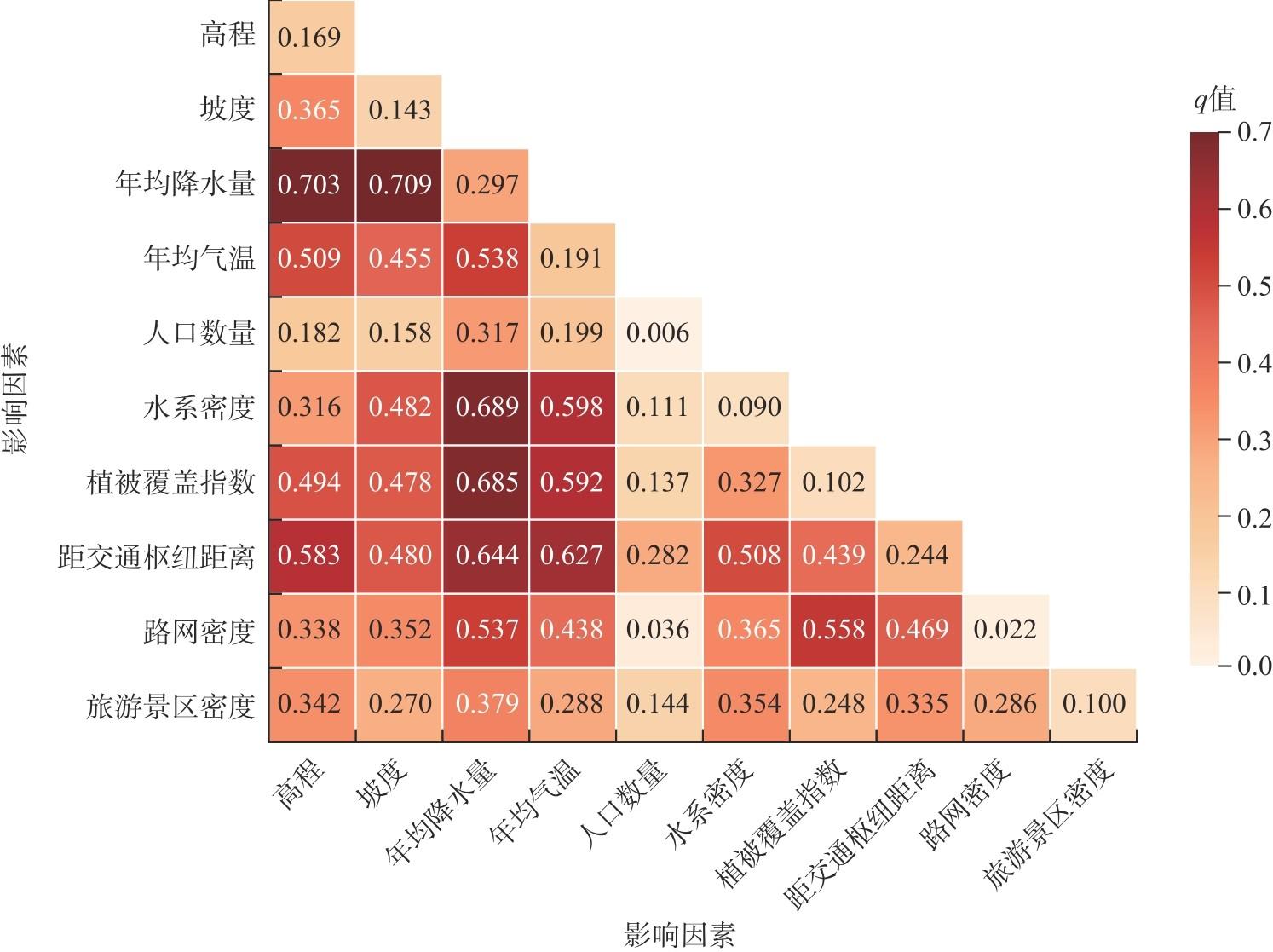
Tourism is an important industry in Xinjiang, and sports tourism plays an important role in promoting tourism strategies to prosper Xinjiang of China. Identifying the characteristics of spatial distribution and influencing factors of sports tourism resources can provide a scientific basis for the sustainable development of the sports tourism industry in Xinjiang. Adopting the sports tourism resources in Xinjiang in 2022 as the research object, this study uses exploratory spatial data analysis and geographical detectors to quantitatively explore their spatial distribution characteristics and influencing factors. The results indicate that: (1) The spatial distribution of sports tourism resources across Xinjiang in 2022 shows a significant imbalance, with a highly aggregated distribution, mainly concentrated in Urumqi, Changji Hui Autonomous Prefecture, and Ili Kazakh Autonomous Prefecture; on the whole, it is distributed more across the north and less across the south, forming a three-core spatial distribution pattern; in addition, the spatial dependence is obvious, with large differences being spatially correlated and with an uneven distribution of coldspot and hotspot areas. (2) The spatial distribution of sports tourism resources in Xinjiang is affected by such multi-dimensional factors as geography, traffic, and resources, among which, the average annual precipitation, distance from transportation hubs, average annual temperature, and elevation are the main influencing factors, while the road network density and amount of population have relatively minimal influence; this type of interaction is mainly dominated by dual-factor enhancement, indicating that the spatial distribution of sports tourism resources in Xinjiang is the result of the joint action of multiple factors. From this, scientific and reasonable suggestions are put forward for the sustainable development of the sports tourism industry in Xinjiang.
Di YANG , Jin ZOU , Xiaofei MA , Xun ZHANG , Rui ZHOU , Yanchun LIU , Jinlian SHI . Spatial distribution characteristics and sustainable development of sports tourism resources: A case of Xinjiang[J]. Arid Land Geography, 2026 , 49(1) : 140 -150 . DOI: 10.12118/j.issn.1000-6060.2024.639
表1 体育旅游资源分类Tab. 1 Classification of sports tourism resources |
| 主类 | 亚类 | 基本类型 |
|---|---|---|
| 参与型 | 体育休闲活动 | 公园休闲体育、垂钓、高尔夫、露营等 |
| 强身健体 | 登山、户外徒步等 | |
| 激情冒险 | 探险、漂流、越野、滑雪等 | |
| 体育赛事 | 大、中、小型体育赛事 | |
| 观赏型 | 自然景观 | 风景名胜 |
| 民族民俗 | 民族体育节庆 | |
| 现代节庆 | 旅游节等活动 | |
| 体育建筑设施 | 体育场馆 |
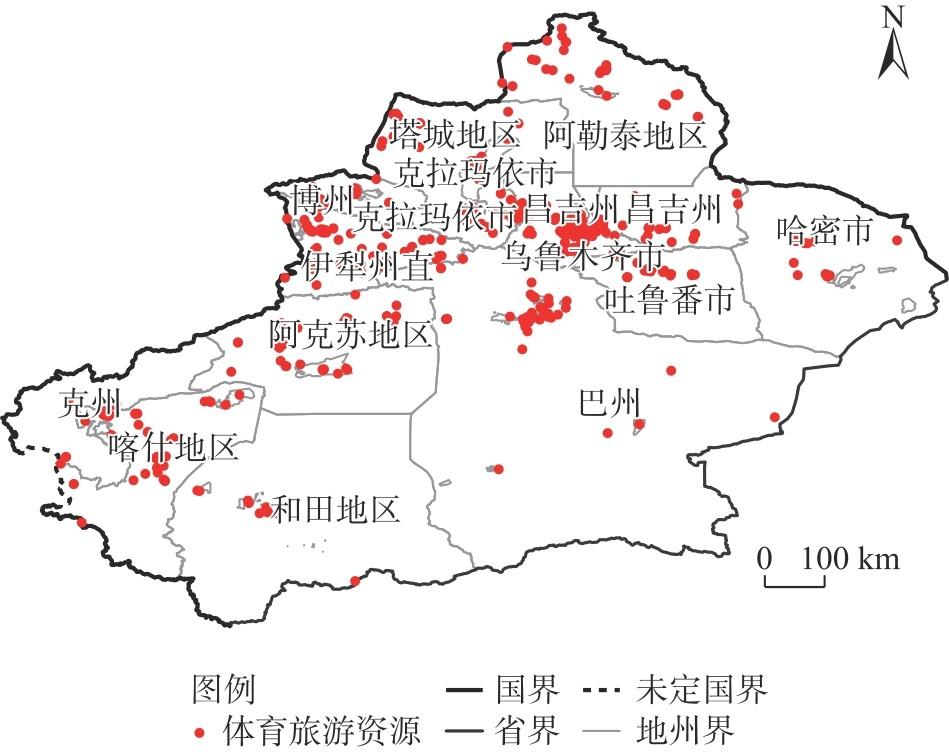
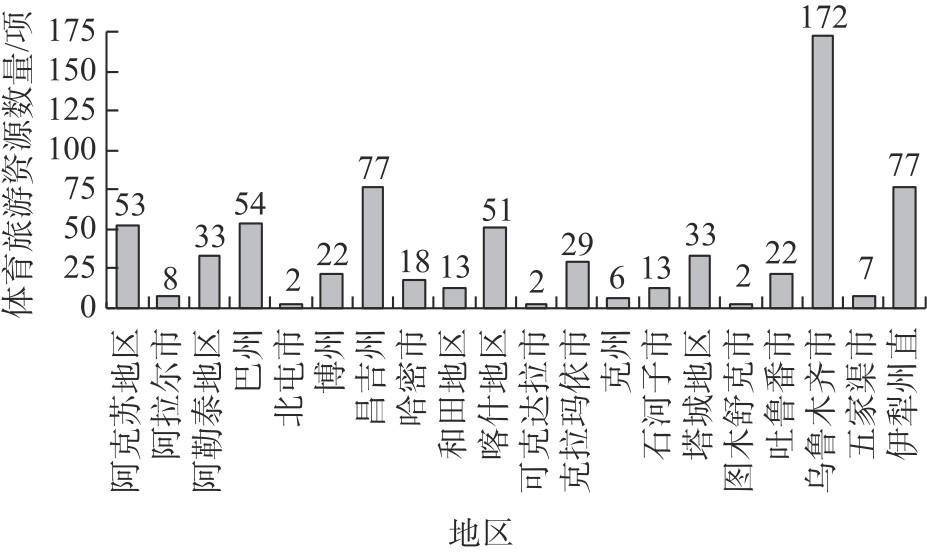
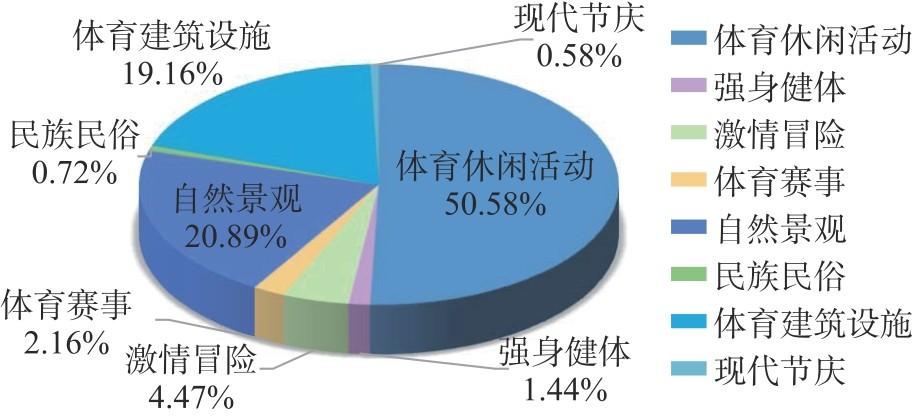
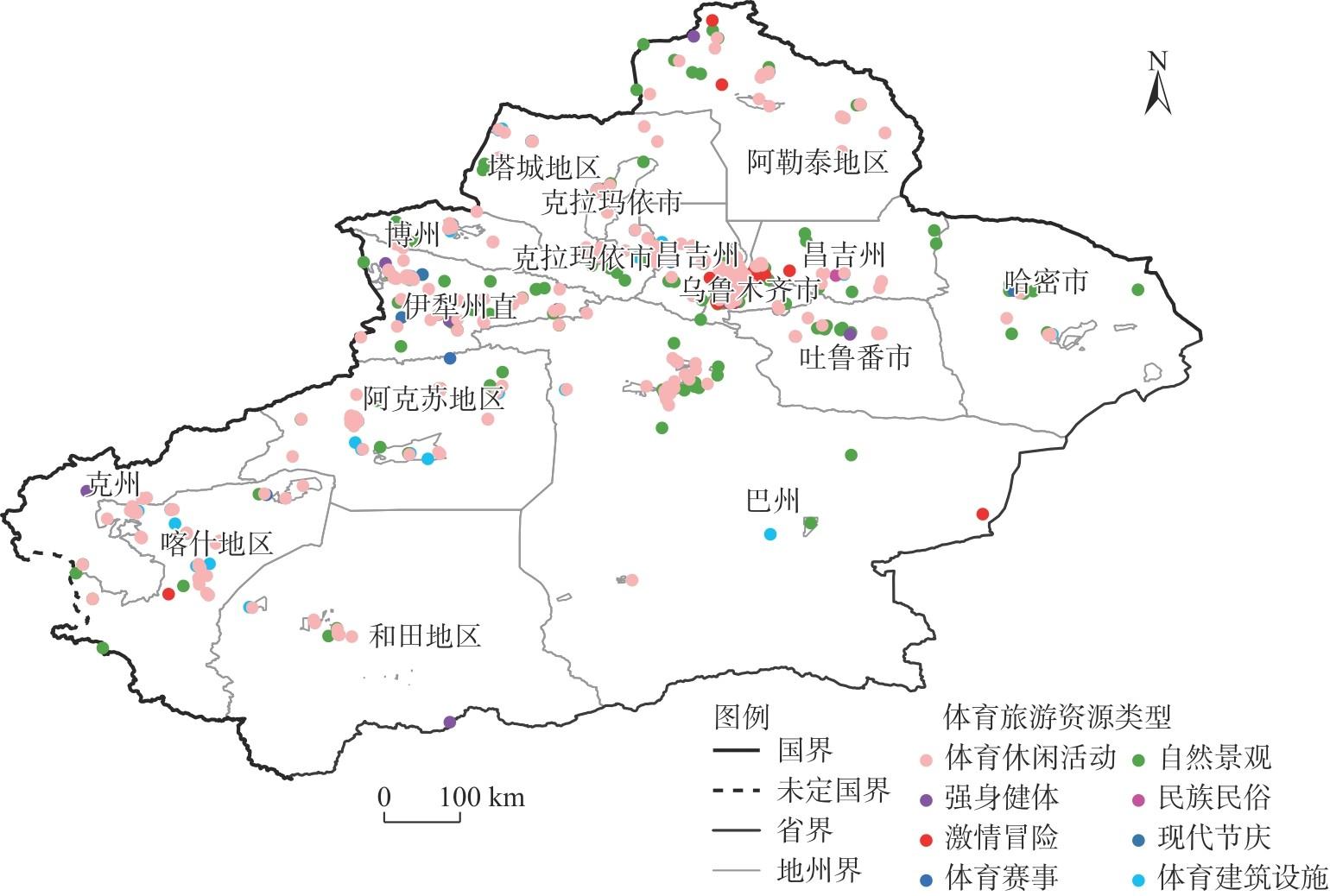
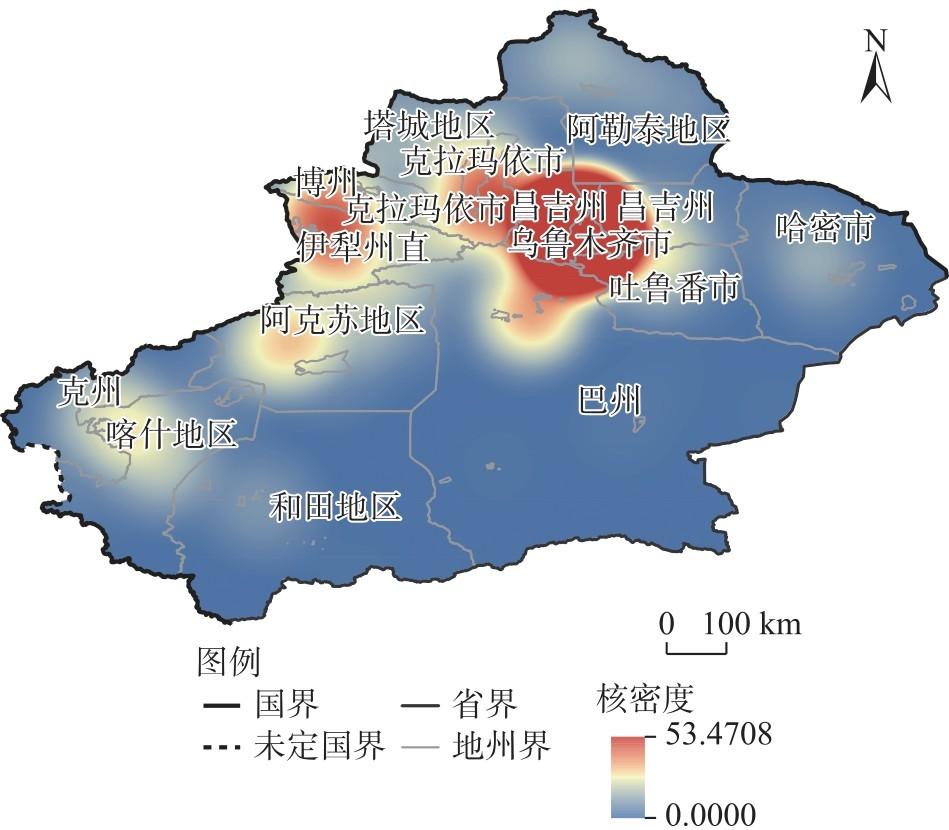
图1 新疆体育旅游资源空间分布注:基于自然资源部标准地图服务网站审图号为GS(2023)2767号的标准地图制作,底图边界无修改。昌吉州、博州、伊犁州直、克州、巴州分别为昌吉回族自治州、博尔塔拉蒙古自治州、伊犁哈萨克自治州直属县市、克孜勒苏柯尔克孜自治州、巴音郭楞蒙古自治州的简称。下同。 Fig. 1 Spatial distribution of sports tourism resources in Xinjiang |
表2 新疆体育旅游资源最近邻指数Tab. 2 Nearest neighbor index of sports tourism resources in Xinjiang |
| 资源类型 | 最近邻指数 |
|---|---|
| 整体 | 0.00000401 |
| 体育休闲活动 | 0.00000388 |
| 强身健体 | 0.00001726 |
| 激情冒险 | 0.00000768 |
| 自然景观 | 0.00000605 |
| 民族民俗 | 0.00000287 |
| 现代节庆 | 0.00001293 |
| 体育建筑设施 | 0.00000319 |
| 体育赛事 | 0.00001053 |
表3 单因子探测结果Tab. 3 Single factor detection results |
| 影响因素 | q值 | P值 | 影响力排序 |
|---|---|---|---|
| 高程 | 0.169 | 0.005 | 4 |
| 坡度 | 0.143 | 0.609 | 5 |
| 年均降水量 | 0.297 | 0.000 | 1 |
| 年均气温 | 0.191 | 0.000 | 3 |
| 人口数量 | 0.006 | 0.944 | 10 |
| 水系密度 | 0.090 | 0.095 | 8 |
| 植被覆盖指数 | 0.102 | 0.018 | 6 |
| 距交通枢纽距离 | 0.244 | 0.000 | 2 |
| 路网密度 | 0.022 | 0.862 | 9 |
| 旅游景区密度 | 0.100 | 0.121 | 7 |
注:q值为各影响因素对新疆体育旅游资源空间分布的影响强度。 |
| [1] |
杨茜. “数字中国”背景下河南省体育旅游产业发展策略研究[J]. 河南财政金融学院学报(自然科学版), 2024, 33(2): 84-87.
[
|
| [2] |
|
| [3] |
|
| [4] |
|
| [5] |
杨强. 体育旅游产业融合发展的动力与路径机制[J]. 体育学刊, 2016, 23(4): 55-62.
[
|
| [6] |
姜付高, 曹莉, 孙晋海, 等. 我国滨海地区体育旅游资源禀赋、丰度与绩效评价研究[J]. 天津体育学院学报, 2016, 31(4): 277-282.
[
|
| [7] |
张新, 刘家明, 朱鹤, 等. 北京郊区参与型体育旅游资源时空演化特征及影响因素[J]. 资源科学, 2020, 42(11): 2196-2209.
[
|
| [8] |
|
| [9] |
罗振中, 戴朝. 广元市休闲体育旅游资源的SWOT分析[J]. 体育科技, 2024, 45(1): 113-115.
[
|
| [10] |
罗亮, 范冬云, 刘晴. 湖南省体育旅游资源空间分布特征及区划分析[J]. 体育文化导刊, 2018(5): 89-93.
[
|
| [11] |
于素梅. 中国体育旅游研究[M]. 北京: 中国水利水电出版社, 2006: 43-51.
[
|
| [12] |
中华人民共和国国家质量监督检验检疫总局. GB/T18972-2003. 旅游资源分类、调查与评价[S]. 北京: 文化和旅游部, 2003.
[General Administration of Quality Supervision, Inspection and Quarantine of the People’s Republic of China. GB/T18972-2003. Classification, investigation and evaluation of tourism resources[S]. Beijing: Ministry of Culture and Tourism, 2003.]
|
| [13] |
靳诚, 陆玉麟. 基于县域单元的江苏省经济空间格局演化[J]. 地理学报, 2009, 64(6): 713-724.
[
|
| [14] |
黄钦, 杨波, 龚熊波, 等. 基于POI数据的长沙市旅游景点空间格局分析[J]. 湖南师范大学自然科学学报, 2021, 44(5): 40-49.
[
|
| [15] |
郑光辉, 蒋涤非, 陈国磊, 等. 中国乡村旅游重点村空间分布格局及影响机理研究[J]. 干旱区资源与环境, 2020, 34(9): 194-201.
[
|
| [16] |
宋小龙, 马明德, 李陇堂, 等. 宁夏乡村旅游重点村空间格局与影响因素分析[J]. 干旱区地理, 2024, 47(11): 1957-1969.
[
|
| [17] |
刘周敏, 周鸿璋, 曹庆荣. 基于ArcGIS下国家级体育特色小镇空间分布特征及影响因素研究[J]. 成都体育学院学报, 2020, 46(4): 62-67.
[
|
| [18] |
|
| [19] |
|
| [20] |
张凯煌, 千庆兰, 陈清怡. 多尺度视角下中国新能源汽车产业创新空间格局及网络特征[J]. 地理科学进展, 2021, 40(11): 1824-1838.
[
|
| [21] |
常艳萍, 李玉娟, 彭仕兰. 贵州省A级旅游景区空间分异及影响因素——基于地理探测器模型研究[J]. 国土与自然资源研究, 2024(3): 84-90.
[
|
| [22] |
李若倩, 孟斌. 基于地理探测器的北京市居民通勤距离影响因素分析[J]. 资源开发与市场, 2020, 36(5): 449-455.
[
|
| [23] |
王劲峰, 徐成东. 地理探测器: 原理与展望[J]. 地理学报, 2017, 72(1): 116-134.
[
|
| [24] |
张赫, 彭千芮, 王睿, 等. 中国县域碳汇时空格局及影响因素[J]. 生态学报, 2020, 40(24): 8988-8998.
[
|
| [25] |
邹建琴, 明庆忠, 刘安乐, 等. 中国红色旅游经典景点空间分布格局及其影响因素异质性[J]. 自然资源学报, 2021, 36(11): 2748-2762.
[
|
| [26] |
|
| [27] |
朱磊, 李燕楠, 徐佳慧, 等. 中国冰雪旅游地空间分布格局及成因[J]. 干旱区地理, 2024, 47(8): 1399-1410.
[
|
/
| 〈 |
|
〉 |