



Research on the spatial differentiation pattern and driving factors of Chinese ski resorts from a multi-scale perspective
Received date: 2024-09-03
Revised date: 2024-12-03
Online published: 2026-03-11
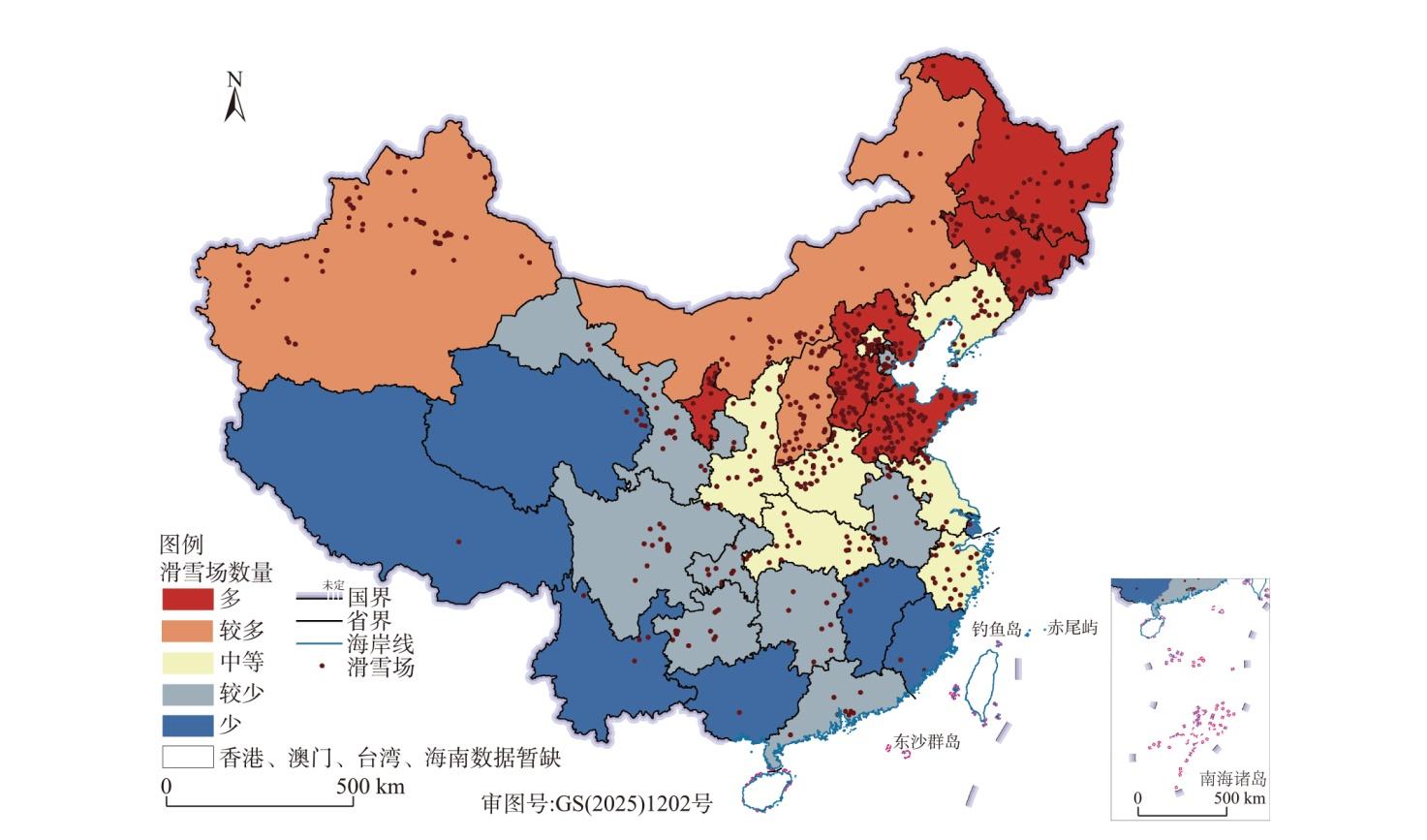
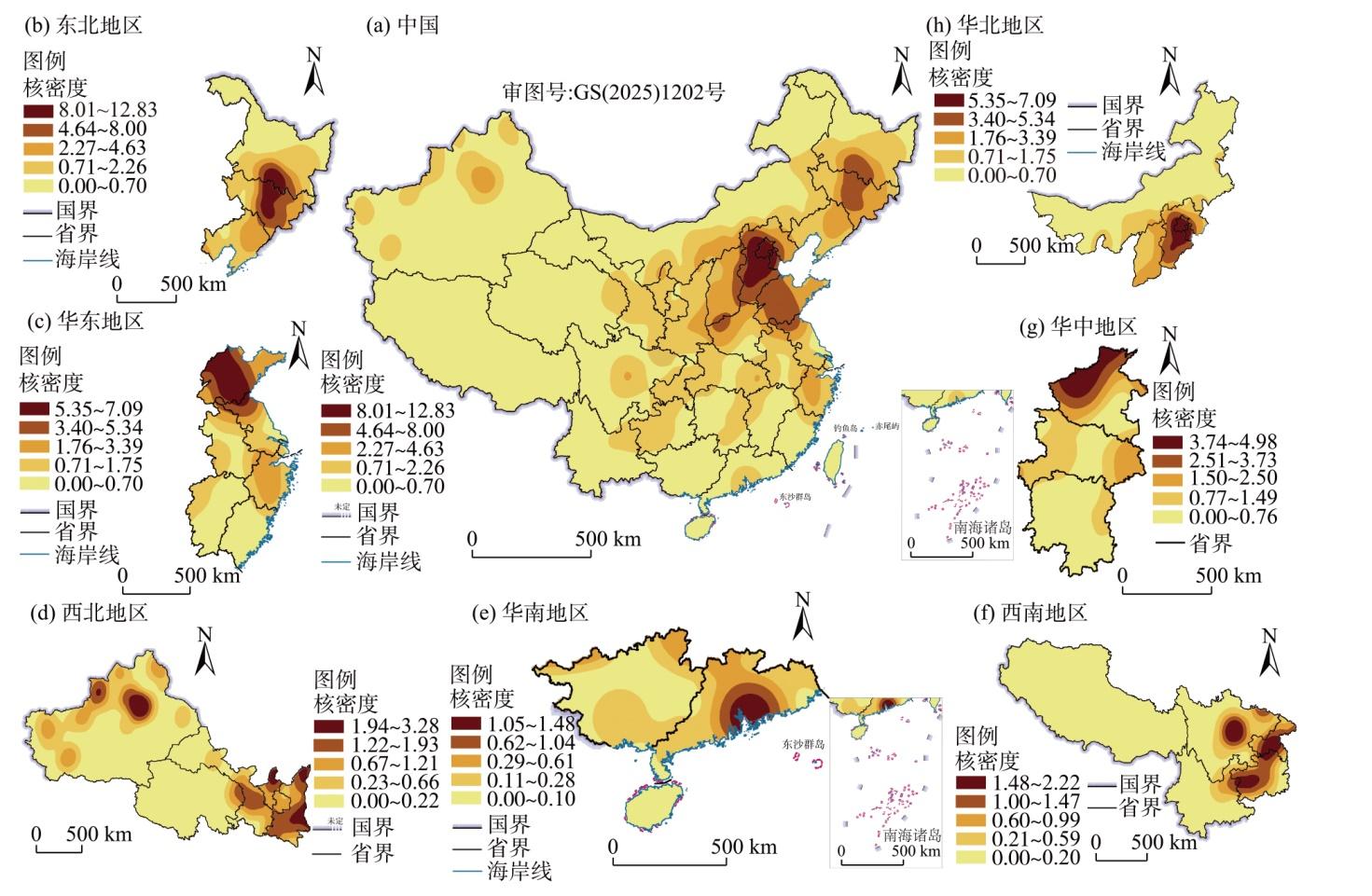
This study examines the spatial distribution patterns of 899 ski resorts across China from a multi-scale perspective, integrating national natural geographical zones and provincial regions. Using spatial analysis techniques including the Voronoi coefficient of variation, kernel density estimation, and geographic detector models, we investigated both the spatial differentiation characteristics and driving factors of Chinese ski resort distribution. Our analysis revealed three key findings: (1) Regional distribution pattern: China’s ski resorts exhibit a distinct “dense in the north, sparse in the south, more in the east, less in the west” spatial configuration. The primary concentrations appear in north China, northeast China, east China, and northwest China. (2) Spatial agglomeration structure: A “one core, three areas, multiple facets” pattern emerges at the national scale. High-density areas are predominantly concentrated in northeast China (Heilongjiang and Jilin Provinces), north China (Beijing City, Hebei Province), and northwest China (Xinjiang Uygur Autonomous Region, Shaanxi Province). By contrast, central, south china, and southwest China show a sparse distribution of ski resorts. (3) Hierarchical driving factors: The determinants of ski resort spatial differentiation rank as follows: Natural environment>transport capacity>socio-economic development>tourism development level. Significant interaction exists among these factors, primarily through dual-factor enhancement mechanisms, demonstrating that both environmental and socioeconomic variables jointly shape spatial distribution. Based on these findings, we recommend leveraging spatial agglomeration advantages, implementing regionally differentiated development strategies, and strengthening infrastructure to promote high-quality development of China’s winter sports economy.
Key words: multi-scale; ski field; spatial pattern; geographic detector; driving factors
Peipei WANG , Jiao WANG , Yongmei CAI . Research on the spatial differentiation pattern and driving factors of Chinese ski resorts from a multi-scale perspective[J]. Arid Land Geography, 2025 , 48(6) : 1080 -1088 . DOI: 10.12118/j.issn.1000-6060.2024.526
表1 中国滑雪场Voronoi多边形变异系数分析结果Tab. 1 Analysis results of Voronoi polygon coefficient of variation in Chinese ski resorts |
| 分区 | Voronoi多边形面积变异系数/% |
|---|---|
| 东北地区 | 395.46 |
| 华北地区 | 556.93 |
| 华东地区 | 633.74 |
| 华南地区 | 163.59 |
| 华中地区 | 117.55 |
| 西北地区 | 315.66 |
| 西南地区 | 451.19 |
| 总计 | 604.37 |
表2 全国滑雪场时空分异影响因素数据来源与处理Tab. 2 Data sources and processing of factors affecting the temporal differentiation of ski resorts in China |
| 维度 | 指标 | 标号 |
|---|---|---|
| 自然环境 | 高程 | X1 |
| 坡度 | X2 | |
| 气温 | X3 | |
| 降水量 | X4 | |
| 旅游发展水平 | 旅游总收入 | X5 |
| 旅游接待总人次 | X6 | |
| 星级饭店数量 | X7 | |
| 社会经济发展 | 人均GDP | X8 |
| 人均可支配收入 | X9 | |
| 第三产业增加值比重 | X10 | |
| 交通运输能力 | 高速公路综合密度 | X11 |
| 铁路网综合密度 | X12 | |
| 旅客周转量 | X13 |
表3 单因子探测结果Tab. 3 Single factor detection results |
| 指标 | X1 | X2 | X3 | X4 | X5 | X6 | X7 | X8 | X9 | X10 | X11 | X12 | X13 |
|---|---|---|---|---|---|---|---|---|---|---|---|---|---|
| q | 0.077 | 0.200 | 0.350 | 0.377 | 0.021 | 0.019 | 0.057 | 0.032 | 0.089 | 0.032 | 0.041 | 0.036 | 0.081 |
| P | 0.000 | 0.000 | 0.000 | 0.000 | 0.227 | 0.277 | 0.010 | 0.090 | 0.000 | 0.090 | 0.043 | 0.061 | 0.000 |
| 排序 | 6 | 3 | 2 | 1 | 12 | 13 | 7 | 10 | 4 | 10 | 8 | 9 | 5 |
注:q为解释力水平;P为显著性水平。 |
表4 交互因子探测结果Tab. 4 Results of interaction factor detection |
| 因子 | X1 | X2 | X3 | X4 | X5 | X6 | X7 | X8 | X9 | X10 | X11 | X12 | X13 |
|---|---|---|---|---|---|---|---|---|---|---|---|---|---|
| X1 | 0.077 | ||||||||||||
| X2 | 0.624 | 0.200 | |||||||||||
| X3 | 0.788 | 0.777 | 0.350 | ||||||||||
| X4 | 0.630 | 0.550 | 0.501 | 0.377 | |||||||||
| X5 | 0.398 | 0.783 | 0.657 | 0.766 | 0.021 | ||||||||
| X6 | 0.425 | 0.683 | 0.469 | 0.722 | 0.070 | 0.019 | |||||||
| X7 | 0.448 | 0.350 | 0.530 | 0.589 | 0.292 | 0.235 | 0.057 | ||||||
| X8 | 0.298 | 0.689 | 0.714 | 0.482 | 0.468 | 0.790 | 0.554 | 0.032 | |||||
| X9 | 0.527 | 0.357 | 0.367 | 0.472 | 0.700 | 0.444 | 0.317 | 0.684 | 0.089 | ||||
| X10 | 0.298 | 0.689 | 0.714 | 0.482 | 0.468 | 0.790 | 0.554 | 0.037 | 0.684 | 0.032 | |||
| X11 | 0.234 | 0.346 | 0.773 | 0.645 | 0.472 | 0.420 | 0.384 | 0.236 | 0.460 | 0.236 | 0.041 | ||
| X12 | 0.325 | 0.361 | 0.662 | 0.711 | 0.391 | 0.402 | 0.335 | 0.233 | 0.534 | 0.233 | 0.142 | 0.036 | |
| X13 | 0.578 | 0.701 | 0.749 | 0.787 | 0.210 | 0.258 | 0.330 | 0.376 | 0.640 | 0.376 | 0.507 | 0.383 | 0.081 |
注:对角线为单因子交互结果,灰色底纹为双因子非线性增强型,其他为双因子增强型。 |
| [1] |
|
| [2] |
|
| [3] |
|
| [4] |
|
| [5] |
|
| [6] |
|
| [7] |
王蓓. 后奥运时代京津冀地区冰雪体育产业高质量发展路径探析[J]. 体育科技文献通报, 2023, 31(12): 219-223.
[
|
| [8] |
阚军常, 王飞. 冬奥战略目标下我国滑雪产业升级的驱动因子与创新路径[J]. 体育科学, 2016, 36(6): 11-21.
[
|
| [9] |
王露露, 陈丹, 高晓波. 我国南方冰雪产业发展问题及对策[J]. 体育文化导刊, 2019(4): 94-99.
[
|
| [10] |
郭辉, 张丽梅. 我国滑雪旅游产业发展影响因素及策略分析[J]. 边疆经济与文化, 2022(2): 59-61.
[
|
| [11] |
何文义, 郭彬, 张锐. 新时代我国冰雪产业本质及发展路径研究[J]. 北京体育大学学报, 2020, 43(1): 29-38.
[
|
| [12] |
把多勋, 王储. 西北五省滑雪场空间分异特征及其影响因素研究[J]. 中国生态旅游, 2021, 11(6): 869-883.
[
|
| [13] |
郭文尧, 刘维刚. 数字技术赋能冰雪产业链高质量发展研究[J]. 企业经济, 2024, 43(6): 50-58.
[
|
| [14] |
王超, 杜唯, 杜春华. 数字技术赋能冰雪产业高质量发展的理论内涵、现实困境与实践路径[J]. 沈阳体育学院学报, 2022, 41(5): 21-27.
[
|
| [15] |
赵琳, 王飞. “十四五”时期冰雪体育旅游数字化转型的价值导向与实施路径[J]. 体育文化导刊, 2021(9): 1-7.
[
|
| [16] |
窦文康, 王世金, 韩彤彤, 等. 中国滑雪场可达性及市场潜力测度[J]. 地理科学, 2021, 41(2): 319-327.
[
|
| [17] |
王储, 卢长宝, 巴多勋, 等. 中国代表性滑雪场网络关注度时空演变及影响因素[J]. 自然资源学报, 2022, 37(9): 2367-2386.
[
|
| [18] |
方琰, 徐海滨, 蒋依依. 多源数据融合的中国滑雪场空间活力评价研究[J]. 地理研究, 2023, 42(2): 389-406.
[
|
| [19] |
王世金, 徐新武, 颉佳. 中国滑雪场空间格局、形成机制及其结构优化[J]. 经济地理, 2019, 39(9): 222-231.
[
|
| [20] |
王金伟, 郭嘉欣, 刘乙, 等. 中国滑雪场空间分布特征及其影响因素[J]. 地理研究, 2022, 41(2): 390-405.
[
|
| [21] |
胡娟, 王欣, 赵英刚. 中国南方冰雪旅游发展空间拓展研究[J]. 西南大学学报(自然科学版), 2023, 45(11): 116-129.
[
|
| [22] |
王金伟, 邹明乐, 徐晓文, 等. 东北三省滑雪场时空格局演变及其影响因素[J]. 经济地理, 2023, 43(8): 187-199.
[
|
| [23] |
李颖, 朱天龙, 姚冰, 等. 近20年北京和张家口地区滑雪场发展及其空间分布特征[J]. 经济地理, 2022, 42(1): 191-198.
[
|
| [24] |
梁诗斐, 谢霞, 田晓霞. 新疆S级滑雪场空间分布特征及影响因素分析[J]. 新疆大学学报(自然科学版), 2020, 37(3): 370-378.
[
|
| [25] |
王恒利, 周文静. 基于AHP的冰雪体育旅游产业发展的影响因素分析[J]. 江汉大学学报(自然科学版), 2018, 46(4): 374-378.
[
|
| [26] |
李佳, 和智璇. 基于结构方程模型的冰雪旅游目的地形象感知研究——以长春冰雪新天地为例[J]. 资源开发与市场, 2024, 40(7): 1112-1120.
[
|
| [27] |
朱磊, 李燕楠, 徐佳慧, 等. 中国冰雪旅游地空间分布格局及成因[J]. 干旱区地理, 2024, 47(8): 1400-1412.
[
|
| [28] |
贾国栋, 王立国, 朱海, 等. 基于GIS空间分析的江西红色旅游资源空间特征及其开发适宜性研究[J]. 旅游论坛, 2022, 15(6): 49-61.
[
|
| [29] |
颉佳, 王世金, 窦文康, 等. 1989—2019年中国滑雪场时空特征及其演变规律[J]. 地理科学, 2022, 42(6): 1064-1072.
[
|
| [30] |
王劲峰, 廖一兰, 刘鑫. 空间数据分析教程[M]. 北京: 科学出版社, 2010: 67-83.
[
|
/
| 〈 |
|
〉 |