



Coordinated study of urban population agglomeration and land ecological resilience in the Yellow River Basin
Received date: 2024-06-11
Revised date: 2024-08-01
Online published: 2026-03-11
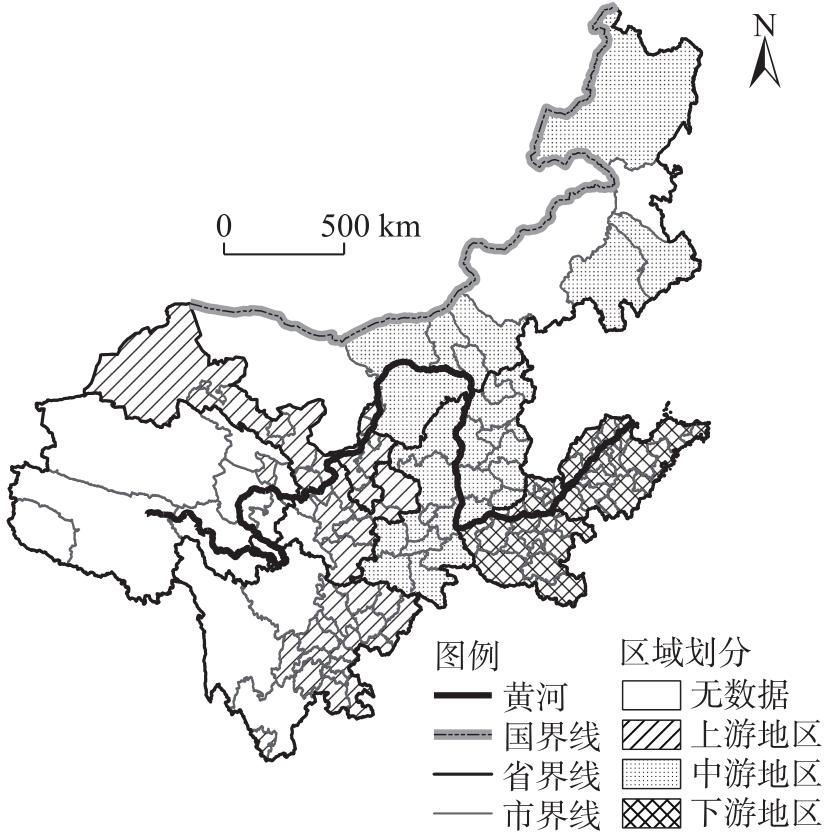
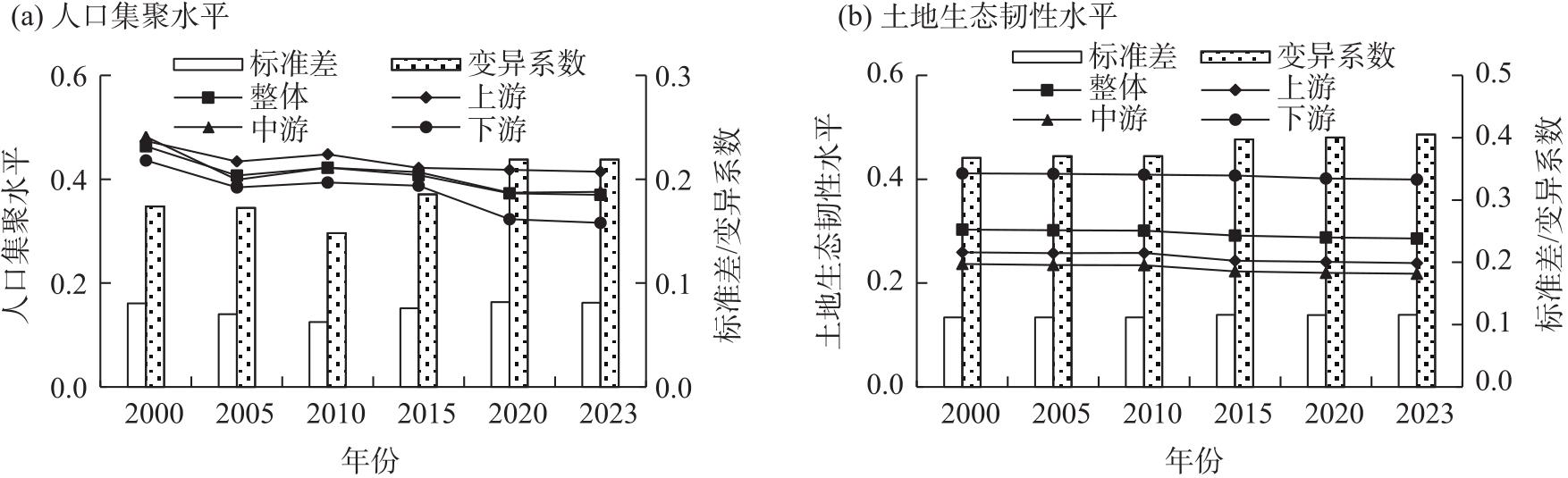
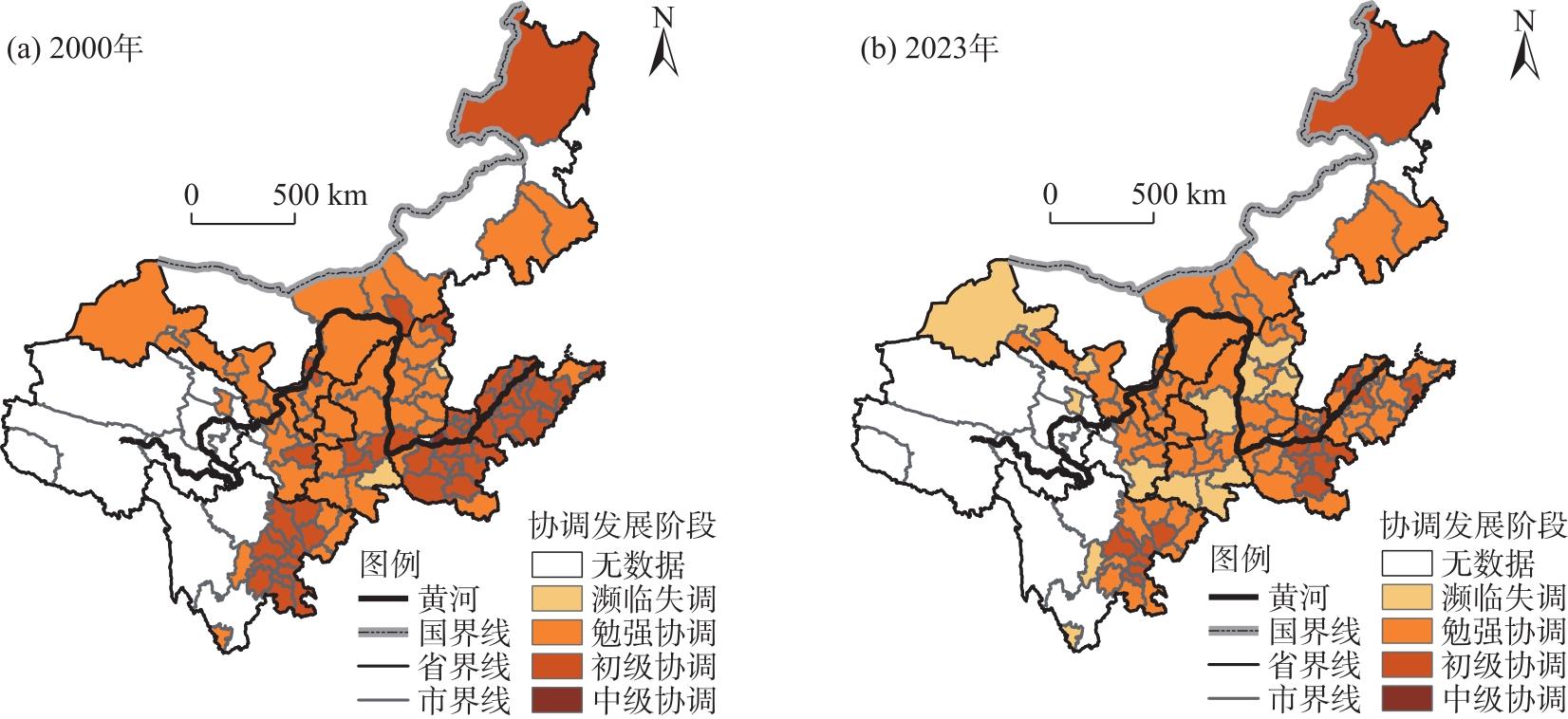
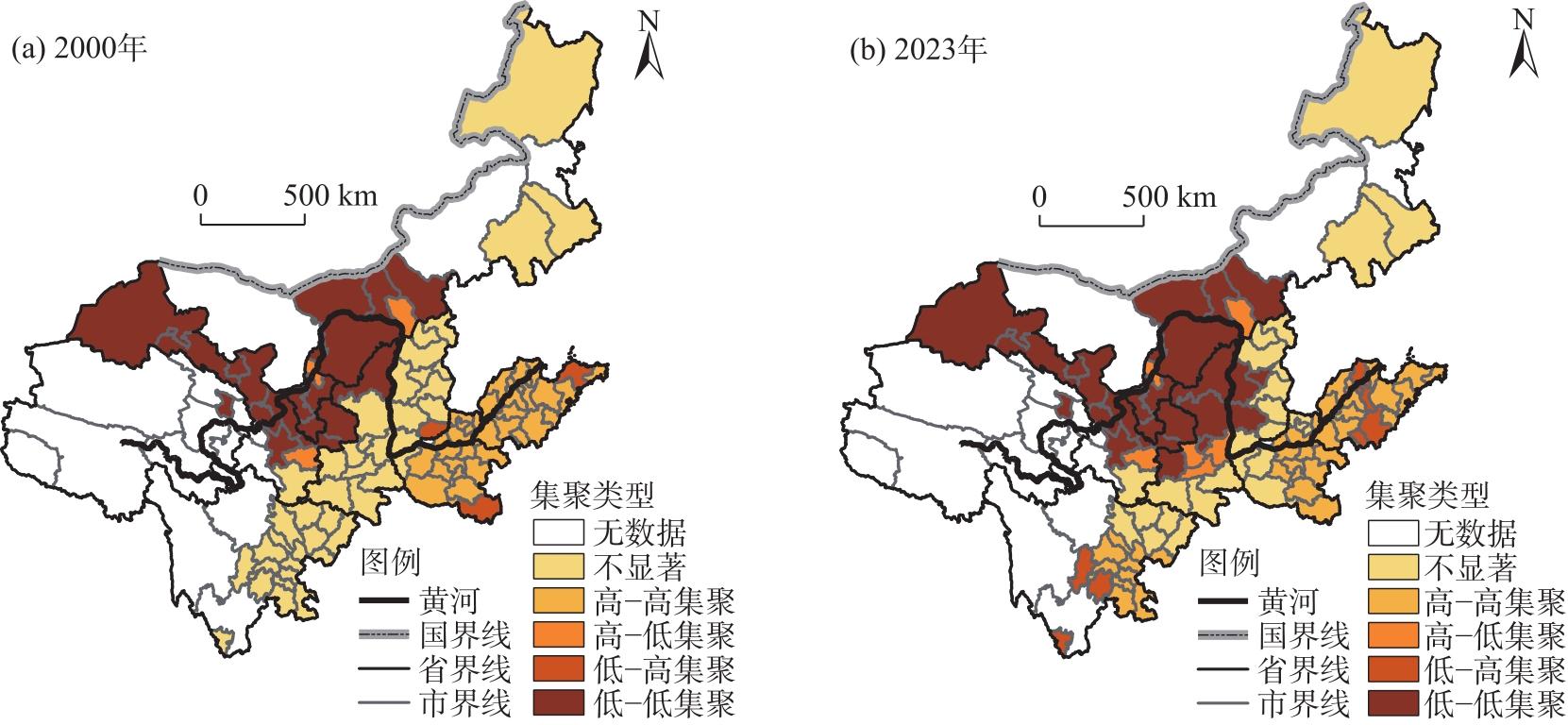
Scientifically evaluating the coordinated development of urban population agglomeration and land ecological resilience in the Yellow River Basin is crucial for promoting ecological protection and high-quality development in the region. Based on the “resistance-adaptability-resilience” three-dimensional framework, a land ecological resilience evaluation system was constructed. The coupling coordination model, Moran’s I, and spatial Tobit model were employed to analyze the spatiotemporal evolution, spatial agglomeration characteristics, and influencing factors of the coordinated development of urban population agglomeration and land ecological resilience in the Yellow River Basin from 2000 to 2023. The results indicate that: (1) The levels of urban population agglomeration and land ecological resilience exhibited a declining trend, with average annual decreases of 0.98% and 0.26%, respectively. The spatial distribution of urban population agglomeration followed a stepped pattern of “upstream>middle reaches>downstream”, while land ecological resilience was distributed as “downstream>upstream> middle reaches”. (2) The coordinated development level of urban population agglomeration and land ecological resilience declined over time, with a spatial distribution of “downstream>upstream>middle reaches”. High-value cities were primarily located in downstream areas and provincial capitals, remaining in the primary coordination stage, whereas low-value cities, predominantly resource-based, were on the verge of imbalance. (3) A spatial positive correlation was observed between urban population agglomeration and the coordinated development of land ecological resilience. “high-high” agglomeration areas were mainly concentrated in downstream regions and Sichuan Province, whereas “low-low” agglomeration areas were primarily located in the city group along the Yellow River Basin in Ningxia, Lanzhou-Xining city group, and Hohhot-Baotou-Ordos-Yulin city group. (4) Economic development, industrialization, scientific and technological innovation, and government intervention were key factors influencing the coordinated development of urban population agglomeration and land ecological resilience. Additionally, economic development and industrialization exhibited significant spatial spillover effects.
Weilu LI , Mingdou ZHANG . Coordinated study of urban population agglomeration and land ecological resilience in the Yellow River Basin[J]. Arid Land Geography, 2025 , 48(4) : 728 -738 . DOI: 10.12118/j.issn.1000-6060.2024.364
表1 城市土地生态韧性评价体系Tab. 1 Urban land ecological resilience evaluation system |
| 目标层 | 准则层 | 指标层 | 指标说明 | 权重 | 类型 |
|---|---|---|---|---|---|
| 城市土地生态韧性 | 抵抗力 | 土地生态服务价值 | 公式计算得出 | 0.4749 | 正向 |
| 适应力 | 景观异质性 | 香农多样性指数 | 0.1833 | 正向 | |
| 斑块丰富度指数 | - | 正向 | |||
| 景观连通性 | 景观蔓延度指数 | - | 正向 | ||
| 景观分离度指数 | - | 负向 | |||
| 景观形状 | 景观形状指数 | - | 负向 | ||
| 面积加权的平均形状指数 | - | 负向 | |||
| 恢复力 | 土地生态恢复力指数 | 公式计算得出 | 0.3418 | 正向 |
表2 黄河流域城市人口集聚与土地生态韧性协同发展水平全局莫兰指数检验Tab. 2 Global Moran’s I test of the coordinated development level of urban population agglomeration and land ecological resilience in the Yellow River Basin |
| 指标 | 2000年 | 2005年 | 2010年 | 2015年 | 2020年 | 2023年 |
|---|---|---|---|---|---|---|
| Moran’s I | 0.3143*** | 0.3430*** | 0.3349*** | 0.3193*** | 0.2596*** | 0.2360*** |
| Z值 | 10.70 | 11.63 | 11.37 | 10.86 | 8.91 | 8.13 |
注:***、**、*分别表示通过了1%、5%、10%水平上的显著性检验。下同。 |
表3 基准回归结果及稳健性检验结果Tab. 3 Benchmark regression results and robustness test results |
| 变量 | 基准回归结果 | 模型一 | 模型二 | |||||
|---|---|---|---|---|---|---|---|---|
| 回归系数 | Z值 | 回归系数 | Z值 | 回归系数 | Z值 | |||
| 经济发展水平 | 0.0105** | 2.07 | 0.0199*** | 6.66 | 0.0108** | 2.07 | ||
| 工业化水平 | -0.1350*** | -7.48 | -0.1191*** | -5.39 | -0.1349*** | -7.22 | ||
| 科技创新水平 | 0.3885** | 2.10 | -0.0351 | -0.15 | 0.3270* | 1.72 | ||
| 外商投资水平 | -0.1288 | -1.13 | 0.0566 | 0.43 | -0.1293 | -1.11 | ||
| 政府干预 | -0.1162*** | -4.58 | -0.1057*** | -4.07 | -0.1170*** | -4.51 | ||
| W×经济发展水平 | -0.0116* | -1.83 | -0.0054*** | -10.08 | -0.0289*** | -2.82 | ||
| W×工业化水平 | 0.1382*** | 4.82 | 0.0165*** | 2.78 | 0.1502*** | 3.53 | ||
| W×科技创新水平 | 0.3845 | 0.98 | 0.2157*** | 3.14 | -0.0133 | -0.03 | ||
| W×外商投资水平 | 0.6018 | 1.49 | 0.0420 | 0.93 | 0.6759** | 2.49 | ||
| W×政府干预 | 0.0023 | 0.05 | 0.0003 | 0.05 | -0.1023* | -1.77 | ||
| ρ | 0.7625*** | 20.32 | 0.0824*** | 13.49 | 0.7074*** | 15.99 | ||
| F值 | 346.3641 | - | 202.6957 | - | - | - | ||
| 调整R2 | 0.9983 | - | 0.9974 | - | 0.4389 | - | ||
| 自然对数似然函数值 | 1078.8026 | - | 1024.3378 | - | 1077.5026 | - | ||
注:W为空间权重矩阵;ρ为空间自回归系数;F值为评估模型整体显著性的统计量;调整R2为评估模型拟合优度的统计量。 |
| [1] |
张晓瑶, 虞虎, 张潇, 等. 基于多源数据的三江源国家公园土地生态安全综合评价[J]. 生态学报, 2022, 42(14): 5665-5676.
[
|
| [2] |
陈乐, 李郇, 姚尧, 等. 人口集聚对中国城市经济增长的影响分析[J]. 地理学报, 2018, 73(6): 1107-1120.
|
| [3] |
邓楚雄, 刘唱唱, 李忠武. 生态修复背景下流域国土空间韧性研究思路[J]. 中国土地科学, 2022, 36(5): 11-20.
[
|
| [4] |
|
| [5] |
陈海山, 梁裕珩. 人口集聚与植被恢复——基于人口空间分布的实证研究[J]. 经济学, 2023, 23(5): 2025-2041.
[
|
| [6] |
宋家鹏, 陈松林. 经济集聚对中国三大城市群土地利用生态效率的影响[J]. 自然资源学报, 2021, 36(11): 2865-2877.
[
|
| [7] |
肖挺. 环境质量是劳动人口流动的主导因素吗?——“逃离北上广”现象的一种解读[J]. 经济评论, 2016, 37(2): 3-17.
[
|
| [8] |
孙伟增, 张晓楠, 郑思齐. 空气污染与劳动力的空间流动——基于流动人口就业选址行为的研究[J]. 经济研究, 2019, 54(11): 102-117.
[
|
| [9] |
|
| [10] |
|
| [11] |
王少剑, 崔子恬, 林靖杰, 等. 珠三角地区城镇化与生态韧性的耦合协调研究[J]. 地理学报, 2021, 76(4): 973-991.
[
|
| [12] |
王立奇, 李国柱. 中国城市生态韧性时空特征及影响因素分析[J/OL]. 干旱区地理.[2024-12-16]. http://kns.cnki.net/kcms/detail/65.1103.X.20241210.1722.004.html.
[
|
| [13] |
|
| [14] |
|
| [15] |
|
| [16] |
张明斗, 任衍婷, 周亮. 黄河流域城市生态韧性时空演变特征及影响因素分析[J]. 干旱区地理, 2024, 47(3): 445-454.
[
|
| [17] |
|
| [18] |
|
| [19] |
彭文英, 刘念北. 首都圈人口空间分布优化策略——基于土地资源承载力估测[J]. 地理科学, 2015, 35(5): 558-564.
[
|
| [20] |
王国惠, 赵新燕, 黄永胜. 新型城镇化与生态环境协调发展关系探究[J]. 经济问题, 2018, 40(3): 112-117.
[
|
| [21] |
安毅, 刘世梁, 侯笑云, 等. 人类活动的景观生态响应——以个旧市为例[J]. 生态学报, 2018, 38(24): 8861-8872.
[
|
| [22] |
刘琳轲, 梁流涛, 高攀, 等. 黄河流域生态保护与高质量发展的耦合关系及交互响应[J]. 自然资源学报, 2021, 36(1): 176-195.
[
|
| [23] |
韩叙, 柳潇明, 刘文婷, 等. 黄河流域绿色金融与经济高质量发展耦合协调时空特征及驱动因素[J]. 经济地理, 2023, 43(9): 121-130.
[
|
| [24] |
刘海龙, 王改艳, 张鹏航, 等. 汾河流域新型城镇化与生态韧性耦合协调时空演变及协调影响力研究[J]. 自然资源学报, 2024, 39(3): 640-667.
[
|
| [25] |
姚鸣奇, 张卓群, 郑艳, 等. 海绵城市试点建设提高了生态韧性吗?——一项准自然实验[J]. 城市发展研究, 2023, 30(4): 25-33.
[
|
| [26] |
王松茂, 牛金兰. 山东省旅游经济与城市生态韧性协同演化研究[J]. 地理学报, 2023, 78(10): 2591-2608.
[
|
| [27] |
田卫民. 省域居民收入基尼系数测算及其变动趋势分析[J]. 经济科学, 2012, 34(2): 48-59.
[
|
| [28] |
|
| [29] |
施金里, 徐丽萍, 李晓航, 等. 南疆县域生态-经济协调性评估及可持续发展分区[J]. 干旱区地理, 2024, 47(10): 1794-1804.
[
|
| [30] |
|
| [31] |
|
| [32] |
周艳, 黄贤金, 徐国良, 等. 长三角城市土地扩张与人口增长耦合态势及其驱动机制[J]. 地理研究, 2016, 35(2): 313-324.
[
|
/
| 〈 |
|
〉 |