



Spatio-temporal analysis of multi-layered soil moisture deficit and its influencing factors in the oases at the eastern foothill of Helan Mountains
Received date: 2024-04-16
Revised date: 2024-10-21
Online published: 2026-03-11
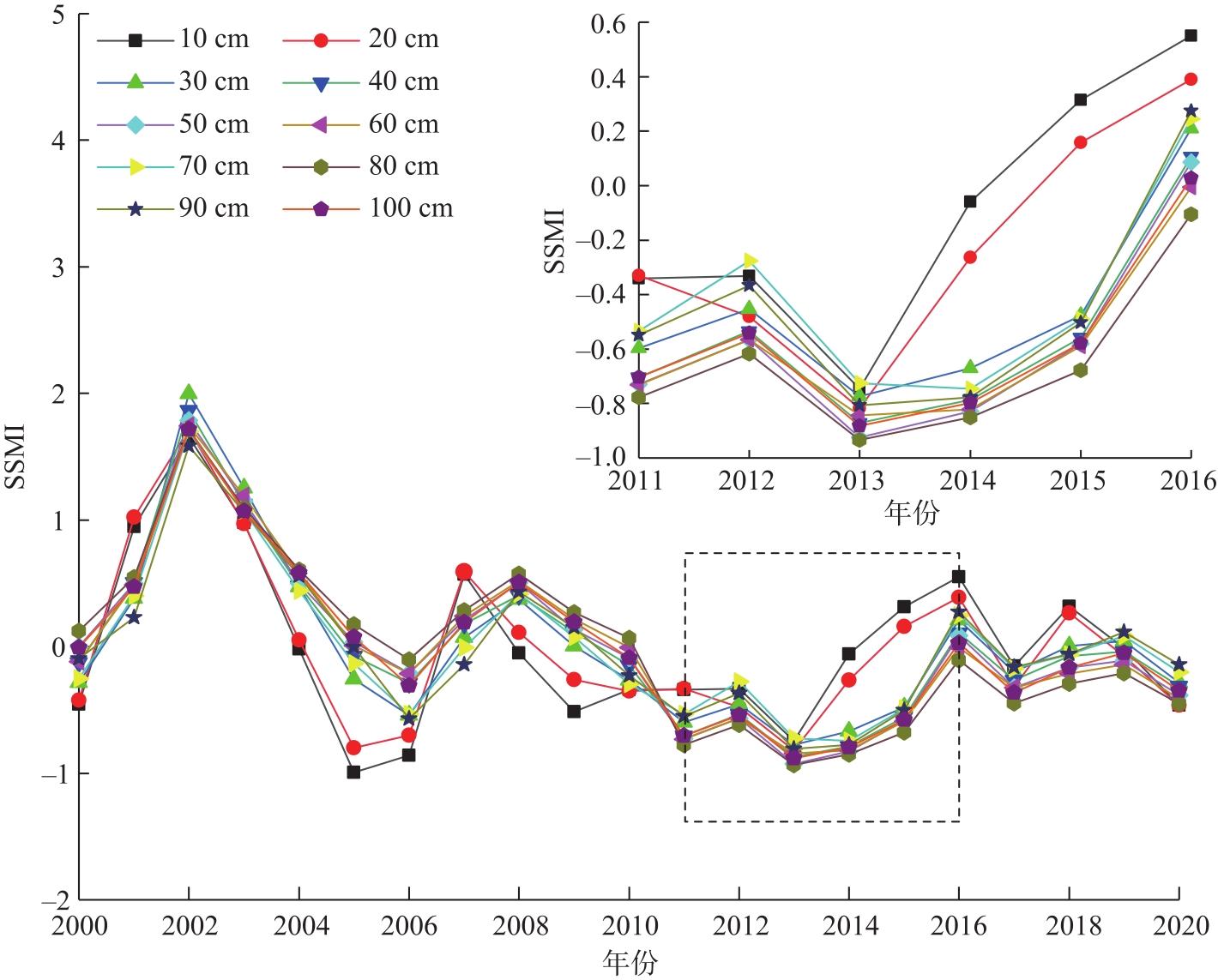
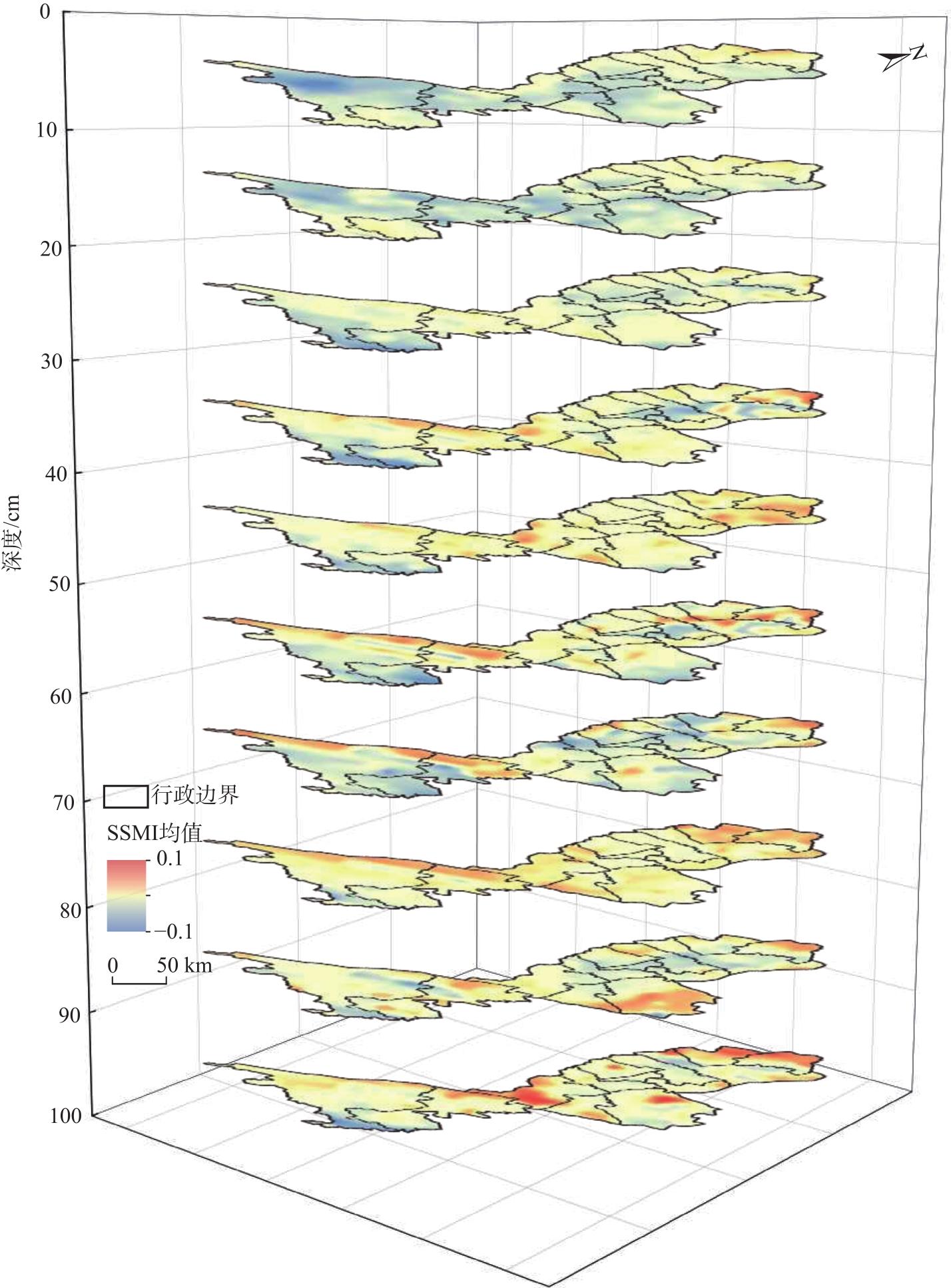
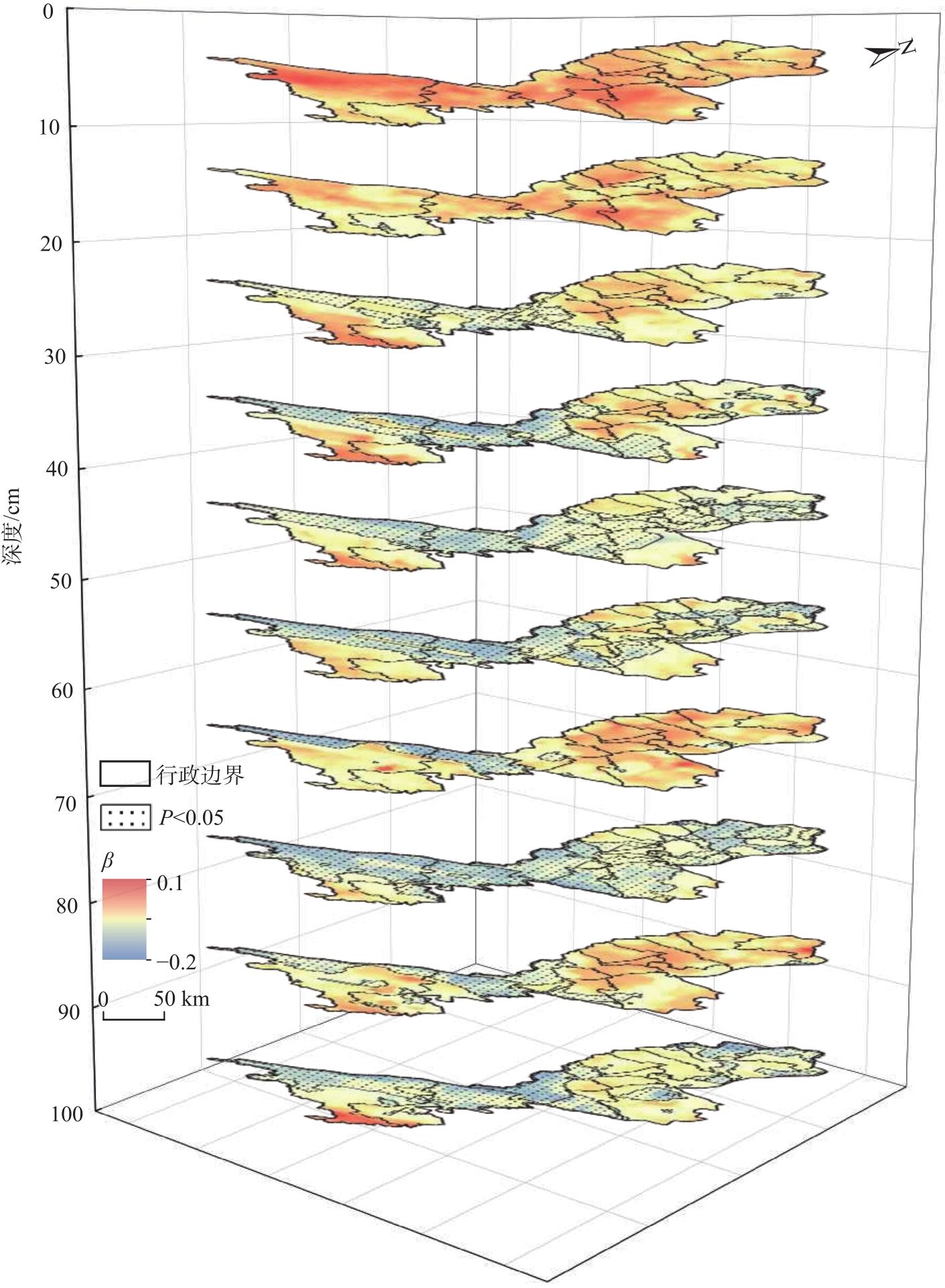
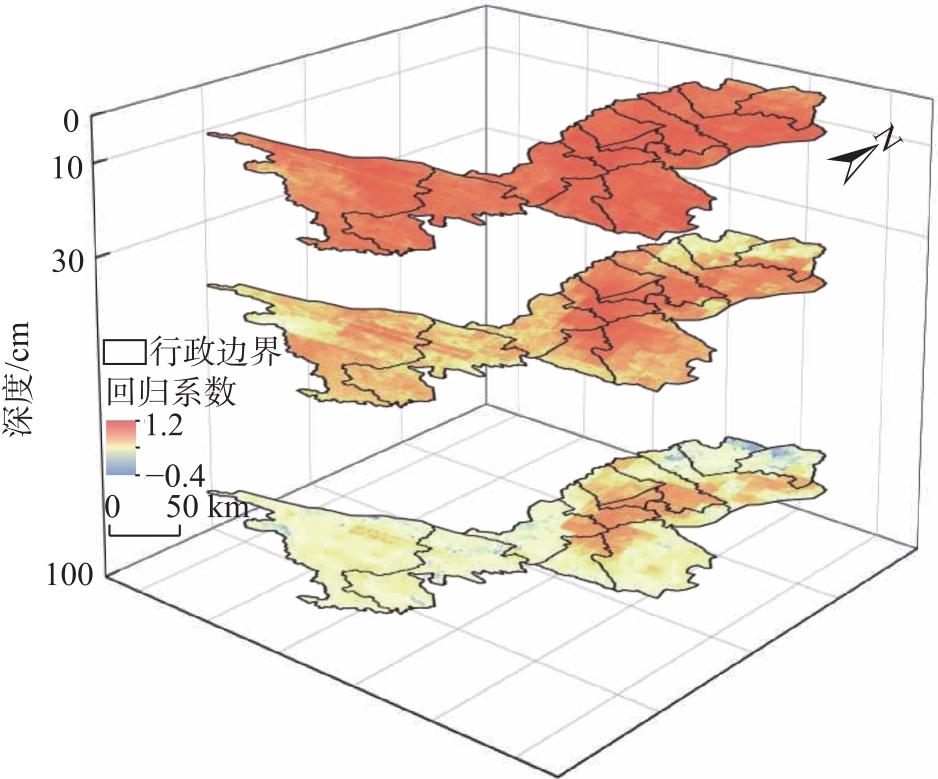
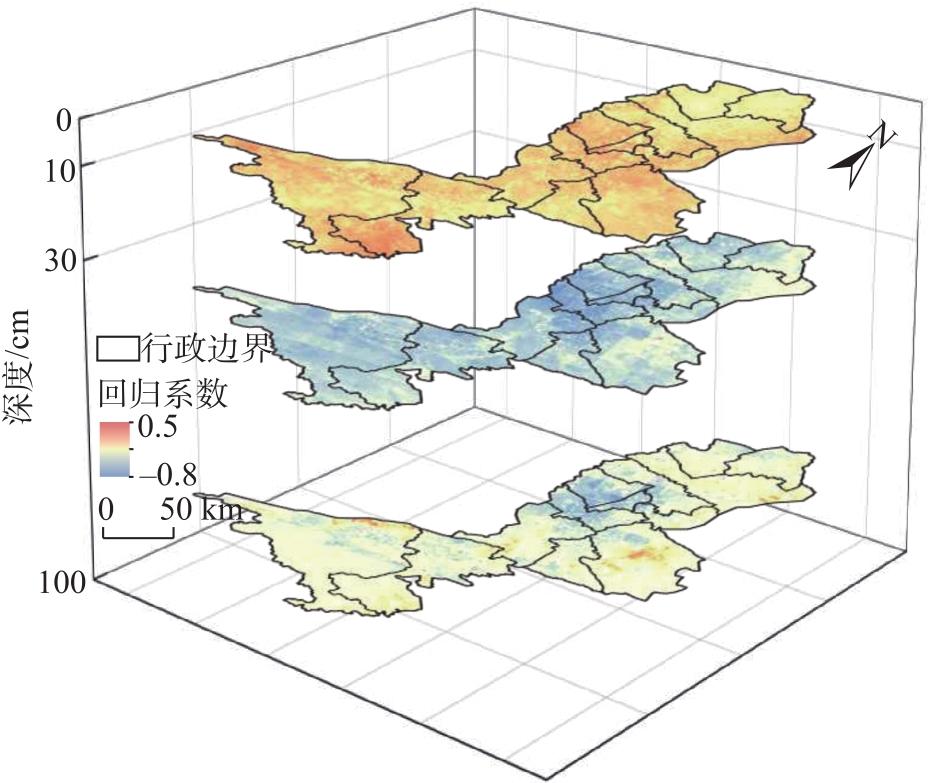
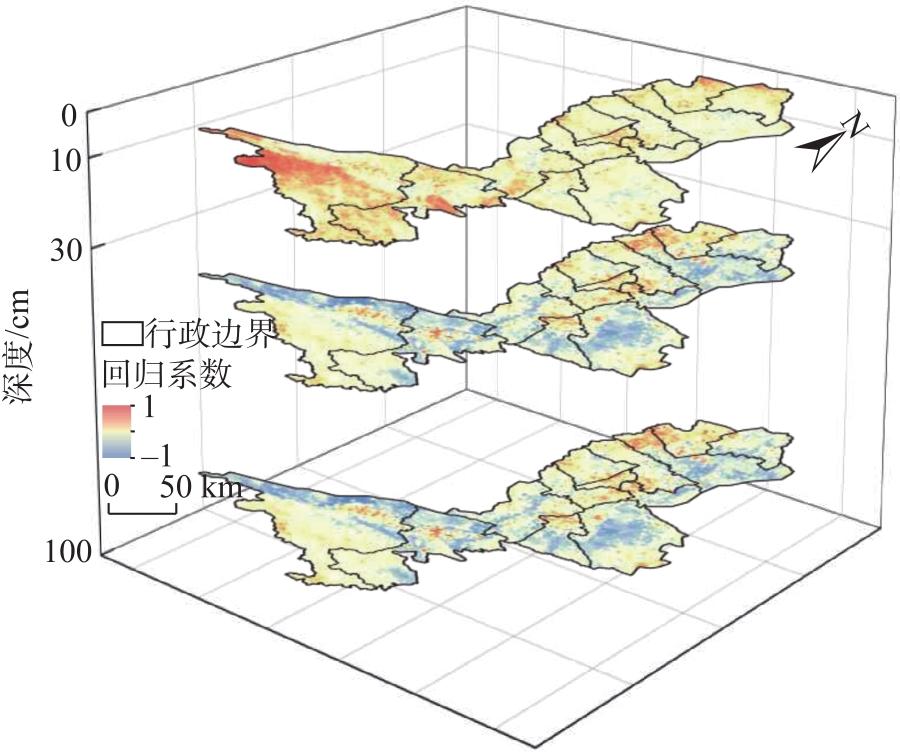
In the oases at the eastern foothill of Helan Mountains, Ningxia, China, known as the “Jiangnan on the Frontier”, soil moisture is a critical limiting factor affecting ecological preservation and high-quality socio-economic development. Based on soil moisture data from ten layers (0-100 cm), multidimensional analyses were conducted on the spatiotemporal distribution, evolution characteristics, and influencing factors of soil moisture deficit in this region using methods such as spatiotemporal trend analysis and partial regression analysis. This approach enhances the understanding of the correlation and interactive effects of soil moisture changes at different depths. The results indicated that the degree of soil moisture deficit in various layers had intensified over the past 20 years. As soil depth increased, soil moisture in the northern and southern oases exhibited distinct multidimensional spatial distribution patterns: deficit-surplus-deficit-surplus-deficit and deficit-surplus-deficit, respectively. Additionally, they followed spatiotemporal evolution trends of wetting-drying-wetting and wetting-drying. The influences of precipitation (PRE) and vapor pressure deficit (VPD) on soil moisture across different layers gradually weakened, while the influence of temperature (TMP) first strengthened and then weakened, and the influence of the normalized difference vegetation index (NDVI) gradually increased. In summary, soil moisture at different depths and its influencing factors exhibited regular and multidimensional spatiotemporal variation patterns. The 0-10 cm layer was strongly positively influenced by PRE, whereas the 10-30 cm and 30-100 cm layers were significantly negatively affected by TMP and NDVI, respectively.
Ying HOU , Wenhui LIU , Yang CHU , Xiaojuan MA , Shiyu YAO , Tongxin NI . Spatio-temporal analysis of multi-layered soil moisture deficit and its influencing factors in the oases at the eastern foothill of Helan Mountains[J]. Arid Land Geography, 2025 , 48(4) : 649 -660 . DOI: 10.12118/j.issn.1000-6060.2024.242
表1 数据来源及预处理过程Tab. 1 Data sources and pre-processing process |
| 数据类型 | 数据来源 | 数据分辨率 | 数据预处理 |
|---|---|---|---|
| SMCI土壤水分 | 中国范围内1 km高质量土壤湿度数据集 (国家青藏高原科学数据中心,http://data. tpdc.ac.cn) | 日尺度;1 km×1 km;0~100 cm,10 cm 为间隔,共10个土层 | 由日值数据合并为年值数据 |
| ERA5土壤水分 | ERA5 Land数据集(https://cds.climate. copernicus.eu/datasets/reanalysis-era5-land- monthly-means?tab=overview) | 月尺度;0.1°×0.1°;4层土壤水分(0~ 7 cm,7~28 cm,28~100 cm,100~289 cm) | 由月值数据合并为年值数据,数据重采样至1 km×1 km |
| 降水量(PRE) | |||
| 气温(TMP) | |||
| 大气饱和水汽压差(VPD) | TerraClimate数据集(http://www.climato- logylab.org/terraclimate.html) | 月尺度;约0.04°×0.04° | 由月值数据合并为年值数据,数据重采样至1 km×1 km |
| 归一化植被指数(NDVI) | MODIS数据集(https://ladsweb.modaps. eosdis.nasa.gov/missions-and-measurements/products/MOD13A3) | 月尺度;1 km×1 km | 由月值数据合并为年值数据 |
表2 贺兰山东麓绿洲土壤水分及其影响因素的多维时空演变特征Tab. 2 Multi-dimensional spatio-temporal evolution characteristics of soil moisture and its influencing factors in the oases at the eastern foothill of Helan Mountains |
| 多维结构特征 及影响因素 | 绿洲北部的银川平原(随土层深度增加) | 绿洲南部的卫宁平原 (随土层深度增加) | |
|---|---|---|---|
| 银川平原北部 | 银川平原南部 | ||
| 多维空间结构 | 亏→盈→亏→盈→亏 | 亏→盈→亏 | |
| 多维时空演变结构 | 湿润化→干旱化→湿润化 | 湿润化→干旱化 | |
| PRE影响因素 | 强正向影响→弱负向影响 | 强正向影响→弱正向影响 | 较强正向影响→无影响 |
| TMP影响因素 | 弱正向影响→较强负向影响→无影响 | 较强正向影响→强负向影响→弱负向影响 | 弱正向影响→较强负向影响→无影响 |
| VPD影响因素 | 无影响或弱正向影响 | 较强负向影响→无影响 | 无影响或弱正向影响 |
| NDVI影响因素 | 较强正向影响→较强负向影响 | 弱正向影响→较强负向影响 | 弱正向影响→较强负向影响 |
| [1] |
|
| [2] |
|
| [3] |
|
| [4] |
|
| [5] |
|
| [6] |
|
| [7] |
赵亚楠, 于露, 周玉蓉, 等. 宁夏东部荒漠草原灌丛引入对土壤水分动态及亏缺的影响[J]. 生态学报, 2020, 40(4): 1305-1315.
[
|
| [8] |
张维福, 张呈春, 马思怡, 等. 宁夏河东沙地土壤水分动态变化[J]. 水土保持通报, 2024, 44(4): 97-106.
[
|
| [9] |
韩新生, 刘广全, 许浩, 等. 宁夏南部半干旱黄土区3种土地利用类型的土壤水分时空变化特征[J]. 水土保持学报, 2022, 36(6): 250-259.
[
|
| [10] |
吴振宗, 毕健, 高艺菲, 等. 近20 a中国中东部部分农业区土壤水分变化[J]. 兰州大学学报(自然科学版), 2022, 58(6): 774-781, 788.
[
|
| [11] |
董金义, 罗敏, 孟凡浩, 等. 蒙古高原土壤水分时空格局演变特征分析[J]. 水土保持研究, 2024, 31(2): 110-121.
[
|
| [12] |
|
| [13] |
|
| [14] |
|
| [15] |
|
| [16] |
|
| [17] |
|
| [18] |
李轩, 过志峰, 吴门新, 等. 华北地区土壤水分的时空变化特征[J]. 应用生态学报, 2021, 32(12): 4203-4211.
[
|
| [19] |
|
| [20] |
|
| [21] |
张亚楠, 宋小宁, 冷佩, 等. 近20年黄河流域夏季土壤水分时空变化特征及驱动因素分析[J]. 中国科学院大学学报, 2024, 41(4): 477-489.
[
|
| [22] |
|
| [23] |
丁思聪, 邱博, 李倩. 不同土壤湿度产品对长江中下游极端气候事件响应过程分析[J]. 大气科学学报, 2024, 47(5): 701-712.
[
|
| [24] |
上官微, 李清亮, 石高松. 基于站点观测的中国1 km土壤湿度日尺度数据集(2000—2022)[DB/OL]. 国家青藏高原科学数据中心. https://cstr.cn/18406.11.Terre.tpdc.272415.
[
|
| [25] |
|
| [26] |
王征. 陕西省土壤湿度时空变化特征及其驱动力分析[J]. 城市勘测, 2023, 38(5): 71-76.
[
|
| [27] |
吴宏玥, 杜灵通, 乔成龙, 等. 基于蒸散演变驱动的宁夏绿洲平原生态系统耗水变化[J]. 水土保持学报, 2023, 37(3): 172-180, 189.
[
|
| [28] |
|
| [29] |
|
| [30] |
周洪奎, 武建军, 李小涵, 等. 基于同化数据的标准化土壤湿度指数监测农业干旱的适宜性研究[J]. 生态学报, 2019, 39(6): 2191-2202.
[
|
| [31] |
|
| [32] |
拉巴, 边巴次仁, 拉珍, 等. 青藏高原土壤水分时空变化特征及其与气候变化的关系研究[J]. 高原科学研究, 2023, 7(1): 1-8.
[Lhaba,
|
| [33] |
|
| [34] |
|
| [35] |
成龙, 吴波, 贾晓红, 等. 基于连续观测数据的毛乌素沙地生长季土壤水分动态及其对降雨的响应[J]. 干旱区地理, 2024, 47(4): 648-661.
[
|
| [36] |
|
| [37] |
|
| [38] |
|
| [39] |
滕健, 常军, 翟永波, 等. 黄淮海平原NDVI的时空变化特征及其对地表水储量的响应[J/OL]. 西安理工大学学报.[2024-10-17]. http://kns.cnki.net/kcms/detail/61.1294.N.20241017.1510.006.ht-ml.
[
|
| [40] |
|
| [41] |
於嘉禾, 王卫光, 陈泽峰. 全球旱地饱和水汽压差和根区土壤水分变化对植被生产力的影响及其成因[J]. 生态学报, 2024, 44(11): 4808-4819.
[
|
| [42] |
|
| [43] |
|
| [44] |
|
| [45] |
侯迎, 黄欣慧, 褚阳, 等. 黄河“几字弯”大气水分亏缺及其影响因素的时空变化特征[J]. 中国环境科学, 2025, 45(2): 637-647.
[
|
/
| 〈 |
|
〉 |