



Spatial structure and influencing factors of public cultural facilities in Inner Mongolia based on POI data
Received date: 2024-04-11
Revised date: 2024-06-12
Online published: 2026-03-11
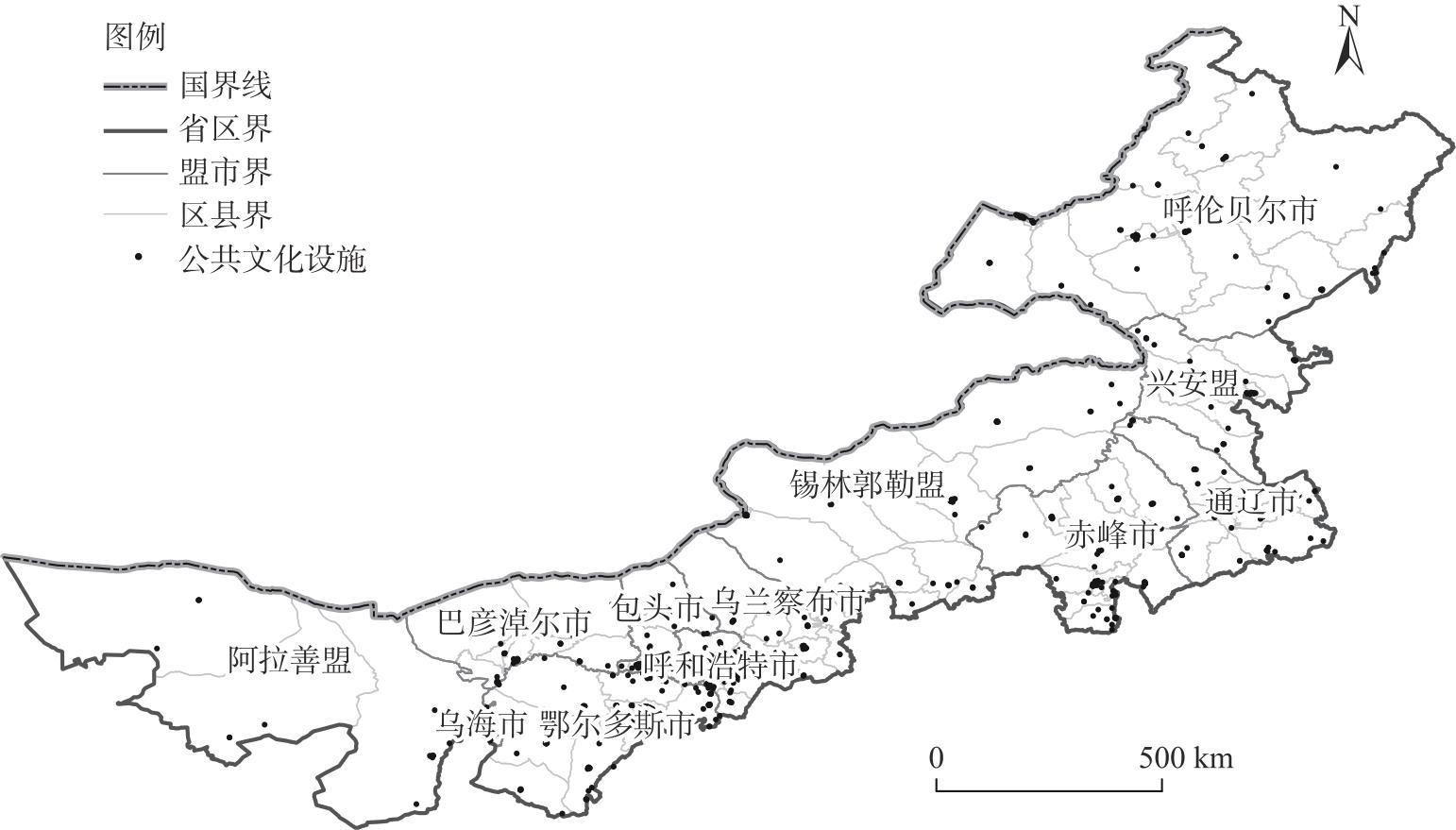
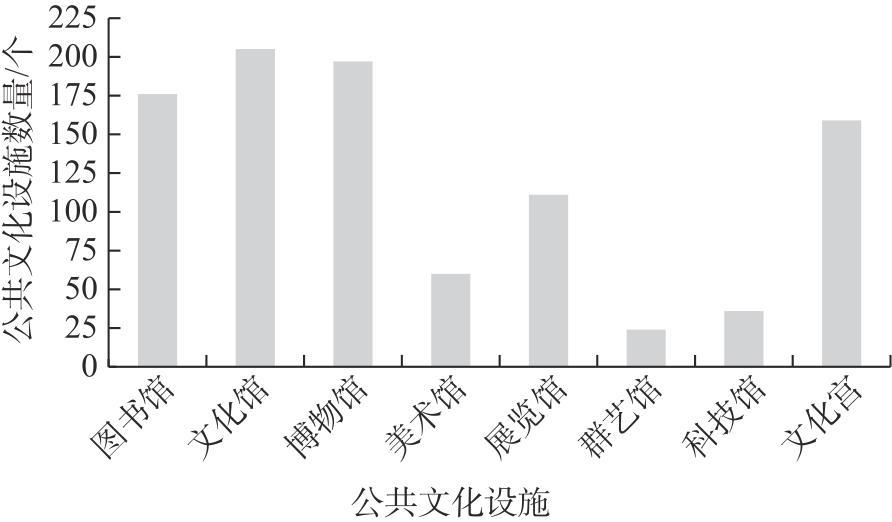
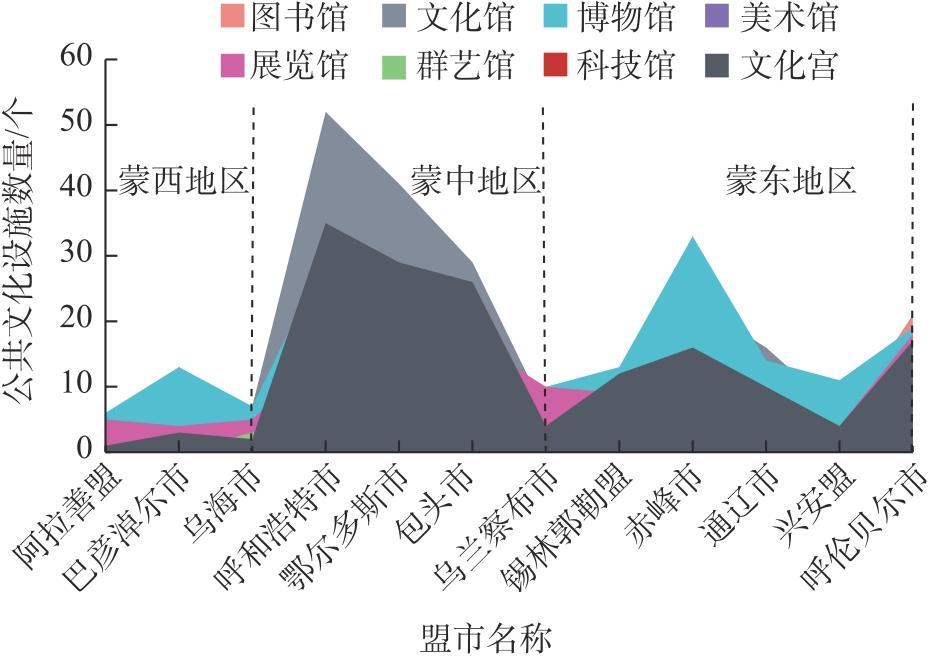
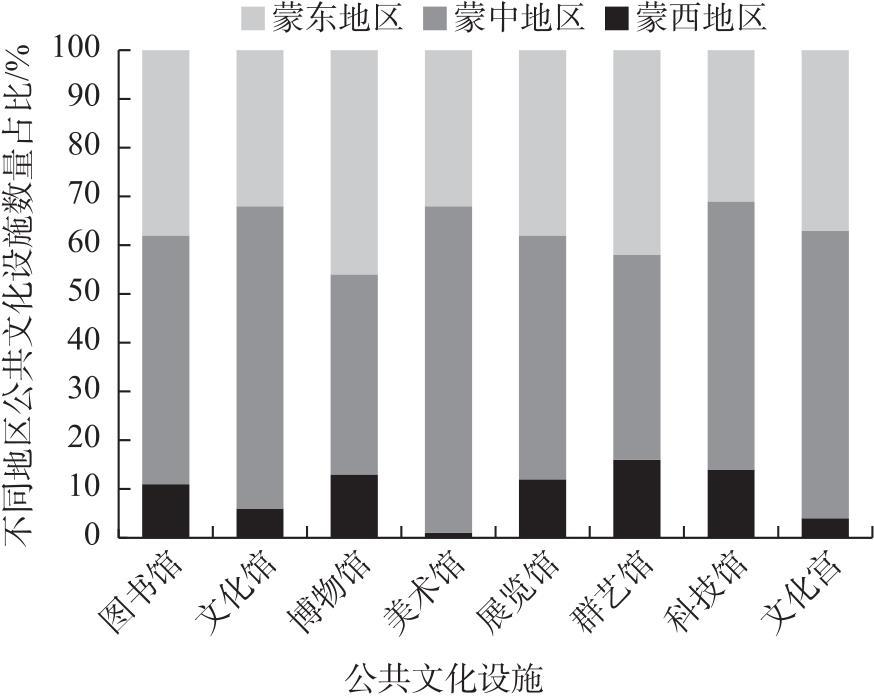
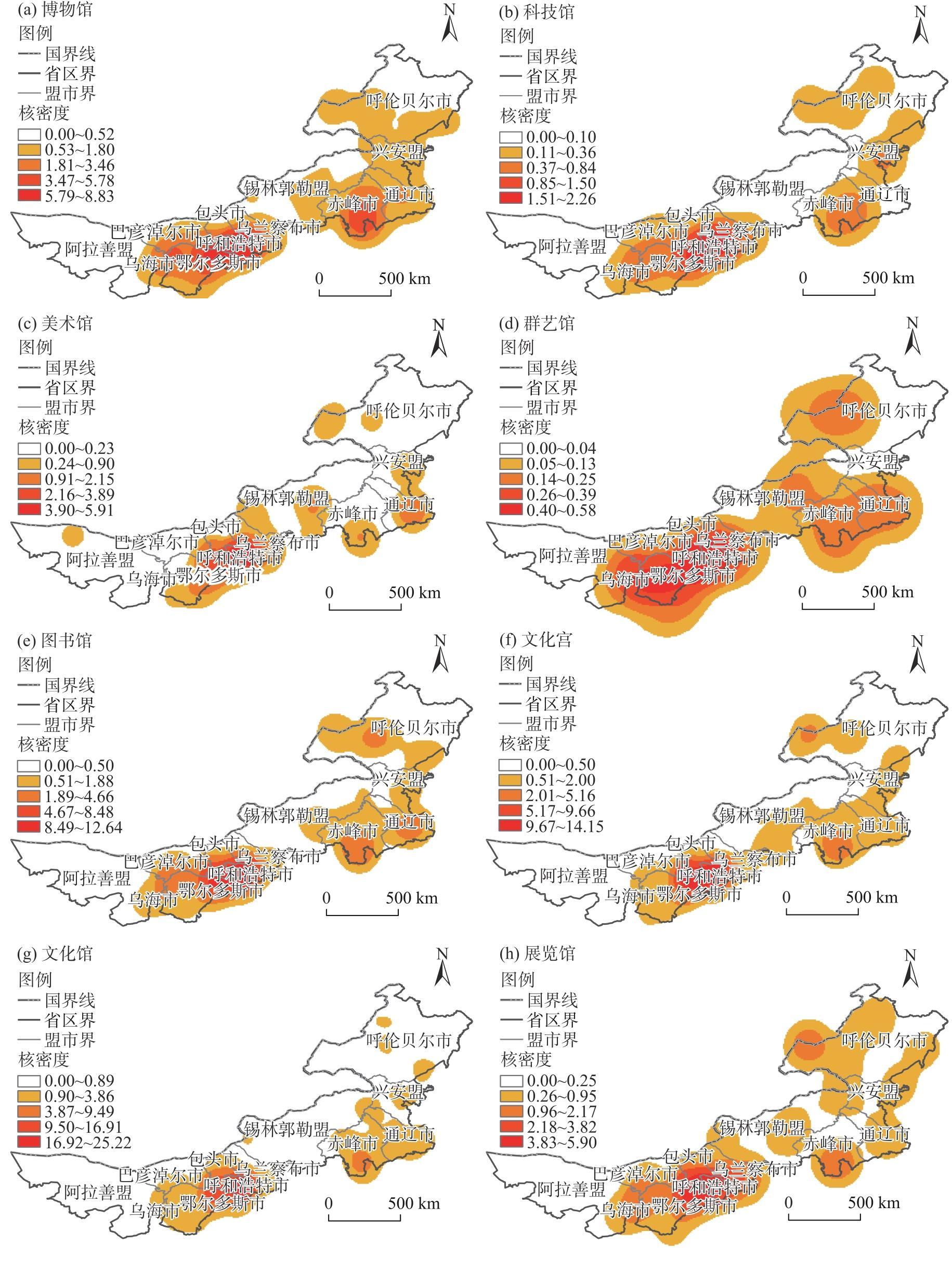
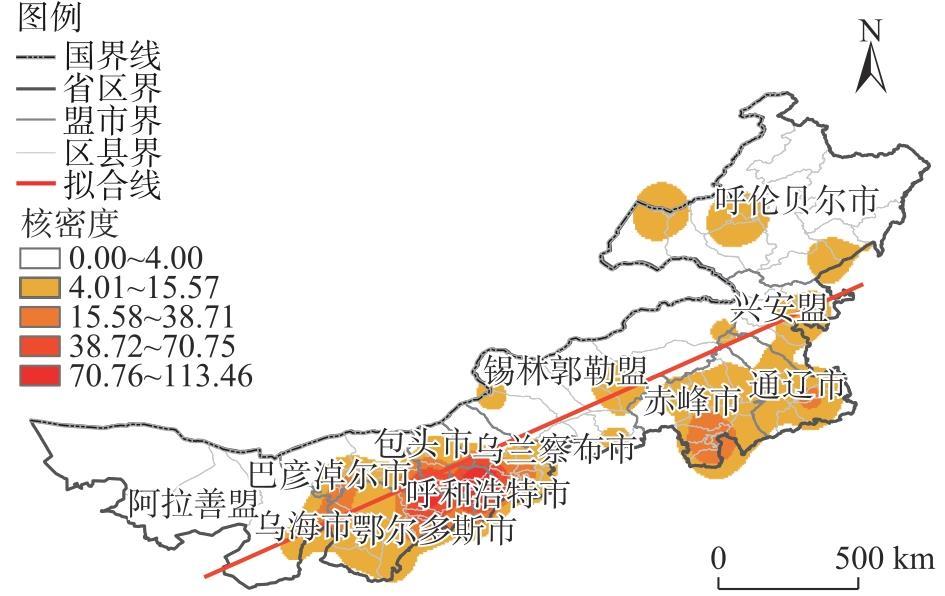
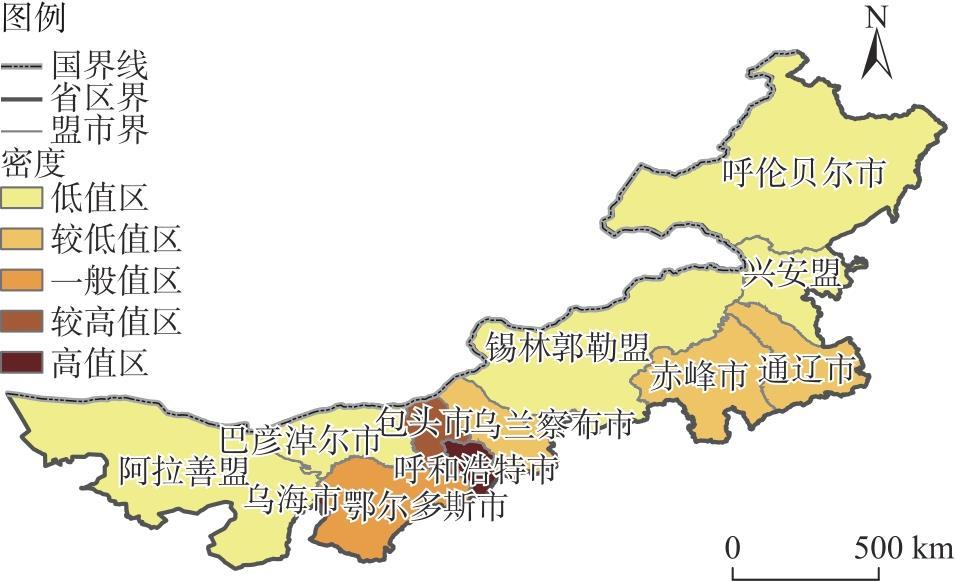
Scientific planning of public cultural facility layouts is essential for enhancing public cultural service systems and addressing the population’s demand for a high-quality spiritual life. Utilizing point-of-interest (POI) data and the ArcGIS 10.8 software platform, this study employs methods such as mathematical statistics, nearest neighbor index, kernel density estimation, and geographical detectors to analyze the spatial structure and influencing factors of public cultural facilities in Inner Mongolia of China across multiple scales. The results indicate the following: (1) At the provincial scale, public cultural facilities are unevenly distributed, exhibiting significant gaps and clustering patterns across various facility types. High-density areas are concentrated in the south, while low-density areas dominate the north, with the “Alagxa Left Banner-Jalaid Banner” line serving as a demarcation. (2) At the regional scale, distributions in west, central, and east Mongolia are clustered, displaying pronounced inequities. Central Mongolia surpasses east and west Mongolia significantly in the number and density of public cultural facilities. (3) At the league and city scale, facility numbers vary markedly, with the “Hohhot-Baotou-Ordos” region demonstrating a high degree of clustering, followed by Wuhai, Ulanqab, and Bayannur cities. Clustering diminishes slightly in Chifeng City, Tongliao City, and Hinggan League and is even weaker in Xilin Gol League and Hulun Buir City. Alagxa League displays a scattered distribution. (4) The spatial structure of public cultural facilities in Inner Mongolia arises from the synergistic interactions of economic, cultural, social, and natural factors. These interactions generate nonlinear enhancement or dual-factor enhancement effects, producing outcomes where “1+1>2”.
Key words: public cultural facilities; POI data; spatial structure; Inner Mongolia
Yajuan YU . Spatial structure and influencing factors of public cultural facilities in Inner Mongolia based on POI data[J]. Arid Land Geography, 2025 , 48(3) : 528 -538 . DOI: 10.12118/j.issn.1000-6060.2024.225
表1 内蒙古不同类型公共文化设施平均最近邻指数Tab. 1 Average nearest neighbor index of different types of public cultural facilities in Inner Mongolia |
| 分布类型 | 平均最近邻指数 | Z得分 | P值 |
|---|---|---|---|
| 博物馆 | 0.3702 | -165.9097 | 0.0000 |
| 科技馆 | 0.6472 | -4.0501 | 0.0001 |
| 美术馆 | 0.4980 | -7.4396 | 0.0000 |
| 群艺馆 | 0.6206 | -3.5555 | 0.0004 |
| 图书馆 | 0.3613 | -16.2089 | 0.0000 |
| 文化宫 | 0.3770 | -15.0279 | 0.0000 |
| 文化馆 | 0.4556 | -14.9133 | 0.0000 |
| 展览馆 | 0.4148 | -11.7946 | 0.0000 |
| 总数 | 0.1980 | -47.7341 | 0.0000 |
注:P值表示概率;Z得分表示临界值。 |
表2 内蒙古公共文化设施影响因素测量指标体系及探测结果Tab. 2 Measurement indicator system and detection results of influencing factors of public cultural facilities in Inner Mongolia |
| 分析框架 | 具体指标 | 指标释义 | q值 | 解释力排序 |
|---|---|---|---|---|
| 经济 | GDP(X1) | 表征经济规模和增长情况 | 0.71*** | 1 |
| 第三产业GDP占比(X2) | 表征经济结构和发展水平 | 0.25*** | 9 | |
| 人均可支配收入(X3) | 表征居民消费能力 | 0.31*** | 8 | |
| 公共预算收入(X4) | 表征政府财政收入状况 | 0.59*** | 3 | |
| 夜间灯光数据(X5) | 表征经济活跃程度 | 0.41*** | 6 | |
| 社会 | 年末户籍人口(X6) | 表征人口规模 | 0.18** | 12 |
| 公路里程(X7) | 表征交通基础设施情况 | 0.23*** | 10 | |
| 行政区面积(X8) | 表征行政区划大小 | 0.08* | 15 | |
| 城镇化率(X9) | 表征社会发展程度 | 0.19*** | 11 | |
| 文化 | 中小学校数(X10) | 表征全民教育程度 | 0.34*** | 7 |
| 影剧院数(X11) | 表征文化产业的发展状况 | 0.55*** | 4 | |
| 文体娱乐业就业人数(X12) | 表征文化活力和多样性 | 0.68*** | 2 | |
| 平均受教育年限(X13) | 表征教育发展水平 | 0.41*** | 5 | |
| 自然 | 建成区绿化覆盖率(X14) | 表征居民生活环境质量 | 0.16*** | 13 |
| PM2.5(X15) | 表征空气污染水平 | 0.14** | 14 | |
| 污水处理率(X16) | 表征居民生活环境质量 | 0.08 | - | |
| 平均降水量(X17) | 表征人居环境气候条件 | 0.03 | - |
注:q值为解释力;***、**、*分别表示通过0.01、0.05、0.1的显著性检验;“-”表示q值未通过显著性检验。 |
| [1] |
邹胜男, 陈世香. 体制内委托经营: 公共文化服务设施治理机制创新[J]. 图书馆论坛, 2019, 39(9): 48-54, 63.
[
|
| [2] |
|
| [3] |
|
| [4] |
|
| [5] |
|
| [6] |
|
| [7] |
|
| [8] |
|
| [9] |
|
| [10] |
|
| [11] |
段成荣, 谭砢. 城市公共文化设施规划研究——宁波城市新区公共文化设施规划案例[J]. 人口研究, 2002(6): 55-62.
[
|
| [12] |
孟华. 探求历史文化街区市政基础设施规划提升改造之路——以嘉定西大街改造区为例[J]. 上海城市规划, 2016(3): 114-117.
[
|
| [13] |
刘玉宝, 李慧嘉. 客家传统村落的公共文化设施研究[J]. 包装工程, 2022, 43(2): 346-351.
[
|
| [14] |
孟晓雪. 我国公共文化设施运营机制研究[J]. 图书馆学刊, 2021, 43(7): 46-49.
[
|
| [15] |
李金珊, 徐越. 基层公共文化基础设施政策绩效及其制度因素探究——以浙江省农家书屋为例[J]. 东北大学学报(社会科学版), 2014, 16(5): 511-516, 538.
[
|
| [16] |
李锦兰, 杨小凤. 公众对公共文化服务体系认知现状的调查与分析[J]. 图书馆研究, 2015, 45(5): 111-115.
[
|
| [17] |
夏雅琴, 江家慧. 公共设施与城市文化基因传承[J]. 江西社会科学, 2021, 41(10): 246-253.
[
|
| [18] |
邵菁菁. 浅析美术馆建筑的选址与空间布局[J]. 中国博物馆, 2019(3): 125-130.
[
|
| [19] |
李细归, 肖鹏南, 吴清, 等. 中国公共图书馆时空格局演变及影响因素研究[J]. 人文地理, 2019, 34(1): 140-150.
[
|
| [20] |
谢秋逸, 常直杨. 江苏省公共文化设施空间结构及驱动因素——从数量统计到效能评价[J]. 南京师大学报(自然科学版), 2023, 46(4): 50-59.
[
|
| [21] |
赵诗童, 张文新. 北京市公共文化设施分布特征及可达性[J]. 城市发展研究, 2020, 27(6): 7-12.
[
|
| [22] |
徐雯雯, 胡雪薇. 基于GIS和启发式算法的公共服务设施选址优化研究[C]// 中国城市规划学会. 人民城市, 规划赋能——2022中国城市规划年会论文集(07城市设计). 北京: 中国城市规划学会, 2023: 10.
[
|
| [23] |
王立平, 张直. 论乡村振兴背景下公共文化服务体系建设——以内蒙古自治区奈曼旗为例[J]. 内蒙古民族大学学报(社会科学版), 2023, 4(4): 22-27.
[
|
| [24] |
于亚娟. 内蒙古公共文化服务设施空间分布及影响因素[J]. 边疆经济与文化, 2024(2): 11-14.
[
|
| [25] |
宁静, 朱冉, 张馨元, 等. 内蒙古区县城市韧性评价与分析[J]. 干旱区地理, 2023, 46(7): 1217-1226.
[
|
| [26] |
王芳, 高晓路. 内蒙古县域经济空间格局演化研究[J]. 地理科学, 2014, 34(7): 818-824.
[
|
| [27] |
中国政府网. 公共文化体育设施条例[EB/OL]. [2024-05-20]. https://www.gov.cn/test/2005-06/28/content_10719.htm.
[China Government Website. Regulations on public cultural and sports facilities[EB/OL]. [2024-05-20]. https://www.gov.cn/test/2005-06/28/content_10719.htm. ]
|
| [28] |
|
| [29] |
尹海伟, 孔繁花. 城市与区域规划空间分析实验教程[M]. 南京: 东南大学出版社, 2014: 200-201.
[
|
| [30] |
王劲峰, 徐成东. 地理探测器: 原理与展望[J]. 地理学报, 2017, 72(1): 116-134.
[
|
| [31] |
杨雨, 宋福铁, 张杰. 基于地理探测器的中国金融网络空间结构特征及影响因素研究[J]. 干旱区地理, 2023, 46(9): 1524-1535.
[
|
| [32] |
李国新. “十四五”时期公共图书馆高质量发展思考[J]. 图书馆论坛, 2021, 41(1): 12-17.
[
|
| [33] |
项琳. 国家文化惠民工程在全面建成小康社会中的成就、贡献与经验[J]. 图书馆论坛, 2021, 41(12): 29-34.
[
|
| [34] |
李少惠, 张玉强. 文化多样性、经济增长对公共文化服务均等化的影响——基于空间计量模型的实证检验[J]. 图书馆学研究, 2020(1): 33-41.
[
|
| [35] |
包思勤. 内蒙古在高质量发展中促进共同富裕的实践路径研究[J]. 内蒙古社会科学, 2022, 43(11): 186-192.
[
|
| [36] |
腾讯网. 2022年内蒙古各市GDP和人均GDP, 鄂尔多斯突破5000亿[EB/OL].[2024-04-18]. https://new.qq.com/rain/a/20230228A07TO700.
[Tencent News. 2022 GDP and per capita GDP of cities in Inner Mongolia, Ordos breaks through 500 billion[EB/OL].[2024-04-18]. https://new.qq.com/rain/a/20230228A07TO700. ]
|
| [37] |
张晓虹. 陕西文化区划及其机制分析[J]. 人文地理, 2000, 15(3): 17-21.
[
|
| [38] |
廖嘉妍, 张景秋. 基于POI数据的北京城市文化设施空间分布特征研究[J]. 北京联合大学学报, 2020, 34(1): 23-33.
[
|
| [39] |
张艺炜, 邓三鸿, 孔嘉, 等. 中国公共文化服务建设的时空分异与影响因素研究[J]. 图书馆建设, 2021(6): 165-174, 183.
[
|
| [40] |
吴浩然, 吴祁宗. 地方财政公共文化服务支出的效率评价——基于三阶段DEA窗口模型[J]. 数学的实践与认识, 2017, 47(3): 74-83.
[
|
/
| 〈 |
|
〉 |