



Simulation of urban expansion and its response to ecological resilience of typical oases in the Yellow River Basin
Received date: 2024-04-08
Revised date: 2024-07-04
Online published: 2026-03-11
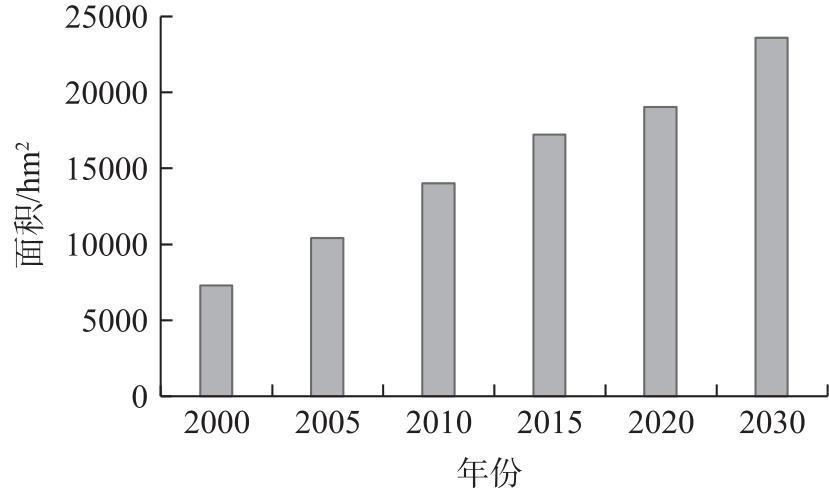
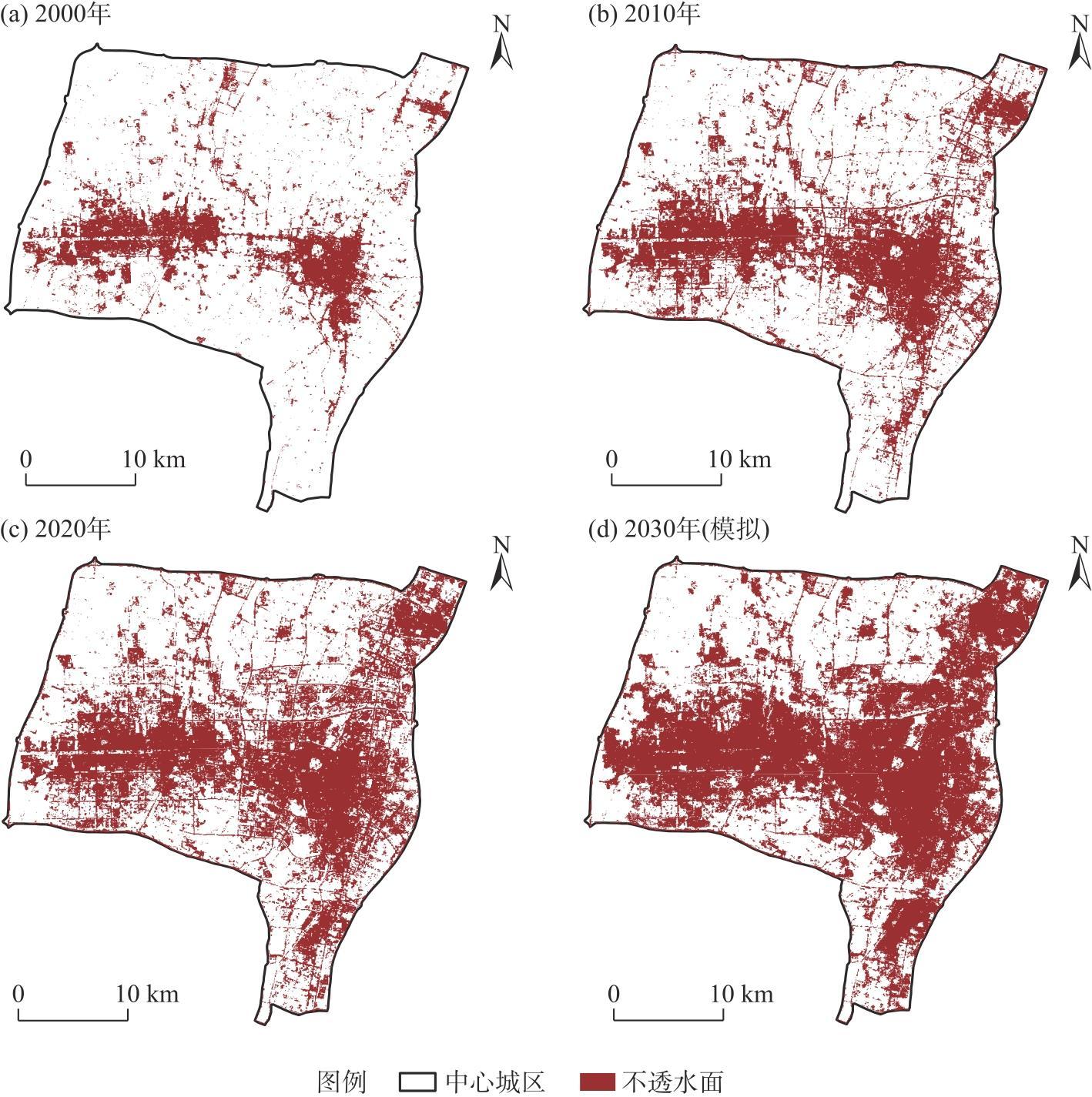
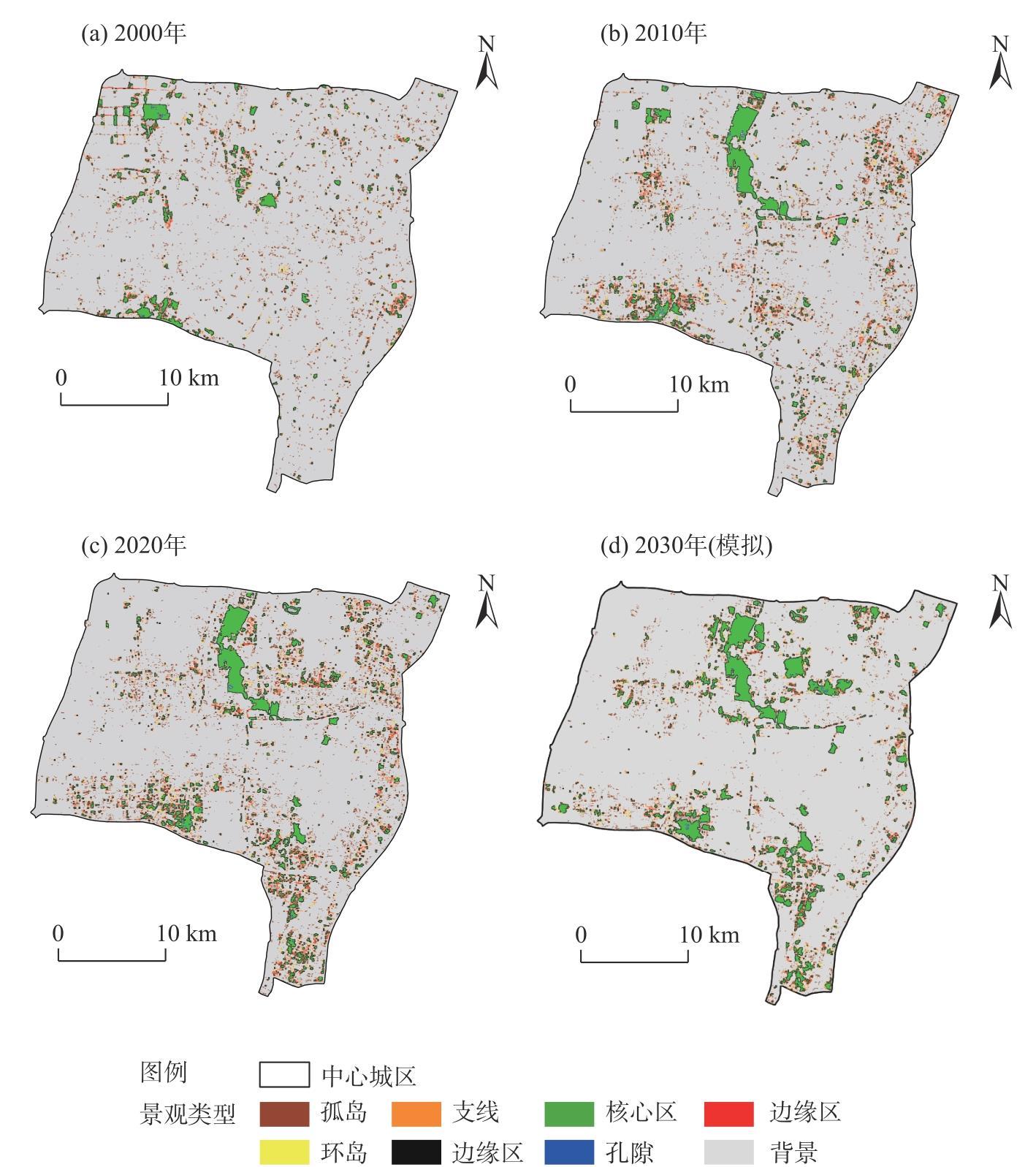
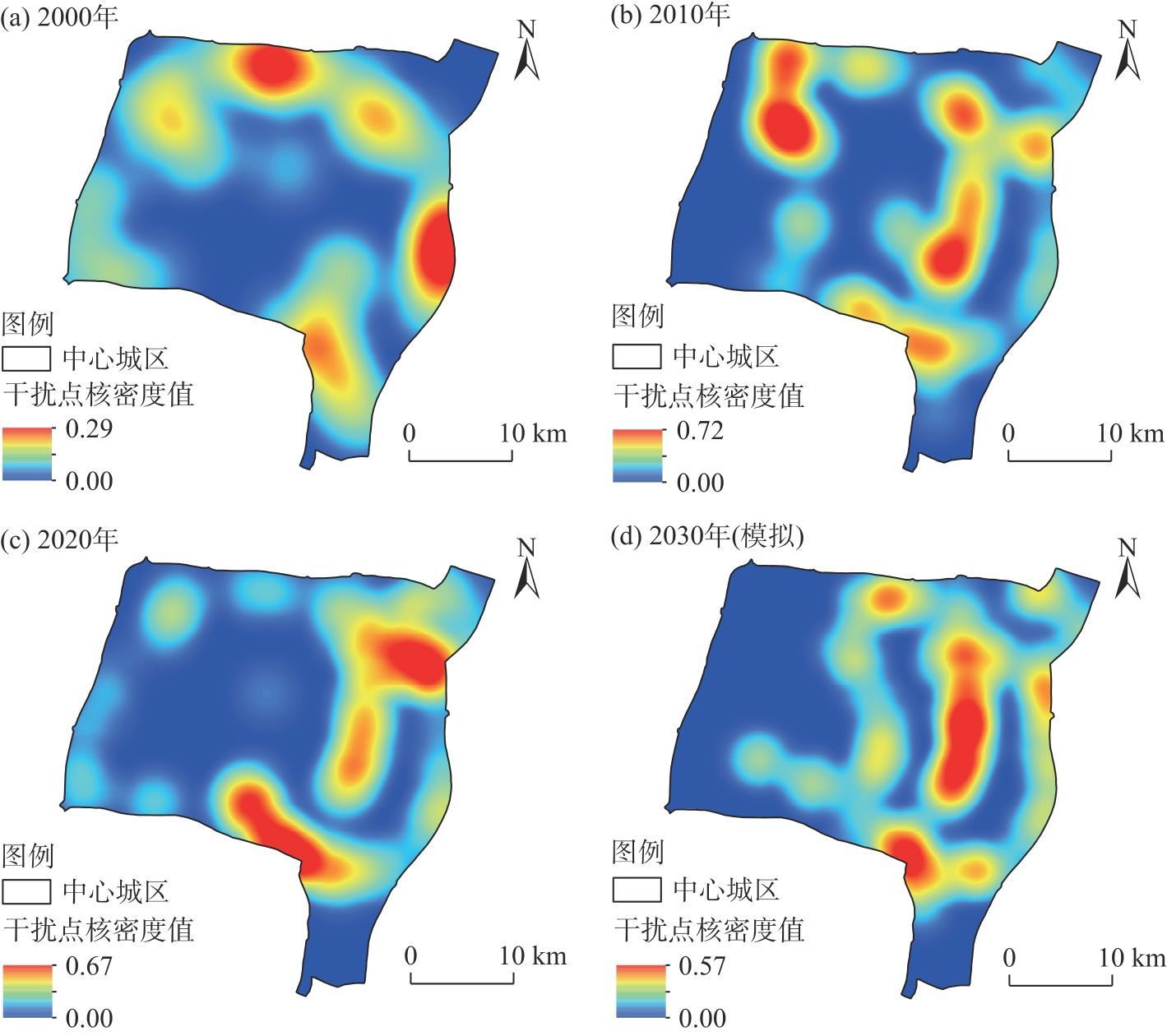
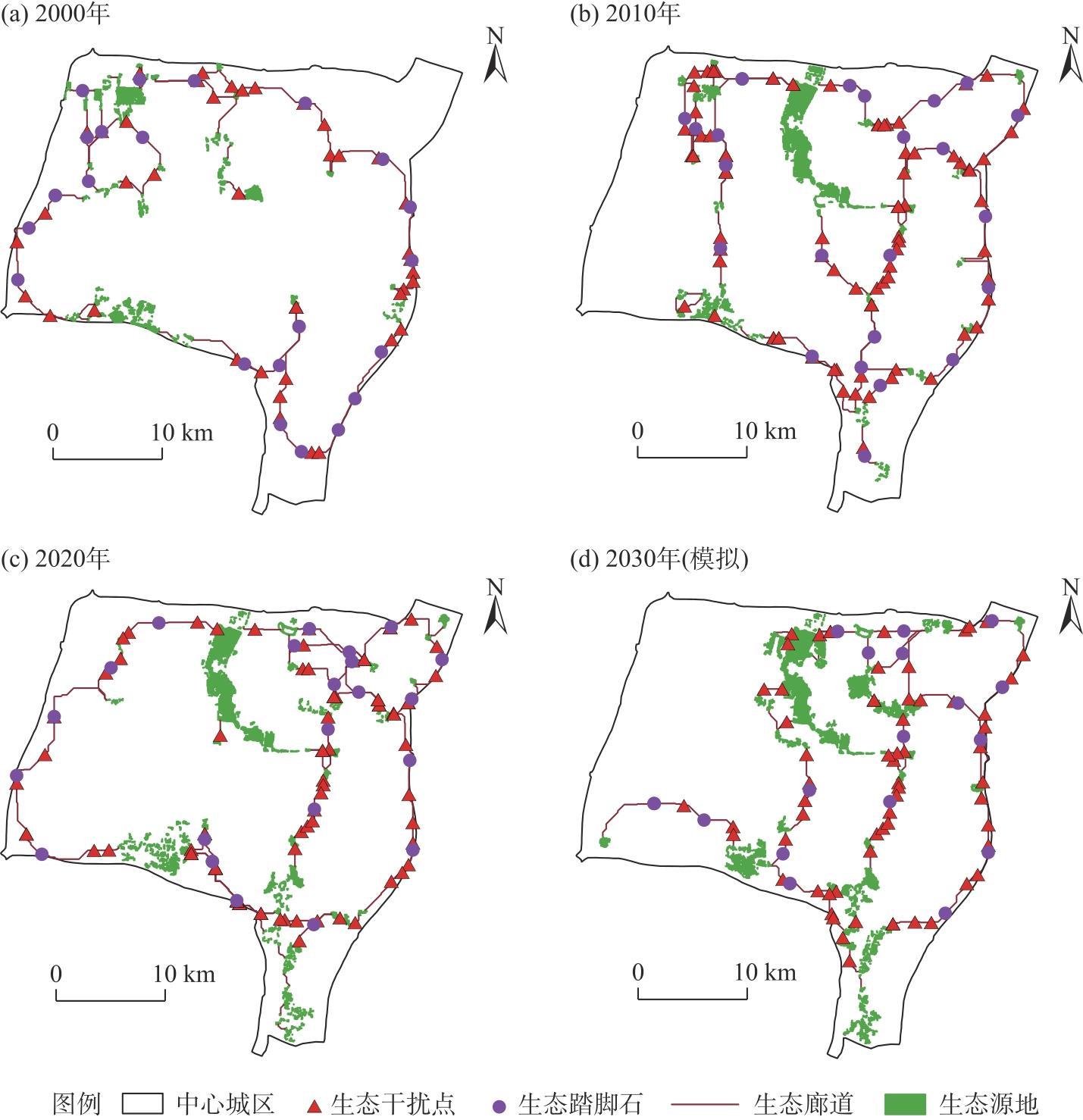
Establishing a robust ecological network is essential for enhancing urban ecological resilience. Using the central urban area of Yinchuan City, a representative oasis city in the Yellow River Basin of China, as a case study, changes in the urban ecological network and its resilience responses to impervious surface expansion were simulated and analyzed using the PLUS model. The results indicate the following: (1) Rapid expansion of impervious surfaces has occurred in central Yinchuan City. The impervious surface area in 2020 expanded to be 2.61 times larger than that in 2000, and by 2030, the area is projected to be 3.24 times larger than in 2000. The spatial pattern of impervious surfaces evolved from an east-west longitudinal “一” pattern to a rightward-tilting “T” pattern, with further strengthening of this horizontal “T” pattern by 2030. (2) With the expansion of impervious surfaces, the ecological network pattern in the central urban area has undergone substantial changes. In 2000, a single-ring ecological network was observed around the urban fringe. By 2020, the outer ring expanded westward, and the inner ring shifted northward, forming a more intricate circuit in the northeastern sector. Simulations predict that by 2030, the ecological network will exhibit a “川” structure. (3) Both structural and functional resilience of the ecological network have improved. Between 2000 and 2020, the α, β, and γ indices increased by 0.09, 0.17, and 0.06, respectively, while network dissemination and diversity rose by 0.08 and 0.29, respectively. By 2030, further enhancements in structural and functional resilience are expected, though the overall resilience level will remain low.
Key words: oasis city; ecological networks; resilience; PLUS model; Yellow River Basin
Yuanyuan LIU , Caihong MA , Liya MA . Simulation of urban expansion and its response to ecological resilience of typical oases in the Yellow River Basin[J]. Arid Land Geography, 2025 , 48(3) : 506 -516 . DOI: 10.12118/j.issn.1000-6060.2024.219
表1 阻力因子赋值及权重Tab. 1 Assignment and weights of resistance factors |
| 阻力因子 | 分级指标 | 阻力值 | 权重 |
|---|---|---|---|
| 土地利用 | 林地 | 10 | 0.2264 |
| 草地 | 20 | ||
| 水体 | 30 | ||
| 耕地 | 70 | ||
| 未利用地 | 100 | ||
| 建设用地 | 150 | ||
| NDVI | [-0.260, -0.038) | 150 | 0.2854 |
| [-0.038, 0.112) | 110 | ||
| [0.112, 0.197) | 90 | ||
| [0.197, 0.289) | 60 | ||
| [0.289, 0.401) | 30 | ||
| [0.401, 0.609] | 10 | ||
| MSPA景观 | 核心区 | 10 | 0.1264 |
| 桥接区 | 20 | ||
| 环岛 | 30 | ||
| 支线 | 40 | ||
| 孤岛 | 50 | ||
| 边缘区 | 70 | ||
| 孔隙 | 90 | ||
| 背景 | 100 | ||
| 与道路的距离/m | [0, 100) | 200 | 0.0874 |
| [100, 200) | 140 | ||
| [200, 300) | 90 | ||
| [300, 400) | 50 | ||
| [400, 500) | 20 | ||
| ≥500 | 10 | ||
| 距居民点距离/m | ≥2000 | 10 | 0.120 |
| [1500, 2000) | 20 | ||
| [1000, 1500) | 40 | ||
| [500, 1000) | 70 | ||
| <500 | 110 | ||
| 与水体的距离/m | [0, 100) | 10 | 0.1544 |
| [100, 200) | 20 | ||
| [200, 300) | 40 | ||
| [300, 400) | 70 | ||
| [400, 500) | 110 | ||
| ≥500 | 160 |
注:NDVI为归一化植被指数;MSPA为形态学空间格局分析。 |
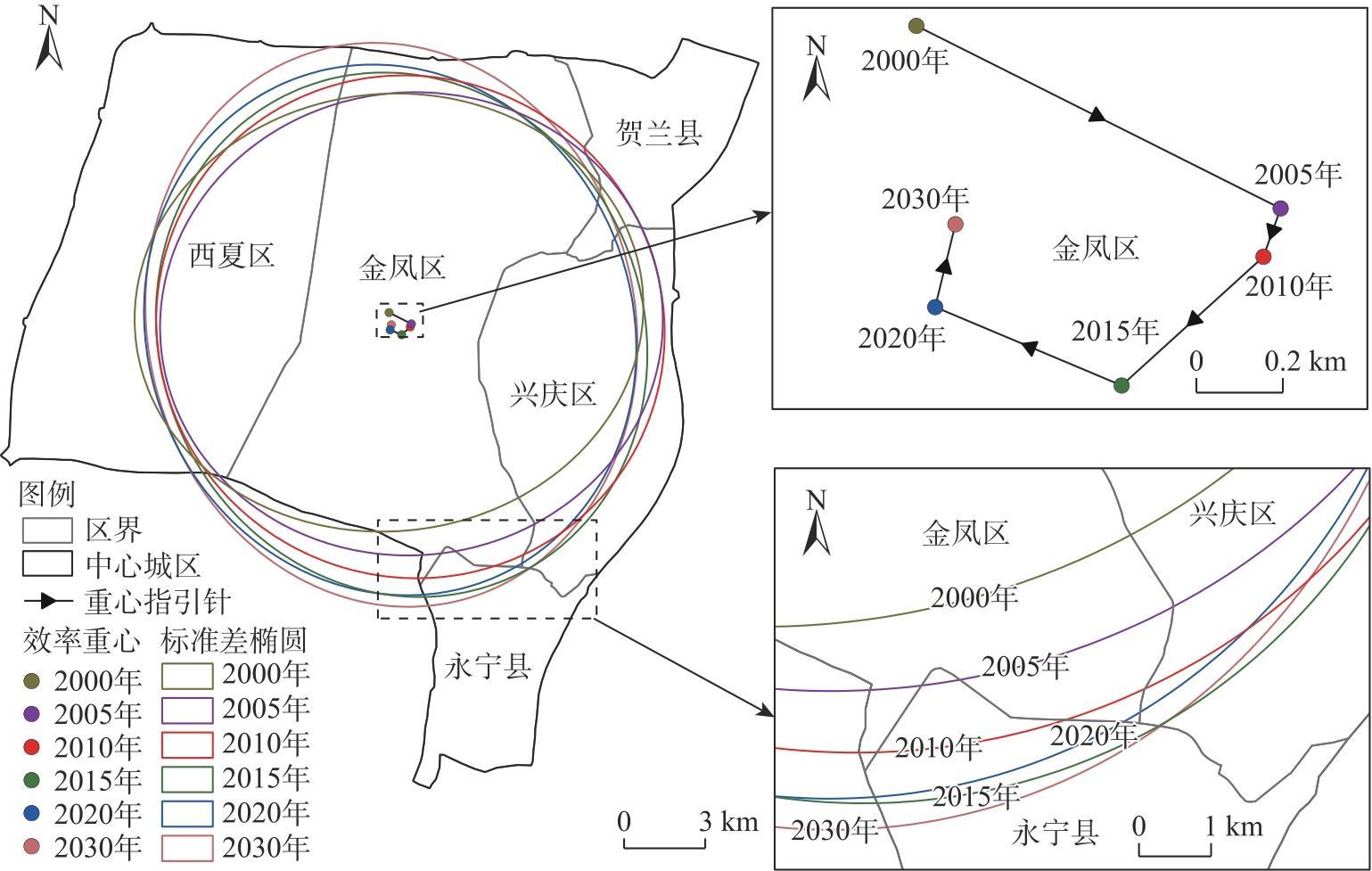
表2 2000—2030年银川市中心城区标准差椭圆参数变化统计Tab. 2 Statistics of standard deviation ellipse parameters in the central urban area of Yinchuan City from 2000 to 2030 |
| 参数 | 2000—2005年 | 2005—2010年 | 2010—2015年 | 2015—2020年 | 2020—2030年 |
|---|---|---|---|---|---|
| 椭圆长轴增减/km | 0.48 | 0.67 | 0.63 | 0.09 | 0.58 |
| 椭圆短轴增减/km | -0.12 | 0.18 | -0.56 | 0.04 | 0.04 |
| 直线距离/m | 940.57 | 125.19 | 446.14 | 911.66 | 200.21 |
| 重心迁移方向 | 东南方向 | 西南方向 | 西南方向 | 西北方向 | 东北方向 |
表3 优化前后的生态网络连接度指标比较Tab. 3 Comparison of ecological network connectivity indicators before and after optimization |
| 指标 | 2000年 | 2010年 | 2020年 | 2030年 |
|---|---|---|---|---|
| α指数 | 0.14 | 0.16 | 0.23 | 0.55 |
| β指数 | 1.21 | 1.26 | 1.38 | 1.89 |
| γ指数 | 0.44 | 0.45 | 0.50 | 0.71 |
表4 生态网络多样性及传播性Tab. 4 Diversity and transmissibility of ecological networks |
| 指标 | 2000年 | 2010年 | 2020年 | 2030年 |
|---|---|---|---|---|
| 网络传播性 | 0.32 | 0.37 | 0.40 | 0.41 |
| 网络多样性 | 1.25 | 1.52 | 1.54 | 1.58 |
| [1] |
|
| [2] |
|
| [3] |
杨亮洁, 张玲玲, 张芳宁, 等. 生态安全格局视角下黄土高原生态网络韧性研究[J]. 生态学报, 2024, 44(22): 10471-10485.
[
|
| [4] |
|
| [5] |
李红波, 黄悦, 高艳丽. 武汉城市圈生态网络时空演变及管控分析[J]. 生态学报, 2021, 41(22): 9008-9019.
[
|
| [6] |
|
| [7] |
金一诺, 黄银洲, 尤凤, 等. 基于Markov-PLUS模型的石羊河流域土地利用及生态系统服务价值模拟[J]. 干旱区资源与环境, 2024, 38(5): 130-139.
[
|
| [8] |
|
| [9] |
|
| [10] |
|
| [11] |
智菲, 周振宏, 赵铭, 等. 基于PLUS和InVEST模型的合肥市生态系统碳储量时空演变特征[J]. 水土保持学报, 2024, 38(2): 205-215.
[
|
| [12] |
徐海斌, 肖长江, 刘雅雯, 等. 基于PLUS模型的徐州市土地利用布局弹性空间模拟[J]. 资源科学, 2024, 46(1): 175-186.
[
|
| [13] |
吴榛, 张凯云, 王浩. 城市扩张情景模拟下绿地生态网络构建与优化研究——以南京市部分区域为例[J]. 中国园林, 2022, 38(4): 56-61.
[
|
| [14] |
李田田. 黄河流域城市韧性时空演变及影响因素研究[D]. 兰州: 兰州大学, 2023.
[
|
| [15] |
王想, 王春雨, 吕飞南, 等. 基于PLUS-InVEST模型的区县碳储量时空格局变化与碳汇提升策略——以延庆区为例[J]. 应用生态学报, 2023, 34(12): 3373-3384.
[
|
| [16] |
田一豆, 赵先超. 基于Markov-PLUS模型的长株潭城市群建设用地扩张模拟及碳排放响应分析[J]. 生态学报, 2024, 44(1): 129-142.
[
|
| [17] |
张艳, 李骏南, 潘博华. 基于PLUS模型的黄河流域生态系统服务评价及多情景预测——以陕西段为例[J]. 干旱区地理, 2024, 47(11): 1935-1946.
[
|
| [18] |
张廷, 胡玉柱, 胡海辉, 等. 基于PLUS-InVEST模型的哈尔滨市土地利用及生境质量预测[J]. 环境科学, 2024, 45(8): 4709-4721.
[
|
| [19] |
李琛, 高彬嫔, 吴映梅, 等. 基于PLUS模型的山区城镇景观生态风险动态模拟[J]. 浙江农林大学学报, 2022, 39(1): 84-94.
[
|
| [20] |
王兴丹, 刘普幸, 耿梦蝶, 等. 土地利用时空变化的关键驱动因子及其影响趋势——以武威市为例[J]. 中国环境科学, 2023, 43(12): 6583-6591.
[
|
| [21] |
|
| [22] |
马彩虹, 刘园园, 杨航, 等. 宁夏灵武市“生态-经济”双网格局演变及互作关系[J]. 应用生态学报, 2023, 34(11): 3095-3104.
[
|
| [23] |
和娟, 师学义, 付扬军. 基于生态系统服务的汾河源头区域生态安全格局优化[J]. 自然资源学报, 2020, 35(4): 814-825.
[
|
| [24] |
黄木易, 岳文泽, 冯少茹, 等. 基于MCR模型的大别山核心区生态安全格局异质性及优化[J]. 自然资源学报, 2019, 34(4): 771-784.
[
|
| [25] |
周英, 施成超, 刘滢, 等. 基于MSPA-MCR模型的云南德昂族乡景观生态安全格局构建[J]. 西南林业大学学报(社会科学), 2022, 6(1): 54-62.
[
|
| [26] |
孔阳, 王思元. 基于MSPA模型的北京市延庆区城乡生态网络构建[J]. 北京林业大学学报, 2020, 42(7): 113-121.
[
|
| [27] |
|
| [28] |
|
| [29] |
黄梅, 刘晨曦, 俞晓莹, 等. 城市水生态网络韧性评价与优化策略——以长沙市为例[J]. 经济地理, 2022, 42(10): 52-60.
[
|
| [30] |
吴一洲, 姚申益, 吴思琴, 等. 海岛城市生态安全格局构建与优化策略研究——以舟山本岛为例[J]. 长江流域资源与环境, 2022, 31(12): 2693-2705.
[
|
| [31] |
王正伟, 王宏卫, 杨胜天, 等. 基于生态系统服务功能的新疆绿洲生态安全格局识别及优化策略——以拜城县为例[J]. 生态学报, 2022, 42(1): 91-104.
[
|
| [32] |
|
/
| 〈 |
|
〉 |