



Citespace-based literature visualization analysis of the hotspots in the research on desertification prevention and control over the last 45 years and its future prospect
Received date: 2024-05-31
Revised date: 2024-11-28
Online published: 2026-03-11
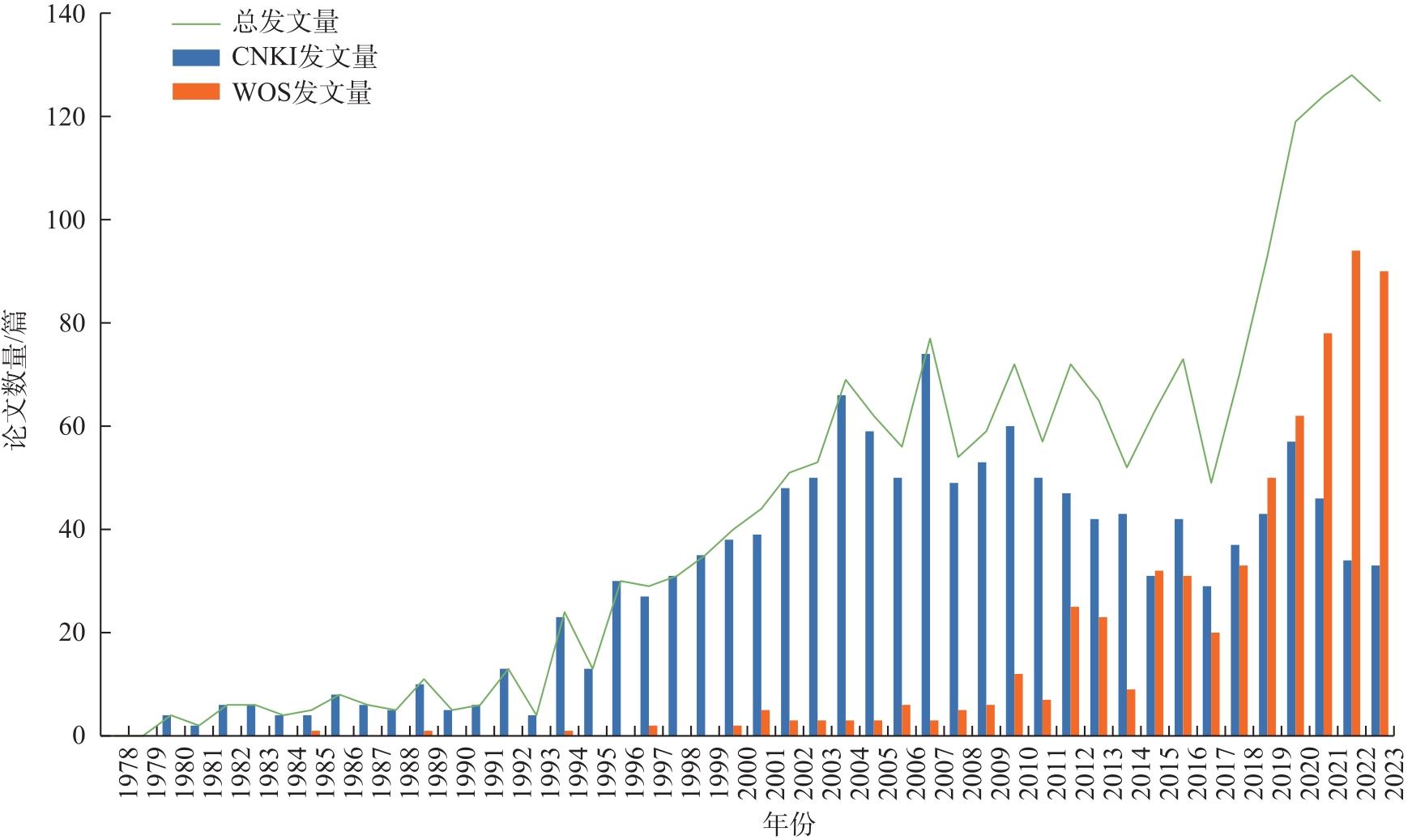
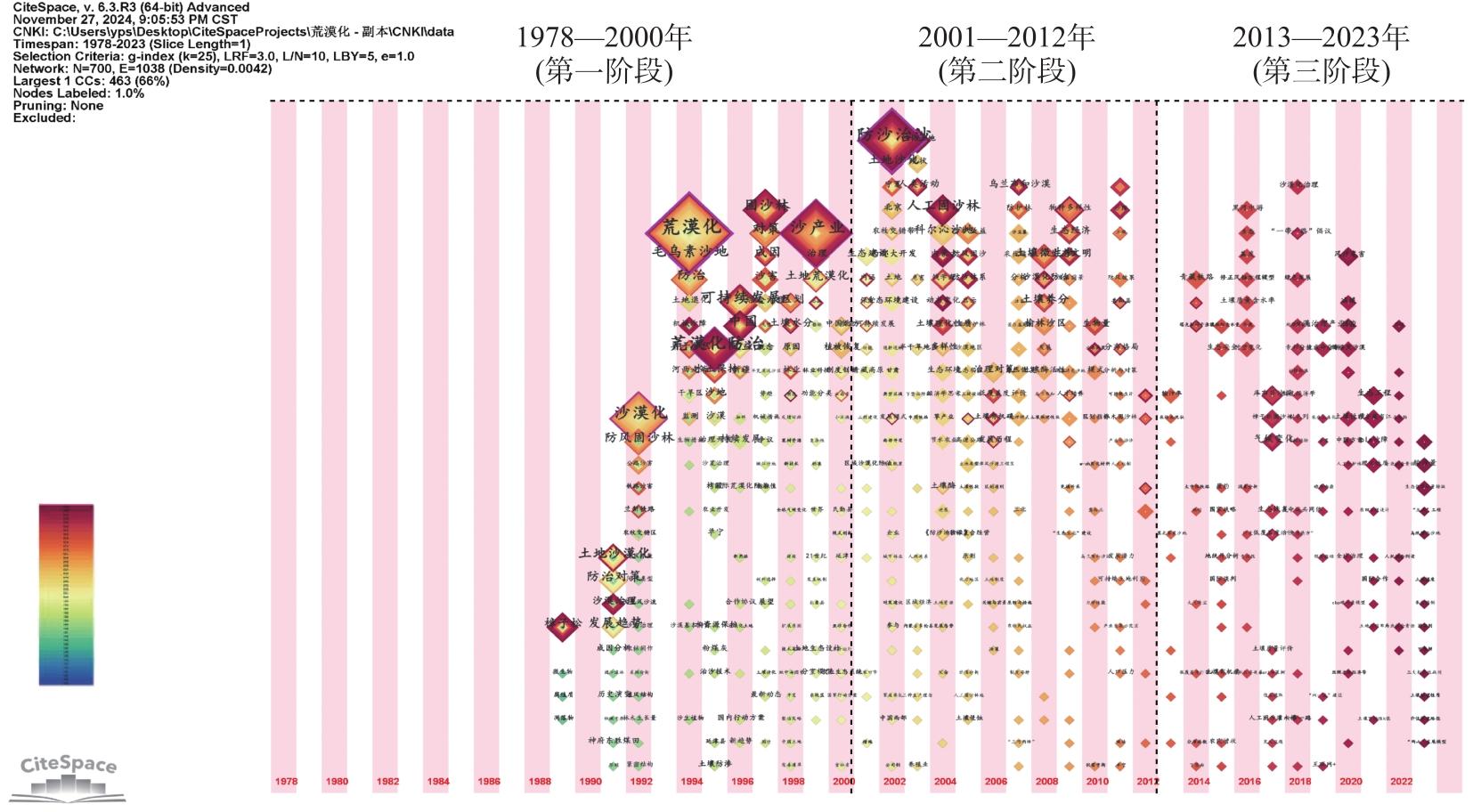
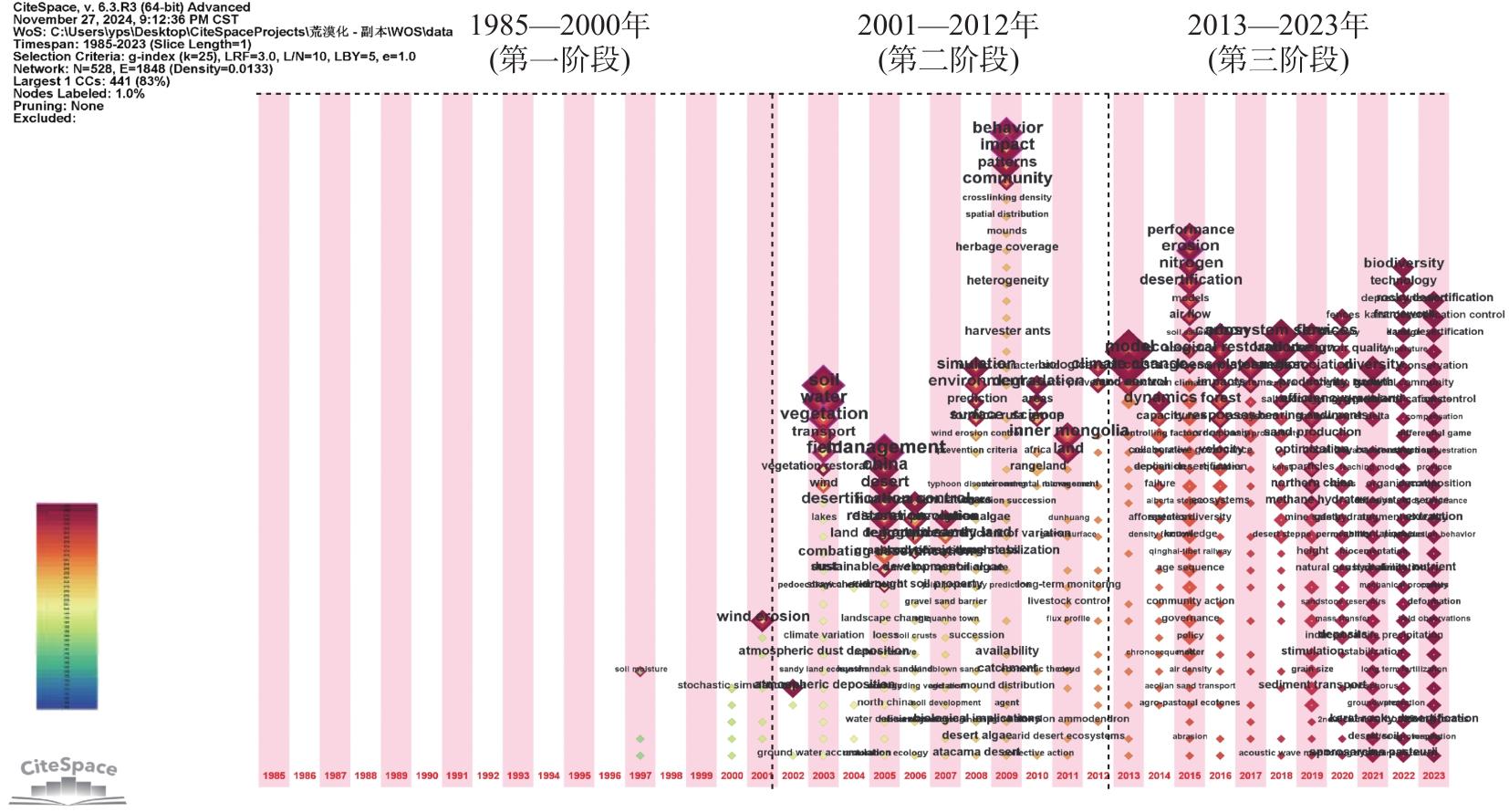
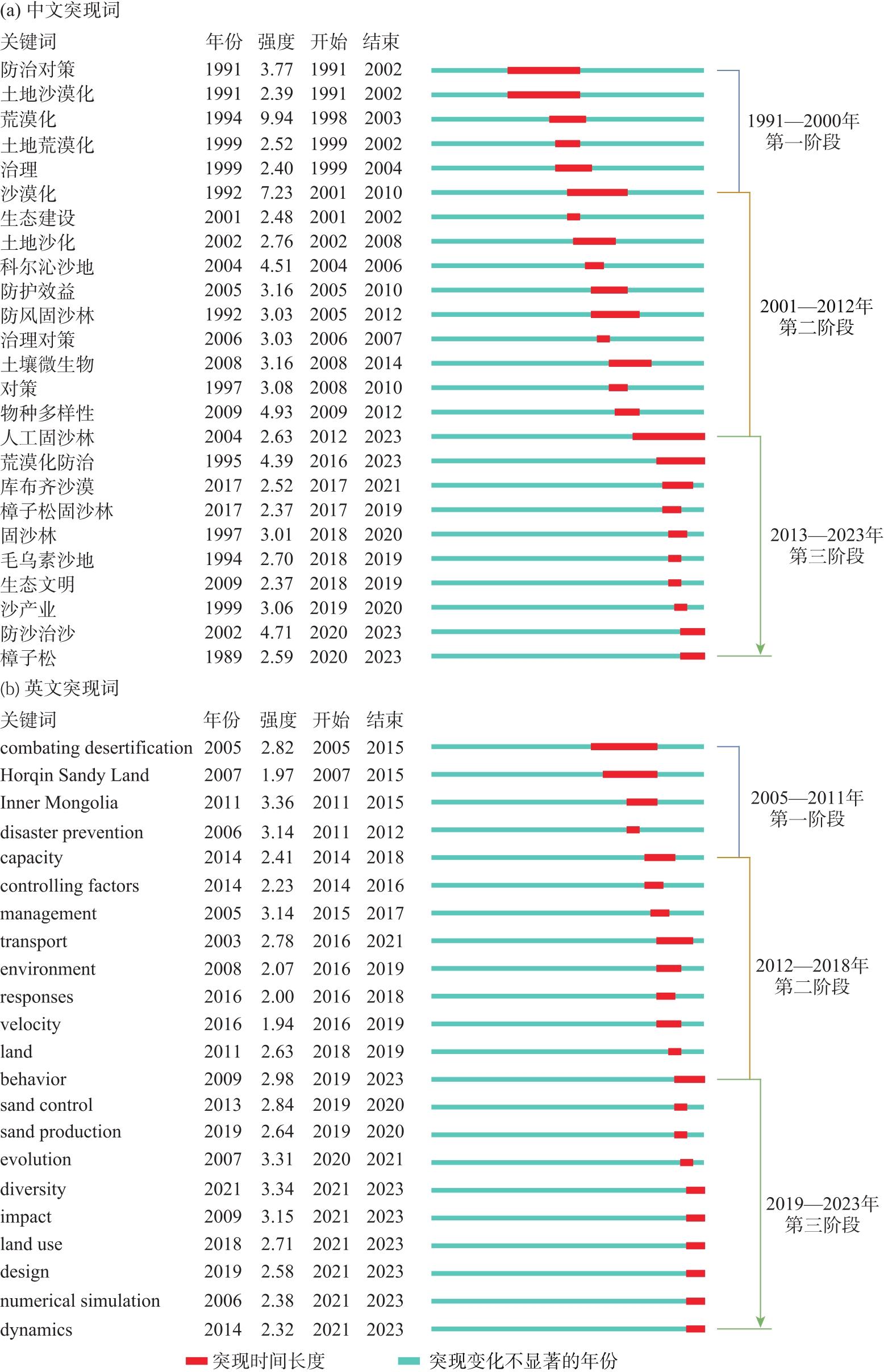
Desertification prevention and control is the main direction of implementation of China’s Three-North Shelter Forest Program (TNSFP) and is the key measure toward building a strong ecological shield in western China. To promote the research on the key techniques in desertification prevention and control, and support comprehensive prevention and control, and construct key ecological projects such as TNSFP, the existing findings in this field over 45 years since the implementation of TNSFP were reviewed by using Citespace and traditional literature induction. In addition, the overall characteristics, hotspot evolution, existing problems, and lacunae in the relevant literature were analyzed. Several conclusions were drawn. (1) The number of Chinese and English language papers on desertification prevention and control has been increasing continuously, and its international influence has been gradually enhanced. Such research is characterized by its multidisciplinary and cross-cutting nature. (2) During the last 45 years, such research has gone through three stages: 1978—2000, 2001—2012, and 2013—2023. In the first stage, the focus was on the causes of desertification and the dynamics of land degradation, and the technical model and countermeasures of desertification control. In the second stage, the focus was on ways to effectively implement desertification prevention and control via artificial sand fixation and afforestation. The third stage dealt with the sustainable development of desertification control, such as industrialized desertification control and natural restoration. (3) The research content mainly covers the driving factors and mechanism of desertification, control measures and models, policies and legal regulations, and changes in the ideas on the control of desertification. (4) Research on the causes of desertification has changed from qualitative analysis to qualitative and quantitative analysis. Monitoring of desertification has changed from a local to a cross-regional, cross-national, and cross-continental process and from a static to a dynamic and real-time process. The technical mode of desertification control changed from comparative research to comprehensive applied research. The focus has shifted from using a single technique to integrating multiple techniques and from only attending to wind-proof and sand-fixing benefits to noting their comprehensive effects. Ideas regarding desertification prevention and control are affected by economic, social, and ecological factors, and their evolutionary route encompasses replacing crops with trees or grass, working toward sustainable development, adopting a scientific approach to development, and applying Xi Jinping’s ecological thoughts. (5) Lastly, the current research deals with the rapid fixation of quicksand, new materials and techniques (models) for desertification control, biodiversity protection, realizing the value of ecological services, sand industry development and its policies, and so on. Future research should explore land use and its design, research and development of desertification control equipment and techniques, service function evaluation and exploration, policy improvement, and innovations in the key techniques for desertification control and promotion of these innovations.
Xinyou WANG , Quanlin MA . Citespace-based literature visualization analysis of the hotspots in the research on desertification prevention and control over the last 45 years and its future prospect[J]. Arid Land Geography, 2025 , 48(2) : 234 -246 . DOI: 10.12118/j.issn.1000-6060.2024.336
图2 防沙治沙中文关键词时序演变Fig. 2 Temporal evolution of Chinese keywords in land use and ecological environment effects in desertification prevention and control |
| [1] |
|
| [2] |
|
| [3] |
卢琦, 雷加强, 李晓松, 等. 大国治沙: 中国方案与全球范式[J]. 中国科学院院刊, 2020, 35(6): 656-664.
[
|
| [4] |
包岩峰, 杨柳, 龙超, 等. 中国防沙治沙60年回顾与展望[J]. 中国水土保持科学, 2018, 16(2): 144-150.
[
|
| [5] |
|
| [6] |
|
| [7] |
|
| [8] |
|
| [9] |
|
| [10] |
张克存, 屈建军, 鱼燕萍, 等. 中国铁路风沙防治的研究进展[J]. 地球科学进展, 2019, 34(6): 573-583.
[
|
| [11] |
赵洋, 潘颜霞, 苏洁琼, 等. 中国干旱区沙化土地绿色环保治理技术综述[J]. 中国沙漠, 2021, 41(1): 195-202.
[
|
| [12] |
国家林业和草原局科学技术司. 中国陆地生态系统质量定位观测研究报告-2020-荒漠[M]. 北京: 中国林业出版社, 2021.
[ Department of Science and Technology, National Forestry and Grassland Administration. Research report on positioning observation of terrestrial ecosystem quality in China-2020-Desert[M]. Beijing: China Forestry Publishing House, 2021. ]
|
| [13] |
朱玲, 朱文莉. 国内外防治土地荒漠化与生态修复研究综述[J]. 西部人居环境学刊, 2020, 35(2): 97-103.
[
|
| [14] |
|
| [15] |
韩雪莹, 王涛, 杨文斌, 等. 中国沙障研究进展与热点分析: 基于Vosviewer和Citespace的图谱量化分析[J]. 中国沙漠, 2021, 41(2): 153-163.
[
|
| [16] |
张晓琴, 苏志珠, 马义娟, 等. 基于CNKI期刊文献数据库的沙产业研究进展分析[J]. 中国沙漠, 2021, 41(3): 56-65.
[
|
| [17] |
王新友, 王玉娇. 耕地撂荒的文献计量分析: 脉络和展望[J]. 干旱区地理, 2023, 46(5): 804-813.
[
|
| [18] |
哈斯, 盖志毅. 基于政策过程的我国荒漠化治理研究述评[J]. 科学管理研究, 2021, 39(2): 29-36.
[
|
| [19] |
王涛, 赵哈林. 中国沙漠科学的五十年[J]. 中国沙漠, 2005, 25(2): 145-165.
[
|
| [20] |
卢琦, 李永华, 崔向慧, 等. 中国荒漠生态系统定位研究网络的建设与发展[J]. 中国科学院院刊, 2020, 35(6): 779-793.
[
|
| [21] |
崔桂鹏, 肖春蕾, 雷加强, 等. 大国治理: 中国荒漠化防治的战略选择与未来愿景[J]. 中国科学院院刊, 2023, 38(7): 943-955.
[
|
| [22] |
要永在. 内蒙古荒漠化驱动力及水土保持研究[J]. 中国农业资源与区划, 2018, 39(2): 13-17, 87.
[
|
| [23] |
UNCCD. United Nations convention to combat desertification in countries experiencing serious drought and/or desertification, particularly in Africa[R]. Paris, 1994.
|
| [24] |
赵媛媛, 高广磊, 秦树高, 等. 荒漠化监测与评价指标研究进展[J]. 干旱区资源与环境, 2019, 33(5): 81-87.
[
|
| [25] |
王圆. 基于无人机高光谱遥感及人工智能的荒漠化草原地物分类研究[D]. 呼和浩特: 内蒙古农业大学, 2023.
[
|
| [26] |
|
| [27] |
孙保平. 荒漠化防治工程学[M]. 北京: 中国林业出版社, 2000.
[
|
| [28] |
赖俊华, 张凯, 王维树, 等. 化学固沙材料研究进展及展望[J]. 中国沙漠, 2017, 37(4): 644-658.
[
|
| [29] |
余伟军, 孙步功, 张鹏, 等. 我国固沙草方格机械装备的研究现状与展望[J]. 林业机械与木工设备, 2023, 51(6): 9-15, 20.
[
|
| [30] |
赵廷宁, 丁国栋, 王秀茹, 等. 中国防沙治沙主要模式[J]. 水土保持研究, 2002, 9(3): 118-123.
[
|
| [31] |
李生宇, 雷加强, 徐新文, 等. 中国交通干线风沙危害防治模式及应用[J]. 中国科学院院刊, 2020, 35(6): 665-674.
[
|
| [32] |
杨文斌, 王涛, 熊伟, 等. 低覆盖度治沙理论的核心水文原理概述[J]. 中国沙漠, 2021, 41(3): 75-80.
[
|
| [33] |
张杨, 杨洋, 江平, 等. 山水林田湖草生命共同体的科学认知、路径及制度体系保障[J]. 自然资源学报, 2022, 37(11): 3005-3018.
[
|
| [34] |
赵燕翘, 连煜超, 许文文, 等. 中国人工蓝藻结皮研究进展[J]. 中国沙漠, 2023, 43(5): 214-222.
[
|
| [35] |
任余艳, 韩易良, 刘朝霞, 等. 毛乌素沙地立地类型划分与抗逆树种筛选[J]. 干旱区资源与环境, 2021, 35(1): 135-140.
[
|
| [36] |
胡金娇. 川西北沙地三种典型生态恢复模式对植被-土壤系统的影响[D]. 成都: 西南民族大学, 2021.
[
|
| [37] |
|
| [38] |
|
| [39] |
王岳, 刘学敏, 哈斯·额尔敦, 等. 中国沙产业研究评述[J]. 中国沙漠, 2019, 39(4): 27-34.
[
|
| [40] |
王金玉, 雷军, 黄佛君, 等. 基于CiteSpace的沙产业研究进展[J]. 水土保持通报, 2022, 42(6): 293-303.
[
|
| [41] |
姚泽, 刘世增, 詹科杰, 等. 沙漠光伏的热力平衡效应及其防沙治沙的生态学意义[J]. 中国农业科技导报, 2022, 24(1): 98-105.
[
|
| [42] |
肖建华, 司建华, 刘淳, 等. 沙漠能源生态圈概念、内涵及发展模式[J]. 中国沙漠, 2021, 41(5): 11-20.
[
|
| [43] |
金旻, 贾志清, 卢琦. 浑善达克沙地防沙治沙综合治理模式及效益评价——以多伦县为例[J]. 林业科学研究, 2006, 19(3): 321-325.
[
|
| [44] |
哈斯. 改革开放以来中国荒漠化治理政策演变: 历程、动因与效果研究[D]. 呼和浩特: 内蒙古农业大学, 2022.
[
|
| [45] |
王睿, 杨国靖. 库布齐沙漠生态治理的生态经济系统耦合分析[J]. 干旱区地理, 2020, 43(5): 1391-1400.
[
|
| [46] |
陈德敏, 胡耘通. 中国防治荒漠化的法律应对——来自UNCCD的启示[J]. 重庆大学学报(社会科学版), 2010, 16(5): 67-71.
[
|
| [47] |
张彪, 王爽, 李庆旭, 等. 基于防风固沙服务空间流动的区域关联度: 以京津风沙源治理工程区为例[J]. 资源科学, 2020, 42(5): 969-979.
[
|
| [48] |
陈紫荆. 人类命运共同体视域下中蒙联合防沙治沙法律对策研究[D]. 呼和浩特: 内蒙古财经大学, 2023.
[
|
| [49] |
杨振姣. 人类命运共同体视域下北极海洋生态安全治理机制研究[J]. 理论学刊, 2022(3): 60-68.
[
|
| [50] |
|
| [51] |
王婕. 生态文明视域下我国沙地生态治理研究——以毛乌素沙地为例[D]. 成都: 电子科技大学, 2021.
[
|
| [52] |
常兆丰. 甘肃河西60年防沙治沙的问题及出路[J]. 干旱区资源与环境, 2019, 33(9): 152-159.
[
|
| [53] |
钱贵霞, 王晓欣, 李武, 等. 中国从防沙治沙到管沙用沙的演变过程与实现路径[J]. 应用生态学报, 2024, 35(1): 8-16.
[
|
| [54] |
卢琦, 肖春蕾, 包英爽, 等. 打赢“三北”攻坚战,再造一个“新三北”: 实现路径与战略规划[J]. 中国科学院院刊, 2023, 38(7): 956-965.
[
|
| [55] |
周颖, 杨秀春, 徐斌, 等. 我国防沙治沙政策的演进历程与特征研究[J]. 干旱区资源与环境, 2020, 34(1): 123-131.
[
|
| [56] |
周颖, 杨秀春, 金云翔, 等. 中国北方沙漠化治理模式分类[J]. 中国沙漠, 2020, 40(3): 106-114.
[
|
/
| 〈 |
|
〉 |