



Spatiotemporal characteristics and driving factors of vegetation carbon sequestration in Xinjiang, China
Received date: 2025-04-17
Revised date: 2025-05-27
Online published: 2026-03-11
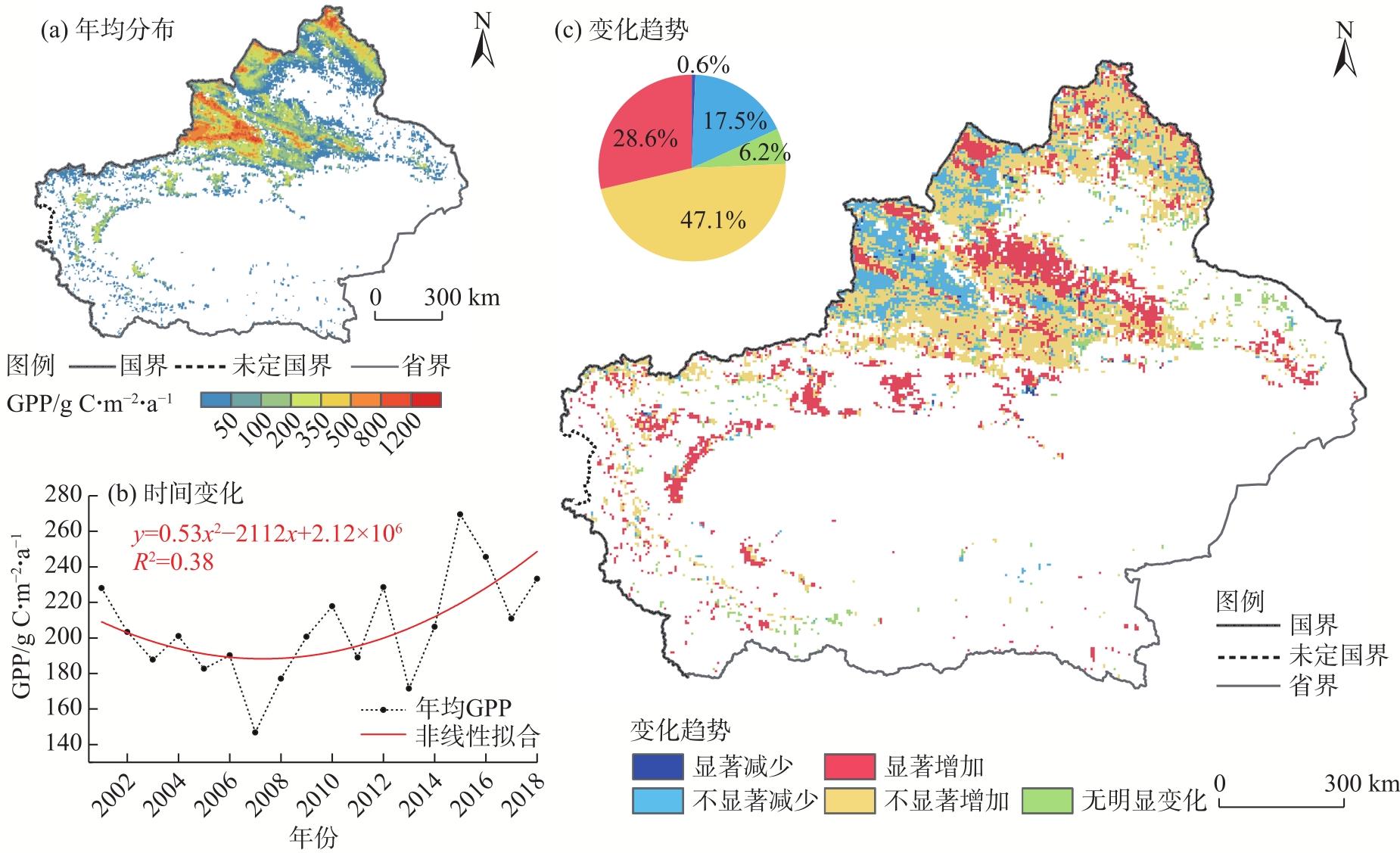
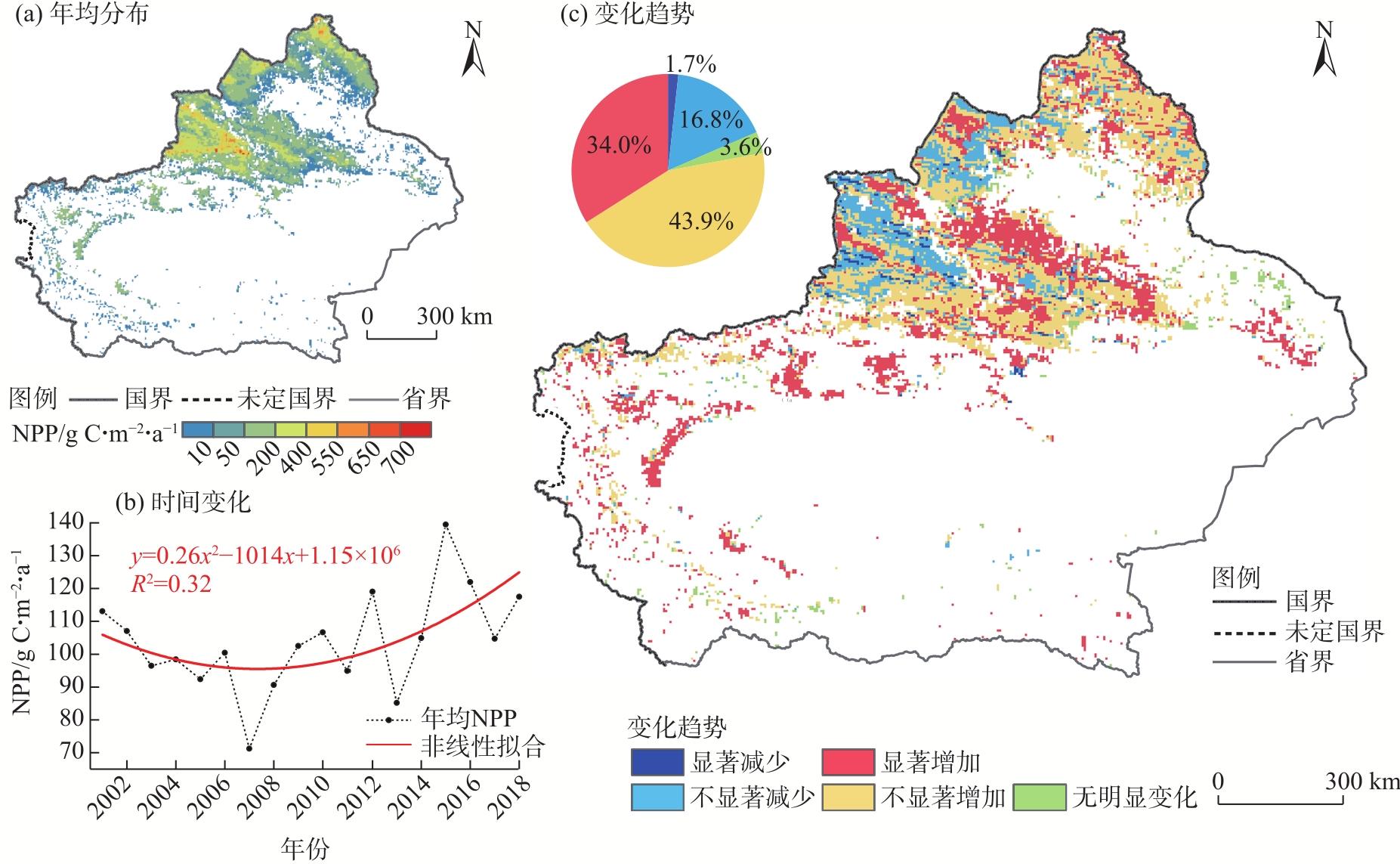
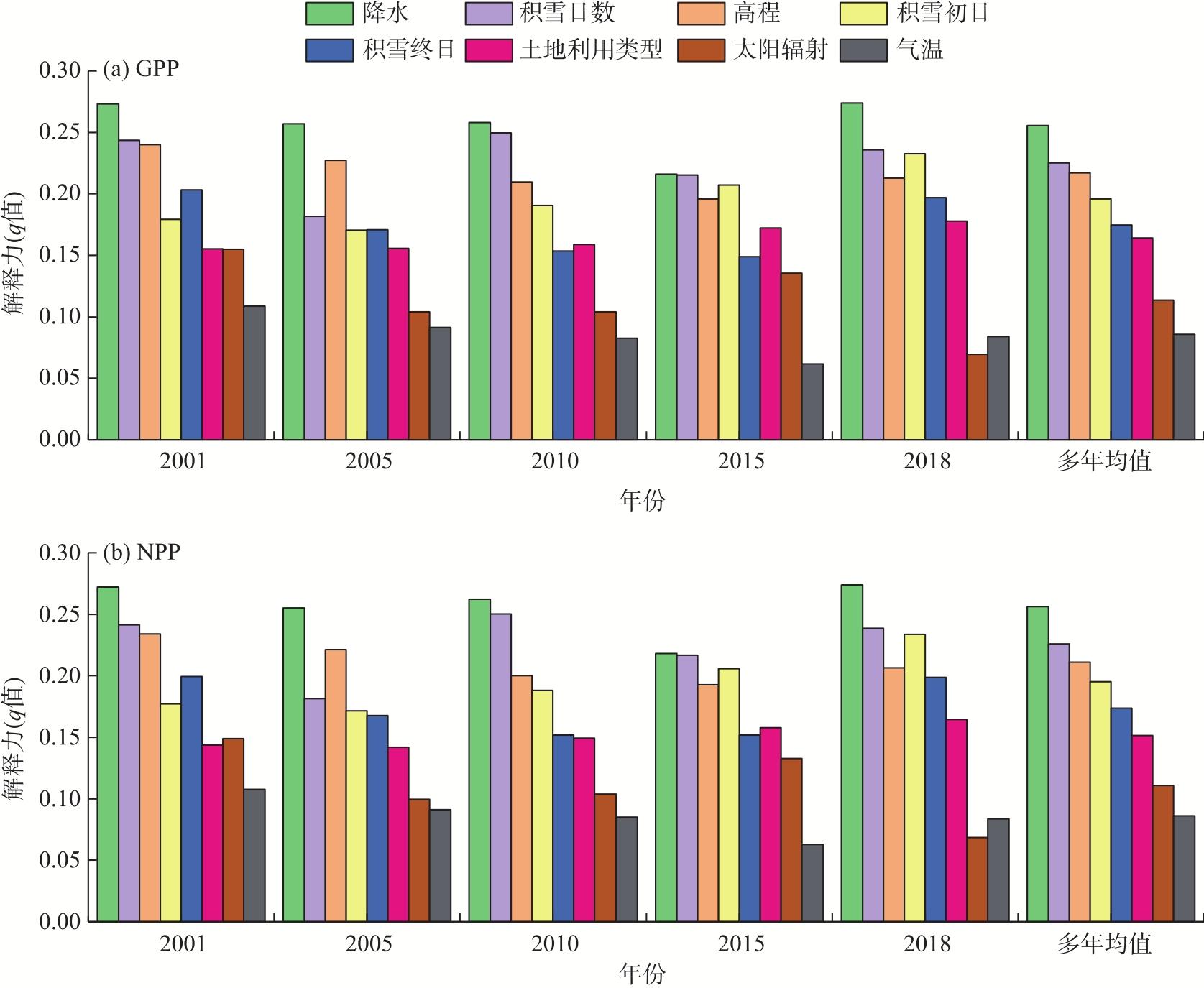
Xinjiang constitutes a critical component of China’s terrestrial carbon sink. Elucidating the spatiotemporal patterns and driving factors of its vegetation carbon sequestration is imperative for regional ecological security and conservation. Currently, research on the driving factors of vegetation carbon sequestration in this area mainly focuses on climate factors such as water and heat, whereas insufficient attention is paid to the phenological effects of snow accumulation that are inherent to Xinjiang regions. Therefore, based on the global daily carbon flux simulation data from 2001 to 2018, this study analyzes the spatiotemporal variations of gross primary production (GPP) and net primary production (NPP) of vegetation in Xinjiang. Snow phenology indicators are introduced, and spatial differentiation and driving mechanisms of GPP and NPP are examined at both regional and pixel scales using the geographical detector and partial correlation analysis methods. The results revealed that from 2001 to 2018, the vegetation GPP and NPP in Xinjiang exhibited a trend of first decreasing and then increasing, with 2007 as the turning point. They spatially exhibited a pattern of higher values in the north than in the south, higher in the west than in the east, and higher in mountainous areas than in plains. The spatial differentiation of GPP and NPP of Xinjiang vegetation was mainly driven by precipitation, snow days and elevation. On the grid scale, the temporal variation of GPP and NPP of Xinjiang vegetation was dominated by precipitation, followed by solar radiation and snowy days. Moreover, under land use change, farmland expansion and farmland areas were the main contributors to the increase in the annual carbon sequestration of vegetation in Xinjiang. Grassland degradation was the main factor contributing to the reduction of annual carbon sequestration in vegetation in Xinjiang. The research results reveal the unique driving process of vegetation carbon sink in Xinjiang regions, which helps to deepen the understanding of the impact of climate change and land use change on vegetation carbon sequestration under the background of climate warming, and provide a theoretical basis for ecological protection and sustainable development in Xinjiang.
Zuo WANG , Jiajing NIE , Mengxue WANG , Ziran WEI , Hu LI , Yuanhong YOU . Spatiotemporal characteristics and driving factors of vegetation carbon sequestration in Xinjiang, China[J]. Arid Land Geography, 2025 , 48(12) : 2197 -2209 . DOI: 10.12118/j.issn.1000-6060.2025.212
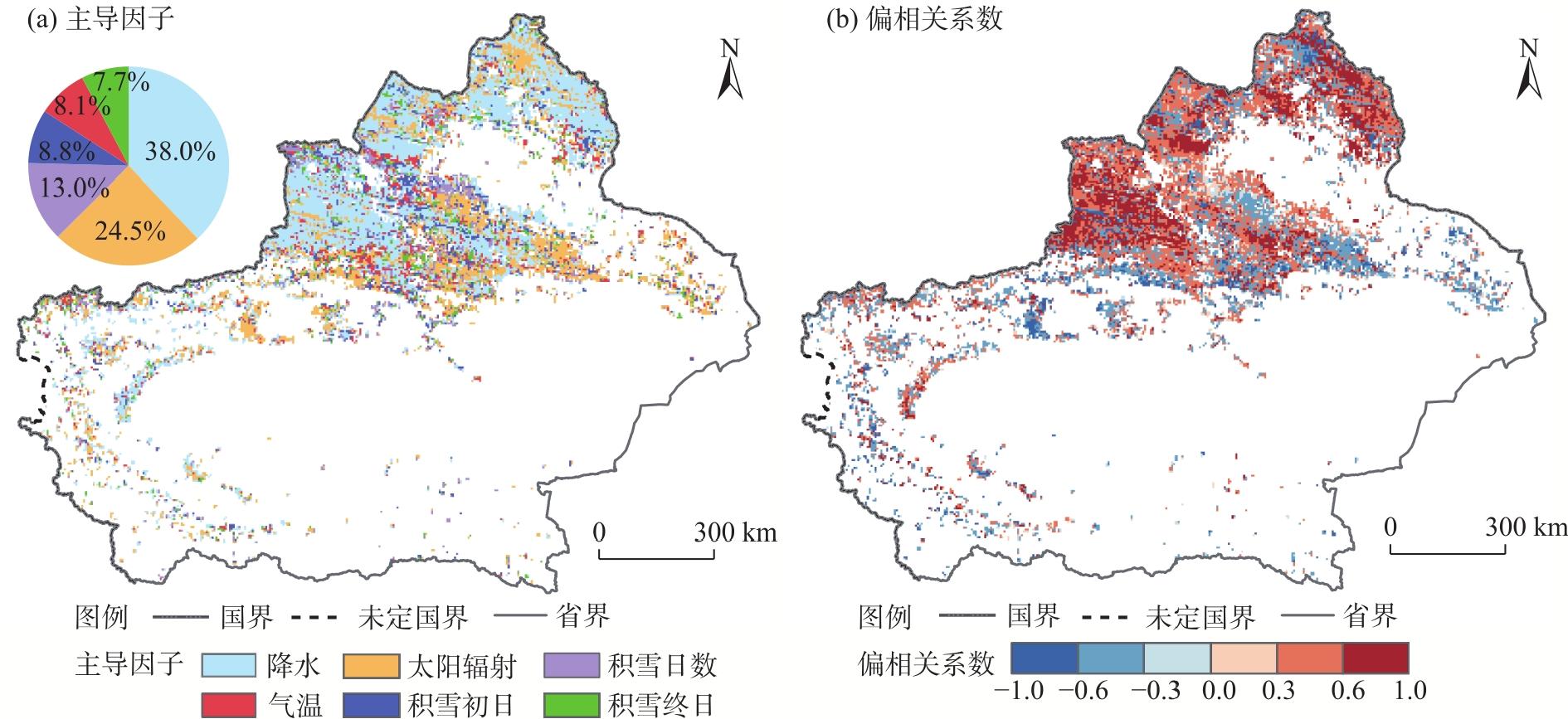
图5 新疆植被GPP变化主导驱动因子及其偏相关系数空间分布Fig. 5 Distributions of dominant driving factors and their partial correlation coefficients for GPP change in Xinjiang |
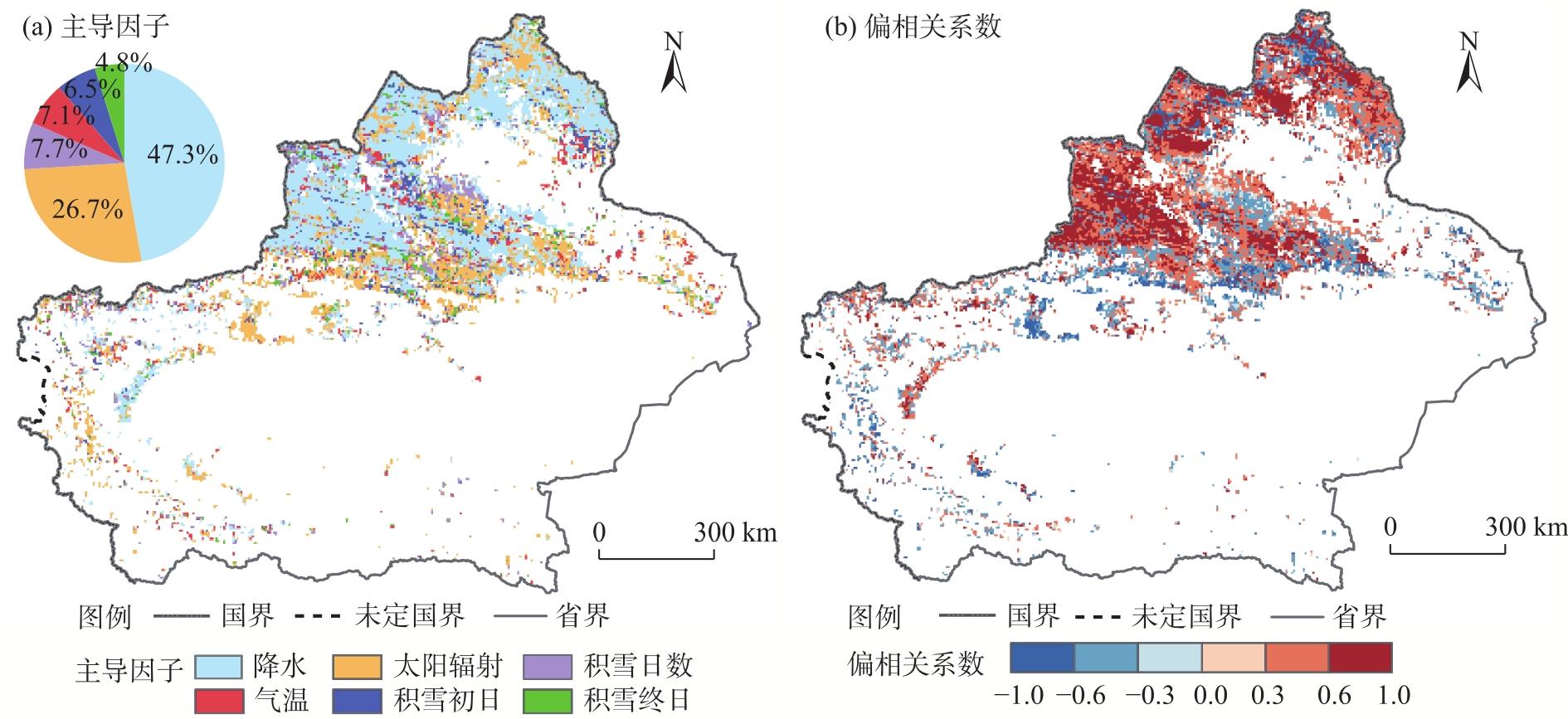
图6 新疆植被NPP变化主导驱动因子及其偏相关系数空间分布Fig. 6 Distributions of dominant driving factors and their partial correlation coefficients for NPP change in Xinjiang |
表1 新疆植被GPP、NPP变化主导驱动因子的面积与正负相关性占比Tab. 1 Area proportions of dominant driving factors and P/N correlations for GPP/NPP changes in Xinjiang /% |
| 植被固碳能力 | 占比项 | 驱动因子 | |||||
|---|---|---|---|---|---|---|---|
| 降水 | 太阳辐射 | 积雪日数 | 积雪初日 | 气温 | 积雪终日 | ||
| GPP | 面积占比 | 38.0 | 24.5 | 13.0 | 8.8 | 8.1 | 7.7 |
| 正相关占比 | 93.0 | 5.9 | 79.0 | 41.8 | 75.7 | 72.7 | |
| 负相关占比 | 7.0 | 94.1 | 21.0 | 58.2 | 24.3 | 27.3 | |
| NPP | 面积占比 | 47.3 | 26.7 | 7.7 | 6.5 | 7.1 | 4.8 |
| 正相关占比 | 98.5 | 4.4 | 79.4 | 32.1 | 71.7 | 70.5 | |
| 负相关占比 | 1.5 | 95.7 | 20.6 | 67.9 | 28.3 | 29.5 | |
注:GPP为总初级生产力;NPP为净初级生产力。 |
表2 2001—2018年新疆土地利用类型转移矩阵Tab. 2 Transfer matrix of land use types in Xinjiang from 2001 to 2018 /km2 |
| 2001年土地利用类型 | 2018年土地利用类型 | |||||
|---|---|---|---|---|---|---|
| 草地 | 灌木 | 荒地 | 建设用地 | 林地 | 农田 | |
| 草地 | 238950 | 75 | 6900 | 500 | 1025 | 22725 |
| 灌木 | - | - | 25 | - | - | - |
| 荒地 | 12200 | 25 | 57300 | 50 | - | 650 |
| 建设用地 | 275 | - | - | 1750 | - | 400 |
| 林地 | 1200 | - | - | - | 625 | - |
| 农田 | 3650 | - | 75 | 225 | - | 36775 |
表3 2001—2018年新疆土地利用类型转移下植被GPP均值变化Tab. 3 Mean GPP changes under land use transfers in Xinjiang from 2001 to 2018 /g C·m-2·a-1 |
| 2001年土地利用类型 | 2018年土地利用类型 | |||||
|---|---|---|---|---|---|---|
| 草地 | 灌木 | 荒地 | 建设用地 | 林地 | 农田 | |
| 草地 | -4.1 | 3.2 | 5.7 | 3.0 | 8.0 | 52.5 |
| 灌木 | - | - | 0.4 | - | - | - |
| 荒地 | 6.6 | 12.4 | 0.8 | 34.6 | - | 63.1 |
| 建设用地 | 33.5 | - | - | 15.7 | - | -2.9 |
| 林地 | 14.8 | - | - | - | -16.8 | - |
| 农田 | -2.9 | - | -87.5 | 51.0 | - | 41.2 |
表4 2001—2018年新疆土地利用类型转移下植被NPP均值变化Tab. 4 Mean NPP changes under land use transfers in Xinjiang from 2001 to 2018 /g C·m-2·a-1 |
| 2001年土地利用类型 | 2018年土地利用类型 | |||||
|---|---|---|---|---|---|---|
| 草地 | 灌木 | 荒地 | 建设用地 | 林地 | 农田 | |
| 草地 | -3.3 | 2.9 | 2.1 | 0.3 | 4.8 | 23.8 |
| 灌木 | - | - | 0.3 | - | - | - |
| 荒地 | 2.6 | 7.9 | 0.0 | 12.1 | - | 25.9 |
| 建设用地 | 15.9 | - | - | 5.7 | - | -5.3 |
| 林地 | 7.4 | - | - | - | -10.9 | - |
| 农田 | -5.3 | - | -52.1 | 22.4 | - | 17.2 |
表5 2001—2018年新疆土地利用类型转移下植被年固碳量变化Tab. 5 Changes in annual carbon sequestration under land use transfers in Xinjiang from 2001 to 2018 /t C |
| 2001年土地利用类型 | 2018年土地利用类型 | ||||||
|---|---|---|---|---|---|---|---|
| 草地 | 灌木 | 荒地 | 建设用地 | 林地 | 农田 | 累计 | |
| 草地 | -753970 | 214 | 14285 | 125 | 4751 | 523532 | -211063 |
| 灌木 | - | - | 7 | - | - | - | 7 |
| 荒地 | 31276 | 191 | 942 | 585 | - | 16289 | 49283 |
| 建设用地 | 4240 | - | - | 13077 | - | -2048 | 15269 |
| 林地 | 8646 | - | - | - | -6609 | - | 2037 |
| 农田 | -18794 | - | -3785 | 4876 | - | 613991 | 596289 |
| 累计 | -728602 | 405 | 11450 | 18664 | -1858 | 1151763 | 451822 |
| [1] |
袁文平, 蔡文文, 刘丹, 等. 陆地生态系统植被生产力遥感模型研究进展[J]. 地球科学进展, 2014, 29(5): 541-550.
[
|
| [2] |
|
| [3] |
|
| [4] |
|
| [5] |
|
| [6] |
|
| [7] |
|
| [8] |
冯婉, 谢世友. 长江流域片2001—2015年植被NPP时空特征及影响因子探测[J]. 水土保持研究, 2022, 29(1): 176-183.
[
|
| [9] |
|
| [10] |
刘旻霞, 焦骄, 潘竟虎, 等. 青海省植被净初级生产力(NPP)时空格局变化及其驱动因素[J]. 生态学报, 2020, 40(15): 5306-5317.
[
|
| [11] |
高振翔, 叶剑, 丁仁惠, 等. 中国植被总初级生产力对气候变化的响应[J]. 水土保持研究, 2022, 29(4): 394-399.
[
|
| [12] |
|
| [13] |
毕晓丽, 王辉, 葛剑平. 植被归一化指数(NDVI)及气候因子相关起伏型时间序列变化分析[J]. 应用生态学报, 2005, 16(2): 284-288.
[
|
| [14] |
陈亚宁, 李稚, 范煜婷, 等. 西北干旱区气候变化对水文水资源影响研究进展[J]. 地理学报, 2014, 69(9): 1295-1304.
[
|
| [15] |
车涛, 李新. 1993—2002年中国积雪水资源时空分布与变化特征[J]. 冰川冻土, 2005, 27(1): 64-67.
[
|
| [16] |
|
| [17] |
姚俊强, 李漠岩, 迪丽努尔·托列吾别克, 等. 不同时间尺度下新疆气候“暖湿化”特征[J]. 干旱区研究, 2022, 39(2): 333-346.
[
|
| [18] |
|
| [19] |
杨静, 黄秉光, 黄玫, 等. 近55 a新疆净生态系统生产力对气候变化的响应[J]. 干旱区地理, 2017, 40(5): 1054-1060.
[
|
| [20] |
|
| [21] |
秦景秀, 郝兴明, 张颖, 等. 气候变化和人类活动对干旱区植被生产力的影响[J]. 干旱区地理, 2020, 43(1): 117-125.
[
|
| [22] |
张山清, 普宗朝, 伏晓慧, 等. 气候变化对新疆自然植被净第一性生产力的影响[J]. 干旱区研究, 2010, 27(6): 905-914.
[
|
| [23] |
姜萍, 袁野. 新疆植被总初级生产力对大气水分亏缺的响应[J]. 干旱区地理, 2024, 47(3): 403-412.
[
|
| [24] |
姚宏达, 顾玉丽, 罗青红, 等. 典型荒漠绿化工程区净生态系统生产力的时空变化特征[J]. 气候与环境研究, 2025, 30(3): 322-334.
[
|
| [25] |
赵晓涵, 张方敏, 韩典辰, 等. 内蒙古半干旱区蒸散特征及归因分析[J]. 干旱区研究, 2021, 38(6): 1614-1623.
[
|
| [26] |
|
| [27] |
|
| [28] |
|
| [29] |
|
| [30] |
|
| [31] |
郝晓华, 赵琴, 纪文政, 等. 1980—2020年AVHRR中国积雪物候数据集[J]. 中国科学数据, 2022, 7(3): 1-10.
[
|
| [32] |
|
| [33] |
|
| [34] |
|
| [35] |
王劲峰, 徐成东. 地理探测器: 原理与展望[J]. 地理学报, 2017, 72(1): 116-134.
[
|
| [36] |
张磊, 罗平平, 王小珲, 等. 1960—2019年关中平原极端降水时空变化及非平稳性分析[J]. 水利水电技术, 2023, 54(3): 35-46.
[
|
| [37] |
温宥越, 孙强, 燕玉超, 等. 粤港澳大湾区陆地生态系统演变对固碳释氧服务的影响[J]. 生态学报, 2020, 40(23): 8482-8493.
[
|
| [38] |
高晓宇, 郝海超, 张雪琪, 等. 中国西北干旱区植被水分利用效率变化对气象要素的响应——以新疆为例[J]. 干旱区地理, 2023, 46(7): 1111-1120.
[
|
| [39] |
韩炳宏, 周秉荣, 颜玉倩, 等. 2000—2018年间青藏高原植被覆盖变化及其与气候因素的关系分析[J]. 草地学报, 2019, 27(6): 1651-1658.
[
|
| [40] |
姚俊强, 杨青, 陈亚宁, 等. 西北干旱区气候变化及其对生态环境影响[J]. 生态学杂志, 2013, 32(5): 1283-1291.
[
|
| [41] |
同琳静, 刘洋洋, 王倩, 等. 西北植被净初级生产力时空变化及其驱动因素[J]. 水土保持研究, 2019, 26(4): 367-374.
[
|
| [42] |
孔冬冬, 张强, 黄文琳, 等. 1982—2013年青藏高原植被物候变化及气象因素影响[J]. 地理学报, 2017, 72(1): 39-52.
[
|
| [43] |
姬盼盼, 高敏华, 杨晓东. 中国西北部干旱区NPP驱动力分析——以新疆伊犁河谷和天山山脉部分区域为例[J]. 生态学报, 2019, 39(8): 2995-3006.
[
|
| [44] |
|
| [45] |
|
| [46] |
吴瀚, 白洁, 李均力, 等. 新疆地区植被覆盖度时空变化及其影响因素分析[J]. 植物生态学报, 2024, 48(1): 41-55.
[
|
/
| 〈 |
|
〉 |