



Simulation study on water and fertilization coupling optimization scheme of spring maize based on DNDC model
Received date: 2025-01-16
Revised date: 2025-04-18
Online published: 2026-03-11
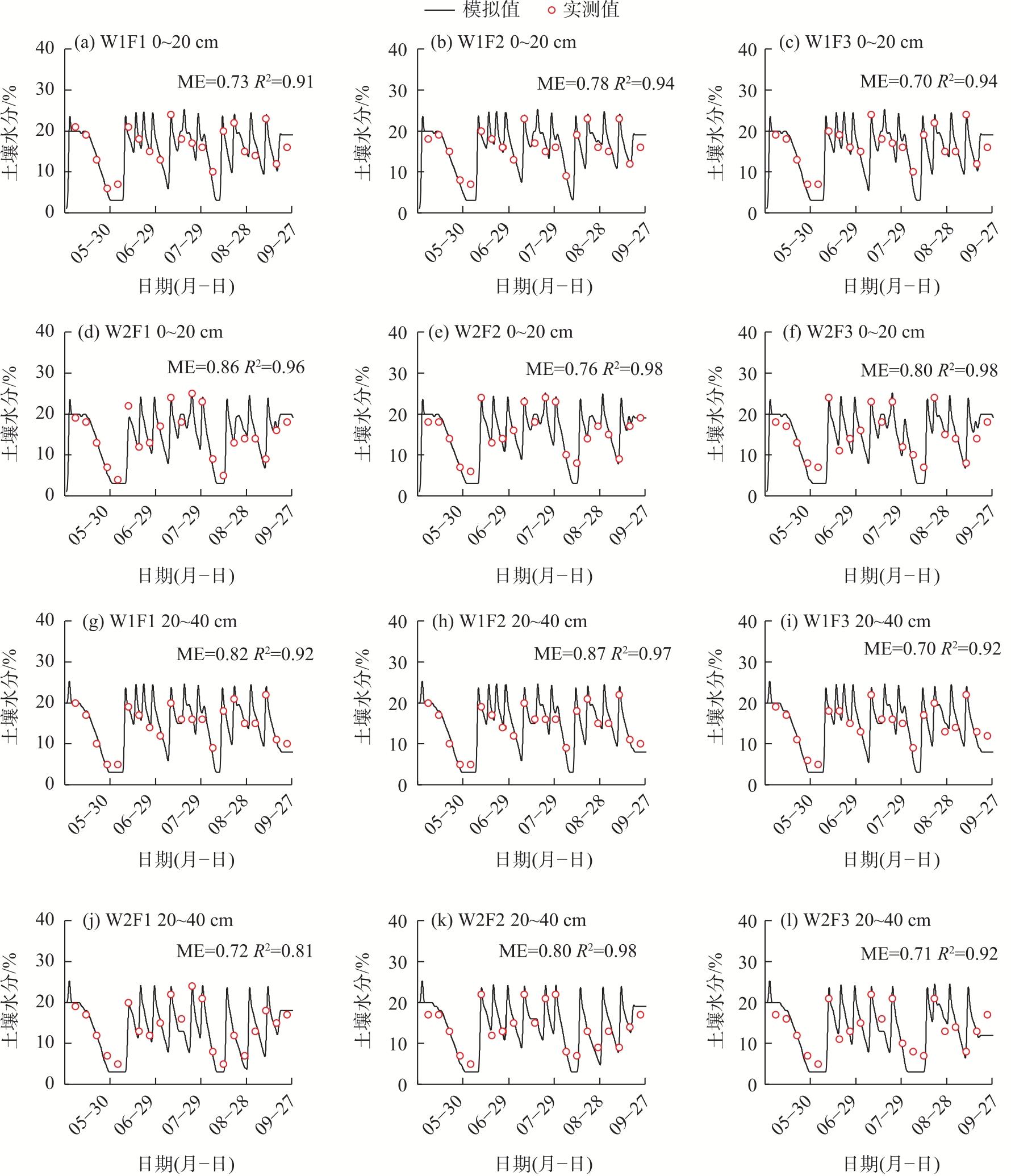
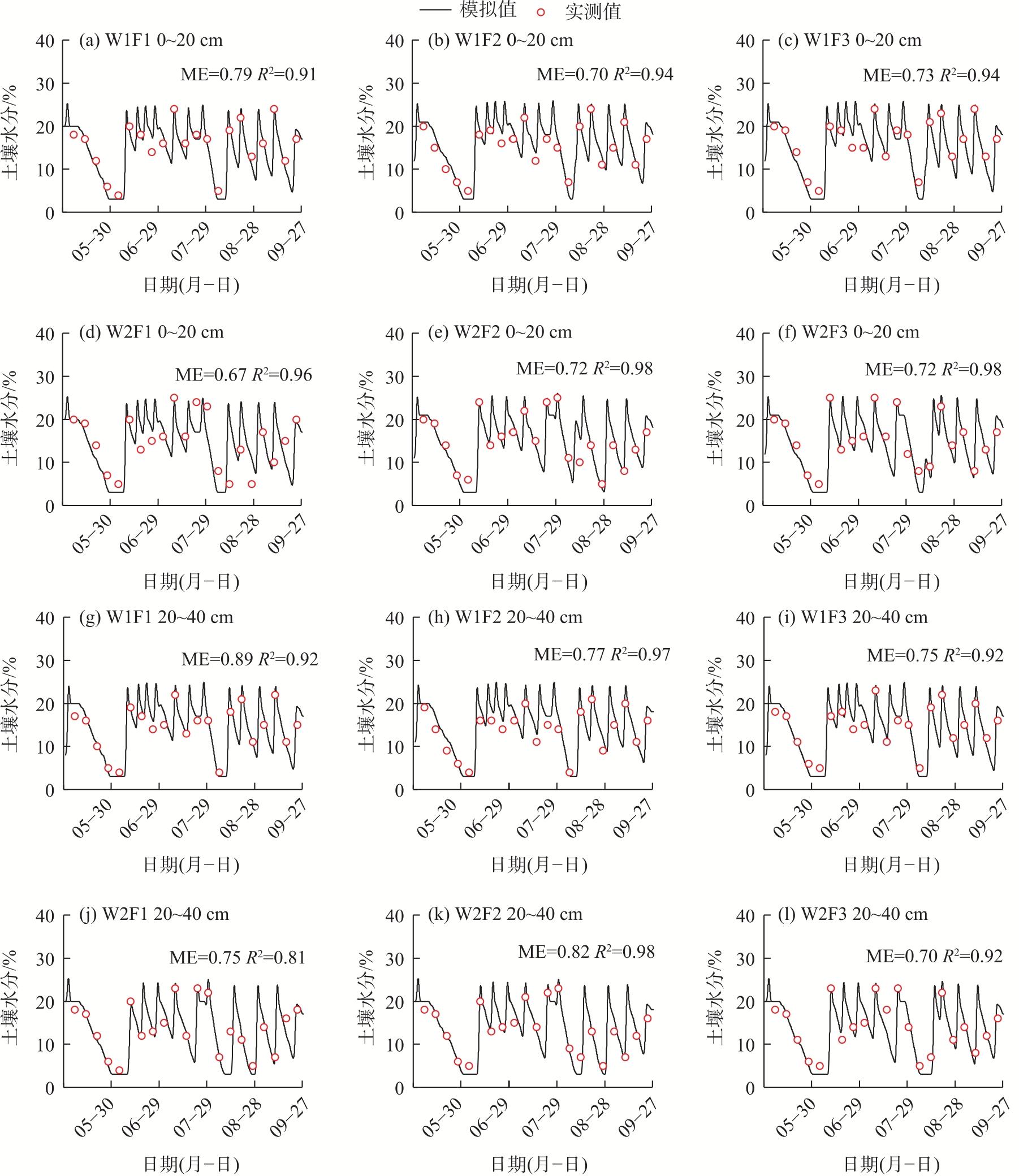
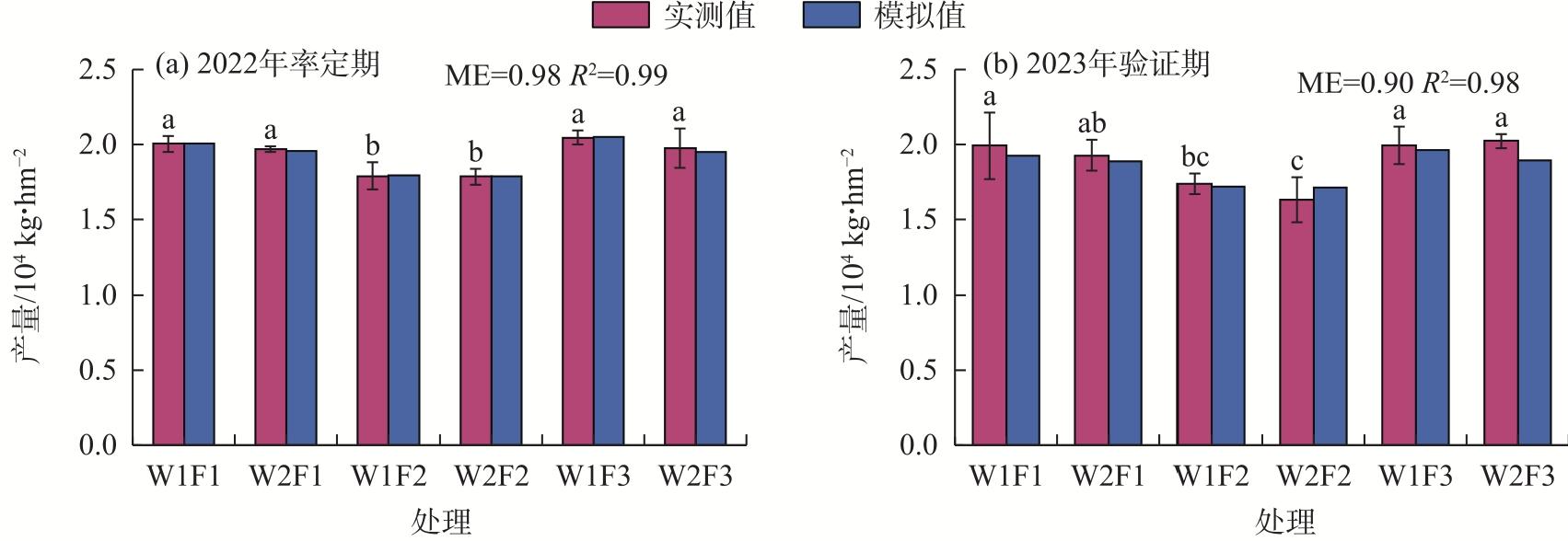
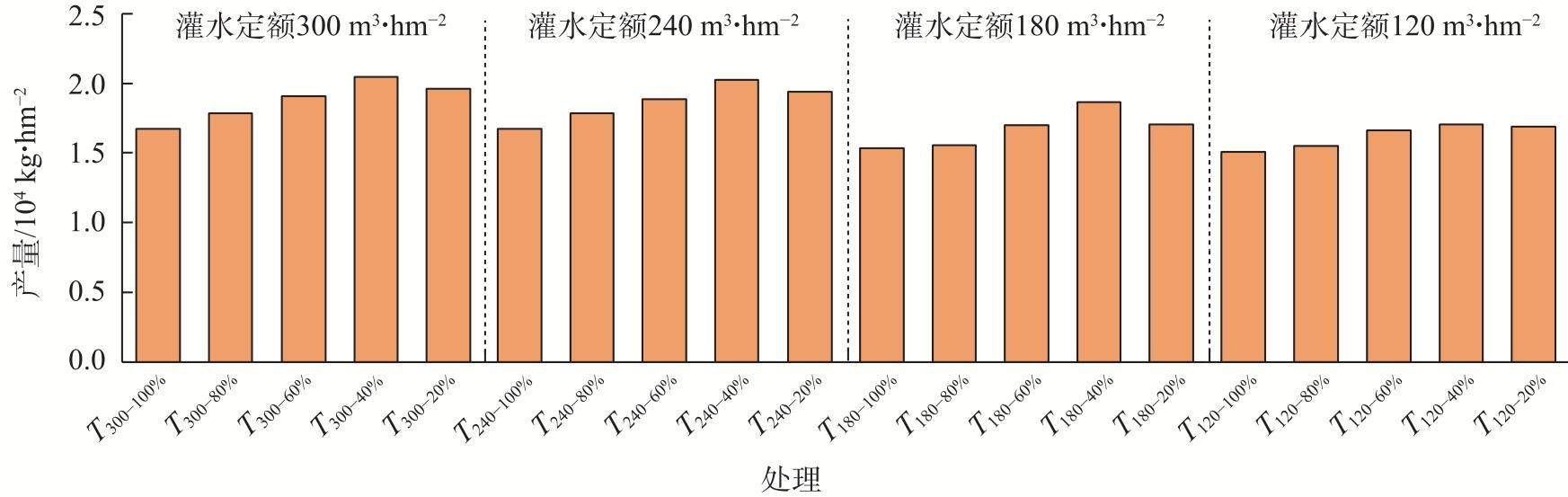
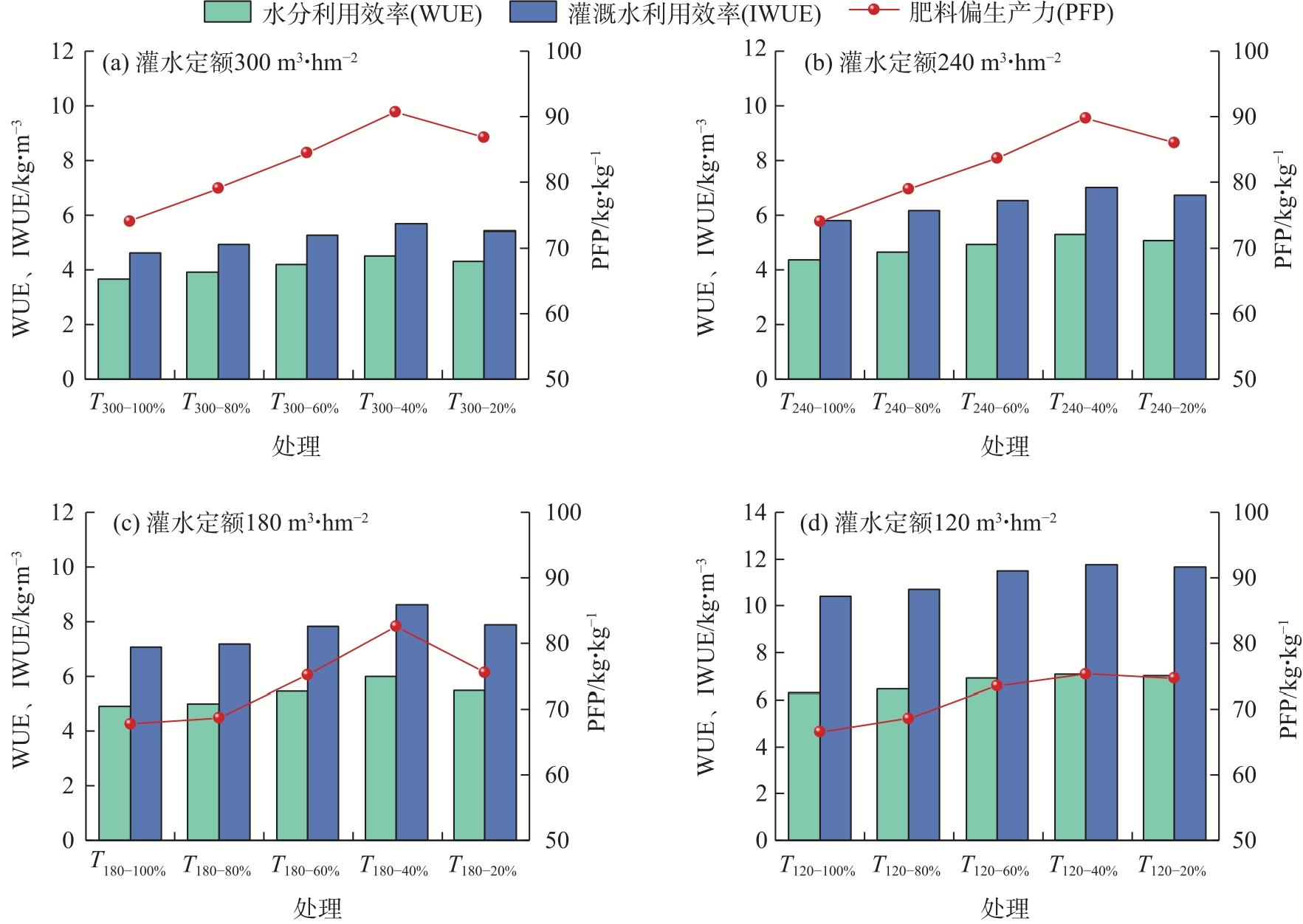
To investigate the effects of reducing the use of traditional fertilizers and substituting them with organic fertilizers on the growth of spring maize (Zea mays L.) under different irrigation gradients, we used a combination of field trials and crop growth modeling. Fully (75%-95% of field capacity) and partially (55%-75% of field capacity) irrigated gradients were set. Additionally, three modes of fertilizer addition, traditional, traditional reduced by one-third, and traditional reduced by one-third+organic fertilizer, were set based on the local fertilizer application rates of 225 kg·hm−2. The effects of different water-fertilizer combinations on the yield and water use efficiency of crops in the Minqin Oasis, Gansu Province, China, could be ascertained based on a quantitative analysis using the DNDC model. The results showed that: (1) The Nash coefficients (ME) of the simulated and measured values of the standard and validation periods during 2022—2023, employing the DNDC model, were in the range of 0.72-0.98, and the coefficients of determination (R2) were >0.80. (2) The validated DNDC model exhibited good applicability in simulating the growth rates of maize plants in the Minqin Oasis. (3) The yield under different water-fertilizer application scenarios varied; that with T240-40% (40% organic fertilizer) treatment was 1.08% lower than that with T300-40% (40% organic fertilizer) treatment; while water use efficiency and irrigation water use efficiency increased by 17.40% and 23.65%, respectively; and the partial fertilizer productivity improved by 1.07%. T240-40% was the most optimal water-fertilizer treatment scheme. The results of this study can provide a theoretical basis for improving the water-fertilizer use efficiency of spring maize in the Minqin Oasis.
Key words: DNDC model; maize; yield; water use efficiency; partial fertilizer productivity
Haolin LI , Xuejie ZHANG , Hongjuan ZHANG , Li’na SUN , Pengcheng SONG , Ping LI . Simulation study on water and fertilization coupling optimization scheme of spring maize based on DNDC model[J]. Arid Land Geography, 2025 , 48(12) : 2099 -2110 . DOI: 10.12118/j.issn.1000-6060.2025.036
表1 试验设计Tab. 1 Experimental design |
| 处理 | 灌溉梯度 | 施肥 | |
|---|---|---|---|
| 施肥类型 | 施肥量/kg·hm-2 | ||
| W1F1 | 充分灌溉75%~95%θf(W1) | 传统肥(F1) | 225 |
| W1F2 | 传统肥减量(F2) | 150 | |
| W1F3 | 传统肥减量+有机肥(F3) | 150+75 | |
| W2F1 | 胁迫灌溉55%~75%θf(W2) | 传统肥(F1) | 225 |
| W2F2 | 传统肥减量(F2) | 150 | |
| W2F3 | 传统肥减量+有机肥(F3) | 150+75 | |
注:θf为田间持水率。 |
表2 模型模拟土壤参数和作物参数Tab. 2 Soil parameters and crop parameters of model simulation |
| 土壤参数 | 作物参数 | ||
|---|---|---|---|
| 参数类型 | 取值 | 参数类型 | 取值 |
| 土壤质地 | 砂壤土 | 最高产量/kg·hm-2 | 6993.00 |
| 土壤容重/g·cm-3 | 1.37 | 总需氮量/kg·hm-2 | 125.82 |
| 田间持水率/cm3·cm-3 | 0.20 | 生长积温/℃ | 2550.00 |
| 孔隙度 | 0.48 | 需水量/mm | 150.00 |
| pH值 | 9.60 | 最适温度/℃ | 30.00 |
| 表层土壤有机碳/g·kg-1 | 1.00 | 固氮系数 | 1.00 |
表3 玉米不同水肥耦合模拟情景Tab. 3 Simulation scenarios of different water and fertilizer coupling of maize |
| 情景处理 | 灌水定额/m3·hm-2 | 施肥类型 | 有机肥施肥量/kg·hm-2 |
|---|---|---|---|
| T300-100% | 300 | 100%有机肥 | 225 |
| T300-80% | 80%有机肥 | 180 | |
| T300-60% | 60%有机肥 | 135 | |
| T300-40% | 40%有机肥 | 90 | |
| T300-20% | 20%有机肥 | 45 | |
| T240-100% | 240 | 100%有机肥 | 225 |
| T240-80% | 80%有机肥 | 180 | |
| T240-60% | 60%有机肥 | 135 | |
| T240-40% | 40%有机肥 | 90 | |
| T240-20% | 20%有机肥 | 45 | |
| T180-100% | 180 | 100%有机肥 | 225 |
| T180-80% | 80%有机肥 | 180 | |
| T180-60% | 60%有机肥 | 135 | |
| T180-40% | 40%有机肥 | 90 | |
| T180-20% | 20%有机肥 | 45 | |
| T120-100% | 120 | 100%有机肥 | 225 |
| T120-80% | 80%有机肥 | 180 | |
| T120-60% | 60%有机肥 | 135 | |
| T120-40% | 40%有机肥 | 90 | |
| T120-20% | 20%有机肥 | 45 |
| [1] |
|
| [2] |
罗静怡, 东梅. 中国粮食生产用水绿色效率与回弹效应研究——基于三阶段超效率SBM-Malmquist模型[J]. 干旱区地理, 2024, 47(9): 1508-1517.
[
|
| [3] |
|
| [4] |
吴梦雨, 李冬杰, 韩玉国, 等. 河西走廊农田灌溉面积阈值分析[J]. 干旱区地理, 2024, 47(7): 1165-1174.
[
|
| [5] |
受娜. 施氮量对陇东旱塬区青贮玉米生产及水氮利用的影响[D]. 兰州: 兰州大学, 2022.
[
|
| [6] |
|
| [7] |
邝雨欣, 张体彬, 程煜, 等. 有机无机肥配施对盐渍化农田无机态氮迁移和玉米生长的影响[J]. 干旱地区农业研究, 2025, 43(2): 105-115, 137.
[
|
| [8] |
郭喜军, 谢军红, 李玲玲, 等. 氮肥用量及有机无机肥配比对陇中旱农区玉米光合特性及产量的影响[J]. 植物营养与肥料学报, 2020, 26(5): 806-816.
[
|
| [9] |
宿顺顺. 有机无机肥配施与亏缺灌溉对夏玉米/冬小麦生长和水氮利用的影响[D]. 西安: 西北农林科技大学, 2020.
[
|
| [10] |
刘占军. 东北春玉米氮磷增效施肥模式研究[D]. 北京: 中国农业科学院, 2010.
[
|
| [11] |
|
| [12] |
|
| [13] |
|
| [14] |
|
| [15] |
|
| [16] |
|
| [17] |
|
| [18] |
李元航, 李广, 王钧, 等. 基于DNDC模型的旱地春玉米产量对不同施氮水平的响应[J]. 甘肃农业大学学报, 2024, 59(5): 65-72.
[
|
| [19] |
|
| [20] |
|
| [21] |
|
| [22] |
|
| [23] |
乔帅帅, 魏征, 张宝忠, 等. 基于DNDC模型的北京市大兴区冬小麦农业用水效率[J]. 排灌机械工程学报, 2018, 36(11): 1087-1091.
[
|
| [24] |
|
| [25] |
牟云芳. 秸秆配施氮肥对土壤水-肥-盐分布和玉米产量的影响[D]. 呼和浩特: 内蒙古农业大学, 2024.
[
|
| [26] |
颜学斌, 王俊, 王科锋, 等. 基于DNDC模型模拟的冬小麦田土壤有机碳和作物产量对地表覆盖的响应[J]. 干旱地区农业研究, 2022, 40(1): 42-49.
[
|
| [27] |
张开, 王立为, 高西宁, 等. 基于DNDC模型不同降水年型下氮肥管理对马铃薯田N2O减排及增产潜力影响研究[J]. 生态环境学报, 2021, 30(8): 1672-1682.
[
|
| [28] |
高小叶, 袁世力, 吕爱敏, 等. DNDC模型评估苜蓿绿肥对水稻产量和温室气体排放的影响[J]. 草业学报, 2016, 25(12): 14-26.
[
|
| [29] |
邱建军, 王立刚, 唐华俊, 等. 东北三省耕地土壤有机碳储量变化的模拟研究[J]. 中国农业科学, 2004, 37(8): 1166-1171.
[
|
| [30] |
|
| [31] |
|
| [32] |
|
| [33] |
韩碧波. 有机无机配施对潮土夏玉米减氮增效影响研究[D]. 郑州: 河南农业大学, 2022.
[
|
| [34] |
谢丽华, 李玲玲, 谢军红, 等. 有机肥替代化肥对陇中旱区玉米生长及农田碳排放的影响[J]. 植物营养与肥料学报, 2022, 28(6): 1029-1038.
[
|
| [35] |
李明悦, 金修宽, 高伟, 等. 有机肥替代部分氮化肥对鲜食玉米产量、干物质和氮吸收的影响[J]. 天津农业科学, 2020, 26(9): 56-60.
[
|
| [36] |
|
| [37] |
汤宏, 曾掌权, 张杨珠, 等. 化学氮肥配施有机肥对烟草品质、氮素吸收及利用率的影响[J]. 华北农学报, 2019, 34(4): 183-191.
[
|
| [38] |
周慧, 史海滨, 徐昭, 等. 有机无机肥配施对盐渍土供氮特性与作物水氮利用的影响[J]. 农业机械学报, 2020, 51(4): 299-307.
[
|
| [39] |
赵吉霞, 禹妍彤, 周芸, 等. 有机肥等氮替代化肥对玉米产量和氮素吸收利用效率的影响[J]. 水土保持研究, 2022, 29(5): 374-381.
[
|
| [40] |
洪瑜, 王芳, 刘汝亮, 等. 长期配施有机肥对灌淤土春玉米产量及氮素利用的影响[J]. 水土保持学报, 2017, 31(2): 248-252, 261.
[
|
/
| 〈 |
|
〉 |