



Spatiotemporal characteristics of ecosystem services and ecological function areas in Guanzhong Plain urban agglomeration
Received date: 2023-10-08
Revised date: 2023-11-19
Online published: 2026-03-11
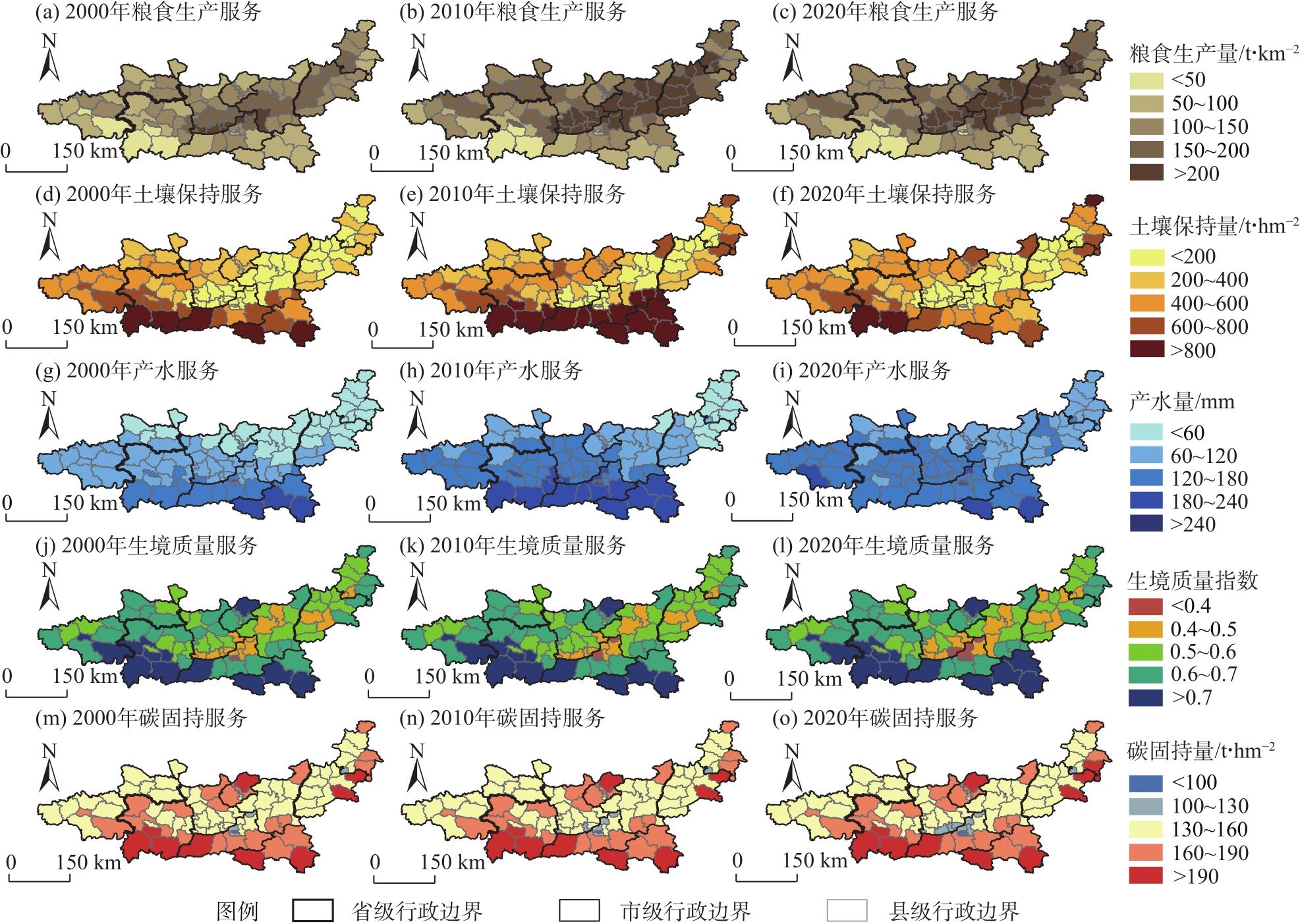
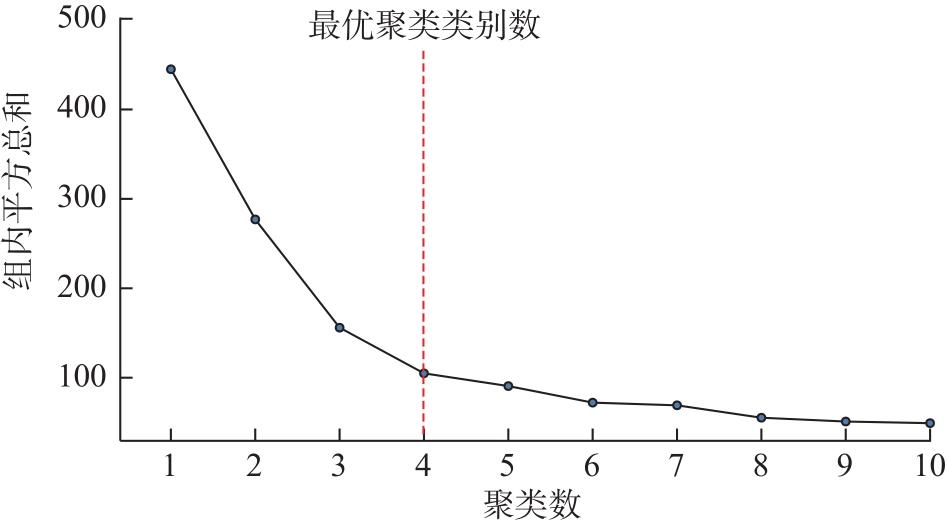
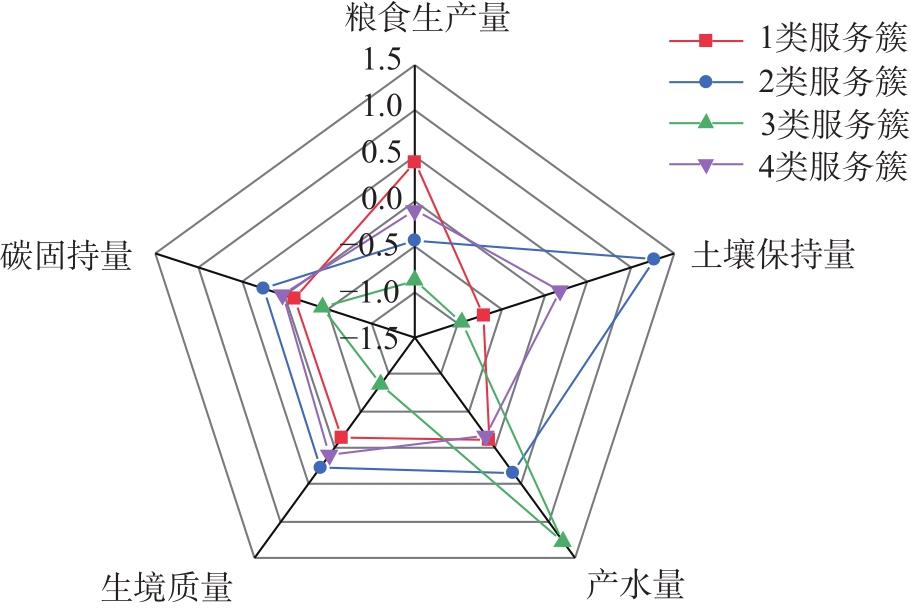
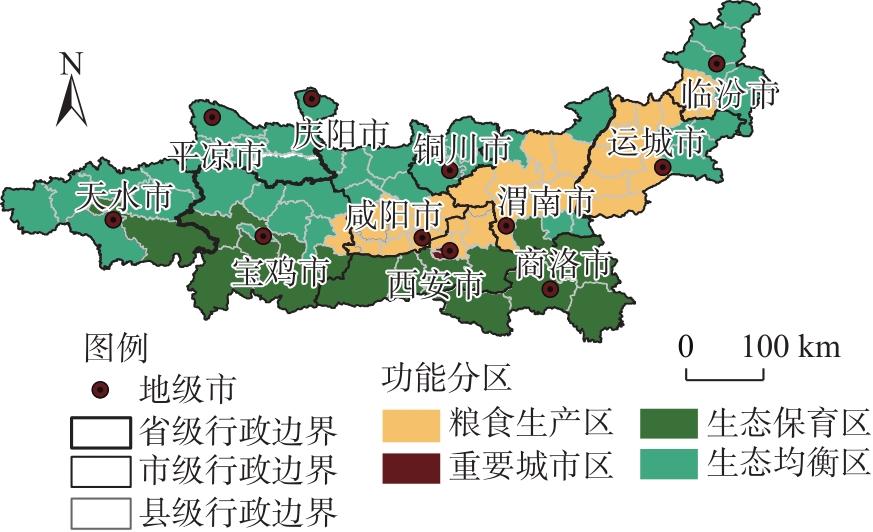
This study employs a quantitative approach to analyze the spatiotemporal distribution patterns of five ecosystem services in the Guanzhong Plain urban agglomeration, northwest China from 2000 to 2020. Utilizing K-means clustering analysis, ecosystem service clusters are identified, dominant service functions are determined, and ecological functional zones are delineated based on the functional characteristics within each cluster. Results indicate: (1) Grain production and soil retention exhibit a trend of initial increase followed by a decrease, while water yield demonstrates a rapid increase followed by a slow rise. Habitat quality and carbon sequestration services show a relatively mild decrease. High-value zones for grain production are concentrated in the central and northeastern parts, soil retention in the southern and western areas, and habitat quality and carbon sequestration services in the southern region. (2) Grain production shows a trade-off relationship with other services, while soil retention exhibits synergies with habitat quality and soil retention with carbon sequestration, as well as synergies between habitat quality and carbon sequestration, with varying strengths of inter-service correlations over time. (3) Ecological functional zones are identified as primary grain-producing areas, ecological conservation zones, important urban areas, and ecological balance zones. This study is crucial for maintaining the balance of ecosystems and fostering sustainable economic development, providing guidance for ecosystem management in different functional zones within the Guanzhong Plain urban agglomeration.
Xin ZHANG , Dan ZHANG , Guangsen ZHANG , Mei SONG . Spatiotemporal characteristics of ecosystem services and ecological function areas in Guanzhong Plain urban agglomeration[J]. Arid Land Geography, 2024 , 47(9) : 1587 -1595 . DOI: 10.12118/j.issn.1000-6060.2023.555
表1 2000—2020年关中平原城市群5项生态系统服务的年均值Tab. 1 Annual averages of five ecosystem services in the Guanzhong Plain urban agglomeration from 2000 to 2020 |
| 年份 | 粮食生产量/t·km-2 | 土壤保持量/t·hm-2 | 产水量/mm | 生境质量 | 碳固持量/t·hm-2 |
|---|---|---|---|---|---|
| 2000 | 107.14 | 434.33 | 94.51 | 0.62 | 165.87 |
| 2010 | 147.16 | 625.42 | 132.02 | 0.62 | 165.79 |
| 2020 | 133.72 | 442.23 | 132.96 | 0.62 | 164.99 |
表2 关中平原城市群不同生态系统服务间的Spearman相关系数Tab. 2 Spearman correlation coefficients among different ecosystem services in the Guanzhong Plain urban agglomeration |
| 年份 | 生态系统 服务 | 粮食 生产量 | 土壤 保持量 | 产水量 | 生境质量 |
|---|---|---|---|---|---|
| 2000 | 土壤保持量 | -0.63*** | - | - | - |
| 产水量 | -0.21** | 0.26** | - | - | |
| 生境质量 | -0.67*** | 0.91*** | 0.06 | - | |
| 碳固持量 | -0.56*** | 0.83*** | 0.01 | 0.95*** | |
| 2010 | 土壤保持量 | -0.58*** | - | - | - |
| 产水量 | -0.26** | 0.10 | - | - | |
| 生境质量 | -0.61*** | 0.93*** | -0.01 | - | |
| 碳固持量 | -0.52*** | 0.89*** | -0.07 | 0.95*** | |
| 2020 | 土壤保持量 | -0.55*** | - | - | - |
| 产水量 | -0.34** | -0.13 | - | - | |
| 生境质量 | -0.57*** | 0.91*** | -0.13 | - | |
| 碳固持量 | -0.48*** | 0.87*** | -0.20 | 0.94*** |
注:**、***分别表示在P<0.05、P<0.01水平上显著。 |
| [1] |
|
| [2] |
戴尔阜, 王晓莉, 朱建佳, 等. 生态系统服务权衡/协同研究进展与趋势展望[J]. 地球科学进展, 2015, 30(11): 1250-1259.
[
|
| [3] |
|
| [4] |
傅伯杰, 张立伟. 土地利用变化与生态系统服务: 概念、方法与进展[J]. 地理科学进展, 2014, 33(4): 441-446.
[
|
| [5] |
|
| [6] |
潘莹, 郑华, 易齐涛, 等. 流域生态系统服务簇变化及影响因素——以大清河流域为例[J]. 生态学报, 2021, 41(13): 5204-5213.
[
|
| [7] |
陈利顶, 孙然好, 孙涛, 等. 城市群生态安全格局构建: 概念辨析与理论思考[J]. 生态学报, 2021, 41(11): 4251-4258.
[
|
| [8] |
唐立娜, 蓝婷, 邢晓旭, 等. 中国东部超大城市群生态环境建设成效与发展对策[J]. 中国科学院院刊, 2023, 38(3): 394-406.
[
|
| [9] |
|
| [10] |
杨屹, 杨凤仪, 蔡梓萱. 黄河流域城市群资源环境承载力演变特征及驱动因素研究——以关中平原城市群为例[J]. 环境科学学报, 2022, 42(2): 476-485.
[
|
| [11] |
|
| [12] |
赵文亮, 贺振, 贺俊平, 等. 基于MODIS-NDVI的河南省冬小麦产量遥感估测[J]. 地理研究, 2012, 31(12): 2310-2320.
[
|
| [13] |
武文欢, 彭建, 刘焱序, 等. 鄂尔多斯市生态系统服务权衡与协同分析[J]. 地理科学进展, 2017, 36(12): 1571-1581.
[
|
| [14] |
|
| [15] |
余玉洋, 李晶, 周自翔, 等. 基于贝叶斯网络的生态系统服务空间格局优化——以泾河流域为例[J]. 干旱区地理, 2022, 45(4): 1268-1280.
[
|
| [16] |
戴尔阜, 王亚慧. 横断山区产水服务空间异质性及归因分析[J]. 地理学报, 2020, 75(3): 607-619.
[
|
| [17] |
窦攀烽, 左舒翟, 任引, 等. 气候和土地利用/覆被变化对宁波地区生态系统产水服务的影响[J]. 环境科学学报, 2019, 39(7): 2398-2409.
[
|
| [18] |
黄木易, 岳文泽, 冯少茹, 等. 基于InVEST模型的皖西大别山区生境质量时空演化及景观格局分析[J]. 生态学报, 2020, 40(9): 2895-2906.
[
|
| [19] |
卢雅焱, 徐晓亮, 李基才, 等. 基于InVEST模型的新疆天山碳储量时空演变研究[J]. 干旱区研究, 2022, 39(6): 1896-1906.
[
|
| [20] |
隋露, 蒲春玲, 刘志有, 等. 基于PLUS模型的乌鲁木齐市生态服务价值权衡协同探究[J]. 干旱区地理, 2023, 46(1): 159-168.
[
|
| [21] |
祁宁, 赵君, 杨延征, 等. 基于服务簇的东北地区生态系统服务权衡与协同[J]. 生态学报, 2020, 40(9): 2827-2837.
[
|
| [22] |
彭立, 邓伟, 黄佩, 等. 四川盆地多重生态系统服务景观指数评价与服务簇识别[J]. 生态学报, 2021, 41(23): 9328-9340.
[
|
| [23] |
赵筱青, 石小倩, 李驭豪, 等. 滇东南喀斯特山区生态系统服务时空格局及功能分区[J]. 地理学报, 2022, 77(3): 736-756.
[
|
| [24] |
汪仕美, 靳甜甜, 燕玲玲, 等. 子午岭区生态系统服务权衡与协同变化及其影响因素[J]. 应用生态学报, 2022, 33(11): 3087-3096.
[
|
| [25] |
徐省超, 赵雪雁, 宋晓谕. 退耕还林(草)工程对渭河流域生态系统服务的影响[J]. 应用生态学报, 2021, 32(11): 3893-3904.
[
|
| [26] |
黄麟, 祝萍, 曹巍. 中国退耕还林还草对生态系统服务权衡与协同的影响. 生态学报, 2021, 41(3): 1178-1188.
[
|
| [27] |
刘文超, 刘纪远, 匡文慧. 陕北地区退耕还林还草工程土壤保护效应的时空特征[J]. 地理学报, 2019, 74(9): 1835-1852.
[
|
| [28] |
王茜, 穆琪, 罗漫雅, 等. 秦岭生态系统服务协同与权衡的时空异质性[J]. 应用生态学报, 2022, 33(8): 2057-2067.
[
|
| [29] |
李明臣, 何霖. 陕西黄土高原生态系统服务时空变化及热点识别[J]. 人民黄河, 2022, 44(4): 94-99, 106.
[
|
| [30] |
陈登帅, 李晶, 杨晓楠, 等. 渭河流域生态系统服务权衡优化研究[J]. 生态学报, 2018, 38(9): 3260-3271.
[
|
| [31] |
申嘉澍, 梁泽, 刘来保, 等. 雄安新区生态系统服务簇权衡与协同[J]. 地理研究, 2020, 39(1): 79-91.
[
|
| [32] |
范逸凡, 王珂, 黄璐. 乡村地区生态系统服务权衡与协同关系——以湖州市为例[J]. 生态学报, 2022, 42(17): 6875-6887.
[
|
/
| 〈 |
|
〉 |