



Applicability of reanalysis data in runoff simulation of Manas River
Received date: 2023-11-21
Revised date: 2024-02-04
Online published: 2026-03-11
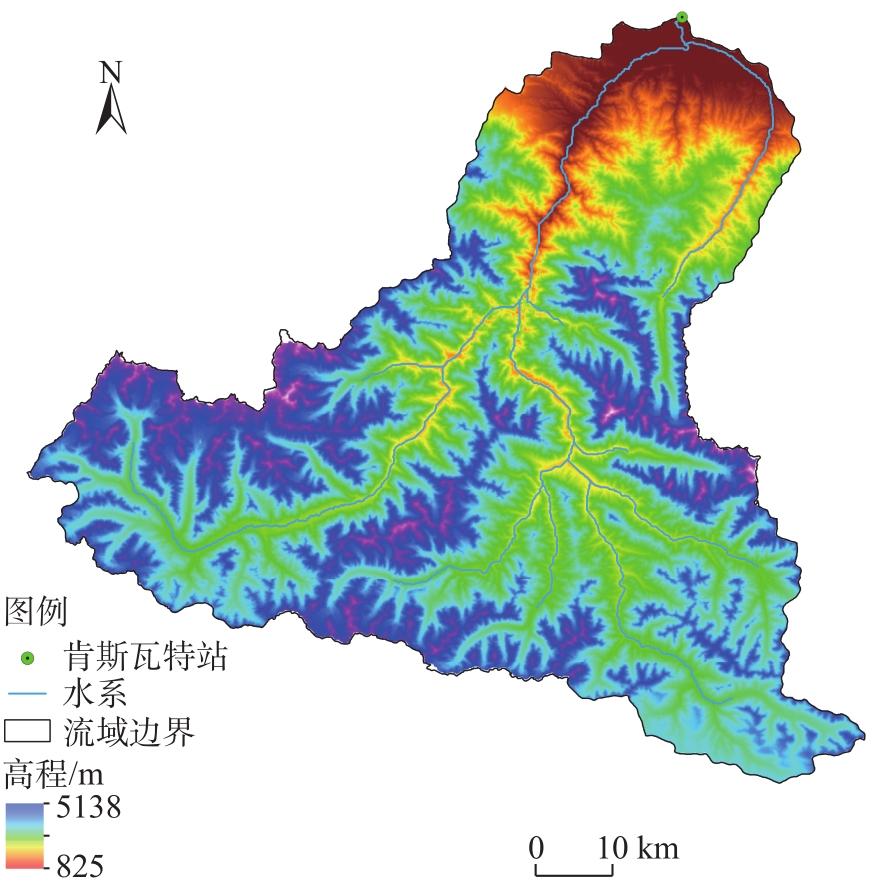
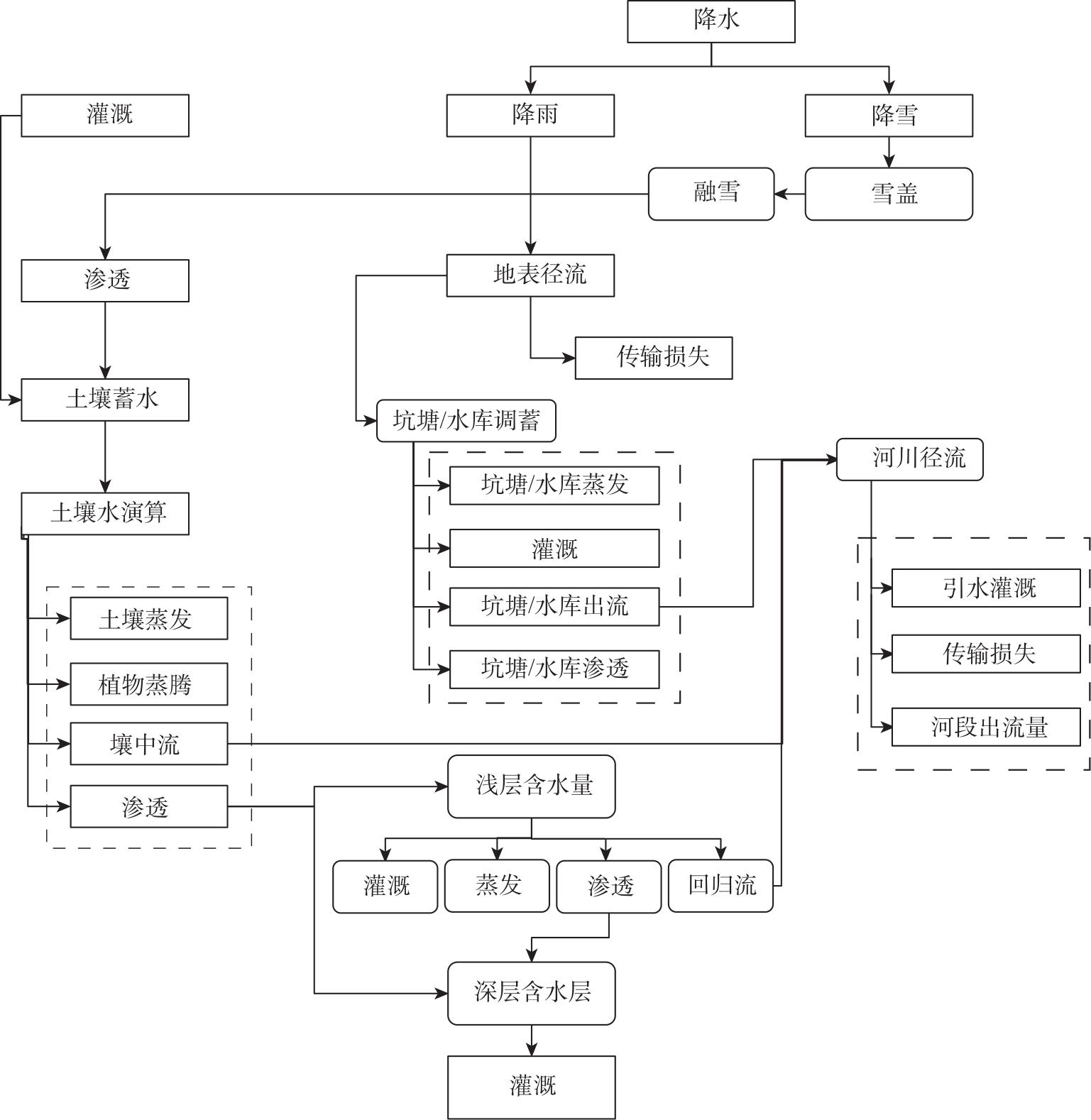
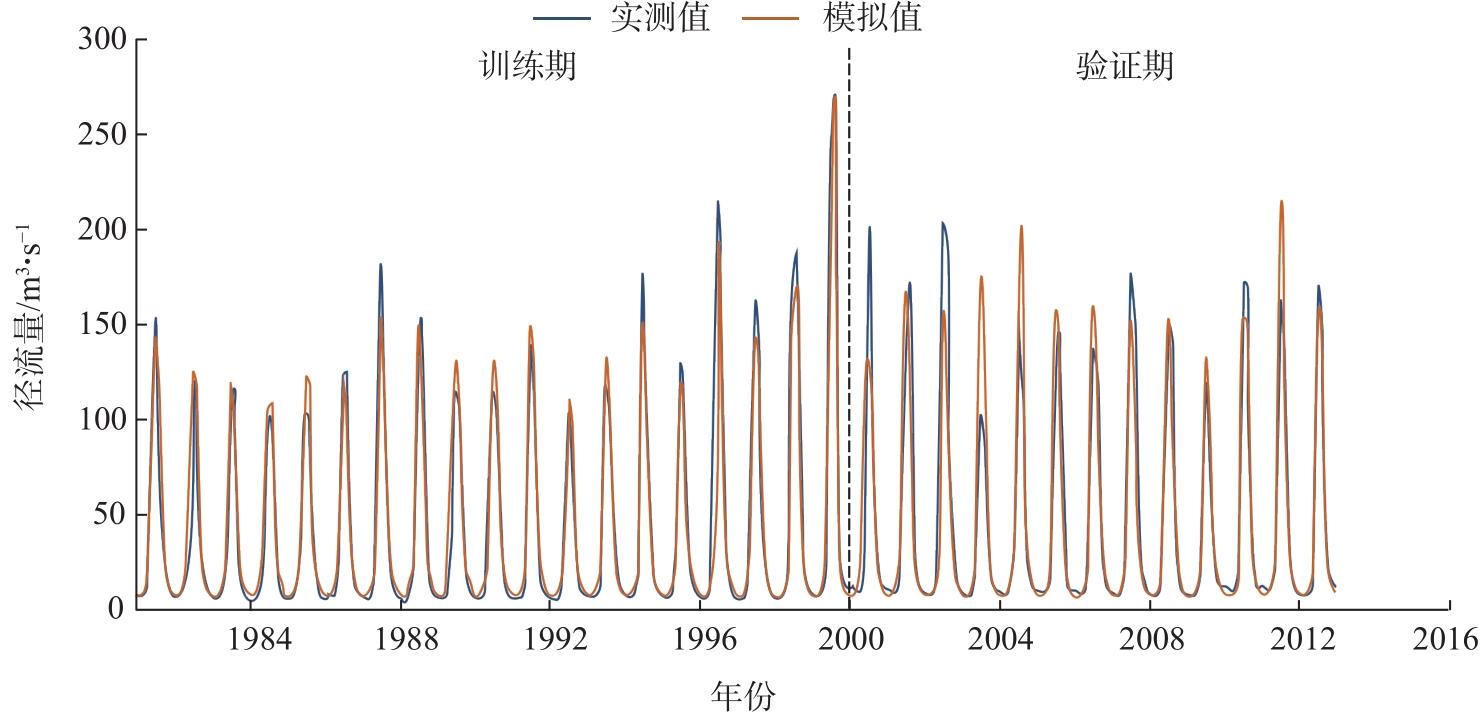
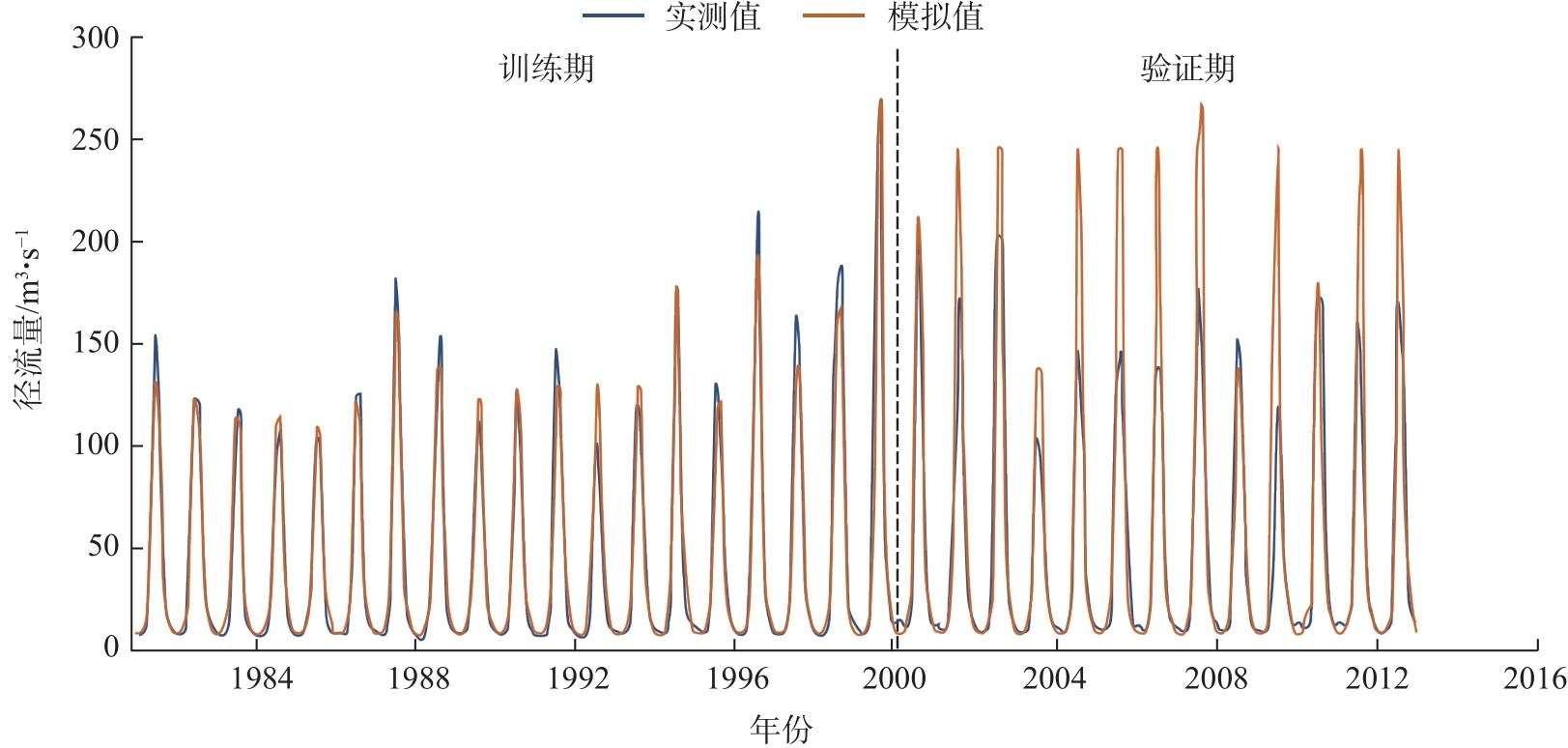
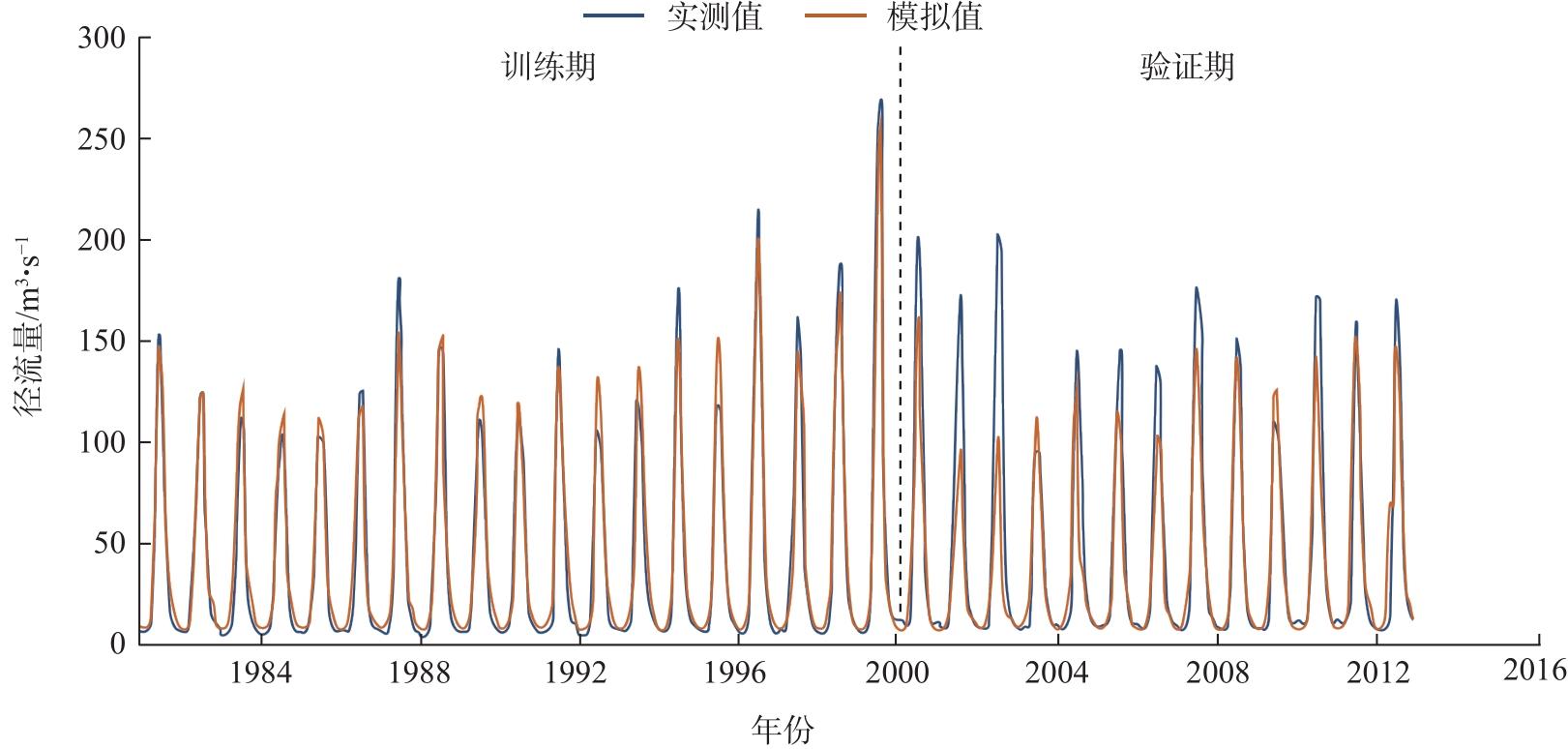
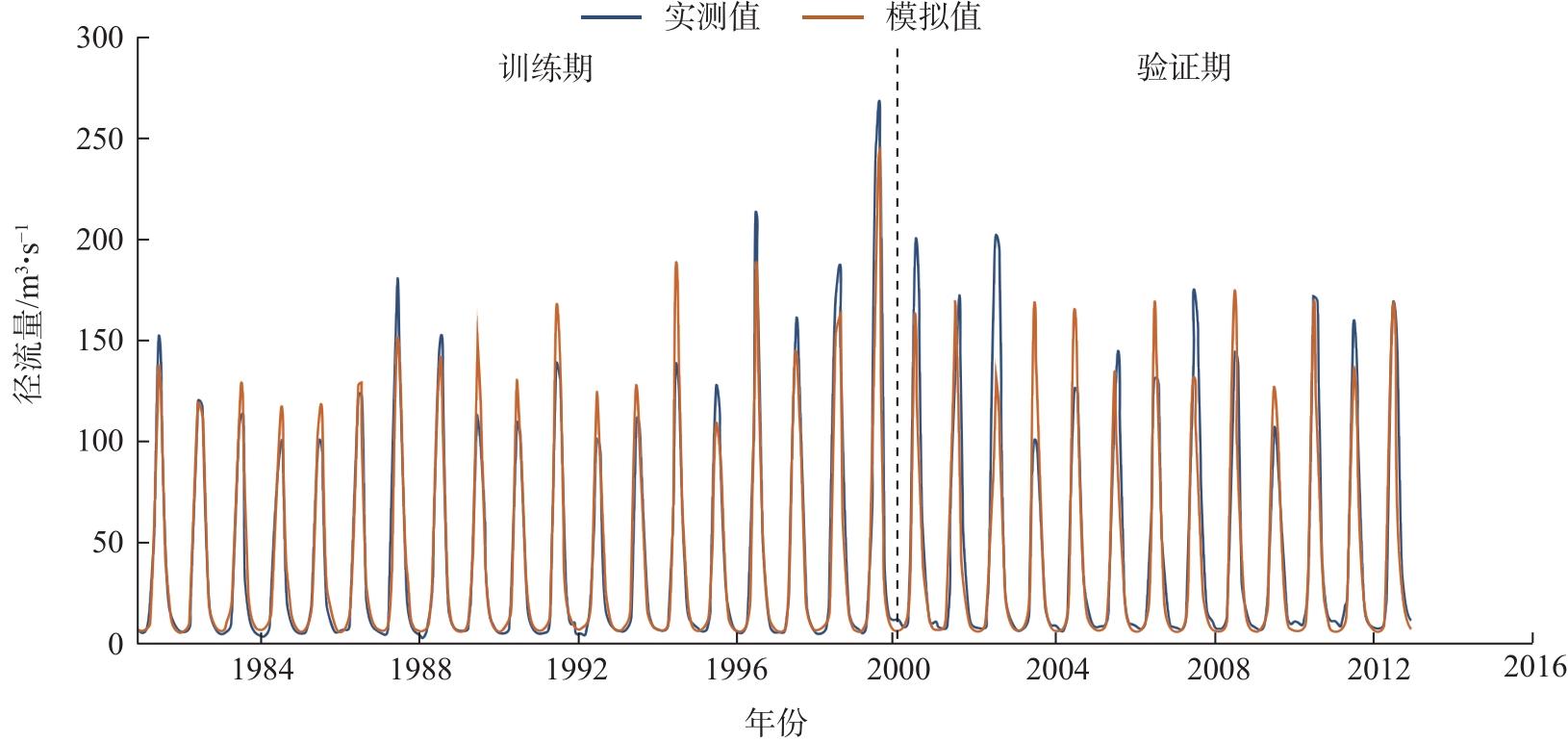
Meteorological data is a crucial factor in the study of hydrological processes. However, due to the complex terrain, meteorological stations in the upper reaches of the basin are scarce, limiting the study of hydrological processes in the basin due to the lack of measured data. This paper takes the Manas River Basin, Xinjiang, China as the research area and selects ERA5-Land, CMFD, and CFSR reanalysis data for analysis. The SWAT model, based on physical processes, and the AdaBoost model, based on data-driven approaches, are constructed to verify the applicability of different datasets in runoff simulation for two types of hydrological models. The Nash efficiency coefficient (NSE) and the determination coefficient (R2) are selected for quantitative analysis. The results show that: (1) The performance of the datasets in the AdaBoost model is better than that in the SWAT model. During the verification period, the NSE and R² of the ERA5-Land dataset increased by 4% and 2%; the NSE and R² of the CFSR dataset increased by 14% and 15%; the NSE and R2 of the CMFD dataset changed by -10% and 8%. The NSE and R2 of the meteorological station data increased by 8% and 10%. For datasets lacking data, the AdaBoost model is more applicable due to fewer restrictions on input data. (2) In the AdaBoost model, the simulation accuracy of all datasets decreased to a certain extent during the validation period, with CMFD showing the most significant decrease and ERA5-Land the least. These results indicate that the generalization ability of the AdaBoost model is weak. (3) Using ERA5-Land, CFSR, CMFD, and meteorological station data as inputs for the AdaBoost model, the simulation results show that ERA5-Land achieved good results during the verification period. The simulation accuracy of CFSR is comparable to that of meteorological stations, while CMFD performed the worst due to its inaccurate description of meteorological data in the mountainous area of the Manas River Basin. The reanalysis dataset ERA5-Land can provide a reference for runoff simulation in arid areas with insufficient measured meteorological data in northwest China.
Bo LIU , Fulong CHEN , Hao TANG , Long JIANG , Tongxia WANG . Applicability of reanalysis data in runoff simulation of Manas River[J]. Arid Land Geography, 2024 , 47(8) : 1348 -1357 . DOI: 10.12118/j.issn.1000-6060.2023.658
表1 评价指标计算方法Tab. 1 Evaluation index calculation method |
| 评价指标 | 公式计算 | 最优值 | 注释 |
|---|---|---|---|
| 纳什效率系数(NSE) | 1 | 为径流观测值; 为径流观测值均值; 为径流模拟值; 为径流模拟值均值; 为偏差分析中径流模拟值; 为偏差分析中径流观测值 | |
| 决定系数(R2) | 1 | ||
| 相对误差(BIAS) | 0 | ||
| 平均绝对误差(MAE) | 0 |
表2 SWAT模拟结果评价表Tab. 2 Evaluation table of SWAT simulation results |
| 数据类型 | 训练期 | 验证期 | |||
|---|---|---|---|---|---|
| R2 | NSE | R2 | NSE | ||
| ERA5-Land | 0.86 | 0.84 | 0.85 | 0.83 | |
| CMFD | 0.77 | 0.52 | 0.75 | 0.67 | |
| CFSR | 0.79 | 0.76 | 0.64 | 0.61 | |
| 气象站点 | 0.78 | 0.77 | 0.74 | 0.74 | |
表3 AdaBoost模拟结果评价表Tab. 3 Evaluation table of AdaBoost simulation results |
| 数据类型 | 训练期 | 验证期 | |||
|---|---|---|---|---|---|
| R2 | NSE | R2 | NSE | ||
| ERA5-Land | 0.95 | 0.94 | 0.87 | 0.87 | |
| CMFD | 0.95 | 0.93 | 0.83 | 0.57 | |
| CFSR | 0.93 | 0.93 | 0.79 | 0.75 | |
| 气象站点 | 0.93 | 0.92 | 0.84 | 0.82 | |
表4 AdaBoost模拟结果偏差表Tab. 4 AdaBoost simulation result deviation table |
| 数据类型 | Q20 | Q20-80 | Q80 | |||||
|---|---|---|---|---|---|---|---|---|
| MAE | BIAS | MAE | BIAS | MAE | BIAS | |||
| ERA5-Land | 1.56 | 0.05 | 3.62 | -0.01 | 33.99 | -0.06 | ||
| CFSR | 1.83 | 0.18 | 6.15 | 0.05 | 40.98 | -0.29 | ||
| CMFD | 1.63 | 0.03 | 5.58 | 0.13 | 56.20 | 0.26 | ||
| 气象站 | 0.92 | 0.03 | 3.42 | -0.12 | 39.55 | -0.18 | ||
| [1] |
夏军, 左其亭. 国际水文科学研究的新进展[J]. 地球科学进展, 2006, 21(3): 256-261.
[
|
| [2] |
金倩芳. 无资料地区短期水文预报方法研究与应用[D]. 武汉: 华中科技大学, 2020.
[
|
| [3] |
|
| [4] |
|
| [5] |
|
| [6] |
|
| [7] |
蒋慧敏, 刘春云, 贾健, 等. 新疆夏季对流性降水时空分布特征及成因分析[J]. 高原气象, 2019, 38(2): 340-348.
[
|
| [8] |
牛怡莹, 李春兰, 王军, 等. 内蒙古ERA5再分析降水数据性能评估与极端降水时空特征分析[J]. 干旱区地理, 2023, 46(9): 1418-1431.
[
|
| [9] |
成硕, 李艳忠, 星寅聪, 等. 遥感降水产品对黄河源区水文干旱特征的模拟性能分析[J]. 干旱区地理, 2023, 46(7): 1063-1072.
[
|
| [10] |
|
| [11] |
谭秋阳, 徐宗学, 赵彦军, 等. CMFD数据集在雅江年楚河流域的适用性分析[J]. 北京师范大学学报(自然科学版), 2021, 57(3): 372-379.
[
|
| [12] |
黄艳伟, 李颖, 朱红雷, 等. CFSR数据集在辉发河流域水文模拟中的应用[J]. 水土保持研究, 2021, 28(1): 300-306.
[
|
| [13] |
张淑芬, 董燕灵, 徐精诚, 等. 基于目标扰动的AdaBoost算法[J]. 通信学报, 2023, 44(2): 198-209.
[
|
| [14] |
|
| [15] |
张圆圆, 侯艳, 李康. 多分类研究中的boosting算法[J]. 中国卫生统计, 2018, 35(1): 142-145.
[
|
| [16] |
孟宪贵, 郭俊建, 韩永清. ERA5再分析数据适用性初步评估[J]. 海洋气象学报, 2018, 38(1): 91-99.
[
|
| [17] |
|
| [18] |
|
| [19] |
刘自牧, 李国平. 高原切变线的客观识别与时空分布的统计分析[J]. 大气科学, 2019, 43(1): 13-26.
[
|
| [20] |
温婷婷, 郭英香, 董少睿, 等. 1979—2017年CRU、ERA5、CMFD格点降水数据在青藏高原适用性评估[J]. 干旱区研究, 2022, 39(3): 684-697.
[
|
| [21] |
张银辉. SWAT模型及其应用研究进展[J]. 地理科学进展, 2005, 24(5): 123-132.
[
|
| [22] |
|
| [23] |
尹儒, 门昌骞, 王文剑, 等. 模型决策树: 一种决策树加速算法[J]. 模式识别与人工智能, 2018, 31(7): 643-652.
[
|
| [24] |
唐豪, 王晓云, 陈伏龙, 等. 基于ERA5-Land数据集的玛纳斯河径流模拟研究[J]. 地学前缘, 2022, 29(3): 271-283.
[
|
| [25] |
谷新晨, 肖森元, 杨广, 等. 基于CMADS和SWAT模型的玛纳斯河流域水文过程模拟[J]. 水资源与水工程学报, 2021, 32(2): 116-123.
[
|
| [26] |
陈伏龙, 王怡璇, 吴泽斌, 等. 气候变化和人类活动对干旱区内陆河径流量的影响——以新疆玛纳斯河流域肯斯瓦特水文站为例[J]. 干旱区研究, 2015, 32(4): 692-697.
[
|
| [27] |
肖森元, 杨广, 何新林, 等. 玛纳斯河流域MIKE SHE水文模型率定[J]. 山地学报, 2021, 39(1): 1-9.
[
|
/
| 〈 |
|
〉 |