



Diurnal variation characteristics of warm season precipitation in the Bayanbuluke Basin of the Middle Tianshan Mountains
Received date: 2024-02-28
Revised date: 2024-05-08
Online published: 2026-03-11
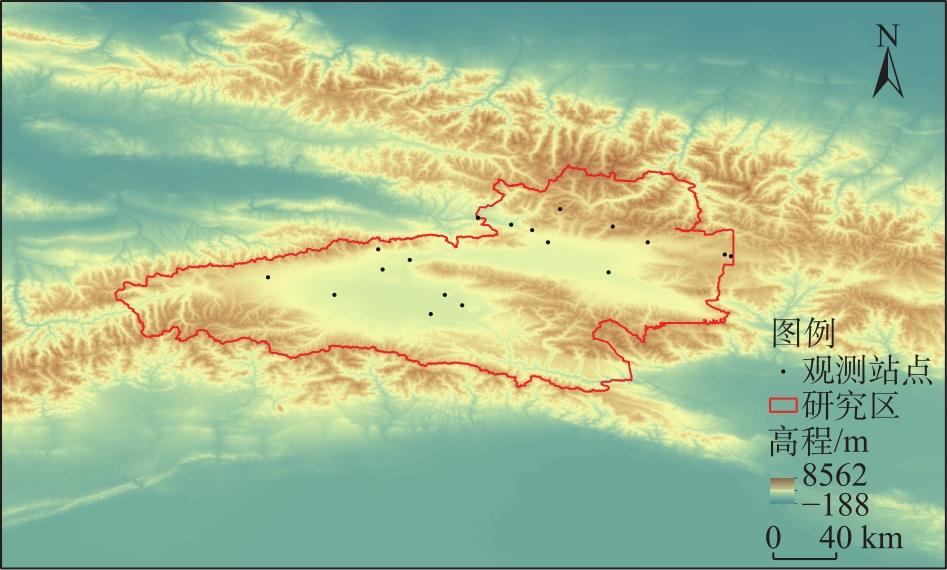
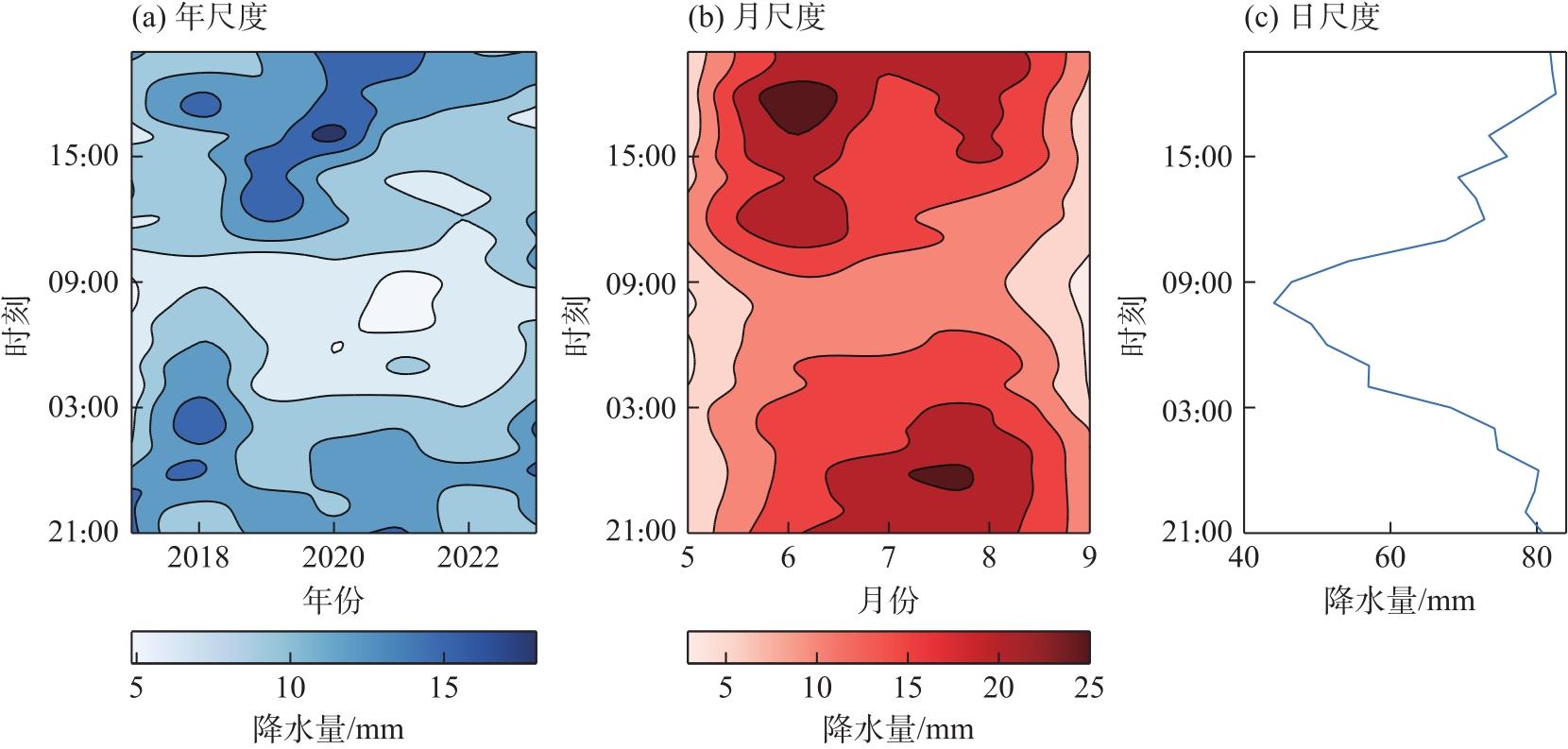
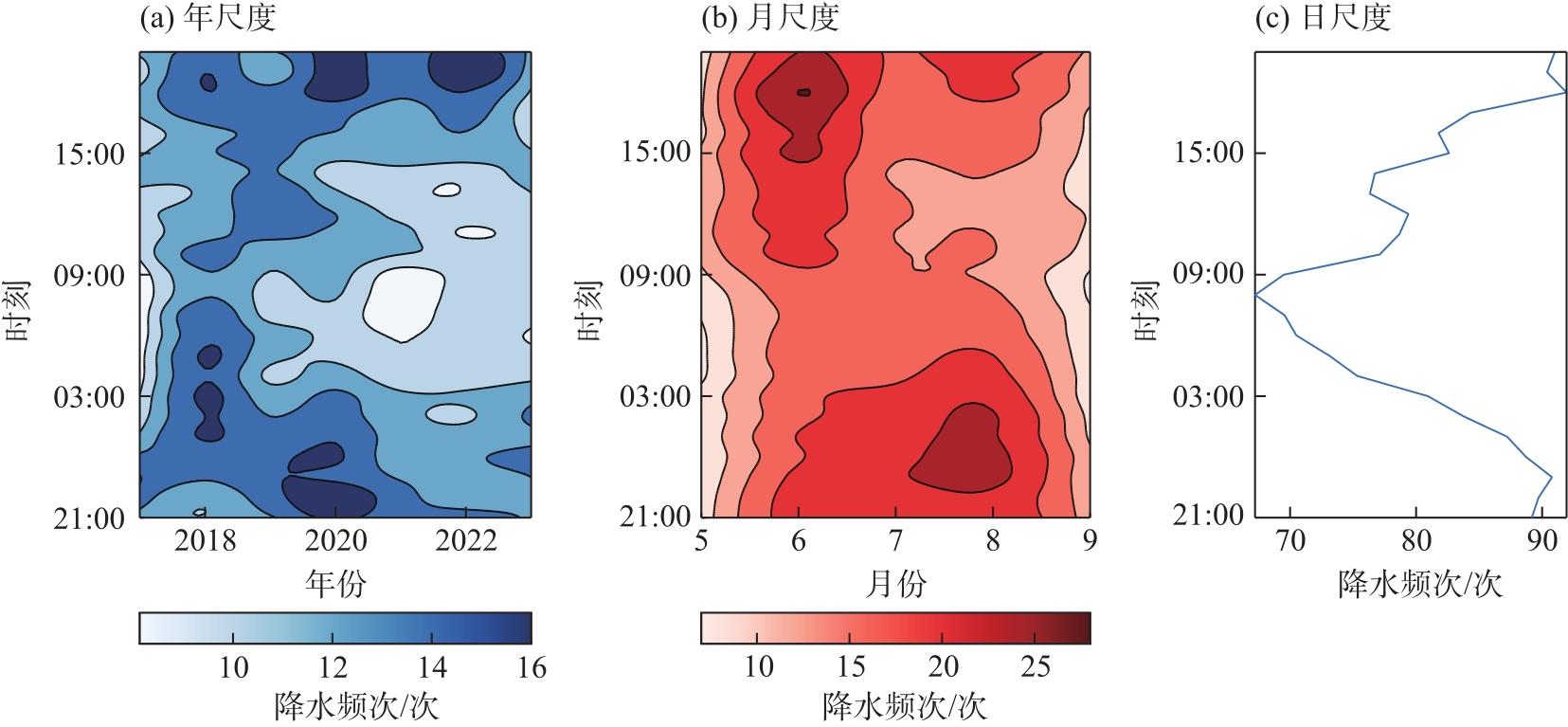
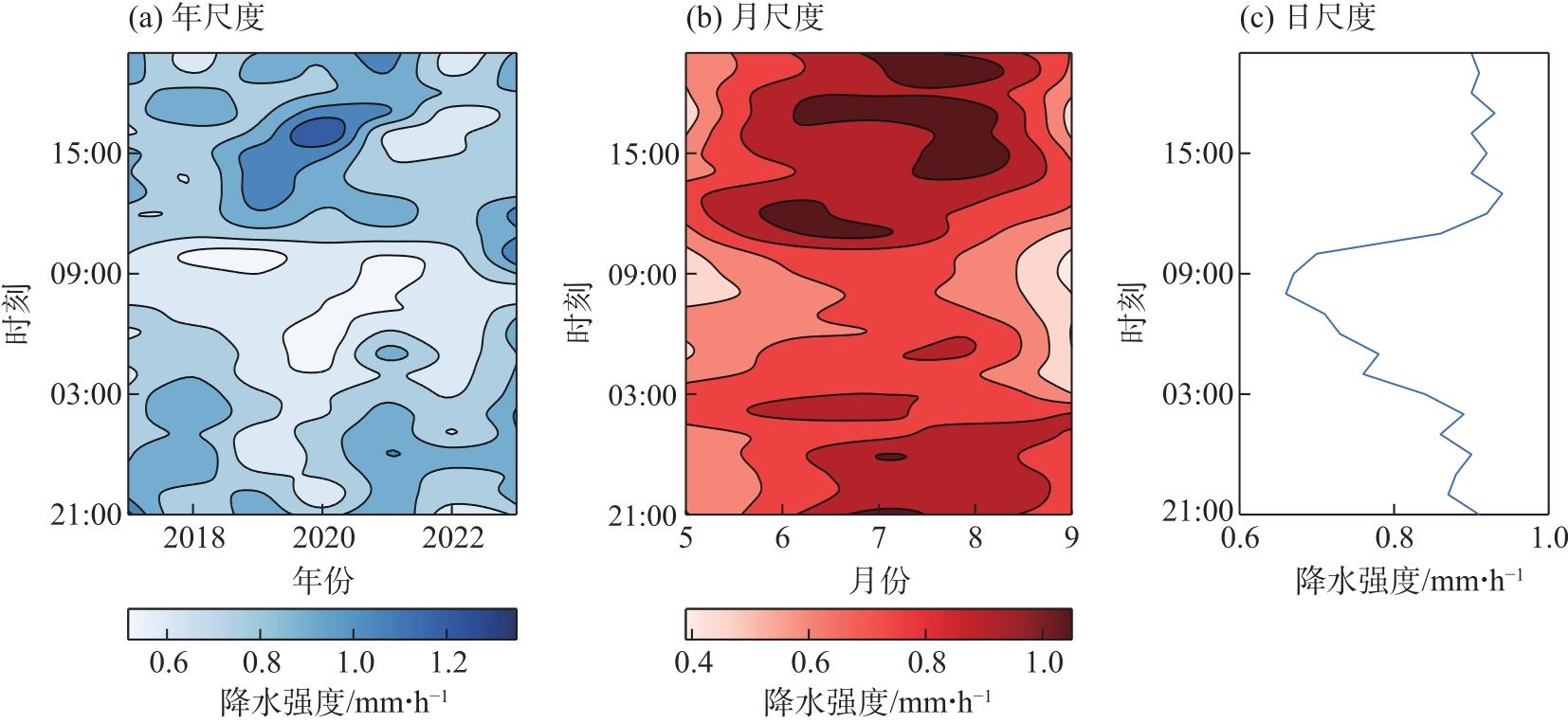
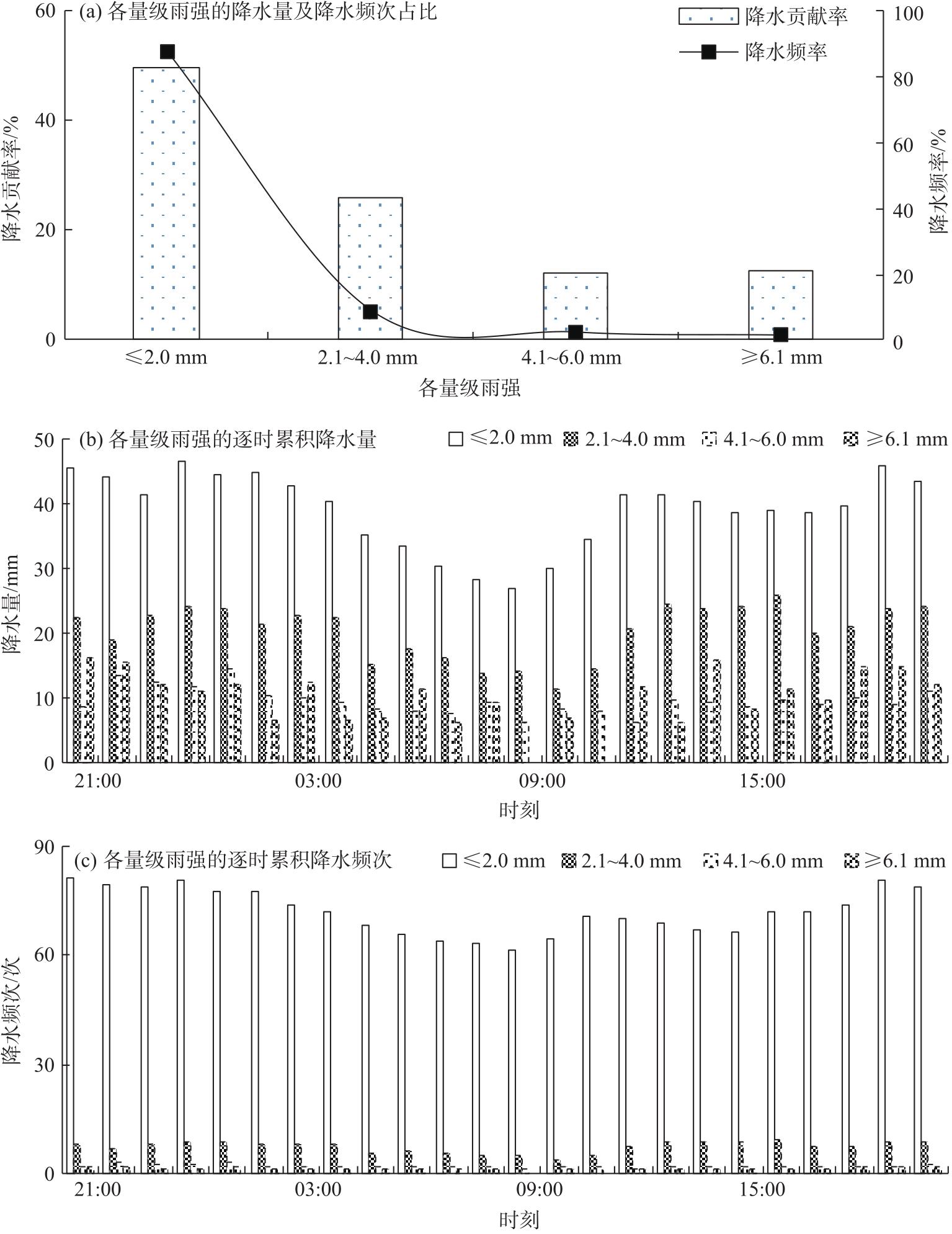
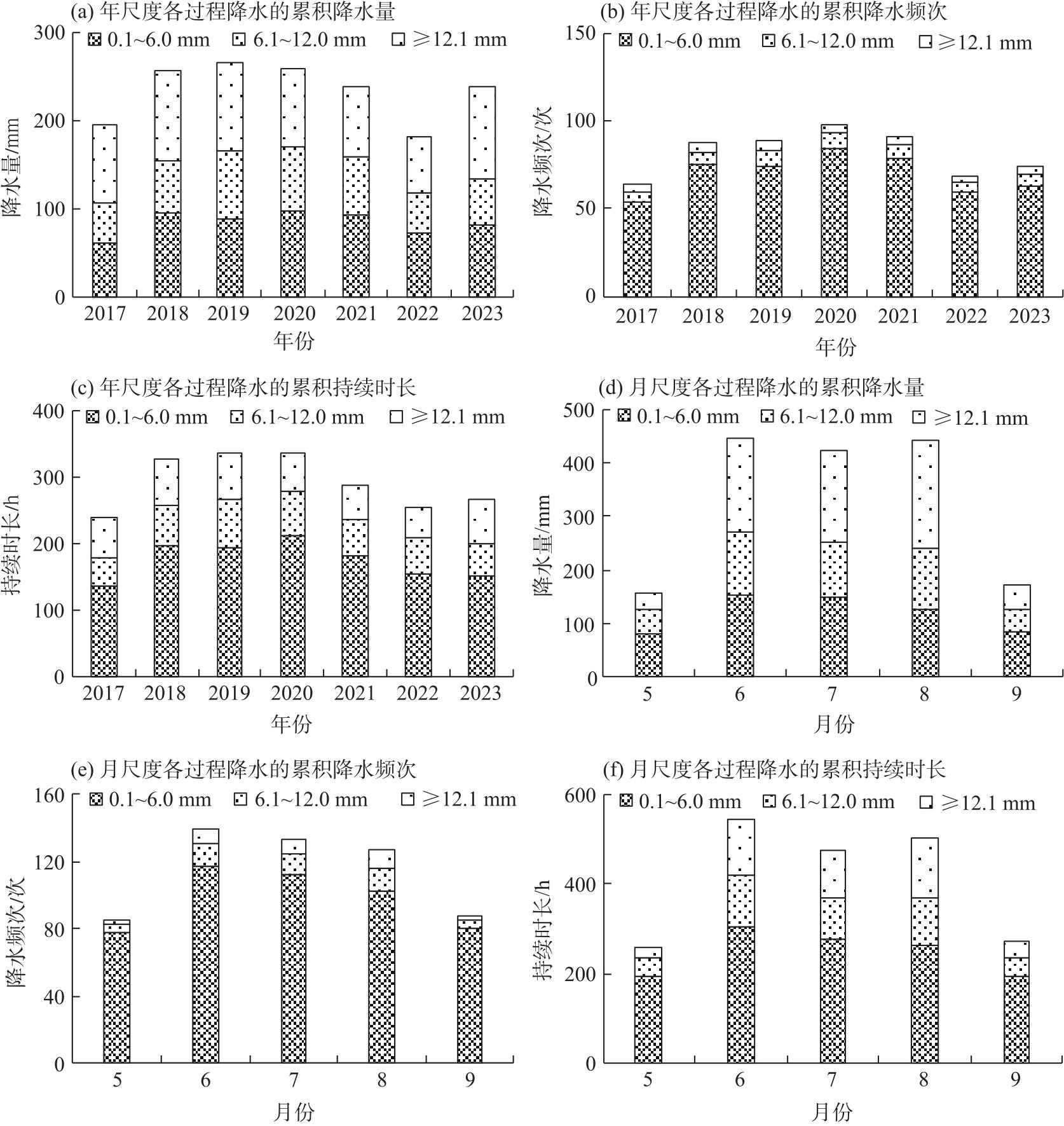
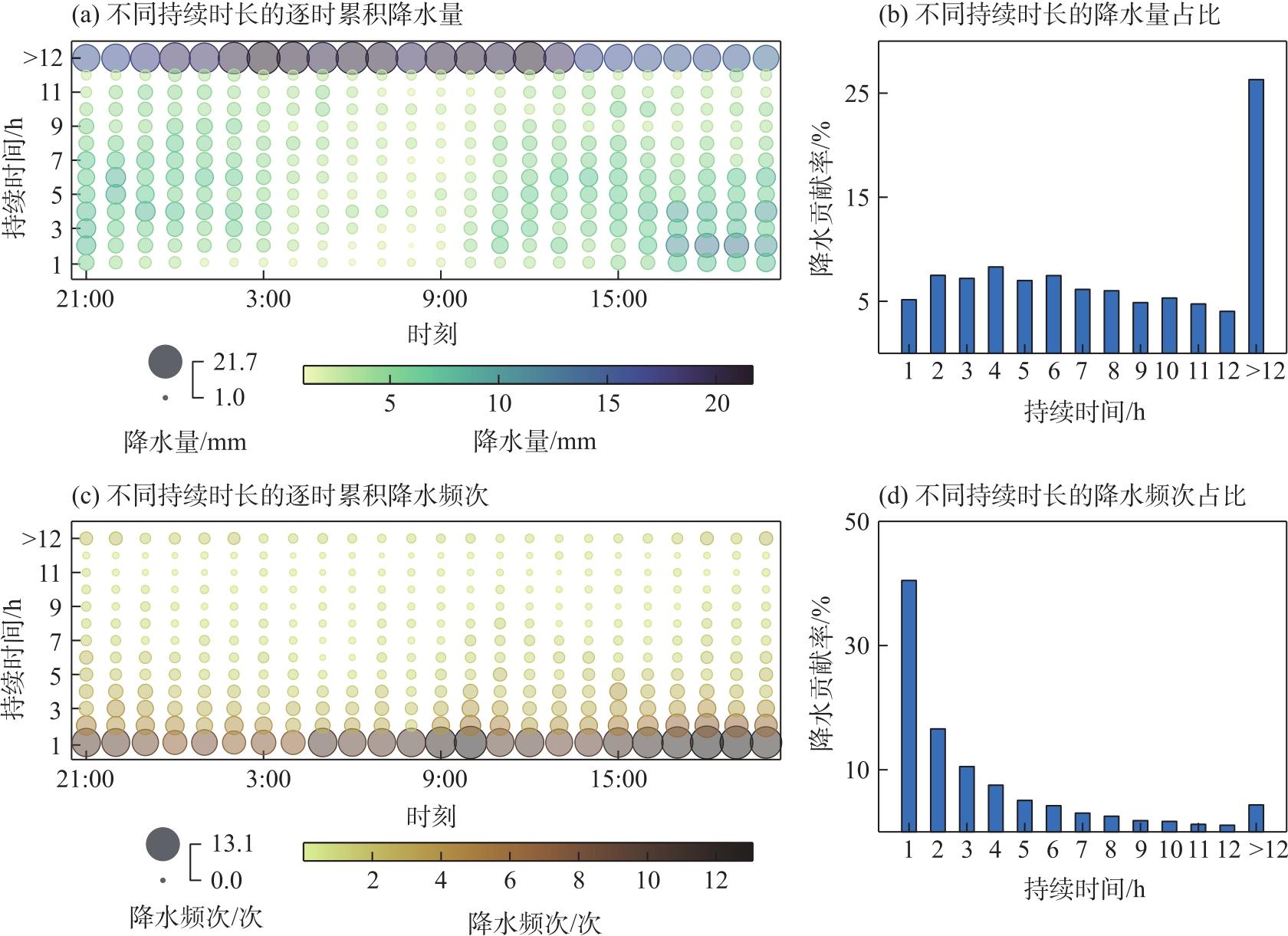
Diurnal variation in precipitation is a fundamental aspect of climate change, providing valuable insights into its effects on regional water resources. This study analyzes the diurnal precipitation patterns in the Bayanbuluke Basin, Xinjiang, China during the warm season (May-September) from 2017 to 2023, using hourly precipitation data from 18 meteorological observation stations. The findings indicate that the diurnal variation characteristics of precipitation amount, frequency, and intensity during the warm season exhibit overall consistency, albeit with differences across time scales. On an annual scale, precipitation amount and intensity predominantly increase during the day, whereas frequency rises at night. On a monthly scale, all three metrics show significant increases from the afternoon to the first half of the night. During the 18:00—24:00 period, precipitation is not only more frequent but also exhibits higher amounts and intensity, while the 07:00—10:00 period reflects the opposite trend. In the warm season, low-intensity rainfall (R1≤2.0 mm) contributes the most to total precipitation, followed by moderate rainfall (2.1 mm≤R1≤4.0 mm). Regarding precipitation processes (R), light rain (0.1 mm≤R≤6.0 mm) occurs most frequently, yet heavy to torrential rain (R≥12.1 mm) contributes the most to total precipitation. The afternoon period experiences the highest precipitation frequency and contribution. Among different precipitation durations, long-duration events exceeding 6 hours account for the largest contributions, whereas short-duration events (1-3 h) are more frequent, particularly during 15:00—20:00.
Peng DIAO , Xueying ZHOU , NUJIA Nimicairen , Changyong LIU . Diurnal variation characteristics of warm season precipitation in the Bayanbuluke Basin of the Middle Tianshan Mountains[J]. Arid Land Geography, 2024 , 47(12) : 2093 -2103 . DOI: 10.12118/j.issn.1000-6060.2024.128
表1 不同时间尺度下降水量、降水频次和降水强度的相关性Tab. 1 Correlation coefficient of precipitation, precipitation frequency and precipitation intensity at different time scales |
| 相关类别 | 时间尺度 | ||
|---|---|---|---|
| 年 | 月 | 逐时 | |
| 降水量—降水频次 | 0.72* | 0.99** | 0.94** |
| 降水量—降水强度 | 0.31 | 0.96** | 0.93** |
| 降水频次—降水强度 | 0.43 | 0.93* | 0.75** |
注:∗、∗∗分别表示通过了0.05和0.01的置信度检验。 |
图6 不同量级降水过程在各时间尺度中的变化Fig. 6 Changes of precipitation processes of different magnitudes at different time scales |
表2 不同量级降水过程的降水量、频次及持续时间对比分析Tab. 2 Comparative analysis of precipitation amount, frequency and duration of precipitation processes of different magnitudes |
| 降水量级/mm | 降水贡献率/% | 降水频率/% | 持续时间占比/% | 平均降水量/mm·次-1 | 平均持续时间/h·次-1 |
|---|---|---|---|---|---|
| 0.1≤R≤6.0 | 36.12 | 85.64 | 59.83 | 1.21 | 2.51 |
| 6.1≤R≤12.0 | 25.81 | 8.67 | 19.41 | 8.53 | 8.05 |
| R≥12.1 | 38.07 | 5.69 | 20.77 | 19.20 | 13.15 |
注:R为降水量。下同。 |
表3 不同量级降水过程发生时段统计表Tab. 3 Statistical table of occurrence time of precipitation processes of different magnitudes |
| 时段 | 类别 | 降水量级/mm | 总计 | ||
|---|---|---|---|---|---|
| 0.1≤R≤6.0 | 6.1≤R≤12.0 | R≥12.1 | |||
| 上午 | 总降水量/mm | 142.64 | 94.46 | 116.36 | 353.47 |
| 总降水频次/次 | 125.44 | 11.22 | 6.61 | 143.28 | |
| 总持续时间/h | 315.67 | 90.44 | 65.11 | 471.22 | |
| 下午 | 总降水量/mm | 199.63 | 140.27 | 194.43 | 534.33 |
| 总降水频次/次 | 151.94 | 16.39 | 10.44 | 178.78 | |
| 总持续时间/h | 357.78 | 129.72 | 124.89 | 612.39 | |
| 前半夜 | 总降水量/mm | 161.36 | 124.02 | 198.80 | 484.17 |
| 总降水频次/次 | 116.06 | 14.56 | 9.50 | 140.11 | |
| 总持续时间/h | 328.89 | 115.83 | 131.28 | 576.00 | |
| 后半夜 | 总降水量/mm | 89.19 | 64.79 | 115.32 | 269.30 |
| 总降水频次/次 | 96.89 | 7.50 | 6.00 | 110.39 | |
| 总持续时间/h | 230.50 | 63.56 | 86.67 | 380.72 | |
| [1] |
戴泽军, 宇如聪, 陈昊明. 湖南夏季降水日变化特征[J]. 高原气象, 2009, 28(6): 1463-1469.
[
|
| [2] |
|
| [3] |
Sperber,
|
| [4] |
胡亮, 杨松, 李耀东. 青藏高原及其下游地区降水厚度季、日变化的气候特征分析[J]. 大气科学, 2010, 34(2): 387-398.
[
|
| [5] |
李红梅, 周天军, 宇如聪. 近四十年我国东部盛夏日降水特性变化分析[J]. 大气科学, 2008, 32(2): 357-370.
[
|
| [6] |
何清, 杨青, 李红军. 新疆40 a来气温、降水和沙尘天气变化[J]. 冰川冻土, 2003, 25(4): 423-427.
[
|
| [7] |
|
| [8] |
|
| [9] |
薛羽君, 白爱娟, 李典. 四川盆地降水日变化特征分析和个例模拟[J]. 地球科学进展, 2012, 27(8): 885-894.
[
|
| [10] |
唐红玉, 顾建峰, 俞胜宾, 等. 西南地区降水日变化特征分析[J]. 高原气象, 2011, 30(2): 376-384.
[
|
| [11] |
|
| [12] |
朱小凡, 张明军, 王圣杰, 等. 2008—2013年新疆夏季降水的日变化特征[J]. 生态学杂志, 2016, 35(2): 478-488.
[
|
| [13] |
陈春艳, 赵克明, 阿不力米提江·阿布力克木, 等. 暖湿背景下新疆逐时降水变化特征研究[J]. 干旱区地理, 2015, 38(4): 692-702.
[
|
| [14] |
郑博华, 李斌, 黄秋霞, 等. 新疆伊犁河谷冷暖季降水时空分布特征[J]. 沙漠与绿洲气象, 2019, 13(3): 80-87.
[
|
| [15] |
杨霞, 于晓晶, 赵雅蕾, 等. 2011—2015年乌鲁木齐冬季降雪的日变化特征[J]. 干旱气象, 2018, 36(4): 603-609.
[
|
| [16] |
赵勇, 黄丹青, 古丽格娜, 等. 新疆北部夏季强降水分析[J]. 干旱区研究, 2010, 27(5): 773-779.
[
|
| [17] |
刁鹏, 李刚, 袁先雷, 等. 基于Budyko模型的巴音布鲁克山区暖季人工增水作业效果分析[J]. 干旱区地理, 2023, 46(12): 1963-1972.
[
|
| [18] |
周雪英, 段均泽, 李晓川, 等. 近52年巴音布鲁克山区降水变化趋势与突变特征[J]. 沙漠与绿洲气象, 2013, 7(5): 19-24.
[
|
| [19] |
任芝花, 赵平, 张强, 等. 适用于全国自动站小时降水资料的质量控制方法[J]. 气象, 2010, 36(7): 123-132.
[
|
| [20] |
于杨, 朱晨, 赵琦, 等. 全球地面气温和降水定时值数据整合与初步质量控制[J]. 气象与环境学报, 2016, 32(6): 94-101.
[
|
| [21] |
李胜楠, 高婧, 宋佳, 等. 库尔勒市主汛期降水日变化特征分析[J]. 沙漠与绿洲气象, 2019, 13(2): 63-68.
[
|
| [22] |
|
| [23] |
黄秋霞, 方雯, 王春燕, 等. 新疆昌吉市主汛期降水的日变化特征[J]. 沙漠与绿洲气象, 2016, 10(6): 19-23.
[
|
| [24] |
肖开提·多莱特. 新疆降水量级标准的划分[J]. 新疆气象, 2005(3): 7-8.
[
|
| [25] |
崔彩霞, 李杨, 杨青. 新疆夜雨和昼雨的空间分布和长期变化[J]. 中国沙漠, 2008, 28(5): 903-907.
[
|
| [26] |
李建, 宇如聪, 王建捷. 北京市夏季降水的日变化特征[J]. 科学通报, 2008, 53(7): 829-832.
[
|
| [27] |
郭玉琳, 赵勇, 周雅蔓, 等. 新疆天山山区夏季降水日变化特征及其与海拔高度关系[J]. 干旱区地理, 2022, 45(1): 57-65.
[
|
| [28] |
黄秋霞, 赵勇, 何清. 新疆伊犁河谷夏季降水日变化特征[J]. 冰川冻土, 2015, 37(2): 369-375.
[
|
| [29] |
杨莲梅, 张庆云. 新疆夏季降水年际变化与亚洲副热带西风急流[J]. 应用气象学报, 2008, 19(2): 171-178.
[
|
| [30] |
于晓晶, 赵勇. 地形对天山夏季降水影响的模拟[J]. 中国沙漠, 2016, 36(4): 1133-1143.
[
|
| [31] |
杨莲梅, 杨青, 杨柳. 天山山区大气水分循环特征[J]. 气候与环境研究, 2014, 19(1): 107-116.
[
|
/
| 〈 |
|
〉 |