



Characteristic and potential prediction of thunderstorm in Gansu Province
Received date: 2024-02-22
Revised date: 2024-06-27
Online published: 2026-03-11
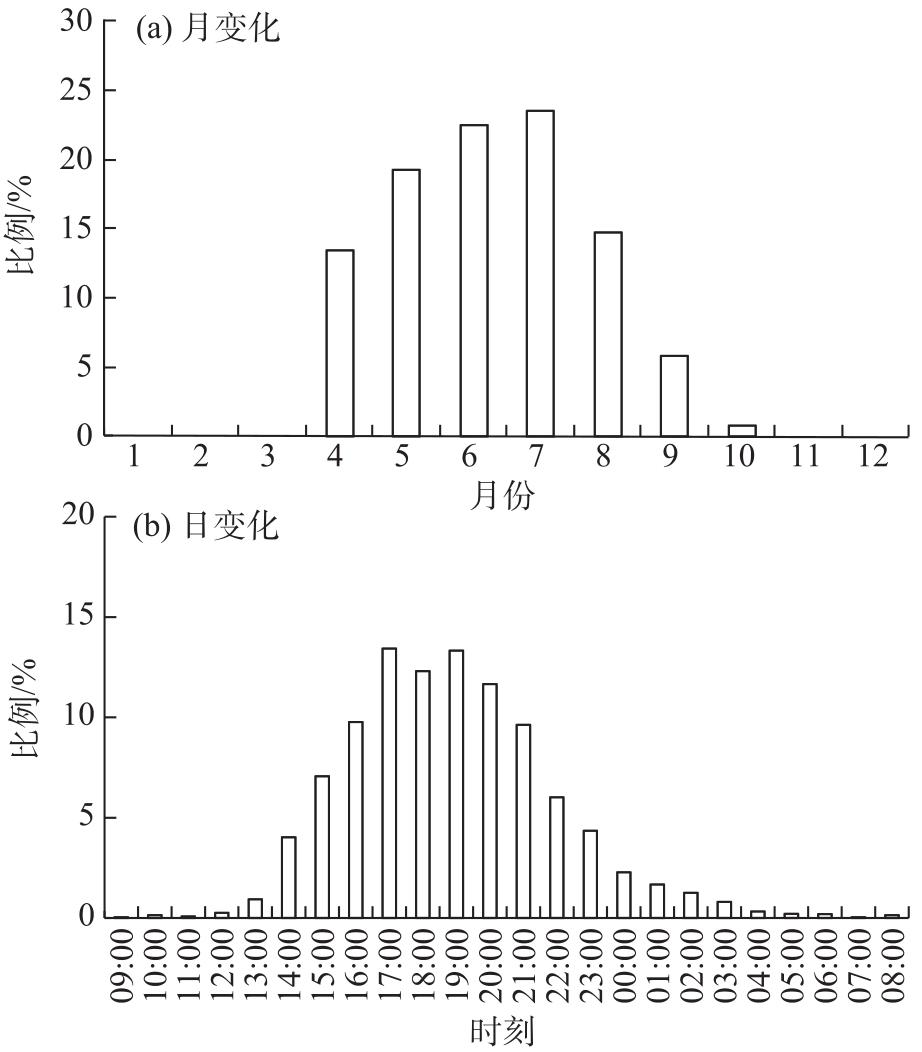
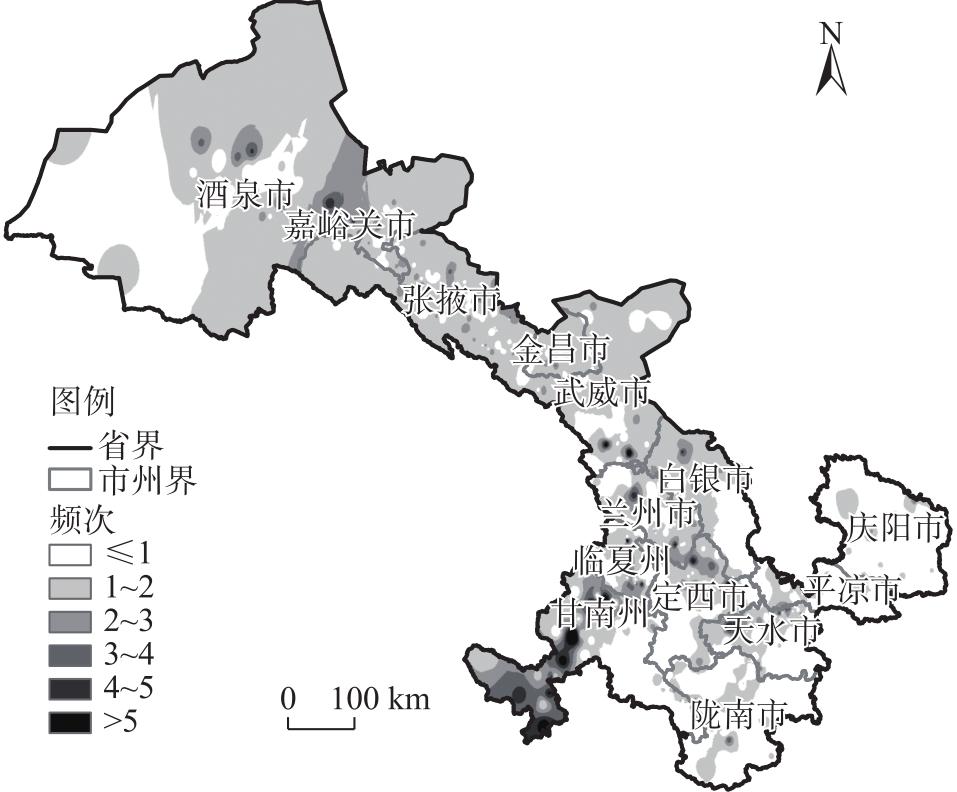
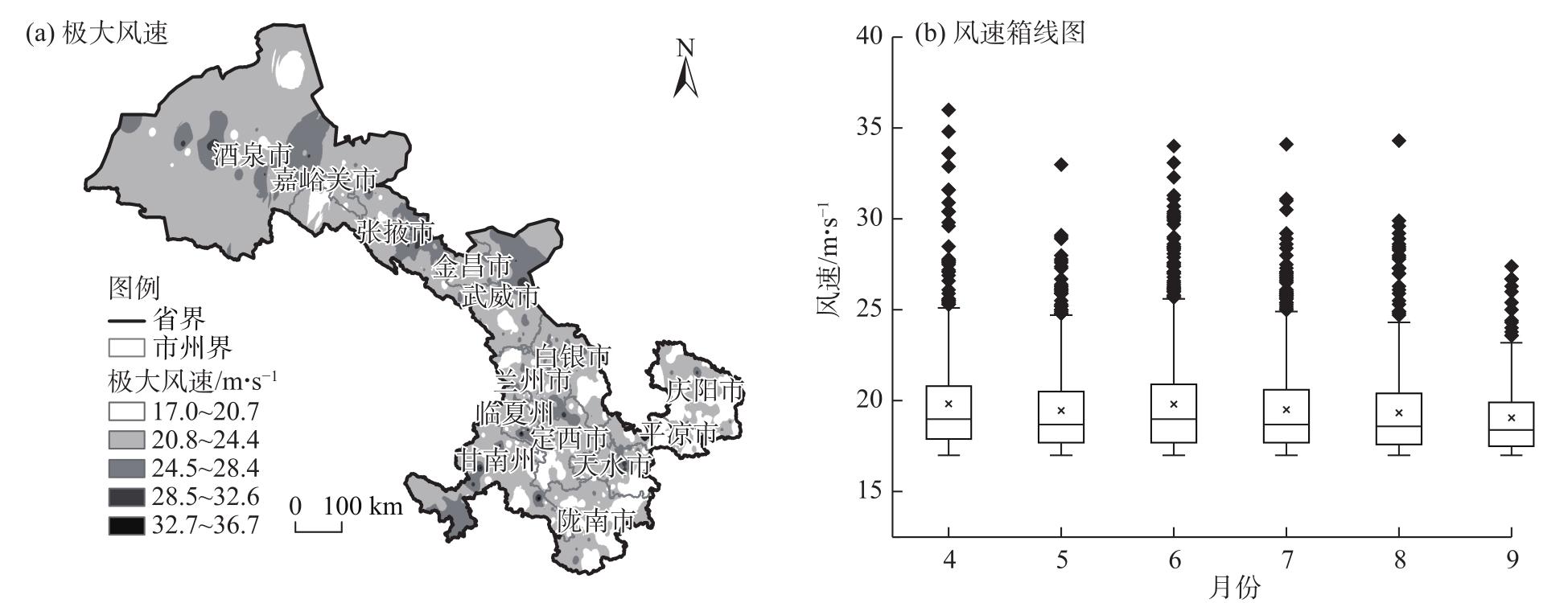
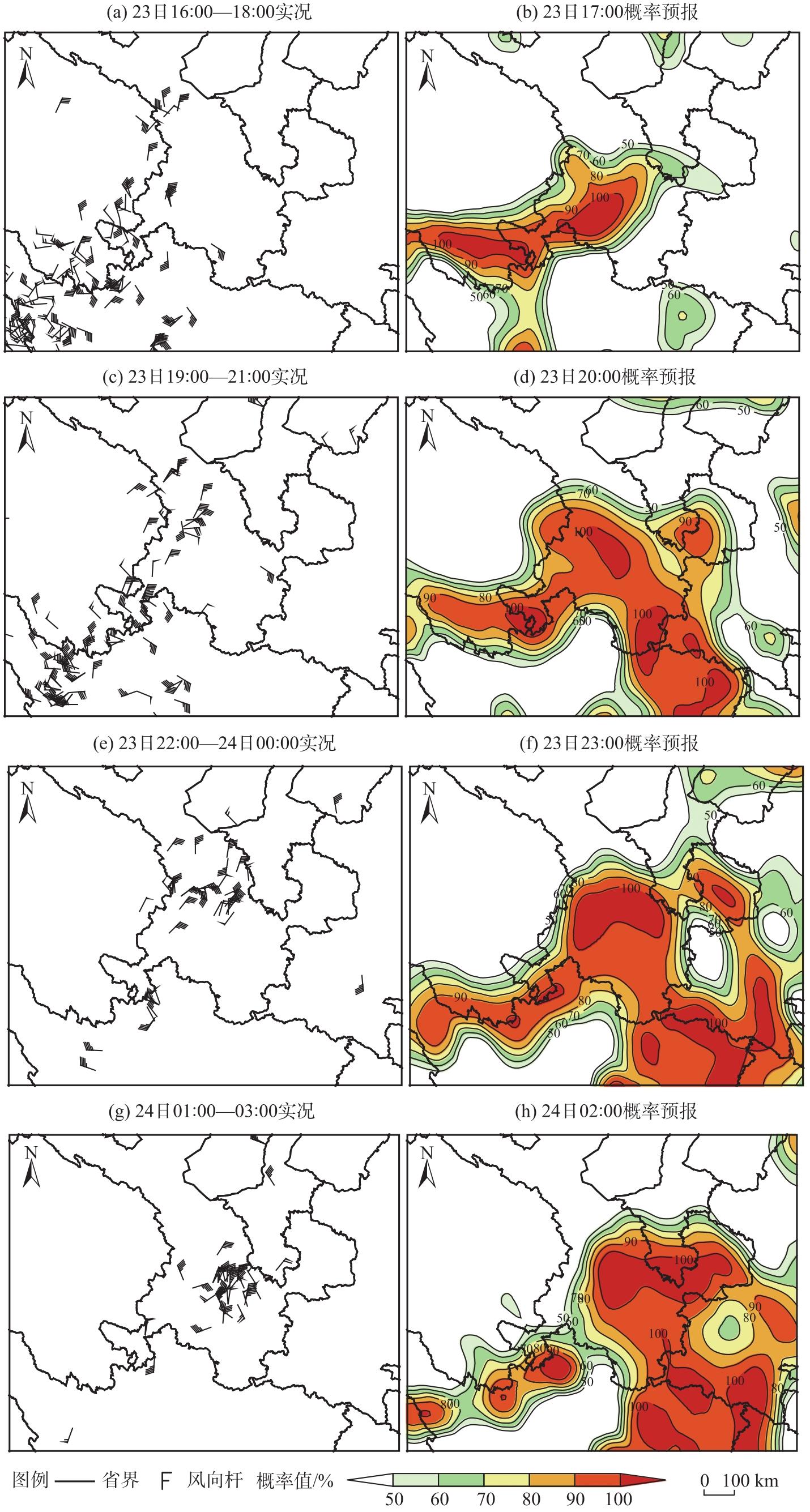
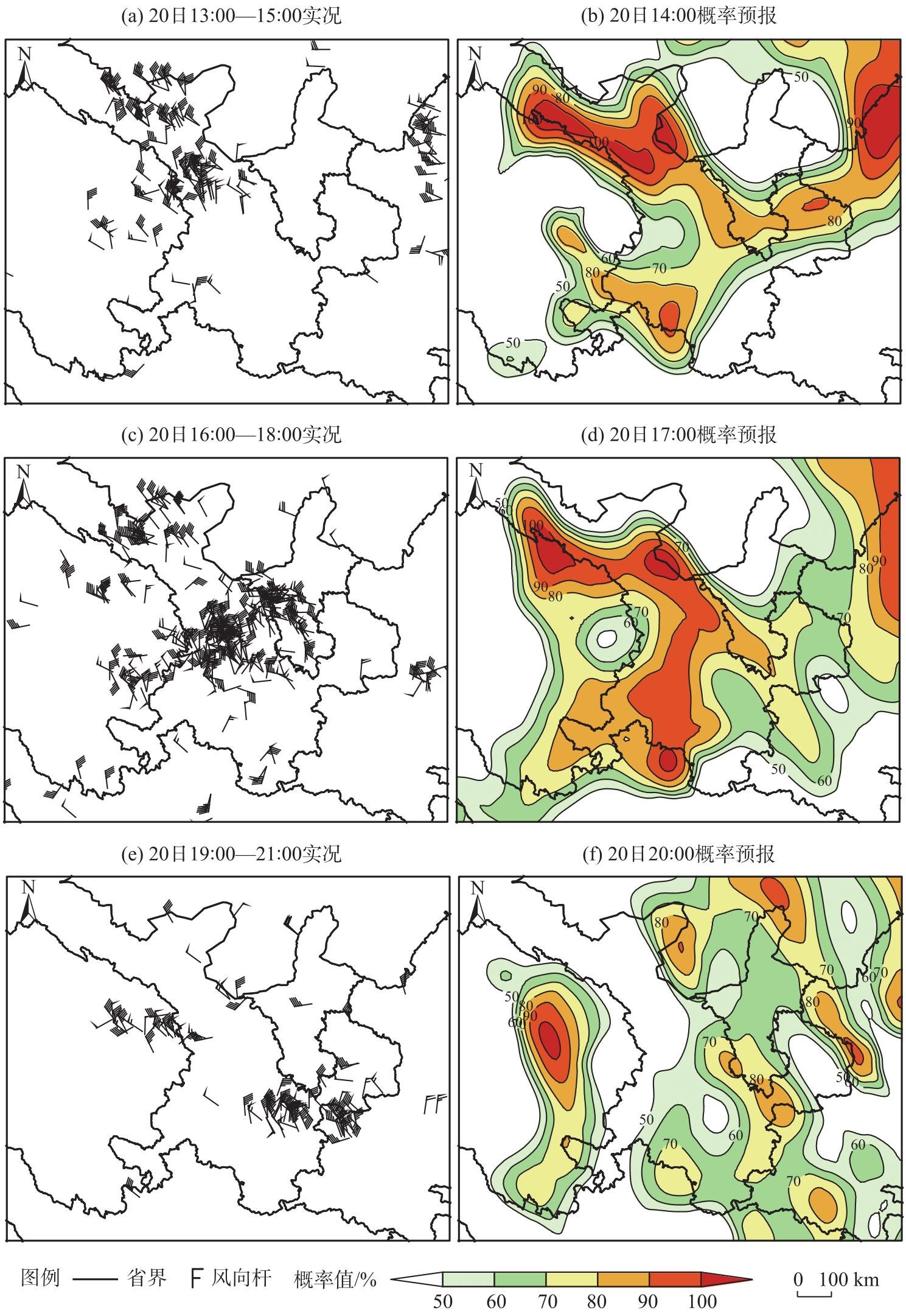
Based on hourly extreme wind speed and lightning localization data from 2115 observation stations in Gansu Province, China for the period from 2017 to 2021, combined with ECMWF ensemble forecasting data, the temporal and spatial distribution characteristics as well as the convective parameter characteristics of thunderstorm were analyzed. The potential prediction of thunderstorm was conducted using a multi-index nested method. The results indicate that thunderstorm primarily occur from April to September, with the highest frequency from May to July, accounting for 65.3% of the total occurrences. The hourly occurrence of thunderstorm is concentrated between 15:00 and 21:00, peaking at 17:00. The spatial distribution of thunderstorm is strongly influenced by the terrain in Gansu Province. Spatially, the frequency of thunderstorm decreases from west to east. Thunderstorm are more frequent in plateaus than in valleys, with the highest occurrences observed in the Gannan Plateau and the lowest in southeastern Gansu Province. Thunderstorm in Gansu Province predominantly fall into categories 8 and 9, while those above category 10 mainly occur in the Hexi Region and Gannan Plateau. Potential forecast probability products for thunderstorm in Gansu Province were obtained based on convective parameters and indicator threshold. Test results reveal a strong concurrence between the forecasted and actual occurrence areas, providing a significant reference value to improve the thunderstorm forecast in Gansu Province.
Key words: thunderstorm; characteristic; potential prediction; Gansu Province
Dan TAN , Canqi NIE , Wubin HUANG , Wenyao LI , Lijun XIE . Characteristic and potential prediction of thunderstorm in Gansu Province[J]. Arid Land Geography, 2024 , 47(12) : 2083 -2092 . DOI: 10.12118/j.issn.1000-6060.2024.110
表1 甘肃省区域划分Tab. 1 Regional division of Gansu Province |
| 区域 | 自然地理区 | 行政区划 |
|---|---|---|
| 河西 | 河西 | 酒泉市、嘉峪关市、张掖市、金昌市、武威市 |
| 河东 | 陇中 | 兰州市、白银市、定西市、临夏州 |
| 陇东 | 庆阳市、平凉市 | |
| 陇南 | 天水市、陇南市 | |
| 甘南 | 甘南州 |
表2 雷暴大风物理量参数4—9月中位数指标Tab. 2 Midrange index of water vapor convection parameters in thunderstorms from April to September |
| 类型 | 物理量 参数 | 中位数 | |||||
|---|---|---|---|---|---|---|---|
| 4月 | 5月 | 6月 | 7月 | 8月 | 9月 | ||
| 水汽 | FH500 | 2.5 | 1.8 | 2.7 | 2.8 | 2.7 | 2.4 |
| FH700 | 3.6 | 2.6 | 2.3 | 3.2 | 3.3 | 2.4 | |
| IFVQ700 | -0.2 | -0.2 | -0.2 | -0.3 | -0.3 | -0.3 | |
| IFVQ850 | -0.5 | -0.3 | -0.4 | -0.5 | -0.3 | -0.4 | |
| 热力 | CAPE | 129.6 | 60.7 | 107.8 | 164.4 | 117.0 | 121.2 |
| K | 17.1 | 15.1 | 16.8 | 21.9 | 21.3 | 18.0 | |
| LI | -0.5 | -0.8 | 0.3 | -0.9 | -1.1 | -1.9 | |
| A | 8.6 | 6.3 | 6.1 | 5.5 | 4.5 | 7.7 | |
| SI | 5.6 | 4.9 | 5.3 | 3.8 | 3.9 | 3.7 | |
| 动力 | D850 | -1.8 | -0.8 | -0.6 | -0.5 | -0.4 | -0.7 |
| W500 | -2.4 | -0.7 | -0.8 | -0.7 | -0.3 | -0.3 | |
注:FH500、FH700分别为500 hPa、700 hPa水汽通量(g·cm-1·hPa-1·s-1);IFVQ700、IFVQ850分别为700 hPa、850 hPa水汽通量散度(10-5·g·cm-2·hPa-1·s -1);CAPE为对流有效位能(J·kg-1);K、A为气团指数(℃);LI为抬升指数(℃);SI为沙氏指数(℃);D850为850 hPa散度(10-5·s-1);W500为500 hPa垂直速度(Pa·s-1)。下同。 |
表3 雷暴大风对流参数指标阈值Tab. 3 Threshold of thermal convection parameters in thunderstorms |
| 参数 | 阈值 | 参数 | 阈值 | 参数 | 阈值 |
|---|---|---|---|---|---|
| FH500 | 2.5 | CAPE | 110.0 | A | 6.0 |
| FH700 | 2.8 | K | 18.4 | D850 | -0.6 |
| IFVQ700 | -0.2 | LI | -0.7 | W500 | -0.6 |
| IFVQ850 | -0.4 | SI | 4.5 |
| [1] |
俞小鼎, 王秀明, 李万莉, 等. 雷暴与强对流临近预报[M]. 北京: 气象出版社, 2020: 298-299, 295.
[
|
| [2] |
孙继松, 戴建华, 何立富, 等. 强对流天气预报的基本原理与技术方法—中国强对流天气预报手册[M]. 北京: 气象出版社, 2014: 13-18.
[
|
| [3] |
肉孜·阿基, 于碧馨, 李如琦. 2019年8月阿克苏罕见翻山大风精细特征及成因分析[J]. 干旱区地理, 2023, 46(2): 222-232.
[
|
| [4] |
高婧, 井立军, 李新东, 等. 新疆塔城地区雷暴时空分布及变化特征[J]. 干旱区地理, 2010, 33(1): 37-44.
[
|
| [5] |
郑永光, 田付友, 孟智勇, 等. “东方之星”客轮翻沉事件周边区域风灾现场调查与多尺度特征分析[J]. 气象, 2016, 42(1): 1-13.
[
|
| [6] |
侯淑梅, 李昱薇, 张鹏, 等. “4·29”山东近海10级以上雷暴大风的成因分析[J]. 气象, 2022, 48(10): 1242-1256.
[
|
| [7] |
陈晓欣, 俞小鼎, 王秀明. 中国大范围雷暴大风事件(Derechos)研究: 时空分布、环境背景和对流系统形态特征[J]. 气象学报, 2022, 80(1): 67-81.
[
|
| [8] |
方翀, 王西贵, 盛杰, 等. 华北地区雷暴大风的时空分布及物理量统计特征分析[J]. 高原气象, 2017, 36(5): 1368-1385.
[
|
| [9] |
覃卫坚, 寿绍文, 王咏青, 等. 广西雷暴分布特征及灾害成因分析[J]. 自然灾害学报, 2009, 18(2): 131-138.
[
|
| [10] |
刘兆旭, 刘晶, 范子昂. 2005—2020年新疆雷电灾害特征分析[J]. 干旱区地理, 2022, 45(5): 1402-1414.
[
|
| [11] |
许霖, 姚蓉, 王晓雷, 等. 湖南省雷暴大风的时空分布和变化特征[J]. 高原气象, 2017, 36(4): 993-1000.
[
|
| [12] |
柴东红, 杨晓亮, 吴紫煜, 等. 京津冀地区雷暴大风天气的统计分析[J]. 暴雨灾害, 2017, 36(3): 193-199.
[
|
| [13] |
李力, 万雪丽, 齐大鹏, 等. 贵州省雷暴大风时空分布及对流参数特征分析[J]. 中低纬山地气象, 2020, 44(2): 1-8.
[
|
| [14] |
井宇, 陈闯, 赵强, 等. 陕西雷暴大风时空分布和气象条件分析[J]. 干旱气象, 2024, 42(4): 576-587.
[
|
| [15] |
廖晓农, 于波, 卢丽华. 北京雷暴大风气候特征及短时临近预报方法[J]. 气象, 2009, 35(9): 18-29.
[
|
| [16] |
柯元惠, 马明明, 郑艳, 等. 海南岛雷暴大风天气形势和环境参数特征分析[J]. 暴雨灾害, 2022, 41(1): 86-93.
[
|
| [17] |
韦惠红, 许冠宇, 刘希文, 等. 湖北省不同类型雷暴大风的时空分布及环境参数特征[J]. 暴雨灾害, 2022, 41(1): 66-75.
[
|
| [18] |
严仕尧, 李昀英, 齐琳琳, 等. 华北产生雷暴大风的动力热力综合指标分析及应用[J]. 暴雨灾害, 2013, 32(1): 17-23.
[
|
| [19] |
王军德, 苏振娟, 张丽娜, 等. 甘肃省极端降水指数时空变化特征[J]. 水土保持研究, 2022, 29(4): 270-276, 291.
[
|
| [20] |
谭丹, 黄玉霞, 沙宏娥. 甘肃省强对流天气特征分析[J]. 自然灾害学报, 2022, 31(2): 222-232.
[
|
| [21] |
鲍文中, 张强, 陶健红, 等. 甘肃气候[M]. 北京: 气象出版社, 2018: 1-2, 122-123, 215-216.
[
|
| [22] |
张宏芳, 巨晓璇, 卢珊, 等. 精细化网格的降水预报解析方法对比[J]. 气象科技进展, 2019, 9(3): 7-14.
[
|
| [23] |
费海燕, 王秀明, 周小刚, 等. 中国强雷暴大风的气候特征和环境参数分析[J]. 气象, 2016, 42(12): 1513-1521.
[
|
| [24] |
陈思容, 朱伟军, 周兵. 中国雷暴气候分布特征及变化趋势[J]. 大气科学学报, 2009, 32(5): 703-710.
[
|
| [25] |
王宝鉴, 刘维成, 黄玉霞, 等. 1961—2011年甘肃雷暴气候分布特征及变化趋势[J]. 中国沙漠, 2015, 35(5): 1346-1352.
[
|
| [26] |
尤伟, 臧增亮, 潘晓滨, 等. 夏季青藏高原雷暴天气及其天气学特征的统计分析[J]. 高原气象, 2012, 31(6): 1523-1529.
[
|
| [27] |
央美, 旦增格列, 达瓦泽仁, 等. 那曲地区雷暴天气时空变化特征及影响因素[J]. 应用气象学报, 2014, 25(6): 751-760.
[
|
| [28] |
雷蕾, 孙继松, 魏东. 利用探空资料判别北京地区夏季强对流的天气类别[J]. 气象, 2011, 37(2): 136-141.
[
|
/
| 〈 |
|
〉 |