



Climate change and desert evolution of Horqin Sandy Land in the mid-late Holocene
Received date: 2024-01-03
Revised date: 2024-02-20
Online published: 2026-03-11
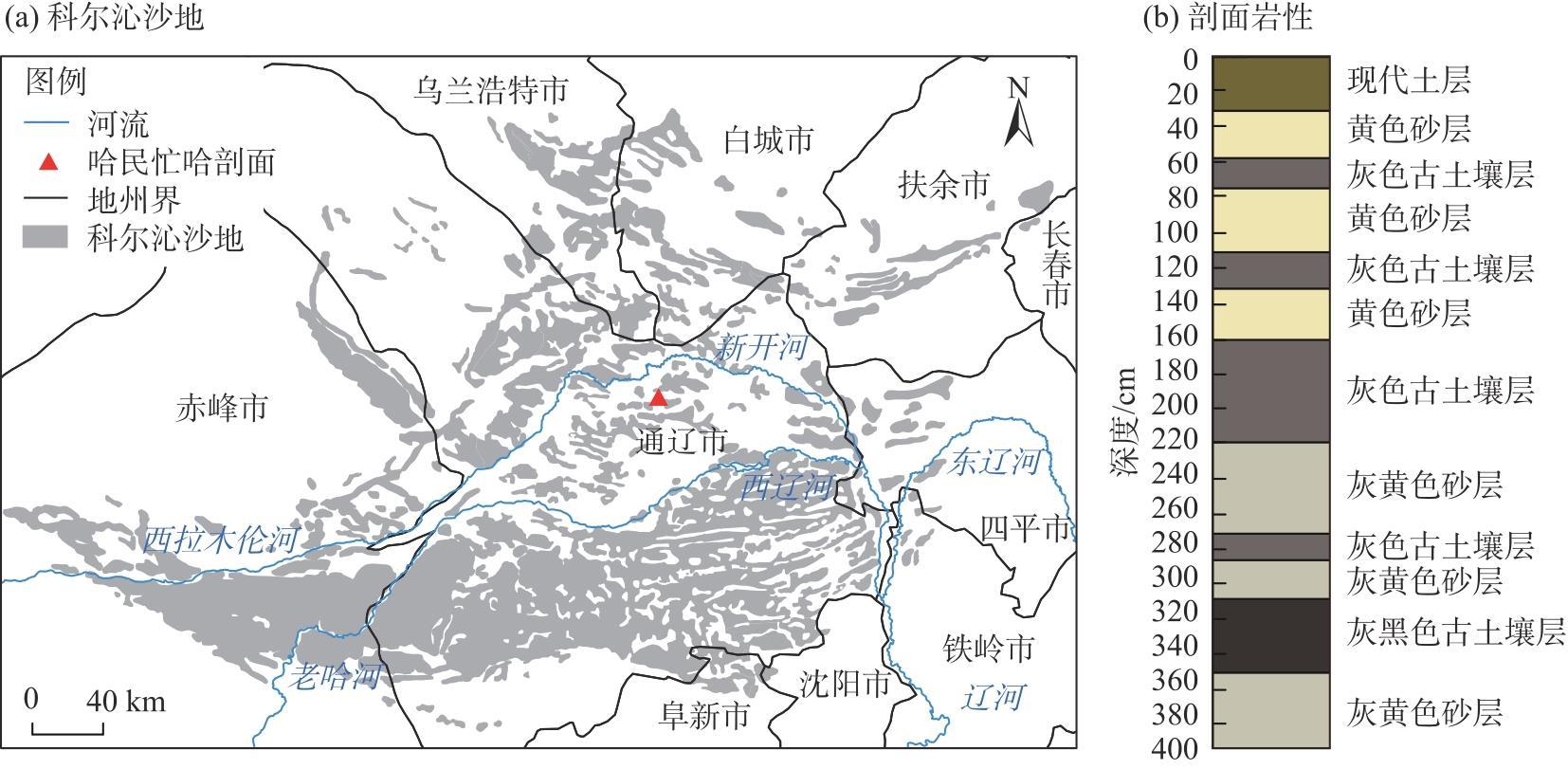
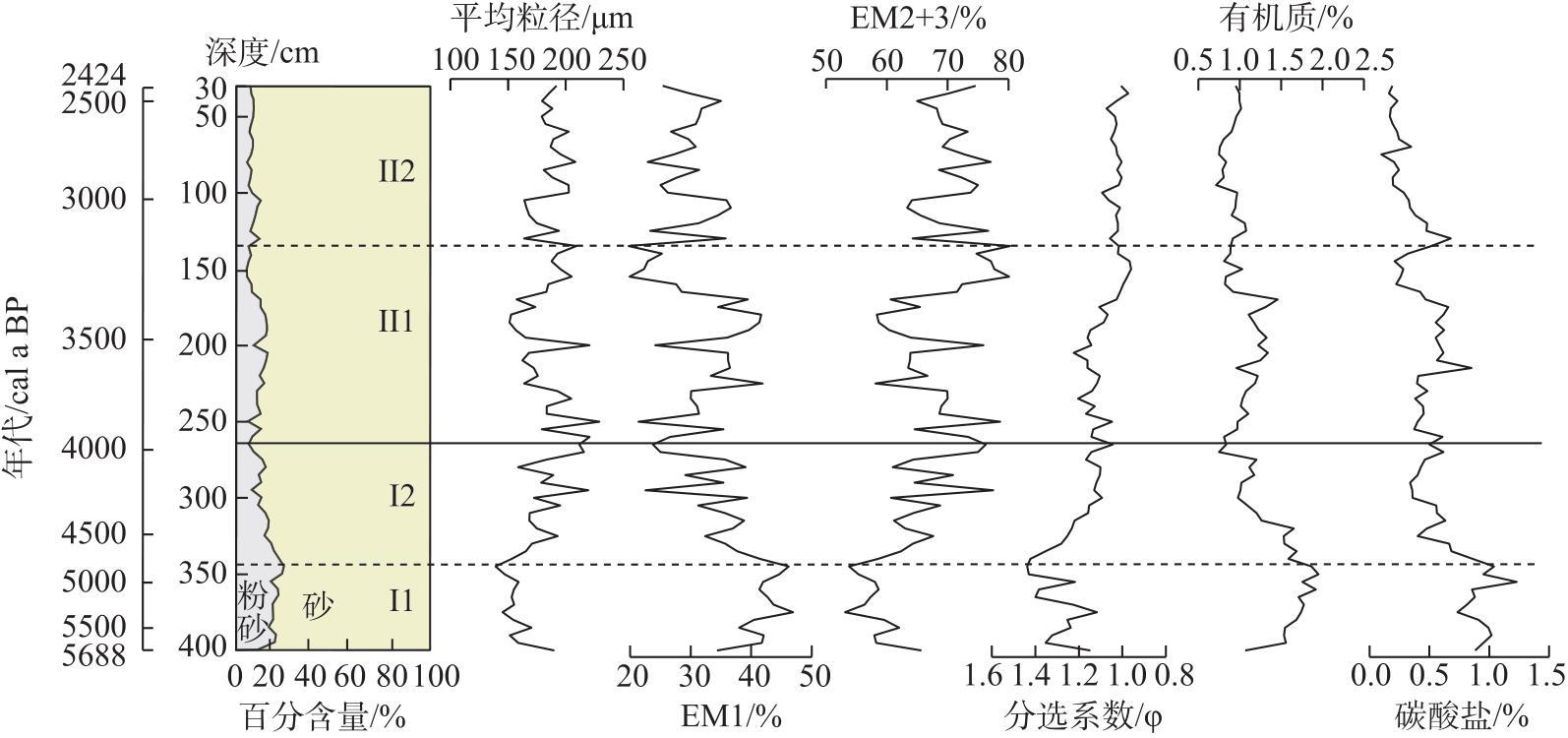
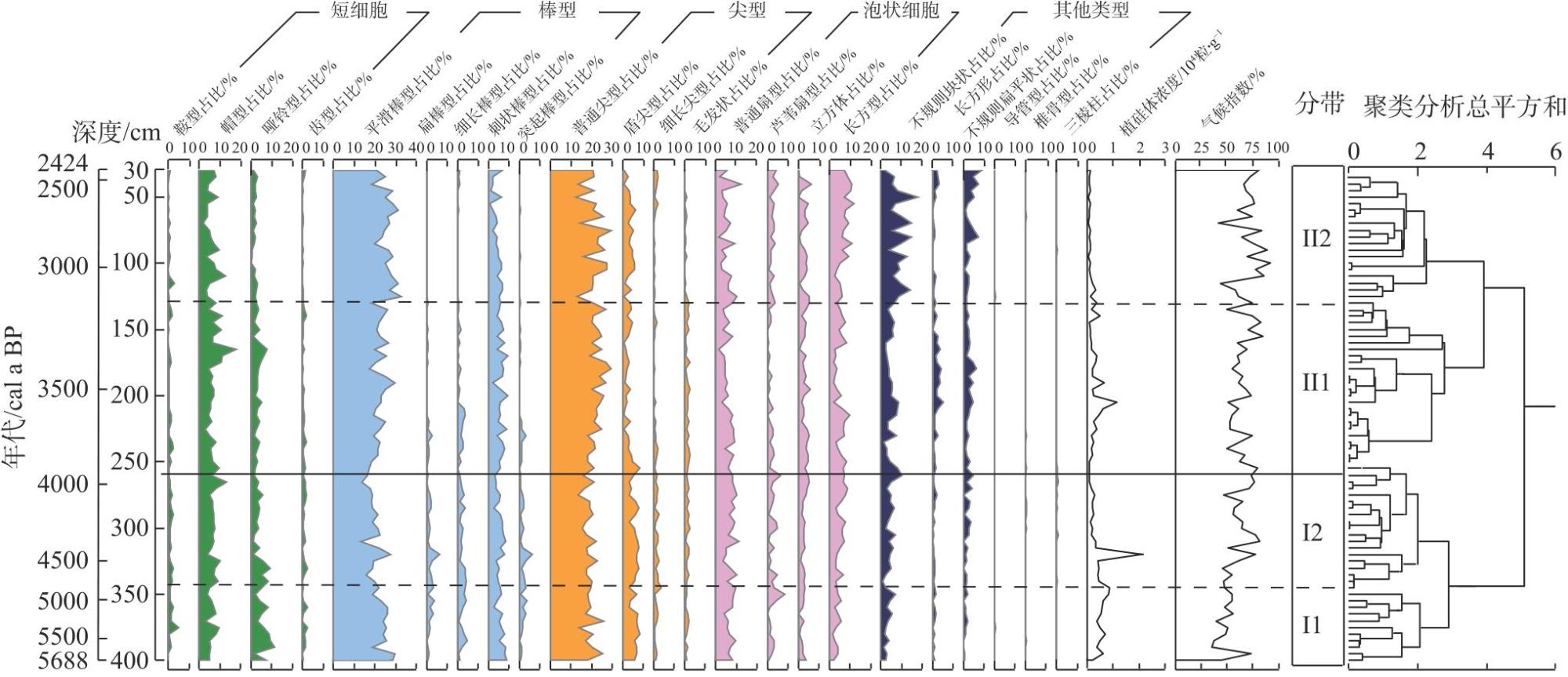
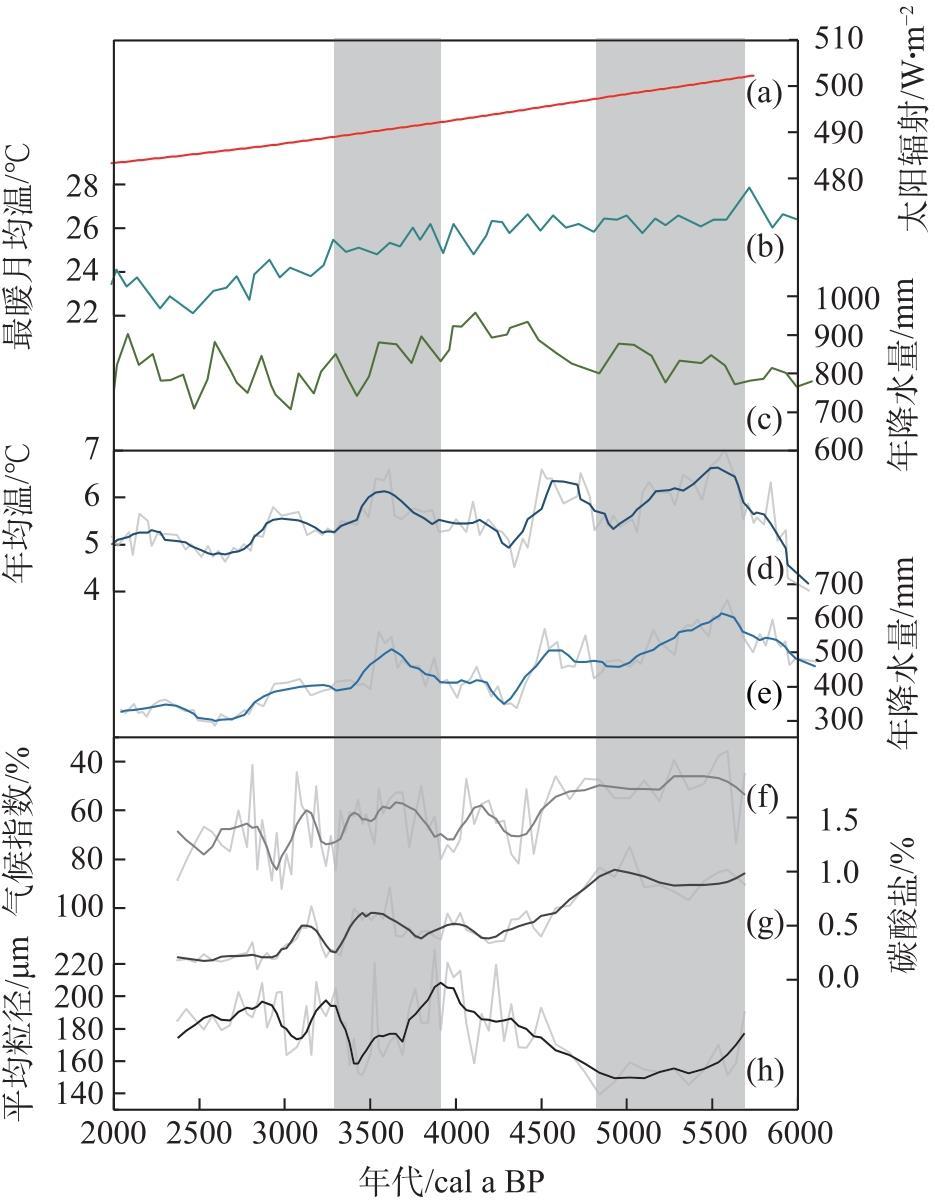
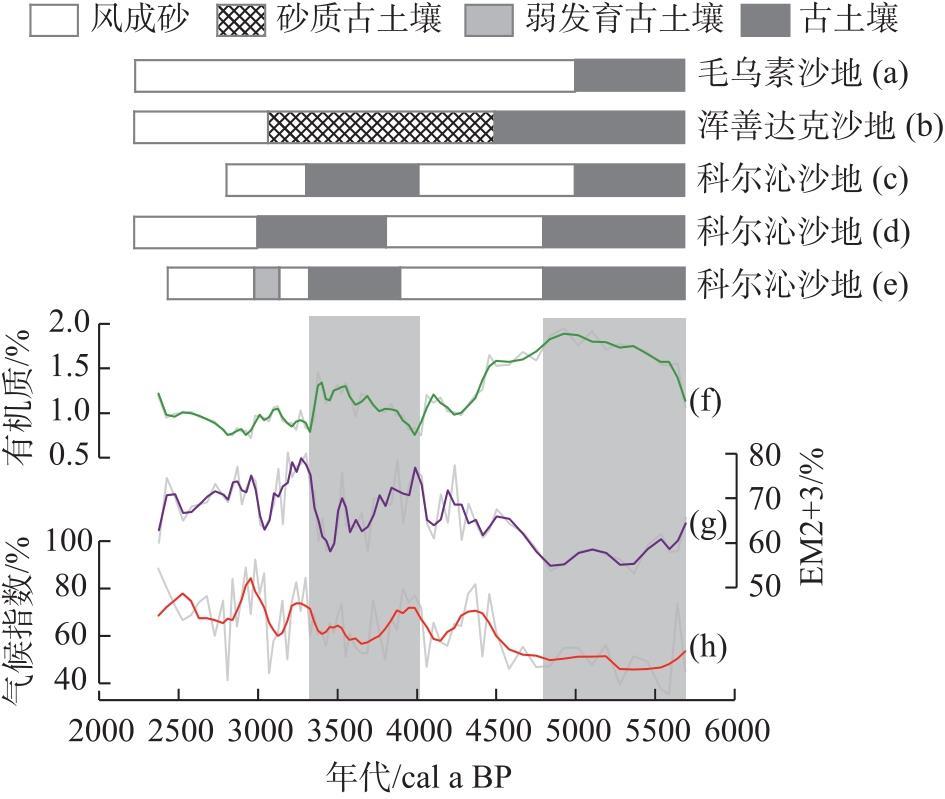
The Horqin Sandy Land in Inner Mongolia, China, known for its ecological fragility and climate sensitivity, is highly responsive to climate change. This study aims to elucidate the evolutionary processes of the sandy terrain and its response to climatic variations, establishing a theoretical foundation for the future protection and management of sandy lands. The research focuses on an eolian paleosol profile situated on the northeastern periphery of the Horqin Sandy Land. Through grain size analysis, loss on ignition, and phytolith analysis, the study reconstructs past climate changes and sandy land dynamics since the mid-Holocene. The results identify distinct phases of stability and expansion in the Horqin Sandy Land between 5700 and 2400 cal a BP, highlighting a strong correlation between eolian activity and climate fluctuations. From 5700 to 4800 cal a BP, the sandy land remained predominantly stable, coinciding with an intensified East Asian summer monsoon that fostered a warm and moist climate. This stability was followed by gradual expansion between 4800 and 3900 cal a BP, as the weakening summer monsoon led to colder and drier conditions that increased eolian activity and sandy land spread. The period from 3900 to 3300 cal a BP marked a return to stability and contraction, driven by a warmer and more humid climate conducive to soil development. However, from 3300 to 2400 cal a BP, colder and more arid conditions prompted renewed sandy land expansion, ultimately leading to the burial of the paleosol layer with sand. In summary, the evolution of the Horqin Sandy Land during the middle to late Holocene is closely linked to climate variations driven by the East Asian summer monsoon. These findings underscore the need for careful consideration of climate impacts in the development of policies for sandy land management.
Wanyue LIAO , Dongmei JIE , Guizai GAO , Jiangyong WANG . Climate change and desert evolution of Horqin Sandy Land in the mid-late Holocene[J]. Arid Land Geography, 2024 , 47(11) : 1876 -1886 . DOI: 10.12118/j.issn.1000-6060.2024.003
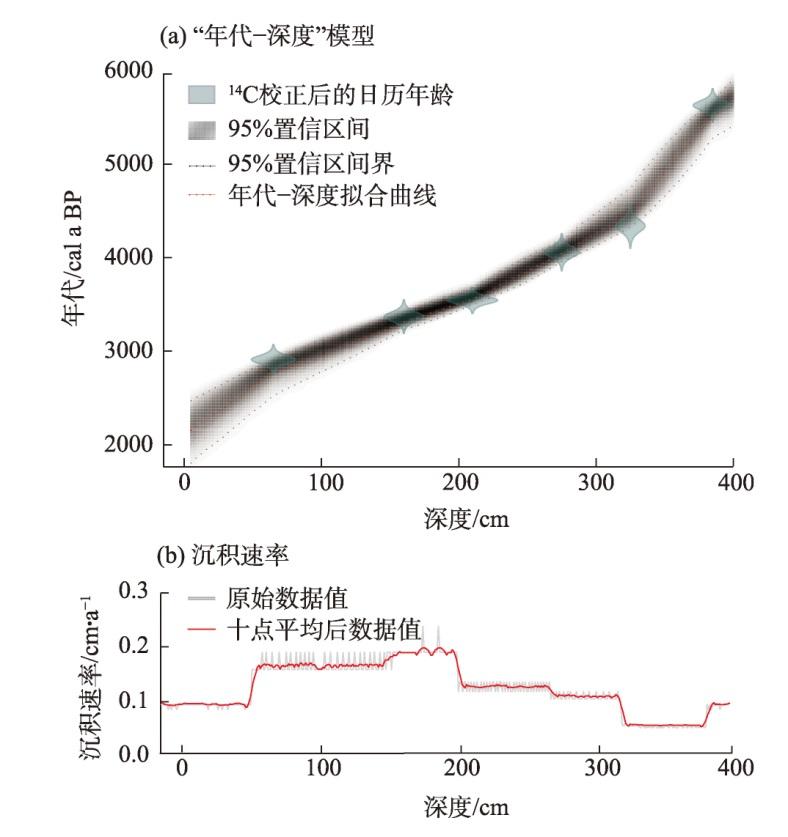
表1 哈民忙哈剖面AMS14C测年结果Tab. 1 AMS14C dating results of Haminmangha profile |
| 实验室编号 | 深度/cm | 测年材料 | 14C年龄/cal a BP | 日历年龄/cal a BP |
|---|---|---|---|---|
| NENUR11060 | 65~70 | 全样 | 2790±25 | 2890±40 |
| NENUR11061 | 160~165 | 全样 | 3125±25 | 3350±45 |
| NENUR11063 | 210~215 | 全样 | 3315±25 | 3525±35 |
| NENUR11064 | 275~280 | 全样 | 3705±30 | 4040±50 |
| NENUR11065 | 325~330 | 全样 | 3880±30 | 4320±60 |
| NENUR11066 | 385~390 | 全样 | 4880±35 | 5610±45 |
图6 哈民忙哈剖面指标与其他区域古气候记录比较注:(a)7月45°N太阳辐射[37];(b)四海龙湾玛珥湖最暖月平均温度[38];(c)四海龙湾玛珥湖年平均降水量[38];(d)岱海地区孢粉拟合的最暖月平均温度[39];(e)岱海地区孢粉拟合的年平均降水量[39];(f)哈民忙哈剖面植硅体气候指数;(g)哈民忙哈剖面碳酸盐含量;(h)哈民忙哈剖面平均粒径。图(d)~(h)浅灰色线为原始数据值,其他线为十点平均后数据值;阴影部分代表相对暖湿时期。 Fig. 6 Comparison of the index of the Haminmangha profile with paleoclimate records |
图7 哈民忙哈剖面指标与其他沙地演化记录比较注:(a)毛乌素沙地演化[45];(b)浑善达克沙地演化[46];(c)科尔沁沙地演化[47];(d)科尔沁沙地演化[48];(e)哈民忙哈剖面重建的科尔沁沙地演化;(f)哈民忙哈剖面有机质含量;(g)哈民忙哈剖面粒度端元EM2+3组分含量;(h)哈民忙哈剖面植硅体气候指数。图(f)~(h)浅灰色线为原始数据值,其他线为十点平均后数据值,阴影部分代表沙地固定期。 Fig. 7 Comparison of the index of the Haminmangha profile with other sandy land evolution records |
| [1] |
董光荣. 中国沙漠形成演化气候变化与沙漠化研究[M]. 北京: 海洋出版社, 2002: 212-232.
[
|
| [2] |
徐宇杰, 刘冰, 孙爱军, 等. 古尔班通古特沙漠及周边区域全新世环境演变研究进展[J]. 干旱区地理, 2023, 46(4): 550-562.
[
|
| [3] |
|
| [4] |
张兰生, 方修琦, 任国玉, 等. 我国北方农牧交错带的环境演变[J]. 地学前缘, 1997(增刊1): 131-140.
[
|
| [5] |
裘善文. 试论科尔沁沙地的形成与演变[J]. 地理科学, 1989(4): 317-328, 97.
[
|
| [6] |
裘善文, 李取生, 夏玉梅. 东北平原西部沙地古土壤与全新世环境变迁[J]. 第四纪研究, 1992(3): 224-232.
[
|
| [7] |
董光荣, 金炯, 李保生, 等. 科尔沁沙地沙漠化的几个问题──以南部地区为例[J]. 中国沙漠, 1994(1): 1-9.
[
|
| [8] |
乌兰图雅, 雷军, 玉山. 科尔沁沙地风沙环境形成与演变研究进展[J]. 干旱区资源与环境, 2002(1): 28-31.
[
|
| [9] |
|
| [10] |
|
| [11] |
薛文萍, 靳鹤龄, 刘冰, 等. 中国季风边缘区全新世沙地演化及其驱动机制研究进展[J]. 中国沙漠, 2019, 39(3): 163-171.
[
|
| [12] |
|
| [13] |
|
| [14] |
刘冰, 靳鹤龄, 孙忠. 中晚全新世科尔沁沙地演化与气候变化[J]. 中国沙漠, 2013, 33(1): 77-86.
[
|
| [15] |
汪佩芳. 全新世呼伦贝尔沙地环境演变的初步研究[J]. 中国沙漠, 1992(4): 16-22.
[
|
| [16] |
李取生. 松嫩沙地历史演变的初步研究[J]. 科学通报, 1990(11): 854-856.
[
|
| [17] |
刘子亭, 杨小平, 朱秉启. 巴丹吉林沙漠全新世环境记录的年代校正与古气候重建[J]. 第四纪研究, 2010, 30(5): 925-933.
[
|
| [18] |
|
| [19] |
|
| [20] |
张启德, 王玉秀. 科尔沁沙地与大气环境[M]. 北京: 科学出版社, 1994: 14-16.
[
|
| [21] |
|
| [22] |
卓海昕, 鹿化煜, 贾鑫, 等. 全新世中国北方沙地人类活动与气候变化关系的初步研究[J]. 第四纪研究, 2013, 33(2): 303-313.
[
|
| [23] |
|
| [24] |
王琳, 武虹, 贾鑫. 西辽河地区史前聚落的时空演变与生业模式和气候历史的相关性研究[J]. 地球科学进展, 2016, 31(11): 1159-1171.
[
|
| [25] |
何瑾, 刘演, 田彦国, 等. 西辽河流域中晚全新世气候环境演变及其对农牧业演替的影响[J]. 地理学报, 2021, 76(7): 1618-1633.
[
|
| [26] |
朱永刚, 吉平. 内蒙古哈民忙哈遗址房址内大批人骨遗骸死因蠡测——关于史前灾难事件的探索与思考[J]. 考古与文物, 2016(5): 75-82.
[
|
| [27] |
高桂在. 东北地区典型植物群落的表土植硅体记录及晚冰期以来古植被定量重建[D]. 长春: 东北师范大学, 2019.
[
|
| [28] |
刘颖, 介冬梅, 方启, 等. 长山遗址沉积物粒度特征及其环境指示意义[J]. 东北师大学报(自然科学版), 2020, 52(1): 136-143.
[
|
| [29] |
张佳华, 孔昭宸, 杜乃秋. 烧失量数值波动对北京地区过去气候和环境的特征响应[J]. 生态学报, 1998(4): 9-13.
[
|
| [30] |
|
| [31] |
|
| [32] |
|
| [33] |
王永吉, 吕厚远. 植物硅酸体研究及应用[M]. 北京: 海洋出版社, 1993: 48-118.
[
|
| [34] |
|
| [35] |
|
| [36] |
|
| [37] |
|
| [38] |
|
| [39] |
|
| [40] |
|
| [41] |
|
| [42] |
|
| [43] |
|
| [44] |
董光荣, 金炯, 高尚玉, 等. 晚更新世以来我国北方沙漠地区的气候变化[J]. 第四纪研究, 1990, 10(3): 213-222.
[
|
| [45] |
|
| [46] |
|
| [47] |
夏正楷, 邓辉, 武弘麟. 内蒙西拉木伦河流域考古文化演变的地貌背景分析[J]. 地理学报, 2000, 55(3): 329-336.
[
|
| [48] |
|
| [49] |
汤卓炜, 朱永刚, 吉平, 等. 哈民忙哈聚落遗址孢粉分析与哈民文化古生态环境初步研究[J]. 边疆考古研究, 2016, 19: 341-346.
[
|
| [50] |
|
| [51] |
|
/
| 〈 |
|
〉 |