



Variation characteristics of extreme precipitation in Qinling and surrounding areas over the past 40 years
Received date: 2023-07-21
Revised date: 2023-10-06
Online published: 2024-06-20
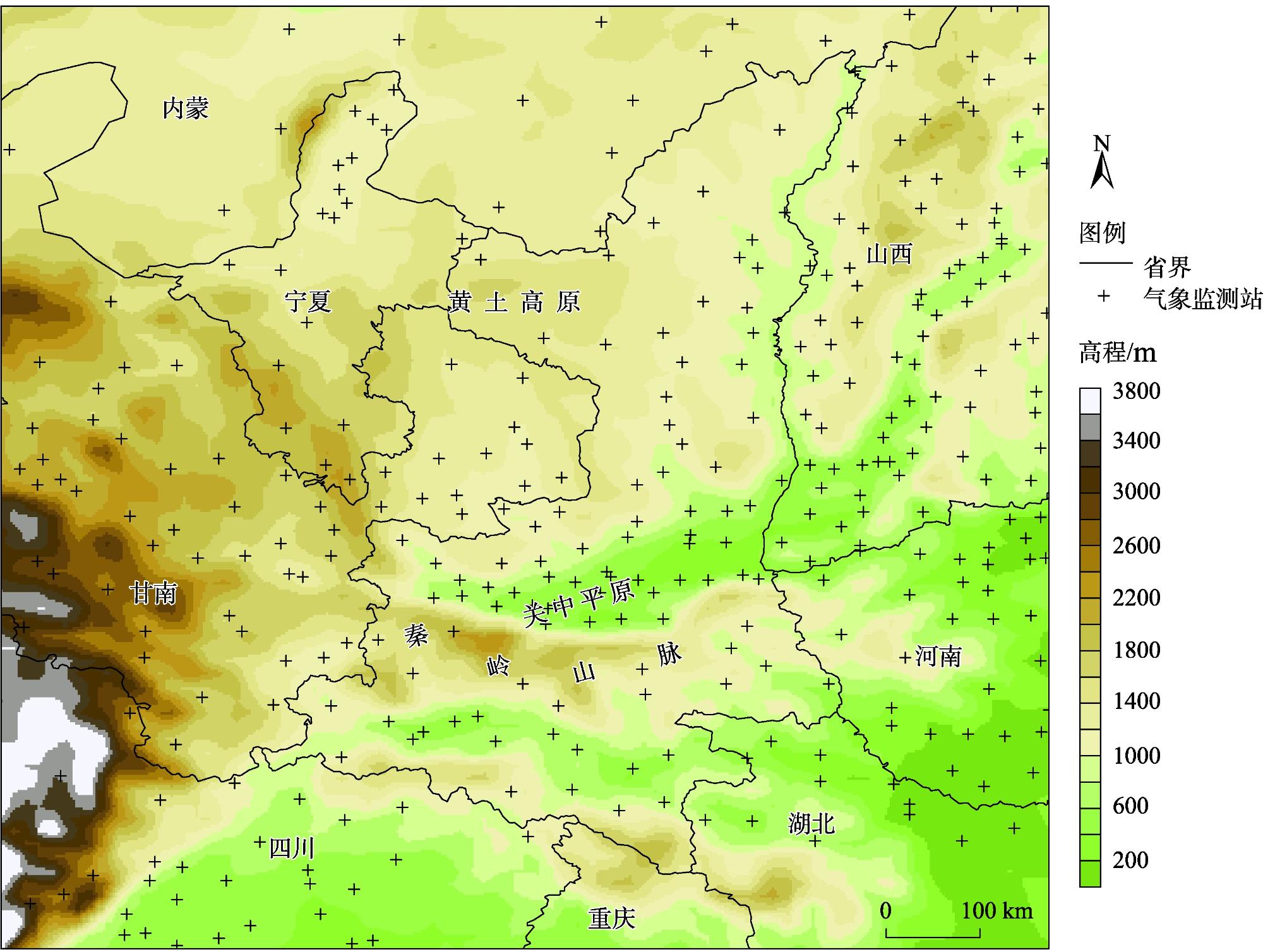
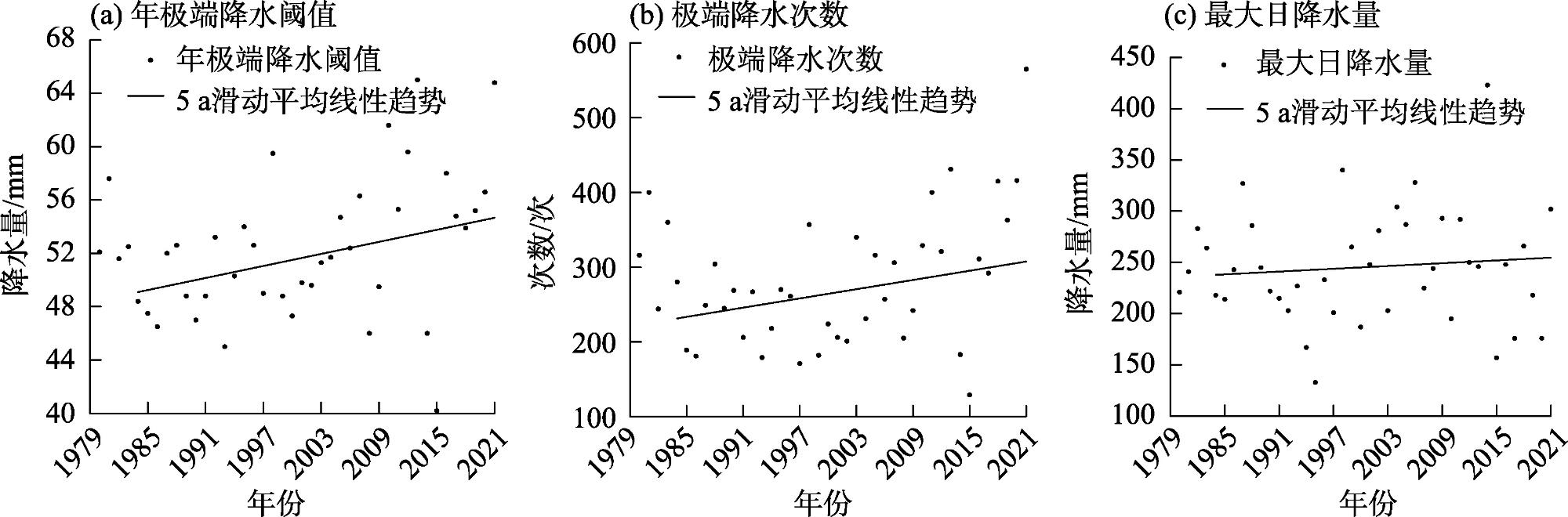
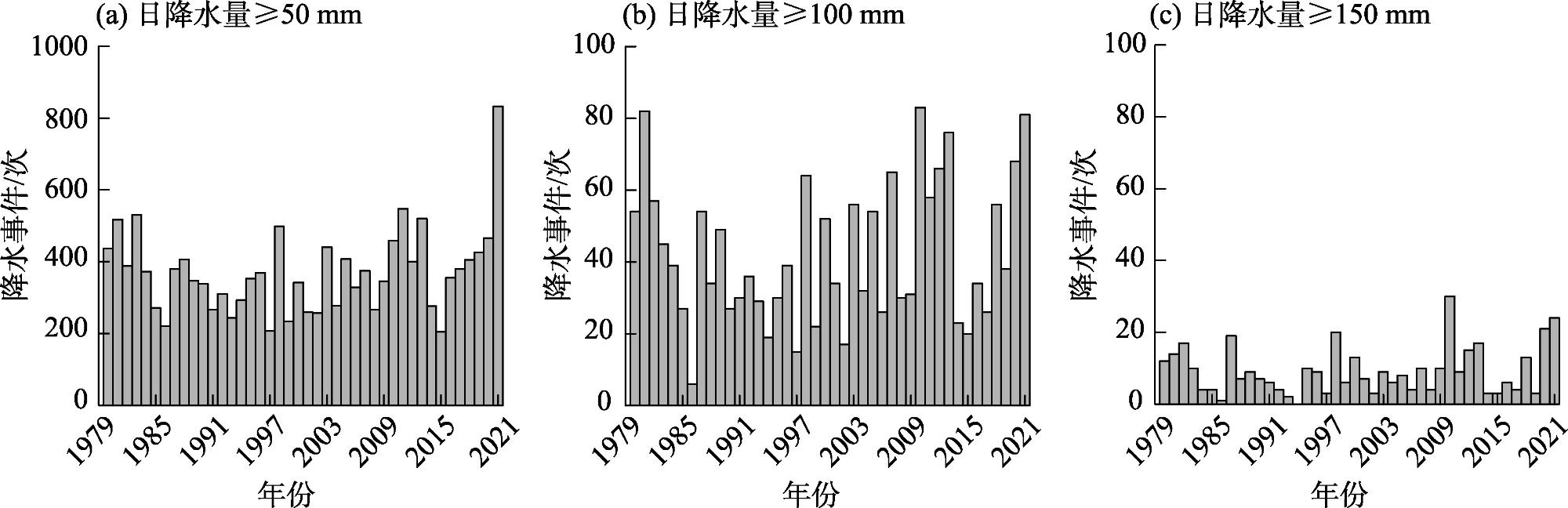
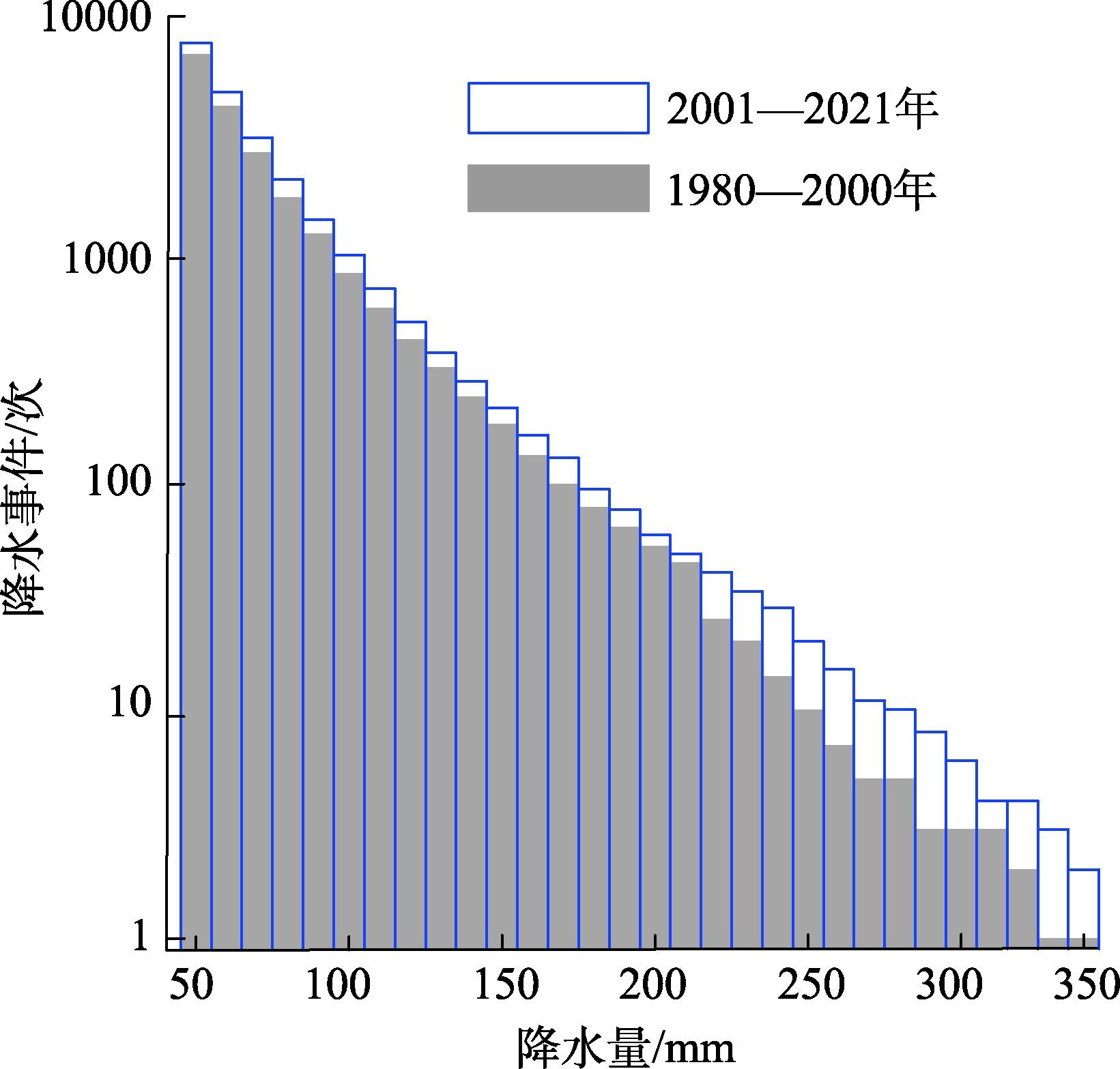
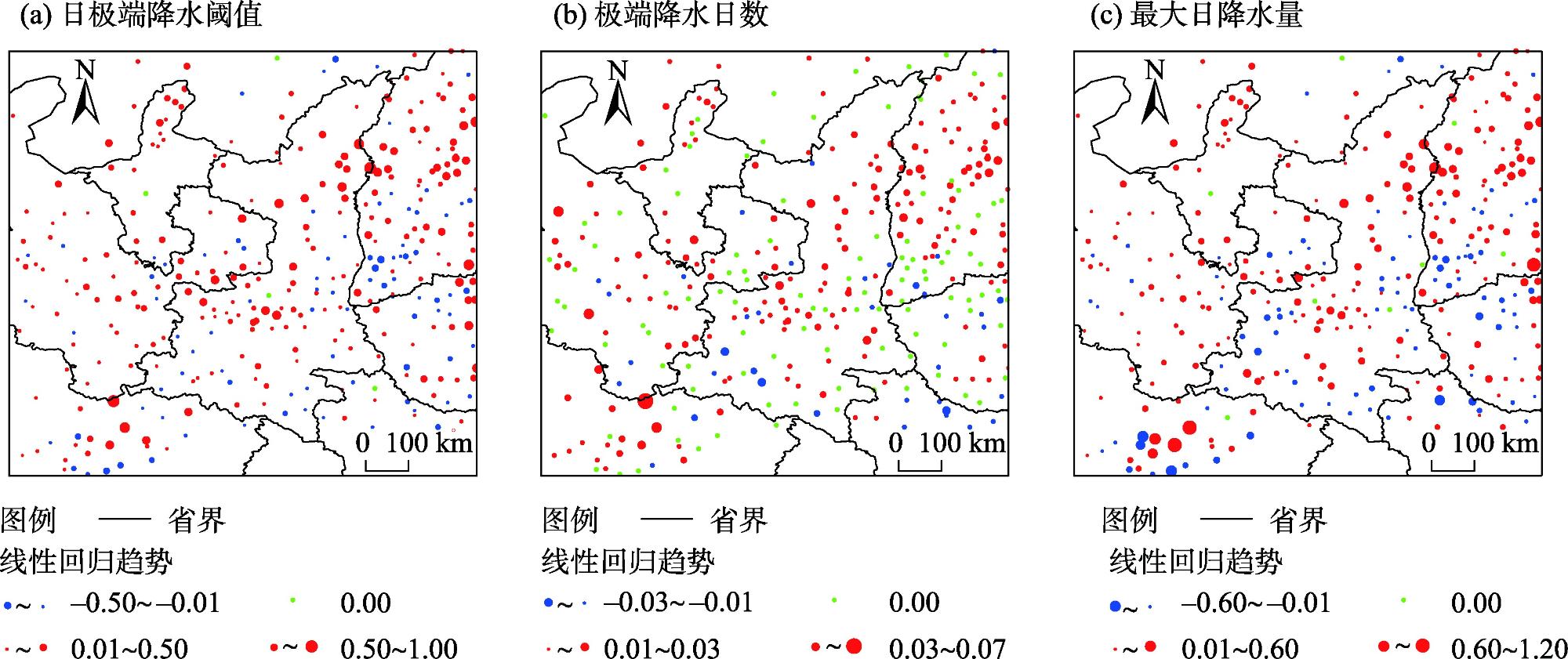
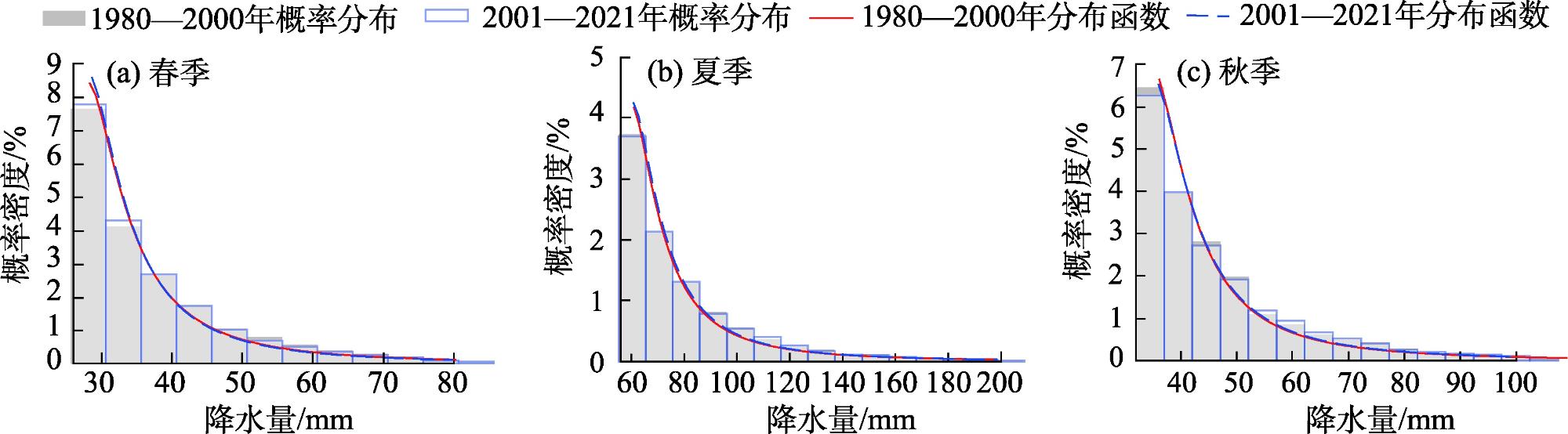
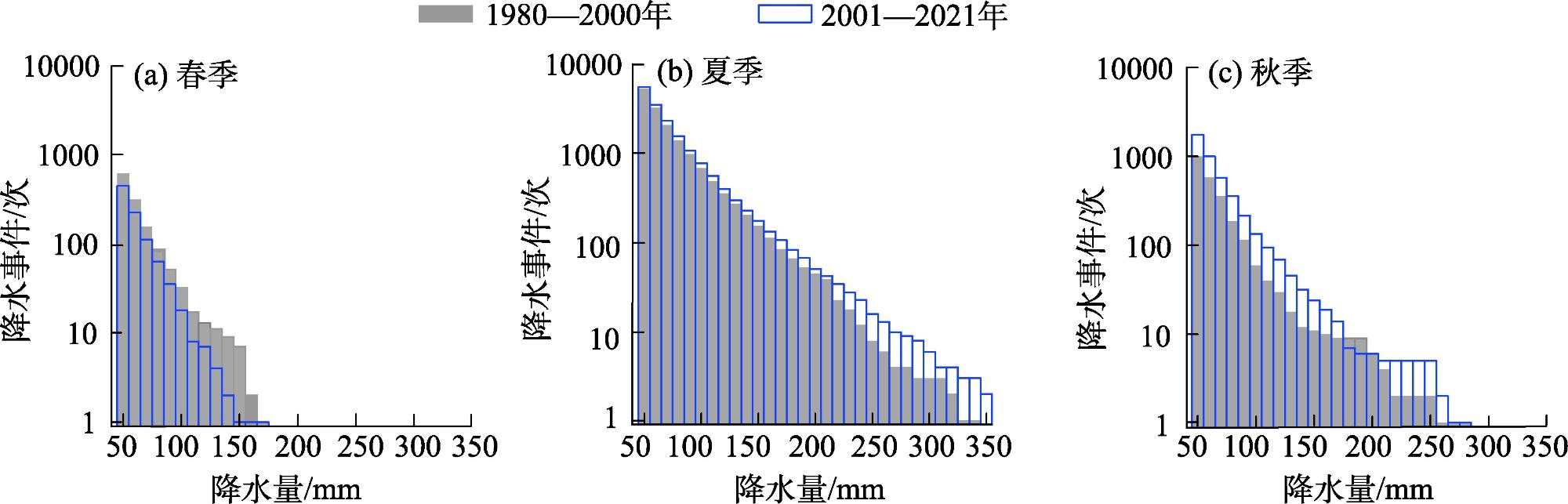
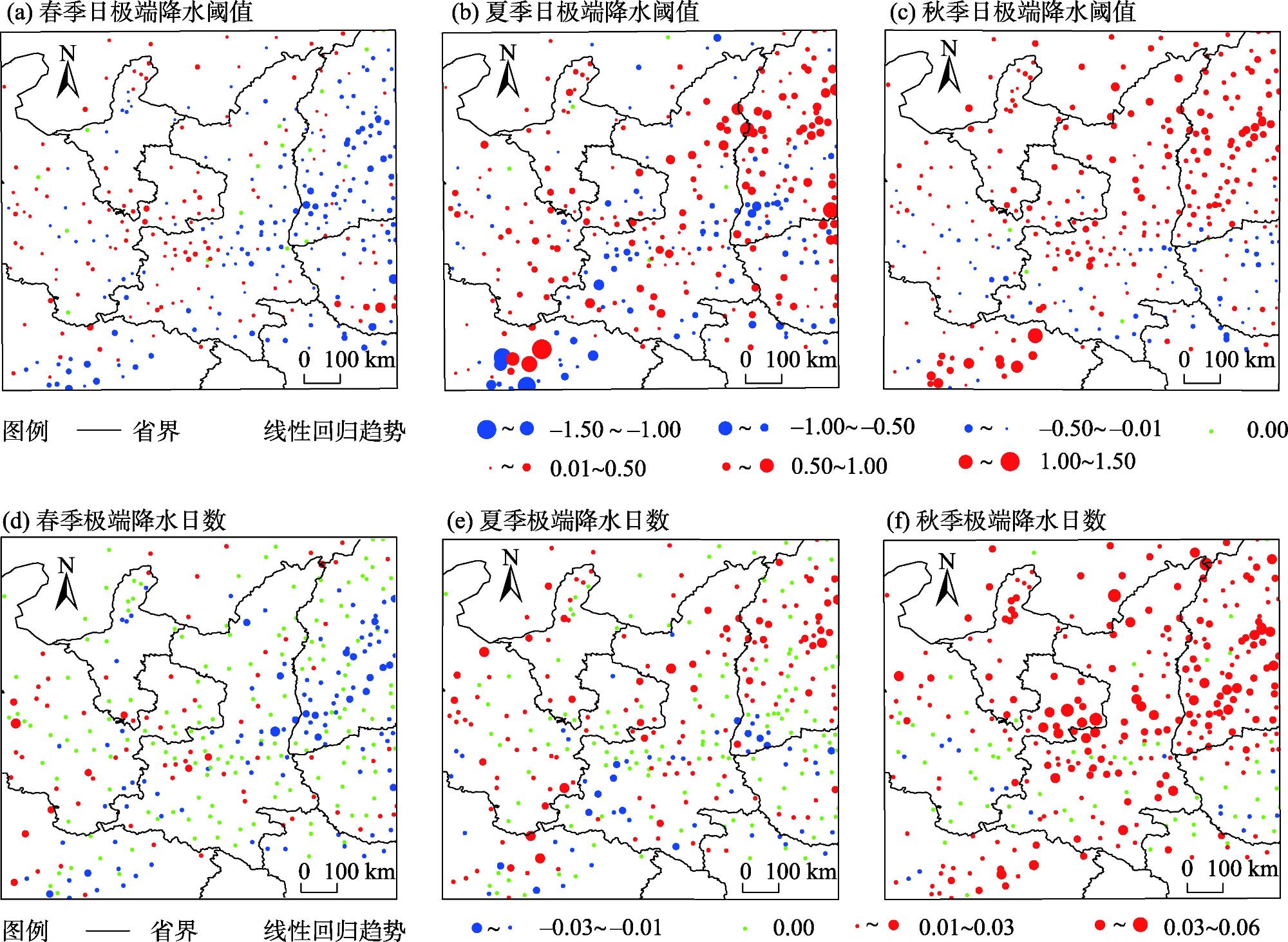
Based on daily precipitation data from 337 meteorological monitoring stations in Qinling Mountains and surrounding areas during 1980—2021, the spatiotemporal characteristics of extreme precipitation were analyzed. The generalized extreme value distribution and climate statistics methods were used to compare the differences in extreme precipitation years and seasons (spring, summer, and autumn) between two phases: the first phase (1980—2000) and the second phase (2001—2021). The results are as follows: (1) Extreme precipitation in Qinling and surrounding areas mainly concentrated from April to November, with July registering the highest number of extreme precipitation days. Over the past 40 years, extreme precipitation has shown an overall increasing trend. Spatially, the southeast exhibits higher values for the extreme daily precipitation threshold and daily maximum precipitation than the northwest. Additionally, a clear boundary along the north-south direction, aligning with the Qinling, highlights more occurrences in the southern region than in the northern region. (2) On an annual scale, there is a discernible rise in both the number and intensity of extreme precipitation events during 2001—2021 compared with 1980—2000. The spatial changes in the extreme daily precipitation threshold, the number of extreme precipitation days, and daily maximum precipitation also show an overall increasing trend, with more meteorological stations exhibiting an increasing trend. (3) Considerable seasonal differences in extreme precipitation exist, particularly between spring and summer/autumn. The probability and frequency of extreme precipitation were generally higher in spring during 1980—2000, whereas in 2001—2021, extreme precipitation peaks in summer and autumn. Spatial distribution differences are also evident. In spring, the extreme daily precipitation threshold and the number of extreme precipitation days generally show an increasing trend in the western region, contrasting with a decreasing trend in the eastern region, transitioning from positive to negative values. A greater number of stations display a decreasing trend than an increasing trend. In contrast, in summer and autumn, the number of stations demonstrating an increase in the extreme daily precipitation threshold and the number of extreme precipitation days exceeds those witnessing decreasing trends, particularly in autumn, where the proportion of stations with increasing trends is higher.
Hongfang ZHANG , Liujie PAN , Shan LU , Jiaojiao SHEN . Variation characteristics of extreme precipitation in Qinling and surrounding areas over the past 40 years[J]. Arid Land Geography, 2024 , 47(3) : 380 -390 . DOI: 10.12118/j.issn.1000-6060.2023.377
| [1] |
|
| [2] |
|
| [3] |
|
| [4] |
|
| [5] |
樊星, 秦圆圆, 高翔. IPCC第六次评估报告第一工作组报告主要结论解读及建议[J]. 环境保护, 2021, 49(增刊2): 437-444.
[
|
| [6] |
|
| [7] |
陈海山, 朱月佳, 刘蕾. 长江中下游地区冬季极端降水事件与天气尺度瞬变波活动的可能联系[J]. 大气科学, 2013, 37(4): 801-814.
[
|
| [8] |
|
| [9] |
|
| [10] |
贺冰蕊, 翟盘茂. 中国1961—2016年夏季持续和非持续性极端降水的变化特征[J]. 气候变化研究进展, 2018, 14(5): 437-444.
[
|
| [11] |
|
| [12] |
杨玮, 程智. 近53年江淮流域梅汛期极端降水变化特征[J]. 气象, 2015, 41(9): 1126-1133.
[
|
| [13] |
陈冬冬, 戴永久. 近五十年我国西北地区降水强度变化特征[J]. 大气科学, 2009, 33(5): 923-935.
[
|
| [14] |
田付友, 杨舒楠, 郑永光, 等. 北京地区两次极端特大暴雨过程中短时强降水环境条件对比分析[J]. 暴雨灾害, 2021, 40(1): 27-36.
[
|
| [15] |
|
| [16] |
甘璐, 郭文利, 邓长菊. 北京地区两次特大暴雨过程的对比分析[J]. 干旱气象, 2017, 35(2): 239-249.
[
|
| [17] |
布和朝鲁, 诸葛安然, 谢作威, 等. 2021年“7.20”河南暴雨水汽输送特征及其关键天气尺度系统[J]. 大气科学, 2022, 46(3): 725-744.
[
|
| [18] |
郑祚芳, 王在文, 高华. 北京地区夏季极端降水变化特征及城市化的影响[J]. 气象, 2013, 39(12): 1635-1641.
[
|
| [19] |
王钊, 罗慧, 李亚丽, 等. 近50年秦岭南北不均匀增温及对城市化响应[J]. 应用气象学报, 2016, 27(1): 85-94.
[
|
| [20] |
李双双, 汪成博, 延军平, 等. 面向事件过程的秦岭南北极端降水时空变化特征[J]. 地理学报, 2020, 75(5): 989-1007.
[
|
| [21] |
毕旭, 王丽, 张雅斌, 等. 陕西秦岭北麓致灾短时暴雨特征及预警技术[J]. 灾害学, 2019, 34(2): 122-127.
[
|
| [22] |
王楠, 赵强, 井宇, 等. 秦岭北麓一次冷锋触发的短时强降水成因分析[J]. 高原气象, 2018, 37(5): 1277-1288.
[
|
| [23] |
张明, 李国胜. 关中地区极端降水时空变化及概率特征研究[J]. 人民黄河, 2021, 343(11): 59-64.
[
|
| [24] |
杨涵洧, 龚志强, 王晓娟, 等. 中国东部夏季极端降水年代际变化特征及成因分析[J]. 大气科学, 2021, 45(3): 683-696.
[
|
| [25] |
李湘瑞, 范可, 徐志清. 2000年后中国北方东部地区夏季极端降水减少及水汽输送特征[J]. 大气科学, 2019, 43(5): 1109-1124.
[
|
| [26] |
陈红专. 湖南极端降水的气候特征及天气系统分型研究[J]. 气象, 2021, 47(10): 1219-1232.
[
|
| [27] |
王颖, 刘晓冉, 程炳岩, 等. 广义极值分布在重庆短历时极值降水中的应用[J]. 气象, 2019, 45(6): 820-830.
[
|
| [28] |
李建, 宇如聪, 孙蟩. 从小时尺度考察中国东部极端降水的持续性和季节特征[J]. 气象学报, 2013, 71(4): 652-659.
[
|
| [29] |
宋晓猛, 张建云, 孔凡哲, 等. 基于极值理论的北京市极端降水概率分布研究[J]. 中国科学: 技术科学, 2018, 48(6): 639-650.
[
|
| [30] |
张宏芳, 潘留杰, 陈昊明, 等. 秦岭及周边地区暖季降水日变化及其成因分析[J]. 高原气象, 2020, 39(5): 935-946.
[
|
| [31] |
黄鑫, 焦黎, 马晓飞, 等. 基于RClimDex模型的近60 a中亚极端降水事件变化特征[J]. 干旱区地理, 2023, 46(7): 1039-1051.
[
|
| [32] |
史维良, 车璐阳, 李涛. 陕西省汛期极端降水概率分布及综合危险性评估[J]. 干旱区地理, 2023, 46(9): 1407-1417.
[
|
/
| 〈 |
|
〉 |