



Attribution analysis of runoff change in the Datong River Basin, Qinghai-Tibet Plateau
Received date: 2023-03-21
Revised date: 2023-08-01
Online published: 2024-06-20
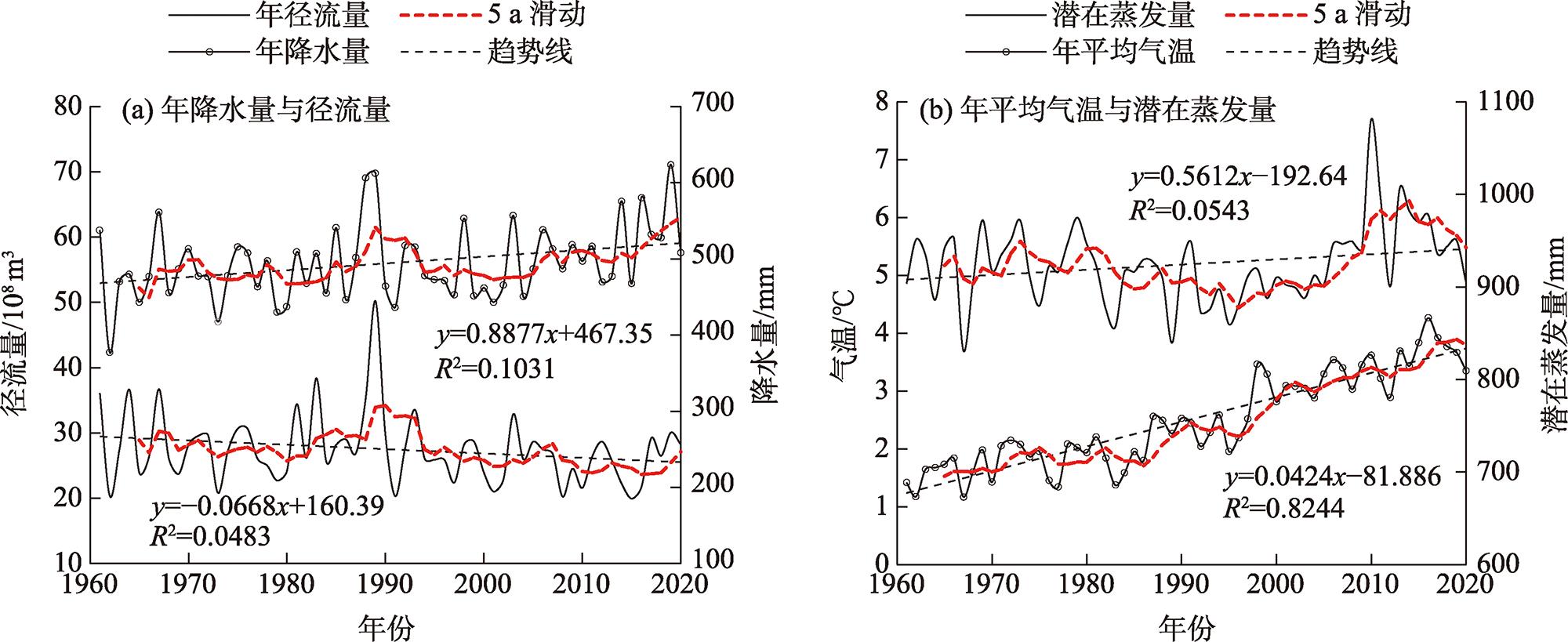
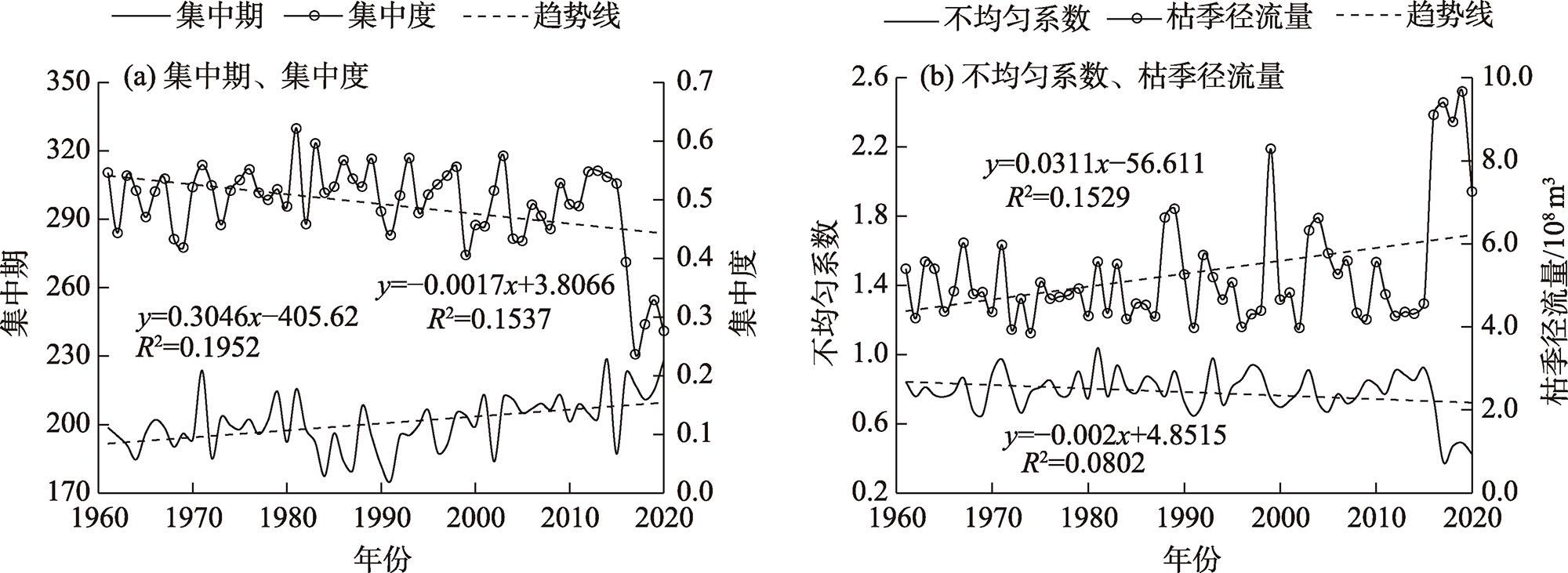
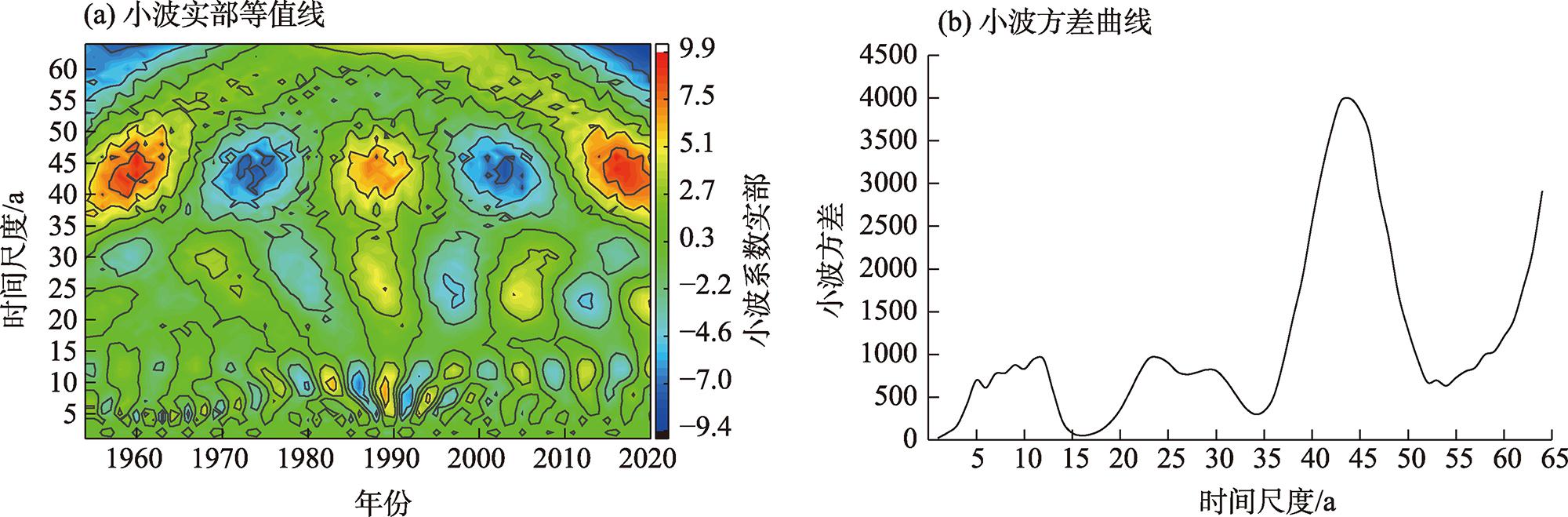
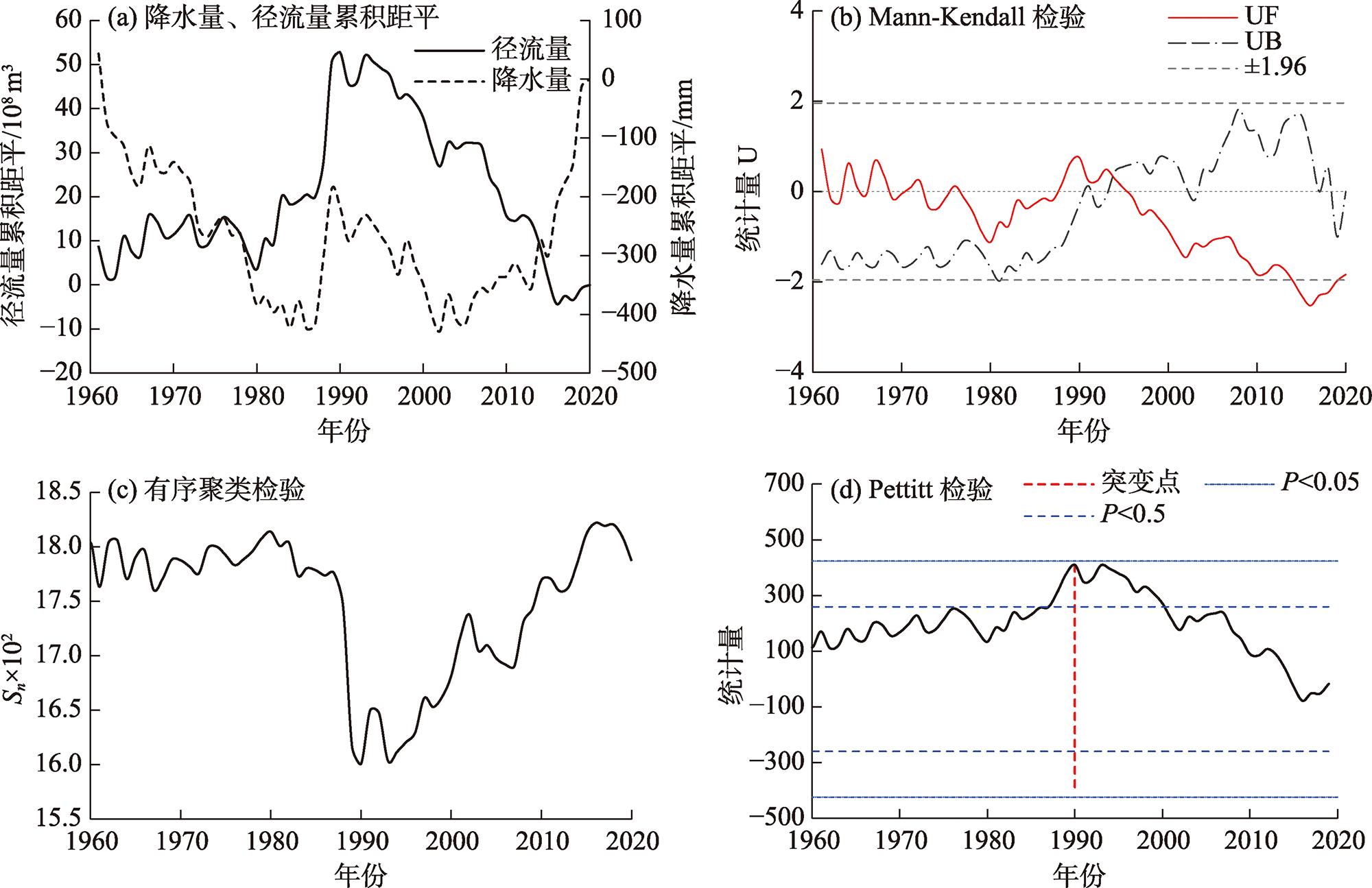
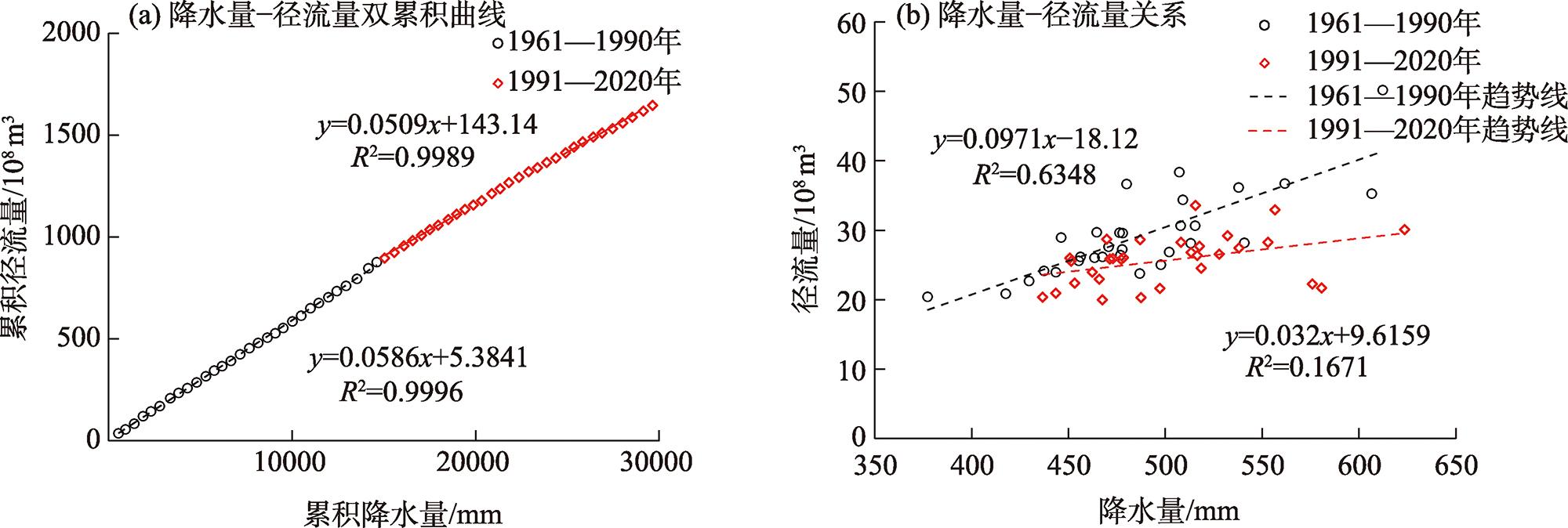
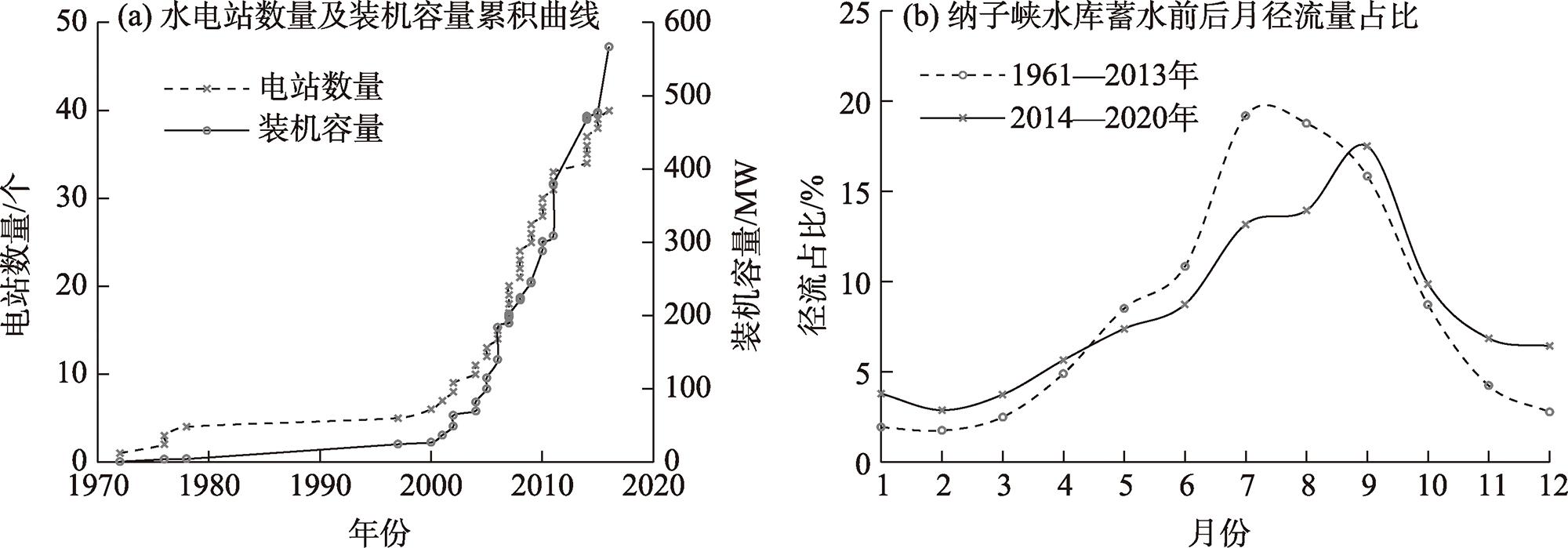
The Datong River Basin is located on the northeastern edge of the Qinghai-Tibet Plateau and is a sensitive and fragile ecological environment. It is of great significance to conduct research on the evolution and attribution of water resources in changing environments for the protection of the water ecological environment in the area and the construction of water ecocivilization. Statistical methods such as linear regression, concentration degree, concentration period, ordered clustering test, and wavelet analysis were used to analyze the characteristics of annual variation, seasonal distribution, periodicity, and abrupt changes in basin runoff. On the basis of the cumulative slope change rate method and double cumulative curve, the effects of climate factors and human activities on runoff changes were quantitatively evaluated. The results showed the following: (1) The climate in the Datong River Basin had warmed and humidified significantly in the past 60 years, with increases in average annual temperature, precipitation, and potential evapotranspiration of 0.42 ℃·(10a)-1, 8.9 mm·(10a)-1, and 5.6 mm·(10a)-1, respectively. The annual runoff showed a decreasing trend, with a tendency rate of 0.67×10⁸ m3·(10a)-1. (2) The concentration degree and uneven coefficient of runoff showed a weak downward trend, and the increasing dry season runoff trend was evident. The seasonal distribution was more uniform, and the concentration period showed a delayed trend, with a delay rate of 3.0 d·(10a)-1. (3) The annual runoff oscillated significantly at a scale of approximately 44 years, and the mutation occurred in 1990. After the mutation, runoff decreased by 3.52×10⁸ m3. The distribution of glaciers in the basin showed a decreasing trend, whereas the vegetation cover did not show a significant change. (4) The contributions of climate and human activities to the runoff decrease in the Datong River were -17.7% and 117.7%, respectively. Precipitation was the main source of water supply in the Datong River Basin, and interbasin water transfer was the main driving factor for runoff reduction.
Shuzhi WANG , Deping WEN . Attribution analysis of runoff change in the Datong River Basin, Qinghai-Tibet Plateau[J]. Arid Land Geography, 2024 , 47(2) : 203 -213 . DOI: 10.12118/j.issn.1000-6060.2023.124
表1 大通河流域各要素趋势检验Tab. 1 Trend test of elements in the Datong River Basin |
| 水文气象 要素 | 变化 趋势 | 线性趋势回归检验 | Kendall秩次检验 | Spearman秩次检验 | |||||
|---|---|---|---|---|---|---|---|---|---|
| T | 显著性水平 (ɑ=0.05,tɑ/2=2.0) | U | 显著性水平 (ɑ=0.05,Uɑ/2=1.96) | T | 显著性水平 (ɑ=0.05,tɑ/2=2.0) | ||||
| 年平均气温 | 增加 | 16.30 | 趋势显著 | 7.74 | 趋势显著 | 16.70 | 趋势显著 | ||
| 年降水量 | 增加 | 2.58 | 趋势显著 | 2.22 | 趋势显著 | 2.25 | 趋势显著 | ||
| 潜在蒸发量 | 增加 | 1.83 | 趋势不显著 | 1.08 | 趋势不显著 | 1.14 | 趋势不显著 | ||
| 年径流量 | 减少 | 1.72 | 趋势不显著 | 1.53 | 趋势不显著 | 1.51 | 趋势不显著 | ||
注:T、U为统计量。 |
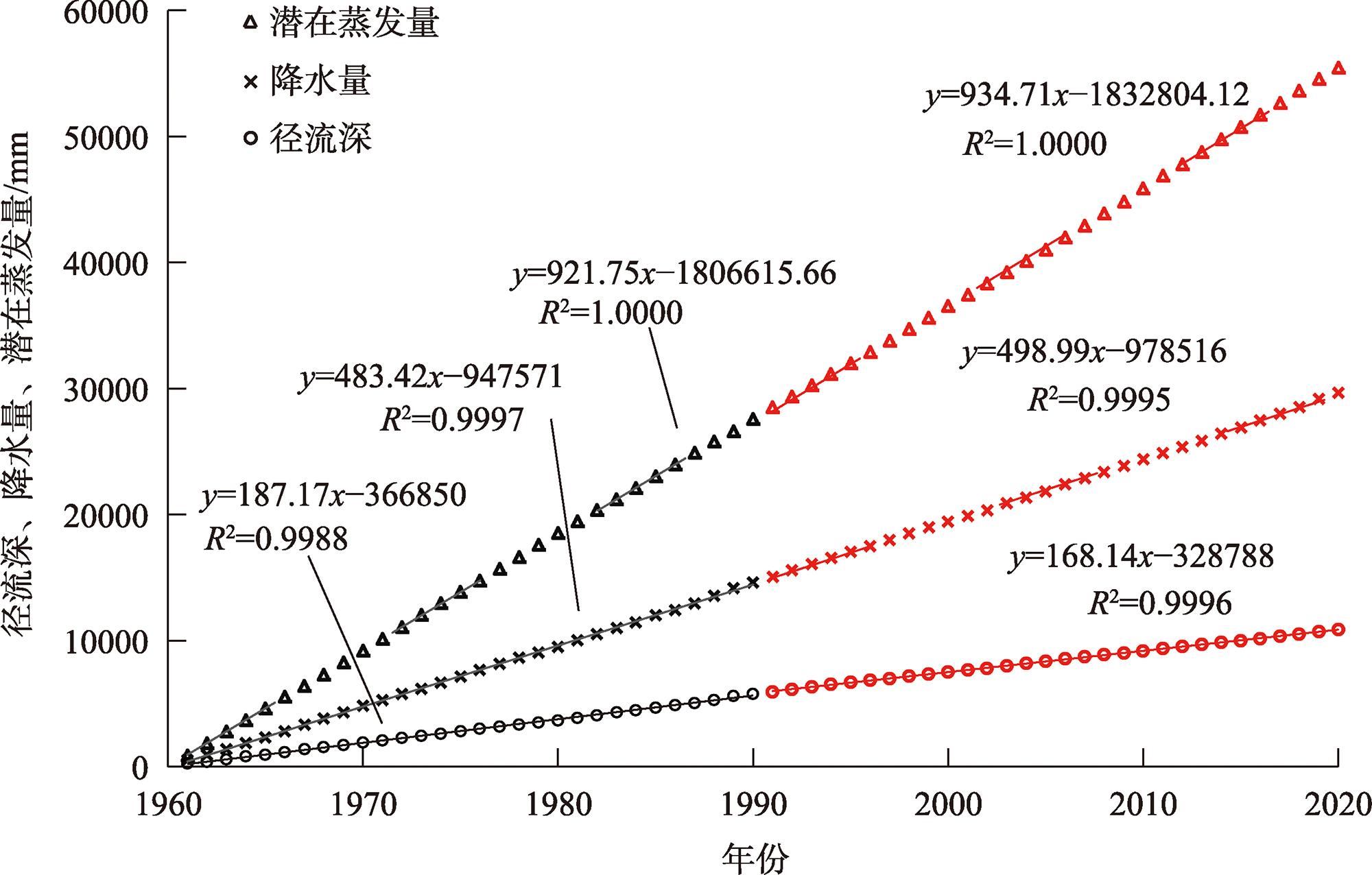
图6 大通河流域累积年径流深、降水量和潜在蒸发量与年份的拟合关系Fig. 6 Fitting relationship between cumulative annual runoff depth, precipitation, evapotranspiration and year in the Datong River Basin |
表2 气候变化和人类活动对大通河流域径流影响Tab. 2 Impacts of climate change and human activities on runoff in the Datong River Basin |
| 时期 | 径流深 | 气候变化 | 人类活动 | ||||||||
|---|---|---|---|---|---|---|---|---|---|---|---|
| 斜率 | 变化率/% | 降水量 | 潜在蒸发量 | ||||||||
| 斜率 | 变化率/% | CP/% | 斜率 | 变化率/% | CET/% | CH/% | |||||
| 基准期(1961—1990年) | 187.2 | - | 483.4 | - | - | 921.8 | - | - | - | ||
| 变化期(1991—2020年) | 168.1 | -10.2 | 499.0 | 3.2 | -31.4 | 934.7 | 1.4 | 13.7 | 117.7 | ||
注:CP、CET、CH分别为降水量、潜在蒸发量、人类活动对径流变化的贡献率。 |
表3 大通河流域冰川面积及植被覆盖度统计Tab. 3 Statistics of glacier area and fractional vegetation cover (FVC) in the Datong River Basin |
| 指标 | 1986年 | 1990年 | 1995年 | 2000年 | 2005年 | 2010年 | 2015年 | 2017年 | 2018年 | 2019年 |
|---|---|---|---|---|---|---|---|---|---|---|
| 冰川面积/km2 | 37.0 | 29.5 | 25.0 | 22.3 | 21.3 | 29.5 | 16.3 | 16.3 | 16.4 | 17.3 |
| FVC年值 | 0.597 | 0.556 | 0.621 | 0.519 | 0.476 | 0.536 | 0.661 | 0.543 | 0.570 | 0.595 |
| FVC生长季均值 | 0.723 | 0.744 | 0.762 | 0.688 | 0.688 | 0.699 | 0.827 | 0.727 | 0.727 | 0.726 |
| 年径流深/mm | 191.3 | 196.3 | 171.3 | 158.4 | 189.5 | 143.0 | 131.9 | 193.0 | 175.3 | 198.8 |
| 生长季径流深/mm | 114.7 | 97.6 | 73.0 | 71.1 | 83.2 | 73.9 | 69.4 | 64.3 | 56.9 | 72.5 |
注:FVC为植被覆盖度。 |
| [1] |
张建云, 王国庆. 河川径流变化及归因定量识别[M]. 北京: 科学出版社, 2014.
[
|
| [2] |
杜嘉妮, 蔡宜晴, 刘希胜, 等. 基于Budyko假设的湟水径流变化归因识别[J]. 中国农村水利水电, 2022(7): 116-121.
[
|
| [3] |
吴恒卿, 刘赛艳, 黄强, 等. 基于SWAT模型的大通河流域径流模拟[J]. 西北农林科技大学学报(自然科学版), 2015, 43(9): 210-216.
[
|
| [4] |
白雁翎, 王芳, 刘扬. 大通河上游径流演变及驱动因素定量分析[J]. 南水北调与水利科技, 2021, 19(1): 103-110, 167.
[
|
| [5] |
王大超. 大通河径流变化特征及其影响因素探析[D]. 兰州: 兰州大学, 2019.
[
|
| [6] |
张成凤, 刘翠善, 王国庆, 等. 基于Budyko假设的黄河源区径流变化归因识别[J]. 中国农村水利水电, 2020(9): 90-94.
[
|
| [7] |
王随继, 闫云霞, 颜明, 等. 皇甫川流域降水和人类活动对径流量变化的贡献率分析——累积量斜率变化率比较方法的提出及应用[J]. 地理学报, 2012, 67(3): 388-397.
[
|
| [8] |
郭爱军, 畅建霞, 黄强, 等. 渭河流域气候变化与人类活动对径流影响的定量分析[J]. 西北农林科技大学学报(自然科学版), 2014, 42(8): 212-220.
[
|
| [9] |
李佳, 汪赢政, 李建江. 祁连山地区冰川边界产品(1980—2015)[DB]. 国家青藏高原科学数据中心, https://doi.org/10.11888/Geogra.tpdc.270234.
[
|
| [10] |
仲波, 吴俊君. 祁连山区域基于Landsat 反射率数据的月度30 m×30 m地表植被指数数据(1986—2017)[DB]. 国家青藏高原科学数据中心, https://doi.org/10.1188/Geogra.tpdc.270136.
[
|
| [11] |
GB/T20481-2017. 中华人民共和国国家标准: 气象干旱等级[S]. 北京: 中国标准出版社, 2017.
GB/T20481-2017. National Standard of the People’s Republic of China: Grades of meteorological drought[S]. Beijing: Standard Press of China, 2017. ]
|
| [12] |
魏凤英. 现代气候统计诊断与预测技术[M]. 北京: 气象出版社, 2007.
[
|
| [13] |
黄强, 黄生志, 潘晶晶. 水文序列变异诊断理论与方法[M]. 北京: 科学出版社, 2020.
[
|
| [14] |
成艺, 武兰珍, 刘峰贵, 等. 黄河上游近60 a径流量与降水量变化特征研究[J]. 干旱区地理, 2022, 45(4): 1022-1031.
[
|
| [15] |
蔡宜晴, 李文辉, 于泽兴, 等. 长江源区降水时空演变规律[J]. 长江科学院院报, 2022, 39(5): 28-35.
[
|
| [16] |
杨阳, 时璐, 刘弢, 等. 青海省西北诸河61 a来降水演变特征及空间分布研究[J]. 中国农村水利水电, 2020(8): 159-165.
[
|
| [17] |
刘宇, 管子隆, 田济扬, 等. 近70 a泾河流域径流变化及其驱动因素研究[J]. 干旱区地理, 2022, 45(1): 17-26.
[
|
| [18] |
穆兴民, 张秀勤, 高鹏, 等. 双累积曲线方法理论及在水文气象领域应用中应注意的问题[J]. 水文, 2010, 30(4): 47-51.
[
|
| [19] |
关颖慧, 王淑芝, 温得平. 长江源区水沙变化特征及成因分析[J]. 泥沙研究, 2021, 46(3): 43-49, 56.
[
|
| [20] |
|
| [21] |
杨大文, 张树磊, 徐翔宇. 基于水热耦合平衡方程的黄河流域径流变化归因分析[J]. 中国科学: 技术科学, 2015, 45(10): 1024-1034.
[
|
/
| 〈 |
|
〉 |