



Changes in terrestrial water storage and evaluation of oasis ecological security in the Tarim River Basin
Received date: 2023-05-29
Revised date: 2023-06-25
Online published: 2024-06-20
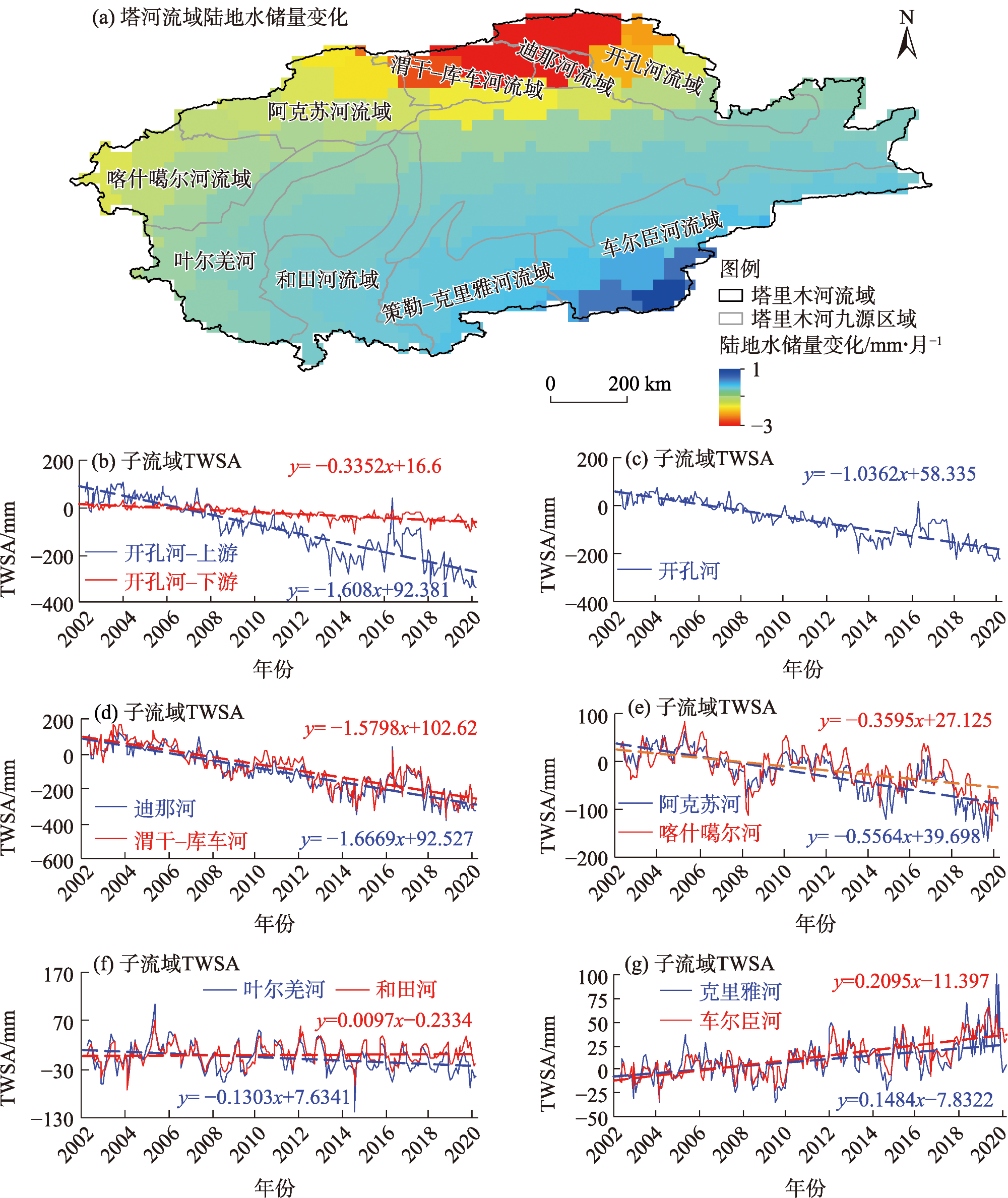
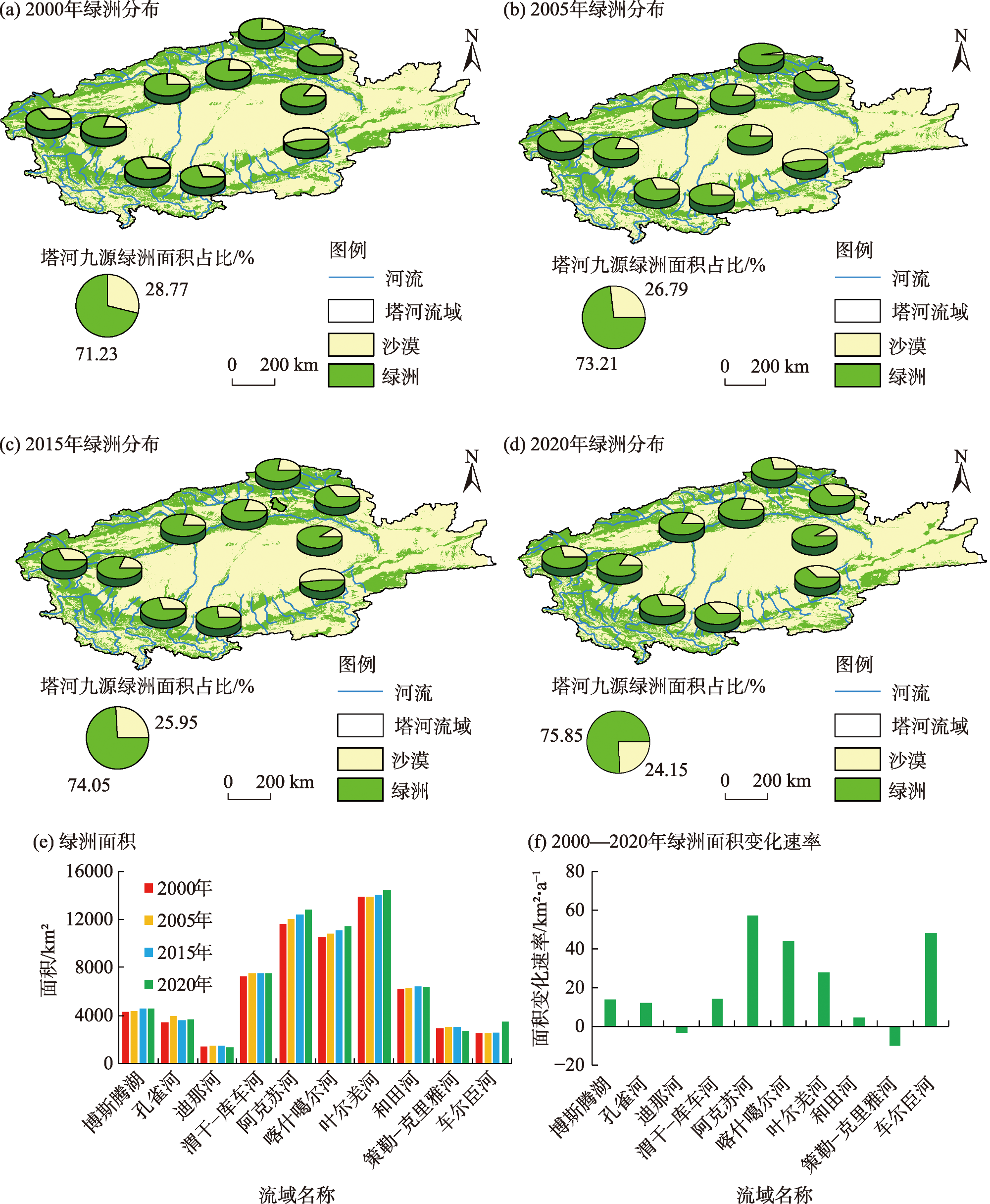
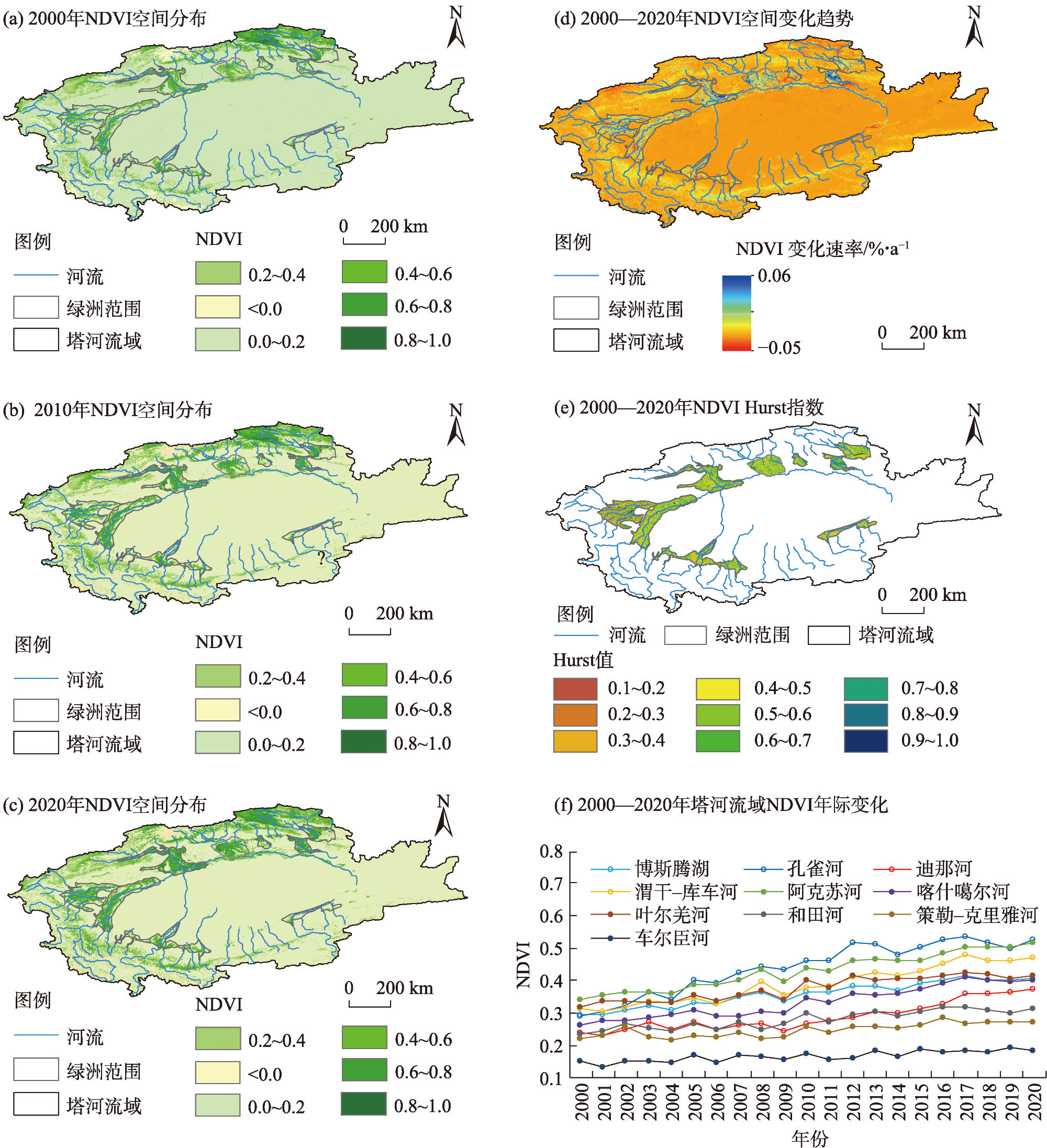
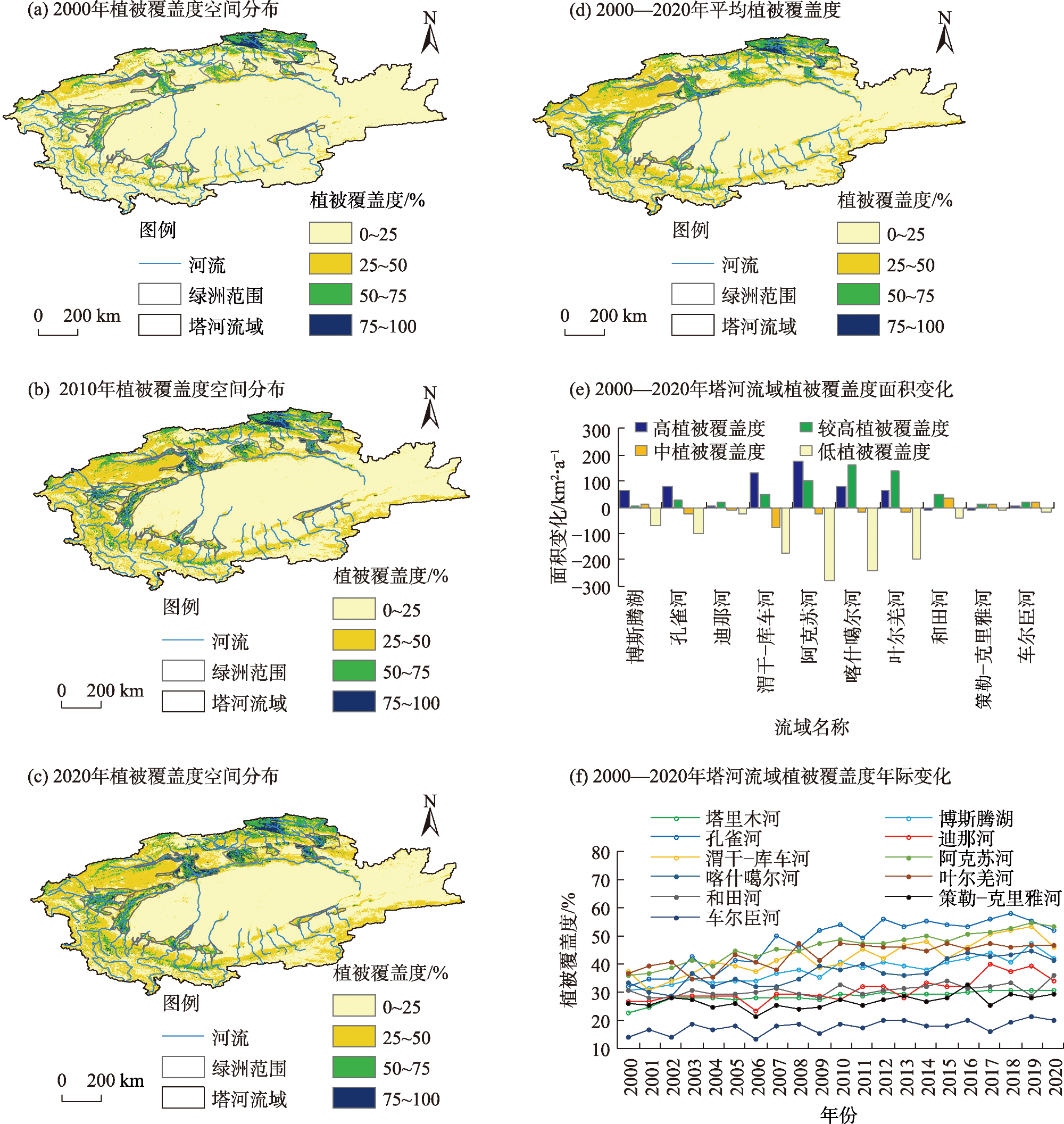
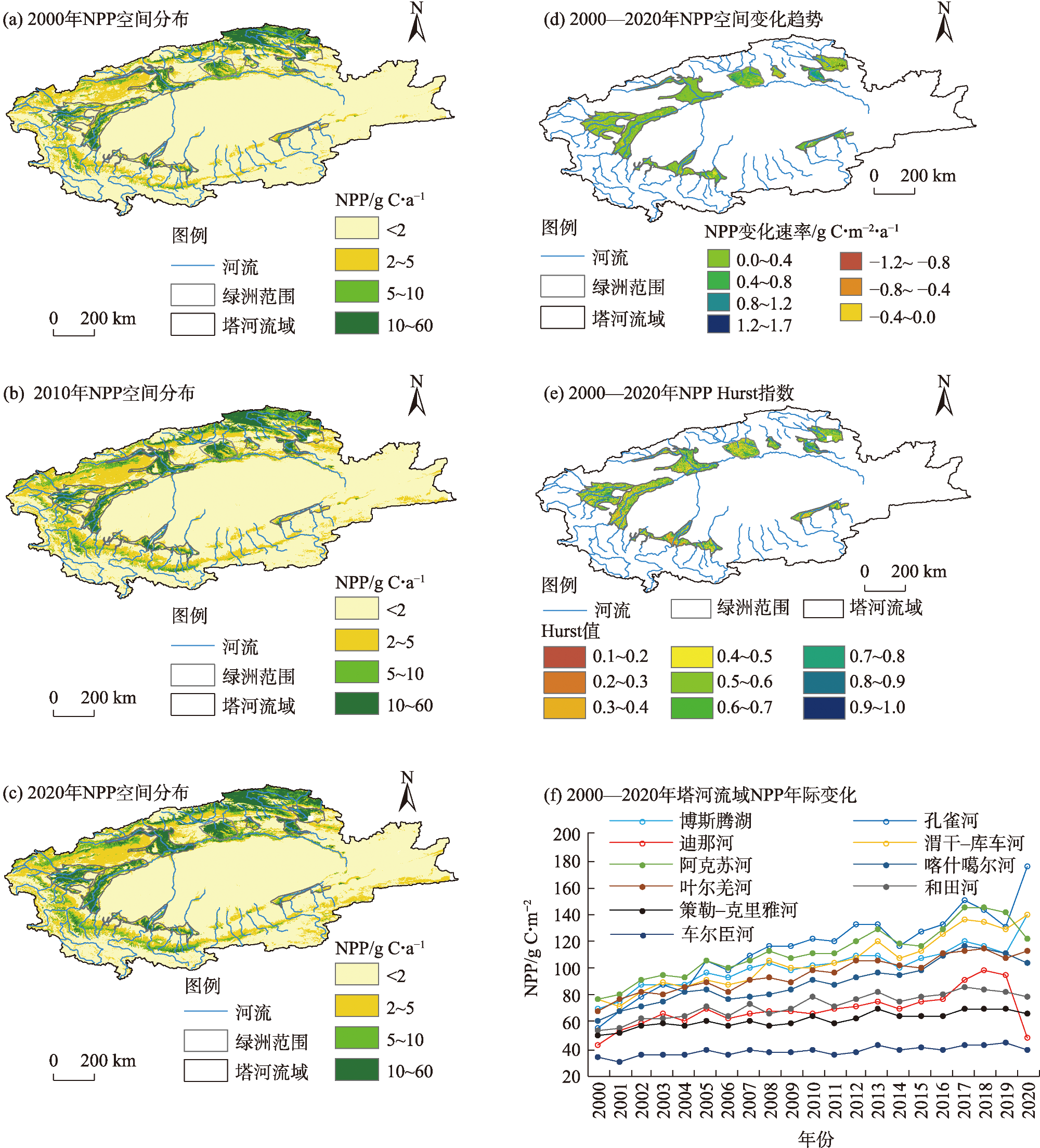
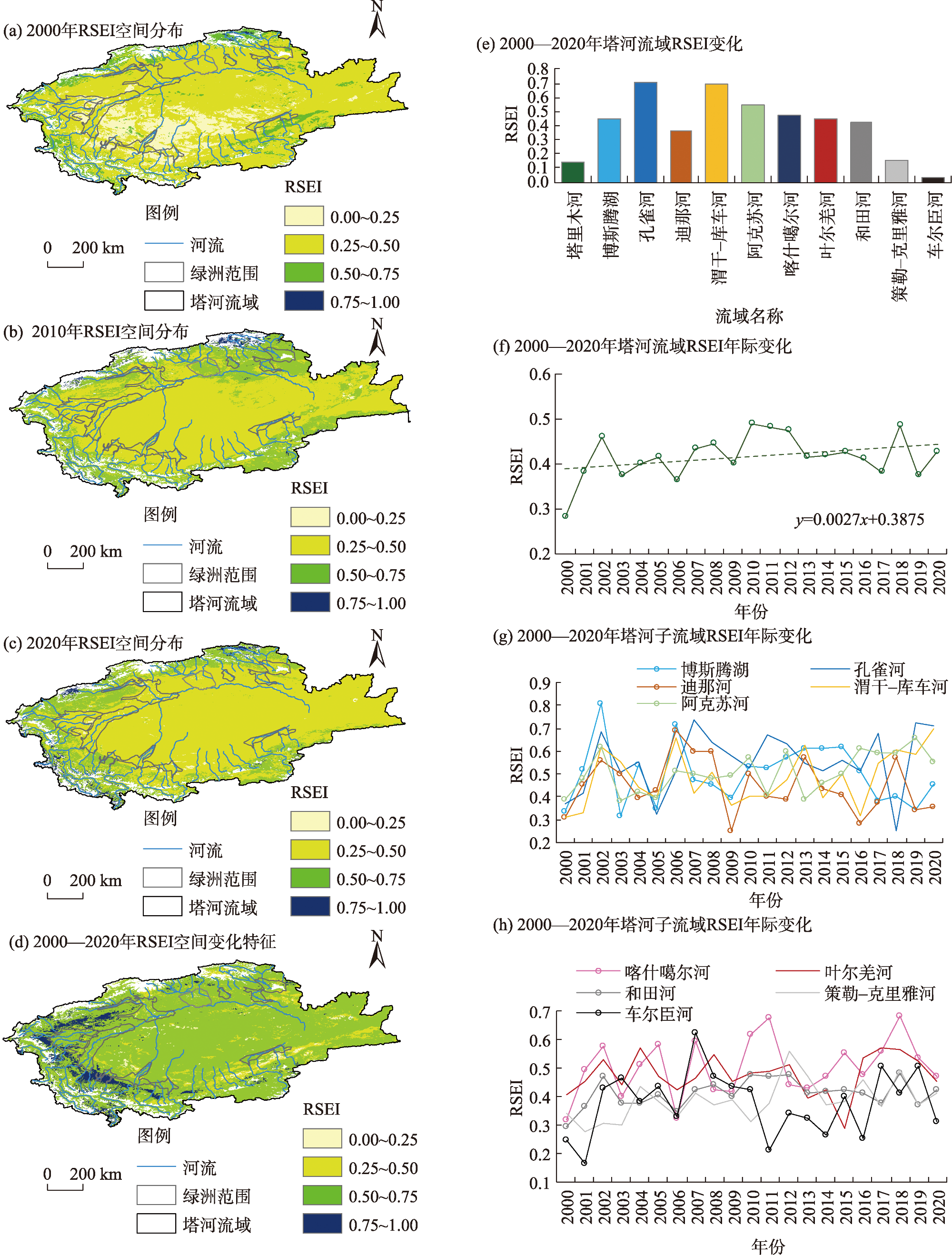
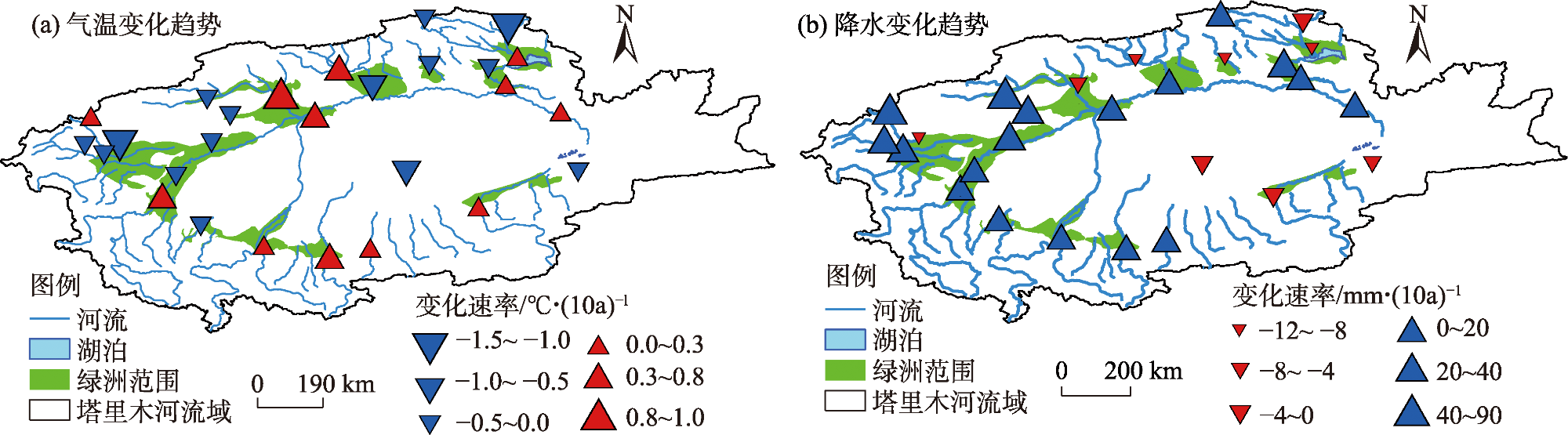
Oases are unique and ecologically sensitive landscape types in arid and semiarid regions and play a crucial role in sustaining human survival and socioeconomic development. However, climatic changes and human activities are causing drastic changes to water resources and the oasis eco-environment. This study analyzes terrestrial water storage changes and assesses the ecological security of oases in the Tarim River Basin of Xinjiang, China. The assessment was performed using the fraction of vegetation cover, a remote sensing ecological index, and net primary productivity (NPP) using the Carnegie-Ames-Stanford approach. The analysis used moderate-resolution imaging spectroradiometer satellite images, GRACE data, land use data, and climatic gridded and observed data from 2002 to 2020. The results indicate the following: (1) Terrestrial water storage in the Tarim River Basin decreased at a rate of 0.27 mm per month. Spatially, terrestrial water storage in the northern and western regions of the Tarim River Basin exhibited a negative trend, whereas that in the southern regions of the Basin showed a positive trend. (2) The total oasis area in the Tarim River Basin expanded by 6.49% (0.42×10⁴ km2) from 2000 to 2020. The ecological security of the basin improved, and the eco-environment ranged from poor to general grade. Approximately 69% of the region’s eco-environment improved, whereas the area of ecological degradation was less than 5%. The normalized difference vegetation index increased from 0.13 in 2000 to 0.16 in 2020, the fraction of vegetation cover increased by 36.79%, and the NPP expanded by 31.55% in the past 20 years. (3) Rising temperatures and precipitation contributed to increased downstream river runoff and spatiotemporal variability of water resources in the Tarim River Basin. However, human activities are a key factor in the expansion of oases.
Qifei ZHANG , Yaning CHEN , Congjian SUN , Yanyun XIANG , Haichao HAO . Changes in terrestrial water storage and evaluation of oasis ecological security in the Tarim River Basin[J]. Arid Land Geography, 2024 , 47(1) : 1 -14 . DOI: 10.12118/j.issn.1000-6060.2023.247
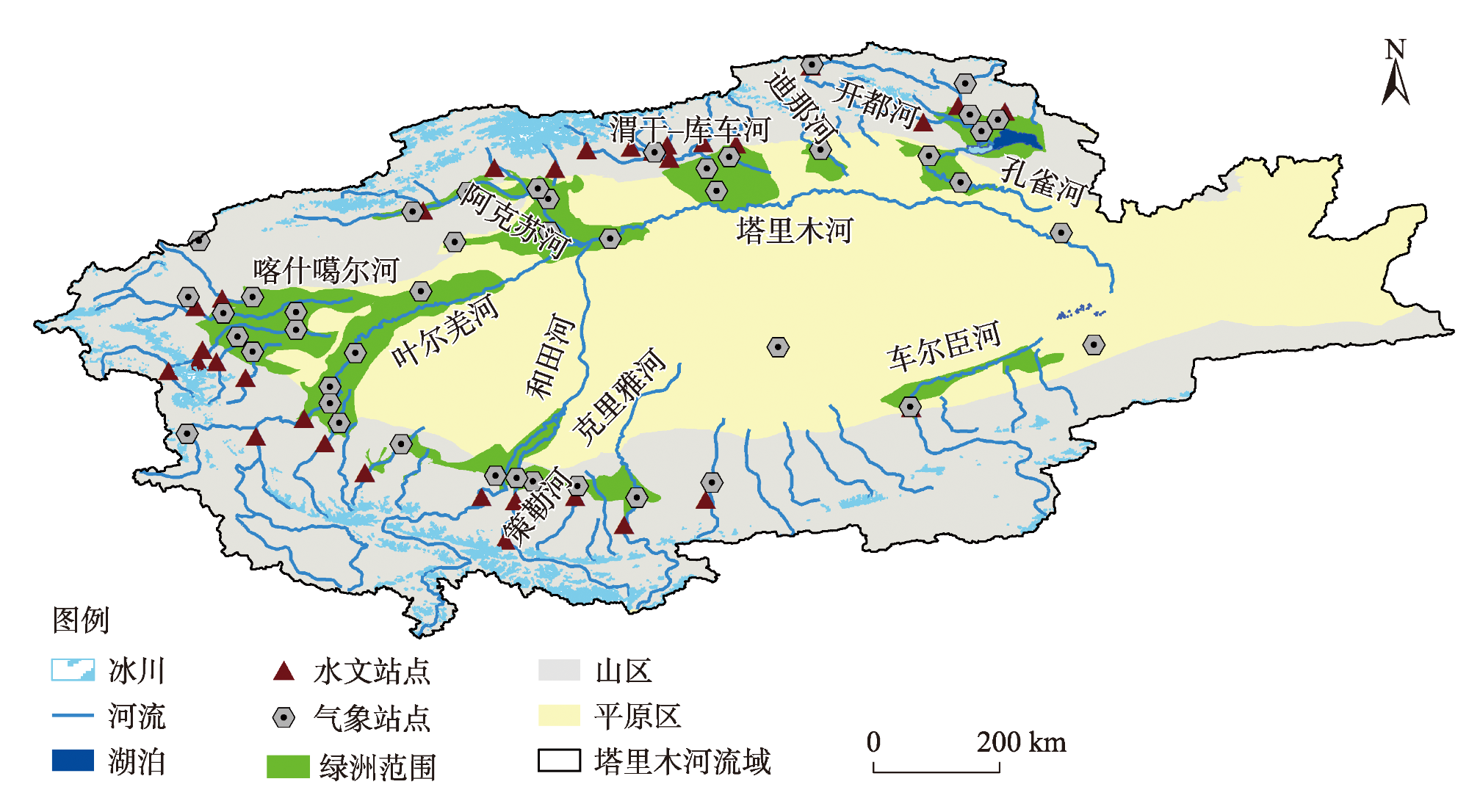
表1 塔里木河流域绿洲区主要河流水文信息Tab. 1 Hydrological information of main rivers in the oases of the Tarim River Basin |
| 水系序号 | 流域 | 绿洲范围面积/km2 | 水文站 | 流域面积/km2 | 年均径流量/108 m3 | 冰川占比/% |
|---|---|---|---|---|---|---|
| 1 | 开孔河(开都河-博斯腾湖) | 6901.08 | 大山口 | 19022 | 41.65 | 1.21 |
| 开孔河(孔雀河) | 4074.80 | 塔什店 | 33200 | 14.44 | 0.00 | |
| 2 | 迪那河 | 1882.67 | 迪那河 | 5193 | 1.95 | 0.43 |
| 3 | 渭干-库车河 | 9415.49 | 黑孜、卡拉苏、拜城、卡木鲁克、破城子、托克逊 | 10774 | 29.67 | 15.12 |
| 4 | 阿克苏河 | 15634.70 | 协合拉、沙里桂兰克 | 50000 | 79.89 | 3.52 |
| 5 | 喀什噶尔河 | 16025.20 | 恰其嘎、卡浪沟吕克、维他克、克勒克、卡拉贝利、沙曼 | 28659 | 66.52 | 5.80 |
| 6 | 叶尔羌河 | 17410.10 | 卡群 | 50248 | 67.85 | 1.45 |
| 7 | 和田河 | 9066.15 | 乌鲁瓦提、同古孜洛克 | 34558 | 46.08 | 5.34 |
| 8 | 策勒-克里雅河 | 4115.07 | 策勒 | 9390 | 9.78 | 5.23 |
| 9 | 车尔臣河 | 5408.91 | 且末 | 26822 | 6.63 | 1.98 |
| [1] |
|
| [2] |
|
| [3] |
|
| [4] |
|
| [5] |
陈亚宁, 郝兴明, 陈亚鹏, 等. 新疆塔里木河流域水系连通与生态保护对策研究[J]. 中国科学院院刊, 2019, 34(10): 1156-1164.
[
|
| [6] |
陈亚宁, 陈亚鹏, 朱成刚, 等. 西北干旱荒漠区生态系统可持续管理理念与模式[J]. 生态学报, 2019, 39(20): 7410-7417.
[
|
| [7] |
陈亚宁, 李稚, 方功焕, 等. 气候变化对中亚天山山区水资源影响研究[J]. 地理学报, 2017, 72(1): 18-26.
[
|
| [8] |
|
| [9] |
|
| [10] |
孙帆, 王弋, 陈亚宁. 塔里木盆地荒漠-绿洲过渡带动态变化及其影响因素[J]. 生态学杂志, 2020, 39(10): 3397-3407.
[
|
| [11] |
|
| [12] |
|
| [13] |
|
| [14] |
|
| [15] |
|
| [16] |
|
| [17] |
李鹏辉, 徐丽萍, 刘笑, 等. 基于三维生态足迹模型的天山北麓绿洲生态安全评价[J]. 干旱区研究, 2020, 37(5): 1337-1345.
[
|
| [18] |
|
| [19] |
|
| [20] |
|
| [21] |
|
| [22] |
|
| [23] |
|
| [24] |
|
| [25] |
向燕芸, 陈亚宁, 张齐飞, 等. 天山开都河流域积雪、径流变化及影响因子分析[J]. 资源科学, 2018, 40(9): 1855-1865.
[
|
| [26] |
邓海军, 陈亚宁. 中亚天山山区冰雪变化及其对区域水资源的影响[J]. 地理学报, 2018, 73(7): 1309-1323.
[
|
| [27] |
|
| [28] |
李海娟. 近30年喀喇昆仑山东部北坡主要冰川变化的遥感监测[D]. 昆明: 云南大学, 2021.
[
|
| [29] |
|
| [30] |
|
| [31] |
|
| [32] |
|
| [33] |
李玉焦, 陈亚宁, 张齐飞, 等. 1960—2018年博斯腾湖水位变化特征及其影响因素分析[J]. 干旱区研究, 2021, 38(1): 48-58.
[
|
| [34] |
|
| [35] |
陈亚宁, 吾买尔江·吾布力, 艾克热木·阿布拉, 等. 塔里木河下游近20 a输水的生态效益监测分析[J]. 干旱区地理, 2021, 44(3): 605-611.
[
|
| [36] |
张久丹, 李均力, 包安明, 等. 2013—2020年塔里木河流域胡杨林生态恢复成效评估[J]. 干旱区地理, 2022, 45(6): 1824-1835.
[
|
| [37] |
陈永金, 艾克热木·阿布拉, 张天举, 等. 塔里木河下游生态输水对地下水埋深变化的影响[J]. 干旱区地理, 2021, 44(3): 651-658.
[
|
| [38] |
王振, 李均力, 张久丹, 等. 输水漫溢对塔里木河中游胡杨林恢复的影响[J]. 干旱区地理, 2023, 46(1): 94-102.
[
|
| [39] |
张静静, 郝海超, 郝兴明, 等. 塔里木河下游生态输水对天然植被NPP的影响[J]. 干旱区地理, 2021, 44(3): 708-717.
[
|
/
| 〈 |
|
〉 |