Remote Sensing for Natural Resources >
Gaussian mixture model and its application in remote sensing identification of industrial heat sources
Received date: 2024-04-19
Revised date: 2024-10-26
Online published: 2026-06-03
Precisely extracting the information of industrial heat source activities serves as a significant prerequisite for the prevention and control of air pollution and the prediction of industrial economy in China. However, due to unclear heat source characteristics and inaccurate type determination, the remote sensing monitoring of industrial heat sources fails to be widely applied. This study investigated Hunan Province based on the Suomi-NPP VIIRS Nightfire data from 2015 to 2021. First, this study extracted nighttime industrial heat sources from the data using spatial filtering and the hierarchical density-based spatial clustering of applications with noise (HDBSCAN) algorithm. Second, this study constructed temperature characteristic template functions for different industrial heat sources using the Gaussian mixture model. Third, this study determined the subcategories of industrial heat sources according to temperature similarity of the same categories, achieving an overall classification accuracy of 86.31 %. Finally, this study obtained the layout of industrial heat sources in Hunan Province. The results indicate that the industry in Hunan Province was dominated by petrochemical plants, with the smallest number of coal-to-chemical plants. Metallurgical enterprises, showing the highest heat radiation intensity, were primarily distributed in the Loudi-Xiangtan-Zhuzhou area. From 2015 to 2019, industrial heat sources in Hunan Province showed a decreasing trend, indicating that relevant government departments effectively rectified the scattered, non-compliant, and polluting factories in Hunan Province during the 13th Five-Year Plan period. During the COVID-19 pandemic, the number of heat sources changed slightly since work and production were gradually resumed under the effective regulation of the government. This study analyzed the grey relational degrees between the heat radiation emission intensity and the relevant indicators of energy consumption and industrial pollutant emissions. Based on the comprehensive industrial energy consumption, industrial sulfur dioxide emissions, and heat radiation emission intensity, this study explored the relevant situation of energy consumption, pollution, and heat emissions in Hunan Province, dividing the cities and prefectures into seven types accordingly. Overall, this study provides information sources and data support for local governments to dynamically monitor the production activities of local key industrial enterprises. Ascertaining the spatial distribution patterns and evolutionary trends of different industrial enterprises will contribute to the formulation of industrial transformation policies by the government and relevant departments and the practice of sustainable development.
LI Lelin , WANG Wenxi , YANG Wentao , CHEN Hao , PENG Huanhua , ZHAO Qian . Gaussian mixture model and its application in remote sensing identification of industrial heat sources[J]. Remote Sensing for Natural Resources, 2025 , 37(4) : 173 -183 . DOI: 10.6046/zrzyyg.2024146
表1 工业热源子类温度特征GMM模型Tab.1 GMM for temperature characteristics of industrial heat source subclasses |
| 企业类别 | GMM模型 | R2 | 调整后R2 | RMSE/% |
|---|---|---|---|---|
| 冶金 | 0.993 7 | 0.993 2 | 0.114 1 | |
| 水泥 | 0.937 2 | 0.934 8 | 0.870 4 | |
| 石化 | 0.988 0 | 0.986 9 | 0.218 5 | |
| 煤化 | 0.970 9 | 0.967 6 | 0.277 8 |
表2 工业热源分类精度Tab.2 Classification accuracy of industrial heat sources |
| 分类类别 | 参考类别 | 用户精度/% | |||
|---|---|---|---|---|---|
| 冶金 | 水泥 | 石化 | 煤化 | ||
| 冶金 | 34 | 2 | 3 | 1 | 85.00 |
| 水泥 | 2 | 38 | 3 | 2 | 84.44 |
| 石化 | 3 | 4 | 64 | 0 | 90.14 |
| 煤化 | 0 | 1 | 2 | 9 | 75.00 |
| 制图精度/% | 89.47 | 84.44 | 88.89 | 75.00 | — |
| 总体精度/% | 86.31 | ||||
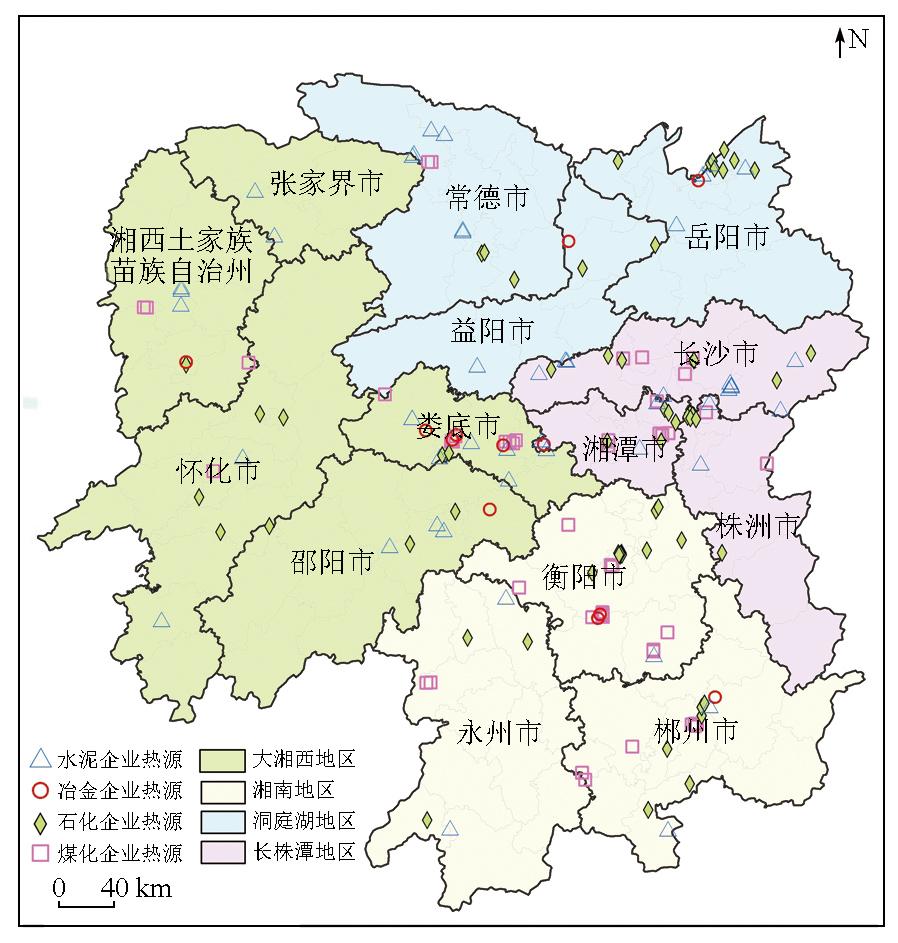
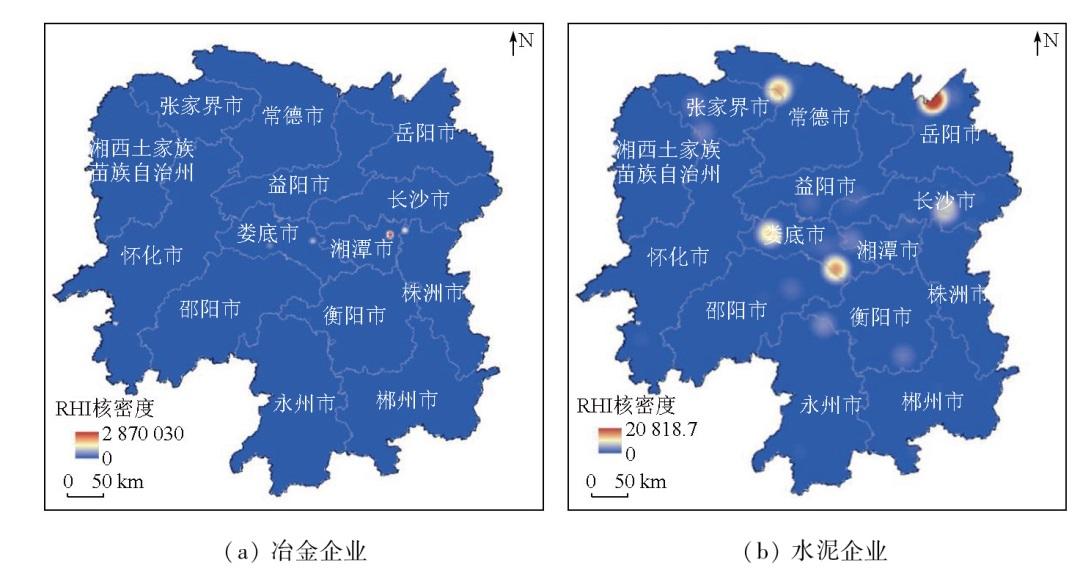
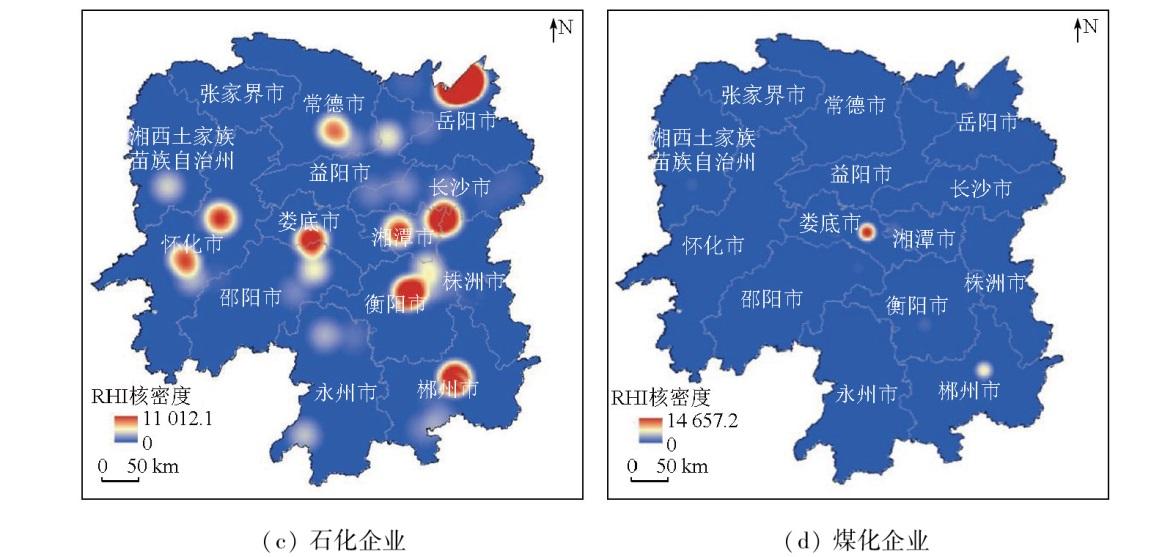
图3 研究区各类别工业热源分布Fig.3 Distribution of various types of industrial heat sources in study area |
表3 各市工业热源数量统计Tab.3 Statistics on the number of industrial heat sources(个) |
| 市级行政区 | 冶金 | 水泥 | 石化 | 煤化 | 共计 |
|---|---|---|---|---|---|
| 长沙市 | 4 | 8 | 6 | 0 | 18 |
| 株洲市 | 2 | 2 | 6 | 0 | 10 |
| 湘潭市 | 5 | 5 | 7 | 1 | 18 |
| 衡阳市 | 9 | 1 | 9 | 2 | 21 |
| 邵阳市 | 0 | 3 | 4 | 1 | 8 |
| 岳阳市 | 0 | 5 | 11 | 1 | 17 |
| 常德市 | 1 | 6 | 4 | 0 | 11 |
| 张家界市 | 0 | 2 | 0 | 0 | 2 |
| 益阳市 | 0 | 2 | 2 | 1 | 5 |
| 郴州市 | 8 | 1 | 11 | 1 | 21 |
| 永州市 | 1 | 2 | 4 | 0 | 7 |
| 怀化市 | 1 | 2 | 4 | 0 | 7 |
| 娄底市 | 6 | 5 | 3 | 4 | 18 |
| 湘西土家族苗族自治州 | 2 | 1 | 1 | 1 | 5 |
| 共计 | 39 | 45 | 72 | 12 | 168 |
表4 灰色关联度结果Tab.4 Results of grey relational degree |
| 评价项 | 关联度 | 排名 |
|---|---|---|
| X8 | 0.846 | 1 |
| X3 | 0.788 | 2 |
| X5 | 0.761 | 3 |
| X7 | 0.756 | 4 |
| X1 | 0.726 | 5 |
| X4 | 0.712 | 6 |
| X6 | 0.704 | 7 |
| X2 | 0.700 | 8 |
| [1] |
李宇军. 生态文明视野下的企业环保责任——“腾格里沙漠违法排污” 案例分析[J]. 杭州师范大学学报(社会科学版), 2015, 37(6):119-125.
|
| [2] |
何慧妍, 杨庆媛, 毕国华, 等. 重庆市2009—2018年工业用地供应规模时空特征分析[J]. 长江流域资源与环境, 2021, 30(4):808-817.
|
| [3] |
高菠阳, 罗会琳, 黄志基, 等. 中国工业用地出让价格空间格局及影响因素[J]. 地球信息科学学报, 2020, 22(6):1189-1201.
|
| [4] |
史焱文, 李小建, 孟德友. 典型农区县域工业化进程评价及时空演进——以河南省为例[J]. 经济地理, 2020, 40(10):118-126,153.
|
| [5] |
傅国伟. 当代环境规划的定义、作用与特征分析[J]. 中国环境科学, 1999, 19(1):72-76.
|
| [6] |
任胜钢, 张如波, 袁宝龙. 长江经济带工业生态效率评价及区域差异研究[J]. 生态学报, 2018, 38(15):5485-5497.
|
| [7] |
赖建波. 重工业热源的遥感识别及空间分布格局研究[D]. 兰州: 西北师范大学, 2020.
|
| [8] |
陈鹏飞, 卢力, 朱华忠, 等. 基于不同分辨率影像的水泥厂遥感识别适宜性研究[J]. 环境污染与防治, 2015, 37(9):20-28.
|
| [9] |
陈鹏飞, 卢力, 朱华忠, 等. 不同分辨率遥感影像的钢铁厂识别适宜性研究[J]. 地球信息科学学报, 2015, 17(9):1119-1127.
|
| [10] |
|
| [11] |
|
| [12] |
孙爽, 姜磊, 刘保献, 等. 中高分辨率卫星影像的装置级别工业热源识别[J]. 遥感学报, 2024, 28(8):2101-2112.
|
| [13] |
|
| [14] |
孙佳琪, 刘永学, 董雁伫, 等. 基于Suomi-NPP VIIRS夜间热异常产品的城市工业热源分类——以京津冀地区为例[J]. 地理与地理信息科学, 2018, 34(3):13-19.
|
| [15] |
李博, 范俊甫, 韩留生, 等. 基于VIIRS Nightfire数据的山东省工业热源分类提取与变化特征分析[J]. 遥感技术与应用, 2022, 37(4):919-928.
|
| [16] |
张钦挺, 邹滨, 刘宁, 等. 耦合温度特征的工业热源ANN遥感识别与时空演化分析[J]. 遥感学报, 2024, 28(4):956-968.
|
| [17] |
|
| [18] |
|
| [19] |
纪轩禹. 京津冀地区工业热源活动卫星遥感监测及环境影响研究[D]. 青岛: 山东科技大学, 2019.
|
| [20] |
陶金花, 范萌, 顾坚斌, 等. 新冠病毒疫情期间复工复产卫星遥感监测[J]. 遥感学报, 2020, 24(7):824-836.
|
| [21] |
孙爽, 李令军, 赵文吉, 等. 基于热异常遥感的冀南城市群工业能耗及大气污染[J]. 中国环境科学, 2019, 39(7):3120-3129.
|
| [22] |
郝丽春, 孟庆岩, 葛小三, 等. 一种基于八分位法的工业热污染区提取方法[J]. 遥感技术与应用, 2020, 35(2):469-477.
|
| [23] |
|
| [24] |
|
| [25] |
|
| [26] |
|
| [27] |
蒋姝睿, 王玥, 王萌, 等. 区域视角下中国工业行业与工业污染关系[J]. 中国环境科学, 2017, 37(11):4380-4387.
|
/
| 〈 |
|
〉 |