Remote Sensing for Natural Resources >
A MobileNet-based lightweight cloud detection model
Received date: 2024-01-17
Revised date: 2024-04-24
Online published: 2026-06-03
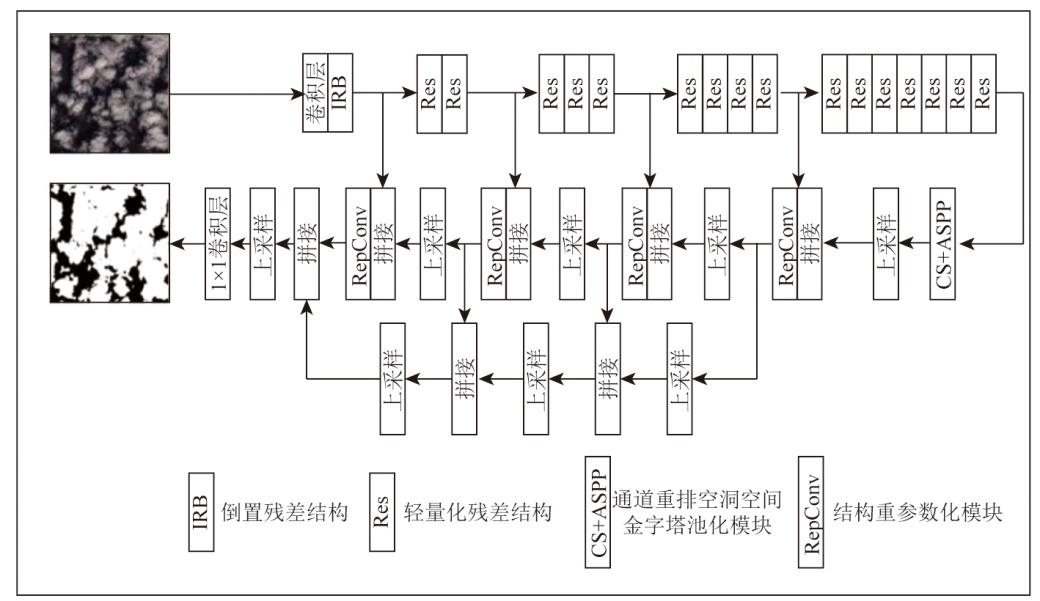
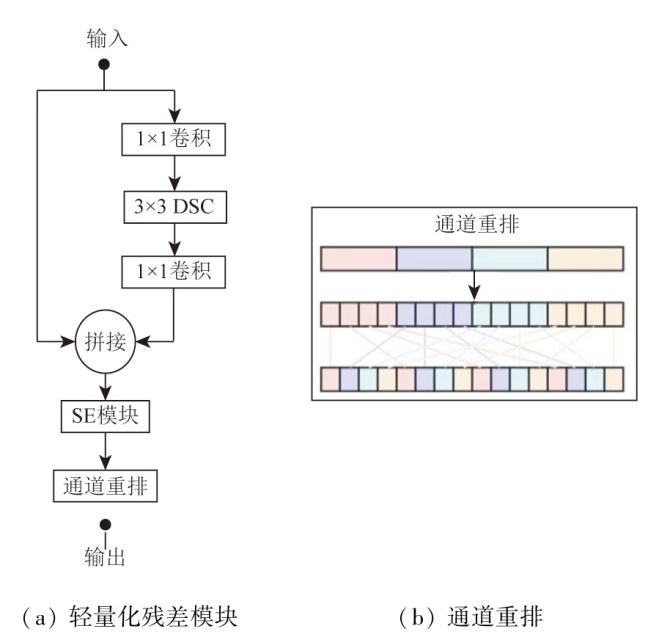
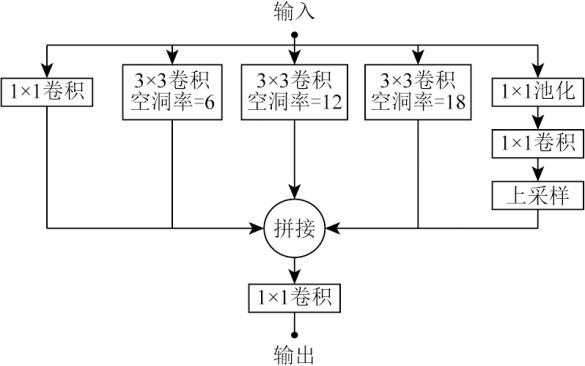
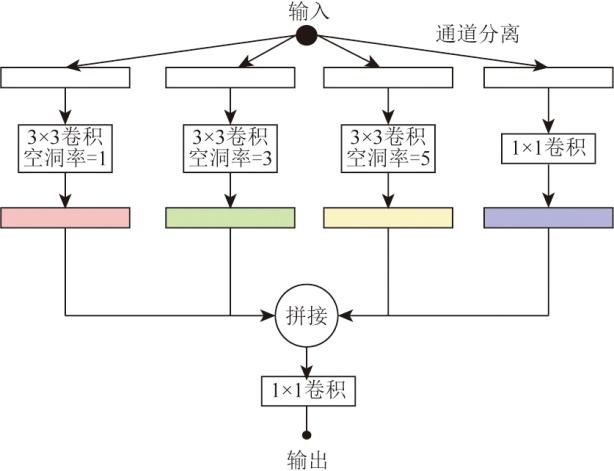
The high computational complexity and large model scales of existing cloud detection algorithms render their deployment on edge devices almost infeasible. To address this challenge, this study proposed a MobileNet-based lightweight cloud detection model. In the downsampling stage, a residual module based on the attention mechanism was employed to reduce model parameters through group convolution. The channel shuffling mechanism and the squeeze-and-excitation (SE) channel attention were integrated to enhance the information exchange between channels. These approaches reduced parameters and computational complexity while maintaining the ability to extract significant features. In the upsampling stage, the RepConv module and the improved atrous spatial pyramid pooling (ASPP) module were used to enhance the network’s learning capability and its ability to capture image details and spatial information. Experimental results demonstrate that the proposed model can achieve higher cloud detection accuracy while reducing parameters and model complexity, substantiating its practicality and feasibility.
YE Wujian , XIE Linfeng , LIU Yijun , WEN Xiaozhuo , Li Yang . A MobileNet-based lightweight cloud detection model[J]. Remote Sensing for Natural Resources, 2025 , 37(3) : 95 -103 . DOI: 10.6046/zrzyyg.2024031
表1 MobileNetV2模型结构Tab.1 MobileNetV2 model structure |
| 输入形状 | 结构层名 | 扩展因子 | 输出通道数 | 数量 | 步距 |
|---|---|---|---|---|---|
| 2242×3 | 卷积层 | — | 32 | 1 | 2 |
| 1122×32 | IRB | 1 | 16 | 1 | 1 |
| 1122×16 | IRB | 6 | 24 | 2 | 2 |
| 562×24 | IRB | 6 | 32 | 3 | 2 |
| 282×32 | IRB | 6 | 64 | 4 | 2 |
| 142×64 | IRB | 6 | 96 | 3 | 1 |
| 142×96 | IRB | 6 | 160 | 3 | 2 |
| 72×160 | IRB | 6 | 320 | 1 | 1 |
| 72×320 | 1×1 卷积层 | — | 1 280 | 1 | 1 |
| 72×1 280 | 平均池 化7×7 | — | — | 1 | — |
| 1×1×1 280 | 线性层 | — | — | — | — |
表3 不同模型的云检测分割结果Tab.3 Cloud detection segmentation results of different models |
| 序号 | 假彩图像 | 真实值 | MobileNetV2 | ICNet | DFANet | LEDNet | 本文模型 |
|---|---|---|---|---|---|---|---|
| 1 |  | ||||||
| 2 |  | ||||||
| 3 |  | ||||||
| 4 |  | ||||||
| 5 |  | ||||||
| 6 |  |
表4 不同模型性能指标对比Tab.4 Comparison of performance indicators of different models(%) |
| 网络模型 | 准确率 | 召回率 | 精确率 | F1分数 | Jaccard |
|---|---|---|---|---|---|
| MobileNetV2 | 93.28 | 87.29 | 87.66 | 85.79 | 79.11 |
| ICNet | 91.35 | 92.34 | 83.91 | 85.07 | 79.12 |
| DFANet | 92.23 | 88.17 | 86.13 | 84.89 | 78.20 |
| LEDNet | 91.62 | 88.76 | 85.68 | 84.39 | 77.96 |
| 本文模型 | 93.24 | 90.82 | 87.03 | 86.27 | 80.49 |
表5 不同模型参数量和复杂度对比Tab.5 Comparison of parameter quantity and complexity of different models |
| 网络模型 | 参数量/106个 | GFLOPS |
|---|---|---|
| MobileNetV2 | 4.68 | 1.93 |
| ICNet | 26.24 | 5.70 |
| DFANet | 2.15 | 1.00 |
| LEDNet | 0.92 | 3.54 |
| 本文模型 | 1.43 | 1.04 |
表6 消融实验结果对比Tab.6 Comparison of ablation experiment results(%) |
| 网络模型 | A | B | C | 准确 率 | 召回 率 | 精确 率 | F1 分数 | Jac- card |
|---|---|---|---|---|---|---|---|---|
| MobileNetV2 | — | — | — | 93.28 | 87.29 | 87.66 | 85.79 | 79.11 |
| 模型A | √ | — | — | 92.77 | 85.51 | 89.53 | 84.95 | 78.37 |
| 模型B | √ | √ | — | 92.93 | 88.09 | 88.50 | 85.42 | 79.33 |
| 提出的模型 | √ | √ | √ | 93.24 | 90.82 | 87.03 | 86.27 | 80.49 |
| [1] |
|
| [2] |
|
| [3] |
|
| [4] |
|
| [5] |
|
| [6] |
|
| [7] |
|
| [8] |
|
| [9] |
刘小波, 刘鹏, 蔡之华, 等. 基于深度学习的光学遥感图像目标检测研究进展[J]. 自动化学报, 2021, 47(9):2078-2089.
|
| [10] |
|
| [11] |
|
| [12] |
刘广进, 王光辉, 毕卫华, 等. 基于DenseNet与注意力机制的遥感影像云检测算法[J]. 自然资源遥感, 2022, 34(2):88-96.doi:10.6046/zrzyyg.2021128.
|
| [13] |
|
| [14] |
|
| [15] |
|
| [16] |
|
| [17] |
|
| [18] |
|
| [19] |
|
| [20] |
|
| [21] |
|
| [22] |
|
/
| 〈 |
|
〉 |