Remote Sensing for Natural Resources >
Spatiotemporal evolution of ecological vulnerability in Xinjiang and its response to drought
Received date: 2024-02-06
Revised date: 2024-05-27
Online published: 2026-06-03
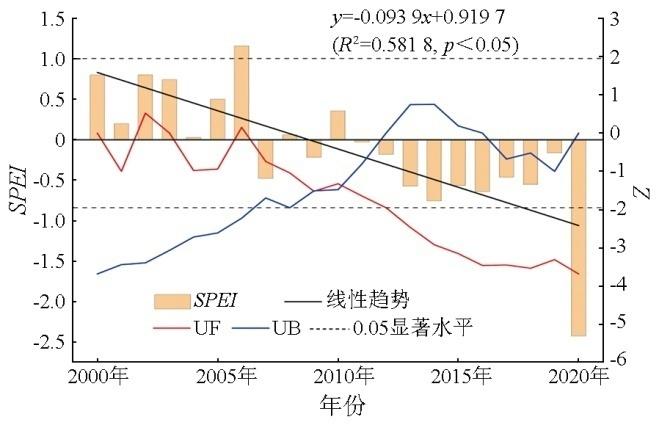
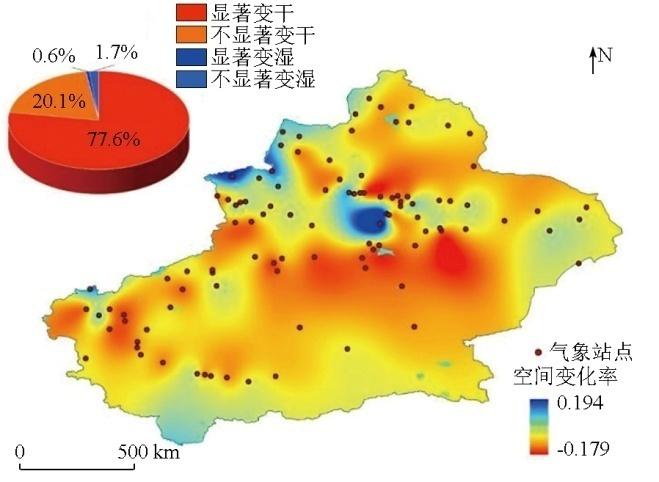
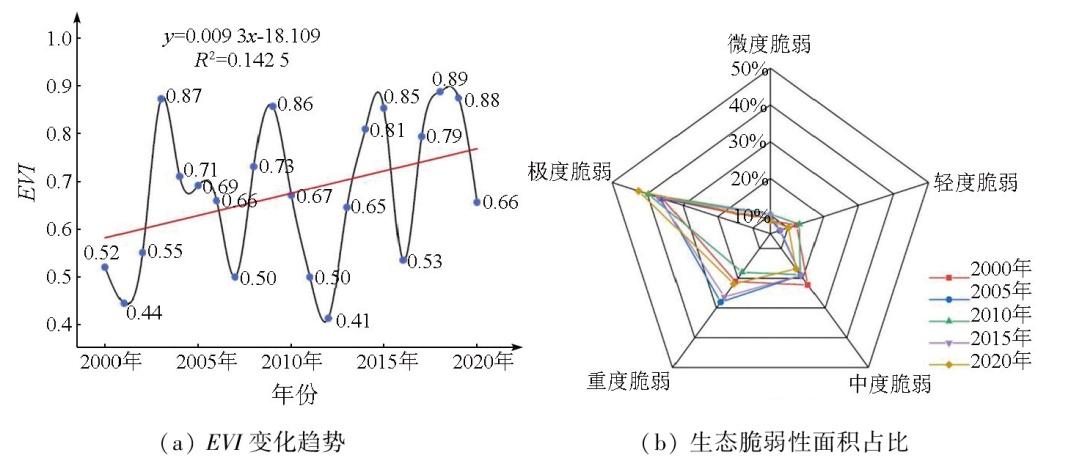
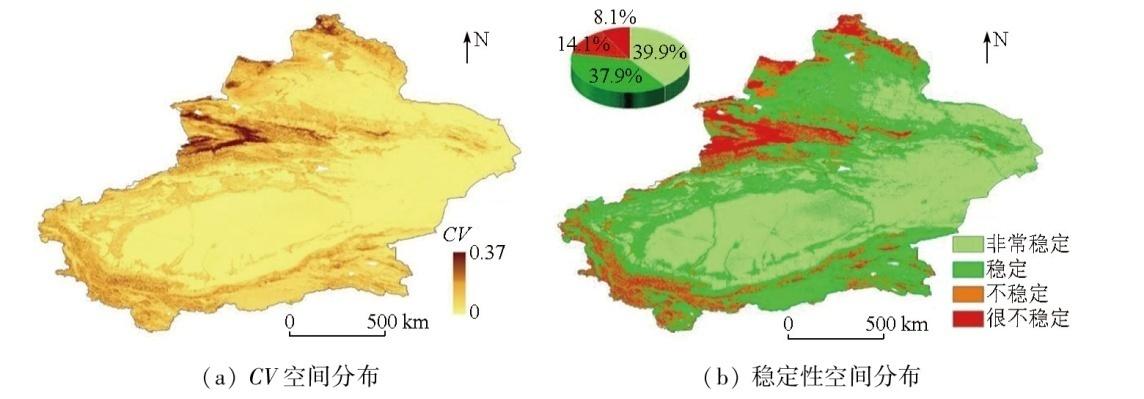
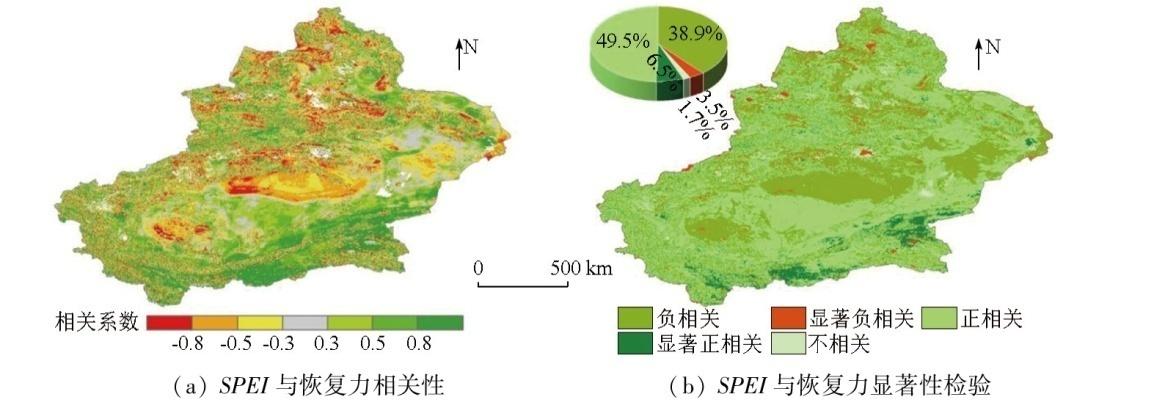
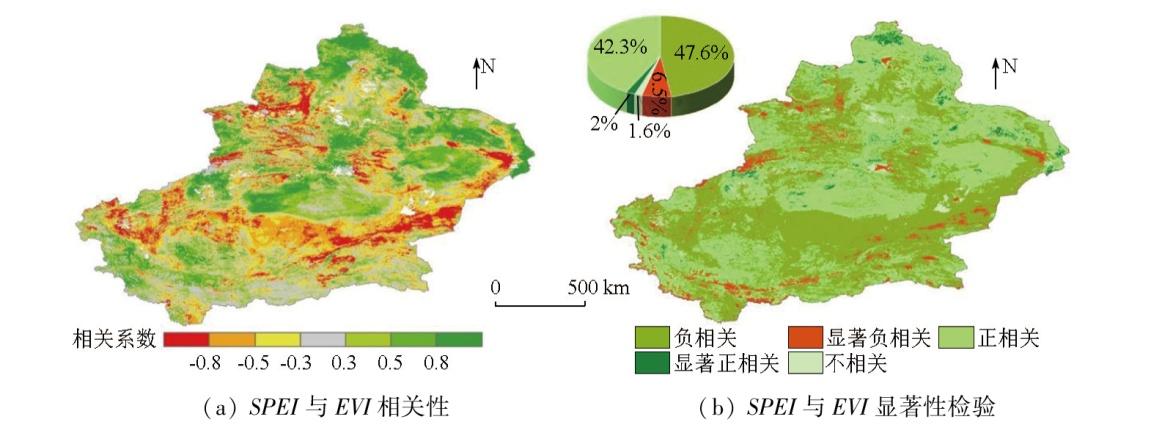
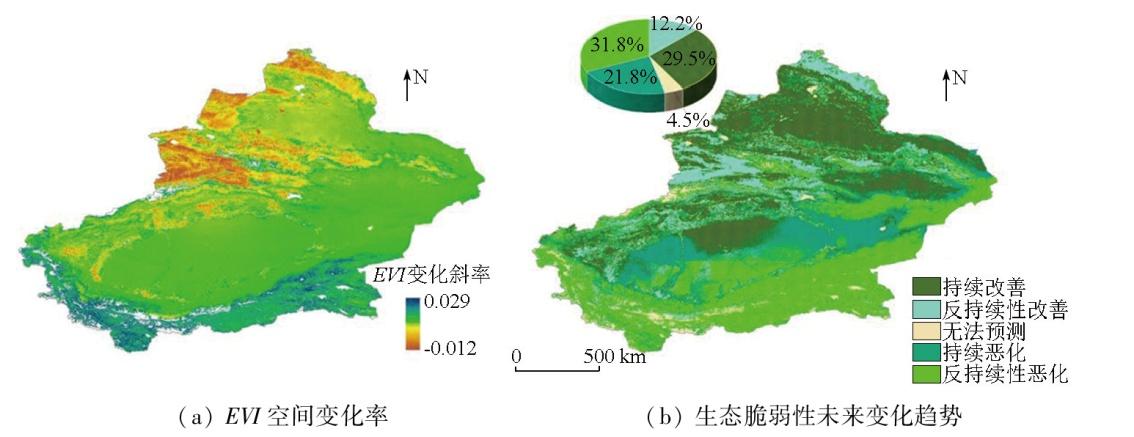
Global warming has exacerbated drought conditions, posing a significant threat to ecosystem structures and functions. Analyzing the spatiotemporal evolution of ecological vulnerability and its response to drought plays a significant role in achieving regional high-quality and sustainable development. With Xinjiang as the study area, this study constructed an assessment index system for ecological vulnerability based on the ecological sensitivity-resilience-pressure (SRP) model. Using methods like local spatial autocorrelation, coefficient of variation, slope trend analysis, and Hurst exponent, this study assessed the ecological vulnerability in Xinjiang from 2000 to 2020, followed by future trend prediction. Moreover, this study explored the impacts of drought on ecological vulnerability using the standardized precipitation evapotranspiration index (SPEI). The results indicate that the overall ecological vulnerability was relatively high in Xinjiang, with its spatial distribution characterized by significant regional differences and spatial aggregation. The SPEI value showed a downward trend at an average annual rate of 0.093 9, suggesting a significant worsening trend of regional aridification. The area featuring a negative correlation between drought and ecological vulnerability represented 54.1 %, indicating that ecological vulnerability in most areas decreased with improved regional moisture conditions. The stable distribution area of ecological vulnerability constituted 77.8 %, dominated by severely and extremely vulnerable areas. In the future, the majority of Xinjiang (61.3 %) is projected to witness decreased ecological vulnerability and enhanced ecological quality. Overall, the results of this study deepen the understanding of the status and driving mechanism of ecological vulnerability in Xinjiang, providing a scientific reference and decision-making basis for enhancing the adaptability of regional ecosystems to environmental changes.
LU Jiantao , ZHENG Jianghua , PENG Jian , XIAO Xianghua , LI Gangyong , LIU Liang , WANG Renjun , ZHANG Jianli . Spatiotemporal evolution of ecological vulnerability in Xinjiang and its response to drought[J]. Remote Sensing for Natural Resources, 2025 , 37(3) : 253 -264 . DOI: 10.6046/zrzyyg.2024065
表1 生态脆弱性评价指标体系Tab.1 Assessment index system for ecological vulnerability |
| 要素层 | 指标层 | 指标性质 | 权重 |
|---|---|---|---|
| 生态敏感性 | 高程 坡度 地形起伏度 | 正 正 正 | 0.062 0.043 0.027 |
| 景观破碎度 土壤侵蚀程度 年均降水量 | 正 正 负 | 0.085 0.092 0.055 | |
| 年均气温 | 负 | 0.036 | |
| 生态恢复力 | FVC 景观干扰度指数 NPP | 负 正 负 | 0.125 0.145 0.130 |
| 生态压力度 | 人均GDP 人口密度 人类足迹数据 | 正 正 正 | 0.044 0.074 0.082 |
表2 新疆地区SRP模型生态脆弱性分级标准Tab.2 Classification criteria of ecological vulnerability in Xinjiang |
| 等级 | 取值范围 | 脆弱性 分类 | 恢复力 等级 | 生态特征 |
|---|---|---|---|---|
| Ⅰ | (0,0.2] | 微度脆弱 | 5级 | 生态功能完整,抗外界干扰和自我恢复能力强 |
| Ⅱ | (0.2,0.4] | 轻度脆弱 | 4级 | 生态功能较为完善,抗外界干扰和自我恢复能力较强 |
| Ⅲ | (0.4,0.6] | 中度脆弱 | 3级 | 生态功能一般,抗外界干扰和自我恢复能力较弱 |
| Ⅳ | (0.6,0.8] | 重度脆弱 | 2级 | 生态功能部分退化,抗外界干扰和自我恢复能力弱 |
| Ⅴ | (0.8,1] | 极度脆弱 | 1级 | 生态功能严重退化,抗外界干扰和自我恢复能力差 |
表3 未来变化趋势分级Tab.3 Classification of future trends |
| 取值范围 | 变化趋势 |
|---|---|
| θslope<0,0.5<H<1 | 持续改善 |
| θslope<0,0<H<0.5 | 反持续性改善 |
| θslope>0,0.5<H<1 | 持续恶化 |
| θslope>0,0<H<0.5 | 反持续性恶化 |
| H=0.5 | 无法预测 |
感谢自治区级产学研联合培养研究生基地——新疆草原总站提供的资料与实验平台支持。
| [1] |
|
| [2] |
周波涛. 全球气候变暖:浅谈从AR5到AR6的认知进展[J]. 大气科学学报, 2021, 44(5):667-671.
|
| [3] |
|
| [4] |
|
| [5] |
|
| [6] |
|
| [7] |
乔青, 高吉喜, 王维, 等. 生态脆弱性综合评价方法与应用[J]. 环境科学研究, 2008, 21(5):117-123.
|
| [8] |
|
| [9] |
|
| [10] |
贾晶晶, 赵军, 王建邦, 等. 基于SRP模型的石羊河流域生态脆弱性评价[J]. 干旱区资源与环境, 2020, 34(1):34-41.
|
| [11] |
赵志荣, 许端阳, 张绪教, 等. 2000—2015年内蒙古地区土地沙漠化脆弱性评估[J]. 水土保持研究, 2020, 27(1):168-175.
|
| [12] |
沈伊丽, 蔡建国, 舒美英. 基于GIS的浙江海宁尖山新区景观规划用地适宜性评价[J]. 测绘与空间地理信息, 2022, 45(10):23-26.
|
| [13] |
张学渊, 魏伟, 周亮, 等. 西北干旱区生态脆弱性时空演变分析[J]. 生态学报, 2021, 41(12):4707-4719.
|
| [14] |
贾路, 于坤霞, 李占斌, 等. 长江经济带景观格局对生态系统服务价值影响的概率评估[J]. 农业工程学报, 2023, 39(15):217-227.
|
| [15] |
邰苏日嘎拉, 王永亮, 陈国栋, 等. 基于SRP模型的内蒙古鄂伦春地区生态脆弱性评价[J]. 中国地质, 2024, 51(1):234-247.
|
| [16] |
孙桂丽, 陆海燕, 郑佳翔, 等. 新疆生态脆弱性时空演变及驱动力分析[J]. 干旱区研究, 2022, 39(1):258-269.
|
| [17] |
常溢华, 蔡海生. 基于SRP模型的多尺度生态脆弱性动态评价——以江西省鄱阳县为例[J]. 江西农业大学学报, 2022, 44(1):245-260.
|
| [18] |
|
| [19] |
|
| [20] |
|
| [21] |
|
| [22] |
於琍. 干旱对生态系统脆弱性的影响研究——以长江中下游地区为例[J]. 长江流域资源与环境, 2014, 23(7):1063-1070.
|
| [23] |
|
| [24] |
|
| [25] |
闫文波, 何云玲, 余岚, 等. 气候干旱化背景下云南地区生态系统脆弱性的变化特征[J]. 生态科学, 2023, 42(1):197-205.
|
| [26] |
张宁宁, 房世峰, 杜加强, 等. 基于LUCC的新疆沙尘源空间格局及转化机理分析[J]. 干旱区地理, 2018, 41(5):1053-1063.
|
| [27] |
|
| [28] |
刘大钊, 周立志. 安徽安庆菜子湖国家湿地公园景观格局变化对鸟类多样性的影响[J]. 生态学杂志, 2021, 40(7):2201-2212.
|
| [29] |
李晓燕, 张树文. 基于景观结构的吉林西部生态安全动态分析[J]. 干旱区研究, 2005, 22(1):57-62.
|
| [30] |
梁二敏, 张军民, 杨卫红. 新疆玛纳斯河流域绿洲景观生态脆弱性时空分异[J]. 干旱区研究, 2017, 34(4):950-957.
|
| [31] |
|
| [32] |
|
| [33] |
赵楠, 赵颖慧, 邹海凤, 等. 1990—2020年黑龙江省植被覆盖度的时空变化趋势及驱动力[J]. 应用生态学报, 2023, 34(5):1320-1330.
|
| [34] |
张霞, 周忠发, 朱昌丽, 等. 喀斯特山区生态脆弱性与经济贫困的耦合关系——以贵州省荔波县为例[J]. 水土保持通报, 2020, 40(5):227-233.
|
| [35] |
张慧琳, 吴攀升, 侯艳军. 五台山地区生态脆弱性评价及其时空变化[J]. 生态与农村环境学报, 2020, 36(8):1026-1035.
|
| [36] |
卓静, 胡皓, 何慧娟, 等. 陕北黄土高原生态脆弱性时空变异及驱动因素分析[J]. 干旱区地理, 2023, 46(11):1768-1777.
|
| [37] |
齐润泽, 潘竟虎. 河湟地区生态脆弱性时空演变及影响因素研究[J]. 干旱区研究, 2023, 40(6):1002-1013.
|
| [38] |
邓伟, 袁兴中, 孙荣, 等. 基于遥感的北方农牧交错带生态脆弱性评价[J]. 环境科学与技术, 2016, 39(11):174-181.
|
| [39] |
|
| [40] |
李怀海, 李纯斌, 吴静, 等. 2000—2020年石羊河流域草地净初级生产力时空动态及其对气候的响应[J]. 草业科学, 2022, 39(10):2048-2061.
|
| [41] |
刘亮, 关靖云, 穆晨, 等. 2008—2018年伊犁河流域植被净初级生产力时空分异特征[J]. 生态学报, 2022, 42(12):4861-4871.
|
| [42] |
|
| [43] |
|
| [44] |
隋露, 闫志明, 李开放, 等. 人类活动及气候变化影响下伊犁河谷生境质量预测研究[J]. 干旱区地理, 2024, 47(1):104-116.
|
| [45] |
姚雄, 余坤勇, 刘健, 等. 南方水土流失严重区的生态脆弱性时空演变[J]. 应用生态学报, 2016, 27(3):735-745.
|
| [46] |
|
| [47] |
岳笑, 张良侠, 周德成, 等. 干旱—半干旱典型生态脆弱区生态脆弱性时空演变及驱动因子分析[J]. 环境生态学, 2023, 5(6):1-9,14.
|
| [48] |
李致家, 霍文博, 张珂. 格林-安普特降雨径流模型改进及初步应用[J]. 河海大学学报(自然科学版), 2020, 48(5):385-391.
|
/
| 〈 |
|
〉 |