Remote Sensing for Natural Resources >
Whole-process deformation monitoring of the Baige landslide in Tibet before and after instability based on multisource remote sensing images
Received date: 2024-01-09
Revised date: 2024-04-10
Online published: 2026-06-03
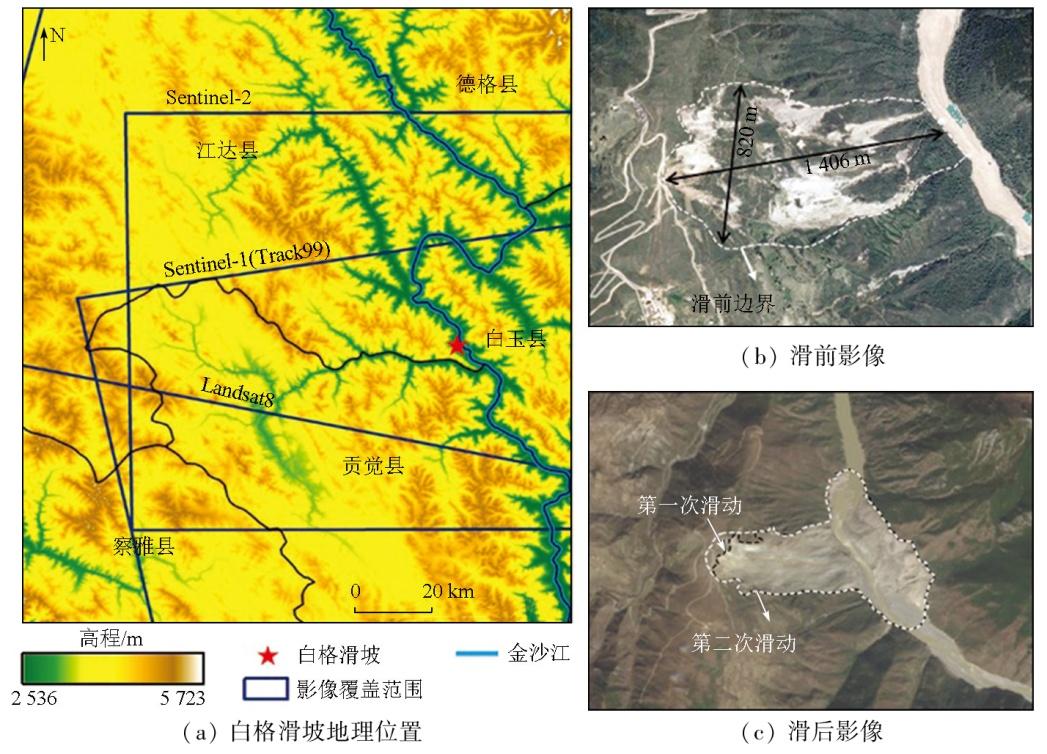
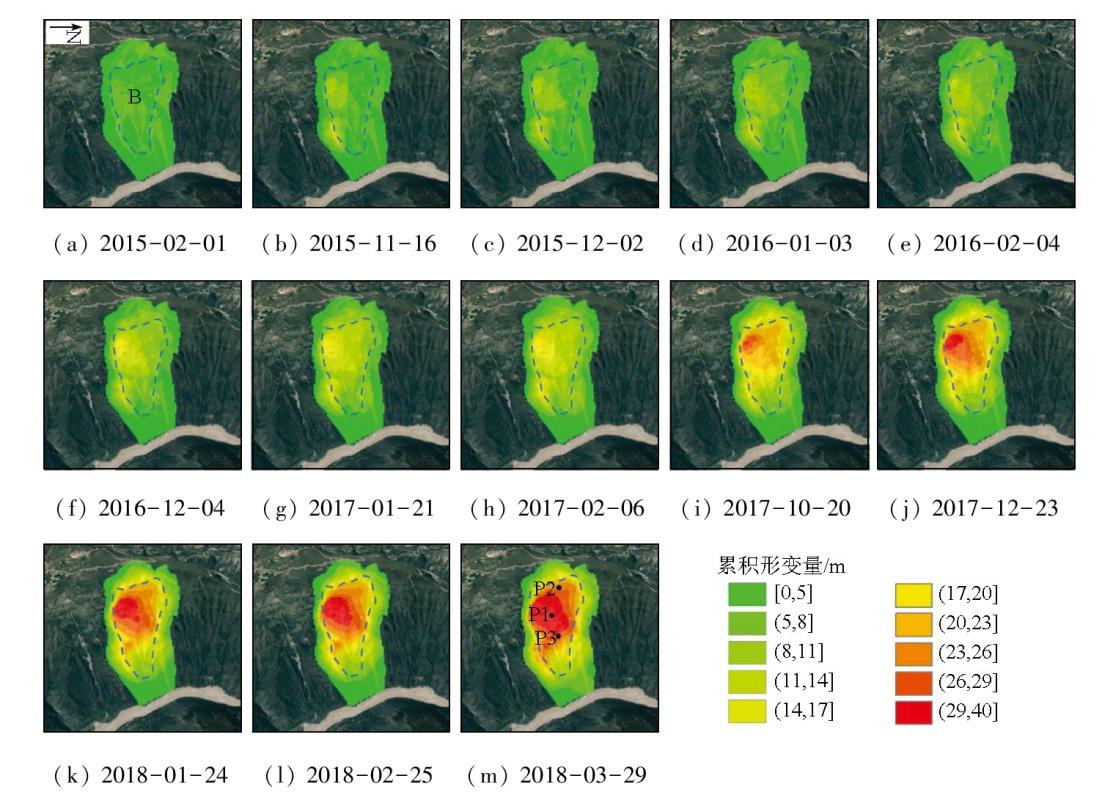
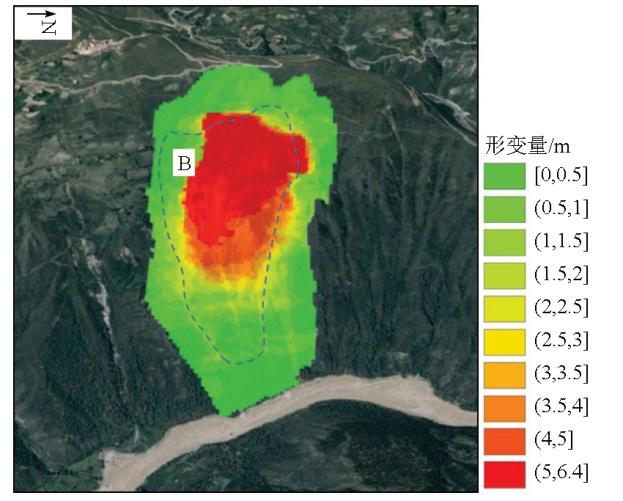
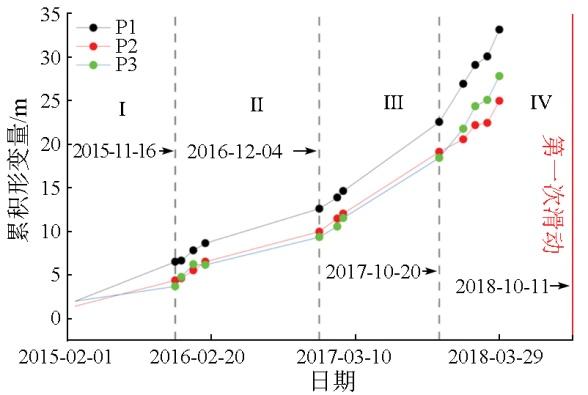
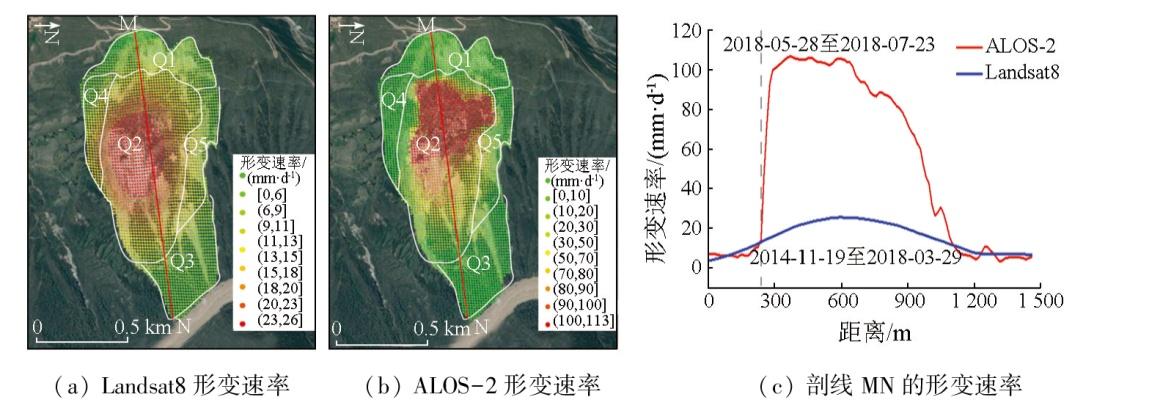
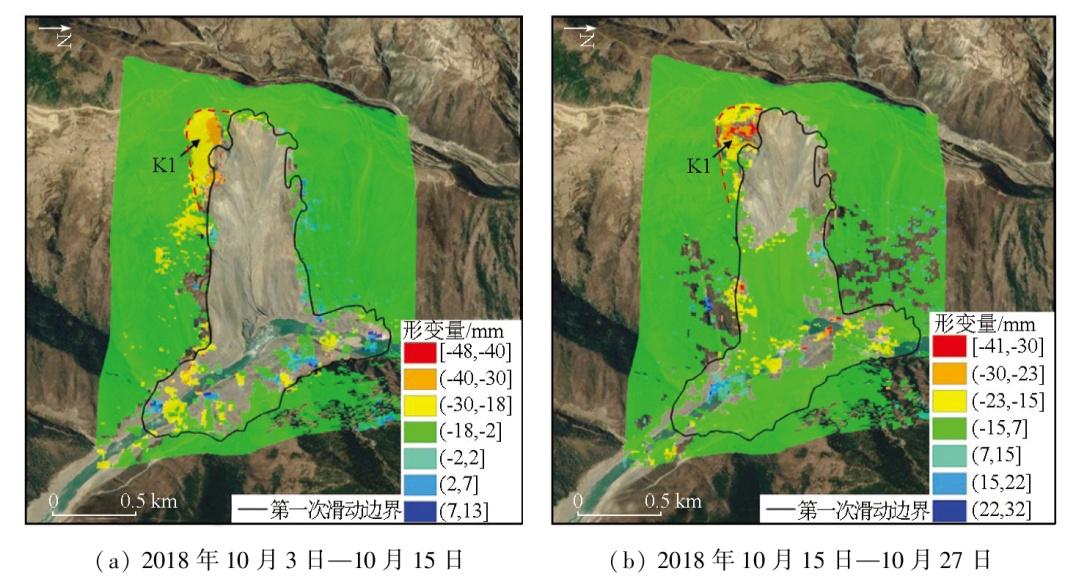
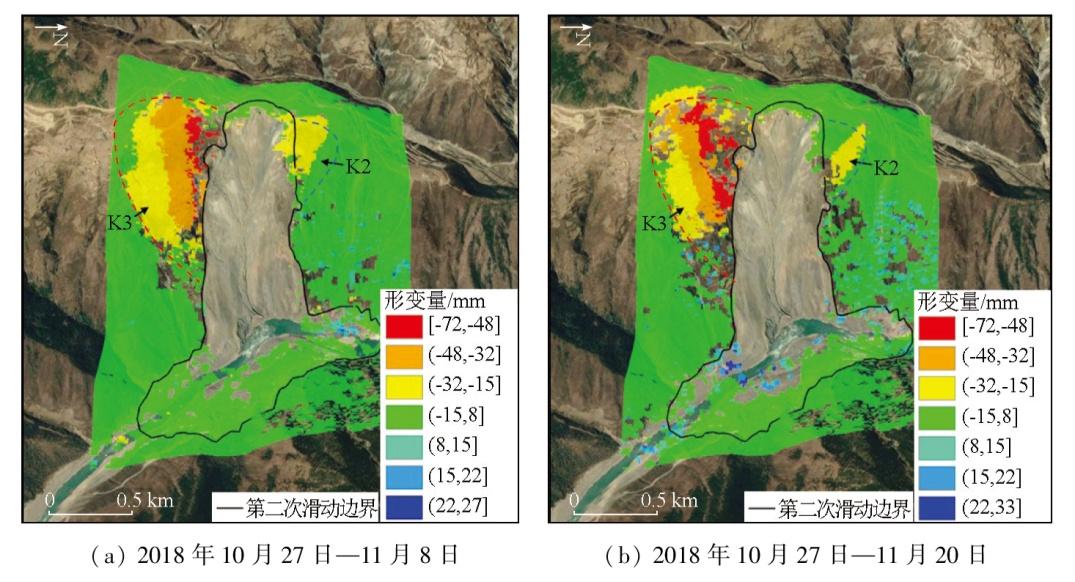
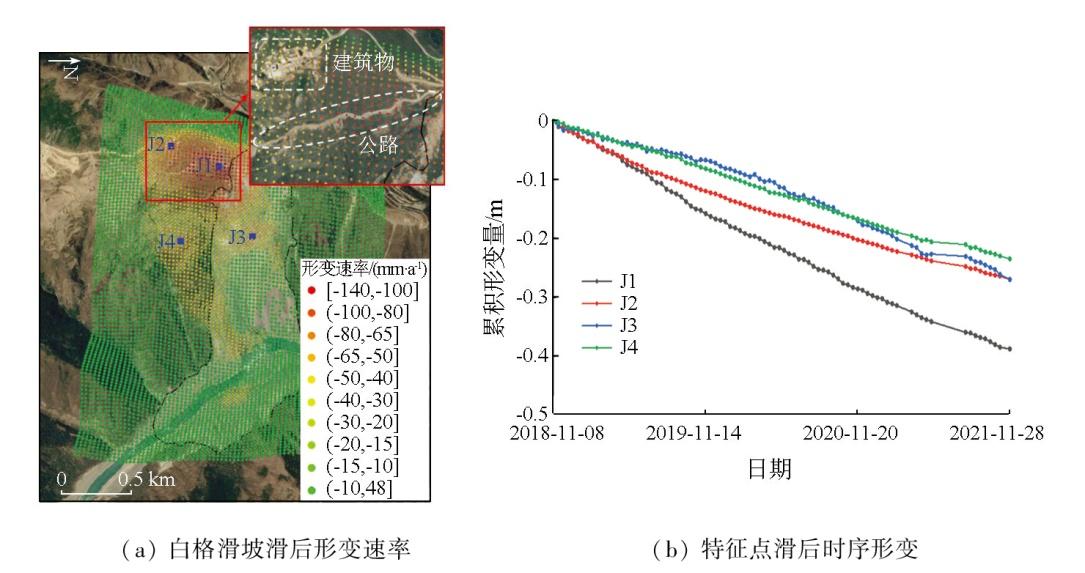
The Baige landslide occurred twice in October and November 2018, causing huge economic losses and extensive social impact. Monitoring the activity characteristics of the Baige landslide in various stages based on multisource data is significant for understanding the failure mechanism of this landslide. With Sentinel-1, ALOS-2, and Landsat8 data as data sources, this study derived the deformation characteristics of the Baige landslide before, during, and after two slide events using techniques, such as small baseline subset-interferometric synthetic aperture radar (SBAS-InSAR), SAR offset tracking, and optical offset tracking. The optical offset calculation results show that from November 2014 to March 29, 2018 in the pre-sliding stage, the cumulative displacement of the Baige landslide reached 40 m, with deformation concentrated in the middle of the landslide. The SAR offset results indicate that the cumulative displacement of the landslide reached 6.4 m in May and July 2018 in the pre-sliding stage, with deformation also concentrated in the middle of the landslide. The InSAR-based monitoring results reveal that after the two failures of the Baige landslide in October and November 2018, significant residual deformation remained in the trailing edge and upper left side of the landslide. From November 2018 to November 2021 in the post-sliding stage, the Baige landslide exhibited a deformation rate of -140 mm/y at the high trailing edge of the landslide, and the deformation range on the upper left side continued to expand. All the results of this study reconstructed the whole sliding process of the Baige landslide subjected to large displacements, providing a valuable reference for the monitoring and early warning of landslides.
YANG Chengsheng , WEI Chunrui , WEI Yunjie , LI Zufeng , DING Huilan . Whole-process deformation monitoring of the Baige landslide in Tibet before and after instability based on multisource remote sensing images[J]. Remote Sensing for Natural Resources, 2025 , 37(3) : 203 -211 . DOI: 10.6046/zrzyyg.2024015
表1 采用的SAR数据集主要参数Tab.1 Main parameters of the SAR dataset used |
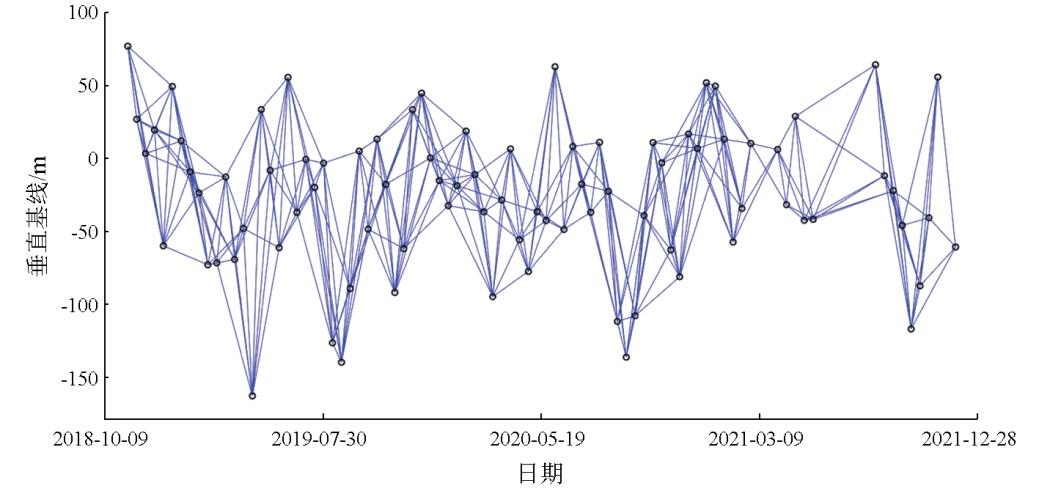
| SAR数据 | Sentinel-1 | ALOS-2 |
|---|---|---|
| 轨道方向 | 升轨 | 升轨 |
| 轨道号 | 99 | — |
| 入射角/(°) | 33.9 | 36.2 |
| 方位角/(°) | -10.1 | 90 |
| 成像模式 | IW宽幅模式 | PALSAR2 |
| 极化方式 | VV | HH |
| 影像数量/景 | 85 | 2 |
| 影像时间间隔/d | 12 | 56 |
| 影像时间范围 | 2018年11月— 2021年11月 | 2018年5月28日, 2018年7月23日 |
表2 采用的光学数据集主要参数Tab.2 Main parameters of the optical dataset used |
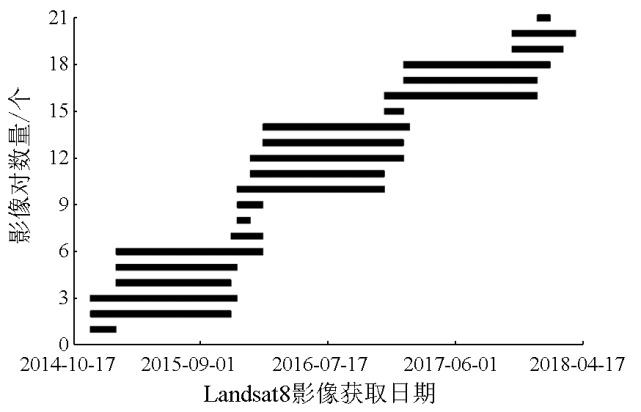
| 序号 | 数据源 | 影像 | 太阳高 度角/(°) | 太阳方 位角/(°) | 序号 | 数据源 | 影像 | 太阳高 度角/(°) | 太阳方 位角/(°) |
|---|---|---|---|---|---|---|---|---|---|
| 1 | Landsat8 | 2014-11-29 | 33.838 3 | 158.818 0 | 8 | Landsat8 | 2017-01-21 | 33.256 1 | 152.079 2 |
| 2 | Landsat8 | 2015-02-01 | 35.408 1 | 150.056 2 | 9 | Landsat8 | 2017-02-06 | 36.815 7 | 149.023 3 |
| 3 | Landsat8 | 2015-11-16 | 36.762 2 | 158.626 6 | 10 | Landsat8 | 2017-10-20 | 44.497 5 | 154.835 2 |
| 4 | Landsat8 | 2015-12-02 | 33.341 8 | 158.725 2 | 11 | Landsat8 | 2017-12-23 | 31.108 4 | 156.833 1 |
| 5 | Landsat8 | 2016-01-03 | 31.180 0 | 155.324 6 | 12 | Landsat8 | 2018-01-24 | 33.748 1 | 151.531 9 |
| 6 | Landsat8 | 2016-02-04 | 36.098 4 | 149.556 6 | 13 | Landsat8 | 2018-02-25 | 42.578 0 | 145.266 3 |
| 7 | Landsat8 | 2016-12-04 | 32.900 5 | 158.631 4 | 14 | Landsat8 | 2018-03-29 | 54.207 2 | 137.820 0 |
表3 各类数据应用的描述与总结Tab.3 Description and summary of various data applications |
| 数据 | 监测时间 | 处理方法 | 观测类型 | 方法描述与适用性 | 白格滑坡应用阶段 |
|---|---|---|---|---|---|
| Sentinel-1 | 2018年11月8日—2021年11月28日 | SBAS-InSAR技术 | 雷达影像 | 重点区域定性/定量分析; 长时期观测序列,小量级形变监测; 结果为距离向和方位向形变量 | 第一次滑动和第二次滑动引起的后缘变形区监测; 滑后的长时序监测 |
| ALOS-2 | 2018年5月28日和2018年7月23日 | SAR偏移量 跟踪技术 | 雷达影像 | 大量级的形变监测; 较高分辨率雷达影像使结果精度 更高; 结果为距离向和方位向偏移量 | 滑前的大量级位移 获取 |
| Landsat8 | 2014年11月29日—2018年3月29日 | 光学偏移量跟踪技术 | 光学影像 | 大量级的形变监测; 可利用数据量较多的光学影像; 结果为东西向和南北向偏移量 | 滑前的大量级长时间序列位移的获取 |
图4 2014年11月29日至不同日期的白格滑坡滑前光学偏移量时序累积形变结果Fig.4 Time series cumulative deformation results of optical offset before sliding of Baige landslide from November 29,2014 to different dates |
| [1] |
许强, 郑光, 李为乐, 等. 2018年10月和11月金沙江白格两次滑坡-堰塞堵江事件分析研究[J]. 工程地质学报, 2018, 26(6):1534-1551.
|
| [2] |
|
| [3] |
|
| [4] |
|
| [5] |
范景辉, 邱阔天, 夏耶, 等. 三峡库区范家坪滑坡地表形变InSAR监测与综合分析[J]. 地质通报, 2017, 36(9):1665-1673.
|
| [6] |
朱同同, 史绪国, 周超, 等. 利用2016—2020年Sentinel-1数据监测与分析三峡库区树坪滑坡稳定性[J]. 武汉大学报(信息科学版) 2021, 46(10):1560-1568.
|
| [7] |
冯文凯, 顿佳伟, 易小宇, 等. 基于SBAS-InSAR技术的金沙江流域沃达村巨型老滑坡形变分析[J]. 工程地质学报, 2020, 28(2):384-393.
|
| [8] |
|
| [9] |
|
| [10] |
|
| [11] |
王群, 张蕴灵, 范景辉, 等. 基于PS-InSAR和offset tracking技术的金沙江白格滑坡形变监测[J]. 大地测量与地球动力学, 2020, 40(4):340-345.
|
| [12] |
柳林, 宋豪峰, 杜亚男, 等. 联合哨兵2号和Landsat8估计白格滑坡时序偏移量[J]. 武汉大学学报(信息科学版), 2021, 46(10):1461-1470.
|
| [13] |
徐小波, 马超, 单新建, 等. 联合DInSAR与Offset-tracking技术监测高强度采区开采沉陷的方法[J]. 地球信息科学学报, 2020, 22(12):2425-2435.
|
| [14] |
孙军, 张锦. 基于SBAS-InSAR和偏移追踪技术的露天煤矿地面形变监测[J]. 煤矿安全, 2022, 53(3):162-169.
|
| [15] |
黄洁慧, 谢谟文, 王立伟. 基于SBAS-InSAR技术的白格滑坡形变监测研究[J]. 人民长江, 2019, 50(12):101-105.
|
| [16] |
莫玉娟, 吴洋, 刘学武. 基于SBAS技术的四川阿坝州小金县地表形变监测[J]. 测绘工程, 2018, 27(11):46-50.
|
| [17] |
高文锦. 基于SBAS-InSAR技术的深圳西部地区地表形变研究[D]. 西安: 西安科技大学, 2021.
|
| [18] |
|
| [19] |
|
| [20] |
贺礼家, 冯光财, 冯志雄, 等. 哨兵-2号光学影像地表形变监测:以2016年MW7.8新西兰凯库拉地震为例[J]. 测绘学报, 2019, 48(3):339-351.
|
| [21] |
|
| [22] |
|
/
| 〈 |
|
〉 |