Remote Sensing for Natural Resources >
Spatiotemporal differentiation and responses to climate and mining activities of NDVI in Shaanxi Province from 2001 to 2022
Received date: 2023-09-14
Revised date: 2024-01-22
Online published: 2026-06-03
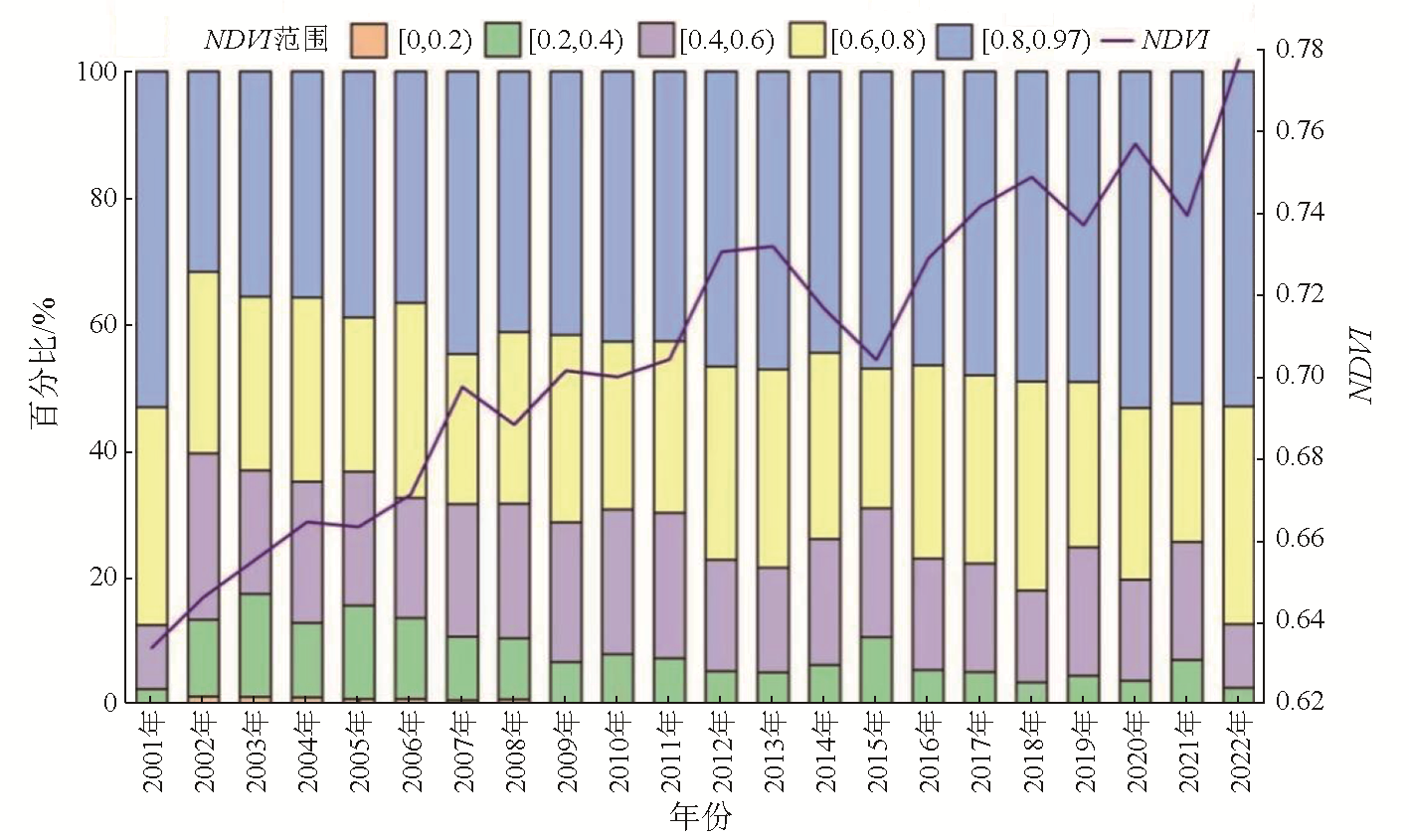
Shaanxi Province, serving as both one of China’s initial pilot areas for the returning farmland to forestland/grassland project and an important energy supply base in the Yellow River basin, has made substantial investments in mineral resource development and ecological environment protection and restoration in recent years. Based on trend analysis and correlation analysis conducted using MATLAB, this study examined the spatiotemporal differentiation pattern of vegetation ecology and its responses to the dual disturbances of climate conditions and mining activities. The results indicate that from 2001 to 2022, the normalized difference vegetation index (NDVI) of Shaanxi Province exhibited an upward trend while fluctuating, with an average annual increase of 0.006. The lowest NDVI value occurred in 2015. Precipitation acted as the major factor affecting the NDVI of Shaanxi Province. In most areas, NDVI exhibited a significant positive correlation with both precipitation and humidity. The correlation between NDVI and mining activities was increasingly significant with an increase in the mining area. In some energy-based cities, NDVI decreased initially and then increased, exhibiting a V-shaped trend. Overall, mining activity made more positive than negative contributions to changes in NDVI of Shaanxi Province. The results of this study will provide foundational data and a scientific reference for ecological protection and mine restoration and management in Shaanxi Province.
YANG Tao , WANG Lishe , ZHENG Pengpeng , WANG Peng , ZHAO Hansen , YANG Shengfei , ZHAO Jun , XI Rengang , REN Huaning , CAI Haojie . Spatiotemporal differentiation and responses to climate and mining activities of NDVI in Shaanxi Province from 2001 to 2022[J]. Remote Sensing for Natural Resources, 2025 , 37(1) : 82 -93 . DOI: 10.6046/zrzyyg.2023286
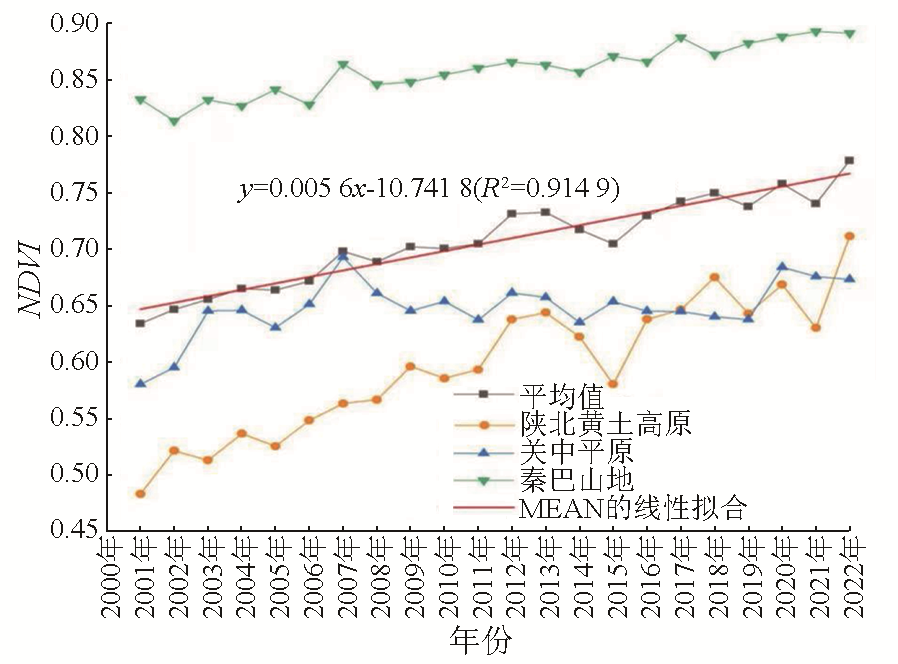
图4 2001—2022年陕西省逐年NDVI及其不同等级面积比例变化Fig.4 The Change of annual averaged NDVI and proportion of area of different NDVI grade from 2001 to 2022 of Shaanxi Province |
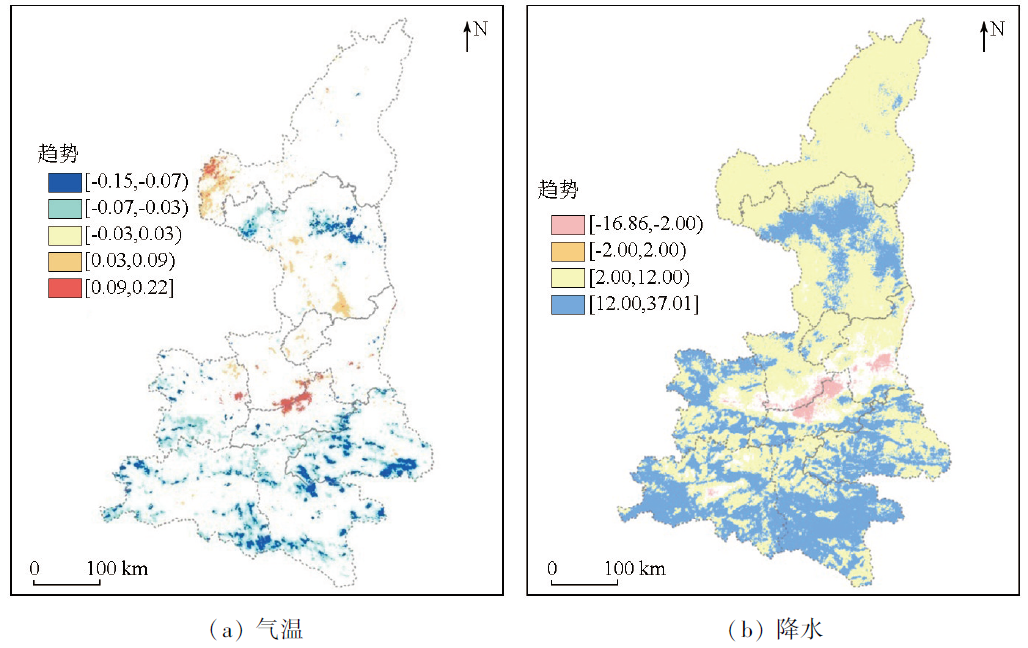
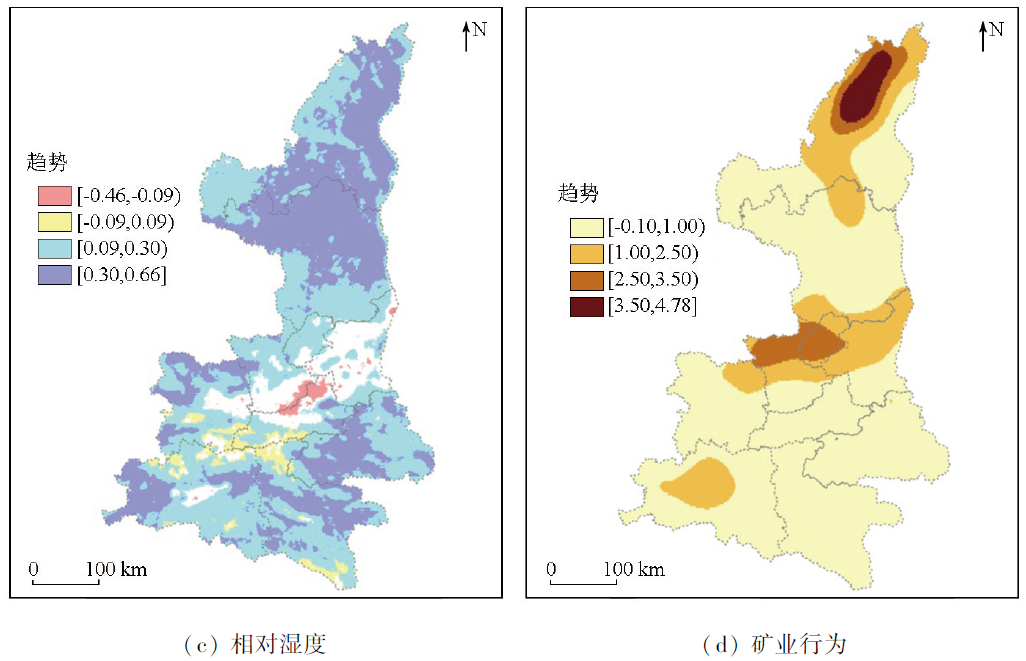
图6-1 2001—2020年陕西省气温、降水量、相对湿度和矿业行为趋势特征Fig.6-1 Spatial patterns of trend coefficients of annual temperature, precipitation, humidity and mining activity from 2001 to 2020 of Shaanxi Province |
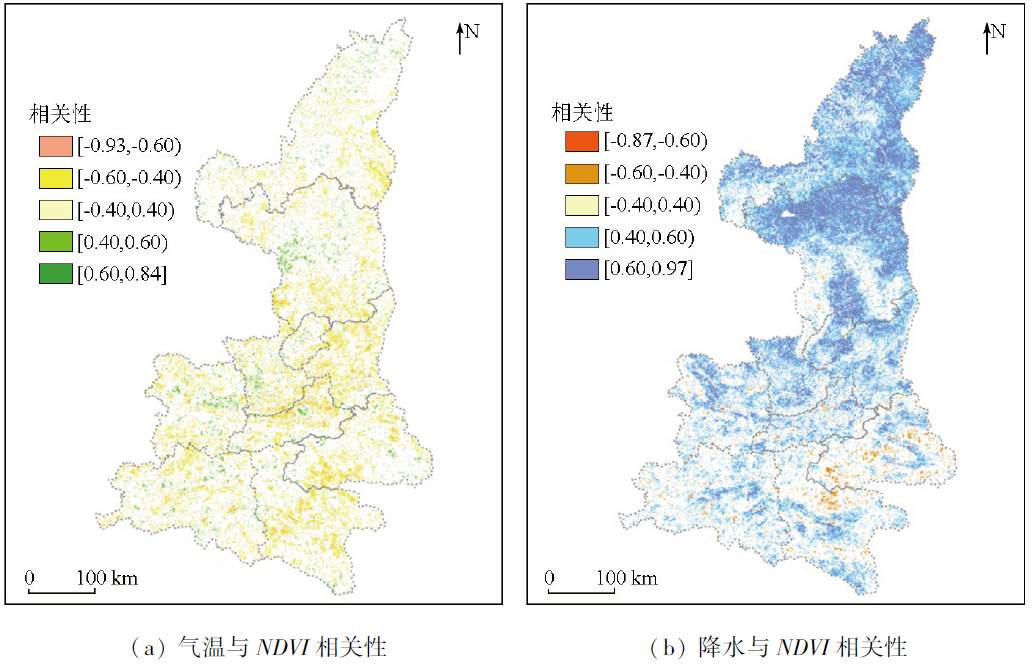
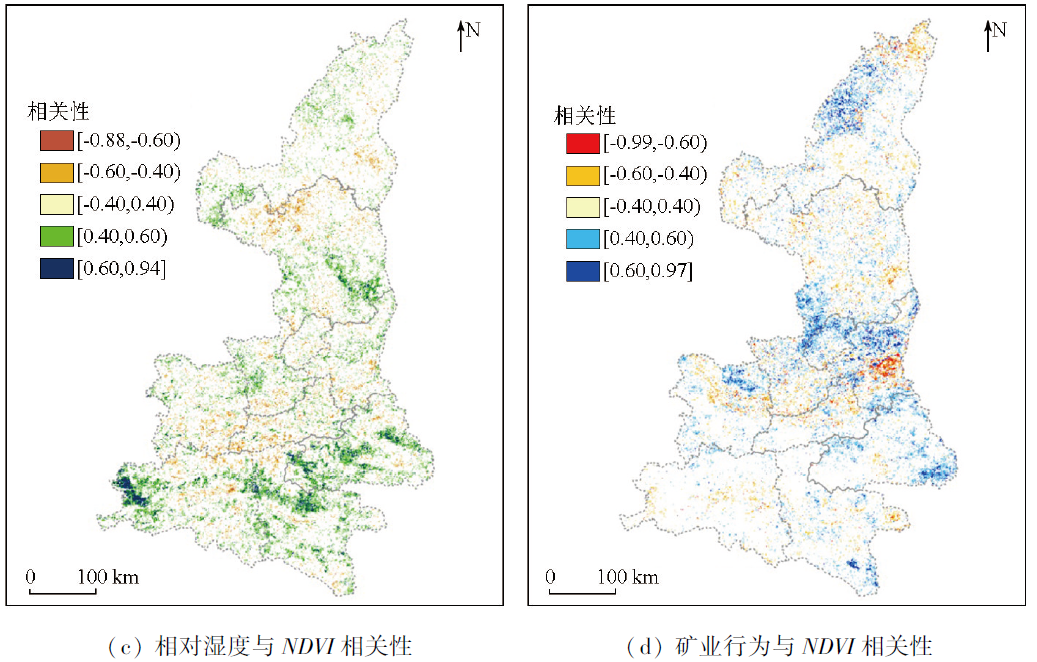
图7-1 陕西省2001—2020年NDVI与年均气温、降水量、相对湿度和矿业行为的相关性Fig.7-1 Correlation between NDVI and average temperature, precipitation, humidity and mining activity from 2001 to 2020 of Shaanxi Province |
| [1] |
|
| [2] |
高江波, 焦珂伟, 吴绍洪. 1982—2013年中国植被NDVI空间异质性的气候影响分析[J]. 地理学报, 2019, 74(3):534-543.
|
| [3] |
王建邦, 赵军, 李传华, 等. 2001—2015年中国植被覆盖人为影响的时空格局[J]. 地理学报, 2019, 74(3):504-519.
|
| [4] |
耿庆玲, 陈晓青, 赫晓慧, 等. 中国不同植被类型归一化植被指数对气候变化和人类活动的响应[J]. 生态学报, 2022, 42(9):3557-3568.
|
| [5] |
张静, 杜加强, 盛芝露, 等. 1982—2015年黄河流域植被NDVI时空变化及影响因素分析[J]. 生态环境学报, 2021, 30(5):929-937.
|
| [6] |
|
| [7] |
|
| [8] |
卓静, 朱延年, 何慧娟, 等. 生态恢复工程对陕北地区生态系统格局的影响[J]. 生态学报, 2020, 40(23):8627-8637.
|
| [9] |
|
| [10] |
高滢, 孙虎, 徐崟尧, 等. 陕西省植被覆盖时空变化及其对极端气候的响应[J]. 生态学报, 2022, 42(3):1022-1033.
|
| [11] |
栾金凯, 刘登峰, 黄强, 等. 近17年陕西榆林植被指数的时空变化及影响因素[J]. 生态学报, 2018, 38(8):2780-2790.
|
| [12] |
李蕊, 陈国清, 李玮贤, 等. 基于遥感生态指数的神东矿区1995—2020年生态环境质量的时空变化特征分析[J]. 水土保持通报, 2021, 41(3):143-151.
|
| [13] |
庞国伟, 山琳昕, 杨勤科, 等. 陕西省不同地貌类型区植被覆盖度时空变化特征及其影响因素[J]. 长江科学院院报, 2021, 38(3):51-58,76.
|
| [14] |
|
| [15] |
刘立, 李长安, 高俊华, 等. 多源卫星遥感的湖南矿山违法开采时空变化[J]. 遥感学报, 2022, 26(3):528-540.
|
| [16] |
赵银娣, 卫虹宇, 董霁红, 等. 基于子区域多标签学习的露天煤矿区场景识别[J]. 遥感学报, 2022, 26(9):1849-1858.
|
| [17] |
高文龙, 苏腾飞, 张圣微, 等. 矿区地物分类及土地利用/覆盖变化动态监测——以海流兔流域为例[J]. 国土资源遥感, 2020, 32(3):232-239.doi:10.6046/zrzyyg.2020418.
|
| [18] |
|
| [19] |
|
| [20] |
|
| [21] |
范沛薇, 郝蒙蒙, 江东, 等. 基于高分遥感影像的露天矿区土地利用动态监测——以平朔矿区为例[J]. 遥感技术与应用, 2023, 38(2):274-284.
|
| [22] |
马丽, 田华征, 康蕾. 黄河流域矿产资源开发的生态环境影响与空间管控路径[J]. 资源科学, 2020, 42(1):137-149.
|
| [23] |
|
| [24] |
张少伟, 郭勇, 权红花. 陕西省地理国(省)情监测中的基本地貌类型及划分指标[J]. 测绘标准化, 2012, 28(4):13-16.
|
| [25] |
董王仓, 李新林. 中国矿产地质志-陕西卷, 陕西矿产地质:陕西卷陕西矿产地质:普及本[M]. 北京: 地质出版社, 2018.
|
| [26] |
Galvão, Breunig, Teles, et al. Investigation of terrain illumination effects on vegetation indices and VI-derived phenological metrics in subtropical deciduous forests[J]. GIScience & Remote Sensing, 2016, 53(3):360-381.
|
| [27] |
|
| [28] |
|
| [29] |
|
| [30] |
|
| [31] |
李维成, 董王仓, 朱雪丽, 等. 陕西主要成矿单元矿产特征及成矿时空域[J]. 矿床地质, 2022, 41(5):1009-1024.
|
| [32] |
贺蕾, 潘竟虎, 董磊磊. 基于遥感和微博签到数据的住房空置空间识别[J]. 遥感技术与应用, 2020, 35(4):820-831.
|
| [33] |
周璞, 侯华丽, 吴尚昆. 我国矿产资源自然区划研究[J]. 中国矿业, 2019, 28(2):29-33.
|
| [34] |
|
| [35] |
刘静, 温仲明, 刚成诚. 黄土高原不同植被覆被类型NDVI对气候变化的响应[J]. 生态学报, 2020, 40(2):678-691.
|
| [36] |
李璠, 徐维新. 2000—2015年青海省不同功能区NDVI时空变化分析[J]. 草地学报, 2017, 25(4):701-710.
|
| [37] |
曹巍, 黄麟, 肖桐, 等. 人类活动对中国国家级自然保护区生态系统的影响[J]. 生态学报, 2019, 39(4):1338-1350.
|
| [38] |
中国地质调查局. 国土资源地质大调查成果总结报告(1999—2010年) [R]. 北京: 地质出版社, 2012,1-220.
China Geological Survey Bureau. Summary report of the New Round Land and Resources Geological Survey(1999—2010)[R]. Beijing: Geological Publishing House, 2012,1-220.
|
| [39] |
|
| [40] |
殷崎栋, 柳彩霞, 田野. 基于MODIS NDVI数据的陕西省植被绿度时空变化及人类活动影响[J]. 生态学报, 2021, 41(4):1571-1582.
|
| [41] |
刘小燕, 崔耀平, 董金玮, 等. 黄河中下游影响区生态空间和生态指数变化评估[J]. 生态学报, 2021, 41(20):8030-8039.
|
| [42] |
|
| [43] |
韩红珠, 白建军, 张波, 等. 基于MODIS时序的陕西省植被物候时空变化特征分析[J]. 国土资源遥感, 2018, 30(4):125-131.doi:10.6046/gtzyyg.2018.04.19.
|
| [44] |
牟乐, 芦奕晓, 杨慧敏, 等. 1981—2015年中国西北牧区植被覆盖的时空变化[J]. 干旱区研究, 2018, 35(3):615-623.
|
| [45] |
刘宪锋, 朱秀芳, 潘耀忠, 等. 1982—2012年中国植被覆盖时空变化特征[J]. 生态学报, 2015, 35(16):5331-5342.
|
| [46] |
徐省超, 赵雪雁, 宋晓谕. 退耕还林(草)工程对渭河流域生态系统服务的影响[J]. 应用生态学报, 2021, 32(11):3893-3904.
|
| [47] |
岳辉, 刘英. 近15 a陕西省植被时空变化与影响因素分析[J]. 干旱区地理, 2019, 42(2):314-323.
|
| [48] |
张景华, 封志明, 姜鲁光, 等. 澜沧江流域植被NDVI与气候因子的相关性分析[J]. 自然资源学报, 2015, 30(9):1425-1435.
|
| [49] |
卢乔倩, 江涛, 柳丹丽, 等. 中国不同植被覆盖类型 NDVI对气温和降水的响应特征[J]. 生态环境学报, 2020, 29(1):23-34.
|
| [50] |
|
| [51] |
|
| [52] |
赵明伟, 王妮, 施慧慧, 等. 2001—2015年间我国陆地植被覆盖度时空变化及驱动力分析[J]. 干旱区地理, 2019, 42(2):324-331.
|
| [53] |
成方妍, 刘世梁, 尹艺洁, 等. 基于MODIS NDVI的广西沿海植被动态及其主要驱动因素[J]. 生态学报, 2017, 37(3):788-797.
|
| [54] |
刘敬, 杨金虎, 段少帅, 等. 生态文明视阈下矿业治理共同体探索——以陕西为例[J]. 金属矿山, 2019(6):173-178.
|
| [55] |
周静. 市场化方式推进矿山生态修复的实施路径与思考[J]. 中国矿业, 2022, 31(7):61-64.
|
| [56] |
杨金中, 许文佳, 姚维岭, 等. 全国采矿损毁土地分布与治理状况及存在问题[J]. 地学前缘, 2021, 28(4):83-89.
|
| [57] |
孙灏, 胡佳琪, 崔雅静, 等. 基于多源遥感数据的生态系统服务功能时空演变趋势分析[J]. 测绘通报, 2021(4):1-7.
|
| [58] |
陈建平, 范立民, 杜江丽, 等. 陕西省矿山地质环境治理现状及变化趋势分析[J]. 中国煤炭地质, 2014, 26(9):54-56,64.
|
| [59] |
陕西省自然资源厅. 陕西绿色矿山建设初见成效[EB/OL].(2017-09-11) [2023-10-25].https://zrzyt.shaanxi.gov.cn/info/1038/35413.htm.
Department of Natural Resources of Shannxi Province. The construction of green mines in Shannxi has achieved initial results.[EB/OL].(2017-09-11) [2023-10-25].https://zrzyt.shaanxi.gov.cn/info/1038/35413.htm.
|
| [60] |
张海东, 田婷, 张青, 等. 基于GF-1影像的耕地地块破碎区水稻遥感提取[J]. 遥感技术与应用, 2019, 34(4):785-792.
|
| [61] |
钱琛, 陈海滨, 侯现慧. 生态建设背景下陕西省植被覆盖时空变化及其影响因素研究[J]. 干旱区地理, 2020, 43(2):425-433.
|
| [62] |
王朗, 傅伯杰, 吕一河, 等. 生态恢复背景下陕北地区植被覆盖的时空变化[J]. 应用生态学报, 2010, 21(8):2109-2116.
|
| [63] |
康帅直, 穆琪, 赵永华, 等. 黄土高原神府资源开采区生态环境质量时空格局特征[J]. 生态学报, 2023, 43(7):2781-2792.
|
/
| 〈 |
|
〉 |