Remote Sensing for Natural Resources >
Machine learning-based inversion of aerosol optical depth inversion from FY-4A data
Received date: 2023-07-20
Revised date: 2024-01-04
Online published: 2026-06-03
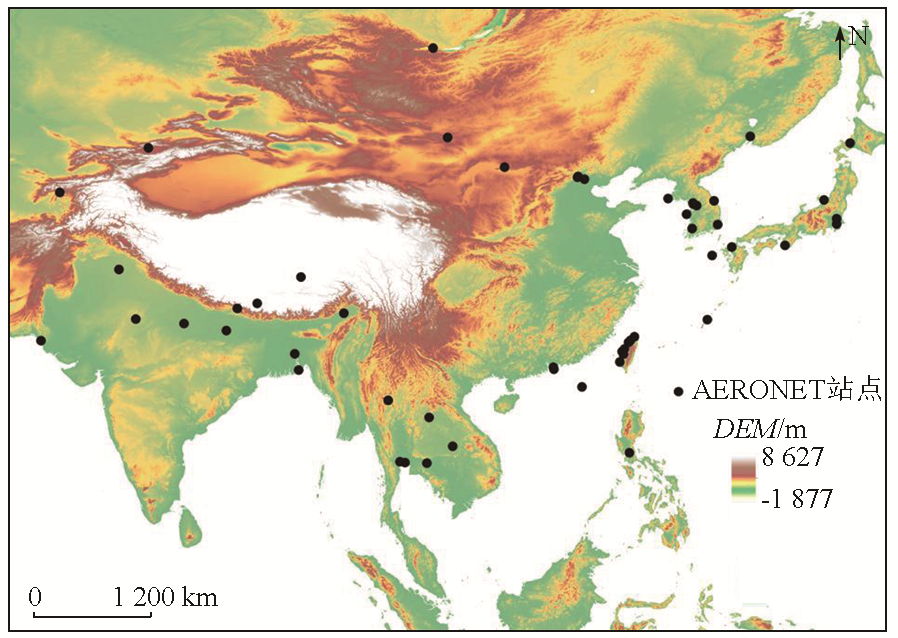
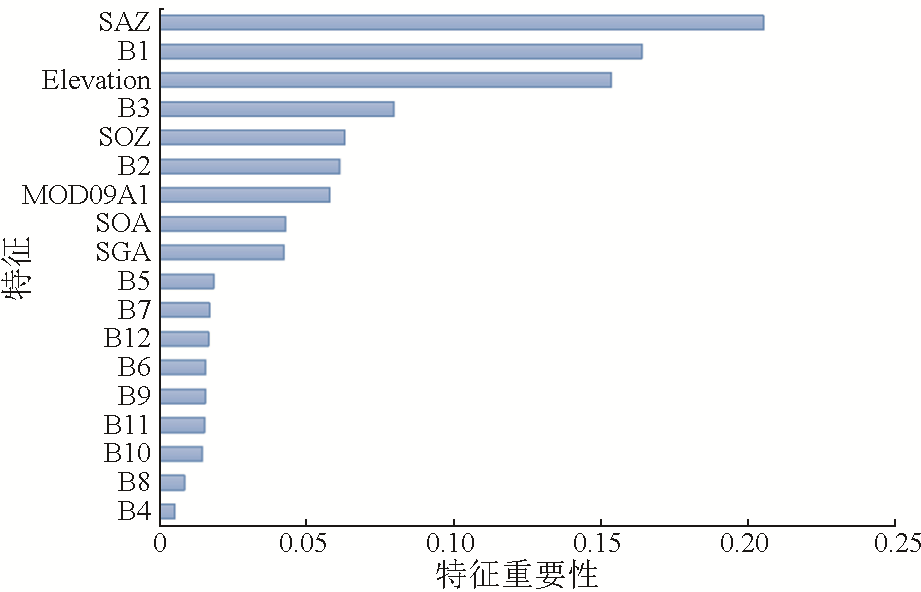
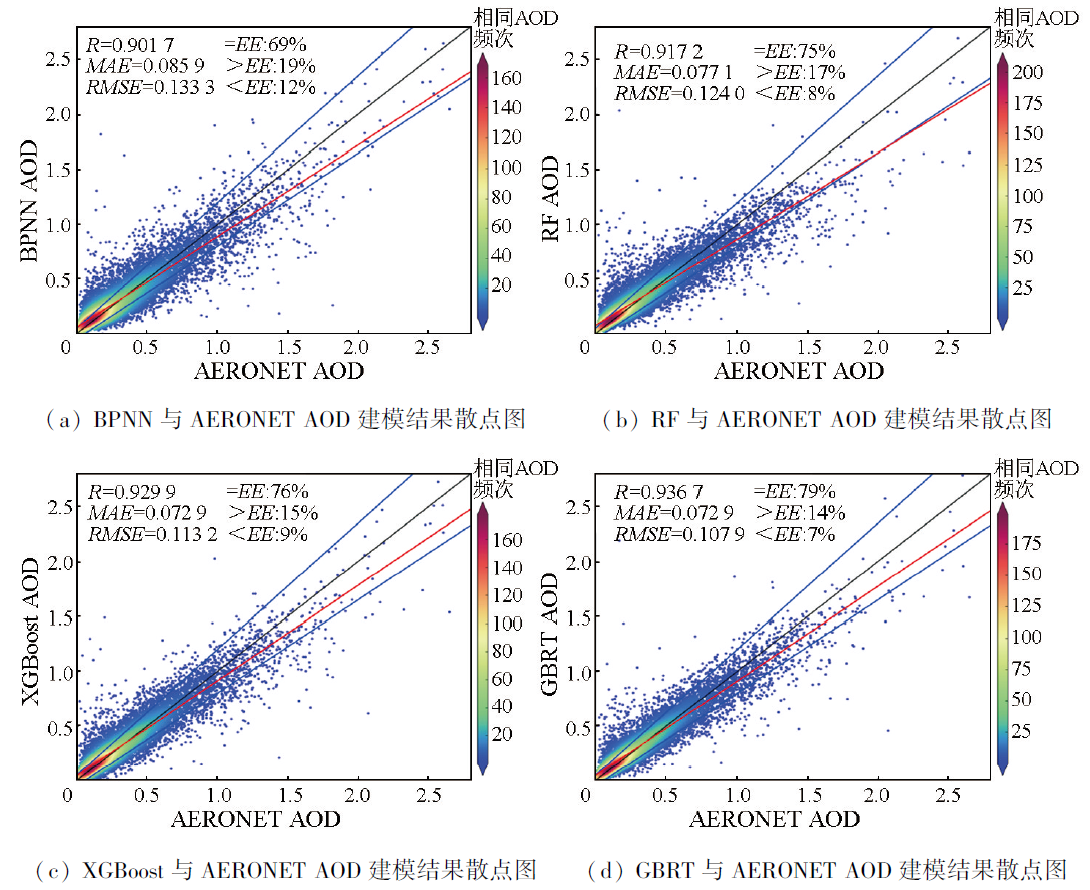
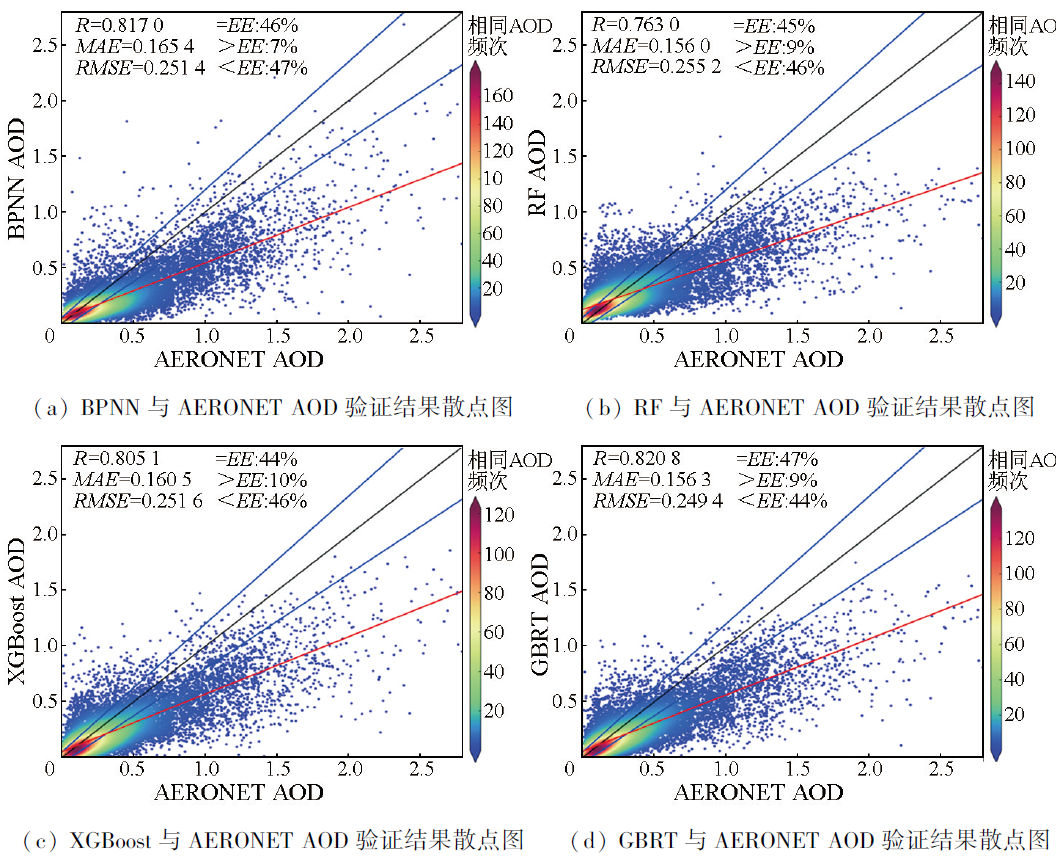
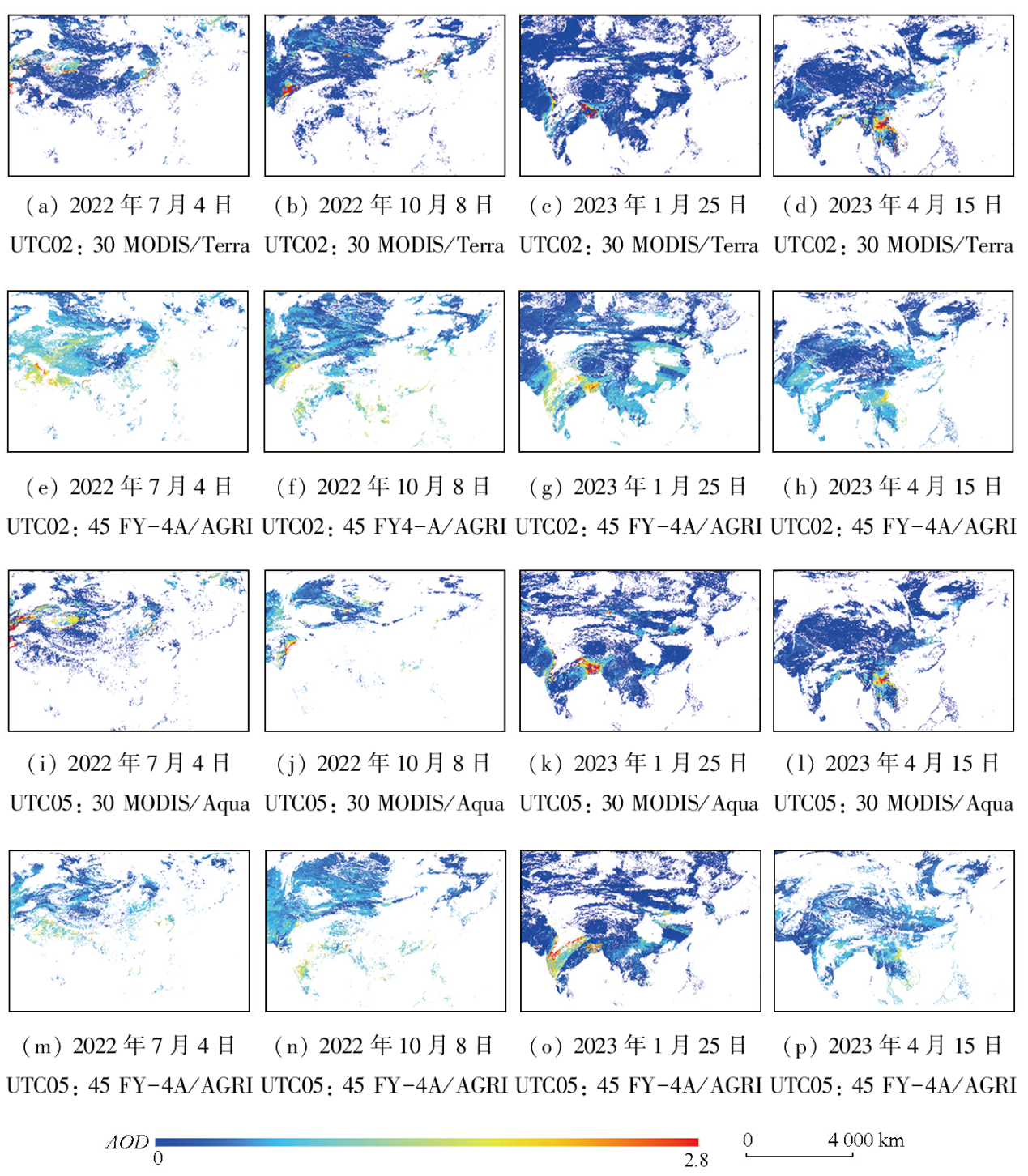
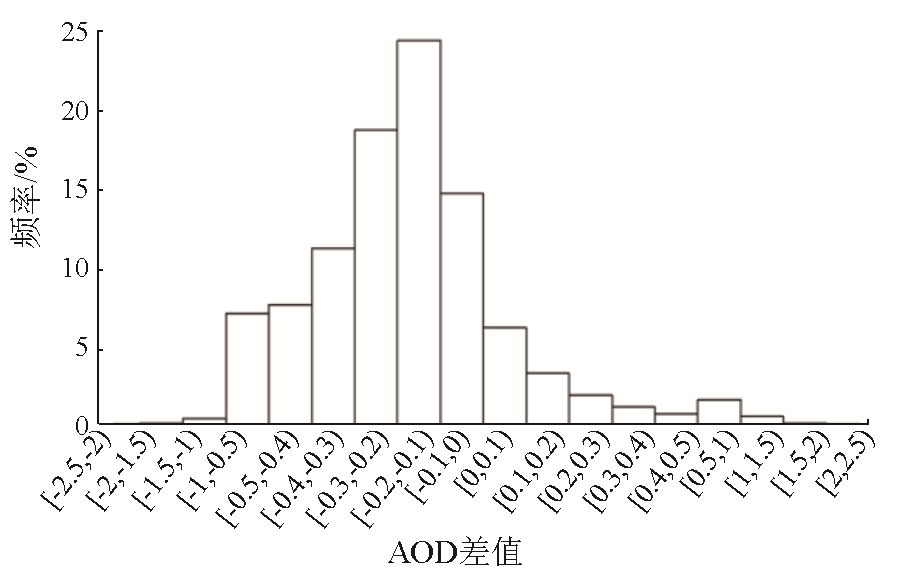
This study aims to develop a machine learning algorithm based on the characteristics of AGRI data to generate an aerosol dataset with a high spatiotemporal resolution. Using aerosol data from 67 aerosol robotic network (AERONET) sites in China and its surrounding areas in 2021, this study selected data of factors such as apparent reflectance, observation angles, elevation, and MODIS surface reflectance acquired from FY-4A advanced geostationary radiation imager (AGRI)-a new generation geostationary meteorological satellite of China. Then, this study performed the inversion of aerosol optical depth (AOD) using four machine learning methods-random forest (RF), gradient boosting regression tree (GBRT), extreme gradient boosting (XGBoost), and back propagation neural network (BPNN). Using the optimal model determined based on evaluation metrics, this study achieved the AOD inversion with a spatial resolution of 4 km × 4 km based on FY-4A data. Then, this study compared the inversion results with MODIS aerosol products of roughly the same periods. The results indicate that the AOD inversion models based on the four machine learning algorithms yielded correlation coefficients (R) exceeding 0.90, mean absolute errors (MAEs) of less than 0.09, and root mean square errors (RMSE) below 0.14. This indicates that it is feasible to conduct AOD inversion using machine learning-based models. The GBRT-based model exhibited the highest inversion accuracy among the four methods, with a correlation coefficient of 0.82, MAE of 0.16, and RMSE of 0.25, as indicated by the verification results. Additionally, 47% of the inversion results fell within the expected error ranges, indicating that the results of AOD inversion from FY-4A data using the GBRT-based model were generally consistent with observed values. The comparison between the GBRT model-derived AOD inversion results and the results of MODIS aerosol products shows that the former exhibited high consistency with the latter in terms of spatial distribution, with 83.57% of grid deviations falling within the range from -1.0 to 0 and the former slightly higher than the latter.
Key words: machine learning; AOD; FY-4A/AGRI; AERONET; MODIS AOD
CHEN Xin , SHI Guoping . Machine learning-based inversion of aerosol optical depth inversion from FY-4A data[J]. Remote Sensing for Natural Resources, 2025 , 37(1) : 213 -220 . DOI: 10.6046/zrzyyg.2023220
表1 AGRI数据波段Tab.1 AGRI channels |
| 通道序号 | 通道类型 | 中心波长/μm | 光谱带宽/μm | 主要用途 |
|---|---|---|---|---|
| B1 | 可见光与近红外 | 0.47 | 0.45~0.49 | 气溶胶 |
| B2 | 0.65 | 0.55~0.75 | 植被 | |
| B3 | 0.825 | 0.75~0.90 | 植被 | |
| B4 | 短波红外 | 1.375 | 1.36~1.39 | 卷云 |
| B5 | 1.61 | 1.58~1.64 | 云、雪 | |
| B6 | 2.25 | 2.1~2.35 | 卷云、气溶胶 | |
| B7 | 中波红外 | 3.75 | 3.5~4.0(高) | 火点 |
| B8 | 3.75 | 3.5~4.0(低) | 地表 | |
| B9 | 水汽 | 6.25 | 5.8~6.7 | 云导风 |
| B10 | 7.1 | 6.9~7.3 | 云导风 | |
| B11 | 长波红外 | 8.5 | 8.0~9.0 | 云导风、云 |
| B12 | 13.5 | 13.2~13.8 | 云顶高度 |
表2 分月验证表Tab.2 Monthly validation table |
| 时间 | R | MAE | RMSE | =EE/% | >EE/% | <EE/% |
|---|---|---|---|---|---|---|
| 2022年7月 | 0.748 8 | 0.120 6 | 0.188 6 | 52 | 20 | 28 |
| 2022年10月 | 0.826 9 | 0.117 8 | 0.182 8 | 56 | 12 | 32 |
| 2023年1月 | 0.903 7 | 0.125 3 | 0.197 8 | 51 | 6 | 43 |
| 2023年4月 | 0.802 2 | 0.251 3 | 0.364 7 | 32 | 2 | 66 |
| [1] |
|
| [2] |
|
| [3] |
|
| [4] |
|
| [5] |
|
| [6] |
|
| [7] |
|
| [8] |
|
| [9] |
|
| [10] |
胡秀清, 卢乃锰, 邱红. FY-1C/1D全球海上气溶胶业务反演算法研究[J]. 海洋学报, 2006, 28(2):56-65.
|
| [11] |
任通, 高玲, 李成才, 等. 利用风云2C静止卫星可见光资料反演气溶胶光学厚度[J]. 北京大学学报(自然科学版), 2011, 47(4):636-646.
|
| [12] |
刘智超, 王健, 张鹏, 等. 风云三号卫星气溶胶光学厚度产品的适用性验证[J]. 环境监测管理与技术, 2023, 35(2):18-22.
|
| [13] |
|
| [14] |
许梦婕. FY-4A气象卫星对京津冀地区AOD的反演方法研究[D]. 南京: 南京信息工程大学, 2021.
|
| [15] |
|
| [16] |
陈兴峰, 郑逢杰, 郭丁, 等. 气溶胶定量遥感的机器学习方法综述[J]. 遥感学报, 2021, 25(11):2220-2233.
|
| [17] |
|
| [18] |
|
| [19] |
|
| [20] |
|
| [21] |
|
| [22] |
|
| [23] |
高阿芳. 基于改进随机森林的耕深预测模型研究[D]. 长春: 长春工业大学, 2022.
|
| [24] |
|
| [25] |
|
| [26] |
|
| [27] |
|
| [28] |
陈岚琪. 基于GWR的郑州市域林地景观格局、气象与气溶胶光学厚度的空间关系研究[D]. 郑州: 河南农业大学, 2020.
|
| [29] |
杨阳, 赵娜, 岳天祥. 1980—2018年中国极端高温事件时空格局演变特征[J]. 地理科学, 2022, 42(3):536-547.
|
| [30] |
|
| [31] |
|
| [32] |
|
/
| 〈 |
|
〉 |