
Review Article

Grassland ecosystems of Tajikistan: Plant species diversity, ecological restoration, and sustainable management

  • Hikmat HISORIEV a, b ,
  • LI Yaoming , b, c, * ,
  • HUANG Wenjun b, c ,
  • FAN Lianlian b, c ,
  • Mekhrovar OKHONNIYOZOV a, d, e ,
  • MA Xuexi b, c
Expand
  • aInstitute of Botany, Plant Physiology and Genetics, National Academy of Sciences of Tajikistan, Dushanbe, 734017, Tajikistan
  • bResearch Center for Ecology and Environment in Central Asia, Chinese Academy of Sciences, Urumqi, 830011, China
  • cXinjiang Institute of Ecology and Geography, Chinese Academy of Sciences, Urumqi, 830011, China
  • dResearch Center for Ecology and Environment in Central Asia (Dushanbe), Dushanbe, 734017, Tajikistan
  • eChina-Tajikistan Belt and Road Joint Laboratory on Biodiversity Conservation and Sustainable Use, Dushanbe, 734017, Tajikistan
* E-mail address: (LI Yaoming).

Received date: 2025-09-08

  Revised date: 2025-11-12

  Accepted date: 2026-01-03

  Online published: 2026-03-11

Abstract

Livestock farming is a critical pillar of Tajikistan’s national economy and livelihood security. However, significant economic challenges in the country have led to the degradation of grassland ecosystems. This degradation has not only reduced the productivity of grassland ecosystems but also severely impacted their ecological functions. A particularly concerning consequence is the threat to biodiversity, as the survival and persistence of endemic, rare, and endangered plant species are at serious risk, thereby diminishing the value of species’ genetic resources. Based on the data from multiple sources such as literature reviews, field observations, and national statistics, this study employed a systematic literature review and meta-analysis to investigate the current status, causes of degradation, and restoration measures for grassland ecosystems in Tajikistan. The results revealed that Tajikistan’s grassland ecosystems support exceptionally high plant species diversity, comprising over 4500 vascular plant species, including nearly 1500 endemic and sub-endemic taxa that constitute a unique genetic reservoir. These ecosystems are experiencing severe degradation, characterized by significantly reduced vegetation cover and declining species richness. Palatable forage species are increasingly being displaced by unpalatable, thorny, and poisonous species. The primary drivers of degradation include excessive grazing pressure, which disrupts plant reproductive cycles and regeneration capacity, habitat fragmentation due to urbanization and infrastructure development, and uncontrolled exploitation of medicinal and edible plants. Climate change, particularly rising temperatures and altered precipitation patterns, further exacerbates these anthropogenic pressures. Ecological restoration experiments suggested that both ecosystem productivity and plant species diversity are significantly enhanced by systematic reseeding trials using altitude-adapted native species. These findings underscore the necessity of establishing scientifically grounded approaches for ecological restoration.

Cite this article

Hikmat HISORIEV , LI Yaoming , HUANG Wenjun , FAN Lianlian , Mekhrovar OKHONNIYOZOV , MA Xuexi . Grassland ecosystems of Tajikistan: Plant species diversity, ecological restoration, and sustainable management[J]. Regional Sustainability, 2026 , 7(1) : 100293 . DOI: 10.1016/j.regsus.2026.100293

1. Introduction

Tajikistan is a mountainous country, covering 143,000 km2, with 93.0% of its territory characterized by rugged terrain. Located in southern Central Asia, it is surrounded by the Pamir-Alai Mountain ranges, with altitudes ranging from 300 to 7495 m. Tajikistan shares borders with China to the east, Afghanistan to the south, Kyrgyzstan to the northeast, and Uzbekistan to the north and northwest. Due to its diverse ecological, soil, and climatic conditions, Tajikistan has developed one of the richest biodiversity of natural flora, comprising more than 4500 vascular plant species. Among these, nearly 1500 taxa (33.3% of the native flora) are endemic and sub-endemic (Nowak et al., 2011), highlighting the unique plant species diversity of the region (Ovchinnikov et al., 1973; Hisoriev et al., 2011; Khisoriev, 2015, 2024; Nowak and Nobis, 2020; Nowak et al., 2025). Because of the richness of its flora, Tajikistan—a core area of the Middle Asian Mountains—is recognized by Conservation International as a biodiversity hotspot as well as one of the 11 most crucial points for future biodiversity research and conservation (Giam et al., 2010).
A considerable portion of the country’s area consists of grasslands—the primary grassland ecosystems and main source of hay production in Tajikistan, supporting 70.0% of the population. These grasslands include semi-arid deserts on flatlands, foothill steppes, semi-savannas, sub-alpine and alpine meadows, as well as high-mountain desert vegetation, which are largely used for livestock grazing. The natural grazing grassland used for seasonal livestock foraging is known as “pasture”. Grassland ecosystems include diverse native herbaceous, shrub, and woody plants, forming recognizable ecological communities within specific climatic zones (Sinkovsky and Savchenko, 1976; Sinkovsky and Madaminov, 1989; Ahmadov, 2012; Hisoriev, 2022). Livestock serves as a key ecological factor and has a direct impact on plant species composition through grazing, trampling, and excretion. Grassland ecosystems can undergo significant degradation under prolonged, unregulated grazing; this is because selective consumption of nutritious grasses allows unpalatable, thorny, or poisonous species to dominate. Additionally, with intensive and year-round use of grasslands, most plant species cannot complete their biological development stages (i.e., reach vegetative and sexual maturity) to bear fruits and seeds, thereby impairing their capacity for reproduction and restoration (Wang, 2000; Mi et al., 2023; Wang et al., 2025). Therefore, the livestock population introduced to natural grassland ecosystems must correspond to the levels of their feed productivity.
However, Tajikistan’s grassland resources currently face a severe development dilemma due to the dual pressures of climate change and intensifying human activities (Umuhoza et al., 2021; World Bank Group, 2024). Most livestock farms send large numbers of animals to natural pastures, which leads not only to the degradation of grassland ecosystems but also to an acceleration of desertification in Tajikistan. The importance of natural grassland ecosystems extends far beyond the interests of livestock farming. As a critical component of the biosphere, grassland ecosystems provide forage resources and influence land resource conditions, soil fertility, biodiversity of flora and fauna, economic development, poverty reduction, and the quality of the human environment (Shamsutdinov and Shamsutdinov, 2002; Gesellschaft für Internationale Zusammenarbeit, 2016). During 1980-2020, significant economic development has triggered extensive grassland degradation, resulting in reduced biomass production and notable shifts in species composition (United Nations Convention to Combat Desertification, 2024). These changes are characterized by a decline in palatable forage species and an increase in non-edible plant species (Safarov, 2017). Currently, nearly all types of pastures in Tajikistan, regardless of their forage productivity, are under constant or seasonal pressures (Safarov, 2017). Overgrazing causes not only changes in natural grassland ecosystems but also the loss of biodiversity, particularly affecting rare, endemic, and endangered plant species that are vital components of biological resources. Findings from scientific literature, government reports, and project experiences (including joint research between China and Tajikistan) were synthesized in this review to summarize current grassland distribution patterns, main plant community composition, the status of rare, endemic, and endangered plant species in pastures, prevailing environmental pressures, and the effectiveness of restoration projects in Tajikistan’s grassland ecosystems. Finally, we proposed directions for future research and sustainable management to promote the long-term resilience of Tajikistan’s grassland resources.

2. Materials and methods

2.1. Study area

The study area covers the territory of the Republic of Tajikistan, focusing on its grassland ecosystems. These ecosystems span multiple altitudinal zones, including lowland semi-arid deserts (300-600 m), foothill steppes and low-grass semi-savannas (450-800 m), tall-grass semi-savannas and mountain sparse forests (800-2500 m), sub-alpine and alpine meadows (2000-3500 m), and high-mountain deserts of the Pamir (>3500 m). Specific sites highlighted in the analysis, such as the Tabakchi pasture (650 m) in the Khatlon region of southern Tajikistan and the Ziddi pasture (2000 m) in central Tajikistan, served as illustrative case studies for degradation and restoration efforts.

2.2. Data collection

This study is based on a systematic compilation of scientific literature, including peer-reviewed journal articles, monographs, as well as books and reports related to Tajikistan and Central Asia’s flora, vegetation ecology, pasture management, and biodiversity conservation. The study also utilized grey literature to incorporate policy and statistical contexts. National biodiversity communications, specialized reports from international organizations such as Food and Agriculture Organization (FAO) and GIZ (a German government-owned development agency), official statistical digests from Tajikistan’s Agency on Statistics, and pivotal government decrees such as the “Pasture Development Program in the Republic of Tajikistan for 2023-2027” (Government of the Republic of Tajikistan, 2022) were the key sources employed in the study.
The study utilized authoritative floristic and ecological databases, beyond published documents, to synthesize plant species diversity information. This process involved consulting foundational works such as “Flora of the Tajik SSR” (Ovchinnikov, 1957) and integrating recent taxonomic revisions (e.g., Nowak and Nobis, 2020). Moreover, the latest editions of The Red Book of the Republic of Tajikistan (Khisoriev, 2015, 2024) were used to cross-reference species conservation statuses and compile lists of the main forage plant species as well as endemic, rare, and endangered species. Primary insights and empirical data from collaborative China-Tajikistan research projects, particularly those conducted with the Xinjiang Institute of Ecology and Geography, Chinese Academy of Sciences, were integrated. These contributions included critical findings on grassland productivity, species richness, and the effectiveness of experimental restoration techniques, such as reseeding trials.

2.3. Research methods

This study employed a comprehensive methodology focused on the systematic compilation and critical analysis of literature from multiple sources, including peer-reviewed publications, national statistics, and field survey data. To integrate these heterogeneous datasets and address inherent discrepancies—such as significant variations in reported total pasture area across different sources—this study utilized a qualitative meta-analytical approach. This synthesis clearly clarified the primary drivers of grassland degradation and the effectiveness of various restoration measures. The process underscores the urgent need to establish a standardized and unified monitoring system to support future research and evidence-based policy development for sustainable pasture management in Tajikistan.

3. Grassland ecosystems: Structure and species diversity of main plant communities

3.1. Plant community structure of grassland ecosystems

Joint studies conducted by researchers from China and Tajikistan reveal that, within natural grassland ecosystems in Tajikistan, the largest areas are occupied by deserts, xerophilous sparse forests, and low-grass and tall-grass semi-savanna communities. The area of each community ranges from 6.0×10⁵ to 7.0×10⁵ hm2.
Natural grassland ecosystems in Tajikistan span various altitudinal zones and exhibit diverse species compositions and taxonomic structures across different vegetation formations and types. These grassland ecosystems comprise distinct plant species compositions with unique biological and ontogenetic traits, such as varying dormancy periods, lengths of the vegetation cycle, biomass production, and so on. The most productive pasture forage communities are found at altitudes ranging from 800 to 3000 m, including low-grass, tall-grass, semi-savanna, and mountain meadow communities.
The vegetation cover of pastures primarily consists of semi-shrub grass and herbaceous species, which occur both as independent groups and communities within tree-shrub formations (Ovchinnikov et al., 1973; Ovchinnikov and Sidorenko, 1977; Safarov et al., 2014; Hisoriev, 2022; Nowak et al., 2025). Moreover, semi-shrub grass and herbaceous species communities share significant similarities in species composition and the systematic structure of the flora. Therefore, they should be classified under a single common term: the forb-semi-shrub grass type. This category includes the following formation groups: low-grass semi-savannas, xeromesophilic ephemeroids, xerophilic shiblyak, fragmented thermophilic juniper forests, and xeromorphic black forests. The primary dominant trees and shrubs include Pistacia vera, Juniperus seravshanica, Populus pruinosa, Pyrus korshinskyi, Salsola richteri, and Haloxylon persicum. Associated vegetation includes sandy jungles, valley salt marshes, tugai forests, and steppe thyme forests (Ovchinnikov, 1957; Safarov, 2015).

3.2. Main forage plant species of grassland ecosystems

Joint studies conducted by Chinese and Tajikistan researchers reveal that, within grassland ecosystems in Tajikistan, the greatest taxonomic richness and species diversity among forage plant communities are found in low-grass and tall-grass semi-savannah, as well as meadow and steppe grassland ecosystems (Table 1). These communities also exhibit the highest productive biomass of forage plants. As shown in Table 1, among the more than 1500 species of forage plants consumed by cattle in the natural pastures of Tajikistan, approximately 200 key species constitute the primary forage resources. Most of these species belong to the families of Fabaceae, Poaceae, Asteraceae, and so on (Table 1). Key forage plant species consist of Poa bulbosa, Carex pachystilis, Psilurus aristatus, Hordeum spontaneum, Stipa longiplumosa, Cephalorrhiza oopodum, and Festuca squamulosa, as well as species from the genera of Hypericum and Ziziphora, among others.
Table 1 Main forage plant species of grassland ecosystems in Tajikistan.
Family Genus Species
Amaryllidaceae Allium Allium atrosanguineum, Allium barsczewski, Allium coeruleum, Allium fedtschenkoanum, Allium odorum, Allium oschaninii, Allium rosenbachianum, Allium rosenorum, and Allium winkleranum
Poaceae Alopecurus Alopecurus mucronatus, Alopecurus ventricosus, and Alopecurus zeravshanicus
Asteraceae Artemisia Artemisia absinthum, Artemisia glaucina, Artemisia lehmaniana, Artemisia macrocephala, Artemisia tenuisecta, and Artemisia turanica
Fabaceae Astragalus Astragalus alpinus, Astragalus aksuenisis, Astragalus bornmulleranus, Astragalus breviscapus, Astragalus campylorrhynchus, Astragalus campylotrinchus, Astragalus commixtus, Astragalus corydalinus, Astragalus dignus, Astragalus dolychopodus, Astragalus filicaulis, Astragalus flexus, Astragalus harpilobus, Astragalus heterodontus, Astragalus hissaricus, Astragalus korovinianus, Astragalus lasiosemius, Astragalus macrotropis, Astragalus macroptera, Astragalus melanostachys, Astragalus opiocarpus, Astragalus pauper, Astragalus rytilobus, Astragalus sesamoides, Astragalus severzovii, Astragalus skorniakovii, Astragalus subcaposus, Astragalus tecti-mundi, Astragalus tibetanus, Astragalus tribuloides, and Astragalus turkestanicus
Campanulaceae Asyneuma Asyneuma trautvetter
Poaceae Bromus Bromus severtzovii
Cyperaceae Carex Carex pachystilis, Carex pseudofoedita, and Carex stenophylloides
Ranunculaceae Ceratocephalus Ceratocephalus testiculatus
Plumbaginaceae Cephalorrhiza Cephalorrhiza oopodum
Brassicaceae Chorispora Chorispora macropoda
Asteraceae Cousinia Cousinia francheti and Cousinia splendida
Thymelaeaceae Diarthron Diarthron vesiculosum
Geraniaceae Erodium Erodium oxyrrhynchus
Asteraceae Erigeron Erigeron cabulicus
Euphorbiaceae Euphorbia Euphorbia canescens
Poaceae Festuca Festuca alaica, Festuca protensis, Festuca rubra, Festuca squamulosa, and Festuca sulcata
Apiaceae Gaga Gaga graminifoli, Gaga hissarica, and Gaga Olga
Caryophyllaceae Gastrolychnis Gastrolychnis longicarpophora
Gentianaceae Gentiana Gentiana olivieri
Geraniaceae Geranium Geranium collinum and Geranium regelii
Poaceae Hordeum Hordeum bogdanii, Hordeum leporinum, Hordeum spontaneum, and Hordeum turkestanicum
Asteraceae Inula Inula rhizosephalis
Fabaceae Lathyrus Lathyrus annuus, Lathyrus aphaca, Lathyrus hirsutus, Lathyrus inconspicuus, Lathyrus mulkak, Lathyrus protensis, and Lathyrus tuberosus
Fabaceae Lens Lens culinaris and Lens orientalis
Brassicaceae Leptaleum Leptaleum filifolium
Asteraceae Ligularia Ligularia thomsonii
Lindelophia Lindelofia Lindelofia olgae
Fabaceae Lotus Lotus corniculatus
Malva Malva Malva neglecta
Fabaceae Medicago Medicago denticulata, Medicago sativa, Medicago lupulina, Medicago minima, Medicago orbicularis, and Medicago rigidula
Fabaceae Melilotus Melilotus albus, Melilotus derntatus, Melilotus indicus, and Melilotus officinalis
Cistaceae Melisitus Melisitus adsendens, Melisitus lipskyi, Melisitus pamirica, Melisitus popovii, and Melisitus zaorjagaevii
Boraginaceae Myosotis Myosotis alpestri
Lamiaceae Nepeta Nepeta podostachus
Asteraceae Omalotheca Omalotheca supina
Fabaceae Oxytropis Oxytropis baldshuanica, Oxytropis bella, Oxytropis gorbunovii, Oxytropis hirsutiuscula, Oxytropis limmersa, Oxytropis ovczinnikovii, Oxytropis pamiroalaicum, Oxytropis savellanica, and Oxytropis trichosphaera
Papaveraceae Papaver Papaver pavonium
Poaceae Piptatherum Piptatherum alpestre
Poaceae Poa Poa angustifolia, Poa bactriana, Poa bucharica, Poa bulbosa, Poa calliopsis, Poa lipskyi, Poa pratensis, Poa supina, Poa ursulens, and Poa versicolor
Polygonaceae Polygonum Polygonum biaristatum and Polygonum coriarium
Poaceae Psilurus Psilurus aristatus
Pucciniaceae Puccinella Puccinella subspicata
Apiaceae Semenovia Semenovia dasycarpa
Asteraceae Serratula Serratula algida
Sewerzowia Sewerzowia Sewerzowia vicaria
Stipa Stipa Stipa longiplumosa
Brassicaceae Strigosella Strigosella africana, Strigosella hispida, Strigosella grandiflora, Strigosella latifolia, and Striugosella turkestanica
Fabaceae Trifolium Trifolium fragiliferum, Trifolium karatavicum, Trifolium lapaceum, Trifolium negligum, Trifolium repens, Trifolium pratense, and Trifolium seravschanicum
Fabaceae Trigonella Trigonella arcuata, Tigonella noeanna, Trigonella foenum-graecum, and Trigonella geminiflora

3.3. Rare, endemic, and endangered plant species of grassland ecosystems

In the pastures of southern and central Tajikistan, there are 105 rare, endemic, and endangered plant species listed in the Red Book of Plants, accounting for 30.0% of all Red Book species in Tajikistan. Among them, one endemic species, Ranunculus chodzhamastonicus, is considered extinct in the wild. Additionally, 28 species are critically endangered, 45 are highly endangered, and 31 are vulnerable (see Table 2).
Table 2 Rare, endemic, and endangered plant species of grassland ecosystems in southern and central Tajikistan.
Conservation status Number of species Species name
Extinct 1 Ranunculus chodzhamastonicus
Critically endangered 28 Allium ferganicum, Allium inсrustatum, Allium lipskyanum, Allium taeniopetalum, Korshinskya bupleuroides, Cousinia agelocephala, Jurinea tadshikistanica, Stephanocaryum olgae, Cryptocodon monocephalus, Anthochlamys tianschanica, Salsola pulvinata, Astragalus darwasicus, Astragalus subspongocarpus, Chesneya tadshikistanica, Hedysarum korshinskyanum, Hedysarum mogianicum, Onobrychis gontscharovii, Oxytropis kuramensis, Oxytropis mumynabadensis, Iris tadshikorum (syn. Juno tadshikorum), Iris zaprjagajevii (syn. Juno zaprjagajevii), Scutellaria juzepczukii, Gagea holochiton, Tulipa fosteriana, Cephalanthera longifolia, Bromus alaicus, Stipa gracilis, and Stipa regeliana
Highly endangered 45 Allium confragosum, Allium elegans, Allium flavellum, Allium gracillimum, Allium gypsodictyum, Allium hexaceras, Allium ophiophyllum, Ungernia victoris, Ferula decurrens, Ferula koso-poljanskyi, Ferula sumbul, Cousinia darwasica, Jurinea impressinervis, Jurinea pteroclada, Saussurea tadshikorum, Dielsiocharis bactriana, Draba yunussovii, Spryginia pilosa, Stroganowia tolmaczovii, Cleome lipskyi, Gypsophila vedeneevae, Polycnemum perenne, Astragalus junussovii, Astragalus leptophysus, Astragalus mogoltavicus, Astragalus saratagius, Astragalus taschkutanus, Chesneya neplii, Cicer chorassanicum, Eversmannia sogdiana, Oxytropis astragaloides, Oxytropis siomensis, Iris baldshuanica (syn. Juno baldshuanica), Iris leptorrhiza (syn. Juno leptorrhiza), Iris linifolia (syn. Juno linifolia), Nepeta gontscharovii, Nepeta maussarifi, Scilla raevskiana, Tulipa affinis, Tulipa ingens, Acantholimon varivtzevae, Cephalorhizum popovii, Delphinium decoloratum, Valerianella kulabensis, and Erianthera rhomboidea
Vulnerable 31 Allium bucharicum, Allium giganteum, Allium rosenbachianum, Allium trautvetterianum, Cousinia leptocampyla, Iskandera hissarica, Capparis rosanoviana, Gypsophila tadzhikistanica, Halocharis gossypina, Carex bucharica, Crocus korolkowii, Iris darwasica, Iris hoogiana, Iris lineata, Dracocephalum formosum, Kudrjaschevia korshinskyi, Nepeta odorifera, Salvia komarovii, Scutellaria picta, Fritillaria regelii, Gagea villosula, Tulipa bifloriformis, Tulipa linifolia, Stipa kuhitangi, Polygonum ovczinnikovii, Rheum hissaricum, Dionysia involucrata, Anemone bucharica, Aquilegia darwazi, Pulsatilla kostyczewii, and Fragaria bucharica
Total 105

4. Degradation crisis of grassland ecosystems in Tajikistan

4.1. Biodiversity loss and habitat destruction

Rare, endemic, and endangered plant species in Tajikistan are facing a critical situation, with the value of their genetic resources steadily declining. Urbanization, highway construction, overgrazing by livestock, shrub cutting, and the uprooting of medicinal and edible plants have significantly reduced plant cover and species abundance in grassland ecosystems. The rich vegetative zones, particularly the mountainous tree-shrub belt, have become narrower: the upper boundary is shifting downward due to climate change, while the lower boundary is moving upward as a result of anthropogenic impacts. This phenomenon is causing the expansion of arid and semi-arid areas, a process known as secondary desertification. Insufficient energy resources and inadequate state control over biodiversity conservation have led not only to widespread deforestation but also to chaotic and excessive harvesting of wild food, medicinal plants, and flowering plants.
Since the 1970s, almost all natural landscapes of Tajikistan—except for rocky peaks—have consisted of ridges covered with snow and glaciers (above 4500 m) and have experienced increased human economic activities. Currently, the unregulated and excessive use of natural grasslands has caused a sharp decline in resources, including not only valuable forage, food, and medicinal plants but also many endemic, rare, and endangered species (Safarov, 1993; Hisoriev et al., 2011; Khisoriev, 2015, 2024; Nowak and Nobis, 2020; Nowak et al., 2021; Hisoriev, 2022). The rapid destruction of habitats across the grasslands and the potential loss of endemic, rare, and endangered species make this region a high priority for future monitoring.

4.2. Seasonal grassland degradation and shrinking productivity

The degradation of grassland ecosystems in Tajikistan manifests differently across seasons and altitudes but consistently results in a sharp decline in productivity and a critical reduction of valuable pasture resources. In this context, many grasslands in the region have become unproductive and heavily degraded. Grasslands located near populated areas and used year-round have been transformed into countless wasteland beds and trampled paths due to the constant movement of domestic animals. Winter pastures, utilized during the dormancy period of herbaceous ephemeral plants, have also become highly vulnerable. According to the study of Umarov (2019), the yield of winter pastures remains very low (dry edible mass of 100-200 kg/hm2), which explains why the average weight of animals grazing on these pastures is decreasing. As for summer pastures, although they are the most effective in Tajikistan for feeding domestic animals, unsystematic use and overgrazing have caused most of their plant communities, including forage grasses, to be replaced by inedible thorny grasses. The deterioration in the quality of summer pastures and the gradual expansion of thorn grass communities, especially in high-mountain meadow, subalpine, and alpine zones, began in the second half of the 20th century (Stanyukovich, 1973).
The scale of pasture resources is significant but subject to conflicting data. According to the Pasture Development Program in the Republic of Tajikistan for 2023-2027 (Government of the Republic of Tajikistan, 2022), pastures constitute 83.0% (3.8×10⁶ hm2) of Tajikistan’s agricultural land (4.7×10⁶ hm2). However, various data sources reported different values, ranging from approximately 2.8×10⁶ hm2 (Umarov, 2019) to 3.9×10⁶ hm2 (GIZ, 2016), with recent official data confirming the value of 3.8×10⁶ hm2 (Nazarova, 2024). Despite this, there is a decrease in the area of high-quality pastures, thus making livestock keeping increasingly difficult, especially in winter (Karaev, 2024a). While the total pasture area remains relatively stable, the livestock population is growing rapidly, leading to the worsening of a critical structural imbalance. The cattle population increased by more than twice from 1991 to 2017 and further rose by 32.5% from 2017 to 2022 (Agency on Statistics under the President of the Republic of Tajikistan, 2018; Narzikulova, 2024), reaching nearly 2.7×10⁶ heads in 2024 (Karaev, 2024a).
The progressive increase in livestock numbers, combined with the reduction of natural feed resources, has created a severe imbalance. Due to unregulated use, the productivity of forage grasses on spring, autumn, and winter pastures has sharply declined. Officially, the forage productivity of spring-autumn and winter pastures is now only 150-200 kg/hm2, resulting in a live weight loss of 10.0%-25.0% in small livestock during winter due to forage shortages. Furthermore, the total land area under pastures is shrinking. By 2017, pasture land had decreased by 15.6% compared to 1991; this was largely due to an expansion of orchards and vineyards in foothill and low-mountain areas by 40.7% (Umarov, 2019).

4.3. Impacts of climate change and pests

Progressive reductions in the feed value of pastures are partially driven by global warming, which leads to increased annual average temperatures and decreased annual precipitation. According to Mirzokhonova (2022), in the valleys and foothills of Tajikistan, summer temperatures have risen by 0.2°C-0.8°C, while autumn temperatures have increased by 0.8°C-1.2°C during 1961-1990. The zone of unfavorable thermal conditions—defined as temperatures equal to or exceeding 40.0°C—now encompasses the entire flat region of Tajikistan. Long-term observational analysis reveals a tendency for the number of days with temperatures above 40.0°C to increase by 30.0% or more across nearly all lowland areas of Tajikistan (Mirzokhonova, 2022). Under the conditions of rising annual average temperatures and declining annual precipitation, there is a corresponding decrease in species diversity and productivity of forage plants within mesophilic and meso-xerophilic plant communities, which are adapted to optimal temperature and humidity levels. These communities are gradually being replaced by xerophilic plant communities characterized by hardy, prickly, and livestock-unpalatable perennial herbaceous and sub-shrub species. The sharp increase in annual average temperatures during 1990-2020, along with prolonged periods of temperatures reaching 40.0°C, may disrupt the full ontogenetic cycle (individual development) of most herbaceous species, leading to a decline in forage plant biomass.
Additionally, it is important to note the decline in the productivity of forage plants in recent years, which is clearly linked to the nearly annual locust infestations affecting pastures on farms in the southern districts of Tajikistan (including Panj, Farkhor, Vakhsh, Kushonyon, Khuroson, Jaloliddin Balkhi, Shahritus, and Dangara). This region contains the most extensive pastures and is the largest agricultural area in Tajikistan, supplying the majority of the country’s agricultural products (Cabar, 2024).

4.4. Scientific and policy consensus on grassland ecosystem degradation

Long-term studies conducted by researchers in Tajikistan (Yusufbekov, 1968; Stanyukovich, 1973; Sinkovsky and Savchenko, 1976; Ovchinnikov and Sidorenko, 1977; Madaminov et al., 1981; Madaminov and Amanova, 1988; Madaminov and Budtueva, 1988; Sinkovsky and Madaminov, 1989; Madaminov, 1992, 2000; Aknazarov et al., 1993; Madaminov and Sanginova, 1993; Karimov, 1996; Ahmadov, 2012; Hisoriev, 2022), as well as collaborative research between China and Tajikistan (Li et al., 2018; Fan et al., 2021; Geng et al., 2025), have recently examined the productivity of forage plants. These studies demonstrate that unregulated and unsystematic use of natural pastures in Tajikistan has led to a decline in biodiversity and significant alterations in grassland ecosystems. This has disrupted the natural ecological and coenotic balance, simplified the structure of plant communities, and destabilized grassland ecosystems. Consequently, most of the grassland ecosystems in Tajikistan are severely degraded. The once phytocoenotically diverse, floristically rich, structurally complex, and stable plant communities have now been transformed into impoverished and unstable ecosystems.
In Tajikistan, the severity of the pasture degradation crisis has been unequivocally recognized at the national policy level. The Pasture Development Program in the Republic of Tajikistan for 2023-2027 (Government of the Republic of Tajikistan, 2022) rightly points out that in recent years, most of Tajikistan’s pastures have been on the verge of destruction and disappearance, especially those located near populated areas, with some turning into desert zones. Failure to prevent this unfavorable situation could lead to dangerous, irreversible consequences. To develop livestock farming, it is essential to establish a solid feed base. Therefore, the main factors in the industry’s development are improving the quality, productivity, and appropriate regulation and use of pastures (Government of the Republic of Tajikistan, 2022).

4.5. Summarization of the fundamental causes of the grassland ecosystem degradation

From the above, it can be concluded that the primary reasons for the decline in forage plant productivity, the degradation of grassland ecosystems, and the disappearance of rare, endemic, and endangered plant species are as follows:
(i) Ignoring the biological rhythms of plant development—particularly the ontogenetic (individual) cycle and dormant stages—of forage, rare, endemic, and endangered plant species growing in grassland ecosystems. In this context, most plant species in winter pastures are unable to complete their individual developmental stages (i.e., vegetative and sexual maturity) and are therefore incapable of subsequent reproduction and regeneration.
(ii) Unregulated use of pastures’ natural resources and disruption of the naturally adapted ecological balance of plant communities have led to the decrease in species diversity, the simplification of plant community structure, and the instability of grassland ecosystems. Overgrazing has caused the disappearance of many productive forage plants from these communities, resulting in their transformation into communities dominated by coarse, thorny, and inedible plant species that livestock avoid. The livestock sector of the Ministry of Agriculture needs to establish region- and district-specific standards for livestock carrying capacity relative to pasture biomass and productivity.
(iii) The non-optimized ratio of cattle to small livestock on farms, considering their biological characteristics during transhumance and maintenance in grassland ecosystems, poses significant challenges. Recently, the total number of small livestock in Tajikistan has been three to four times greater than that of cattle. Due to their biological traits—such as narrow muzzles, thin and dexterous lips, sharp incisors, and high mobility—small livestock graze all kinds of grasses, including their renewal buds. Consequently, small livestock represent the most significant threat to the extinction of rare, endemic, and endangered plant species.

5. Ecological restorations of degraded grassland ecosystems

To alleviate the pressure of grassland ecosystem degradation in Tajikistan, this study reviewed the literature and obtained data from collaboration between China and Tajikistan on the degradation of grassland ecosystems and the factors driving the losses of rare, endemic, and endangered plant species in the wild flora of southern and central Tajikistan. Based on this information, we developed recommendations aimed at promoting the sustainable use of forage resources and enhancing the conservation of the most vulnerable plant species in Tajikistan. In formulating these recommendations, we considered the natural plant types, groups of formations or plant communities within grassland ecosystems, and the protected status of rare, endemic, and endangered plant species. Accordingly, we introduced the ecological restoration practices of grassland ecosystems separately for the forb-semi-shrub grass type and the woody-shrub type.

5.1. Monitoring pasture selection and grassland ecosystem degradation

The topography in Tajikistan is diverse, resulting in varying degrees of grassland degradation. The objective of this study is to select typical, representative degraded grasslands for restoration, with the aim to enhance both their productive and ecological functions. Therefore, monitoring and experimental areas were selected from forb-semi-shrub grassland ecosystems in the Tabakchi pasture, located in the Khatlon region of southern Tajikistan, and woody-shrub grassland ecosystems in the Ziddi pasture of central Tajikistan. These selected sites are situated in different vegetation zones and at different altitudes: Tabakchi at 650 m and Ziddi at 2000 m. Detailed information on average annual temperature, humidity, and soil mineral composition at the experimental sites (Tabakchi pasture and Ziddi pasture), as well as the principles of site preparation, sowing, and fertilization in the test beds, is presented in several previous publications, such as Fan et al. (2021) and Hao et al. (2025).
The Khatlon region encompasses the southern valleys of Tajikistan, including the Vakhsh Valley and others, at altitudes ranging from 300 to 700 m. The region is characterized by hot and dry summers, with maximum temperatures reaching up to 48.0°C and no precipitation from June to September (Safarov et al., 2014; Musoev, 2022; OrexCA, 2024). The grassland ecosystems in this region are predominantly degraded communities, such as deserts, low-mountain steppes, and low-grass semi-savannas. Species such as Poa bulbosa and Carex pachystilis, along with associated forbs and legumes including Astragalus rytilobus, Bromus oxyodon, and Trigonella grandiflora, dominate the grassland ecosystems. Despite their inherently low productivity, the grassland ecosystems are subjected to intensive overgrazing during three seasons: autumn, winter, and spring. The actual biomass reserves are often disregarded by the local livestock farms, which leads to severe degradation of the grassland ecosystems.
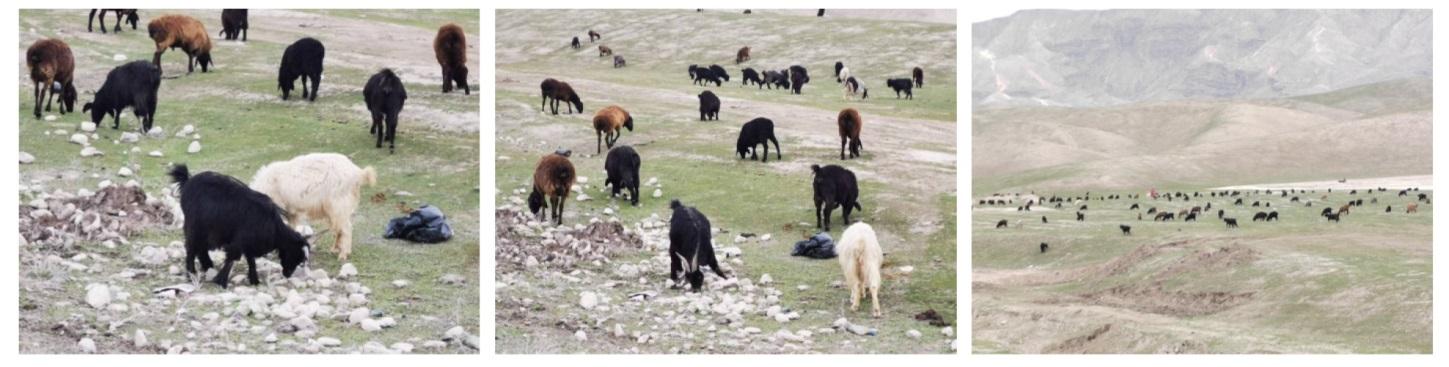
Consequently, not only forage plants but also many rare, endemic, and endangered plant species are unable to complete their life cycles—they cannot reach maturity or produce seeds. Even in winter, during plant dormancy, when the land is almost bare of vegetation, livestock farms in the region bring numerous cattle to repeatedly graze on the sparse pasture grass. Premature grazing is widespread; in early spring, without waiting for the plants to reach forage maturity, livestock breeders drive cattle to low-yielding pastures. To find sparse grass, many cattle cover tens of kilometers, practically not feeding but trampling the sprouts of forage and other plants (Fig. 1).
Fig. 1 Herding small cattle to poor winter pastures (Tabakchi pasture in the Vakhsh Valley of the Khatlon region on 11 January 2024).
As per long-term botanical studies, the Khatlon region’s natural habitats currently support common forage plants as well as an interesting diversity of flora that is priceless and threatened. This includes species that are known for their nutritional and medicinal value, as well as rare, endemic, and endangered ones that are strictly confined to the region’s specific environmental conditions. Some of the notable examples include Bukhara onion (Allium bucharicum), giant onion (Allium giganteum), gypsophilous onion (Allium gypsodictyum), Rosen’s onion (Allium rosenorum), Persian bunium (Bunium persicum), Ferula botschantzevii, decurrent ferula (Ferula decurrens), Tajik ferula (Ferula tadschikorum), Salvia baldshuanica, lined iris (Iris lineata), Iris leptorrhiza (syn. Juno leptorrhiza), Iris nicolai (syn. Juno nicolai), five-leaved tulip (Tulipa subquinquefolia), and superb tulip (Tulipa subpraestans). Based on the revelation of recent studies (Khisoriev, 2015, 2024), intensive and unregulated grazing practices have led to over 100 plants species currently facing extinction.
Grassland in Ziddi pasture is a highland area located in the Varzob District of Tajikistan. Mountain meadow grasslands, steep altitudinal gradients, and a dynamic hydrological network—all centered around the Ziddi River Basin—are the characteristic features of the region. These grassland ecosystems are ecologically critical for biodiversity, livestock grazing, and water regulation. Prangos pabularia is the dominant plant species in the grassland ecosystem. Besides this species, a diverse assemblage of regional pasture plants, including Geranium collinum, Vicia tenuifolia, and Lathyrus inconspicuus, forms a part of the grassland ecosystem. Recent assessments indicate moderate to severe grassland degradation in Ziddi pasture, primarily due to a combination of biotic and abiotic factors (Geng et al., 2025). Further, aboveground biomass has declined, soil compaction has increased, and palatable species have dwindled directly due to chronic overgrazing under unregulated livestock pressure. These impacts are compounded by climatic variability, where productivity is diminished and vegetation recovery is further delayed by time-lag effects induced by recurrent droughts and temperature extremes.

5.2. Ecological restoration practice of the degraded grassland ecosystems

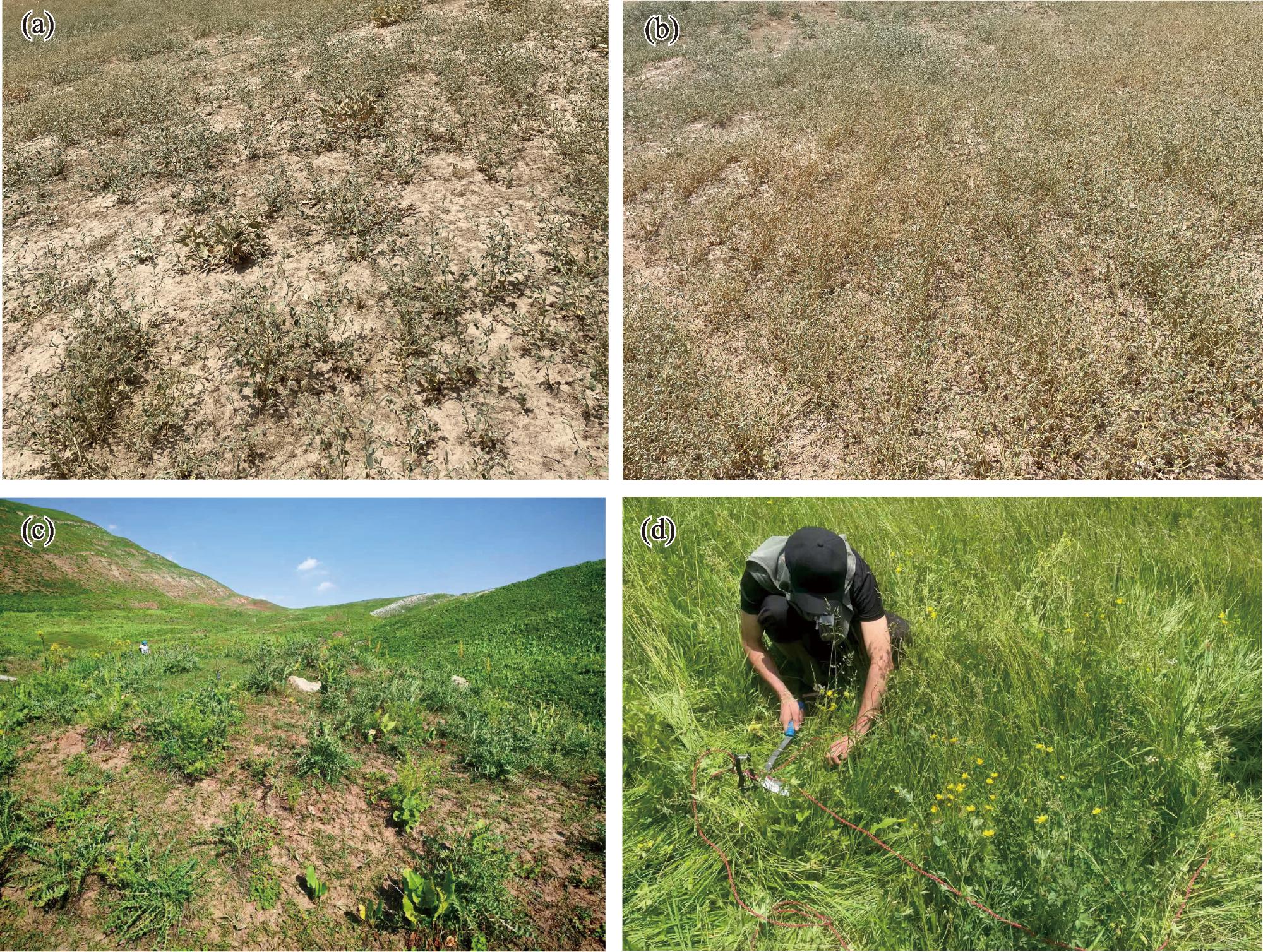
Since 2018, researchers from China and Tajikistan have collaborated to investigate the causes of grassland degradation and develop technologies for the ecological restoration of the degraded grasslands. The grassland degradation in Tabakchi and Ziddi regions is representative of conditions throughout much of Tajikistan. Therefore, selecting them for restoration trials is highly significant. Reseeding experiments were conducted at both sites using annual species in Tabakchi pasture and perennial species in Ziddi pasture. According to the experimental results, reseeding has led to significant improvement in grassland productivity, with species diversity increasing markedly compared to pre-reseeding conditions. In Tabakchi area, monoculture and mixed sowing showed distinct effects. Monoculture of Triticosecale significantly improved the productivity of the grassland, while the combination of Avena sativa and Melilotus officinalis produced the best results in mixed sowing. Therefore, during reseeding in southern Tajikistan, sowing methods and species combinations should both be carefully considered. The local climatic conditions of Ziddi area are quite favorable for the growth of Onobrychis viciifolia. The introduction of this plant species significantly boosted grassland productivity. Moreover, various grass species mixed with it derived benefits from legume-grass interactions, thus leading to superior overall outcomes of mixed sowing as well as notable results in ecological restoration. These findings confirm artificial reseeding as a viable strategy for enhancing the productive function of Tajikistan’s degraded grasslands. The results also prove that depending on the vegetation characteristics of different regions, suitable species can be selectively used for ecological restoration (Fig. 2).
Fig. 2. Degraded grassland vegetation versus restored vegetation. (a), degraded vegetation in Tabakchi pasture; (b), restored vegetation in Tabakchi pasture; (c), degraded vegetation in Ziddi pasture; (d), restored vegetation in Ziddi pasture.
Besides the grassland reseeding experiments mentioned above, the establishment of artificial plantations through the supplementary sowing of black saxaul (Haloxylon aphyllum) seeds on low-yielding desert communities in southern Tajikistan also demonstrates the restoration of desert herbaceous plant species after several years (Irgashev et al., 2022). According to Irgashev et al. (2022), young green shoots of Haloxylon aphyllum significantly supplemented the livestock diet during winter pastures in the Khatlon region’s arid zone. The practice of ecological and coenotic restoration of degraded pastures in the arid zones of Russia and Uzbekistan through additional sowing of seeds from adjacent herbaceous and subshrub species has been documented in several studies (Shamsutdinov, 1975; Zozulin, 1977; Shamsutdinov and Ibragimov, 1983; Shamsutdinov and Shamsutdinov, 2002, 2012; Shamsutdinova and Shamsutdinov, 2011).
In Tajikistan, tree and shrub vegetation, as well as forest cover, spans approximately 4.2×10⁵ hm2, accounting for about 3.0% of Tajikistan’s total area (Karaev, 2023). Vegetation cover is inconsistently scattered throughout the country, forming sparse forests along river valleys at altitudes ranging from 300 to 2800 m. Tree and shrub groups in these formations do not play a significant role as pastures, since forage plant communities here consist of only a few shade-loving and shade-tolerant species that grow in small open spaces beneath the crowns of various tree and shrub species, including walnut (Juglans regia), poplar (Populus tadshikistanica), maple (Acer turkestanicum), plane tree (Platanus orientalis), juniper (Juniperus seravschanica and Juniperus semiglobosa), and pistachio (Pistacia vera). Because tree-shrub communities are used primarily as temporary pastures during off-season periods of cattle migration and grazing, the grass cover beneath the crowns does not lead to the degradation of these ecosystems. Moreover, tree-shrub vegetation develops not at the expense of herbaceous plant communities but rather through the growth of trees and shrubs themselves. Thickets of trees and shrubs subsequently create natural ecological niches that facilitate seed germination for future generations. Therefore, tree-shrub communities do not require additional ecological restoration or reconstruction. However, it should be noted that due to the continuous cutting of trees and shrubs by the local population for firewood, highway construction, and the expansion of villages and cities across the country, these plant communities—including wild relatives of fruit plants such as apple, pear, cherry, and cherry plum—have been significantly altered. With the ecosystems located near settlements and recreational areas being severely degraded, there is a need for immediate intervention by local environmental authorities in these areas (Khisoriev, 2015, 2024; Karaev, 2024b).

6. Conclusions and recommendations

Based on the analysis above, we can conclude that human activities and climate change have significantly contributed to grassland degradation in Tajikistan. Notable changes in vegetation communities have occurred in some areas, resulting in decreased grassland utilization efficiency. Scientific ecological restoration methods such as reseeding experiments for degraded grasslands have substantially improved grassland productivity and ecological functions in typical regions of Tajikistan and can serve as effective strategies for future grassland restoration.
According to Tajikistan’s long-term planning and regulatory frameworks for the management of grasslands, this study develops future research directions and recommendations to reduce grassland degradation and remove the causes of the disappearance of rare, endemic, and endangered plant species in Tajikistan’s wild flora.
(i) Strict restrictions on grazing or complete prohibitions on winter pastures in the flatland areas of Tajikistan (300-600 m) must be implemented. This essential measure can help respect the biological rhythms and life cycles of plants in areas that require a winter dormancy period for survival and regeneration, such as deserts, low-grass semi-savanna, steppes, and ephemeroid communities. In addition, due to the lack of pasture grasses in winter, which leads to weight loss in small livestock, it is also proposed to switch to stall-mixed forage feeding of cattle on livestock farms during winter to allow plants time for regeneration and restoration.
It is essential to strictly adhere to the pasture rotation system because overgrazing leads to pasture overloading, which adversely affects the pasture grass stands. The soil becomes deprived of vegetation, and in many pastures—particularly in camps and at livestock watering points—significant plant die-off is evident. Following a rotation system is a fundamental requirement for restoring wild grass populations, achieving community sustainability, increasing productivity, and protecting ecosystems from further degradation. The Law of the Republic of Tajikistan “on pastures” also states that measures must be taken to prevent the decline in pasture productivity, the reduction in wild grass stocks and their diversity, the deterioration of ecological conditions, and the degradation of pastures.
(ii) Science-based carrying capacities must be established and enforced for all pasture types. This is essential to curb the unsustainable expansion of livestock numbers and to prevent the exploitation of plant resources beyond their capacity for renewal. On a national scale, the actual livestock density on natural pastures exceeds the optimal level by 10.5 times in year-round pastures, 4.3 times in winter pastures, and 3.1 times in spring-autumn pastures. It is necessary to optimize livestock density on natural pastures and transition to ecologically balanced management of pasture resources by ensuring that the number of grazing cattle corresponds to the productivity levels of grassland ecosystems. Reasonably controlling the number of livestock can not only prevent degradation in grassland productivity, but also mitigate the risk of livestock grazing, thereby protecting rare, endemic, and endangered plant species in these grassland ecosystems.
(iii) Additional in situ seeding of the main forage herbaceous plants (such as Triticale, Avena sativa, Vicia sativa, Vicia bungei, Melilotus officinalis, Medicago sativa, Festuca arundinacea, Onobrychis viciifolia, Bromus inermis, and others) is necessary in the low-productivity pastures of southern and central Tajikistan. This will foster conditions for generating and restoring forage plants as well as achieve ecological and coenotic reduction of degradation in forb-semi-shrub and forb-semi-savannah grassland ecosystems. Similarly, this approach can reduce the degradation of most grassland ecosystems on the plains and plateaus at elevations ranging from 300 to 2200 m throughout Tajikistan.
Considering that the degradation of tree and shrub vegetation currently occurs mainly due to the direct impact of human economic activities, the restoration of tree and shrub vegetation should be based on the species composition and structure of specific plant formations during the ecological restoration process. For example, the restoration of mesophilic black forest formations in southern and central Tajikistan can be achieved by planting 2-3-a walnut saplings of Juglans regia, the dominant species in these black forest formations. Seedlings of trees and shrubs can be grown ex situ in nurseries managed by district forestry departments or in the botanical gardens of Kulyab and Dushanbe, both of which have extensive experience in such cultivation. Additionally, seeds of trees and shrubs can also be sown in situ, that is, directly under existing trees within the natural ecosystem conditions.
(iv) A managed “Generation-Restoration Protected Area” network is proposed to be established in Tajikistan. This approach aims to utilize natural plant community ecology to simultaneously enhance the regeneration of primary food plants, preserve rare, endemic, and endangered species, and address pasture degradation within an ecological framework. The size of generation-restoration protected areas can range from 1.0 to 3.0 hm2, and they should be established along the periphery of pastures and, depending on the degree of ecosystem degradation, spaced every 5.0-10.0 km. These areas must be enclosed with sturdy mesh or another barrier to prevent livestock access.

Authorship contribution statement

Hikmat HISORIEV: conceptualization, data curation, formal analysis, investigation, methodology, writing - original draft, and writing - review & editing; LI Yaoming: conceptualization, project administration, supervision, and writing - review & editing; HUANG Wenjun: investigation and validation; FAN Lianlian: investigation and writing - review & editing; Mekhrovar OKHONNIYOZOV: data curation and investigation; and MA Xuexi: investigation and validation. All authors approved the manuscript.

Declaration of conflict of interest

FAN Lianlian is a Young Editorial Board member of Regional Sustainability and was not involved in the editorial review or the decision to publish this article. All authors declare that they have no known competing financial interests or personal relationships that could have appeared to influence the work reported in this paper.

Acknowledgements

This research was supported by the National Key Research and Development Program of China (2025YFE0103800, 2023YFE0102600, 2024YFE0214200).
[1]
Agency on Statistics under the President of the Republic of Tajikistan, 2018. Agriculture of the Republic of Tajikistan: Statistical Digest. Dushanbe: Agency on Statistics under the President of the Republic of Tajikistan, 81-85 (in Russian).

[2]
Ahmadov H.M., 2012. Influence of over-grazing on biodiversity and productivity of the pasture on high mountain zone Tajikistan. Journal of Academy of Soil Science. 2(1), 33-42 (in Russian).

[3]
Aknazarov K.A., Kasach A.E., Yusufbekov K.Y., 1993. Wild Dorage Plants in the Western Pamirs. Dushanbe: Donish, 1-132 (in Russian).

[4]
Cabar A., 2024. Farmers in Southern Tajikistan Sound the Alarm over Locust Infestation. [2025-07-30]. https://asiaplustj.info/ru/news/tajikistan/security/20240530/farmers-yuga-tajikistan-bespokoit-napadenie-saranchi (in Russian).

[5]
Fan L.L., Okhonniyozov M., Li Y.M., et al., 2021. Effect of nutrient addition on the productivity and species richness of grassland along with an elevational gradient in Tajikistan. Frontiers in Plant Science. 12, 765077, doi: 10.3389/fpls.2021.765077.

[6]
Geng Y.X., Hikmat H., Wang G.Y., et al., 2025. Time-lag of effects of extreme climate events on grassland vegetation dynamics across an altitudinal gradient in Tajikistan. Plants. 14(8), 1266, doi: 10.3390/plants14081266.

[7]
Giam X., Bradshaw C.J.A., Tan H.T.W., et al., 2010. Future habitat loss and the conservation of plant biodiversity. Biological Conservation. 143(7), 1594-1602.

DOI

[8]
GIZ(Gesellschaft für Internationale Zusammenarbeit) 2016. Germany Program for Sustainable and Climate Sensitive Land Use for Economic Development in Central Asia. [2025-07-01].

[9]
Government of the Republic of Tajikistan, 2022. Pasture Development Program in the Republic of Tajikistan for 2023-2027. [2025-06-29]. https://mmk.tj/ru/documents/10/583/ (in Tajik).

[10]
Hao L.N., Ye H.P., He S., et al., 2025. Estimation of aboveground biomass in Tajikistan based on upscaling extrapolation of UAV and Sentinel-2 multi-source data synergy. Science of Remote Sensing. 12, 100259, doi: 10.1016/j.srs.2025.100259.

[11]
Hisoriev H.H., 2022. Plant diversity and steppe conservation in the Pamir-Alai Range (Tajikistan) . In: Global Steppe Symposium Proceedings. Denver: Denver Botanic Gardens Press, 33-42 (in Russian).

[12]
Hisoriev H.H., Ashurov A.A., Kudratov I., et al., 2011. Rare and endangered species of wild flora for inclusion in the second edition of the Red Book of the Republic of Tajikistan. Academy of Sciences of the Republic of Tajikistan. 4(177), 7-18 (in Russian).

[13]
Irgashev T.A., Khandzharov A., Irgashev S.T., 2022. Creation of winter cultural pastures using black saxaul in the arid zone of Tajikistan. Bulletin of the Orenburg State Agrarian University. 6(98), 98-103 (in Russian).

[14]
Karaev S., 2023. Seven Somoni per Hectare: Will Tajikistan Be Able to Improve Its Pastures for Such Money? [2025-07-13]. https://asiaplustj.info/ru/news/tajikistan/economic/20230113/po-sem-somoni-na-gektar-sumeet-li-tadzhikistan-za-takie-dengi-uluchshit-svoi-pastbitsha (in Russian).

[15]
Karaev S., 2024a. Silent Death of Pastures in Tajikistan. [2025-07-01]. https://asiaplustj.info/ru/news/tajikistan/economic/20240701/bezmolvnaya-gibel-pastbitsh-tadzhikistana (in Russian).

[16]
Karaev S., 2024b. Pistachio, Juniper and Black Forest: What You Need to Know about the Forests of Tajikistan? [2025-07-22]. https://asiaplustj.info/ru/news/tajikistan/20240922/fistashka-archa-i-chernolese-chto-nuzhno-znat-o-lesah-tadzhikistana (in Russian).

[17]
Karimov H.H., 1996. Reserve of Phytomass of Plant Communities of the Western Pamir-Alai. Dushanbe: Donish, 1-23 (in Russian).

[18]
Khisoriev H.H., 2024. The Red Book of the Republic of Tajikistan. Dushanbe: Ganch Nashreti, 1-696 (in Tajik).

[19]
Khisoriev H.K., 2015. The Red Book of the Republic of Tajikistan. Dushanbe: Ganch Nashreti, 1-536 (in Tajik).

[20]
Li Y.M., Madaminov A.A., Li K.H., et al., 2018. Productivity of tall-grass semi-savannahs pastures of Tajikistan. Journal of the Academy of Sciences of Tajikistan. 61(9-10), 800-804 (in Russian).

[21]
Madaminov A.A., Shub S.S., Maysupov M., 1981. On the biology of wild birds of southern Tajikistan. Izvestiya of the Academy of Sciences of the Tajik SSR. 1(110), 43-49 (in Russian).

[22]
Madaminov A.A., Amanova N.M., 1988. Effect of fertilizers on the mineral composition of plants in pastures and hayfields of Tajikistan. In: All-Russia Scientific and Technical Information Center. No. 6836-V88. Moscow, Russia (in Russian).

[23]
Madaminov A.A., Budtueva T.I., 1988. Dynamics and productivity of the ephemeral-bearded association. In: All-Russia Scientific and Technical Information Center. No. 785-B85. Moscow, Russia (in Russian).

[24]
Madaminov A.A., 1992. Productivity of mountain pastures and hayfields of Tajikistan. In: All-Russia Scientific and Technical Information Center. No. 2711-B92. Moscow, Russia (in Russian).

[25]
Madaminov A.A., Sanginova M.Y., 1993. Productivity and chemical composition of phytomass of meadow communities of the Gissar Range. In: Institute of Plant Physiology and Genetics of the National Academy Republic of Tajikistan. No. 48(837)-TA93. Dushanbe, Tajikistan (in Russian).

[26]
Madaminov A.A., 2000. Study of fodder plants of the Pamirs in the works of M.I. Ibadov. In: KhasanovO.K., SanginovS.R., (eds.). Contribution of Scientists to the Development of Animal Husbandry in Tajikistan. Dushanbe: Maorif, 138-143 (in Russian).

[27]
Mi W.T., Tang S.M., Qi L., et al., 2023. Grazing reduces plant sexual reproduction but increases asexual reproduction: A global meta-analysis. Science of the Total Environment. 879, 162850, doi: 10.1016/j.scitotenv.2023.162850.

[28]
Mirzokhonova S.O., 2022. Climate of Tajikistan in Connection with Global Warming. [2025-07-14]. https://physical.tnu.tj/ru/klimat-tadzhikistana-v-svjazi-s-globalnym-potepleniem/ (in Russian).

[29]
Musoev A., 2022. Geography of the Vakhsh Valley and the uniqueness of its nature. Tajik State Pedagogical University (TSPU) named after Sadriddin Aini. 3(3), 264-269 (in Russian).

[30]
Narzikulova K., 2024. New Breeds of Beef and Dairy Cows Began to Be Bred in Tajikistan. [2025-06-26]. https://mir24.tv/news/16591563/novye-porody-myasnyh-i-molochnyh-korov-nachali-razvodit-v-tadzhikistane (in Russian).

[31]
Nazarova S., 2024. Interview with the Head of the Pasture and Land Reclamation Trust of the Ministry of Agriculture of Tajikistan. [2025-07-11].https://old.asiaplustj.info/ru/news/tajikistan/economic/20221213/v-tadzhikistane-prinyata-programma-razvitiya-pastbitsh-na-2023-2027-godi (in Russian).

[32]
Nowak A., Nowak S., Nobis M., 2011. Distribution patterns, ecological characteristic and conservation status of endemic plants of Tadzhikistan—A global hotspot of diversity. Journal for Nature Conservation. 19(5), 296-305.

DOI

[33]
Nowak A., Nobis M., 2020. Illustrated Flora of Tajikistan and Adjacent Areas. Warsaw: Botanical Garden Center for Biological Diversity Conservation, 1-770.

[34]
Nowak A., Świerszcz S., Nowak S., et al., 2021. Red List of vascular plants of Tajikistan—the core area of the Mountains of Central Asia global biodiversity hotspot. Scientific Reports. 10, 6235, doi: 10.1038/s41598-020-63333-9.

[35]
Nowak A., Nobis M., Nowak S., et al., 2025. Vegetation of Middle Asia with a Special Reference to Tajikistan. Wroclaw: Polish Botanical Society, 1-632.

[36]
OrexCA(Oriental Express Caucasus & Asia), 2024. Pamir Mountains: Mountains of Tajikistan. Passes and Mountains of Tajikistan Regions. [2025-07-15]. https://www.orexca.com/tajikistan/nature/mountains/pamir.htm.

[37]
Ovchinnikov P.N., 1957. Flora of the Tajik SSR (vol. 1). Pteridophytes - Gramineae. Moscow & Leningrad: Publishing House of the USSR Academy of Sciences, 1-547 (in Russian).

[38]
Ovchinnikov P.N., Sidorenko G.T., Kaletkina N.G., 1973. Vegetation of the Pamirs. Dushanbe: Donish, 1-28 (in Russian).

[39]
Ovchinnikov P.N., Sidorenko G.T., 1977. Pastures and Hayfields of Tajikistan. Dushanbe: Donish, 1-304 (in Russian).

[40]
Safarov N.M., 1993. State of biological resources in 1990-1991. In: National Center for Biodiversity and Biosafety of the Republic of Tajikistan. NCBB National Report. Dushanbe, Tajikistan (in Russian).

[41]
Safarov N.M., Novikova T., Shermatov H., 2014. Fifth National Report of the Republic of Tajikistan on Biodiversity. Dushanbe: Global Environment Facility & United Nations Environment Programme, 1-152 (in Russian).

[42]
Safarov N.M., 2015. Flora and Vegetation of the Southern Pamir-Alay. Dushanbe: Donish, 1-384 (in Russian).

[43]
Safarov T., 2017. Restoration of Pasture Lands Through Perennial Shrub Seeds in Tajikistan. In: World Bank. Bokat Database Technical Report T_TAj368ru. Dangara, Tajikistan (in Russian).

[44]
Shamsutdinov Z.S., 1975. Creation of Long-Term Pastures in the Arid Zone of Central Asia. Tashkent: Fan, 1-174 (in Russian).

[45]
Shamsutdinov Z.S., Ibragimov I.O., 1983. Long-Term Pasture Agrophytocenoses in the Arid Zone of Uzbekistan. Tashkent: Fan, 1-176 (in Russian).

[46]
Shamsutdinov Z.S., Shamsutdinov N.Z., 2002. Methods of Ecological Restoration of Arid Ecosystems in Areas of Pasture Livestock. Novosibirsk: Novosibirsk University Press, 21-27 (in Russian).

[47]
Shamsutdinov Z.S., Shamsutdinov N.Z., 2012. Biogeocenotic principles and methods of ecological restoration of desert pasture ecosystems in Central Asia. Arid Ecosystems. 2(3), 139-149.

DOI

[48]
Shamsutdinova E.Z., Shamsutdinov Z.S., 2011. Phytoresources of halophytes and prospects for their use in the system of arid forage production. Fodder Production. 1(1), 5-8 (in Russian).

[49]
Sinkovsky L.I., Madaminov A.A., 1989. Pastures of Low-Grass Semi-Savannas of Central Asia. Dushanbe: Donish, 1-268 (in Russian).

[50]
Sinkovsky L.P., Savchenko I.V., 1976. Productivity of natural hayfields and pastures in the mixed forest zone. In: Larin, I.V., (ed.). Natural Forage Resources of the Soviet Union and Prospects for their Rational Use. Moscow: Kolos, 258-282 (in Russian).

[51]
Stanyukovich K.V., 1973. Vegetation of the Mountains of the USSR (Botanical and Geographical Essay). Dushanbe: Donish, 1-411 (in Russian).

[52]
Umarov H., 2019. Livestock sector in Tajikistan:Problems of sustainable and balanced development. In: Leibniz Institute of Agricultural Development in Transition Economies. IAMO Discussion Paper N190. Halle, Germany (in Russian).

[53]
Umuhoza J., Jiapaer G., Yin H.M., et al., 2021. The analysis of grassland carrying capacity and its impact factors in typical mountain areas in Central Asia—A case of Kyrgyzstan and Tajikistan. Ecological Indicators. 131, 108129, doi: 10.1016/j.ecolind.2021.108129.

[54]
United Nations Convention to Combat Desertification, 2024. ‘Silent Demise’ of Vast Rangelands Threatens Climate, Food, Well-being of Billions: UNCCD. [2025-05-21]. https://www.unccd.int/news-stories/press-releases/silent-demise-vast-rangelands-threatens-climate-food-wellbeing-billions.

[55]
Wang R.Z., 2000. Effect of grazing on reproduction in Leymus chinensis population. Chinese Journal of Applied Ecology. 11(3), 399-402 (in Chinese).

PMID

[56]
Wang Z.J., Chen M., Song Z.B., et al., 2025. Effects of different grazing intensities on the plant reproductive traits and heterogeneous distributions of soil properties. CATENA. 250, 108785, doi: 10.1016/j.catena.2025.108785.

[57]
World Bank Group, 2024. Tajikistan Country Climate and Development Report. [2025-05-11]. https://www.preventionweb.net/publication/tajikistan-country-climate-and-development-report-0.

[58]
Yusufbekov H.Y., 1968. Improvement of Pastures and Hayfields of the Pamirs and the Alai Valley. Dushanbe: Donish, 1-320 (in Russian).

[59]
Zozulin G.M., 1977. Scientific and Practical Aspects of Landscapes Used as A Natural Standards. Rostov: Rostov University, 1-336 (in Russian).

Outlines

/