



Impact of green energy development on climate change mitigation
Received date: 2025-08-29
Revised date: 2025-12-03
Accepted date: 2025-12-31
Online published: 2026-03-11
This study examined the role of green energy development in mitigating climate change and fostering sustainable development in Central Asia including Kazakhstan, Uzbekistan, Kyrgyzstan, Tajikistan, and Turkmenistan. The region has substantial untapped potential in solar energy, wind energy, hydropower energy, as well as biomass and bioenergy, positioning it strategically for renewable energy deployment. The result demonstrated that integrating renewable energy can reduce greenhouse gas emissions, improve air quality, enhance energy security, and support rural development. Case studies from Kazakhstan, Uzbekistan, Kyrgyzstan, and Tajikistan showed measurable environmental and economic benefits. However, the large-scale use of renewable energy still faces numerous barriers, including outdated infrastructure, fragmented regulatory frameworks, limited investment, and shortages of technical expertise. Overcoming these obstacles requires institutional reform, stronger regional cooperation, and increasing engagement from international financial institutions and private investors. Modernizing grids, deploying storage systems, and investing in education, research, and innovation are critical for building human capacity in renewable energy sector. Accelerating the renewable energy transition is essential for Central Asia to meet climate goals, enhance environmental resilience, and ensure long-term socioeconomic development through innovation, investment, and regional collaboration.
Kobiljon Khushvakht KHUSHVAKHTZODA , Ilkhom Burkhonovich MAKHSUMOV , Muzaffar Boynazarovich KHOLNAZAROV , Irina Mikhailovna KIRPICHNIKOVA . Impact of green energy development on climate change mitigation[J]. Regional Sustainability, 2026 , 7(1) : 100292 . DOI: 10.1016/j.regsus.2026.100292
Table 1 Renewable resource potential in five Central Asian countries. |
| Country | Solar radiation (×103 kW•h/(m2•a)) | Average wind speed (m/s) | Installed capacity of hydropower plant (×106 kW) |
|---|---|---|---|
| Kazakhstan | 1.60-1.90 | 5-6 | 5.00 |
| Uzbekistan | 1.80-2.10 | 4-5 | 2.00 |
| Kyrgyzstan | 1.50-1.80 | 5-7 | 3.50 |
| Tajikistan | 1.60-2.00 | 4-6 | 6.00 |
| Turkmenistan | 2.00-2.20 | 4-5 | 1.50 |
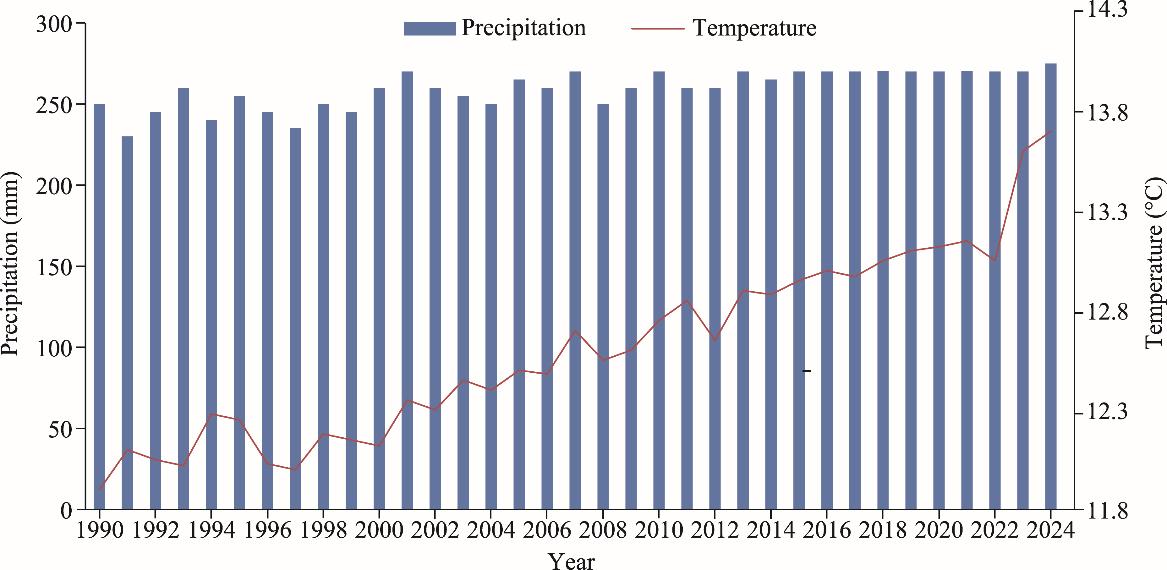
Fig. 1. Annual precipitation and annual average temperature change trends in Central Asia during 1990-2024. |
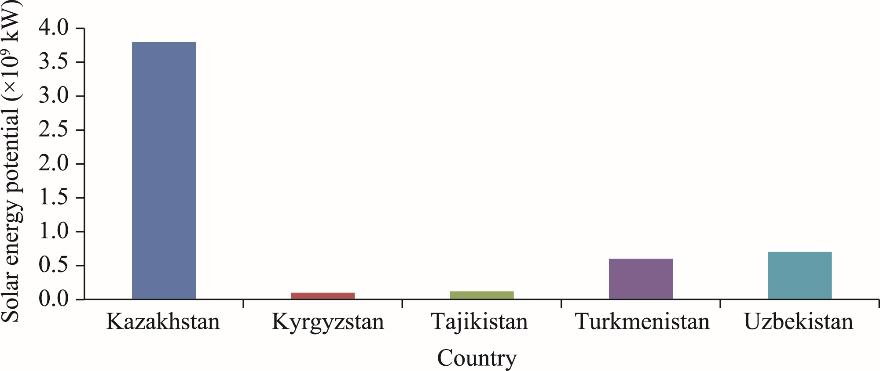
Fig. 2. Solar energy potential in five Central Asian countries in 2022. |
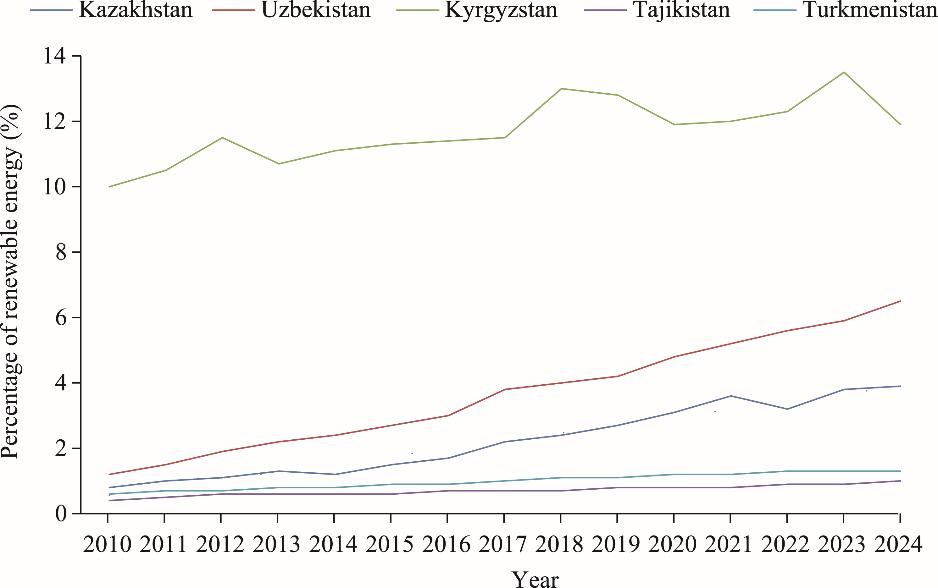
Fig. 3. Percentage of renewable energy in the national energy structure of Central Asian countries during 2010-2024. |
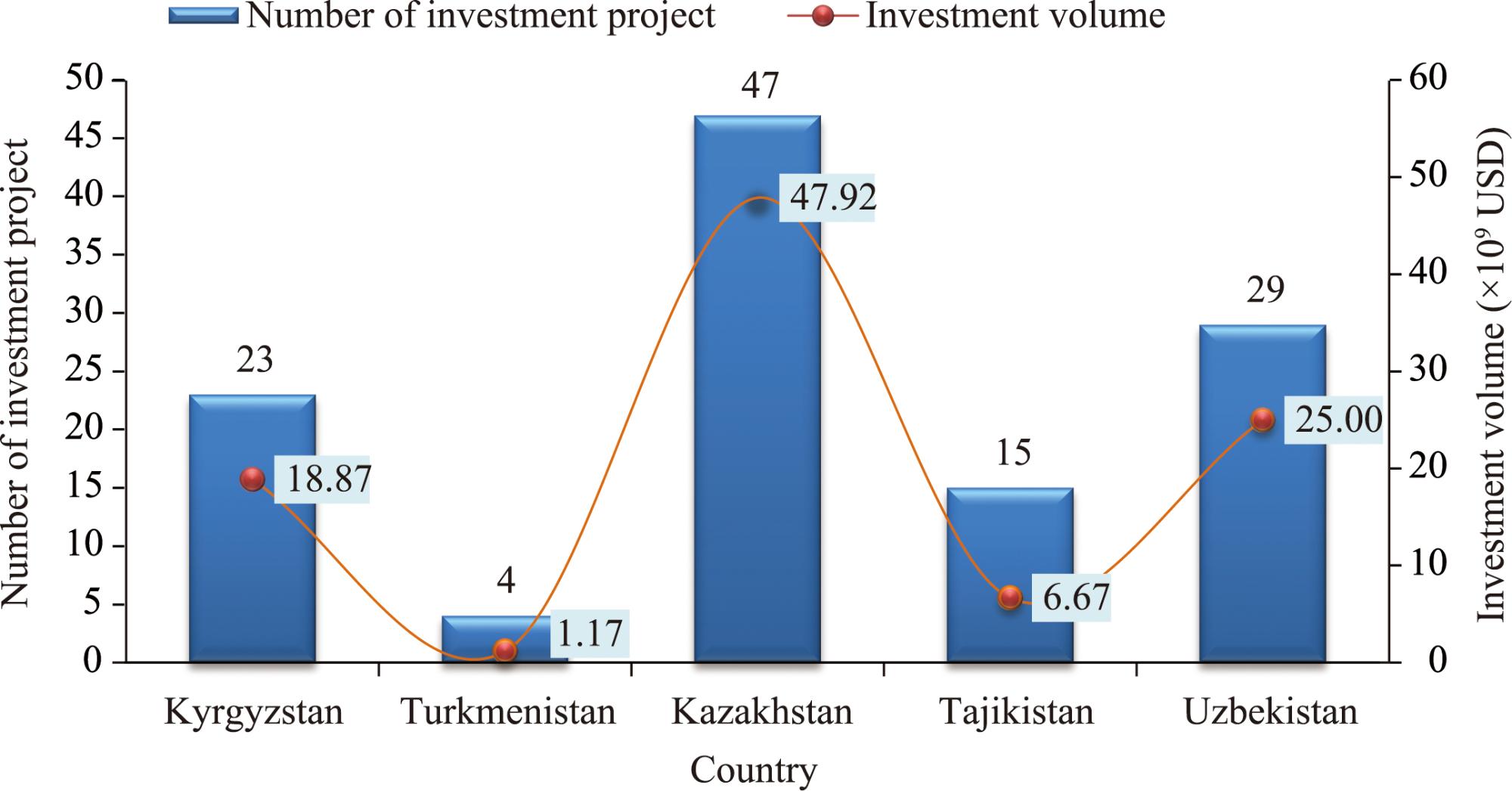
Fig. 4. Number of investment project and investment volume of five Central Asian countries during 2022‒2024. |
Table 2 Reduction of CO2 emissions in five Central Asian countries due to the use of renewable energy during 2020-2024. |
| Year | Reduction of CO2 emissions (t CO2/a) | ||||
|---|---|---|---|---|---|
| Kazakhstan | Uzbekistan | Kyrgyzstan | Tajikistan | Turkmenistan | |
| 2020 | 2.1 | 1.5 | 0.8 | 0.9 | 0.4 |
| 2021 | 3.0 | 2.1 | 1.0 | 1.1 | 0.6 |
| 2022 | 4.2 | 3.0 | 1.2 | 1.3 | 0.9 |
| 2023 | 5.1 | 4.0 | 1.4 | 1.5 | 1.2 |
| 2024 | 6.0 | 5.2 | 1.6 | 1.7 | 1.5 |
| [1] |
|
| [2] |
ADB(Asian Development Bank), 2023a. Barriers to Renewable Energy Deployment in Central Asia. [2025-07-22]. https://www.ppa.org.fj/asian-development-bank-increasing-access-to-renewable-energy-project/.
|
| [3] |
ADB, 2023b. Central Asia Clean Energy Initiatives. [2025-07-22]. https://www.adb.org/news/events/asia-clean-energy-forum-2023.
|
| [4] |
ADB, 2023c. Wind Energy Development in Central Asia. [2025-07-22]. https://kun.uz/en/news/2023/04/25/adb-and-acwa-power-sign-deal-for-two-utility-scale-wind-power-plants-in-uzbekistan.
|
| [5] |
|
| [6] |
|
| [7] |
|
| [8] |
|
| [9] |
|
| [10] |
|
| [11] |
|
| [12] |
|
| [13] |
|
| [14] |
|
| [15] |
BloombergNEF, 2024. Investment Trends in Global Renewable Energy. New York: BloombergNEF.
|
| [16] |
|
| [17] |
|
| [18] |
|
| [19] |
|
| [20] |
|
| [21] |
EBRD(European Bank for Reconstruction and Development) , 2024a. Barriers to Renewable Energy Deployment in Central Asia. London: EBRD.
|
| [22] |
EBRD, 2024b. We Invest in Changing Lives. London: EBRD.
|
| [23] |
FAO (Food and Agriculture Organization of the United Nations), 2024. Supported by GEF, Launches Projects to Transform Central Asian Agriculture. Rome: FAO.
|
| [24] |
|
| [25] |
Government of Kazakhstan, 2021. Green Kazakhstan Strategy 2050. [2025-07-15]. https://2021.page-annual-report.org/country-report/2021-kazakhstan/.
|
| [26] |
|
| [27] |
|
| [28] |
|
| [29] |
IEA(International Energy Agency) , 2024a. Energy Transitions and Climate Strategies in Emerging Economies. Paris: IEA.
|
| [30] |
IEA, 2024b. The Global Power Mix Is Set to Transform by 2030. Paris: IEA.
|
| [31] |
International Hydropower Association, 2024. Hydropower in South and Central Asia. South and Central Asia Regional Overview and Outlook. London: International Hydropower Association.
|
| [32] |
IPCC (Intergovernmental Panel on Climate Change), 2021. Climate Change 2021: The Physical Science Basis. Geneva: IPCC.
|
| [33] |
IPCC, 2023. Climate Change 2023:Synthesis Report. Contribution of Working Groups I, II and III to the Sixth Assessment Report of the Intergovernmental Panel on Climate Change. Geneva: IPCC.
|
| [34] |
IRENA(International Renewable Energy Agency), 2023. Renewable Energy and Climate Change Mitigation. Abu Dhabi: IRENA.
|
| [35] |
IRENA, 2024. Renewable Energy and Climate Change Mitigation. Abu Dhabi: IRENA.
|
| [36] |
|
| [37] |
Kyrgyzstan and Tajikistan Energy Ministries, 2022. National Energy Development Plans. [2025-07-12]. https://timesca.com/kyrgyzstan-plans-to-export-electricity-to-pakistan-next-year/.
|
| [38] |
|
| [39] |
|
| [40] |
Masdar, 2022. Uzbekistan Wind Projects. [2025-06-10]. https://masdar.ae/en/news/newsroom/masdar-achieves-financial-close-on-uzbekistans.
|
| [41] |
Masdar & Uzbek Ministry of Energy, 2023. Project Portfolio Overview. [2025-06-12]. https://masdar.ae/en/news/newsroom/masdar-signs-agreement-to-develop-1gw-mingbulak-wind-farm-in-uzbekistan.
|
| [42] |
|
| [43] |
Ministry of Energy of Tajikistan, 2023. Development of Small Hydropower in Mountain Regions. Dushanbe: Ministry of Energy of Tajikistan.
|
| [44] |
|
| [45] |
|
| [46] |
|
| [47] |
|
| [48] |
|
| [49] |
REN21(Renewable Energy Policy Network for the 21st Century), 2023. Renewables Global Futures Report. [2025-07-22]. https://www.ren21.net/gsr-2023/.
|
| [50] |
|
| [51] |
|
| [52] |
|
| [53] |
|
| [54] |
|
| [55] |
UNDP
|
| [56] |
UNECE(United Nations Economic Commission for Europe), 2021. Climate Change Vulnerability and Adaptation in Central Asia. Geneva: UNECE.
|
| [57] |
UNECE, 2022a. Solar Energy Potential in Central Asia. Geneva: UNECE.
|
| [58] |
UNECE, 2022b. UNECE Annual Report 2022. Geneva: UNECE.
|
| [59] |
UNECE, 2023. Renewable Energy Readiness in Central Asia. Geneva: UNECE.
|
| [60] |
UNEP(United Nations Environment Programme), 2022. Environmental Benefits of Renewable Energy. Nairobi: UNEP.
|
| [61] |
Uzbekistan Ministry of Energy, 2023. Renewable Energy Development Plan. [2025-07-22]. https://euroconventionglobal.com/event/renpower-uzbekistan-2023/.
|
| [62] |
World Bank, 2022. Central Asia Water and Energy Program: Annual Report 2021. Washington, D.C.: World Bank.
|
| [63] |
World Bank, 2023a. Central Asia Energy Sector Overview. Washington, D.C.: World Bank.
|
| [64] |
World Bank, 2023b. Central Asia Energy Forum Discusses Prospects for the Regional Electricity Market Development and Clean Energy Transition. Washington, D.C.: World Bank.
|
| [65] |
World Bank, 2023c. Energy Transition in Kazakhstan Back to the Sustainable Future. Washington, D.C.: World Bank.
|
| [66] |
World Bank, 2023d. Financing Renewable Energy in Central Asia. Washington, D.C.: World Bank.
|
| [67] |
World Health Organization, 2021. Air Quality and Health in Central Asia. Geneva: World Health Organization.
|
| [68] |
World Meteorological Organization, 2025a.
|
| [69] |
World Meteorological Organization, 2025b. Rising Temperatures and Extreme Weather Hit Asia Hard. Geneva: World Health Organization.
|
| [70] |
World Resources Institute, 2024. Investment and Infrastructure Challenges in Renewable Energy. Washington, D.C.: World Resources Institute.
|
| [71] |
|
| [72] |
|
| [73] |
|
/
| 〈 |
|
〉 |