
Full Length Article

Unlocking climate change resilience: Socioeconomic factors shaping smallholder farmers’ perceptions and adaptation strategies in Mediterranean and Sub-Saharan Africa regions

  • Osama AHMED , a, b, * ,
  • Mourad FAIZ c ,
  • Laamari ABDELALI d ,
  • Safwa KHOALI e ,
  • Cataldo PULVENT f ,
  • Sameh MOHAMED b ,
  • Mame Samba MBAYE g ,
  • Thomas GLAUBEN a
Expand
  • aDepartment of Agricultural Markets, Leibniz Institute of Agricultural Development in Transition Economies (IAMO), Halle, 06120, Germany
  • bFaculty of Agriculture, Cairo University, Giza, 12613, Egypt
  • cCadi Ayad University, Marrakech, 40000, Morocco
  • dNational Institute for Agricultural Research, Settat, 26000, Morocco
  • eUniversity of Hassan II Casablanca, Casablanca, 20000, Morocco
  • fUniversity of Bari Aldo Moro, Bari, 70121, Italy
  • gCheikh Anta Diop University, Dakar, 10700, Senegal
* E-mail address: (Osama AHMED).

Received date: 2024-10-01

  Accepted date: 2025-01-23

  Online published: 2025-08-13

Copyright

This is an open access article under the CC BY-NC-ND license (http://creativecommons.org/licenses/by-nc-nd/4.0/).

Abstract

Climate change poses substantial challenges to agricultural productivity and sustainability, particularly in Mediterranean and Sub-Saharan Africa regions. Local smallholder farmers’ adaptation strategies to climate change are crucial for mitigating these impacts. Therefore, this study investigated the socioeconomic factors influencing smallholder farmers’ perceptions and adaptation strategies to climate change in four countries (Morocco, Egypt, Italy, and Senegal) of Mediterranean and Sub-Saharan Africa regions using a binary logistic regression (BLR) model. The results indicated that educational level, farming experience, agricultural income, farm size, participation in agricultural workshops, and training in Good Agricultural Practices (GAPs) significantly impacted smallholder farmers’ perceptions and adaptation strategies to climate change (such as smallholder farmers adopting drought-tolerant crops). Higher educational level was linked to the greater possibility of smallholder farmers adopting drought-tolerant crops in Italy and Egypt, while gaps in rural education limited the possibility of smallholder farmers adopting drought-tolerant crops in Morocco and Senegal. Farming experience and agricultural income also enhanced the possibility of smallholder farmers adopting drought-tolerant crops, with notable variations across countries due to systemic barriers such as limited infrastructure in Senegal. Larger farm size and participation in agricultural workshops further improved the possibility of smallholder farmers adopting drought-tolerant crops, particularly in Morocco and Egypt. The findings highlighted the importance of tailored interventions and policy measures to support smallholder farmers in effectively responding to the challenges of climate change under diverse agricultural contexts. By understanding the specific needs and circumstances of smallholder farmers in these countries, policymakers can develop more effective adaptation strategies to enhance agricultural resilience and sustainability under the context of climate change.

Cite this article

Osama AHMED , Mourad FAIZ , Laamari ABDELALI , Safwa KHOALI , Cataldo PULVENT , Sameh MOHAMED , Mame Samba MBAYE , Thomas GLAUBEN . Unlocking climate change resilience: Socioeconomic factors shaping smallholder farmers’ perceptions and adaptation strategies in Mediterranean and Sub-Saharan Africa regions[J]. Regional Sustainability, 2025 , 6(1) : 100195 . DOI: 10.1016/j.regsus.2025.100195

1. Introduction

Climate change is a critical global challenge that considerably impacts agriculture and livelihoods. It encompasses various phenomena, such as rising temperature, changing precipitation patterns, droughts, floods, and hurricanes (IPCC, 2021, 2022). Globally, agriculture is under unprecedented stress due to consecutive heatwaves, erratic precipitation, and growing water scarcity. Moreover, climate change results in declining crop yields, exacerbating pest and disease outbreaks, and threatening food security, particularly for smallholder farmers with limited adaptive capacity (Sterling et al., 2003; Chaplin-Kramer et al., 2019). Projections for regions located in Mediterranean and Sub-Saharan Africa indicated worsening conditions, with sea surface temperature in Mediterranean rising four times faster than the global ocean average, thereby intensifying irrigation demands and water scarcity (Lange, 2020; von Schuckmann et al., 2020). In Sub-Saharan Africa, summer temperature is expected to increase by up to 5°C by 2100, compounding vulnerabilities for agricultural systems reliant on stable climatic conditions (Serdeczny et al., 2017).
Given the direct and measurable impacts of climate change on agricultural productivity, water availability, and food security, this study examined smallholder farmers’ perceptions and adaptation strategies to these challenges across four countries in Mediterranean and Sub-Saharan Africa regions, namely, Italy, Morocco, Egypt, and Senegal, each representing diverse climatic zones and socioeconomic contexts. This focus complements the broader understanding of climate change and its impacts. Northern Mediterranean country, such as Italy, is affected by rising temperature and water shortages, whereas southern Mediterranean countries, including Morocco and Egypt, are characterized by semiarid and arid climate. Senegal, situated in Sub-Saharan Africa, is affected by vulnerabilities of irregular precipitation, droughts, and rising temperature, highlighting the region’s susceptibility to climate change (Serdeczny et al., 2017; Cramer et al., 2018; Lange, 2020).
Addressing these regional vulnerabilities requires tailored approaches. For example, in Mediterranean, every 5°C increase in sea temperature can lead to an estimated 18.00% increase in irrigation demand (Cramer et al., 2018). Similarly, the irregular precipitation patterns of Sub-Saharan Africa challenge smallholder farmers’ ability to sustain productivity, highlighting the importance of climate-smart agricultural practices and adaptation strategies (Habiba et al., 2012; Funk et al., 2020a).
This study aimed to understand how smallholder farmers perceive and respond to the localized impact of rising temperature in the context of climate change and its impacts on agriculture. The selection of these regions is strategic, which facilitates the analysis of diverse climate change impacts and socioeconomic factors, such as education, gender, farm size, and access to resources, which shape smallholder farmers’ adaptation behaviors (Below et al., 2012b; Esham and Garforth, 2013; Xu et al., 2020). For example, participation in agricultural workshops and training in Good Agricultural Practices (GAPs) have been demonstrated to enhance smallholder farmers’ perceptions and adoption strategies to climate change (Pannell, 1999; Arbuckle et al., 2013; Foguesatto et al., 2019).
Several studies have highlighted the importance of understanding smallholder farmers’ perceptions and adaptation strategies to climate change. For example, Pannell (1999) and Xu et al. (2020) reported that recognizing and perceiving climate change is a key step for smallholder farmers in deciding to act in response to climate change. In some regions, smallholder farmers’ perceptions of increased temperature and decreased precipitation have positively influenced their decision to implement adoption strategies (Patt and Schroeter, 2008; Arunrat et al., 2017b). Battaglini et al. (2009) found that smallholder farmers’ willingness to implement adaptation strategies (such as changing crop varieties to mitigate droughts) varies across regions.
The adoption of climate-smart agricultural practices is influenced by various factors, including environmental, economic, social, and psychological elements. Foguesatto et al. (2019) and Gosnell et al. (2019) reported the importance of understanding farmers’ behaviours and perceptions to increase the possibility of adopting climate-smart agricultural practices. Mihiretu et al. (2019) and Xu et al. (2020) further identified personal, psychological, and socioeconomic factors (e.g., educational level, farming experience, social networks, and access to information) that shaped smallholder farmers’ adaptive decisions. For example, below-average income, limited access to credit, and inadequate information are major barriers to the adoption of effective climate-smart agricultural practices (Islam et al., 2020; Ali et al., 2021). In particular, a well-established educational system that ensures gender equality and provides access to agricultural extension services and microcredit facilities is essential for enhancing smallholder farmers’ adaptive capacity (Below et al., 2012b). Moreover, empirical studies by Arbuckle et al. (2013) and Esham and Garforth (2013) showed that smallholder farmers who are more aware of climate change and its potential impact are more likely to implement adaptation strategies.
Using a binary logistic regression (BLR) model, this study explored how socioeconomic factors, such as educational level, farming experience, agricultural income, farm size, participation in agricultural workshops, and training in GAPs, impact smallholder farmers’ perceptions and adaptation strategies to climate change. By focusing on the local contexts of Italy, Morocco, Egypt, and Senegal, this study aimed to provide actionable insights that can inform targeted policy interventions and improve the effectiveness of adaptation strategies to climate change.

2. Materials and methods

2.1. Study area

The selection of the case study countries (Morocco, Egypt, Italy, and Senegal) was driven by the objective of exploring the impact of climate change across diverse geographical and socioeconomic contexts.
Morocco and Egypt, located in southern Mediterranean, face pressing challenges, such as water scarcity, unpredictable precipitation, and rising temperature, all of which exacerbate the vulnerability of their agricultural systems. The analyses of these regions can provide valuable insights into the adaptive capacities of developing countries, where factors such as limited resources, education, and access to technology considerably shape smallholder farmers’ perceptions to climate change. Italy, situated in northern Mediterranean, represents more developed agricultural sectors. Despite their advanced agricultural technologies and stronger institutional frameworks, these countries are not immune to the effects of climate change, including extreme weather events and shifting precipitation patterns. The selection of these countries can provide a basis for comparing climate-smart agricultural practices in regions with greater access to resources and institutional support. Meanwhile, Senegal, located in Sub-Saharan Africa, represents a contrasting perspective where smallholder farmers face acute vulnerability to climate-related stressors, such as prolonged droughts and shifting agricultural seasons.
By incorporating a mix of developed and developing countries, this study aimed to gain sufficient understanding on how socioeconomic factors influence smallholder farmers’ perceptions and adaptation strategies to climate change, reflecting varying levels of development and complexities of agricultural system.

2.1.1. Case of Morocco

Oulad Boughadi is a rural community situated in Khouribga Province, Morocco, and predominantly relies on rainfed agriculture, with a total population of 8147 persons, according to the latest census conducted by the High Commission for Planning (HCP, 2024). It is one of the most significant production zones in Khouribga Province, boasting a substantial agricultural area and production output.
Oulad Boughadi is characterized by a mixed agricultural system that encompasses crop cultivation and livestock raising. In addition, the region’s forest rangeland plays a critical role as a primary source of animal feed. However, water scarcity presents a significant challenge to agricultural production in this region, which is exacerbated by the region’s heavy reliance on extremely low but highly unpredictable annual precipitation. Furthermore, soil in this region is characterized by shallow depth and low water retention capacity, further complicating crop production endeavors. Consequently, crop cultivation, particularly cereal production, is fraught with inherent risks. Oulad Boughadi has a continental climate, which is influenced by the “Chergui” wind. Extreme temperature is notable, with an average temperature ranging from 2°C in winter to 42°C in summer. Annual precipitation is relatively low, with an average cumulative precipitation of 350 mm. These climatic conditions substantially impact agricultural activities and contribute to the region’s vulnerability to climate change and its associated challenges.

2.1.2. Case of Egypt

El-Nubaria, located in northwestern Egypt, is a pivotal agricultural hub; however, its climatic conditions and environmental challenges make it exceptionally vulnerable to climate change. This region is characterized by obvious rainy seasons, long and intensely hot summers, high relative humidity, and substantial temperature variations between day and night. These climatic conditions substantially impact agriculture by increasing evapotranspiration and reducing water availability for crops. Climate change has exacerbated these challenges through erratic precipitation patterns, rising temperature, and shifting weather extremes, leading to reduced agricultural productivity and heightened water scarcity. Moreover, poor soil and water management practices such as over-extraction of groundwater, inadequate irrigation methods, and soil salinization, undermine sustainable agriculture in El-Nubaria. The reliance on chemical fertilizers further deteriorates soil quality, impacting crop health and resilience. El-Nubaria represents Egypt’s diverse agricultural zones, providing insights into how smallholder farmers cope with climate change and implement adaptation strategies. The challenges in El-Nubaria mirror broader national concerns about food security and sustainable agriculture, highlighting the need for adaptation strategies to mitigate the impact of climate change on Egypt’s agricultural sectors (Aboukota et al., 2024).

2.1.3. Case of Italy

The survey in southern Italy was conducted in Bari (46.70%), Avellino (20.00%), Matera (21.70%), Cosenza (5.00%), Benevento (3.20%), Potenza (1.70%), and Brindisi (1.70%) provinces in the southern Italy. This regional diversity highlights varying agricultural and climatic challenges across the southern Italy. Mediterranean climate of the southern Italy makes it highly vulnerable to climate change. The region faces increased extreme weather events, including tornadoes, hailstorms, and prolonged droughts, increasing the risk of desertification. Precipitation decreases in some areas of the southern Italy, whereas intense precipitation events increased. This trend reduces soil water availability, limits arable land, increases runoff and erosion, decreases water storage in reservoirs, and exacerbates water scarcity for irrigation. Prolonged droughts and rising temperature further strain water resources through higher evapotranspiration demand, posing significant challenges to agriculture and sustainability (Pulvento et al., 2022).

2.1.4. Case of Senegal

Niakhène, nestled within the Old Peanut Basin, Senegal, grapples with delicate light soils vulnerable to wind erosion. These soil conditions, coupled with scant and irregular precipitation patterns and escalating temperature due to climate change, adversely impact local landscape. Consequently, a considerable portion of the population relies on agriculture for sustenance, yielding meager outputs that translate to low average income and limited access to essential social welfare. Over the past five years (2019-2024), there has been a noticeable decline in the diversity of cultivated species in the region. Although governmental agencies, Non-Governmental Organizations (NGOs), and other stakeholders have implemented agricultural initiatives and development projects to improve crop productivity, crop diversity, agricultural sustainability, and ecosystem health, yields remain exceptionally low, averaging less than 1 t/hm2 for all crops. Local constraints, such as soil impoverishment, droughts, erratic precipitation, plant diseases, pests, and weed infestations, contribute to the low yields. Consequently, the incomes of smallholder farmers dwindle annually in Niakhène, exacerbating social vulnerability and leading to a growing trend of smallholder farmers temporarily migrating to urban areas in pursuit of better job opportunities.

2.2. Data sources

In this study, data were collected through a survey from 348 smallholder farmers during 2021-2022 in four distinct regions: Oulad Boughadi (70), El-Nubaria (110), southern Italy (60), and Niakhène (108). The dataset comprised over 1000 quantitative and qualitative variables, providing insights into agricultural productivity as well as sociodemographic, economic, and environmental factors. Utilizing this comprehensive dataset, we employed a BLR model to assess the probability of smallholder farmers adopting drought-tolerant crops, considering six socioeconomic factors including educational level, farming experience, agricultural income, farm size, participation in agricultural workshops, and training in GAPs.

2.3. Methodology

In this study, the possibility of adopting climate change adaptation strategies by smallholder farmers was evaluated using a combination of quantitative and qualitative methods. Socioeconomic factors specific to various ecosystems were investigated through structured surveys and in-depth interviews with smallholder farmers across different regions. Statistical models were used to identify key socioeconomic factors, whereas comparative analysis across different regions allowed for the identification of localized driving factors. This approach ensures a detailed understanding of adaptation strategies, providing a robust foundation for policy recommendations tailored to diverse agro-ecological and socioeconomic contexts.
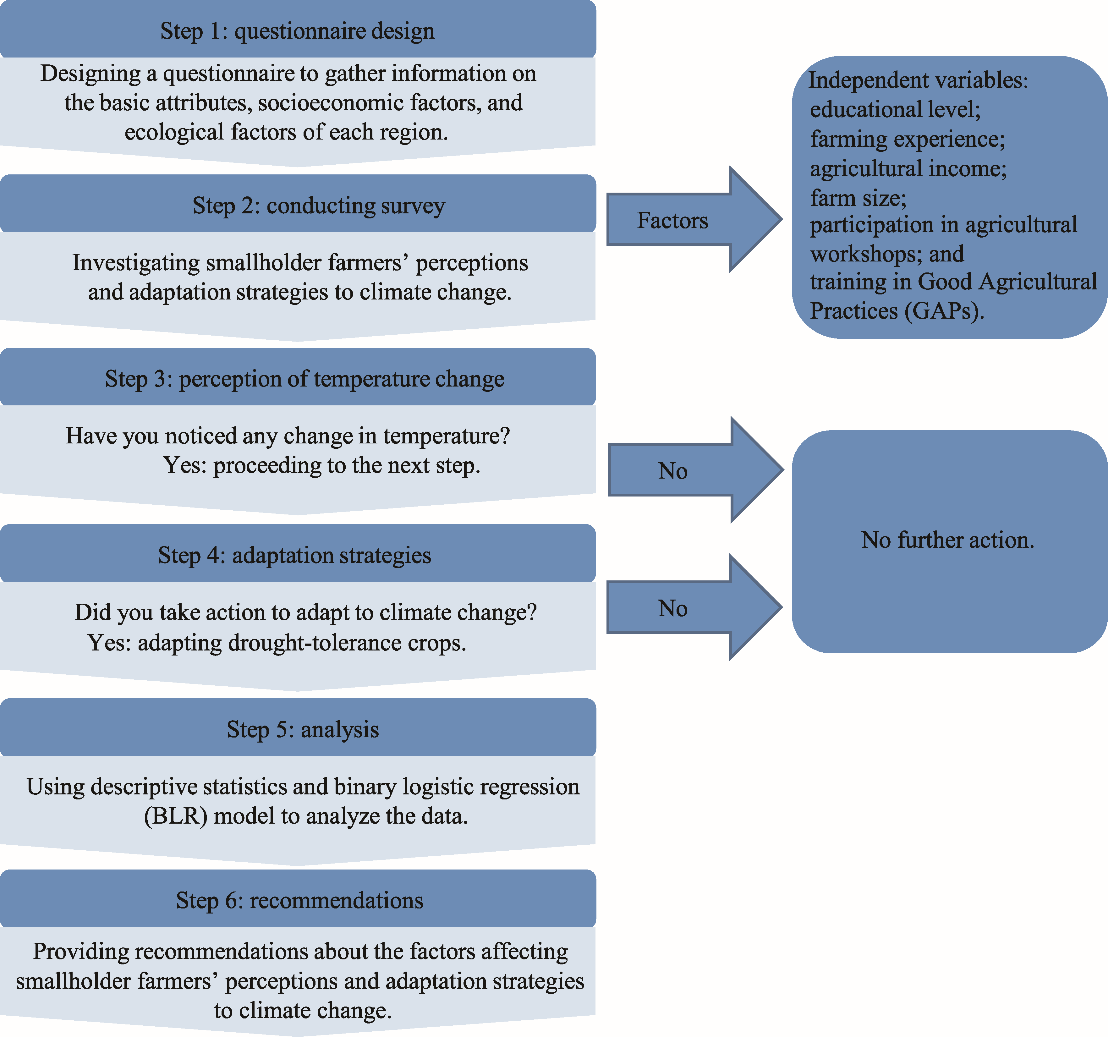
Several studies have delved into the impact of various factors on smallholder farmers’ perceptions and adaptation strategies (Mihiretu et al., 2019; Funk et al., 2020b; Islam et al., 2020; Wang and Zhang, 2020; Xu et al., 2020). These investigations have employed either the linear regression approach or the BLR model. In this study, we opted for the BLR model to explore the relationship between a set of noncontinuous variables and binary dependent variables. While the linear regression approach is adapted at analyzing the regression of continuous variables, it is ill-suited for binary dependent variables (Gelman, 2020; Wickham and Grolemund, 2022). Hence, the BLR model aligns better with our research objectives, prompting its implementation in this study (Fig. 1).
Fig. 1. Conceptual framework of this study.
Several studies have applied the BLR model to analyze adaptation strategies within agricultural systems (Alemayehu and Bewket, 2017; Ali et al., 2021; Mwadzingeni et al., 2023). This approach provides valuable insights into smallholder farmers’ perceptions and adaptation strategies to climate change.
The BLR is a nonlinear model, in which the dependent variable is binary, and the independent variables can be continuous or categorical. A binary dependent variable has two possible values; in this case “yes” and “no” usually coded as 1 and 0, respectively:
$Y_{j}=\left\{\begin{array}{ll} 0 & \text { if the answer is no (no action) } \\ 1 & \text { if the answer is yes (taking action) } \end{array},\right.$

E(Yi)=Pr(Yi=1)×1+Pr(Yi=0)×1=Pr(Yi=1),

where Y is the dependent variable, in this case, smallholder farmers adopting drought-tolerant crops; i is the number of respondents (i=1, 2, …, n); n is the total number of respondents; E(Y) denotes the expectation of smallholder farmers adopting drought-tolerant crops, which is a nominal qualitative variable representing the practice of utilizing drought-tolerant crops or the decision of a surveyed farmer to implement an adaptation strategy to mitigate the impact of climate change; and Pr is the probability that dependent variable takes a value of 1.
Based on Equation 1, we can identify the relationship between dependent variable and independent variables, considering the possibility of smallholder farmers adopting drought-tolerant crops:
Pr ( Y j = 1 X j ) = Pr ( β X j = ε j 0 X j ) = Pr ( β X j ε j X j ) = F ε ( β X )
where X is the independent variable; β is the coefficient; j is the number of independent variables; ε is the error term; and F is the binomial distribution.
As the estimation of the BLR model is based on the maximum likelihood estimation (MLE) method, the equation can be expressed as follows:
Pr j ( Y j = 1 ) = F ( α + β X j ) = e β X j 1 + e ( α + β X j ) = 1 1 + e ( α + β X j )
where α is the constant and e is the natural logarithm. This analysis provides insights into how smallholder farmers perceive variations in temperature and precipitation patterns, as well as the innovative and policy-driven measures they are taking to address climate change. This study posited that smallholder farmers’ adaptation strategies were shaped by their perceptions of climate change. The factors influencing these decisions included educational level (Alam et al., 2017; Ojo and Baiyegunhi, 2018), farming experience (Deressa et al., 2009; Tessema et al., 2013), agricultural income (Hassan and Nhemachena, 2008; Mulwa et al., 2017), farm size (Sofoluwe et al., 2011; Below et al., 2012a), participation in agricultural workshops, and training in GAPs (Anley et al., 2007; Makuvaro et al., 2018). These variables have been widely recognized in previous studies as critical driving factors of smallholder farmers adopting adaptation strategies to climate change. Within the framework of this study, the model is structured as follows:

Y=f(X1, X2, X3, X4, X5, X6),

Where f represents the functional relationship between the independent and dependent variables; X1 is the educational level; X2 is the farming experience (a); X3 is the agricultural income (USD); X4 is the farm size per household (hm2/household); X5 is the participation in agricultural workshops (in this case, yes=1, otherwise=0); and X6 is the training in GAPs (in this case, yes=1, otherwise=0). In Italy and Senegal, participation in agricultural workshops and training in GAPs were combined as one independent variable due to data unavailability. However, in Morocco and Egypt, participation in agricultural workshops and training in GAPs were regarded as two independent variables due to data availability.
Therefore, the BLR model can be specified as follows:
P ( Y ) = 1 1 + e ( α + β 1 X 1 + β 2 X 2 + β 3 X 3 + β 4 X 4 + β 5 X 5 + β 6 X 6 )
When
α + β X j = log Pr j 1 Pr j
, we specified the BLR model as follows:
log Pr j 1 Pr j = α + β X 1 + . . . + β X j
where Pr is the probability of smallholder farmers adopting drought-tolerant crops and 1-Prj is the probability of smallholder farmers not adopting drought-tolerant crops.

3. Results

3.1. Characteristics of respondents

Table 1 shows notable differences among respondents in terms of educational level, socioeconomic status, and perceptions of climate change in four countries. In Morocco, 29.33%, 19.27%, and 0.55% of respondents had primary, secondary, and university education, respectively. Meanwhile, in Egypt, 3.50%, 35.70%, and 42.60% of respondents had primary, secondary, and university education, respectively. In Italy, 6.70%, 21.70%, and 35.00% of respondents held primary, secondary, and university education, respectively, whereas in Senegal, the percentages were 14.65%, 13.96%, and 3.15%, respectively.
Table 1 Characteristics of respondents in four countries.
Category Sub-category Percentage of respondents (%)
Morocco Egypt Italy Senegal
Educational level Pimary education 29.33 3.50 6.70 14.65
Secondary education 19.27 35.70 21.70 13.96
University education 0.55 42.60 35.00 3.15
Socioeconomic satus On-farm demonstration 36.00 6.10 23.30 1.00
Sufficient agricultural income 16.00 37.40 75.00 27.80
Participation in agricultural workshops and training in GAPs 63.30 17.40 53.30 2.80
Food insecurity 64.40 75.20 0.00 45.40
Implementing climate-smart agricultural practices 46.20 47.80 36.70 12.00
Crop insurance 78.40 1.00 33.30 0.00
Perceptions of climate change Facing climate change challenges 100.00 81.00 71.00 90.00
Change in temperature 100.00 100.00 96.70 74.10
Increase in temperature 100.00 40.90 96.70 31.50
Adopting drought-tolerant crops 33.30 41.70 43.30 4.60

Note: GAPs, Good Agricultural Practices.

Approximately 64.40%, 75.20%, and 45.40% of respondents in Morocco, Egypt, and Senegal, respectively, reported experiencing food insecurity. Conversely, none of respondents in Italy claimed food insecurity issues. These findings highlighted the stark contrast in agricultural conditions between developing and developed countries, with a considerable percentage of respondents in developing countries facing challenges related to low food production and inadequate agricultural income. Notably, only approximately 16.00% of respondents in Morocco, 37.40% in Egypt, and 27.80% in Senegal perceived that they had sufficient agricultural income, highlighting the prevalence of insufficient income among smallholder farmers in these regions. Moreover, 46.20%, 47.80%, 36.70%, and 12.00% of respondents in Morocco, Egypt, Italy, and Senegal, respectively, reported that they implemented climate-smart agricultural practices to adapt to climate change. Moreover, 63.30%, 17.40%, 53.30%, and 2.80% of respondents contended participation in agricultural workshops and training in GAPs in Morocco, Egypt, Italy, and Senegal, respectively, which reflected the degree of smallholder farmers’ involvement in shaping climate-smart agricultural practices and policies, with lower participation in agricultural workshops observed in Egypt, Senegal, and Italy compared with Morocco.
Concerning the impact of climate change, a substantial majority of respondents across all regions acknowledged its presence. Specifically, 100.00%, 81.00%, 71.00%, and 90.00% of respondents in Morocco, Egypt, Italy, and Senegal, respectively, reported facing climate change-related challenges. Notably, a considerable percentage of respondents in Morocco (100.00%), Egypt (100.00%), and Italy (96.70%) perceived a noticeable change in temperature over the past decade (2013-2023), whereas in Senegal, this perception was shared by 74.00% of respondents. Specifically, approximately 100.00%, 40.90%, 96.70%, and 31.50% of respondents in Morocco, Egypt, Italy, and Senegal, respectively, perceived an increase in temperature over the same period. In response to climate change-related threats, approximately 33.30%, 41.70%, 43.30%, and 4.60% of respondents in Morocco, Egypt, Italy, and Senegal, respectively, reported adopting drought-tolerant crops as an adaptation strategy.

3.2. Results of the BLR model

The BLR model was employed to identify which variables influence smallholder farmers’ perceptions and adaptation strategies to climate change. The estimation of the BLR model was based on the MLE method, which was employed and carried out in two steps. Step 1 served as an initial stage, where the regression is performed without introducing independent variables. The outcomes of this initial estimation are presented in Table 2. The -2 log-likelihood (-2LL) value was used to measure the model fit, achieving a perfect score at zero. The results showed that the -2LL values for the model’s starting point were 81.020, 159.210, 81.500, and 149.570 for Morocco, Egypt, Italy, and Senegal, respectively. In this analysis, the observed -2LL values were relatively high, indicating that the model could be improved for a better fit. The overall correct classification rate of the model showed that 61.42% of respondents in Morocco, 54.54% in Egypt, 58.36% in Italy, and 81.85% in Senegal, were correctly specified (Table 3). These results suggested that the model was moderately accurate in predicting the probability of smallholder farmers adopting drought-tolerant crops in these countries. Additionally, the Wald test results confirmed that all independent variables (educational level, farming experience, agricultural income, farm size, participation in agricultural workshops, and training in GAPs) included in the model were statistically significant at the 1% level (Table 4). These results indicated that the independent variables collectively play a critical role in explaining the dependent variable. From Table 4 we can see that all independent variables had significant impacts on dependent variable in Morocco, Egypt, and Italy. However, participation in agricultural workshops and training in GAPs were not significant in Senegal.
Table 2 History iterations of estimating the first step of the binary logistic regression (BLR) model in four countries.
Iteration Morocco Egypt Italy Senegal
-2LL Coefficient -2LL Coefficient -2LL Coefficient -2LL Coefficient
Step 0 1 81.020 0.680*** 159.210 0.090 81.500 0.330 149.570 0.074
2 81.000 0.720*** 159.210 0.090 81.500 0.340 149.570 0.074
3 81.000 0.720*** - - 81.500 0.340 - -

Note: -, no value; -2LL, -2 log-likelihood; ***, significance at the P<0.01 level.

Table 3 Classification for predicting the probability of smallholder farmers adopting drought-tolerant crops in four countries.
Answer Morocco Egypt Italy Senegal
Number of people Correct value (%) Number of people Correct value (%) Number of people Correct value (%) Number of people Correct value (%)
Are you adopting drought-tolerant crops? No 0 0.00 50 0.00 25 0.00 52 0.00
Yes 43 100.00 60 100.00 35 100.00 56 100.00
Overall correct classification rate (%) 61.42 54.54 58.33 81.85
Table 4 Results of the BLR model for independent variables in four countries.
Independent variable Morocco Egypt Italy Senegal
Score Significance Score Significance Score Significance Score Significance
Educational level 10.200*** 0.001 47.050*** 0.000 10.620*** 0.001 1.850 0.173
Farming experience 8.600*** 0.003 40.370*** 0.000 3.730* 0.054 7.470*** 0.006
Agricultural income 10.810*** 0.001 25.090*** 0.000 9.970*** 0.002 10.250*** 0.001
Farm size 11.020*** 0.001 37.940*** 0.000 8.190*** 0.004 12.020*** 0.001
Participation in agricultural workshops 2.380 0.123 26.040*** 0.000 10.290*** 0.001 0.424 0.515
Training in GAPs 13.670*** 0.000 16.430*** 0.000
Constant Coefficient 0.720*** 0.090* −0.340* 0.070*
Wald test 7.250 0.220 0.650 0.150

Note: -, no value; *, significance at the P<0.10 level; **, significance at the P<0.05 level; ***, significance at the P<0.01 level. In Italy and Senegal, participation in agricultural workshops and training in GAPs were combined as one independent variable due to data unavailability. However, in Morocco and Egypt, participation in agricultural workshops and training in GAPs were regarded as two independent variables due to data availability.

In the second step of estimation process, independent variables were incorporated into the model. The results, as detailed in Table S1, indicated that the Cox & Snell R2 values accounted for 58.30%, 53.30%, 41.90%, and 24.50% of the variance in the probability of smallholder farmers adopting drought-tolerant crops in Morocco, Egypt, Italy, and Senegal, respectively. Furthermore, the Nagelkerke’s R2 values indicated that the model had the respective explanatory power of 81.20%, 71.10%, 56.40%, and 32.70% in Morocco, Egypt, Italy, and Senegal (Table 5).
Table 5 Relationship between dependent variable and independent variables by the BLR model in four countries.
Independent variable Morocco Egypt Italy Senegal
Coefficient Significance Coefficient Significance Coefficient Significance Coefficient Significance
Educational level 4.769*** 0.008 1.546** 0.033 1.567** 0.037 1.137** 0.028
Farming experience 3.030** 0.026 2.152** 0.031 1.971** 0.029 1.035** 0.027
Agricultural income 2.462** 0.047 1.360** 0.040 1.901** 0.028 1.520*** 0.005
Farm size 3.109** 0.019 1.350** 0.039 1.782** 0.027 1.384*** 0.003
Participation in agricultural workshops 2.695** 0.041 2.067** 0.043 1.608 0.460 - -
Training in GAPs 2.467** 0.046 1.859 0.500
Constant -5.469*** 0.001 -4.266*** 0.000 -5.408*** 0.000 -1.859*** 0.000
Nagelkerke’s R2 (%) 81.20 71.10 56.40 32.70
Pseudo-R2 (%) 69.00 55.00 40.00 20.00

Note: -, no value; **, significance at the P<0.05 level; ***, significance at the P<0.01 level. In Italy and Senegal, participation in agricultural workshops and training in GAPs were combined as one independent variable due to data unavailability. However, in Morocco and Egypt, participation in agricultural workshops and training in GAPs were regarded as two independent variables due to data availability.

The results of the model specification tests indicated that the chi-square (χ2) test was significant at the 5% level in four countries (Tables S2 and S3). This implied accepting the null hypothesis (H0) that “the model significantly improves the probability of smallholder farmers adopting drought-tolerant crops to cope with climate change”.
The results of the BLR model are presented in Table 5, suggesting that all independent variables contributed to better predicting the probability of smallholder farmers adopting drought-tolerant crops in Morocco and Egypt. All independent variables contributed to better predicting the probability of smallholder farmers adopting drought-tolerant crops in Italy except for participation in agricultural workshops and training in GAPs, which did not have a significant impact. However, in Senegal, results indicated that educational level, farming experience, agricultural income, and farm size contributed to the probability of smallholder farmers adopting drought-tolerant crops. In addition, the estimated coefficients using the BLR model consistently showed positive values, indicating a direct correlation between dependent variable and independent variables. Moreover, we used the Pseudo-R2 to estimate the variability explained by the model. Hence, the model explained approximately 69.00%, 55.00%, 20.00%, and 40.00% of the total variation in the probability of smallholder farmers adopting drought-tolerant crops in Morocco, Egypt, Senegal, and Italy, respectively (Table 5).

4. Discussion

The BLR model revealed that socioeconomic factors (educational level, farming experience, agricultural income, farm size, participation in agricultural workshops, and training in GAPs) were consistently positive related with the probability of smallholder farmers adopting drought-tolerant crops in Morocco, Egypt, Italy, and Senegal. Previous studies also highlighted the important role of educational level in enhancing smallholder farmers’ perceptions and adaptation strategies to climate change (Deressa et al., 2011; Arunrat et al., 2017a; Alvar-Beltrán et al., 2020b; Anabaraonye et al., 2020; Funk et al., 2020a; Xu et al., 2020).

4.1. Role of educational level in addressing climate change

The findings highlighted the critical role of educational level in the adoption of climate adaptation strategies. The results indicated that educational level enabled smallholder farmers in Italy and Egypt to effectively access to and apply climate-related knowledge. Educated smallholder farmers in these countries were more adept at interpreting climate information and using climate-smart agricultural practices, as corroborated by Deressa et al. (2011) and Arunrat et al. (2017a).
Contrarily, Morocco and Senegal exhibited lower percentages of respondents with secondary and university education levels, suggesting gaps in educational infrastructure, particularly in rural areas. These findings emphasized the need for tailored educational policies. Programs focusing on the education of climate change and practical training, such as agricultural extension services, are crucial in regions with lower educational level. Deressa et al. (2011) also highlighted the benefits of educational level for smallholder farmers in Ethiopia.
Despite its positive impact, there remains an urgent need to improve educational level, particularly in rural areas of developing countries. Governments should prioritize policies that expand access to education for marginalized groups, including women. Educational programs should also emphasize climate-related topics and provide training GAPs. Empowering smallholder farmers through targeted educational initiatives is crucial to ensuring widespread adoption of climate-smart agricultural practices, thereby strengthening long-term resilience to climate change.

4.2. Role of farming experience in addressing climate change

The results also indicated that smallholder farmers with years of farming experience were better equipped to adapt to climate change in Morocco, Egypt, Italy, and Senegal. Moreover, Mustafa et al. (2023) highlighted that experienced smallholder farmers benefited from practical knowledge gained through years of exposure to local climate dynamics.
The significant impact of farming experience on the probability of smallholder farmers adopting drought-tolerant crops in Egypt and Italy may reflect the advanced farming experience in facing climate change and better integration of traditional and scientific knowledge in these countries. However, in Senegal and Morocco, barriers such as limited access to updated climate information might reduce the efficacy of experienced smallholder farmers. Programs integrating local and scientific knowledge through workshops or farmer-to-farmer exchanges could bridge this gap and ensure that less experienced smallholder farmers can benefit from experienced smallholder farmers. Agricultural extension services are also crucial for facilitating knowledge sharing and enhancing the impletion of adaptation strategies to climate change.

4.3. Role of agricultural income in addressing climate change

A positive relationship between agricultural income and the probability of smallholder farmers adopting drought-tolerant crops was found in four countries, but this relationship varied across countries. Smallholder farmers in Morocco and Egypt with higher agricultural income can more readily invest in adaptation strategies such as improved seeds and irrigation systems, consistent with the findings of Gbetibouo et al. (2010) and Habiba et al. (2012). These investments can reduce smallholder farmers’ vulnerability to climate change and increase resilience. In Senegal, even higher agricultural income might not suffice due to logistic and systemic issues, such as inadequate infrastructure or limited market access. The positive relationship between agricultural income and the probability of smallholder farmers adopting drought-tolerant crops in Italy likely reflects the established government subsidies and widespread availability of climate-smart technologies, which mitigate income-based disparities. To enhance the resilience of smallholder farmers to climate change, policymakers should prioritize equitable access to resources through subsidies, low-interest loans, and micro-insurance schemes, particularly for low-income smallholder farmers.
Smallholder farmers with higher agricultural income are also more likely to invest in long-term adaptation strategies, such as diversifying income sources or adopting climate-smart agricultural practices, which can help protect them from the impact of climate change. This highlights a big gap in adopting adaptation strategies between wealthy and poor smallholder farmers. Smallholder farmers with high agricultural income can afford to invest in new climate-smart agricultural practices to adapt to climate change, whereas poor smallholder farmers often lack the money to make these changes. To address this, policies should support low-income smallholder farmers with subsidies for climate-smart tools, low-interest loans, or financial help for adaptation strategies. Micro-insurance programs could also help smallholder farmers handle the financial risks of climate change.

4.4. Role of farm size in addressing climate change

Farm size substantially impacted the probability of smallholder farmers adopting drought-tolerant crops. Larger farm size is better equipped to diversify crops, invest in modern irrigation systems, and implement climate-smart agricultural practices, as noted by Thornton et al. (2020). The positive relationship between farm size and the probability of smallholder farmers adopting drought-tolerant crops in Egypt, Italy, and Morocco highlighted the advantages of farm size, whereas lower significance between them in Senegal indicated constraints, such as land fragmentation and financial limitations.
Interventions such as cooperative farming, shared resource systems, and targeted microfinance can address these disparities, enabling smallholder farmers to cope with climate change. Ensuring equitable access to resources is vital in facilitating the transition to more climate-smart agricultural practices for all smallholder farmers regardless of farm size.

4.5. Role of participation in agricultural workshops and training in Good Agricultural Practices (GAPs) in addressing climate change

Participation in agricultural workshops and training in GAPs substantially had positive impacts on adaptation strategies; the increase in participation in agricultural workshops led to an increase in the probability of smallholder farmers adopting drought-tolerant crops in Morocco and Egypt. Similarly, a 1.00% increase in training in GAPs was linked to a 2.47% increase in the probability of smallholder farmers adopting drought-tolerant crops in Morocco and an 1.86% increase in Egypt. These agricultural workshops and GAPs can provide smallholder farmers with essential technical skills and knowledge of climate-smart agricultural practices such as water conservation and soil management (Mbow et al., 2019). The capacity-building initiatives in Italy benefit from robust extension networks and collaboration between research institutions and smallholder farmers, enabling effective dissemination of climate-smart agricultural practices (FAO, 2018). Conversely, in Morocco and Egypt, logistical challenges such as limited access to training sites, inadequate transportation infrastructure, and scheduling conflicts combined with financial barriers, may hinder smallholder farmers’ participation. Incorporating climate services such as localized weather forecasts and early warning systems into training programs can amplify their effectiveness (Rao and Surendran, 2019). These results indicated that the targeted training can provide smallholder farmers with the necessary knowledge and skills to improve their capacity to address climate-related challenges. These programs typically include workshops, field demonstrations, and farmer field schools that can provide climate-smart agricultural practices, such as water conservation measures, soil health management, and drought-resistant crop plantation. These practices not only mitigate the effect of climate change but also promote long-term sustainability by enhancing soil quality and increasing crop resilience to cope with extreme weather events (Mbow et al., 2019). Research consistently supports the effectiveness of capacity-building initiatives in improving smallholder farmers’ adaptation strategies to climate change. Deressa et al. (2011) found that Ethiopian smallholder farmers who participated in capacity-building programs were more likely to adopt climate-smart agricultural practices, such as using improved crops and water-efficient techniques. Similarly, Alvar-Beltrán et al. (2020a) reported that Kenyan smallholder farmers who received training were better able to recognize climate change and implement adaptation strategies, such as altering planting schedules and adapting drought-tolerant crops. Funk et al. (2020b) also emphasized the critical role of participation in agricultural workshops and training in GAPs in enhancing resilience to climate change in Sub-Saharan Africa.

5. Conclusions

This study focused on four countries: Italy, Morocco, Egypt, and Senegal, which were significantly affected by climate change to explore how climate change challenges manifested in these countries. By analyzing the impact of socioeconomic factors (educational level, farming experience, agricultural income, farm size, participation in agricultural workshops, and training in GAPs) on smallholder farmers’ perceptions and adaptation strategies, this study highlighted the need for tailored and region-specific solutions to enhance the resilience of smallholder farmers to climate change and address the diverse impacts of climate change.
The findings confirmed that educational level, farming experience, agricultural income, and farm size influenced smallholder farmers’ adaptation strategies. In Morocco, Egypt, and Italy, smallholder farmers with higher educational level and better farming experience were more likely to adopt climate-smart agricultural practices. In Senegal, while educational level and farming experience remained important, participation in agricultural workshops and training in GAPs were less evident, highlighting the need for more targeted and context-specific interventions. These differences indicated the importance of adopting adaptation strategies to climate change that accounted for the distinct socioeconomic and institutional contexts of each region, ensuring their relevance and effectiveness.
Furthermore, this study emphasized the critical need to integrate socioeconomic factors into climate change adaptation strategies, particularly in rural and marginalized areas. Policymakers should prioritize enhancing educational level, particularly for young people, to improve their perceptions of climate change and encourage to adopt climate-smart agricultural practices. Strengthening agricultural extension services, improving access to training programs, and promoting participatory governance are essential for bridging the gap between research institutions and smallholder farmers, ensuring that adaptation strategies are practical and aligned with local needs.
This study provides valuable insights into adaptation strategies to climate change by comparing four countries—Morocco, Egypt, Italy, and Senegal—across Mediterranean and Sub-Saharan Africa regions. Unlike studies focused on single regions, by highlighting differences across diverse economic and climatic contexts, this study offers practical recommendations for strengthening resilience of smallholder farmers to climate change and addressing climate change globally.

Authorship contribution statement

Osama AHMED: data curation, funding acquisition, methodology, software, project administration, and writing - original draft; Mourad FAIZ: formal analysis, methodology, and writing - review & editing; Laamari ABDELALI: data curation, writing - review & editing, and validation; Safwa KHOALI: data curation and writing - review & editing; Cataldo PULVENT: data curation; Sameh MOHAMED: data curation; Mame Samba MBAYE: data curation; and Thomas GLAUBEN: supervision and conceptualization. All authors approved the manuscript.

Ethics statement

Ethics approval was obtained from the Ethics Advisory Board of the the European Research Area Network Cofund on Food Systems and Climate (ERA-NET FOSC). In addition, the participants provided their informed consent to participate in this study.

Declaration of conflict of interest

The authors declare that they have no known competing financial interests or personal relationships that could have appeared to influence the work reported in this paper.

Acknowledgments

This study is an integral component of the TRUSTFARM Project, supported by the European Union’s Horizon 2020 research and innovation program. The TRUSTFARM Project was carried out under the European Research Area Network Cofund on Food Systems and Climate (ERA-NET FOSC; 862555), and built upon and supported by the experience from the Joint Programming Initiative on Agriculture, Food Security & Climate Change (FACCE-JPI) and the European Research Area Network Cofund on Long-term Europe-Africa Partnership on Agricultural Research for Development (LEAP-Agri).

Appendix

Table S1 Results of estimating the second step of the binary logistic regression (BLR) model.
Step Morocco Egypt Italy Senegal
-2LL Cox and Snell’s R2 (%) Nagelkerke’s R2 (%) -2LL Cox and Snell’s R2 (%) Nagelkerke’s R2 (%) -2LL Cox and Snell’s R2 (%) Nagelkerke’s R2 (%) -2LL Cox and Snell’s R 2 (%) Nagelkerke’s R2 (%)
1 65.525a 21.50 29.90 107.878a 36.00 48.00 48.957a 41.90 56.40 137.320a 10.70 14.30
2 51.452b 37.00 51.50 96.065a 42.30 56.40 - - - 128.232b 17.90 23.90
3 42.302b 45.40 63.20 86.973a 46.60 62.20 - - - 124.249b 20.90 27.90
4 35.785c 50.70 70.60 81.027b 49.30 65.80 - - - 119.196c 24.50 32.70
5 30.715c 54.40 75.80 76.940b 51.10 68.20 - - - - - -
6 25.005c 58.30 81.20 71.666c 53.30 71.10 - - - - - -

Note: -, no value; a, the estimation process concluded at iteration 5 as the adjustments to the parameter estimates fell below the threshold of 0.001; b, the estimation process concluded at iteration 6 as the adjustments to the parameter estimates fell below the threshold of 0.001; c, the estimation process concluded at iteration 7 as the adjustments to the parameter estimates fell below the threshold of 0.001.

Table S2 Composite tests of the BLR model’s coefficients.
Step Morocco Egypt Italy Senegal
χ2 df Significance χ2 df Significance χ2 df Significance χ2 df Significance
1 Step 15.479 1 0.000 51.328 1 0.000 32.547 5 0.000 12.251 1 0.000
Block 15.479 1 0.000 51.328 1 0.000 32.547 5 0.000 12.251 1 0.000
Model 15.479 1 0.000 51.328 1 0.000 32.547 5 0.000 12.251 1 0.000
2 Step 14.073 1 0.000 11.813 1 0.001 - - - 9.088 1 0.003
Block 29.552 2 0.000 63.141 2 0.000 - - - 21.340 2 0.000
Model 29.552 2 0.000 63.141 2 0.000 - - - 21.340 2 0.000
3 Step 9.150 1 0.002 9.092 1 0.003 - - - 3.983 1 0.046
Block 38.701 3 0.000 72.233 3 0.000 - - - 25.323 3 0.000
Model 38.701 3 0.000 72.233 3 0.000 - - - 25.323 3 0.000
4 Step 6.517 1 0.011 5.946 1 0.015 - - - 5.053 1 0.025
Block 45.219 4 0.000 78.180 4 0.000 - - - 30.376 4 0.000
Model 45.219 4 0.000 78.180 4 0.000 - - - 30.376 4 0.000
5 Step 5.070 1 0.024 4.086 1 0.043 - - - - - -
Block 50.289 5 0.000 82.266 5 0.000 - - - - - -
Model 50.289 5 0.000 82.266 5 0.000 - - - - - -
6 Step 5.710 1 0.017 5.275 1 0.022 - - - - - -
Block 55.999 6 0.000 87.541 6 0.000 - - - - - -
Model 55.999 6 0.000 87.541 6 0.000 - - - - - -

Note: -, no value; χ2, chi-square; df, degree of freedom.

Table S3 Hosmer and Lemeshow test results.
Step Morocco Egypt Italy Senegal
χ2 df Significance χ2 df Significance χ2 df Significance χ2 df Significance
1 0.000 0 0.000 0.000 0 0.000 5.233 8 0.732 0.000 0 0.000
2 0.050 2 0.975 0.000 2 1.000 - - - 0.324 2 0.850
3 1.026 6 0.985 4.487 5 0.482 - - - 1.975 5 0.853
4 19.254 7 0.007 1.247 4 0.870 - - - 8.749 7 0.271
5 5.144 8 0.742 5.017 6 0.542 - - - - - -
6 7.779 8 0.455 2.865 6 0.826 - - - - - -

Note: -, no value.

[1]
Aboukota M.E.S., Hassaballa H., Elhini M., et al., 2024. Land degradation, desertification & environmental sensitivity to climate change in Alexandria and Beheira, Egypt. Egypt. J. Soil Sci. 64(1), 167-180.

[2]
Alam G.M., Alam K., Mushtaq S., 2017. Climate change perceptions and local adaptation strategies of hazard-prone rural households in Bangladesh. CLIM. RISK MANAG. 17, 52-63.

[3]
Alemayehu A., Bewket W., 2017. Climate change vulnerability and adaptation strategies: Household-level assessments in drought-prone areas of Ethiopia. Int. J. Clim. Change Strateg. Manag. 9(6), 763-777.

[4]
Ali S., Liu Y. L., Nazir A., et al., 2021. Rural farmers perception and coping strategies towards climate change and their determinants: Evidence from Khyber Pakhtunkhwa Province, Pakistan. J. Clean Prod. 291, doi: 10.1016/j.jclepro.2020.125250.

[5]
Alvar-Beltrán D., Carpio C.E., García-Sánchez I.M., 2020a. Climate change adaptation in smallholder farming: Evidence from Kenya. Environ. Manage. 65(2), 224-238.

[6]
Alvar-Beltrán J., Dao A., Dalla Marta A., et al., 2020b. Farmers’ perceptions of climate change and agricultural adaptation in Burkina Faso. Atmosphere. 11(8), 827, doi: 10.3390/atmos11080827.

[7]
Anabaraonye B., Okafor J.C., Hope J., 2020. Educating farmers in rural areas on climate change adaptation for sustainability in Nigeria. In: Filho, W.L., (ed.). Handbook of Climate Change Resilience. Cham: Springer, 2771-2789.

[8]
Anley Y., Bogale A., Haile-Gabriel A., 2007. Adoption decision and use intensity of soil and water conservation measures by smallholder subsistence farmers in Dedo District, Western Ethiopia. Land Degrad. Dev. 18(3), 289-302.

[9]
Arbuckle J.G., Jr Morton L.W., Hobbs J., 2013. Farmer beliefs and concerns about climate change and attitudes toward adaptation and mitigation: Evidence from Iowa. Clim. Change. 118(3-4), 551-563.

[10]
Arunrat N., Groot A., Dargusch P., 2017a. The role of education and extension services in enhancing climate change adaptation in agriculture. Environ. Manage. 60(3), 431-445.

[11]
Arunrat N., Wang C., Pumijumnong N., et al., 2017b. Farmers’ intention and decision to adapt to climate change: A case study in the Yom and Nan basins, Phichit Province of Thailand. J. Clean. Prod. 143, 672-685.

[12]
Battaglini A., Barbeau G., Bindi M., et al., 2009. European winegrowers’ perceptions of climate change impact and options for adaptation. Reg. Environ. Change. 9(2), 61-73.

[13]
Below T., Artner A., Siebert R., et al., 2012a. Micro-level practices to adapt to climate change for African small-scale farmers: A review of selected literature. Environ. Dev. Sustain. 14(3), 407-418.

[14]
Below T.B., Mutabazi K.D., Kirschke D., et al., 2012b. Can farmers’ adaptation to climate change be explained by socio-economic household-level variables? Glob. Environ. Change. 22(1), 223-235.

[15]
Chaplin-Kramer R., Sharp R.P., Weil C., et al., 2019. Global modeling of nature’s contributions to people. Science. 366(6462), 255-258.

DOI PMID

[16]
Cramer W., Guiot J., Fader M., et al., 2018. Climate change and interconnected risks to sustainable development in the Mediterranean. Nature Climate Change. 8(11), 972-980.

[17]
Deressa T.T., Hassan R.M., Ringler C., et al., 2009. Determinants of farmers’ choice of adaptation methods to climate change in the Nile Basin of Ethiopia. Glob. Environ. Change. 19(2), 248-255.

[18]
Deressa T.T., Hassan R.M., Ringler C., 2011. Perception of and adaptation to climate change by farmers in the Nile basin of Ethiopia. J. Agric. Sci. 149(1), 23-31.

[19]
Esham M., Garforth C., 2013. Agricultural adaptation to climate change: insights from a farming community in Sri Lanka. Mitig. Adapt. Strateg. Glob. Change. 18(5), 535-549.

[20]
FAO (Food and Agriculture Organization of the United Nation), 2018. Climate-Smart Agriculture in Europe: Success Stories from Italy. [2024-08-16]. http://www.fao.org/.

[21]
Foguesatto C.R., Rossi Borges J.A., Dessimon Machado J.A., 2019. Farmers’ typologies regarding environmental values and climate change: Evidence from southern Brazil. J. Clean Prod. 232, 400-407.

[22]
Funk C., Sathyan A.R., Winker P., et al., 2020a. Changing climate-changing livelihood: Smallholder’s perceptions and adaption strategies. J. Environ. Manage. 259, 109702, doi: 10.1016/j.jenvman.2019.109702.

[23]
Funk C., Shukla S., Hoell A., 2020b. Climate adaptation and resilience in Sub-Saharan African smallholder farming systems. Nat. Sustain. 3(4), 215-222.

[24]
Gbetibouo G.A., Ringler C., Hassan R., 2010. Vulnerability of the South African farming sector to climate change and variability: An indicator approach. Nat. Resour. Forum. 34(3), 175-187.

[25]
Gelman A., 2020. Linear or Logistic Regression with Binary Outcomes. [2024-08-17]. https://statmodeling.stat.columbia.edu/2020/01/10/linear-or-logistic-regression-with-binary-outcomes/.

[26]
Gosnell H., Gill N., Voyer M., 2019. Transformational adaptation on the farm: Processes of change and persistence in transitions to ‘climate-smart’ regenerative agriculture. Glob. Environ. Change. 59, 101965, doi: 10.1016/j.gloenvcha.2019.101965.

[27]
Habiba U., Shaw R., Takeuchi Y., 2012. Farmer’s perception and adaptation practices to cope with drought: Perspectives from Northwestern Bangladesh. Int. J. Disaster Risk Reduct. 1, 72-84.

[28]
Hassan R., Nhemachena C., 2008. Determinants of African farmers’ strategies for adapting to climate change: Multinomial choice analysis. Afr. J. Agric. Resour. Econ. 2(1), 83-104.

[29]
HCP (High Commission for Planning), 2024. Monographie De La Province De Khouribga. [2024-08-17]. https://www.hcp.ma/region-drta/docs/Publications/Monographie%20de%20la%20province%20%20de%20Khouribga(1).pdf.

[30]
IPCC (Intergovernmental Panel on Climate Change), 2021. Climate change 2021:The Physical Science Basis. Contribution of Working Group I to the Sixth Assessment Report of the Intergovernmental Panel on Climate Change. Cambridge: Cambridge University Press.

[31]
IPCC, 2022. Climate Change 2022:Impacts, Adaptation, and Vulnerability. Contribution of Working Group II to the Sixth Assessment Report of the Intergovernmental Panel on Climate Change. Cambridge: Cambridge University Press.

[32]
Islam A.R.M.T., Shill B.K., Salam R., et al., 2020. Insight into farmers’ agricultural adaptive strategy to climate change in northern Bangladesh. Environ. Dev. Sustain. 23(2), 2439-2464.

[33]
Lange M.A., 2020. Climate Change in the Mediterranean: Environmental Impacts and Extreme Events. [2024-08-19]. https://www.iemed.org/publication/climate-change-in-the-mediterranean-environmental-impacts-and-extreme-events/.

[34]
Makuvaro V., Walker S., Masere T.P., et al., 2018. Impact of climate change and variability on smallholder farming systems in semi-arid Zimbabwe. Afr. Crop Sci. J. 26(1), 63-82.

[35]
Mbow C., Rosenzweig C., Barioni L.G., et al., 2019. Food Security. In: Shukla, P.R., Skea, J., Calvo Buendia, E., (eds.). Climate Change and Land:An IPCC Special Report on Climate Change, Desertification, Land Degradation, Sustainable Land Management, Food Security, and Greenhouse Gas Fluxes in Terrestrial Ecosystems. Cham: Springer, 21-41.

[36]
Mihiretu A., Okoyo E.N., Lemma T., 2019. Determinants of adaptation choices to climate change in agro-pastoral drylands of Northeastern Amhara, Ethiopia. Cogent Environ. Sci. 5(1), 1636548, doi: 10.1080/23311843.2019.1636548.

[37]
Mulwa C., Marenya P., Bahadur V., et al., 2017. Climate risk management through adaptation: Options for improving food security. Agric. Syst. 158, 24-35.

[38]
Mustafa D., Sulaiman R., Yang H., 2023. Farmer adaptation to climate change: The role of local knowledge and experience. Environ. Sci. Policy. 124, 133-141.

[39]
Mwadzingeni L., Mugandani R., Mafongoya P.L., 2023. Perception of climate change and coping strategies among smallholder irrigators in Zimbabwe. Front. Sustain. Food Syst. 7, 1027846, doi: 10.3389/fsufs.2023.1027846.

[40]
Ojo T.O., Baiyegunhi L.J., 2018. Determinants of adaptation to climate change among rice farmers in Nigeria: A structural equation modeling approach. J. Clean Prod. 204, 639-647.

[41]
Pannell D.J., 1999. Social and economic challenges in the development of complex farming systems. Agrofor. Syst. 45(1-3), 393-409.

[42]
Patt A.G., Schroeter D., 2008. Perceptions of climate risk in Mozambique: Implications for the success of adaptation strategies. Glob. Environ. Change. 18(3), 458-467.

[43]
Pulvento C., Ahmed O., Sellami M.H., et al., 2022. Sustainable irrigation and abiotic tolerant crops in South Italy within TRUSTFARM project. Environ. Sci. Proc. 16(1), 8, doi: 10.3390/environsciproc2022016008.

[44]
Rao K.P., Surendran S.N., 2019. Climate information services for farmers: Evidence from India. Weather Clim. Soc. 11(3), 513-526.

[45]
Serdeczny O., Adams S., Baarsch F., et al., 2017. Climate change impacts in Sub-Saharan Africa: From physical changes to their social repercussions. Reg. Environ. Change. 17(6), 1585-1600.

[46]
Sofoluwe N.A., Tijani A.A., Baruwa O.I., 2011. Farmers’ perception and adaptation to climate change in Osun State, Nigeria. Afr. J. Agric. Res. 6(20), 4789-4794.

[47]
Sterling M., Baker C.J., Berry P.M., et al., 2003. An experimental investigation of the lodging of wheat. Agric. For. Meteorol. 119(3-4), 149-165.

[48]
Tessema Y.A., Kloos J., de Graaff J., 2013. Farmers’ perceptions of land degradation and their investments in land management: A case study in the Central Rift Valley of Ethiopia. Environ. Manage. 51(5), 989-998.

[49]
Thornton P.K., Herrero M., 2020. Adapting agricultural systems to climate change. Nat. Sustain. 3(5), 456-461.

[50]
Von Schuckmann K., Cheng L., Palmer M.D., et al., 2020. Heat stored in the Earth system: Where does the energy go? Earth Syst. Sci. Data. 12(3), doi: 10.5194/essd-2019-255.

[51]
Wang Q., Zhang F.Y., 2020. Does increasing investment in research and development promote economic growth decoupling from carbon emission growth? An empirical analysis of BRICS countries. J. Clean Prod. 252, 119853, doi: 10.1016/j.jclepro.2019.119853.

[52]
Wickham H., Grolemund G., 2022. Regression with a binary dependent variable. In: Hanck, C., Arnold, M., Gerber, A., (eds.). Introduction to Econometrics with R. Essen: University of Duisburg.

[53]
Xu R.B., Yu P., Abramson M.J., et al., 2020. Wildfires, global climate change, and human health. N. Engl. J. Med. 383(22), 2173-2181.

Outlines

/