
Full Length Article

Impact of geopolitical risk, GDP, inflation, interest rate, and trade openness on foreign direct investment: Evidence from five Southeast Asian countries

  • Md. Shaddam HOSSAIN ,
  • Liton Chandra VOUMIK ,
  • Tahsin Tabassum AHMED ,
  • Mehnaz Binta ALAM ,
  • Zabin TASMIM
Expand
  • Department of Economics, Noakhali Science and Technology University, Noakhali, 3814, Bangladesh
*E-mail address: (Md. Shaddam HOSSAIN).

Received date: 2023-08-21

  Revised date: 2024-03-27

  Accepted date: 2024-11-10

  Online published: 2025-08-13

Abstract

Historically, geopolitical risk (GPR) has posed significant challenges to international economic, social, and political frameworks. This study investigated how internal GPR in the selected five Southeast Asian countries (Indonesia, South Korea, Malaysia, the Philippines, and Thailand) influences foreign direct investment (FDI) during 1996-2019. The stationarity of the data was assessed using the Augmented Dickey-Fuller (ADF) unit root test, which shows that the data became stationary after the first difference. The Kao, Pedroni, and Westerlund cointegration tests were employed to examine long-term cointegration among the selected variables (FDI, GPR index (GPRI), gross domestic product (GDP), inflation, interest rate, and trade openness (TOP)). The results indicated that these variables have a long-term cointegration. Consequently, regression analysis using the Pooled Ordinary Least Squares (OLS) regression, fixed effect, random effect, Arellano-Bond dynamic panel-data estimation, and system generalized moment method (GMM) revealed that GPRI and TOP negatively impacted FDI in the selected five Southeast Asian countries. At the same time, GDP, inflation, and interest rate positively influenced FDI in these countries. Because FDI is crucial to shaping a country’s macroeconomic structure, this study recommends that governments and central banks of the selected five Southeast Asian countries should implement policies and strategies to encourage foreign investments.

Cite this article

Md. Shaddam HOSSAIN , Liton Chandra VOUMIK , Tahsin Tabassum AHMED , Mehnaz Binta ALAM , Zabin TASMIM . Impact of geopolitical risk, GDP, inflation, interest rate, and trade openness on foreign direct investment: Evidence from five Southeast Asian countries[J]. Regional Sustainability, 2024 , 5(4) : 100177 . DOI: 10.1016/j.regsus.2024.100177

1. Introduction

Geopolitical risk (GPR) has affected economic growth in recent years. “Geopolitics” refers to the study of how geography and economics influence politics and international relations. Global investors, policymakers, and government officials are increasingly concerned about GPR, which is typically divided into two categories: broad and narrow definitions. According to David et al. (2017) and Engle and Campos-Martins (2020), the broad definition of GPR includes factors such as political unrest, religious disputes, anti-globalization movements, and natural disasters like earthquakes, cyclones, and heat waves. On the other hand, Caldara and Iacoviello (2022) defined the narrow aspect of GPR as threats from military conflicts, terrorist attacks, and global crises.
Foreign direct investment (FDI) enhances employment, productivity, and economic growth in emerging countries by influencing their development, foreign currency management, investment attraction, and tax collection efforts (Quazi, 2007; Smith, 2017). FDI refers to an investment by a foreign investor in a company that grants the investor control over the business (Organization for Economic Co-operation and Development (OECD), 1996). FDI consists of the flow of capital into a country to acquire a controlling stake in a company (Jeffrey and Spaulding, 2005). FDI typically stimulates economic growth by developing labor sector, creating job, and increasing productivity. It also affects how emerging countries develop and handle foreign currencies, attract investments, and collect taxes (Quazi, 2007; Smith, 2017). It has gained significant importance in emerging countries, particularly as these countries shift from planned economies to more open and trade-friendly economies. FDI is a combination of capital, technology, marketing, and management and is seen as essential for economic progress. However, evaluating how FDI is affected by different macroeconomic variables and how it contributes to economic growth of emerging countries is a central concern of this study. Although FDI increases a country’s capital stock, growth theories emphasize the indirect effects of technological advancement and productivity improvements as key driving factors (Elkomy et al., 2015). It is crucial to analyze why FDI is often lower than expected in many countries.
GPR plays a crucial role in assessing global FDI (Click and Weiner, 2010; Filippaios et al., 2019). This study incorporated GPR index (GPRI) defined by Caldara and Iacoviello (2022), which captures the perceptions of risk and uncertainty associated with geopolitical events. There is a well-established negative correlation between FDI and GPRI because political unrest reduces foreign investors’ willingness to invest, increasing economic uncertainty (Bussy and Zheng, 2023). Political instability affects both foreign and domestic investments, but its impact is more pronounced on FDI (Christiano, 2014; Arellano et al., 2019; Choi and Furceri, 2019). Foreign investors, who have less access to information about a host country’s legal and political systems, are more sensitive to GPR than domestic investors (Aizenman and Spiegel, 2006). For example, political factors such as taxation, labor laws, banking regulations, and open market agreements influence the decision of American Multinational Corporations (MNCs) to invest in Mexico (Liss, 2019). If concerns about Mexico’s political stability arise, foreign investors may delay or redirect their FDI to more politically stable countries. According to Moyo (2019) and Witt (2019), as GPR becomes more widespread, multinational corporations need to reassess their strategies and adjust their investment procedures. Foreign investors must consider GPR of a country because it can significantly affect business operations. Understanding the impact of GPR in different countries is essential for foreign investors to ensure that their investments align with their risk tolerance and risk management strategies. This highlights the need for businesses to establish dedicated teams to assess and manage GPR. Furthermore, GPR evaluations should account for both procedural and legislative factors, as well as the broader potential for instability within a country.
The Arab Spring had a lasting impact on investments in Africa and much of the Middle East, highlighting the significant influence of GPR on investment decisions. Another example is Brexit in June 2016, which serves as a reminder that GPR must be carefully considered in investment planning. Political unrest, which disrupts business operations and international relations, is a key driving factor of GPR (Malmgren, 2015; Caldara and Iacoviello, 2022). Such risks have gained prominence, with scholars increasingly recognizing their importance in investment assessments (Carney, 2016; Balcilar, 2018). GPR encompasses political risks, making it essential for investors to evaluate these risks before committing to a region. Moreover, instead of merely anticipating market and economic uncertainty, the working environment is monitored and the investment framework is adjusted under GPR (Malmgren, 2015). This study defined GPR as a significant threat to host country assets stemming from socioeconomic instability, state intervention, or regulatory restrictions.
This study used data from five Southeast Asian countries (Indonesia, South Korea, Malaysia, the Philippines, and Thailand) during 1996-2019, to address the following questions: (i) to what extent do GPR and other factors (gross domestic product (GDP), inflation, interest rate, and trade openness (TOP)) affect FDI in the selected five Southeast Asian countries, and how do the characteristics of host countries’ economies influence capital mobility? and (ii) how do these factors (GPR, GDP, inflation, interest rate, and TOP) contribute to sustainable economic development in the selected five Southeast Asian countries? Specifically, this study employed the panel-data based statistical methods such as the Pooled Ordinary Least Squares (OLS) regression, fixed effect, random effect, Arellano-Bond dynamic panel-data estimation (Arellano and Bond, 1991), and system generalized moment method (GMM) to analyze the relationships between factors and provide reliable estimates. The significance of this article is as follows. First, it shifts focus from traditional factors, such as trade, political stability, market size, and government effectiveness, to examine the role of GPR in shaping FDI and the macroeconomic structure of the selected five Southeast Asian countries. Second, by analyzing the impact of socioeconomic factors on development, this research fills a gap in the literature regarding the significance of GPR in these countries. Additionally, this study assessed FDI fluctuations by considering factors like GPR, GDP, inflation, interest rate, and TOP, which are critical in influencing foreign investment decisions.

2. Literature review

FDI contributes to development by creating jobs, fostering economic growth, integrating countries into the global economy, transferring advanced technology, improving productivity, and increasing local labor skills. Recognizing these benefits, the selected five Southeast Asian countries strive to mitigate risks that may discourage FDI.
In a highly interconnected global system where mutual trust is eroded and technological change is accelerating, GPR often arises from unilateral foreign policy actions (World Economic Forum, 2017). In the context of hyperglobalization and rapid growth in emerging markets, GPR is becoming increasingly importance in the economy (Cheng and Chiu, 2018; Hoque and Zaidi, 2020). Major institutional investors are now examining the relationship between GPR and the market as a way to guide their investment strategies. Doytch and Uctum (2019) analyzed sectional FDI in the Asia-Pacific region. Their detailed breakdown, particularly between manufacturing and services sub-sectors, revealed that services, especially financial services, have a positive impact on GDP growth, whereas trade services negatively affect manufacturing output.
Similarly, Morgan (2019) argued that current financial market volatility is driven by GPR, such as uncertainty in international relations, political leadership, and shifts in global policy. The BlackRock Investment Institute developed a GPRI to gauge the frequency of market-related discussions on these issues and assess the overall market sentiment.
A common narrative regarding the link between geopolitics and investment is that prolonged geopolitical conflicts can negatively impact a region’s economic outlook and reduce investment returns. Stable political and social conditions tend to foster higher consumption and new investments. However, the harmful effects of uncertainty on investment decisions have long been recognized. For example, Bloom (2009) demonstrated that “wait and see” strategies of producers and consumers triggered by uncertainty, significantly reduce the overall demand. Similarly, Christiano et al. (2014) used a quantitative general-equilibrium model and found that corporations adopt a “wait and see” strategy when faced with increased uncertainty because investments are often irreversible, prompting businesses to maintain liquid assets to mitigate potential future losses.
Furthermore, several studies have confirmed that uncertainty negatively affects all forms of economic and commercial activity (Bernanke, 1983; Dixit and Pindyck, 1994; Ghosal and Ye, 2019; Tajaddini and Gholipour, 2021). For example, economic policy uncertainty has been proved to reduce new investments, depreciate exchange rates, and decrease employment and production levels (Baker et al., 2016; Hossain and Sultana, 2022). Similarly, Azzimonti (2018) found that political uncertainty leads private enterprises to decrease investments based on historical data from the United States during 2007-2009. In a recent study, Morgan et al. (2019) used GPR as a proxy for uncertainty and revealed that it undermines investors’ confidence in the sustainability of state economic policies. Latif et al. (2018) examined the complex relationships among information and communication technology (ICT), FDI, globalization, and economic growth in Brazil, Russia, India, China, and South Africa (BRICS) from 2000 to 2014. Using robust panel estimation techniques that account for heterogeneity and cross-sectional dependence, this study revealed that ICT contributes positively to long-term economic growth. Additionally, the study identified bi-directional causality between GDP and FDI, as well as between globalization and economic growth, highlighting the interconnectedness of these factors in shaping the economic development of BRICS.
All these factors, in turn, influence investors’ investment decisions in Asia. Blomberg and Mody (2005) provided evidence that investors halt trade during the periods of increased violence, with the negative consequences being more severe in emerging countries. Such conditions also lead to capital outflows as investors move funds to wealthier countries with larger GDP and stable political environments, which offer safer returns. Recent research (Ruch, 2020) indicated that unpredictability and poor peace conditions reduce the overall consumption and infrastructure investment in developing and emerging countries. This indicates that during the periods of significant political and social unrest (such as those involving geopolitical threats), FDI tends to decline sharply.
While several studied examine the factors influencing FDI, relatively little focuses on the impact of GPR. Nguyen et al. (2022) analyzed the impact of GPR on FDI in 18 emerging countries from 1985 to 2019, using seemingly unrelated regression models. Their findings indicated that GPR significantly reduces FDI. Similarly, Fania et al. (2020) assessed the impact of GPR on FDI in 16 West African countries during 2011-2017 using a generalized linear model and concluded that although GPR strongly affects FDI, the different components of GPR have varying relationships with FDI. This study also identified positive correlations among FDI and inflation (GDP deflator), trade, and political stability, while noting a negative correlation between FDI and exchange rate. In a related study, Dedeoğlu et al. (2019) explored the link among GPR, governance quality, and FDI and found that governance quality positively influences FDI, whereas GPR has a negative impact in 18 developing countries, based on a dynamic panel-data approach. Additionally, Luo (2021) examined the relationship between regional GPR and FDI, focusing on six specific regional crises and revealed a mixed-direction relationship between regional GPR and FDI using the Large-N analysis, indicating that not all countries are equally affected by regional GPR. Afşar et al. (2022) examined the impact of GPR on FDI in Turkey from 1998 to 2018 using the Granger causality test and the Autoregressive Distributed Lag-bound approach and confirmed that GPR negatively influences FDI. Similarly, Saint Akadiri et al. (2020) identified unidirectional causality among GPR, economic development, and tourism in Turkey. Soltani et al. (2021) used the GMM and panel vector autoregression model to analyze the relationship between GPR and economic growth in the Middle East and North Africa (MENA) countries from 1995 to 2020 and concluded that a higher GPR increases economic vulnerability and that GPR adversely affects the economic growth of MENA countries. Thakkar and Ayub (2022) investigated the impact of GPR on globalization using bilateral FDI data from 2001 to 2012 and applied the pseudo-poison maximum likelihood method to the gravity model. Their findings revealed that an increase in GPR of 10.000% result in a decline in FDI of 3.600%, indicating that GPR has substantial negative effects on globalization. Kurul and Yalta (2017) examined the relationship between institutional factors and FDI in 113 developing countries from 2002 to 2012 and concluded that FDI is positively influenced by government effectiveness and corruption control. This study also indicated that increasing global financial risks lead to a decrease in investments by foreign investors, while TOP emerges as the only significant pull factor positively impacting FDI. Rafat and Farahani (2019) explored the impact of country risks on FDI in Iran using time series data from 1985 to 2016. Using the Wu-Hausman test and the two-stage least squares estimator, their study demonstrated that political risk and uncertainty have a significant negative impact on FDI in Iran. Dondashe and Phiri (2018) analyzed the driving factors of FDI in South Africa from 1994 to 2016 and found that factors such as real interest rate, terms of TOP, GDP per capita, government size, and inflation, positively influence short-run FDI by applying the Autoregressive Distributed Lag-bound approach. In the long term, all variables continue to positively impact FDI, except for inflation. Similarly, Hasan and Nishi (2019) conducted an empirical study in Bangladesh to examine the effects of TOP, market size, GDP, and inflation on FDI between 1997 and 2016 and concluded that FDI is positively correlated with GDP and market size, whereas TOP and inflation have a negative association with FDI, using various econometric tests, such as the Augmented Dickey-Fuller (ADF) unit root test, Phillips-Perron unit root test, Pooled OLS regression, and Granger causality test.
Although much literature explores the factors affecting FDI, studies specifically examining the impact of the GPR on FDI are relatively scarce. Most research has focused on factors such as TOP, political stability, market size, GDP, government effectiveness, and inflation, leaving a gap in understanding how GPR affects FDI. Notably, there is no existing research investigating the relationship between GPR and FDI in the selected five Southeast Asian countries (Indonesia, South Korea, Malaysia, the Philippines, and Thailand) from 1996 to 2019. Few studies have employed the GMM to assess the impact of GPR on FDI, highlighting the need for further investigation in selected countries. This study seeks to fill this gap by considering the effects of GPR alongside other risk factors, such as GDP, inflation, interest rate, and TOP. Further, this study also examines how the characteristics of host countries’ economies affect capital mobility and whether enhanced market accessibility attracts entrepreneurs to expand their business activities in these countries.

3. Data and methodology

3.1. Data source

This study is based on a panel-data in the selected five Southeast Asian countries (Indonesia, South Korea, Malaysia, the Philippines, and Thailand) from 1996 to 2019. In this study, the dependent variable is FDI, defined as an investment made by a foreign investor who gains control over the acquired business. FDI also reflects the amount a company invests in a sector of the economy. FDI data were obtained from the World Development Indicator (WDI) (World Bank, 2019). Five independent variables were GPRI, GDP, inflation, interest rate, and TOP. GPRI data were published by Caldara and Iacoviello (2018, 2022), however, this study took the 12-month GPRI to obtain the annual GPRI. TOP for different countries was the ratio of exports plus imports to GDP.
The objective of market-seeking FDI by MNCs is to achieve competitiveness comparable to that of local businesses in foreign markets. In this study, market size is determined using the per capita GDP growth rate (World Bank, 2019). Because inflation significantly influences FDI, it is also included in the analysis. Rising price levels can lead to economic fluctuations that may deter investment, although in some cases, the effect may be positive. Although Southeast Asia has 11 sovereign countries, this study focuses on five countries (Indonesia, South Korea, Malaysia, the Philippines, and Thailand) because these countries represent emerging countries in the region. These countries significantly contribute to the development of Southeast Asia. Developed countries often invest more in these countries. As these countries experience economic growth and less domestic turmoil, more multinational corporations are likely to invest in various sectors. This analysis used GPRI over other internal governance tools because it captures external factors that influence countries and internal political instability. This study used the logarithmic form of variables to ensure a normal distribution of the results. Table 1 lists the description of the selected variables.
Table 1 Description of selected variables.
Variable Abbreviation Description Unit Logarithmic form Sources
Foreign direct investment FDI Net foreign direct investment USD lnFDI World Bank (2019)
Gross domestic product GDP The total value of all final goods and services produced by a country or region in a given period of time USD lnGDP World Bank (2019)
Inflation INF GDP deflator % lnINF World Bank (2019)
Interest rate IR Lending rate minus deposit rate % lnIR World Bank (2019)
Trade openness TOP The ratio of exports plus imports to GDP - lnTOP World Bank (2019)
Geopolitical risk index GPRI The 12-month GPRI is summed to obtain its annual GPRI - lnGPRI Caldara and Iacoviello (2018, 2022)

Note: - means the variable is dimensionless.

3.2. Theoretical methodology

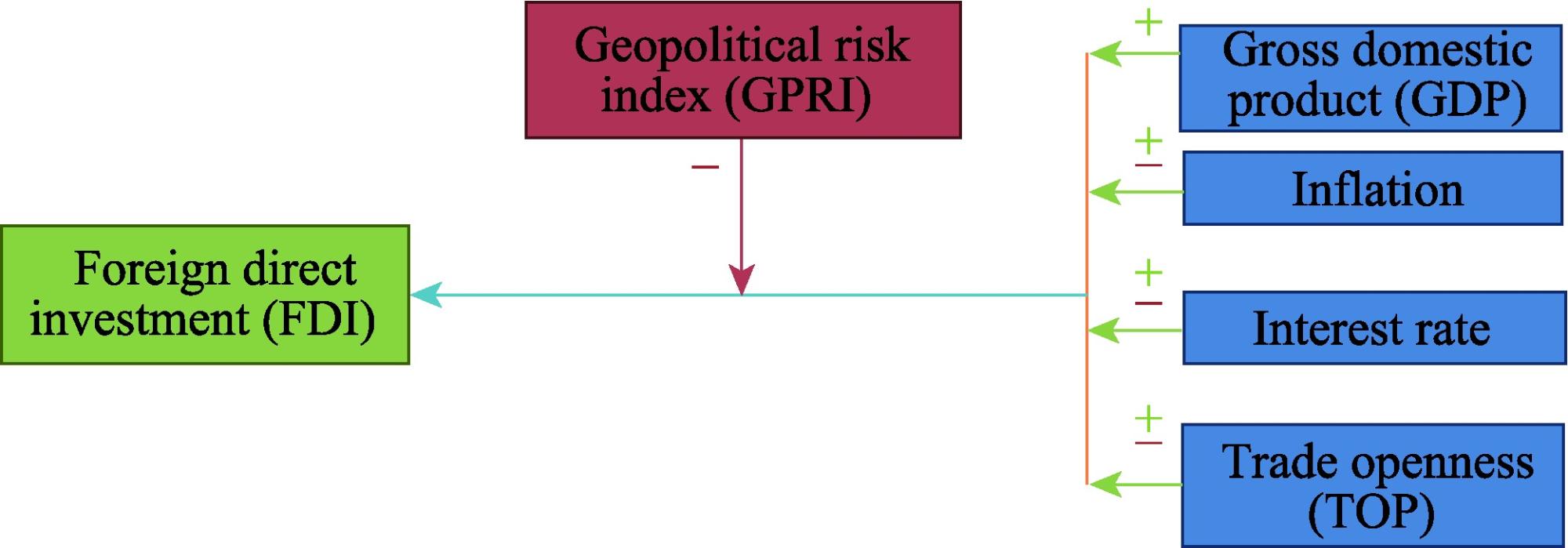
Figure 1 shows the proposed theoretical framework of this study and illustrates the dynamic interplay among GPRI, GDP, inflation, interest rate, and TOP, and how GPRI and economic variables (GDP, inflation, interest rate, and TOP) together shape FDI landscape, particularly in the context of five Southeast Asian countries.
Fig. 1. Theoretical framework of this study. The arrow represents the hypothesized direction of the impact of independent variable on dependent variable. - means a negative effect and + means a positive effect.
To identify the primary driving factors of FDI in the selected five Southeast Asian countries from 1996 to 2019, an empirical analytical model was developed. The theoretical model (Meeusen and van Den Broeck, 1977) can describe the relationship of FDI with GPRI, GDP, inflation, interest rate, and TOP. This relationship is represented as follows:
$\text{FDI}=f(\text{GDP},\text{INF},\text{IR},\text{TOP},\text{GPRI})$,
where FDI is the foreign direct investment (USD); GDP is the gross domestic product (USD); INF is the inflation (%); IR is the interest rate (%); TOP is the trade openness; and GPRI is the geopolitical risk index.
In this study, FDI is the dependent variable, whereas GPRI, GDP, inflation, interest rate, and TOP are independent variables. The logarithmic form of Equation 1 is expressed as follows:
$\ln \text{FD}{{\text{I}}_{it}}=\alpha +{{\beta }_{1}}\ln \text{GD}{{\text{P}}_{it}}+{{\beta }_{2}}\ln \text{IN}{{\text{F}}_{it}}+{{\beta }_{3}}\ln \text{I}{{\text{R}}_{it}}+{{\beta }_{4}}\ln \text{TO}{{\text{P}}_{it}}+{{\beta }_{5}}\ln \text{GPR}{{\text{I}}_{it}}$,
where i means the country; t means time (a); α is the intercept; and β1, β2, β3, β4, and β5 indicate the coefficients of variables.
Here, logarithmic transformations are applied for both dependent and independent variables to achieve symmetric distributions, stabilize variance, and address scaling issues, thereby minimizing the influence of extreme values on estimated coefficients.

3.3. Econometric model

This study employed a panel-data to conduct a four-stage empirical analysis: (i) heterogeneity test, (ii) stationarity test, (iii) cointegration test, and (iv) regression analysis. Both static and dynamic regression models were used. A random effect model was applied to assess the static relationship of the selected variables, while the system GMM initially proposed by Arellano and Bond (1991) and further developed by Arellano and Bover (1995) and Blundell and Bond (1998) was employed to examine the dynamic relationships. The Arellano-Bond dynamic panel-data estimation is particularly suitable for the data with numerous panels and limited periods.

3.3.1. Heterogeneity test

Slope heterogeneity is essential in the panel-data analysis because the influence of independent variables (GPRI, GDP, inflation, interest rate, and TOP) on dependent variable (FDI) is different in each country. Ignoring this issue will result in estimates that are biased and inconsistent. To account for this, the Pesaran heterogeneity test (Pesaran and Yamagata, 2008) was used to examine the presence of slope heterogeneity across countries.

3.3.2. Unit root test

The ADF unit root test, a widely used first-generation unit root test, was employed to assess the stationarity of the data. Because the data were found to be stationary, the second-generation unit root test was not considered necessary for this study.

3.3.3. Cointegration test

The stability of the long-term relationship between the stochastic data series was assessed using a combination of the Kao (1999), Pedroni (2004), and Westerlund (2005) cointegration tests. The residual-based test proposed by Kao (1999) specifies individual cross-sectional intercepts with homogeneous weights in the first stage of the regression value. The approach proposed by Pedroni (2004) also combines test statistics from multiple cross-sections to provide an overall panel test statistic, ensuring a robust evaluation of cointegration. The method suggested by Westerlund (2005) also accounts for slope variation, correlated errors, and the coefficient of determination.

3.3.4. Regression analysis method

In the present study, various regression analysis methods were employed to assess the relationship between variables. This study combined the random effect, Arellano-Bond dynamic panel-data estimation, and system GMM to identify the most suitable analytical method. The fixed effect, random effect, and system GMM were used to explore the dynamic and static relationships between FDI and independent variables. While this study considered alternative methods for comparison, it emphasized the system GMM because it provides objective and practical results. This method was selected to address biases and endogeneity issues, offering a better understanding of non-normally distributed outcomes and their nonlinear relationships with regression models.

4. Results and discussion

Slope heterogeneity test is indispensable for the panel-data analysis. Table 2 indicates that there is no slope heterogeneity in the coefficients of all variables. Slope heterogeneity occurs when there are differences in the sizes of variables. However, the results of the Pesaran heterogeneity test showed that the slope of variables is consistent in size, confirming that variables are homogenous. Therefore, we do not reject the null hypothesis (slope coefficients are homogenous).
Table 2 Pesaran heterogeneity test results.
Test statistic value P-value
Delta -0.817 0.414
Adjusted Delta -1.173 0.241
Table 3 presents the findings of the ADF unit root test, which assesses the stationarity of all variables. Initially, all variables exhibited non-stationary issues, with P-values at the insignificance level. However, after taking the first difference of each variable, the data became stationary, yielding P-values at the significance level. Thus, the unit root test concluded that variables are stationary at the first difference. All variables followed the same order and no mixed-order problem was present.
Table 3 Augmented Dickey-Fuller (ADF) unit root test results of variables.
Variable Statistic method P-value
At the level At the first difference
lnFDI Inverse chi-squared 6.7705 27.0383***
Inverse normal 0.6366 -2.9633***
Inverse logit 0.6337 -3.0813***
Modified inverse chi2 -0.7221 3.8099***
lnGDP Inverse chi-squared 19.3300 15.2167**
Inverse normal 0.4458 -1.5009*
Inverse logit 0.1045 -1.4431*
Modified inverse chi2 2.0862 1.1665**
lnINF Inverse chi-squared 1.9961 16.2151*
Inverse normal 1.7555 -2.4326***
Inverse logit 1.6656 -2.5275**
Modified inverse chi2 -1.7897 1.3897*
lnIR Inverse chi-squared 51.7097 38.4702***
Inverse normal -2.2478 -4.0519***
Inverse logit -5.3770 -4.6261***
Modified inverse chi2 9.3266 6.3661***
lnTOP Inverse chi-squared 19.4291 18.3896**
Inverse normal -1.3891 -1.9994**
Inverse logit -1.6804 -1.9755**
Modified inverse chi2 2.1084 1.8760**
lnGPRI Inverse chi-squared 19.1246 15.7659*
Inverse normal -2.0146 -1.7415**
Inverse logit -1.9860 -1.6286**
Modified inverse chi2 2.0403 1.2893*

Note: ***, **, and * denote the significance at the 1%, 5%, and 10% levels, respectively.

In this study, the cointegration tests of Kao (1999), Pedroni (2004), and Westerlund (2005) were performed. This is because that assessing the cointegration relationship among variables, relying on a single test, may not provide conclusive evidence (Raihan, 2007). From Table 4 we can see that all cointegration tests reject the null hypothesis (no cointegration).
Table 4 Cointegration test results.
Cointegration test Statistic value P-value
Kao cointegration test Modified Dickey-Fuller -1.4311 0.0762
Dickey-Fuller -2.7701 0.0028
ADF -0.8027 0.2111
Unadjusted modified Dickey-Fuller -7.7260 0.0000
Unadjusted Dickey-Fuller -5.3771 0.0000
Pedroni cointegration test Modified Phillips-Perron 0.5995 0.2744
Phillips-Perron -3.2228 0.0006
ADF -3.5676 0.0002
Westerlund cointegration test Variance ratio -0.9778 0.0164
Table 5 presents the econometric estimation results, showing a positive relationship between GDP and FDI across all estimators, with larger GDP leading to higher FDI. The random effect also revealed that GPRI, inflation, interest rate, and TOP negatively impact FDI, implying that an increase in these variables leads to a decrease in FDI. However, the fixed effect indicated that interest rate is positively associated with FDI, and inflation exhibits an exceptional positive relationship with FDI, contrary to the usual negative correlation. This indicated that a rise in inflation of 1.000% could result in an increase in FDI of 0.058%, possibly due to the theory that rising prices stimulate the economy and ensure sufficient returns for investors (Agudze and Ibhagui, 2021). Additionally, GPRI and TOP were found to negatively affect FDI, with a 1.000% increase in GPRI and TOP reducing FDI by 0.659% and 0.177%, respectively. The negative impact of TOP on FDI was unexpected, potentially explained by the fact that reducing trade barriers can disrupt international trade markets.
Table 5 Regression analysis results of the selected variables.
Variable Pooled ordinary least
squares (OLS) regression
Fixed effect Random effect Arellano-Bond dynamic panel-data estimation System generalized moment method (GMM)
lnFDI - - - -0.0980 -0.0690
lnGDP 0.2960** 1.9360*** 0.2960** 0.9640** 0.4110**
lnINF -0.0430 0.0580*** -0.0430 0.0090** 0.0220**
lnIR -0.0340 1.2720*** -0.0340 0.2980** -0.0640
lnTOP -0.3040** -0.6590*** -0.3040** -0.4620** -0.2030*
lnGPRI -0.3210** -0.1770** -0.3200** -0.2000*** -0.2690***
Constant 14.6510*** -29.3110*** 14.6510*** -0.5660 13.0620***
R2 0.2790 0.1347 0.2790 - -
F-statistic 4.8110 11.0500 - - -
Probability
(F-statistic)
0.0010 0.0000 - - -
Wald chi2 - - 24.0300 16.7000 27.8000
Probability>chi2 - - 0.0000 0.0100 0.0000
Hausman test statistic (chi2)=22.2300; Probability (Probability>chi2)=0.0002

Note: ***, **, and * denote the significance at the 1%, 5%, and 10% levels, respectively. - means no value.

Next, this study used the Arellano-Bond dynamic panel-data estimation to analyze the dynamic relationships of FDI with GPRI, GDP, inflation, interest rate, and TOP. The Arellano-Bond dynamic panel-data estimation revealed significant P-values for GPRI, GDP, and TOP, indicating that GDP is positively associated with FDI, whereas GPRI and TOP are inversely related with FDI. All estimation methods consistently showed an inverse relationship between GPRI and FDI. Specifically, in these countries, a 1.000% increase in GPRI leaded to a 0.200% decline in FDI according to the Arellano-Bond dynamic panel-data estimation. Similarly, the system GMM confirmed that a 1.000% increase in GPR resulted a decrease in FDI by 0.269% at the 1% significance level. Theoretically, the political atmosphere in a host country can influence the certainty of investment returns, discouraging investors from committing capital. These risks lead to heightened uncertainty and perceived instability, prompting investors to be cautious about potential political uncertainty, regulatory changes, and security concerns. Consequently, the increased likelihood of adverse economic and financial conditions discourages long-term foreign investments, thereby reducing FDI in affected countries. These empirical findings are supported by Dedeoğlu et al. (2019), Rafat et al. (2019), Afşar et al. (2021), Soltani et al. (2021), Nguyen (2022), and Thakkar et al. (2022).
Both the Arellano-Bond dynamic panel-data estimation and the system GMM showed a positive correlation between GDP and FDI, indicating that FDI will increase (Table 5) as a country’s GDP grows. For example, the Arellano-Bond dynamic panel-data estimation revealed that a 1.000% rise in GDP leads to a 0.964% increase in FDI at the 5% significance level, whereas the system GMM showed that a 1.000% rise in GDP leads to a 0.411% increase in FDI at the 5% significance level. Expanding economies enhance foreign investors’ expected returns, which can outweigh the perceived risks associated with geopolitical instability. Consequently, more developed countries will attract more foreign capital, contributing to further economic growth. A large economy indicates that a country has more substantial resources and better access to modern technology, which enhances foreign investors’ expected returns. Consequently, rapid economic development tends to attract more significant foreign investments. This observation is consistent with the findings of Hasan and Nishi (2019), Zandile and Phiri (2019), and Raihan et al. (2023). An increase in GDP positively affects FDI due to several factors: market growth, increased consumer demand, more foreign investors for seeking profitable opportunities, and a stable economic environment, which reduces perceived investment risks. Additionally, higher GDP is often correlated with better infrastructure, a more skilled workforce, and stronger business prospects, making the country more appealing to foreign investors who seek long-term growth.
Moreover, inflation exhibited an unconventional positive dynamic correlation with FDI, implying that an increase in inflation tends to raise FDI (Table 5). For example, the Arellano-Bond dynamic panel-data estimation indicated that a 1.000% rise in inflation leads to a 0.009% increase in FDI at the 5% significance level, a result supported by the system GMM. Conceptually, rising price levels can stimulate the economy, ensuring that investors receive adequate returns on their investments, which boosts FDI. However, these findings contradict previous studies by Dondashe and Phiri et al. (2018), Hasan and Nishi (2019), and Voumik et al. (2023), which reported a negative relationship between inflation and FDI.
Interest rate and FDI exhibited a positive relationship, indicating that an increase in interest rate leads to an increase in FDI. Higher interest rate offers investors better returns, making investments more attractive. For instance, the Arellano-Bond dynamic panel-data estimation showed that a 1.000% increase in interest rate leads to a 0.298% increase in FDI at the 5% significance level. Investors are more likely to increase their investments because of higher returns (Phiri et al., 2018).
However, results for all estimation methods revealed an unexpected relationship between TOP and FDI (Table 5). Both the Arellano-Bond dynamic panel-data estimation and the system GMM showed that TOP is negatively related to FDI. Specifically, the Arellano-Bond dynamic panel-data estimation demonstrated that a 1.000% increase in TOP reduces FDI by 0.462% at the 5% significance level, whereas the system GMM also showed that a 1.000% increase in TOP reduces FDI by 0.203% at the 10% significance level. This indicates that stricter trade barriers may paradoxically reduce FDI to certain countries, potentially because of country-specific constraints on export and import facilities. In this study, a negative correlation between TOP and FDI was observed, indicating that restrictive trade regulations in the selected five countries deter foreign investment (Zandile and Phiri, 2019; Nica et al., 2023). This finding indicates that TOP can lead to a decrease in FDI due to the substitution effect (Adow and Tahmad, 2018; Deb et al., 2023). When a country is highly open to trade, foreign firms may prefer exporting to the market rather than setting up local operations, thus reducing FDI demand. Moreover, the heightened competition resulting from TOP can diminish foreign profitability prospects, further discouraging FDI.

5. Conclusions

This study analyzed the relationship of FDI with GPRI, GDP, TOP, inflation, and interest rate in the selected five Southeast Asian countries (Indonesia, South Korea, Malaysia, the Philippines, and Thailand) from 1996 to 2019. Various econometric estimation methods were employed, including the Pooled OLS regression, fixed effect, random effect, Arellano-Bond dynamic panel-data estimation, and system GMM. This research highlighted the critical role of FDI in promoting economic development by considering multiple factors before investing. These empirical findings underscored that GPRI significantly and negatively affects FDI in these countries.
It was found that GPRI plays a critical role in influencing FDI, as heightened uncertainties and perceived instability diminish foreign investors’ confidence, leading to reduced FDI. GDP emerged as a major driving factor of FDI, with a robust and expanding economy signaling attractive investment opportunities and market potential, thus making these countries more appealing to foreign investors for seeking long-term growth prospects. However, TOP showed a negative relationship with FDI, likely due to the substitution effect, where foreign firms may prefer exporting to the country rather than establishing local operations, thereby decreasing the reliance on FDI. Mixed evidence regarding the impact of inflation on FDI indicated that other mediating factors may influence this relationship. It is essential to attract foreign investment, stimulate international trade, foster economic growth and political stability, and provide a conducive financial atmosphere. Given these findings, policymakers in the selected five Southeast Asian countries should carefully consider strategies for mitigating GPRI, such as preserving social harmony and global stability, fostering positive national communication, and enhancing financial and political collaboration.

6. Policy implications, limitations, and future studies

To boost FDI, policymakers should prioritize strategies that mitigate uncertainties and strengthen the investment environment. Proactive diplomatic efforts should be made to resolve GPR and foster regional stability. It is essential to establish robust legal and regulatory frameworks, which can safeguard foreign investors’ rights and create a transparent business environment. Governments can attract foreign investors through targeted incentives, such as tax breaks, investment grants, and streamlined administrative processes. Additionally, investing in infrastructure and human capital can enhance a country’s appeal for long-term investments. Collaboration with international organizations can build investors’ confidence. Promoting economic diversification and export-oriented policies can also help mitigate GPR and increase FDI, thereby gaining access to new market opportunities. To mitigate GPR related uncertainties and attract FDI, emerging countries should prioritize diplomatic efforts to resolve conflicts and enhance international cooperation. Establishing transparent and stable governance structures and effective risk assessment mechanisms can boost investors’ confidence. It is essential to build trust and reduce perceived risks by upholding the rule of law, promoting good governance, and ensuring the protection of property rights. Economic diversification and the creation of robust legal frameworks will further minimize GPR and create a favorable environment for increasing FDI.
Countries should not only strengthen regulations and legislation but also encourage bilateral investment agreements and international credit monitoring systems. Addressing GPR requires promoting regional stability and ensuring transparent governance, which is critical for accelerating GDP growth and boosting FDI.
Policymakers should prioritize sustaining and enhancing a country’s economic performance by the following ways: implementing prudent fiscal and monetary policies to maintain macroeconomic stability and a favorable investment environment. Investment in critical infrastructures such as transportation, communication, and energy will increase a country’s appeal to foreign investors. Additionally, promoting research, development, innovation, and technology adoption will improve productivity and competitiveness, attracting FDI focused on advanced resources. Developing a skilled and adaptable workforce through education and training will further contribute to GDP growth. Streamlining business regulations will also facilitate easier entry for investors, while targeted international marketing campaigns and investment summits can help a highlight country’s economic potential and attract foreign investors.
Policymakers should adopt a balanced approach by ensuring that trade agreements and policies benefit domestic industries and foreign investors. Targeted marketing campaigns and investment promotion efforts can show a country’s strengths and advantages in TOP environment. Improving the business environment by focusing on ease of doing business, investor protection, and legal certainty will further attract FDI. Investments in infrastructure and specialized economic zones create cost-effective production and distribution opportunities for foreign investors. Sector-specific incentives and tailored support for industries aligned with national development goals can also attract FDI. Ongoing monitoring of the effects of TOP on FDI will allow policymakers to adjust strategies based on evolving market conditions.
The study scope of this research is limited, which may restrict the generalizability of the findings to other countries or regions. Moreover, the time scope of data was limited due to the data availability. Additionally, reliance on aggregate country-level data may obscure heterogeneity within different sectors or industries within each country. The use of panel-data poses another limitation because it may not fully capture the dynamics and causality of the relationships between variables over time. Moreover, potential endogeneity issues, in which relationships between variables may be bidirectional, are not fully addressed. Finally, this study includes a limited set of variables, which may reduce the precision of the estimates.
Future research should expand the study scope to include a larger number of countries to enhance the robustness and generalizability of conclusions. The longer panel-data analysis can be used to analyzed and reveal dynamic relationships of the selected variables. Moreover, incorporating sector-level or industry-level data can provide more nuanced insights into how different sectors or industries respond to the selected variables. Then, including more variables can improve the analysis accuracy. Advanced econometric techniques, such as instrumental variable approaches and causality tests, can be used to address potential endogeneity concerns. Complementing quantitative methods with case studies or qualitative analyses could offer a deeper understanding of the mechanisms influencing FDI in the context of GPR, GDP, inflation, interest rate, and TOP in the selected five Southeast Asian countries. Future studies should also explore each country’s internal and external GPR to assess their individual and combined impacts on FDI.

Authorship contribution statement

Md. Shaddam HOSSAIN: conceptualization, methodology, data curation, formal analysis, writing - original draft, writing - review & editing, and supervision; Liton Chandra VOUMIK: writing - original draft, and writing - review & editing; Tahsin Tabassum AHMED: visualization, investigation, data curation, writing - original draft, and writing - review & editing; Mehnaz Binta ALAM: data curation and writing - original draft; and Zabin TASMIM: data curation and writing - original draft. All authors approved the manuscript.

Declaration of conflict interest

The authors declare that they have no known competing financial interests or personal relationships that could have appeared to influence the work reported in this paper.
[1]
Afşar, M., Doğan, E., Özarslan Dogan, B., 2021. Does higher geopolitical risk limits Turkish foreign direct investments? J. Mehmet Akif Ersoy Univ. Econ. Adm. Sci. Fac. 8(3), 1456-1475.

[2]
Agudze, K., Ibhagui, O., 2021. Inflation and FDI in industrialized and developing economies. Int. Rev. Appl. Econ. 35(5), 749-764.

[3]
Aizenman, J., Spiegel, M.M., 2006. Institutional efficiency, monitoring costs and the investment share of FDI. Rev. Int. Econ. 14(4), 683-697.

[4]
Arellano, C., Bai, Y., Kehoe, P.J., 2019. Financial frictions and fluctuations in volatility. J. Polit. Econ. 127(5), 2049-2103.

DOI

[5]
Arellano, M., Bond, S., 1991. Some tests of specification for panel data: Monte Carlo evidence and an application to employment equations. The Review of Economic Studies. 58(2), 277-297.

[6]
Arellano, M., Bover, O., 1995. Another look at the instrumental variable estimation of error-components models. J. Econom. 68(1), 29-51.

[7]
Azzimonti, M., 2018. Partisan conflict and private investment. J. Monetary Econ. 93, 114-131.

[8]
Baker, S.R., Bloom, N., Davis, S.J., 2016. Measuring economic policy uncertainty. Q. J. Econ. 131(4), 1593-1636.

[9]
Balcilar, M., Bonato, M., Demirer, R., et al., 2018. Geopolitical risks and stock market dynamics of the BRICS. Econ. Syst. 42(2), 295-306.

[10]
Bernanke, B.S., 1983. Irreversibility, uncertainty, and cyclical investment. The Quarterly Journal of Economics. 98(1), 85-106.

[11]
Blomberg, S.B., Mody, A., 2005. How severely does violence deter international investment? Claremont: Department of Economics, Claremont McKenna College.

[12]
Bloom, N., 2009. The impact of uncertainty shocks. Econometrica. 77(3), 623-685.

[13]
Blundell, R., Bond, S., 1998. Initial conditions and moment restrictions in dynamic panel data models. J. Econom. 87(1), 115-143.

[14]
Bussy, A., Zheng, H.H., 2023. Responses of FDI to geopolitical risks: The role of governance, information, and technology. Int. Bus. Rev. 32(4), 102136, doi: 10.1016/j.ibusrev.2023.102136.

[15]
Caldara, D., Iacoviello, M., 2018. Measuring geopolitical risk. In: International Finance Discussion Papers. Washington: Board of Governors of the Federal Reserve System, 1-47.

[16]
Caldara, D., Iacoviello, M., 2022. Measuring geopolitical risk. Am. Econ. Rev. 112(4), 1194-1225.

[17]
Carney, M., 2016. Uncertainty, the Economy and Policy. [2023-06-15]. https://www.bankofengland.co.uk/speech/2016/uncertainty-the-economy-and-policy.

[18]
Cheng, C.H.J., Chiu, C.W.J., 2018. How important are global geopolitical risks to emerging countries? International Economics. 156, 305-325.

[19]
Choi, S., Furceri, D., 2019. Uncertainty and cross-border banking flows. J. Int. Money Finan. 93, 260-274.

[20]
Christiano, L.J., Motto, R., Rostagno, M., 2014. Risk shocks. Am. Econ. Rev. 104(1), 27-65.

[21]
Click, R.W., Weiner, R.J., 2010. Resource nationalism meets the market: Political risk and the value of petroleum reserves. J. Int. Bus. Stud. 41(5), 783-803.

[22]
David, K.B., Taylor, H., Brendan, R.M., 2017. Understanding and Forecasting Geopolitical Risk and Benefits. Rochester: University of Denver, 110.

[23]
Deb, S.K., Das, M.K., Voumik, L.C., et al., 2023. The environmental effects of tourism: Analyzing the impact of tourism, global trade, consumption expenditure, electricity, and population on environment in leading global tourist destinations. Geo Journal of Tourism and Geosites. 51(4), 1703-1716.

[24]
Dedeoğlu, D., Öğüt, K., Pişkin, A., 2019. The Relationship betweengovernance quality, geopolitical risk and foreign direct investment: The case of developing countries. Finance Political and Economic Comments. 650, 51-69 (in Turkish).

[25]
Dixit, A.K., Pindyck, R.S., 1994. Investment under Uncertainty. Oxford: Princeton University Press, 1-40.

[26]
Dondashe, N., Phiri, A., 2018. Determinants of FDI in South Africa: Do Macroeconomic Variables Matter? [2023-06-15]. https://mpra.ub.uni-muenchen.de/83636/.

[27]
Doytch, N., Uctum, M., 2019. Spillovers from foreign direct investment in services: Evidence at sub-sectoral level for the Asia-Pacific. J. Asian. Econ. 60, 33-44.

[28]
Elkomy, S., Ingham, H., Read, R., 2015. Economic, Institutional & Political Determinants of FDI Growth Effects in Emerging & Developing Countries. [2023-06-15]. https://eprints.lancs.ac.uk/id/eprint/76316/.

[29]
Engle, R.F., Campos-Martins, S., 2020. Measuring and hedging geopolitical risk. New York: New York University (NYU) Stern School of Business.

[30]
Fania, N., Yan, C., Kuyon, J.B., et al., 2020. Geopolitical risks (GPRs) and foreign direct investments: A business risk approach. Global Journal of Management and Business Research. 20(1), 1-9.

[31]
Filippaios, F., Annan-Diab, F., Hermidas, A., et al., 2019. Political governance, civil liberties, and human capital: Evaluating their effect on foreign direct investment in emerging and developing economies. J. Int. Bus. Stud. 50(7), 1103-1129.

[32]
Ghosal, V., Ye, Y., 2019. The impact of uncertainty on the number of businesses. J. Econ. Bus. 105, 105840, doi: 10.1016/j.jeconbus.2019.04.001.

[33]
Hasan, M.K., Nishi, N.N., 2019. An analysis of the impact of GDP, trade openness, inflation rate and market size in attracting inward FDI in Bangladesh based on empirical analysis. International Journal of Science and Business. 3(3), 278-291.

[34]
Hoque, M.E., Zaidi, M.A.S., 2020. Global and country-specific geopolitical risk uncertainty and stock return of fragile emerging economies. Borsa Istanb. Rev. 20(3), 197-213.

[35]
Hossain, M.S., Sultana, H., 2022. Spillover effects of policy uncertainty on the foreign exchange rate: Evidence from selected developed and developing countries. Social Sciences & Humanities Open. 6(1), 100362, doi: 10.1016/j.ssaho.2022.100362.

[36]
Jeffrey, P.G., Spaulding, R.B., 2005. Understanding Foreign Direct Investment (FDI): Going Global, Citibank International Business Portal. [2023-06-15]. https://www.citigroup.com/global/businesses/banking-and-international.

[37]
Kao, C., 1999. Spurious regression and residual-based tests for cointegration in panel data. J. Econom. 90(1), 1-44.

[38]
Kurul, Z., Yalta, A.Y., 2017. Relationship between institutional factors and FDI flows in developing countries: New evidence from dynamic panel estimation. Economies. 5(2), 1-10.

[39]
Latif, Z., Yang, M.K., Danish, et al., 2018. The dynamics of ICT, foreign direct investment, globalization and economic growth: Panel estimation robust to heterogeneity and cross-sectional dependence. Telemat. Inform. 35(2), 318-328.

[40]
Liss, J., 2019. The political relationship between US multinational corporations and the NAFTA investment chapter: The case of manufacturing multinationals. Tran. Cor. Rev. 11(1), 7-23.

[41]
Luo, D.Y., 2021. Make Money Move: Understanding the Nexus Between Geopolitical Risk and Foreign Direct Investment. Vancouver: The University of British Columbia.

[42]
Malmgren, P., 2015. Geopolitics for Investors. [2023-06-10]. https://ssrn.com/abstract=2580184.

[43]
Meeusen, W., van Den Broeck, J., 1977. Efficiency estimation from Cobb-Douglas production functions with composed error. Int. Econ. Rev. 18(2), 435-444.

[44]
Morgan, J.P., 2019. Geopolitical Risks on the Rise. [2023-06-10]. https://www.jpmorgan.com/insights/research/geopolitical-risk-on-rise.

[45]
Moyo, D., 2019. Are Businesses Ready for Deglobalization? [2023-06-10]. https://hbr.org/2019/12/are-businesses-ready-for-deglobalization#:-:text=Concerned%20about%20trade%20protectionism%2C%20and%20revenue%20loss%20from,be%20ready%20to%20compete%20in%20a%20deglobalized%20future.

[46]
Nguyen, T.T.T., Pham, B.T., Sala, H., 2022. Being an emerging economy: To what extent do geopolitical risks hamper technology and FDI inflows? Econ. Anal. Policy. 74, 728-746.

[47]
Nica, E., Poliak, M., Alpopi, C., et al., 2023. Impact of trade, FDI, and urbanization on female employment system in SAARC: GMM and quantile regression approach. Systems-Basel. 11(3), 137, doi: 10.3390/systems11030137.

[48]
OECD (Organisation for Economic Co-operation and Development), 1996. OECD Benchmark Definition of Foreign Direct Investment. Paris: OECD.

[49]
Pedroni, P., 2004. Panel cointegration: Asymptotic and finite sample properties of pooled time series tests with an application to the PPP hypothesis. Economet. Theory. 20(3), 597-625.

[50]
Pesaran, M.H., Yamagata, T., 2008. Testing slope homogeneity in large panels. J. Econom. 142(1), 50-93.

[51]
Quazi, R., 2007. Economic freedom and foreign direct investment in East Asia. J. Asia. Pac. Econ. 12(3), 329-344.

[52]
Rafat, M., Farahani, M., 2019. The country risks and foreign direct investment (FDI). Iran. Econ. Rev. 23(1), 235-260.

[53]
Raihan, A., Voumik, L.C., Ridwan, M., et al., 2023. From growth to green: Navigating the complexities of economic development, energy sources, health spending, and carbon emissions in Malaysia. Energy Rep. 10, 4318-4331.

[54]
Raihan, S., 2007. Dynamics of Trade Liberalisation in Bangladesh: Analyses of Policies and Practices. Dhaka: Pathak Shamabesh.

[55]
Ruch, F.U., 2020. Prospects, Risks, and Vulnerabilities in Emerging and Developing Economies: Lessons from the Past Decade. [2023-06-10]. https://documents1.worldbank.org/curated/en/787881584027048587/pdf/Prospects-Risks-and-Vulnerabilities-in-Emerging-and-Developing-Economies-Lessons-from-the-Past-Decade.pdf.

[56]
Saint Akadiri, S., Eluwole, K.K., Akadiri, A.C, and Avci, T., 2020. Does causality between geopolitical risk, tourism and economic growth matter? Evidence from Turkey. J. Hosp. Tour. Man. 43, 273–277-273–277.

[57]
Smith, A., 2017. Foreign Direct Investment and International Trade. [2023-06-10]. https://www.oecd.org/en/publications/foreign-direct-investment-and-international-trade_788565713012.html.

[58]
Soltani, H., Triki, M.B., Ghandri, M., et al., 2021. Does geopolitical risk and financial development matter for economic growth in MENA countries? Journal of International Studies. 14(1), 103-116.

[59]
Tahmad, A.M.I., Adow, A.H., 2018. The impact of trade openness on foreign direct investment in Sudan by sector in the 1990-2017 period: An empirical analysis. Econ. Ann.-XXI. 172(7-8), 14-22.

[60]
Tajaddini, R., Gholipour, H.F., 2021. Economic uncertainty and business formation: A cross-country analysis. J. Bus. Ven. Ins. 16, e00274, doi: 10.1016/j.jbvi.2021.e00274.

[61]
Thakkar, N., Ayub, K.A., 2022. Geopolitical risk and globalization. Journal of Applied Business and Economics. 24(3), doi: 10.33423/jabe.v24i3.5194.

[62]
Voumik, L.C., Rahman, M.H., Rahman, M.M., et al., 2023. Toward a sustainable future: Examining the interconnectedness among Foreign Direct Investment (FDI), urbanization, trade openness, economic growth, and energy usage in Australia. Reg. Sustain. 4(4), 405-415.

[63]
Westerlund, J., 2005. New simple tests for panel cointegration. Econom. Rev. 24(3), 297-316.

[64]
Witt, M.A., 2019. De-globalization: Theories, predictions, and opportunities for international business research. J. Int. Bus. Stud. 50(7), 1053-1077.

[65]
World, Bank, 2019. World Development Indicators. [2023-06-10]. https://databank.worldbank.org/source/world-development-indicators.

[66]
World Economic Forum, 2017. The Global Risks Report 2017. [2023-06-10]. http://wef.ch/risks2017.

[67]
Zandile, Z., Phiri, A., 2019. FDI as a contributing factor to economic growth in Burkina Faso: How true is this? Glob. Econ. J. 19(1), 1950004, doi: 10.1142/S2194565919500040.

Outlines

/