
Review Article

Encouraging circular economy and sustainable environmental practices by addressing waste management and biomass energy production

  • Nazim Forid ISLAM a ,
  • Bhoirob GOGOI a, b ,
  • Rimon SAIKIA a ,
  • Balal YOUSAF c ,
  • Mahesh NARAYAN d ,
  • Hemen SARMA , b, *
Expand
  • aInstitutional Biotech Hub, Department of Botany, Nanda Nath Saikia College, Titabar, 785630, India
  • bBioremediation Technology Research Group, Department of Botany, Bodoland University, Assam, 783370, India
  • cDepartment of Technologies and Installations for Waste Management, Faculty of Energy and Environmental Engineering, Silesian University of Technology, Gliwice, 44-100, Poland
  • dDepartment of Chemistry and Biochemistry, University of Texas at El Paso, El Paso, TX 79968, the United States
*E-mail address: (Hemen SARMA).

Received date: 2024-01-25

  Revised date: 2024-07-14

  Accepted date: 2024-11-22

  Online published: 2025-08-13

Abstract

The current linear economy assumes abundant, easily accessible, and cost-effective natural resources. However, this assumption is unsustainable, especially considering the world’s current trajectory exceeding the Earth’s ecological limits. In contrast, circular economy (CE) reduces wastes and improves resource efficiency, making them a more sustainable alternative to the dominant linear model. Biomass energy generated from agricultural leftovers, forestry wastes, and municipal trash provides a renewable substitute for fossil fuels. This reduces greenhouse gas emissions and improves energy security. Proper waste management, including trash reduction, recycling, and innovative waste-to-energy technology, reduces the burden on landfills and incineration and creates renewable energy from materials that would otherwise go to waste. Although integrating these techniques is consistent with the CE’s resource efficiency and waste minimization principles, it requires addressing environmental, technical, and socioeconomic challenges. Given the pressing global issues, transitioning to a CE and implementing sustainable environmental practices are crucial to mitigate the current waste management crisis. The aim of this study is to emphasize the viability of biomass as a source of sustainable energy, the necessity of comprehensive strategies that prioritize ecological sustainability, community involvement, and innovation to achieve a circular principle based future, and the potential obstacles to the implementation of sustainable environmental practices. This study will aid in implementing CE practices to accomplish the Sustainable Development Goals (SDGs) by reducing greenhouse gas emissions and landfill loads. Beyond environmental benefits, it can also bring economic, social, and health improvements. Furthermore, this study will assist societies in addressing global issues, such as resource scarcity, pollution, and climate change, as well as transitioning to a more sustainable and resilient future.

Cite this article

Nazim Forid ISLAM , Bhoirob GOGOI , Rimon SAIKIA , Balal YOUSAF , Mahesh NARAYAN , Hemen SARMA . Encouraging circular economy and sustainable environmental practices by addressing waste management and biomass energy production[J]. Regional Sustainability, 2024 , 5(4) : 100174 . DOI: 10.1016/j.regsus.2024.100174

1. Introduction

The alarming increase in the volume of waste generated in recent decades worldwide due to rapid technological advances and changing lifestyles has pushed society to an unprecedented crisis and disrupted the delicate balance of ecosystems (Gogoi and Sarma, 2023). In the Waste Management Act, waste is defined as any substance or object which the holder discards or intends or is required to discard. In essence, waste refers to solid, liquid, or gaseous substances that have been wasted and abandoned, or are no longer functioning, or are thought to have no additional economic, practical, or environmental value (Ayilara et al., 2020). Industrial and household processes, as well as other anthropogenic activities, generate a vast type of waste, which is categorized as construction and demolition (C&D) waste, municipal solid waste (MSW), municipal liquid waste, hazardous waste, electronic waste (e-waste), biological waste, radioactive waste, agricultural waste, plastic waste, and mining waste (Sarma et al., 2024). The inadequate dispersal of wastes triggers an exponential surge in waste generation. A report from the World Bank highlighted the impending global waste crisis, painting a disturbing picture of the future, and projected a worrisome scenario where waste production may reach 3.40×109 t by 2050 (World Bank Group, 2018). To put this into perspective, waste production would be more than twice the population growth rate during the same timeframe (Bhat et al., 2024). Mismanaged waste puts excessive economic pressure on society by taxing public resources (Diggle and Walker, 2022). This financial burden results from improper disposal techniques, waste cleaning expenditures, and healthcare bills. Not only does this financial load slow economic progress, but it also takes away resources that could be used more wisely in other places (Nguyen et al., 2020; Shershneva, 2022). Furthermore, rising global waste production requires even more landfill area, which competes with the community’s desire for more sustainable and inhabitable sites (de Melo et al., 2022). As a result, it lowers the land value even more. This unrestrained waste expansion jeopardizes the planet’s ecosystems by polluting water bodies, strains resources, and seriously threatens public health (Bashir et al., 2020). Due to the severe problems that waste presents worldwide, there is now greater urgency than ever to move towards a circular economy (CE) and implement sustainable environmental practices. The CE proposes a paradigm change from the old linear model of “take-make-consume-dispose” to an innovative and restorative approach in which waste is minimized and resources are retained in continuous use (Kirchherr et al., 2023). The generation of energy from biomass and efficient waste management, two interrelated elements that hold the key to not only reducing environmental degradation but also promoting economic growth and societal well-being, are at the center of this transformation (Zhou and Wang, 2020). The CE’s core resides in its capacity to mirror the Earth’s natural processes, where there is no waste but a constant cycle of production and renewal (Reike et al., 2018). Similarly, biomass is a critical resource in this endeavor. This sustainable energy is obtained from organic materials like wood, agricultural waste, and garbage. Utilizing biomass through various methods, such as combustion, gasification, or fermentation, assists in reducing greenhouse gas emissions and decreasing reliance on fossil fuels, making it a crucial resource (Saleem, 2022). The accomplishment of CE depends not only on biomass energy but also on an effective and creative waste management system. The key to transforming this growing challenge into an opportunity for transformation is effective waste management, which includes recycling, composting, and ethical disposal (Ayilara et al., 2020). It reduces pollution and increases the economic value of waste materials. Therefore, CE and sustainable environmental practices are comprehensive approaches encompassing economic growth, social well-being, and ecological preservation, and it is essential to understand their multifaceted nature (Ferraz and Pyka, 2023).
While various publications have been undertaken, most have focused on specific aspects (Hossain et al., 2024; Oyejobi et al., 2024). Still, they seek to uncover the diverse facets of this transformation, addressing the challenges, opportunities, and implications. As the foundation of CE, an exhaustive understanding of the intricate web of waste management and biomass energy production is urgently required. Furthermore, this study also emphasizes how CE can bolster economies, safeguard ecosystems, and drive innovation. This review explores the core of sustainability, where we address the philosophical and ethical elements of the relationship between the human and environment as well as the practical and technological ones. This review also highlights recent innovations and future advancements in CE field, particularly in waste management and biomass energy production, offering valuable insights into sustainable environmental practices.

2. Circular economy (CE) and sustainability

CE is an economic model aiming to create value at every operational level by systematically reusing products and their constituent components, recycling materials, and conserving natural resources. Positioned as an innovative form of sustainability, CE addresses the challenges posed by resource abundance, material scarcity, and the evolution of the reuse and recycling framework (de Melo et al., 2022). Governmental agencies, educational institutions, corporations, and the general public increasingly adopt this concept as essential to sustainable development (Sgroi, 2022). CE has received a lot of appreciation for its ability to promote long-term, ecologically responsible growth. According to the Ellen MacArthur Foundation (2015), CE is inherently restorative by design and aspires to maintain products, components, and materials at their maximum efficacy, emphasizing distinguishing between biological and technical cycles. Geissdoerfer et al. (2017) defined CE as a regenerative system. In this framework, the intentional monitoring, closure, and narrowing of material and energy loops work to minimize resource input, waste, emissions, and energy leakage (Muller et al., 2022).
The primary goal of CE is to minimize adverse environmental impacts while simultaneously optimizing organizational performance and productivity. Despite the development of several frameworks and metrics by governmental bodies, corporations, and researchers aimed at a thoughtful understanding of CE (Corona et al., 2019), the concept of CE has evolved. Many governments have led by establishing objectives and nationally targeted key performance indicators related to sustainable development and CE. These indicators are a strategic tool for policy-makers and decision-makers in pursuing sustainability goals (Lamba et al., 2023). The prevailing literature on CE prominently highlights the 3R principles: reduce, reuse, and recycle (Reike et al., 2018). Reduce is the process of reducing inputs and outputs, which includes waste and raw resources. Meanwhile, reuse involves utilizing a product for the same purpose even after reaching its shelf life. Finally, recycle refers to reusing discarded resources to create new products (Merewether et al., 2023).
To enhance corporate accountability and facilitate a smoother transition to CE, the initial 3R principles have evolved into a more comprehensive 9R framework, including refuse (R0), rethink (R1), reduce (R2), reuse (R3), repair (R4), refurbish (R5), remanufacture (R6), repurpose (R7), recycle (R8), and recover (R9). The interrelation of economy and environment is elucidated through the 9R framework governing CE. Evaluation of CE process is conducted employing the 9R framework, with a system perspective, guiding the identification of CE domains (Rahla et al., 2021). Three pivotal strategies are embedded in the R-list to stimulate product innovation and circularity. The first strategy encompasses three actions—R0, R1, and R2—emphasizing the imperative for inventive product manufacturing (Ang et al., 2021). The second strategy comprises five actions—R3, R4, R5, R6, and R7—facilitating the extension of product lifespan (Ang et al., 2021). The final strategy, considered less preferable, involves two actions—R8 and R9 (Rahla et al., 2021). The 9R framework positions R0 at the top of circularity progression, whereas R9 is situated at the outset of linear output, providing an understanding of the transition from linear economy to CE (de Melo et al., 2022).

2.1. Transitioning from linear economy to CE

CE fundamentally contrasts with linear economy, characterized by the “take-make-consume-dispose” framework, which is marked by elevated natural resource utilization and limited resource recuperation—a prevailing paradigm as highlighted by Guerra and Leite (2021) and Osei-Tutu et al. (2022). Linear economic model, currently dominant, is identified by the United Nations Environment Programme (UNEP) in 2016 and the World Economic Forum (WEF) in 2020 as a driver of unsustainable development, posing risks to businesses through susceptibility to price fluctuations and disruptions in the supply of raw materials (Mendes et al., 2023).
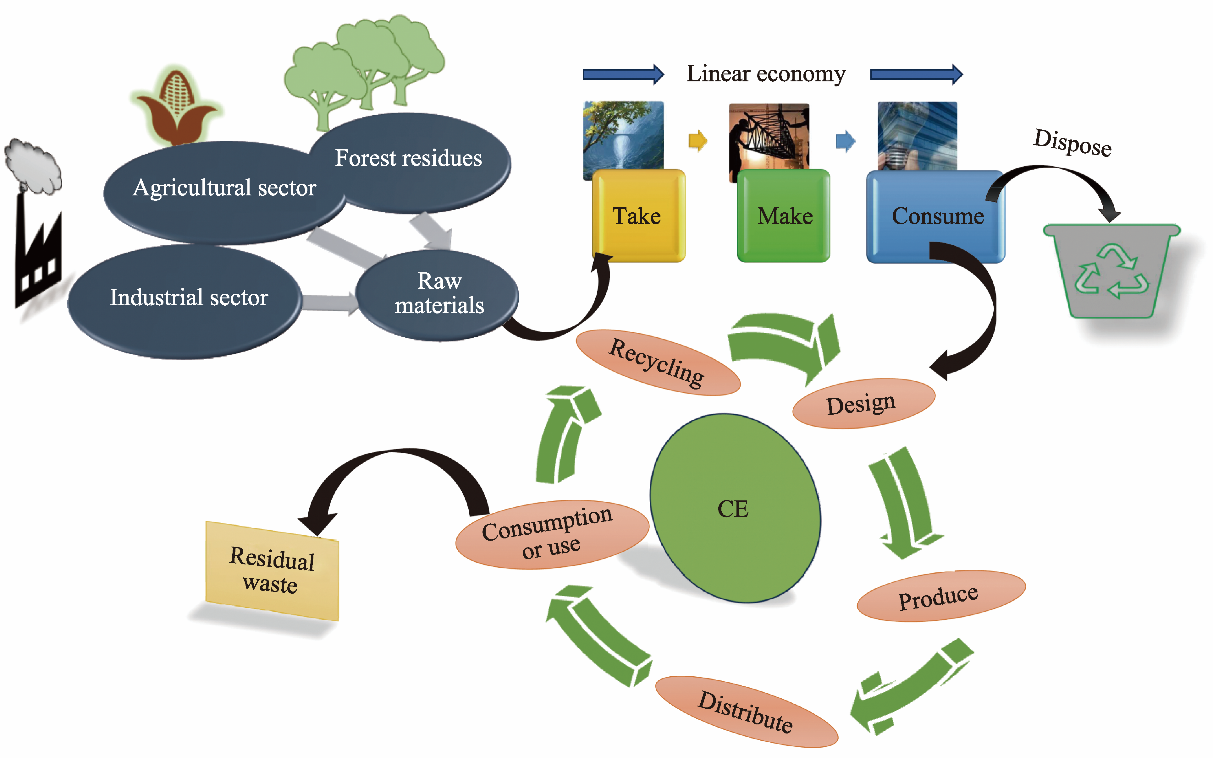
The prevailing linear economy, grounded in the assumption of abundant, easily accessible, and cost-effective natural resources, is inherently unsustainable, particularly given the contemporary global route that exceeds the Earth’s ecological limits (Steffen et al., 2015). Conversely, CE emphasizes reducing waste and increasing resource efficiency, positioning itself as a more sustainable substitute for the dominant linear model. The imperative lies in the transformation from a linear economy to a CE, guided by the principles of the “reduce-reuse-recovery-recycle- redesign-remake” model, which represents a regenerative and restorative ethos (Geissdoerfer et al., 2017; Sharma et al., 2021) (Fig. 1). The capability of CE to lower environmental pollution by conserving resources and minimizing waste is conclusive evidence of its effectiveness. By recycling existing resources, CE mitigates the demand for new raw materials, underscoring the importance of re-evaluating product functionality within a closed-loop system (Govindan and Hasanagic, 2018). The closed-loop system draws inspiration from the circular flow of blood in the body, encapsulating the essence of circularity (Lamba et al., 2023). However, achieving closed resource loops becomes challenging with the persistent surge in material consumption, hampering efforts to maximize recycling rates (Krausmann et al., 2017). This trend contributes to adverse environmental consequences, including heightened CO2 emissions (IEA, 2019), contamination of air, water, and soil, and amplified production of C&D waste (Guerra and Leite, 2021). As a result, framing the economy as a closed system devoid of material exchange with the external environment has profound implications for ensuring the sustainability of human existence on our planet (Lamba et al., 2023).
Fig. 1. Transition from linear economy to circular economy (CE).
The crucial driver for transitioning from a linear economy to a CE lies in adopting and implementing a circular business model. This model is characterized by its capacity to diminish resource inputs, minimize waste generation, and restrict emission releases within the organizational framework through the strategic implementation of loop closure, narrowing, delay, intensification, and dematerialization. These encompass initiatives aimed at enhancing recycling practices (closure), optimizing operational efficiency (narrowing), prolonging the utilization phase of products (delay), increasing the utilization phase (intensification), and substituting perceptible products with service-oriented and software-based alternatives (dematerialization). The primary aim of this business model is to reduce reliance on newly extracted resources, with a particular emphasis on its significance for enterprises dependent on finite resources or commodities. Circular business model replaces materials sourced from pristine resources with those derived from bio-based, renewable, or reclaimed sources. Circular business model influences the economic viability of production systems, prioritizing CE and capitalizing on utilizing waste generated by one enterprise as input for others. Proficiency in CE practices holds the potential to help businesses attain sustainable development objectives (Corona et al., 2019).

2.2. CE’s role in sustainable development

In 2015, the United Nations endorsed 17 Sustainable Development Goals (SDGs), aligning with the UNEP’s mission to protect the environment and promote global peace and prosperity by 2030 (Zhao et al., 2022). SDGs and their accompanying 169 objectives have subsequently been vigorously pursued by numerous entities, resulting in substantial study. Recognizing the significant environmental and societal impacts of goals and development strategies, there is a need for adaptability in these approaches. A study conducted by Schroeder et al. (2018) comparing CE practices to SDGs and their targets establishes a notable positive correlation between CE practices and SDGs. They concluded that the targets of SDG 6 (clean water and sanitation), SDG 7 (affordable and clean energy), SDG 8 (decent work and economic growth), SDG 12 (responsible consumption and production), and SDG 15 (life on land) have the most robust connections with CE practices (Schroeder et al., 2018). CE strategies, such as implementing the 3R principles in waste management, are critical to reaching SDGs. Specifically, strategies prohibiting municipal waste incineration and open burning are essential to meet SDGs. According to a study conducted by Schroeder et al. (2018), adopting CE practices, such as repair, recycling, industrial symbiosis, and remanufacturing, can directly contribute to achieving two targets of SDG 8: target 8.2 and target 8.4. Target 8.2 aims to promote economic productivity through innovation, technical advancement, and diversification, focusing on labor-intensive and high-value-added sectors. Target 8.4, on the other hand, seeks to decouple economic growth from environmental degradation and gradually improve global resource efficiency in production and consumption by 2030 as part of the 10-a framework of sustainable consumption and production programs, with developed countries leading the way. According to the World Business Council on Sustainable Development, CE practice of informal plastic recycling in India positively contributes to achieving the various goals out of 17 SDGs (WBCSD, 2016). SDG 1 (no poverty), SDG 8, SDG 12, and SDG 13 (climate action) are essential examples of SDGs on which informal plastic recycling impacts positively. Reusing sewage sludge is also a CE practice to achieve SDG 6 (Angelakis and Snyder, 2015). CE practices using composting toilets, which turns human waste into compost for agriculture, help to improve agricultural productivity and promote sustainable food production systems, which aligns with target 2.4 (sustainable food production and resilient agricultural practices) and target 2.5 (maintain the genetic diversity in food production) (Schroeder et al., 2018).

3. Biomass as a sustainable energy source

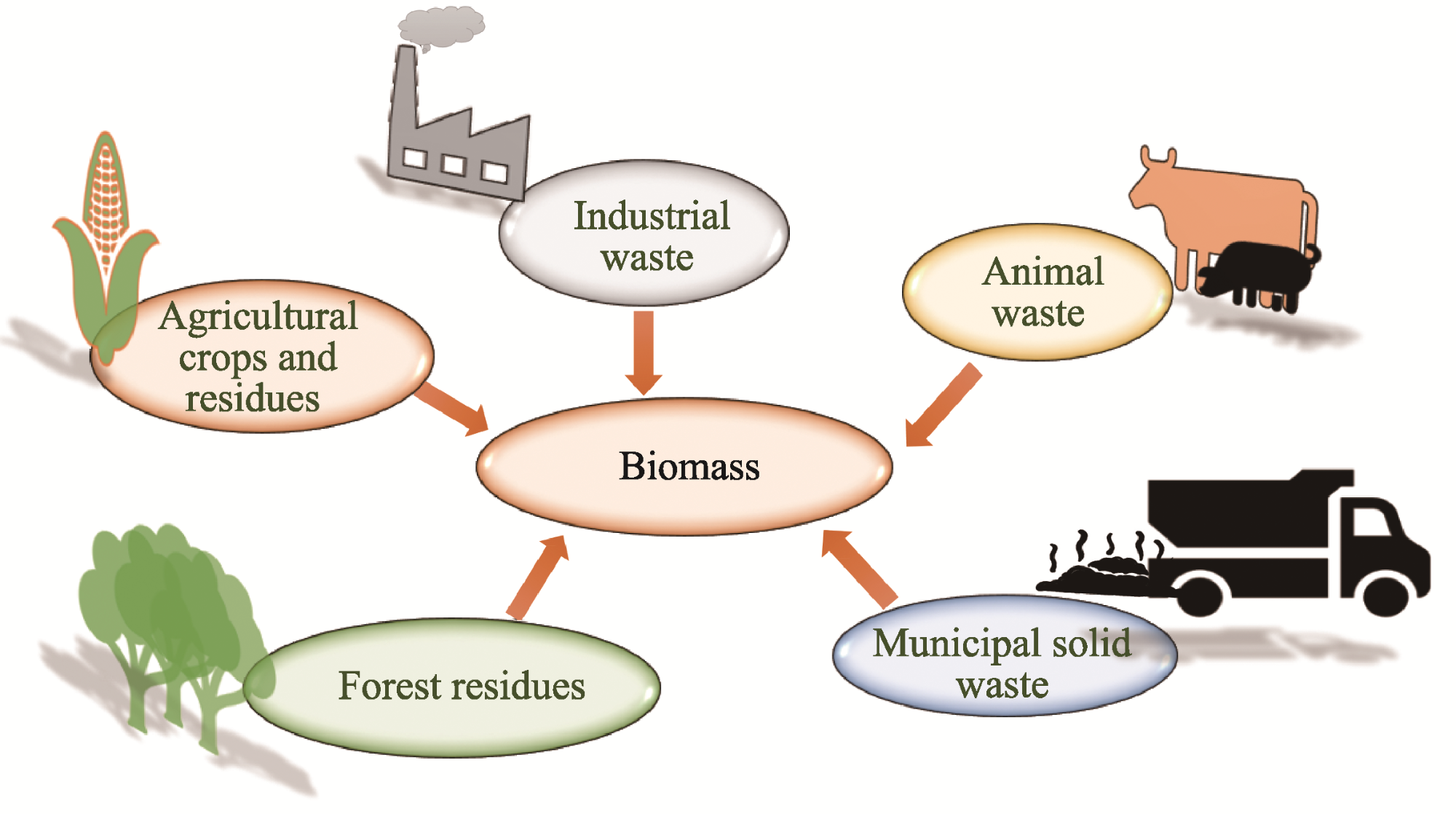
Biomass, which is obtained from plants, trees, agricultural wastes, and organic waste, plays a crucial role in promoting sustainable development and contributing to CE (Martini et al., 2023) (Fig. 2). In an era characterized by climate change concerns, falling fossil fuel supplies, and urgent demand for green energy sources, biomass is seen as a feasible alternative with several advantages and great potential. Biomass is crucial to nature’s carbon cycle (Houghton et al., 2009). It represents a sustainable energy source continually renewed through photosynthesis and generates 1.70×10¹¹ t of biomass annually, with 75.00% of that biomass categorized as carbon (Alper et al., 2020; Hawkins et al., 2023). This organic substance contains carbon, oxygen, hydrogen, nitrogen, sulfur, chlorine, and other inorganic elements and holds the primary advantage of carbon neutrality (Chen et al., 2021). As biomass burns and emits CO2 into the atmosphere, plants and organic materials absorb an equal quantity of CO2. This graceful interaction creates a closed-loop carbon cycle, distinguishing biomass from the net carbon increase associated with standard fossil fuel burning (Kiehbadroudinezhad et al., 2023). This process also produces valuable by-products, such as hydrogen, nitrogen, and sulfur, contributing to plant growth and development. While addressing environmental issues and promoting agricultural production, biomass plays a pivotal role in reducing greenhouse gas emissions and mitigating the impact of climate change (Thornley et al., 2015). It provides an essential avenue towards global sustainability by using natural processes such as photosynthesis and carbon sequestration.
Fig. 2. Different sources of biomass.
Biomass is becoming increasingly popular due to its eco-friendliness, wide variety, and accessibility. Unlike finite fossil fuels, biomass offers a practically limitless power reservoir. Its vast range of feedstocks, ranging from forestry scraps to specific energy crops, allows for adaptation across varied geographic locations and local agricultural landscapes (Jang and Woo, 2024). This adaptability adds to its allure as a viable energy source capable of meeting a wide range of energy requirements while avoiding the hazards associated with over-reliance on finite resources. The World Bioenergy Association emphasizes that throughout history, biomass has been a critical resource for civilization, principally used for energy generation (WBA, 2022).
The Earth has enormous potential to produce 3.30×10⁴ EJ of energy, more than 80 times the amount consumed globally yearly (Kalak, 2023). According to Alper et al. (2020), biomass now contributes 50.00 EJ or almost 10.00% of the world’s total energy consumption. Biomass origins include agricultural practices, livestock farming, fishing, horticulture, forestry, orchards, vineyards, and marine ecosystems. This encompasses both primary crops and waste materials, making biomass a resource in both its natural state and as miscellaneous waste (Gavrilescu et al., 2020).
Various agricultural wastes, including crop remnants and by-products, e.g., rice husk and sugarcane bagasse, are effective employees for biomass energy production. According to Di Fraia et al. (2020), agricultural and agro-industrial residues, such as cereals, legumes, potatoes, peaches, hazelnuts, olives, and vines, can generate 0.15×10⁻³ EJ of energy annually. Recently, Tolessa (2023) revealed that 6.95×10⁵ to 1.05×10⁸ t of robust gross crop residue biomass can produce 5.59×10⁻³ to 1.14 EJ of energy. Simultaneously, India generates 6.86×10⁸ t of gross agricultural residual biomass annually. Approximately 2.34×10⁸ t, or 34.00% of the total outputs, have been recognized as excess and are accessible for bioenergy generation (Hiloidhari et al., 2014). Various published studies present outstanding statistics for gross agricultural residual biomass output and bioenergy potential (Siegrist et al., 2022; Vaish et al., 2022). These findings highlight the importance of using agricultural wastes for sustainable energy practices, which aligns with worldwide initiatives to switch to cleaner and renewable energy sources. Likewise, the forestry industry is critical to biomass generation, providing a sustainable solution to supply about 15.40% of world energy demand through woody waste (Yu et al., 2021; Gogoi et al., 2024). Various sources, such as forests, vineyards, wineries, tree plantations, and public green areas, generate this woody waste. Previously published literature has shed light on the significance of forest waste in the context of biomass energy (IFEU, 2010; Gavrilescu et al., 2020). Furthermore, the abundance and accessibility of forest waste improve the economic viability of using it for bioenergy. The cost-effectiveness, ecological benefits, and financial feasibility make converting forest waste into bioenergy a crucial component of the transition towards a more sustainable and resilient energy future.
MSW is an important biomass source for energy production although frequently overlooked (Nanda and Berruti, 2021). It possesses enormous potential because of its high quantity of biodegradable organic components, such as food scraps, paper, and green detritus, often comprising over 60.00% of its composition (Arelli et al., 2020; Traven, 2023). These organic components are high in energy content, making them a viable resource for bioenergy conversion. Numerous studies have shown that expanding urban populations increases the volume of MSW, establishing it as a stable and plentiful renewable energy source (Chen, 2018; Voukkali et al., 2023). Furthermore, using MSW for electricity coincides with waste management goals by limiting landfill utilization and lessening the environmental effects of traditional waste disposal techniques (Table 1) (Debrah et al., 2021; Alao et al., 2022).
Table 1 Biomass from different sources used in the production of energy in 2010, 2015, and 2020.
Type of energy generated plant Source of biomass Amount of biomass used in the production of energy (EJ)
2010 2015 2020
Electricity only plants Municipal waste 0.57 0.62 0.65
Industrial waste 0.23 0.27 0.29
Liquid biofuel 0.00 0.00 0.00
Biogas 0.31 0.45 0.44
Solid biomass 1.43 2.20 3.93
Heat only plants Municipal waste 0.10 0.08 0.08
Industrial waste 0.10 0.12 0.17
Liquid biofuel 0.00 0.00 0.00
Biogas 0.01 0.01 0.01
Solid biomass 0.23 0.27 0.32
Combined heat and power plants Municipal waste 0.41 0.54 0.58
Industrial waste 0.14 0.14 0.16
Liquid biofuel 0.00 0.00 0.00
Biogas 0.15 0.32 0.40
Solid biomass 1.24 1.70 2.29

Note: Data presented in this table are from IEA (2019) and WBA (2022).

The utilization of biomass offers the possibility of rural rehabilitation and economic development. Communities may support sustainable lifestyles through biomass production, processing, and consumption by developing local biomass resources. Furthermore, its adaptability, renewable nature, and diverse feedstocks position it as a cornerstone in the global transition to cleaner and more resilient energy sources, significantly contributing to CE and alleviating environmental challenges.

4. Circular approaches in energy production and waste management

Efficient handling of biowaste is crucial for preserving ecosystems and enhancing living conditions. Waste-to-energy transition technologies are vital for the conversion of diverse renewable waste materials derived from agricultural (plant and animal residues), industrial (sugar refinery, dairy, confectionery, pulp and paper, tanneries, and slaughterhouses), and residential (kitchen and garden waste) origins into viable energy forms, such as biohydrogen, biogas, and bio-alcohols.
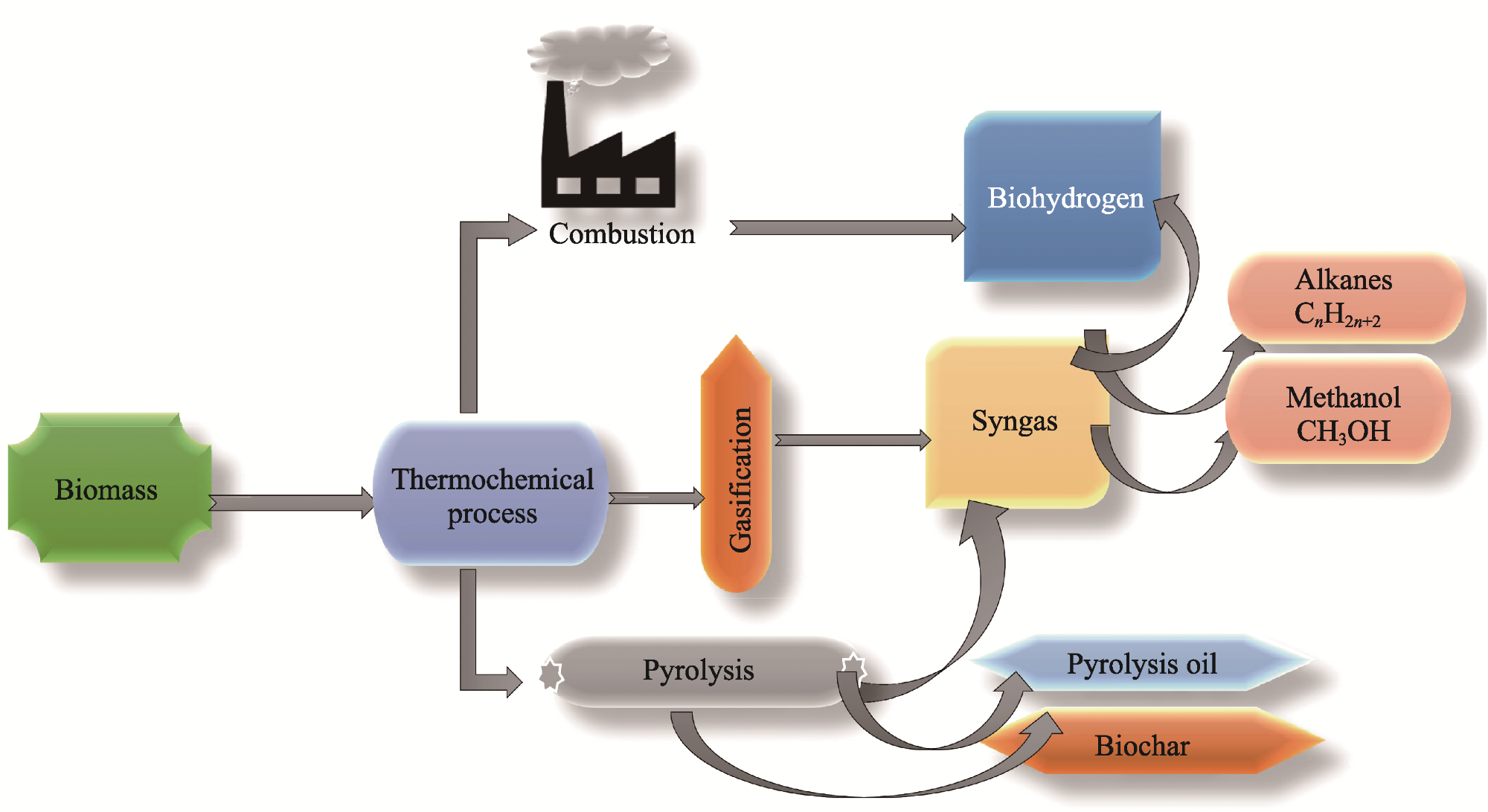
The primary method for transforming solid biomass into energy involves the utilization of diverse thermochemical processes aimed at synthesizing bioenergy products from a range of biomass sources (Fig. 3) (Malico et al., 2019; Ubando et al., 2019). Combustion, a predominant method within thermochemical processes, is employed for synthesizing bioenergy products from diverse biomass sources (Zabot et al., 2020). While any biomass can undergo combustion, practical feasibility is limited to biomass with less than 50.00% moisture levels unless the material is pre-drying (Kumar et al., 2015). Power plants that traditionally burn coal demonstrate high conversion efficiency, making the co-combustion of biomass from such plants an appealing choice for combustion technology. Duan et al. (2014) reported that peanut shells, after harvesting, are used in combustion in many developing countries, positioning them as a potential alternative fuel amidst the current energy crisis. The study involved the utilization of crushed peanut shells and pelletized peanut shells in a vortex fluidized-bed combustor with flue gas recirculation. Biohydrogen, characterized by its higher energy density and lower greenhouse gas emissions, has emerged as a noteworthy fuel for direct combustion (Table 2). Compared to conventional fuels, biohydrogen has elevated energy content at 1.42×10⁻¹³ EJ/g (Bonatto et al., 2020). Biohydrogen is produced from high-solid organic wastes, such as carbohydrate-rich potato and rice, protein-rich lean meat and egg, and fat-rich chicken skin and meat. Various forms of combustion, including surface combustion, smoldering combustion, decomposition combustion, and evaporation combustion, are employed for different applications. Evaporation combustion involves heating a sample with a low fusion temperature, causing it to vaporize and interact with oxygen in the gaseous phase. Decomposition combustion results from the mixture of gases produced by thermal breakdown with oxygen, leading to flame formation and often leaving behind char residues or biochar. The combustion of these residual char elements is typically managed through surface combustion. Smoldering combustion occurs at temperatures below those where volatile components in reactive biomass samples ignite. Surface and decomposition combustion are standard methods in industrial biomass combustion.
Fig. 3. Thermochemical conversion processes of energy production.
Table 2 Different energy by-products and conversion technologies to produce bioenergy.
Energy by-products Conversion technology Energy outcome Sources of biomass Reference
Biohydrogen (H2) Combustion and anaerobic fermentation Heat and electricity Agricultural biomass, forest biomass, municipal solid waste, animal waste, and industrial waste Kalak (2023)
Syngas (CO+H2+CH4) Gasification and pyrolysis Electricity, methanol, alkanes, and synthetic diesel Agricultural biomass, forest biomass, municipal solid waste, animal waste, and industrial waste Nanda and Berruti (2021)
Biochar (carbon+ash, a form of charcoal) Pyrolysis Heat Agricultural biomass, animal waste, and municipal solid waste Nanda and Berruti (2021)
Pyrolysis oil Pyrolysis Fossil fuel and power Agricultural biomass, animal waste, and municipal solid waste Nanda and Berruti (2021)
Bioethanol Anaerobic fermentation Electricity Agricultural biomass, animal waste, municipal solid waste, and industrial waste Dave et al. (2019)
Biogas (methane) Anaerobic digestion Heat and electricity for engines, fuel cells, and microturbines Agricultural biomass, animal waste, municipal solid waste, and industrial waste Kalak (2023)
Biodiesel (methyl esters of fatty acids) Transesterification Heat, fuel energy, and electricity Agricultural biomass, forest biomass, municipal solid waste, animal waste, and industrial waste Lee et al. (2019)
Gasification operates at high temperatures (up to 5000°C) and in an oxygen-deficient environment to convert the heating value of carbonaceous materials into a combustible gas known as synthesis gas or syngas (Zabot et al., 2020; Arpia et al., 2021). The syngas produced in this process contains CO, H2, CH4, and various minor gases (Zabot et al., 2020). Syngas can undergo further processing into alkanes, methanol, or hydrogen through methods, such as Fischer-Tropsch, catalysis, or water gas shift. Hu et al. (2016) produced syngas through catalytic-gasification, utilizing wet sewage sludge and pine sawdust. Biomass waste to a steam atmosphere at temperatures between 250°C and 400°C for about 1 h enables successful conversion into biogas (Qin et al., 2021). The versatility of gasification in producing fuels and chemicals alongside heat and electricity presents opportunities to establish gasification-based biorefineries (Malico et al., 2019).
In an oxygen-deprived environment, organic matter undergoes decomposition through a method known as pyrolysis (Dai et al., 2019). Pyrolysis has the unique virtue of releasing a large amount of heat while maintaining a positive energy balance. This method is primarily employed to yield three products: biochar (a solid residue resembling coal), bio-oil (a compressible liquid), and syngas (a non-condensable lightweight gaseous product) (Dai et al., 2019; Ong et al., 2019). Biochar, a carbon-rich by-product of pyrolysis, is garnering interest because of its capacity to improve soil physicochemical and biological qualities (Zabot et al., 2020). Bio-oil, also known as pyrolysis oil, stands out as a significant by-product of pyrolysis and acts as a suitable alternative for fuel oil in heat and electricity generation (WBA, 2022). Bio-oil production through pyrolysis provides advantages in terms of convenience in storage and transportation compared to the fuel gases generated by the gasification process (Dhyani and Bhaskar, 2018).
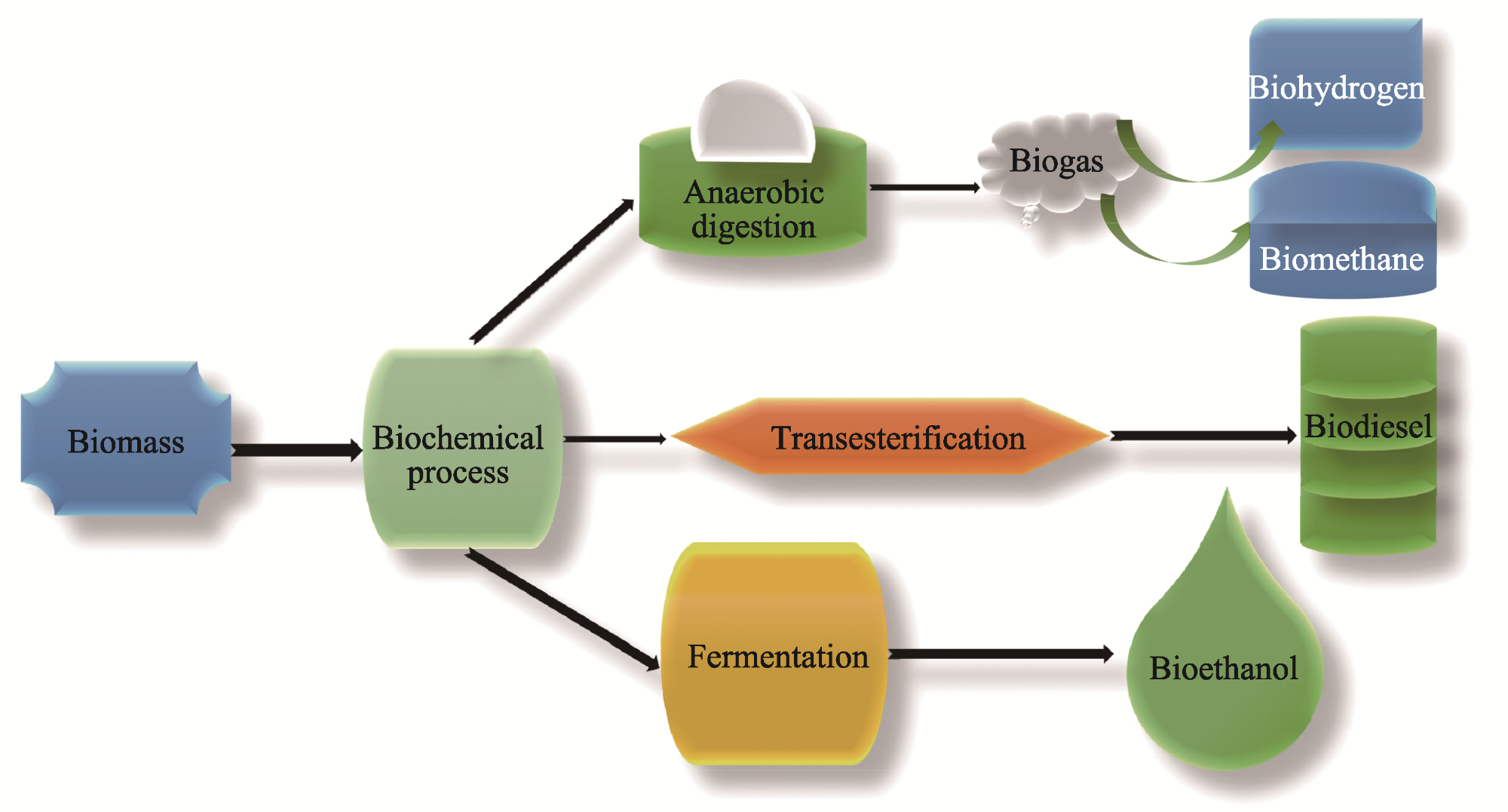
Biochemical conversion methods are effective for biomass that has a high moisture content (Fig. 4) (Kumar et al., 2015; Mishra et al., 2023). Fermentation is a promising method for converting this biomass into energy, with bioethanol production being a significant application. The primary source for bioethanol synthesis is cellulosic biomass, which can be obtained from various agricultural, industrial, and municipal waste materials (Bonatto et al., 2020). Bioethanol is produced from banana peel waste (Bhatia and Paliwal, 2010) and wheat straw (Bhatia and Johri, 2018). Major innovative breakthroughs in lignocellulose biotechnology have made possible significant opportunities for producing renewable fuels and biochemicals from agro-industrial residues like sugarcane bagasse, rice straw, and corn stover (Bhatia et al., 2019). In addition to being used for biofuel production, sugarcane bagasse can also produce phenolic compounds (Pattnaik et al., 2022).
Fig. 4. Biochemical conversion process.
The fermentation process for biofuel production involves several phases: initially, waste biomass undergoes crushing, then raw materials like cellulose or starch are converted into polysaccharides. The ethanol obtained from this process is then distilled and condensed into high purity. Finally, the high-purity ethanol is further processed through dewatering to create biofuel ethanol. The final step involves blending ethanol fuel and gasoline in specific proportions to produce fuel ethanol. Hydrolysis is a standard method for breaking down simple sugars into ethanol and by-products, such as water and CO2. In this process, acids, bases, or enzymes are predominantly utilized (Mishra et al., 2023). The energy-intensive distillation process for ethanol purification can yield 450 L from 1000 kg of dry corn (Kumar et al., 2015). Due to its good amalgamating qualities and physical and chemical properties resembling gasoline, ethanol finds application as a novel and clean automotive fuel in automobiles (Qin et al., 2021). Beyond its energy role, bioethanol is a valuable industrial solvent and chemical feedstock (Guerrero et al., 2018). Increasing recognition is observed for the environmental benefits of bioethanol in reducing particle emission levels (Vaish et al., 2019). Fermentation, particularly in the context of yeast, is extensively employed for bioethanol production, involving pre-treatment of biomass before anaerobic fermentation. Evcan and Tari (2015) conducted a study on bioethanol production using agricultural residues from coconut, pineapple, and tuna. They found that the bioethanol content varied for each residue, with pineapple juice exhibiting the highest percentage at 22.00%, coconut milk at 12.00%, and tuna juice recording the lowest at 12.00% (Evcan and Tari, 2015). Biogas, predominantly consisting of methane and CO2, results from the anaerobic digestion of organic matter. This process involves various metabolic stages, including hydrolysis, methanogenesis, acetogenesis, and acidogenesis, performed by diverse microorganisms in environments devoid of oxygen (Kumar et al., 2015; André et al., 2019). Compared to aerobic organic substrate degradation, anaerobic treatment produces more biogas with lower biomass input and generates less waste sludge/slurry (Vaish et al., 2019). Energy crops, including sugar beet, sunflower, maize, and grasses, are gaining recognition for biogas production due to their high energy content, low nitrogen content, rapid biodegradability, and profitability, compared to other crops, which make them suitable for co-digestion to enhance biogas production alongside organic wastes from fermenters (Vaish et al., 2019). Parawira et al. (2008) studied biomethane gas production using sugar beet leaves and solid potato waste. They used digestion and co-digestion methods to obtain methane from volatile solid. The co-digestion method produced up to 60.00% more methane than digestion alone. This demonstrated a favorable synergy within the digestion fluid, contributing to increased methane generation. Microalgae can also serve as a substrate in the bioreactor of anaerobic digestion (de Morais et al., 2020). González-González et al. (2018) emphasized the methane potential and nutrient mobilization of Scenedesmus dimorphus, a microalga. The findings indicate that S. dimorphus yields an average methane output of 199 mL/g volatile solids, making it a viable substrate for anaerobic digestion. Woody crops are rarely employed for anaerobic digestion due to their high lignin concentration, which is inefficiently digested by anaerobic microbes (Balussou et al., 2018). In developing countries such as Brazil, lignocellulosic waste is successfully used in biogas plants. For instance, 3.71×10⁸ W is generated from wood residue, 0.32×10⁸ W from elephant grass, and 0.36×10⁸ W from rice husk (Vaish et al., 2019). Biodiesel is a sustainable fuel that can partially replace diesel and is made through transesterification (de Morais et al., 2020; Mendes and Bordignon, 2020). It comprises methyl esters of fatty acids, and is a more environmentally friendly option due to its lack of sulfur compounds, which contribute to global warming, the greenhouse effect, and acid rain. Biodiesel is also noncorrosive and biodegradable. The most efficient way to derive bioenergy from waste is through the chemical conversion of lipids to biodiesel. This involves extracting lipids and subjecting them to transesterification, which produces fatty acid methyl esters (Uma and Dineshbabu, 2020).
This transesterification technique includes the interaction of short-chain alcohols, usually methanol or ethanol, with vegetable or animal triglycerides predominantly produced from waste oils. This process yields glycerol, methyl-esterified molecules, and monoglycerides. Various catalysts, such as enzymes (Ali et al., 2017), metal oxides (Chang et al., 2017), alkalis (Nayak and Vyas, 2019), or acids, can be employed in transesterification. This approach can efficiently produce biodiesel due to a catalyst or the interaction of triglycerides with short-chain alcohol (Mendes and Bordignon, 2020). Base-catalyzed transesterification, unlike acid-catalyzed transesterification, rapidly produces significant amounts of fatty acid methyl ester under moderate conditions of reaction, which makes it a popular commercial approach. Despite the eco-friendly and cost-effective benefits of enzymatic catalysts, their commercial application is still in development. Approaches, such as whole-cell catalysts, immobilized enzymes, and protein engineering, are being explored to enhance the efficiency of enzyme catalysis (Mishra et al., 2023).

5. Microbial fuel cell (MFC) as a technology for energy production treating municipal wastewater

Municipal wastewater has enormous promise as an energy resource, and the nascent sector of green energy generation from municipal sewage is rapidly expanding. However, traditional municipal wastewater treatment methods, such as activated sludge, membrane filtration, trickling filters, and reverse osmosis, have limitations in terms of both economic and energetic efficiency. The construction of municipal wastewater treatment plants is associated with significant costs and demands substantial energy. Besides, technology like combustion releases a lot of CO2 into the atmosphere, one of the key greenhouse gases with potentially hazardous effects on the climate (Chaturvedi and Verma, 2016). MFC plays a crucial role in mitigating the economic challenges of municipal wastewater treatment, simultaneously contributing to enhancing renewable energy generation sustainability. This technology is a cost-effective, clean, and efficient process that uses renewable energy sources and produces no hazardous by-products when used as a substitute source of electricity. MFC technology effectively converts organic contaminants found in municipal wastewater into electrical energy. This is accomplished by employing electrogenic microbes, which concurrently produce energy and remediate various kinds of sewage (Singh et al., 2019). Numerous MFC designs are intended to produce electrical energy. Single-chambered and dual-chambered MFCs are regarded as the most popular designs (Vishwanathan, 2021). The dual-chambered MFC is often deliberated, wherein an anode compartment and a cathode compartment are separated by a proton exchange membrane (cationic membrane) (Chaturvedi and Verma, 2016). Microorganisms play an essential role in MFC because they accelerate the release of electrons from organic substrates’ energy-rich bonds in an anaerobic environment (Vishwanathan, 2021). Municipal wastewater, the habitat of innumerable microorganisms, is stored in the negative terminal’s anode chamber. The microbes that digest organic substances like glucose serve as an electron donor. These organic compounds produce protons and electrons during their metabolism. Subsequently, the liberated electrons are then transferred to the anode surface. Protons flow via the electrolyte, and afterward, electrons travel from the anode to the cathode through the external electrical circuit connected by a conductive material, which may include a resistor; through this mechanism, electricity is generated (Pandey et al., 2016). This technology is considered the most useful in electricity production, where waste is converted into bioenergy at a low cost with low energy. Therefore, this method can be utilized to attain CE by achieving sustainability through the production of green energy.

6. Barriers to CE integration

Numerous intellectual researchers have identified an assembly of barriers posing challenges to the successful implementation of CE (Durdyev et al., 2023; Holly et al., 2023). The barriers of CE encompass legal restrictions, regulations, and other limitations, which act as disincentives to realizing a particular concept, innovation, or technology (Hilson, 2000). Ye et al. (2020) further elaborated that difficulty or barrier manifests as a problem hindering the advancement of a specific technique, discouraging individuals from embracing a particular idea, invention, or technology. Govindan and Hasanagic (2018) conducted a detailed investigation and discovered 39 obstacles, 10 of which were external and 29 of which were internal. Building on this research, Osei-Tutu et al. (2022) characterized barriers as “specific disincentives inhibiting, dissuading, or discouraging the implementation of CE principles in the construction industry”. Remarkably, their study identified 79 barriers impeding the adoption of CE, with particular emphasis on economic, technical, and social barriers.
Economic barriers pose formidable challenges to enterprises in impacting the transition from linear economy to CE, primarily due to insufficient economic incentives (Govindan and Hasanagic, 2018). In the case of monetary/financial barriers, prevalent obstacles cover the excessive expenses associated with recycled resources, diminished market valuation, minimal landfill costs, constrained market dynamics for reclaimed materials, economic considerations such as budget and upfront fees, and design expenditures (Osei-Tutu et al., 2022). The raised costs necessitated in waste processing contribute to a growth in the pricing of recycled materials, thereby constituting a recognized hindrance to the extensive adoption of CE.
Technical challenges in the implementation of CE include limited design codes focused on reclaimed materials, the lack of building design standards for minimizing C&D waste, and a lack of policy incentives (Ghisellini et al., 2016; Govindan and Hasanagic, 2018; Osei-Tutu et al., 2022). The recovery and reuse of items and components face significant challenges due to the growing number and complexity of products. Maintaining product quality throughout its lifecycle is an intimidating task. Ensuring the quality of items manufactured from recycled materials is a challenging aspect. The design complexities of creating durable, reusable, and recyclable products contribute to the difficulties. Challenges also arise in the effective separation of materials, requiring technology for a cascading agreement with applications or a safe return to the biosphere. Considerations regarding efficient processes, technology, and involvement of all stakeholders can enhance the likelihood of successful CE implementation (Peñate-Valentín et al., 2021).
Regarding social barriers to CE adoption, prominent challenges include insufficient client demand, limited awareness, knowledge gaps, knowledge of CE practices, and a deficient demand for composite construction. Additionally, there is a recognized deficit in education among stakeholders regarding CE strategies (Osei-Tutu et al., 2022). Research findings highlight that insufficient knowledge about CE strategies impedes the widespread implementation of circular practices (Charef and Emmitt, 2021).

7. Future prospective

To tackle the challenges of waste management, an innovative strategy is required for waste collection and treatment. Urban waste management will require a conceptual framework incorporating the product’s whole life cycle into the waste management system. The objective is to reduce waste from one system and repurpose it as a resource for other systems in an ideal waste-free city. Transitioning to a zero-waste smart city necessitates three critical steps: waste prevention, proper garbage disposal, and practical value recovery from collected waste. The ‘resource waste’ concept prioritizes waste reduction upstream, emphasizing resource management by separating trash at its source to improve value recovery rather than relying exclusively on treatment. This strategy aims to improve efficiency by merging principles from CE and sharing economy (Esmaeilian et al., 2018). Manufacturers may play a critical role by implementing measures to reduce waste and emissions and get knowledge throughout the product’s lifetime. Understanding customer behavior and product usage time might help remanufacturers anticipate the future potential of abandoned items (Mostafa and Dumrak, 2015). For example, prompt buy-back rates can be provided for returning old items, such as consumer electronics, allowing upgrading and recovery through specified remanufacturing channels (Sabbaghi et al., 2016). Municipalities can more effectively handle the timely collection and recovery of waste by keeping apprised of the rate of waste development. This information may also be used to modify the layout and size of waste containers for different geographical locations. Overall, utilizing product lifecycle data provides opportunities for information interchange, the investigation of new data formats, the introduction of creative business models, and the possibility to boost resource utilization, minimize capability waste, and shorten product lifecycles.

8. Conclusions

In today’s world, embracing the principles of CE and sustainable environmental practices has become more than an option; it is now necessary in our quest for a cleaner and more sustainable future. Our planet urgently needs to reduce carbon emissions, preserve dwindling resources, and responsibly manage waste. By utilizing biomass as a renewable energy source and implementing innovative waste management strategies, we have the potential to bring about a revolutionary change. Transitioning to CE and sustainable environmental practices is a challenging task that requires the collective effort of governments, companies, and the public. It involves implementing significant legislative changes, technological advancements, and a shift in public perception. However, the benefits are numerous and far-reaching. By switching to biomass energy, we can reduce greenhouse gas emissions and decrease reliance on fossil fuels. Similarly, effective waste management can significantly reduce pollution, protect ecosystems, and help us realize the economic value of wasted materials. Climate change and environmental degradation caused by waste mismanagement present significant challenges, but they also offer opportunities for economic growth and innovation. By transitioning to more sustainable practices, we can create a cleaner, more prosperous environment for ourselves and future generations. As responsible members of society, we must adopt these practices and live in harmony with the world. Together, we can build a brighter and more sustainable future for all.

Authorship contribution statement

Nazim Forid ISLAM: supervision, conceptualization, writing - original draft, and writing - review & editing; Bhoirob GOGOI: data curation, software, methodology, validation, formal analysis, and writing - original draft; Rimon SAIKIA: data curation, formal analysis, methodology, and writing - original draft; Balal YOUSAF: writing - review & editing; Mahesh NARAYAN: writing - review & editing; and Hemen SARMA: supervision and writing - review & editing. All authors approved the manuscript.

Declaration of conflict of interest

The authors declare that they have no known competing financial interests or personal relationships that could have appeared to influence the work reported in this paper.

Acknowledgments

The authors thank Bodoland University, Assam of India, and Nanda Nath Saikia College, Assam of India, for logistics and assistance. Additionally, the Department of Biotechnology, Government of India, is acknowledged for granting research funds (BT/NER/143/SP44344/2021) to Nanda Nath Saikia College under the North Eastern Region (NER) Biotech Hub Program.
[1]
Alao, M.A., Popoola, O.M., Ayodele, T.R., et al., 2022. Waste to energy nexus: An overview of technologies and implementation for sustainable development. Cleaner Energy Systems. 3, 100034, doi: 10.1016/j.cles.2022.100034.

[2]
Ali, C.H., Qureshi, A.S., Mbadinga, S.M., et al., 2017. Biodiesel production from waste cooking oil using onsite produced purified lipase from Pseudomonas aeruginosa FW_SH-1: Central composite design approach. Renew. Energy. 109, 93-100.

[3]
Alper, K., Tekin, K., Karagöz, S., et al., 2020. Sustainable energy and fuels from biomass: A review focusing on hydrothermal biomass processing. Sustain. Energ. Fuels. 4(9), 4390-4414.

[4]
André, L., Zdanevitch, I., Pineau, C., et al., 2019. Dry anaerobic co-digestion of roadside grass and cattle manure at a 60 L batch pilot scale. Bioresour. Technol. 289, 121737, doi: 10.1016/j.biortech.2019.121737.

[5]
Ang, K.L., Saw, E.T., He, W., et al., 2021. Sustainability framework for pharmaceutical manufacturing (PM): A review of research landscape and implementation barriers for circular economy transition. J. Clean Prod. 280, 124264, doi: 10.1016/j.jclepro.2020.124264.

[6]
Angelakis, A.N., Snyder, S.A., 2015. Wastewater treatment and reuse: Past, present, and future. Water. 7(9), 4887-4895.

[7]
Arelli, V., Juntupally, S., Begum, S., et al., 2020. Significance of pretreatment in enhancing the performance of dry anaerobic digestion of food waste: An insight on full scale implementation strategy with theoretical analogy. Processes. 8(9), 1018, doi: 10.3390/pr8091018.

[8]
Arpia, A.A., Chen, W.H., Lam, S.S., et al., 2021. Sustainable biofuel and bioenergy production from biomass waste residues using microwave-assisted heating: A comprehensive review. Chem. Eng. J. 403, 126233, doi: 10.1016/j.cej.2020.126233.

[9]
Ayilara, M.S., Olanrewaju, O.S., Babalola, O.O., et al., 2020. Waste management through composting: Challenges and potentials. Sustainability. 12(11), 4456, doi: 10.3390/su12114456.

[10]
Balussou, D., McKenna, R., Möst, D., et al., 2018. A model-based analysis of the future capacity expansion for German biogas plants under different legal frameworks. Renew. Sust. Energ. Rev. 96, 119-131.

[11]
Bashir, I., Lone, F.A., Bhat, R.A., et al., 2020. Concerns and threats of contamination on aquatic ecosystems. In: Hakeem, K.R., Bhat, R.A., Qadri, H., (eds.). Bioremediation and Biotechnology. Cham: Springer, 1-26.

[12]
Bhat, R.A., Dar, G.H., Tonelli, F.M.P., et al., 2024. Aquatic Contamination:Tolerance and Bioremediation. New York: Wiley.

[13]
Bhatia, L., Paliwal, S., 2010. Banana peel waste as substrate for ethanol production. International Journal of Biotechnology and Bioengineering Research. 1(2), 213-218.

[14]
Bhatia, L., Johri, S., 2018. Optimization of simultaneous saccharification and fermentation parameters for sustainable ethanol production from wheat straw by Pichia stipitis NCIM 3498. Indian J. Exp. Biol. 56(12), 932-941.

[15]
Bhatia, L., Garlapati, V.K., Chandel, A.K., 2019. Scalable technologies for lignocellulosic biomass processing into ccellulosicethanol. In: Pogaku, R., (ed.). Horizons in Bioprocess Engineering. Cham: Springer, 73-90.

[16]
Bonatto, C., Camargo, A.F., Scapini, T., et al., 2020. Biomass to bioenergy research:Current and future trends for Biofuels. In: Gupta, V.K., Treichel, H., Kuhad, R.C., et al., (eds.). Recent Developments in Bioenergy Research. Amsterdam: Elsevier.

[17]
Chang, K.L., Lin, Y.C., Jhang, S.R., et al., 2017. Rapid jatropha-castor biodiesel production with microwave heating and a heterogeneous base catalyst nano-Ca(OH)2/Fe3O4. Catalysts. 7(7), 203, doi: 10.3390/catal7070203.

[18]
Charef, R., Emmitt, S., 2021. Uses of building information modelling for overcoming barriers to a circular economy. J. Clean Prod. 285, 124854, doi: 10.1016/j.jclepro.2020.124854.

[19]
Chaturvedi, V., Verma, P., 2016. Microbial fuel cell: a green approach for the utilization of waste for the generation of bioelectricity. Bioresources and Bioprocessing. 3, 38, doi: 10.1186/s40643-016-0116-6.

[20]
Chen, W.H., Lin, B.J., Lin, Y.Y., et al., 2021. Progress in biomass torrefaction: Principles, applications and challenges. Prog. Energy Combust. Sci. 82, 100887, doi: 10.1016/j.pecs.2020.100887.

[21]
Chen, Y.C., 2018. Effects of urbanization on municipal solid waste composition. Waste Manage. 79, 828-836.

[22]
Corona, B., Shen, L., Reike, D., et al., 2019. Towards sustainable development through the circular economy - A review and critical assessment on current circularity metrics. Resour. Conserv. Recycl. 151, 104498, doi: 10.1016/j.resconrec.2019.104498.

[23]
Dai, L.L., Wang, Y.P., Liu, Y.H., et al., 2019. Integrated process of lignocellulosic biomass torrefaction and pyrolysis for upgrading bio-oil production: A state-of-the-art review. Renew. Sust. Energ. Rev. 107, 20-36.

[24]
Dave, N., Selvaraj, R., Varadavenkatesan, T., et al., 2019. A critical review on production of bioethanol from macroalgal biomass. Algal Res. 42, 101606, doi: 10.1016/j.algal.2019.101606.

[25]
de Melo, T.A.C., de Oliveira, M.A., de Sousa, S.R.G., et al., 2022. Circular economy public policies: A systematic literature review. Procedia Computer Science. 204(C), 652-662.

[26]
de Morais, M.G., de Morais, E.G., Cardias, B.B., et al., 2020. Microalgae as a source of sustainable biofuels. In: Gupta, V.K., Treichel, H., Kuhad, R.C., et al., (eds.)Recent Developments in Bioenergy Research. Amsterdam: Elsevier, 253-271.

[27]
Debrah, J.K., Vidal, D.G., Dinis, M.A.P., 2021. Raising awareness on solid waste management through formal education for sustainability: A developing countries evidence review. Recycling-Basel. 6(1), 6, doi: 10.3390/recycling6010006.

[28]
Dhyani, V., Bhaskar, T., 2018. A comprehensive review on the pyrolysis of lignocellulosic biomass. Renew. Energy. 129, 695-716.

[29]
Di Fraia, S., Fabozzi, S., Macaluso, A., et al., 2020. Energy potential of residual biomass from agro-industry in a Mediterranean region of southern Italy (Campania). J. Clean Prod. 277, 124085, doi: 10.1016/j.jclepro.2020.124085.

[30]
Diggle, A., Walker, T.R., 2022. Environmental and economic impacts of mismanaged plastics and measures for mitigation. Environments. 9(2), 15, doi: 10.3390/environments9020015.

[31]
Duan, F., Zhang, J.P., Chyang, C.S., et al., 2014. Combustion of crushed and pelletized peanut shells in a pilot-scale fluidized-bed combustor with flue gas recirculation. Fuel Process. Technol. 128, 28-35.

[32]
Durdyev, S., Koc, K., Tleuken, A., et al., 2023. Barriers to circular economy implementation in the construction industry: Causal assessment model. Environ. Dev. Sustain. doi: 10.1007/s10668-023-04061-8.

[33]
Ellen MacArthur Foundation, 2015. Circular Economy Courses. [2024-01-02]. https://www.ellenmacarthurfoundation.org/resources/education-and-learning/circular-economy-courses.

[34]
Esmaeilian, B., Wang, B., Lewis, K., et al., 2018. The future of waste management in smart and sustainable cities: A review and concept paper. Waste Manage. 81, 177-195.

[35]
Evcan, E., Tari, C., 2015. Production of bioethanol from apple pomace by using cocultures: Conversion of agro-industrial waste to value added product. Energy. 88, 775-782.

[36]
Ferraz, D., Pyka, A., 2023. Circular economy, bioeconomy, and sustainable development goals: a systematic literature review. Environ. Sci. Pollut. Res. 30(47), doi: 10.1007/s11356-023-29632-0.

[37]
Gavrilescu, D., Teodosiu, C., David, M., 2020. Environmental assessment of wastewater discharges at river basin level by means of waste absorption footprint. Sustain. Prod. Consump. 21, 33-46.

[38]
Geissdoerfer, M., Savaget, P., Bocken, N.M.P., et al., 2017. The circular economy - A new sustainability paradigm? J. Clean Prod. 143, 757-768.

[39]
Ghisellini, P., Cialani, C., Ulgiati, S., 2016. A review on circular economy: The expected transition to a balanced interplay of environmental and economic systems. J. Clean Prod. 114, 11-32.

[40]
Gogoi, B., Sarma, H., 2023. Rhizoremediation of persistent organic pollutants (POPs) from the soil. In: Sarma, H., Joshi, S., (eds.). Land Remediation and Management:Bioengineering Strategies. Singapore: Springer, 49-78.

[41]
Gogoi, B., Islam, N.F., Sarma, H., 2024. Microbes are the natural ecological engineers in the forest ecosystem. Biotechnology of Emerging Microbes. doi: 10.1016/B978-0-443-15397-6.00011-5.

[42]
González-González, L.M., Zhou, L.H., Astals, S., et al., 2018. Biogas production coupled to repeat microalgae cultivation using a closed nutrient loop. Bioresour. Technol. 263, 625-630.

[43]
Govindan, K., Hasanagic, M., 2018. A systematic review on drivers, barriers, and practices towards circular economy: A supply chain perspective. Int. J. Prod. Res. 56(1-2), 278-311.

[44]
Guerra, B.C., Leite, F., 2021. Circular economy in the construction industry: An overview of United States stakeholders’ awareness, major challenges, and Enablers. Resour. Conserv. Recycl. 170, 105617, doi: 10.1016/j.resconrec.2021.105617.

[45]
Guerrero, A.B., Ballesteros, I., Ballesteros, M., 2018. The potential of agricultural banana waste for bioethanol production. Fuel. 213, 176-185.

[46]
Hawkins, H.J., Cargill, R.I.M., Van Nuland, M.E., et al., 2023. Mycorrhizal mycelium as a global carbon pool. Curr. Biol. 33(11), 560-573.

[47]
Hiloidhari, M., Das, D., Baruah, D.C., et al., 2014. Bioenergy potential from crop residue biomass in India. Renew. Sust. Energ. Rev. 32, 504-512.

[48]
Hilson, G., 2000. Barriers to implementing cleaner technologies and cleaner production (CP) practices in the mining industry: A case study of the Americas. Miner. Eng. 13(7), 699-717.

[49]
Holly, F., Kolar, G., Berger, M., et al., 2023. Challenges on the way to a circular economy from the perspective of the Austrian manufacturing industry. Frontiers in Sustainability. 4, 1243374, doi: 10.3389/frsus.2023.1243374.

[50]
Hossain, M., Park, S., Suchek, N., et al., 2024. Circular economy: A review of review articles. Bus. Strateg. Environ. 33(7), 7077-7099.

[51]
Houghton, R.A., Hall, F., Goetz, S.J., et al., 2009. Importance of biomass in the global carbon cycle. J. Geophys. Res.-Biogeosci. 114, G00E03, doi: 10.1029/2009JG000935.

[52]
Hu, M., Gao, L., Chen, Z., et al., 2016. Syngas production by catalytic in-situ steam co-gasification of wet sewage sludge and pine sawdust. Energy Convers. Manag. 111, 409-416.

[53]
IEA (International Energy Agency), 2019. Global Energy Review 2019 - Analysis. [2024-01-02]. https://www.iea.org/reports/global-energy-review-2019.

[54]
IFEU (Institut für Energie- und Umweltforschung Heidelberg), 2010. Environmental Methodology and Data Update 2020. [2024-01-02]. https://www.ifeu.de/en/publication/environmental-methodology-and-data-update-2020/.

[55]
Jang, J., Woo, S.Y., 2024. Forest biomass characterization and exploitation. Encyclopedia of Renewable Energy, Sustainability and the Environment. 1, 519-528.

[56]
Kalak, T., 2023. Potential use of industrial biomass waste as a sustainable energy source in the future. Energies. 16(4), 1783, doi: 10.3390/en16041783.

[57]
Kiehbadroudinezhad, M., Merabet, A., Hosseinzadeh-Bandbafha, H., 2023. Bioenergy programs in North and South America and Canada. In: Rahimpour, M.R., (ed.). Encyclopedia of Renewable Energy, Sustainability and the Environment. Amsterdam: Elsevier.

[58]
Kirchherr, J., Yang, N.H.N., Schulze-Spüntrup, F., et al., 2023. Conceptualizing the circular economy (revisited): An analysis of 221 definitions. Resour. Conserv. Recycl. 194, 107001, doi: j.resconrec.2023.107001.

[59]
Krausmann, F., Wiedenhofer, D., Lauk, C., et al., 2017. Global socioeconomic material stocks rise 23-fold over the 20th century and require half of annual resource use. Proc. Natl. Acad. Sci. U. S. A. 114(8), 1880-1885.

[60]
Kumar, A., Kumar, N., Baredar, P., et al., 2015. A review on biomass energy resources, potential, conversion and policy in India. Renew. Sust. Energ. Rev. 45, 530-539.

[61]
Lamba, H.K., Kumar, N.S., Dhir, S., 2023. Circular economy and sustainable development: A review and research agenda. Int. J. Product Perform. Manag. 73(2), 497-522.

[62]
Lee, S.Y., Sankaran, R., Chew, K.W., et al., 2019. Waste to bioenergy: A review on the recent conversion technologies. BMC Energy. 1, 4, doi: 10.1186/s42500-019-0004-7.

[63]
Malico, I., Pereira, R.N., Gonçalves, A.C., et al., 2019. Current status and future perspectives for energy production from solid biomass in the European industry. Renew. Sust. Energ. Rev. 112, 960-977.

[64]
Martini, S., Kharismadewi, D., Mardwita, et al., 2023. Biomass potential as an alternative resource for valuable products in the perspective of environmental sustainability and a circular economy system. IOP Conference Series: Earth and Environmental Science. 1175(1), 012012, doi: 10.1088/1755-1315/1175/1/012012.

[65]
Mendes, F.B., Bordignon, S.E., 2020. Renewable energy and the role of biofuels in the current world. In: Gupta, V.K., Treichel, H., Kuhad, R.C., et al., (eds.). Recent Developments in Bioenergy Research. Amsterdam: Elsevier, 65-84.

[66]
Mendes, I., Rocha, P., Aragão, A., et al., 2023. Advancing sustainable bio-waste management through law and policy: How co-creation can help pursue fair environmental public policies in the European context. Soc. Sci.-Basel. 12(10), 572, doi: 10.3390/socsci12100572.

[67]
Merewether, J., Blaise, M., Pitchford, K., et al., 2023. Unsettling “reduce-reuse-recycle”: The provocation of wastepaper and “discarding well”. The Journal of Environmental Education. 54(3), 199-212.

[68]
Mishra, B., Mohanta, Y.K., Reddy, C.N., et al., 2023. Valorization of agro-industrial biowaste to biomaterials: An innovative circular bioeconomy approach. Circular Economy. 2(3), 100050, doi: 10.1016/j.cec.2023.100050.

[69]
Mostafa, S., Dumrak, J., 2015. Waste elimination for manufacturing sustainability. Procedia Manufacturing. 2, 11-16.

[70]
Muller, L.N.P.E.S., Delai, I., Alcantara, R.L.C., et al., 2022. Circular value chain practices for developing resource value retention options. J. Clean Prod. 359, 131925, doi: 10.1016/j.jclepro.2022.131925.

[71]
Nanda, S., Berruti, F., 2021. A technical review of bioenergy and resource recovery from municipal solid waste. J. Hazard. Mater. 403, 123970, doi: 10.1016/j.jhazmat.2020.123970.

[72]
Nayak, M.G., Vyas, A.P., 2019. Optimization of microwave-assisted biodiesel production from Papaya oil using response surface methodology. Renew. Energy. 138, 18-28.

[73]
Nguyen, K.L.P., Chuang, Y.H., Chen, H.W., et al., 2020. Impacts of socioeconomic changes on municipal solid waste characteristics in Taiwan. Resour. Conserv. Recycl. 161, 104931, doi: 10.1016/j.resconrec.2020.104931.

[74]
Ong, H.C., Chen, W.H., Farooq, A., et al., 2019. Catalytic thermochemical conversion of biomass for biofuel production: A comprehensive review. Renew. Sust. Energ. Rev. 113, 109266, doi: 10.1016/j.rser.2019.109266.

[75]
Osei-Tutu, S., Ayarkwa, J., Osei-Asibey, D., et al., 2022. Barriers impeding circular economy (CE) uptake in the construction industry. Smart Sustain. Built Environ. 12(4), 892-918.

[76]
Oyejobi, D.O., Firoozi, A.A., Fernández, D.B., et al., 2024. Integrating circular economy principles into concrete technology: Enhancing sustainability through industrial waste utilization. Results Eng. 24, 102846, doi: 10.1016/j.rineng.2024.102846.

[77]
Pandey, P., Shinde, V.N., Deopurkar, R.L., et al., 2016. Recent advances in the use of different substrates in microbial fuel cells toward wastewater treatment and simultaneous energy recovery. Appl. Energy. 168, 706-723.

[78]
Parawira, W., Read, J.S., Mattiasson, B., et al., 2008. Energy production from agricultural residues: High methane yields in pilot-scale two-stage anaerobic digestion. Biomass Bioenerg. 32(1), 44-50.

[79]
Pattnaik, B., Sarangi, P.K., Jena, P.K., et al., 2022. Production of phenolic flavoring compounds from sugarcane bagasse by Lactobacillus acidophilus MTCC 10307. Arch. Microbiol. 204(1), 23, doi: 10.1007/s00203-021-02655-2.

[80]
Peñate-Valentín, M.C., Sánchez-Carreira, M.D.C., Pereira, A., 2021. The promotion of innovative service business models through public procurement. An analysis of energy service companies in Spain. Sustain. Prod. Consump. 27, 1857-1868.

[81]
Qin, L., Wang, M.J., Zhu, J.F., et al., 2021. Towards circular economy through waste to biomass energy in Madagascar. Complexity. 5822568, doi: 10.1155/2021/5822568.

[82]
Rahla, K.M., Mateus, R., Bragança, L., 2021. Implementing circular economy strategies in buildings - from theory to practice. Appl. Syst. Innov. 4(2), 26, doi: 10.3390/asi4020026.

[83]
Reike, D., Vermeulen, W.J.V., Witjes, S., 2018. The circular economy: New or refurbished as CE 3.0? - Exploring controversies in the conceptualization of the circular economy through a focus on history and resource value retention options. Resour. Conserv. Recycl. 135, 246-264.

[84]
Sabbaghi, M., Behdad, S., Zhuang, J., 2016. Managing consumer behavior toward on-time return of the waste electrical and electronic equipment: A game theoretic approach. Int. J. Prod. Econ. 182, 545-563.

[85]
Saleem, M., 2022. Possibility of utilizing agriculture biomass as a renewable and sustainable future energy source. Heliyon. 8(2), e08905, doi: 10.1016/j.heliyon.2022.e08905.

[86]
Sarma, H., Gogoi, B., Guan, C.Y., et al., 2024. Nitro-PAHs: Occurrences, ecological consequences, and remediation strategies for environmental restoration. Chemosphere. 356, 141795, doi: 10.1016/j.chemosphere.2024.141795.

[87]
Schroeder, P., Anggraeni, K., Weber, U., 2018. The relevance of circular economy practices to the Sustainable Development Goals. J. Ind. Ecol. 23(1), 77-95.

[88]
Sgroi, F., 2022. Circular economy and environmental protection. AIMS Environ. Sci. 9(2), 122-127.

[89]
Sharma, H.B., Vanapalli, K.R., Samal, B., et al., 2021. Circular economy approach in solid waste management system to achieve UN-SDG: Solutions for post-COVID Recovery. Sci. Total Environ. 800, 149605, doi: 10.1016/j.scitotenv.2021.149605.

[90]
Shershneva, E.G., 2022. Analysis of correlation between waste accumulation and countries welfare level. IOP Conference Series: Earth and Environmental Science. 988(2), 022034, doi: 10.1088/1755-1315/988/2/022034.

[91]
Siegrist, A., Bowman, G., Burg, V., 2022. Energy generation potentials from agricultural residues: The influence of techno-spatial restrictions on biomethane, electricity, and heat production. Appl. Energy. 327, 120075, doi: 10.1016/j.apenergy.2022.120075.

[92]
Singh, H.M., Pathak, A.K., Chopra, K., et al., 2019. Microbial fuel cells: A sustainable solution for bioelectricity generation and wastewater treatment. Biofuels-UK. 10(1), 11-31.

[93]
Steffen, W., Richardson, K., Rockström, J., et al., 2015. Planetary boundaries: Guiding human development on a changing planet. Science. 347(6223), 1259855, doi: 10.1126/science.1259855.

[94]
Thornley, P., Gilbert, P., Shackley, S., et al., 2015. Maximizing the greenhouse gas reductions from biomass: The role of life cycle assessment. Biomass Bioenerg. 81, 35-43.

[95]
Tolessa, A., 2023. Bioenergy potential from crop residue biomass resources in Ethiopia. Heliyon. 9(2), e13572, doi: 10.1016/j.heliyon.2023.e13572.

[96]
Traven, L., 2023. Sustainable energy generation from municipal solid waste: A brief overview of existing technologies. Case Studies in Chemical and Environmental Engineering. 8, 100491, doi: 10.1016/j.cscee.2023.100491.

[97]
Ubando, A.T., Rivera, D.R.T., Chen, W.H., et al., 2019. A comprehensive review of life cycle assessment (LCA) of Microalgal and lignocellulosic bioenergy products from Thermochemical Processes. Bioresour. Technol. 291, 121837, doi: 10.1016/j.biortech.2019.121837.

[98]
Uma, V.S., Dineshbabu, G., 2020. Biobased fats and oils from microalgae. In: Gupta, V.K., Treichel, H., Kuhad, R.H., et al., (eds.). Recent Developments in Bioenergy Research. Amsterdam: Elsevier, 273-298.

[99]
Vaish, B., Srivastava, V., Singh, P.K., et al., 2019. Energy and nutrient recovery from agro-wastes: Rethinking their potential possibilities. Environ. Eng. Res. 25(5), 623-637.

[100]
Vaish, S., Kaur, G., Sharma, N.K., et al., 2022. Estimation for potential of agricultural biomass sources as projections of bio-briquettes in Indian context. Sustainability. 14(9), 5077, doi: 10.3390/su14095077.

[101]
Vishwanathan, A.S., 2021. Microbial fuel cells: a comprehensive review for beginners. 3 Biotech. 11(5), 248, doi: 10.1007/s13205-021-02802-y.

[102]
Voukkali, I., Papamichael, I., Loizia, P., et al., 2023. Urbanization and solid waste production: Prospects and challenges. Environ. Sci. Pollut. Res. 31, 17678-17689.

[103]
WBA (World Bioenergy Association), 2022. Global Bioenergy Statistics Report. [2024-01-02]. https://www.worldbioenergy.org/.

[104]
World Bank Group, 2018. Global Waste to Grow by 70 Percent by 2050 Unless Urgent Action is Taken: World Bank Report. [2024-01-02]. https://www.worldbank.org/en/news/press-release/2018/09/20/global-waste-to-grow-by-70-percent-by-2050-unless-urgent-action-is-taken-world-bank-report.

[105]
Ye, J.C., Zhang, R.W., Bannon, J.E., et al., 2020. Identifying practice facilitation delays and barriers in primary care quality improvement. J. Am. Board Fam. Med. 33(5), 655-664.

[106]
Yu, Q., Wang, Y.C., Van Le, Q., et al., 2021. An overview on the conversion of forest biomass into bioenergy. Front. Energy Res. 9, 684234, doi: 10.3389/fenrg.2021.684234.

[107]
Zabot, G.L., Tres, M.V., Ferreira, P.A.A., et al., 2020. Power the future with bioenergy from organic wastes. In: Gupta, V.K., Treichel, H., Kuhad, R.H., et al., (eds.)Recent Developments in Bioenergy Research. Amsterdam: Elsevier, 85-114.

[108]
Zhao, W.W., Yin, C.C., Hua, T., et al., 2022. Achieving the sustainable development goals in the post-pandemic era. Hum. Soc. Sci. Commun. 9(1), 258, doi: 10.1057/s41599-022-01283-5.

[109]
Zhou, C.F., Wang, Y.X., 2020. Recent progress in the conversion of biomass wastes into functional materials for value-added applications. Sci. Technol. Adv. Mater. 21(1), 787-804.

Outlines

/