
Full Length Article

Role of self-help groups on socioeconomic development and the achievement of Sustainable Development Goals (SDGs) among rural women in Cooch Behar District, India

  • Debanjan BASAK , * ,
  • Indrajit Roy CHOWDHURY
Expand
  • Department of Geography and Applied Geography, University of North Bengal, Siliguri, 734013, India
*E-mail address: (Debanjan BASAK).

Received date: 2023-06-19

  Revised date: 2024-02-05

  Accepted date: 2024-06-05

  Online published: 2025-08-12

Abstract

This study examines the transformative role of self-help groups (SHGs) in the socioeconomic development of rural women in Cooch Behar District, India, and their contribution toward achieving Sustainable Development Goals (SDGs) of the United Nations. In this study, we explored the effect of SHGs on rural women by specifically addressing SDGs, such as no poverty (SDG 1), zero hunger (SDG 2), good health and well-being (SDG 3), quality education (SDG 4), and gender equality (SDG 5). Given this issue, a cross-sectional survey and comparison analyses are needed to assess the socioeconomic development of rural women and their awareness level before and after the participation of rural women in SHGs. The survey conducted as part of this study was divided into three sections, namely, demographic characteristics, socioeconomic development, and awareness level, with each focusing on different aspects. A group of 400 individuals who were part of SHGs completed the questionnaire survey form. The results showed that the participation of rural women in SHGs significantly improved their socioeconomic development and awareness level, as supported by both mean values and t test results. Memberships in SHGs and microcredit programs were the major elements that boosted the socioeconomic development of rural women, which also achieves SDGs 1, 2, 3, 4, and 5. This study revealed that participation in SHGs and related financial services significantly aided rural women in economically disadvantaged communities in accumulating savings and initiating entrepreneurial ventures. Moreover, participation in SHGs was instrumental in enhancing the self-confidence, self-efficacy, and overall self-esteem of rural women. Finally, doing so enabled them to move more freely for work and other activities and to make family and common decisions.

Cite this article

Debanjan BASAK , Indrajit Roy CHOWDHURY . Role of self-help groups on socioeconomic development and the achievement of Sustainable Development Goals (SDGs) among rural women in Cooch Behar District, India[J]. Regional Sustainability, 2024 , 5(2) : 100140 . DOI: 10.1016/j.regsus.2024.100140

1. Introduction

The majority of women living in rural areas of India face social isolation and encounter significant obstacles in the access to basic services (Dyson and Moore, 1983). Various interconnected fields, such as agriculture, food security, horticulture, livestock, nutrition, fisheries, energy, and family life, influence rural development and agriculture. These fields are vital for promoting growth and progress in rural areas (Gautam et al., 2012). Although rural women contribute to the economy, they are restricted in terms of access to markets, financial services, educational opportunities, and medical care. In addition, the job of women is to perform duties around the home, including cleaning, cooking, taking care of children, fetching water, and other similar activities. These responsibilities are regarded as the traditional responsibilities of rural women (Desai and Jain, 1994). Women must possess the authority to speak their minds, make decisions based on accurate information, and realize their full potential within the community at the same levels as men (Alkire et al., 2013). Accordingly, advancing the rights of women has become a significant focus of attention in India (Drèze and Sen, 2002). Advocates of self-help groups (SHGs) mentioned that the inclusion of women elevated their social position and made them arbiters of family norms and societal institutions. The concept of empowerment relates to the ability of individual or groups to make decisions and act on them (Cattaneo and Chapman, 2010; Basak and Chowdhury, 2023). Agency allows an individual or group to plan and strategically select options (Emirbayer and Mische, 1998). However, not all agency denotes empowerment. Even when given choices, individuals may not use them. All of these aspects work together to strengthen various levels and may reinforce each other.
According to Alsop et al. (2006), empowerment is the process of helping an individual or group to make successful choices and transform such choices into desired actions and developmental outcomes. The rationale underlying SHGs is that women with access to money could establish small enterprises that generated revenue, which, in turn, could ease poverty by supplementing family costs and improving the sense of self-confidence and effectiveness of women via their participation in decision making within the home (Mayoux, 1998). Socioeconomic development has become an essential part of the solution to various societal issues, including rapid population growth, deterioration of environment, and poor status of women. Empowerment, as defined by Nyagwanga (2016) and Sindhav (2017), involves decision-making abilities, access to resources, assertiveness, growth mindset, openness to change, and skill acquisition to increase power and influence opinions through democratic means. This study examines the impact of SHGs on the socioeconomic development of rural women in Cooch Behar District, West Bengal of India, in relation to the Sustainable Development Goals (SDGs) of the United Nations, specifically no poverty (SDG 1), zero hunger (SDG 2), good health and well-being (SDG 3), quality education (SDG 4), and gender equality (SDG 5). To contextualize this discourse, the study initiates the discussion by critically analyzing the contemporary literature pertaining to the SDGs in the context of SHGs followed by the investigation of the contribution of rural women’s participation in SHGs toward achieving the objectives of SDGs 1, 2, 3, 4, and 5. In this regard, access to microcredit plays a vital role in promoting the socioeconomic development of women living in rural regions as facilitated by SHGs.
The study of the impact of SHGs on the socioeconomic development of women has gained scholarly attention due to significant role of microcredit in achieving SDGs. However, there is a paucity of research on the impact of SHGs on the socioeconomic development of women in Cooch Behar District, West Bengal of India. Against this background, this study aims to address two key questions: whether or not the participation of rural women in SHGs can influence their socioeconomic development and whether or not the awareness level of rural women can change before and after the participation of rural women in SHGs.

2. Literature review

The substantial investigation of many scholars from various countries has emphasized the theoretical and empirical aspects of SHGs. Furthermore, they have underscored the connection between SHGs and the advancement of the socioeconomic status of rural women.
For example, Singh (2006) proposed that women’s development increases awareness of their rights, which enables them to participate in social, economic, and political processes, identify in- and out-groups with similar experiences and attitudes, and act with them to define needs and exert collective pressure to meet these needs. Dinakaran et al. (2010) found that gender equality and women’s development are internationally recognized as essential for the advancement of all sectors. However, gender-specific projects are empowering women. Women now know their rights and obligations. The social needs of women are met through women’s organizations. Kilby (2010) mentioned that development is a dynamic process that helps women and other marginalized and alienated groups transform the institutions and ideas that keep them subjugated. In addition, power and allocation between individuals and organizations are crucial for development. Jakimow and Kilby (2006) proposed the appropriate division of labor, competitive salary, in-job mobility, and formalization of women’s labor to increase the social standing of women. Specifically, women must participate more productively in rural development programs to improve their decision-making and status. According to Rao et al. (2014), women’s development includes access to resources, self-awareness, health, legal rights, technology, and effective use of social and economic resources. Additionally, Mohammed et al. (2017) observed that SHGs are a movement for women’s development that fights against direct and indirect impediments to self-development and social, political, and economic engagement. Women’s growth is constant and interconnected. Awareness and capacity development increase involvement, decision-making power, and transformational action to overcome limits. A recent research showed the positive effects of SHGs on women’s empowerment, poverty alleviation, and social status in Pakistan (Niaz and Iqbal, 2019). Al-Kubati and Selvaratnam (2023) explored the implementation of the Self-Help Group Bank Linkage Programme in India, focusing on SDGs and women’s empowerment. Arora and Chawla (2023) emphasized the global importance of women empowerment through political, legal, economic, and social pathways. Kandpal and Nautiyal (2023) demonstrated how microfinance institutions and SHGs in India empower women, promoting gender equality and entrepreneurship. Survase and Gohil (2024) investigated financial inclusion in rural areas of Maharashtra State, India, and highlighted the impact of SHGs on social conditions and their role in achieving SDGs.

2.1. Role of self-help groups (SHGs) for achieving Sustainable Development Goals (SDGs)

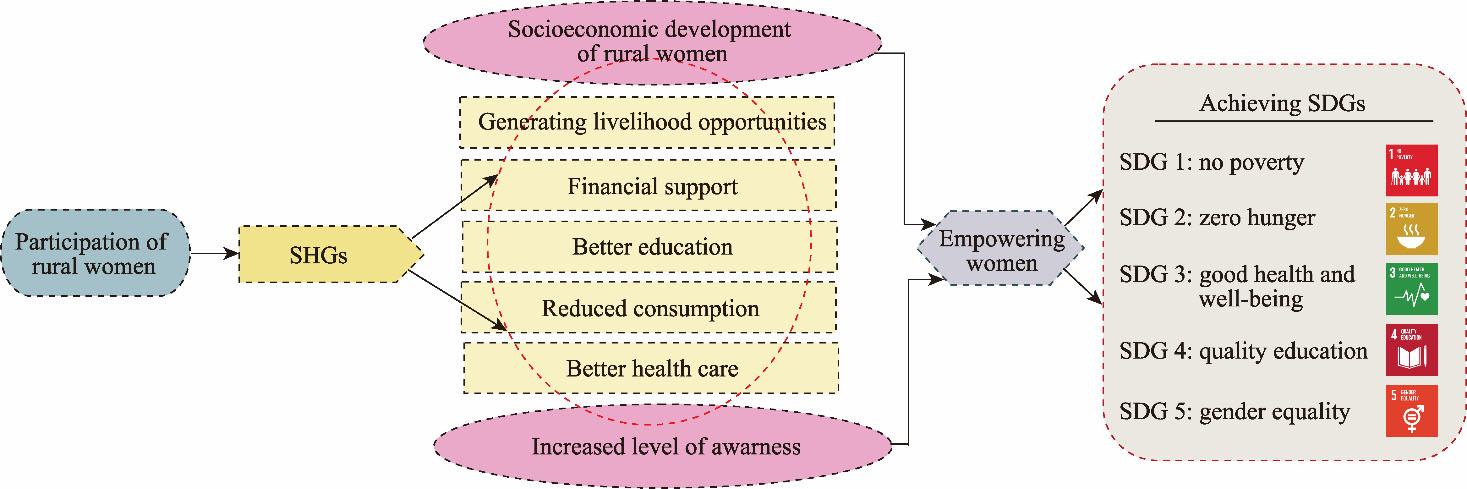
There is a growing body of research on how SHGs help women become more independent. The reason is that microcredit through SHGs plays a major role in contributing to achieving SDGs. Several SDGs strongly rely, directly or indirectly, on the availability of microcredit through SHGs. Figure 1 depicts a few of potential uses and roles that SHGs may play in achieving SDGs. The literature has presented in-depth discussions of the potentially direct influence of SHGs on achieving SDG 1. People who are economically disadvantaged and make 1.25 or 2.00 USD per day are eligible for microcredit through SHGs. This system may help low-income households to improve their financial situation and maintain a steady level of consumption (Murugesan and Ganapathi, 2010; Wickramasinghe and Fernando, 2017). Malnutrition is another extremely severe issue that affects people worldwide. To find a solution to this issue, a large number of studies have investigated the connection between participation in SHGs programs and the nutritional condition of participants (Adamsen and Rasmussen, 2001). Hamad and Fernald (2015) found that using microcredit through SHGs exerted a favorable impact on the nutritional status of participants and their level of food security. Similarly, the connection between socioeconomic status and health has been extensively revealed (Cooper, 2002; Hamad and Fernald, 2015; Roy et al., 2023). People living in poverty and those with low socioeconomic status tend to have bad health. Launching small enterprises, increasing income, and moving closer to economic independence are made possible by microcredit through SHGs for low-income individuals by providing them with the financial means. Therefore, people worldwide agree that a link exists between health and wealth (Deaton, 2008). Inequalities in poverty and health are inseparable, and microcredit through SHGs programs offers solutions for addressing not only one but several of these issues simultaneously (Mahajan, 2005). Low-income families that participate in SHGs programs are more likely to gain access to insurance, as detailed by Brody et al. (2015). Furthermore, the achievement of SDG 4 can also be facilitated through the utilization of microcredit through SHGs programs. The majority of low-income families in rural areas continue to work in agriculture, and many of them put their children to work on family farms to maintain their current standard of living. As a direct consequence, children continue to skip school. Thus, these families can stabilize their financial situation with the support of microcredit through SHGs, such that their children are more likely to go to school. Nader (2008) discovered a significant connection between microcredit through SHGs and the education of children. Based on the discourse, we found that the introduction of microcredit through SHGs has transformed rural women’s income levels, empowered individuals to access better health care, increased nutritional supply for children, boosted household consumption, promoted women’s empowerment, and contributed to increased savings to achieve SDGs 1, 2, 3, 4, and 5.
Fig. 1. Conceptual framework for the role of SHGs to achieve SDGs. SHGs, self-help groups; SDG, Sustainable Development Goal.

2.2. Participation of rural women in SHGs in Cooch Behar District, West Bengal

The SHGs movement was initiated very belatedly in West Bengal. It started slowly but picked up speed over time and is now affecting the rural economy (Sarkar and Malik, 2019). Although the number of SHGs has expanded as a result of measures taken by the state and central governments, this model is evidently not equitably designed across the districts and villages of the state for the sake of the economic well-being of low-income families. As a result of land redistribution in several land reform movements, most farmers in West Bengal own only small plots of land (Mahendra Dev, 2014). This is a factor that contributes to the predominantly agricultural and rural economy of the region. The majority of respondents join SHGs in the hopes of improving their social status. It encourages people to engage in income-generating activities, which enhances their chances of being approved for a loan, increases their propensity to save, and makes paying off their existing debts easy (Sahoo, 2013).
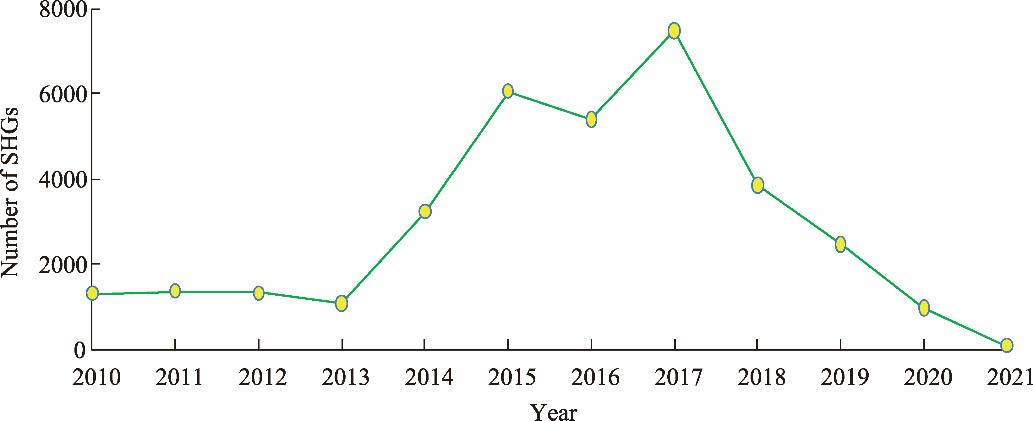
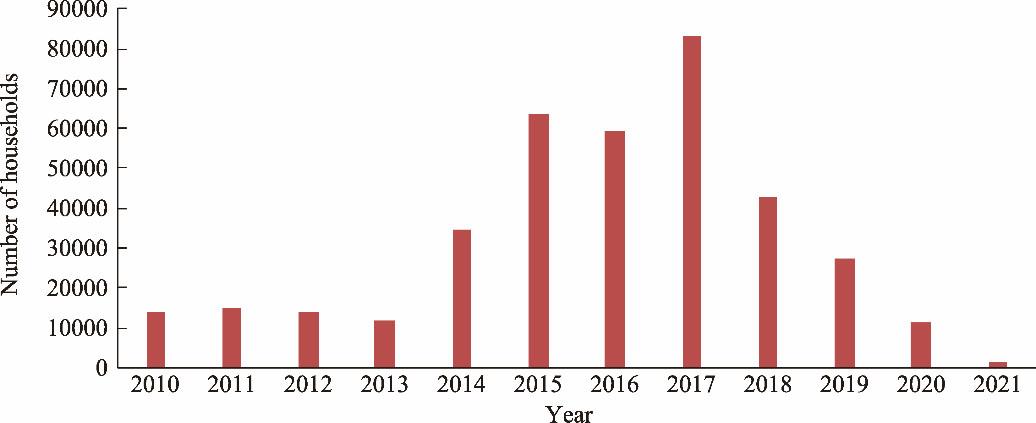
In West Bengal, SHGs are economically and socially improving the lives of rural women. Two dominant philosophies form the function of these societies. In one scenario, everyone in SHGs would save 1.2 USD every month. The SHGs then lend money to its members at an annual interest rate of 2.00%. Another alternative is for participants to engage in the production of goods, such as food processing, handicraft, nursery, and animal rearing. The women share in the little profits from selling such goods. Figures 2 and 3 provide extensive data on SHGs of women in Cooch Behar District, West Bengal. These visuals offer valuable insights into their activities, achievements, and impacts, which highlight their crucial role in empowering women and promoting socioeconomic development in this region. Figure 2 provides a visual representation of the number of SHGs promoted in the study area. It is evident that the highest number of SHGs promoted in the study area was observed in 2017 (7461), constituting 21.54% of the total. In comparison, 17.47% and 15.55% of SHGs were promoted in the study area in 2015 and 2016, respectively. However, since 2019, the number of SHGs promoted in the study area has continued to decline, and this situation continued in 2020 and 2021. In 2017, the highest percentage of households were mobilized to join SHGs (22.08%), as shown in Figure 3. This was followed by 16.83% in 2015 and 15.81% in 2016. After 2019, there was a noticeable decrease in the percentage of households that were mobilized to join SHGs, dropping to 2.94% in 2020 and further declining to 0.32% in 2021. The SHGs in Cooch Behar District showcase the mobilization of households and the active participation of women, which reflect prevailing trends and scenarios.
Fig. 2. Number of SHGs promoted in Cooch Behar District, West Bengal, during 2010-2021.
Fig. 3. Number of households that were mobilized to join SHGs in Cooch Behar District, West Bengal, during 2010-2021.

3. Materials and method

This study is a field survey; thus, we opted for a quantitative data collection and analysis approach. This choice was based on the fact that this study is a survey research attempt. Specifically, the study employed a cross-sectional design. However, data were collected only once, because the study objective did not include the collection of repeated sets of data from the participants during the investigation. The tool used for data collection is a structured and systematic questionnaire. As a result of this approach, the researchers were able to perform statistical analyses to investigate the question: does the participation of rural women in SHGs affect their socioeconomic development and awareness level? The members of women’s SHGs in rural regions of Cooch Behar District were the focus of this study. The study used convenience sampling due to the unavailability of a sample frame. In addition, there were a significant number of women’s SHGs in Cooch Behar District, with a total of 54,213 SHGs and a cumulative number of 576,357 women’s membership. The necessary sample size for the study was calculated using the following formula:
$n=\frac{N}{1+N{{e}^{2}}}$,
where n is the sample size; N is the population size; and e is the margin of error established at 5%.
The survey included 400 respondents from different community development blocks within Cooch Behar District and was conducted between November 2022 and April 2023. The questionnaire does not contain open-ended questions and consists of two different parts. The first part describes the participation of rural women in SHGs and its influence on socioeconomic development, while the second part focuses on whether there is a change in the awareness level of rural women before and after participating in SHGs.
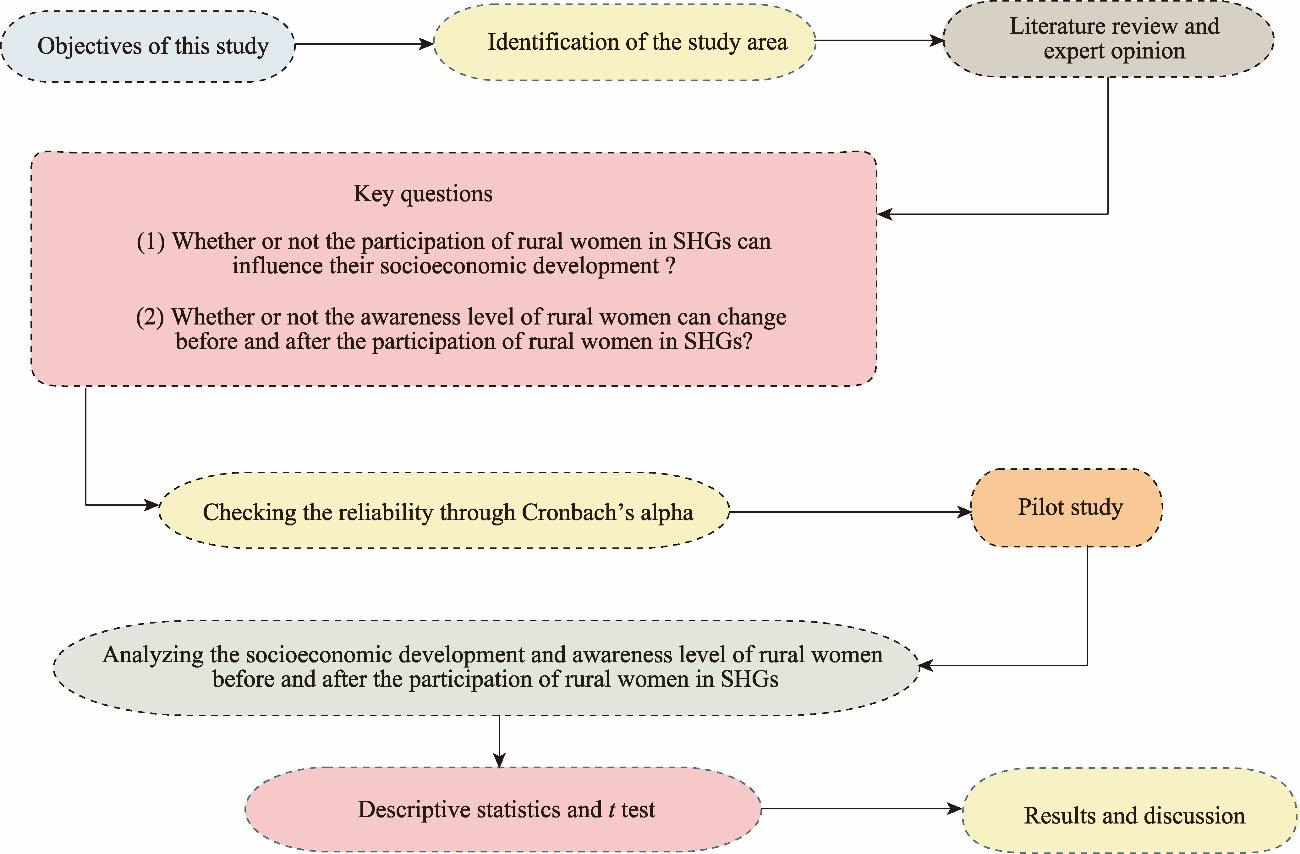
The researchers formulated these constructs after considering the opinions and recommendations made by professionals and academics in the related field of research by reviewing the existing literature (Maheshwari and Goyal, 2014; Datta and Sahu, 2017; Al-Kubati and Selvaratnam, 2023) and noting the opinions of experts. These specialists and academics have been selected due to the scholarly articles they have authored, the unique experiences they have gained, and their extensive expertise on the many aspects of women’s empowerment and SHGs in India. To ensure the validity and reliability of the constructs, we conducted a pilot study to preliminarily test the research instrument. The items regarding socioeconomic development and awareness levels before and after the participation of rural women in SHGs were evaluated using a five-point Likert-type scale. The results indicate that the instrument is sufficiently reliable (Cronbach’s alpha=0.794) (Daud et al., 2018). Interviews were conducted with women who participated in SHGs to further collect data. The purpose of this action was to assess the conditions prior and subsequent to engaging in SHGs. This profile includes information on their socioeconomic conditions before and after the participation of rural women in SHGs. In the process of data analysis, descriptive statistics and t test were employed (Meena et al., 2008). Figure 4 provides a comprehensive and detailed overview of the methodology employed in this study and a visual representation of the various steps and processes involved, which highlight the meticulous approach taken by the researchers to ensure the validity and reliability of the findings.
Fig. 4. Methodological flow chart of this study.

4. Results and discussion

4.1. Sociodemographic characteristics of the respondents

Analysis of the sociodemographic characteristics of the respondents was conducted (Table 1). These characteristics play a major role in determining the development levels of the respondents. Before analyzing these characteristics include age, marital status, religion, caste, level of education, family size, size of land holding, occupation, number of years of participation in SHGs, sizes of SHGs, and type of income-generating activities conducted by SHGs.
Table 1 Sociodemographic characteristics of the respondents.
Sociodemographic characteristic Category Frequency Percentage (%)
Age (years old) <30 47 11.75
30-39 132 33.00
40-49 135 33.75
50-59 78 19.50
>60 8 2.00
Marital status Single 95 23.75
Married 233 58.25
Widow 43 10.75
Divorce 29 7.25
Religion Hindu 297 74.25
Muslim 103 25.75
Caste Scheduled Caste 251 62.75
Scheduled Tribe 0 0.00
General 149 37.25
Level of education Illiterate 97 24.25
Literate 303 75.75
Family size (persons) <3 126 31.50
4-6 197 49.25
>6 77 19.25
Size of land holding (hm2) <0.80 117 29.25
0.80-1.62 247 61.75
>1.62 36 9.00
Occupation Labour 87 21.75
Agriculture 173 43.25
Business 91 22.75
Other 49 12.25
Number of years of participation in SHGs (a) <5 97 24.25
5-10 189 47.25
>10 114 28.50
Size of SHGs (persons) <15 116 29.00
15-20 202 50.50
>20 82 20.50
Type of income-generating activities conducted by SHGs Food processing 97 24.25
Handicraft 167 41.75
Nursery 89 22.25
Animal rearing 47 11.75

Note: SHGs, self-help groups.

Table 1 displays the sociodemographic characteristics of the respondents. Age is a key factor in determining the status of family and society. To a large extent, it acts as a kingpin in regulating the activities of a person. The data presented in this table indicate that the age group with the highest percentage of the respondents (33.75%) was those aged between 40 and 49 years old. This group is considered to have the capacity to contribute the most to development. They are capable of solving the problem that they may encounter. The respondents with 30-39 years old (33.00%) came in second. The rest of the respondents was composed of the less than 30 years old, 50-59 years old, and more than 60 years old, which accounted for 33.25%. Marital status plays a pivotal role in the lives of women. The married group constituted the majority (58.25%) of the respondents, followed by single (23.75%), widow (10.75%), and divorced (7.25%). Religion plays a predominant role in sketching the customs, values, and beliefs of the respondents. In terms of religion, majority of the respondents were Hindu (74.25%), followed by Muslim (25.75%). Notably, the respondents were mainly composed of women belonging to a particular religion in a specific region due to the lack of enthusiasm of women for other religions. In an attempt to analyze the caste of the respondents, Table 1 illustrates that 62.75% of the respondents belonged to Scheduled Caste, while the rest belonged to the general category (37.25%). Education serves as the crucial tool for unlocking the gateway to life opportunities, as it fosters human growth and fuels the progress of a nation. The level of education of a person indicates personality and potential. Specifically, 75.75% of the respondents were literate and completed elementary school levels or above, followed by 24.25% who were illiterate. The utilization of education can prove to be a powerful instrument in the advancement of women, because it equips women in rural areas with the necessary knowledge and technological skills to enhance and progress their work in various domains. The structure of the family unit holds a crucial position in the process of empowering and fostering the growth of rural women. The distribution of family sizes indicates that the majority, which accounted for 49.25%, consisted of four to six persons, while those with less than three persons made up 31.50%, and only 19.25% had more than six persons. Regarding the number of years of participation in SHGs, 47.25% of the respondents participated in SHGs for 5-10 a, and 28.50% participated in SHGs for more than 10 a. Nursery (22.25%), food processing (24.25%), handicraft (41.75%), and animal rearing (11.75%) were complementary occupations.

4.2. Comparing the socioeconomic development of rural women before and after the participation of rural women in SHGs

Women empowerment contributes to socioeconomic development. Economic progress in any developed or undeveloped country can be achieved through social development. The participation of women is significant in their socioeconomic development through their utilization of income-generating activities, such as food processing, handicraft, nursery, and animal rearing. This section has attempted to analyze rural women’s freedom of mobility, community and family recognition, literacy levels, general awareness, work skills, individual and family income, interaction skills, participation in developmental programs, and involvement in decision-making before and after the participation of rural women in SHGs. Table 2 presents a comparison of statistically significant changes in socioeconomic development of rural women before and after the participation of rural women in SHGs. A total of 11 statements were used to assess the level of socioeconomic progress made by rural women over time. The study observed a significant change in rural women’s freedom of mobility after the participation of rural women in SHGs, which is reflected by the increase in mean value from 3.90 before the participation of rural women in SHGs to 4.10 after the participation of rural women in SHGs. The rural women’s community recognition increased after the participation of rural women in SHGs. This result was supported by the work of Anand et al. (2020). The respondents further revealed the rural women’s family recognition, which was indicated by the increase in mean value from 2.76 to 3.39 before and after the participation of rural women in SHGs. Rural women’s literacy levels and general awareness increased after the participation of rural women in SHGs, with the mean values increasing from 2.78 to 3.11 and 3.19 to 3.78, respectively. Rural women’s work skills, individual income, and family income also increased after the participation of rural women in SHGs, which is also supported by the work of Sivachithappa (2013), Dahal (2014), and Mohapatra and Sahoo (2016). The study noted a significant change in rural women’s interaction skills, participation in development programs, and involvement in decision-making, which were reflected by the increases in mean value after the participation of rural women in SHGs (Vijayanthi, 2002; Dahal, 2014; Mohapatra and Sahoo, 2016). The study further compared changes in socioeconomic development using t test. In particular, the t values of the 11 statements were all significant. The results of this study show that participation in SHGs can lead to better socioeconomic development of women in rural areas of Cooch Behar District.
Table 2 Comparison of the socioeconomic development of rural women before and after the participation of rural women in SHGs.
Statement Before the participation of rural women in SHGs After the participation of rural women in SHGs t value
Mean Standard deviation Mean Standard deviation
Rural women’s freedom of mobility 3.90 1.033 4.10 1.070 4.605*
Rural women’s community recognition 3.90 1.210 3.99 1.136 2.100*
Rural women’s family recognition 2.76 1.519 3.39 1.394 10.325*
Rural women’s literacy levels 2.78 1.454 3.11 1.419 5.807*
Rural women’s general awareness 3.19 1.193 3.78 1.291 9.653*
Rural women’s work skills 2.67 1.281 3.17 1.240 8.012*
Rural women’s individual income 4.00 1.126 4.09 1.037 2.131*
Rural women’s family income 4.07 0.803 4.17 0.795 2.468*
Rural women’s interaction skills 4.04 0.889 4.25 0.774 5.745*
Rural women’s participation in developmental programs 3.90 1.070 4.10 1.033 4.605*
Rural women’s involvement in decision making 3.79 1.210 3.99 1.136 2.100*

Note: *, statistical significance at P<0.05 level. The mean and standard deviation were calculated using a five-point Likert-type scale, in which 1, 2, 3, 4, and 5 represent strongly disagree, disagree, neutral, agree, and strongly agree, respectively.

4.3. Influence of SHGs on awareness level of rural women

Table 3 presents the mean, standard deviation, and t value for awareness levels of rural women before and after the participation of rural women in SHGs. We divided the statements that were used to evaluate awareness level of rural women into four broad areas, namely, social, health, economic, and political aspects. The results of t value indicate that participation in SHGs significantly contributes to raising the awareness level of rural women.
Table 3 Comparison of awareness level of rural women before and after the participation of rural women in SHGs.
Statement Before the participation of rural women in SHGs After the participation of rural women in SHGs t value
Mean Standard deviation Mean Standard deviation
Social aspect Child labor awareness 2.76 1.516 3.39 1.394 7.946*
Education on the issue of child marriage 2.89 1.454 3.11 1.419 5.807*
Increased awareness of domestic violence 3.19 1.291 3.78 1.193 9.653*
Understanding the social inequalities that exist 3.41 0.500 4.52 0.516 12.802*
Status in family 3.70 0.715 4.02 0.893 8.519*
Status in society 3.90 0.530 4.49 0.861 12.274*
Making-decisions as a family member 4.00 0.524 4.47 0.706 8.334*
Health aspect Knowledge regarding sanitary practices 2.14 0.495 3.70 1.135 6.951*
Awareness of the importance of personal hygiene 2.96 0.500 4.52 0.734 9.945*
Raising consciousness on the Samaj Sathi insurance scheme 2.60 0.390 4.89 1.137 11.123*
Adoption of small family norms 4.07 0.803 4.17 0.795 2.468*
Economic aspect Controlling resources 4.04 0.773 4.25 0.889 4.261*
Creditworthiness 3.98 0.907 4.27 0.858 4.768*
Liberation from lenders 5.74 1.504 7.36 1.585 16.649*
Banking habits 3.88 1.097 3.92 1.102 2.809*
Opportunities for self-employment 3.77 0.814 3.94 0.946 3.124*
Capacity for communication 3.90 0.815 4.10 0.984 3.363*
Knowledge of entrepreneurship 2.67 1.240 3.17 1.281 8.012*
Political aspect Information about government initiatives 3.98 1.562 4.35 1.868 4.489*
Education about the rights of women 4.55 1.598 4.68 1.584 2.111*
Education on women’s equal ownership of property 4.91 1.497 5.57 1.618 5.721*
Involvement in development initiatives 6.99 1.864 7.57 1.780 7.195*

Note: *, statistical significance at P<0.05 level. The mean and standard deviation were calculated using a five-point Likert-type scale, in which 1, 2, 3, 4, and 5 represent strongly disagree, disagree, neutral, agree, and strongly agree, respectively.

4.3.1. Awareness level of rural women in social aspect

Increased awareness of child labor led to a considerable shift in attitudes toward social problems, particularly in rural regions. This shift especially affected the practices related to child labor. The mean value increased from 2.76 to 3.39 before and after the participation of rural women in SHGs, so it is easy to deduce why people feel differently after the participation of rural women in SHGs. The mean value increased from 2.89 before the participation of rural women in SHGs to 3.11 after the participation of rural women in SHGs, indicating a better understanding of child marriage education-related practices (Dahal, 2014). However, families are compelled to resort to child marriage and employ their children due to the societal circumstances in which they exist (Kabeer, 2005; Abebe, 2008). As a result of participating in SHGs, the participants reported increased awareness about social injustice and domestic violence (Sundaram, 2012), which was most evident among those with low socioeconomic status, low level of education, and weak social networks within the community. A striking evidence of this finding is that rural women’s awareness of domestic violence and their understanding of the social inequalities that exist increased after the participation of rural women in SHGs. The findings of Brody et al. (2015) confirmed the claims of participants that the direct consequence of participating in SHGs is improved status in family and society, as well as increased self-confidence in decision-making. The majority of family members participate in SHGs, which fosters a feeling of community and broadens the opportunities for participants.

4.3.2. Awareness level of rural women in health aspect

Poor women and their families may access affordable health care and other fundamental necessities through SHGs. The mean value of knowledge regarding sanitary practices increased from 2.14 before the participation of rural women in SHGs to 2.90 after the participation of rural women in SHGs, which indicates a substantial change in awareness level. The mean value for the awareness of the importance of personal hygiene was 3.08 before the participation of rural women in SHGs, which considerably increased to 4.52 after the participation of rural women in SHGs. The Samaj Sathi is an insurance scheme against accidents for members of SHGs (Dasgupta et al., 2022). After the participation of rural women in SHGs, the people provided considerably more positive responses, on average, to whether or not they were aware of the Samaj Sathi insurance scheme. The mean value of raising consciousness on the Samaj Sathi insurance scheme increased from 2.60 to 4.89. The change clearly demonstrates that members of SHGs have embraced the norms and values of a small family.

4.3.3. Awareness level of rural women in economic aspect

SHGs are comprised of small groups of rural women who can relate to one another and exhibit comparable demographic traits (Patil and Kokate, 2017). They feel an increased sense of belonging due to their social similarities. It is a tool that carries the potential to end poverty and boost the economic standing of women in India (Prasad and Sreedevi, 2007). The increase in the mean value from 4.04 before the participation of rural women in SHGs to 4.25 after the participation of rural women in SHGs is an evidence of the improvement in the capacity of controlling resources (Daniyan-Bagudu, 2018). In addition, the respondents acknowledged that being a member of SHGs was the most important factor in determining whether or not they would be able to improve their creditworthiness and qualify for loans via the conventional banking system (Dasgupta, 2001). Finally, the respondents confirmed that participating in SHGs has increased their access to financial resources and improved the quality of life. However, SHGs have proven to be a valuable instrument for fostering opportunities for self-employment, enhancing communication skills, and cultivating entrepreneurial knowledge. These findings are further supported by Vejju (2018), Kapoor (2019), and Siddeswari and Gopal (2021).

4.3.4. Awareness level of rural women in political aspect

Women’s participation in SHGs has increased their understanding of social and political issues, which has boosted their self-esteem and worth (Kapoor, 2019; Nayak and Panigrahi, 2020). After the participation of rural women in SHGs, the mean value increased from 3.98 to 4.35, reflecting that they now had more access to information on a wide range of government programs (Mohapatra and Sahoo, 2016). Women strongly believe that SHGs are a collective undertaking to raise awareness of their rights and advocate for women’s equal ownership of property (Choudhury, 2015; Kumar et al., 2021). Regarding the education about the rights of women and education on women’s equal ownership of property, the mean value increased from 4.55 to 4.68 and 4.91 to 5.57, respectively. Moreover, the study noted an increase in their involvement in development initiatives, which was indicated by the increase in the mean value from 6.99 to 7.57 before and after the participation of rural women in SHGs.

5. Conclusions

In summary, the study conducted a comprehensive examination in Cooch Behar District, West Bengal, and clearly demonstrated the pivotal role of microcredit through SHGs in advancing socioeconomic development and awareness level of rural women. By employing a detailed cross-sectional survey on 400 members of SHGs, we effectively captured significant changes in socioeconomic development and awareness level of rural woman before and after the participation of rural women in SHGs. The findings are indicative of a substantial shift in the empowerment of rural women not only in terms of financial independence but also in social status and self-perception. Access to microcredit through SHGs has enabled these women to contribute more significantly to their financial well-being of their families, move beyond traditional roles, and make informed decisions regarding health, education, and household management. This transformation is profound in a context, in which women have been historically relegated to the background in economic and decision-making processes.
Moreover, the study underscored the role of SHGs in achieving SDGs. The empowerment of rural women through financial and social means, as facilitated by SHGs, not only improves the individual lives of women but also contributes to the holistic development of the community and the nation. Thus, the study conclusively pointed out that empowering rural women by providing microcredit through SHGs is a significant step toward the realization of a developed, equitable, and inclusive society. The results emphasized the need for continued support and expansion of such initiatives to ensure sustained socioeconomic development and the achievement of SDGs in rural areas of India. However, the reliance of the study on primary data from the members of SHGs could introduce bias, its cross-sectional approach limits causal inference, and its focus on one district potentially affects the applicability of the results. Thus, future research should include longitudinal studies across regions to fully comprehend the long-term impacts and varying effects of SHGs in socioeconomic and cultural contexts of India.

Authorship contribution statement

Debanjan BASAK: writing - original draft, conceptualization, formal analysis, investigation, methodology, software, visualization, and writing - review & editing; and Indrajit Roy CHOWDHURY: writing - review & editing, supervision, and validation. All authors approved this manuscript.

Ethics statement

Ethics approval was obtained from the University of North Bengal, India, regarding the ethical aspects of this study. In addition, the participants provided their informed consent to participate in this study.

Declaration of competing interest

The authors declare that they have no known competing financial interests or personal relationships that could have appeared to influence the work reported in this paper.

Disclaimer

This work is part of the PhD Dissertation of the first author (Debanjan BASAK).

Firstly, the authors would like to express their sincere gratitude to the Department of Geography and Applied Geography, University of North Bengal, India, for providing the opportunity to conduct the research work. In addition, the authors would like to express their sincere gratitude to all the individuals who actively participated in self-help groups. This paper was completed during the tenure of the University Grants Commission - Junior Research Fellowship. Besides, the authors would also like to thanks Mr. Arghadeep BOSE and Mr. Subham ROY for improving this research work. Finally, two anonymous reviewers provided constructive and insightful comments that greatly improved the quality of the manuscript.

[1]
Abebe T., 2008. Earning a living on the margins: Begging, street work and the socio‐spatial experiences of children in Addis Ababa. Geografiska Annaler: Series B, Human Geography. 90(3), 271-284.

[2]
Adamsen L., Rasmussen J.M., 2001. Sociological perspectives on self‐help groups: Reflections on conceptualization and social processes. J. Adv. Nurs. 35(6), 909-917.

PMID

[3]
Alkire S., Meinzen-Dick R., Peterman A., et al., 2013. The women’s empowerment in agriculture index. World Dev. 52, 71-91.

[4]
Al-Kubati N.A.A., Selvaratnam D.P., 2023. Empowering women through the Self-Help Group Bank Linkage Programme as a tool for sustainable development: Lessons from India. Community Dev. J. 58(2), 283-308.

[5]
Alsop R., Bertelsen M.F., Holland J., 2006. Empowerment in practice: From analysis to implementation. Danvers: World Bank Publications.

[6]
Anand P., Saxena S., Gonzales Martinez R., et al., 2020. Can women’s self-help groups contribute to sustainable development? Evidence of capability changes from Northern India. J. Hum. Dev. Capab. 21(2), 137-160.

[7]
Arora N., Chawla R.A., 2023. Empowering women through self help groups and women cooperatives - A tool for sustainable development. DME J. Manag. 4(1), 25-30.

[8]
Basak D., Chowdhury I.R., 2023. Exploring the impact of self-help groups on empowering rural women: An examination of the moderating role of self-help group membership using structural equation modeling. Glob. Soc. Welf. 10, 299-311.

[9]
Brody C., De Hoop T., Vojtkova M., et al., 2015. Economic self‐help group programs for improving women’s empowerment: A systematic review. Campbell Syst. Rev. 11(1), doi: 10.4073/csr.2015.19.

[10]
Cattaneo L.B., Chapman A.R., 2010. The process of empowerment: A model for use in research and practice. Am. Psychol. 65(7), 646-659.

DOI PMID

[11]
Choudhury S.K., 2015. Empowerment of women through SHG and role of education: An analysis. Pedagog. Learn. 3(2), 96-104.

[12]
Cooper H., 2002. Investigating socio-economic explanations for gender and ethnic inequalities in health. Soc. Sci. Med. 54(5), 693-706.

DOI PMID

[13]
Dahal S., 2014. A study of women’s self help groups and the impact of SHG participation on women empowerment and livelihood in Lamachaur village of Nepal. MSc Thesis. Oslo: Norwegian University of Life Sciences.

[14]
Daniyan-bagudu H., 2018. The impact of microfinance on women’s empowerment in Niger state, Nigeria. PhD Dissertation. Sintok: Universiti Utara Malaysia.

[15]
Dasgupta R., 2001. An informal journey through self-help groups. Indian J. Agric. Econ. 56(3), 370-386.

[16]
Dasgupta S., Wheeler D., Bandyopadhyay S., et al., 2022. Coastal dilemma: Climate change, public assistance and population displacement. World Dev. 150, 105707, doi: 10.1016/j.worlddev.2021.105707.

[17]
Datta S., Sahu T.N., 2017. An empirical study on the impact of microfinance on women empowerment: Evidence from West Bengal. Indian J. Commer. Manag. Stud. 8(3), 53-62.

[18]
Daud K.A.M., Khidzir N.Z., Ismail A.R., et al., 2018. Validity and reliability of instrument to measure social media skills among small and medium entrepreneurs at Pengkalan Datu River. Int. J. Sustain. Dev. 7(3), 1026-1037.

[19]
Deaton A., 2008. Income, health, and well-being around the world: Evidence from the Gallup World Poll. J. Econ. Perspect. 22(2), 53-72.

[20]
Desai S., Jain D., 1994. Maternal employment and changes in family dynamics: The social context of women’s work in rural South India. Popul. Dev. Rev. 20(1), 115-136.

[21]
Dinakaran S., Verma S., Das S.J., et al., 2010. Investigations for obtaining enhanced SHG element of KH2PO 4 crystal. Physica B: Condensed Matter. 405(7), 1809-1812.

[22]
Drèze J., Sen A., 2002. India:Development and Participation. Oxford: Oxford University Press.

[23]
Dyson T., Moore M., 1983. On kinship structure, female autonomy, and demographic behavior in India. Popul. Dev. Rev. 9(1), 35-60.

[24]
Emirbayer M., Mische A., 1998. What is agency? Am. J. Sociol. 103(4), 962-1023.

[25]
Gautam U.S., Singh A., Singh S.R.K., 2012. Participatory approach of women in agriculture: Vision 2025. Indian Res. J. Ext. Edu. 1, 38-42.

[26]
Hamad R., Fernald L.C., 2015. Microcredit participation and women’s health: Results from a cross-sectional study in Peru. International Journal for Equity in Health. 14, 1-10.

[27]
Jakimow T., Kilby P., 2006. Empowering women: A critique of the blueprint for self-help groups in India. Indian J. Gend. Stud. 13(3), 375-400.

[28]
Kabeer N., 2005. Gender equality and women’s empowerment: A critical analysis of the third millennium development goal 1. Gend. Dev. 13(1), 13-24.

[29]
Kandpal V., Nautiyal N., 2023. Women’s empowerment: Key for socio-economic development in India. Int. J. Bus. Innov. Res. 32(2), 260-279.

[30]
Kapoor S., 2019. Entrepreneurship for economic and social empowerment of women: A case study of a self-help credit program in Nithari Village, Noida, India. Australas. Account. Bus. Finance J. 13(2), 123-142.

[31]
Kilby P., 2010. NGOs in India: The Challenges of Women’s Empowerment and Accountability. [2023-05-11]. https://library.oapen.org/handle/20.500.12657/34628.

[32]
Kumar N., Raghunathan K., Arrieta A., et al., 2021. The power of the collective empowers women: Evidence from self-help groups in India. World Dev. 146, 105579, doi: 10.1016/j.worlddev.2021.105579.

[33]
Mahajan V., 2005. From microcredit to livelihood finance. Econ. Polit. Wkly. 40(41), 4416-4419.

[34]
Mahendra Dev S., 2014. Small Farmers in India: Challenges and Opportunities. [2023-11-30]. http://hdl.handle.net/2275/262.

[35]
Maheshwari M., Goyal S., 2014. Role of self-help groups in socio-economic empowerment of women: A review of studies. Pacific Bus. Rev. Int. 2(7), 85-93.

[36]
Mayoux L., 1998. Women’s Empowerment and Micro-finance Programmes Approaches, Evidence and Ways Forward. [2023-11-30]. https://ageconsearch.umn.edu/record/295285?v=pdf.

[37]
Meena M.S., Jain D., Meena H.R., 2008. Measurement of attitudes of rural women towards self-help groups. J. Agric. Educ. Ext. 14(3), 217-229.

[38]
Mohammed N., Wiles A.A., Belsley M., et al., 2017. Synthesis and characterisation of push-pull flavin dyes with efficient second harmonic generation (SHG) properties. RSC Advances. 7(39), 24462-24469.

[39]
Mohapatra S., Sahoo B.K., 2016. Determinants of participation in self-help-groups (SHG) and its impact on women empowerment. Indian Growth Dev. Rev. 9(1), 53-78.

[40]
Murugesan J., Ganapathi R., 2010. Impact of micro-finance on economic status of members of the self-help groups. Asia Pac. Bus. Rev. 6(3), 74-87.

[41]
Nader Y.F., 2008. Microcredit and the socio-economic wellbeing of women and their families in Cairo. J. Socio. Econ. 37(2), 644-656.

[42]
Nayak A.K., Panigrahi P.K., 2020. Participation in self-help groups and empowerment of women: A structural model analysis. J. Dev. Areas. 54(1), doi: 10.1353/jda.2020.0001.

[43]
Niaz M.U., Iqbal M., 2019. Effect of Microfinance on Women Empowerment: A Case Study of Pakistan. [2023-05-15]. https://ssrn.com/abstract=3419834.

[44]
Nyagwanga G.N., 2016. Influence of self help groups on economic empowerment of women in Rongo Sub County, Migori County, Kenya. PhD Dissertation. Nairobi: University of Nairobi.

[45]
Patil S., Kokate K., 2017. Identifying factors governing attitude of rural women towards Self-Help Groups using principal component analysis. J. Rural Stud. 55, 157-167.

[46]
Prasad P.N., Sreedevi V., 2007. Economic empowerment of women through information technology: A case study from an Indian state. Journal of International Women’s Studies. 8(4), 107-120.

[47]
Rao S., Vlassoff C., Sarode J., 2014. Economic development, women’s social and economic empowerment and reproductive health in rural India. Asian Popul. Stud. 10(1), 4-22.

[48]
Roy S., Bose A., Basak D., et al., 2023. Towards sustainable society: The sustainable livelihood security (SLS) approach for prioritizing development and understanding sustainability: An insight from West Bengal, India. Environ. Dev. Sustain. doi: 10.1007/s10668-023-03456-x.

[49]
Sahoo A., 2013. Self-help group & woman empowerment: A study on some selected SHGs. Int. J. Bus. Manag. Invent. 2(9), 54-61.

[50]
Sarkar S., Malik I.C., 2019. Self-help group in West Bengal-PEST analysis. IOSR J. Humanit. Soc. Sci. 24(8), 42-50.

[51]
Siddeswari G.K., Gopal P.S., 2021. Factors influencing the entrepreneurial behavior of women entrepreneurs of self-help groups in Andhra Pradesh. J. Environ. Biol. 42, 524-533.

[52]
Sindhav K., 2017. Women empowerment through microfinance:A study of need, practices and future trends. PhD Dissertation. Vadodara: Maharaja Sayajirao University of Baroda.

[53]
Singh N., 2006. How to establish SHG-bank linkage: A case of Anarde Foundation. Asia Pacific Business Review. 2(2), 87-91.

[54]
Sivachithappa K., 2013. Impact of micro finance on income generation and livelihood of members of self-help groups - A case study of Mandya district, India. Procedia - Social and Behavioral Sciences. 91, 228-240.

[55]
Sundaram A., 2012. Impact of self-help group in socio-economic development of India. IOSR J. Humanit. Soc. Sci. 5(1), 20-27.

[56]
Survase M., Gohil A., 2024. Empowering self-help groups: The impact of financial inclusion on social well-being. J. Risk Financ. Manag. 17, 217, doi: 10.3390/jrfm17060217.

[57]
Vejju B., 2018. Role of self help groups (SHGs) on women entrepreneurship in Andhra Pradesh. Int. J. Res. Manag. Econ. Comm. 8(1), 126-132.

[58]
Vijayanthi K.N., 2002. Women’s empowerment through self-help groups: A participatory approach. Indian J. Gend. Stud. 9(2), 263-274.

[59]
Wickramasinghe V., Fernando D., 2017. Use of microcredit for household income and consumption smoothing by low income communities. Int. J. Consum. Stud. 41(6), 647-658.

Outlines

/