



Sources, migration and ecological risks of microplastic pollution in arid regions
Received date: 2025-06-05
Revised date: 2025-06-11
Online published: 2026-03-12
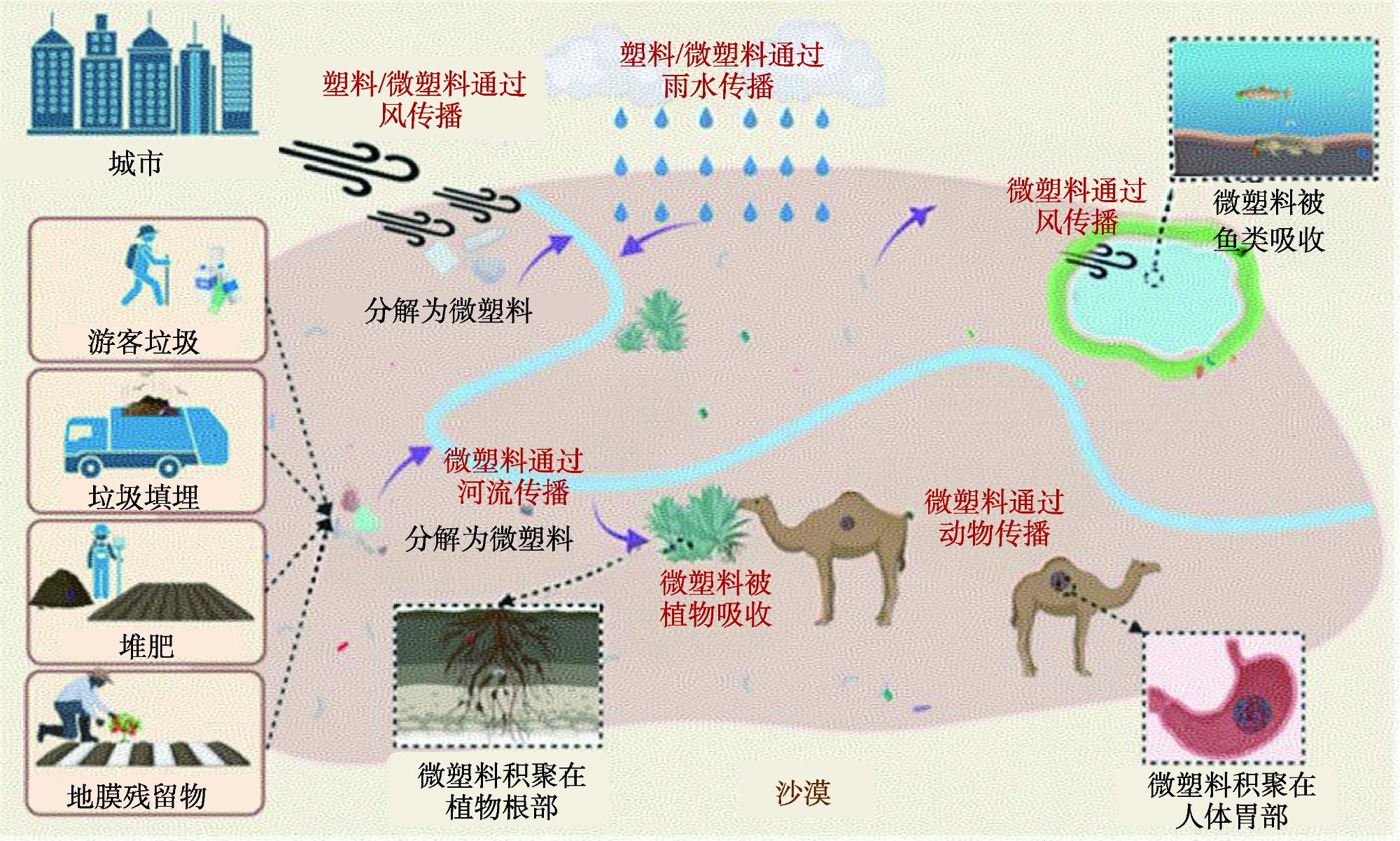
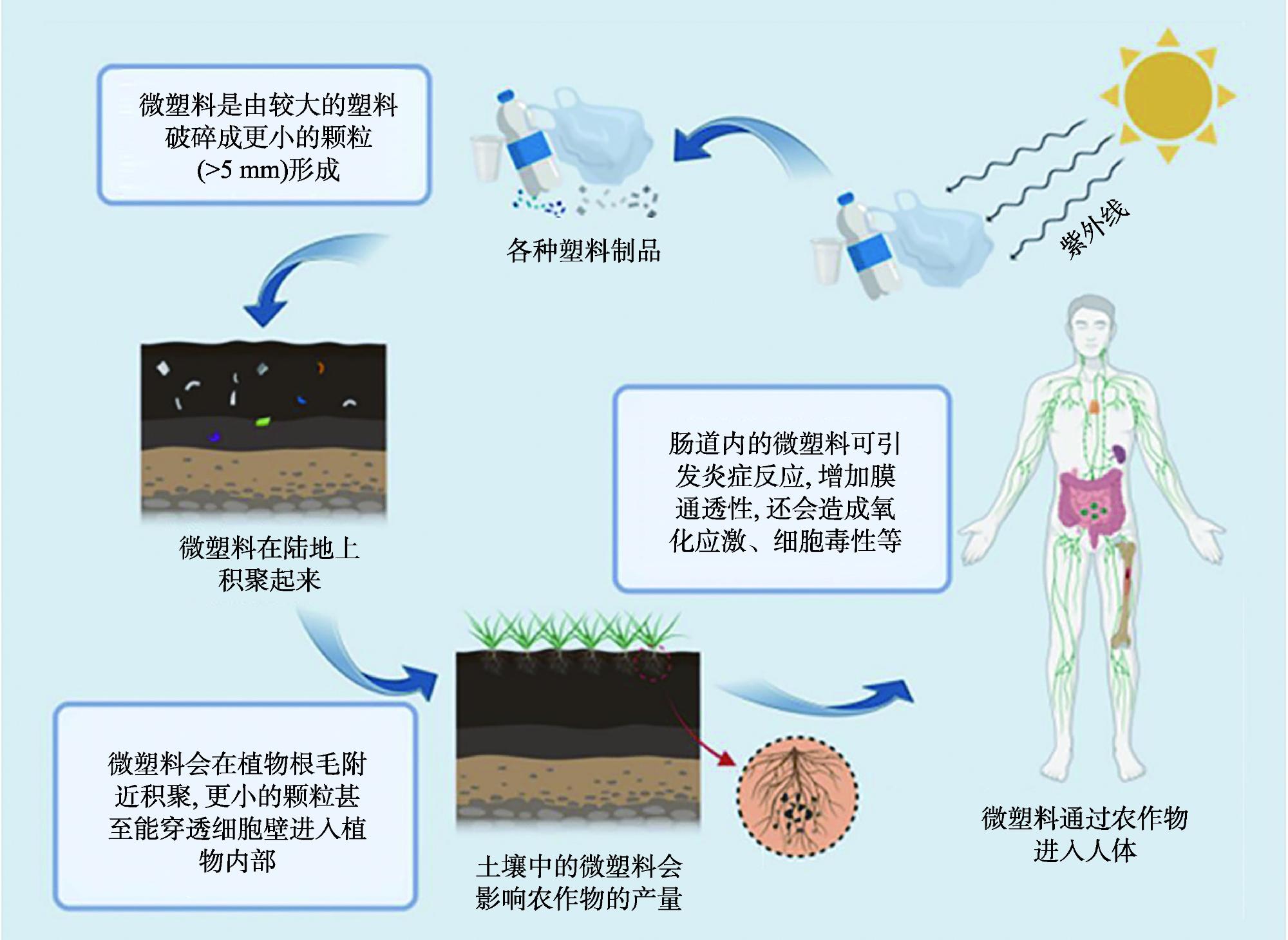
Arid regions function as important global sources and sinks for microplastics (MPs), with their unique climatic conditions and human activity patterns giving rise to specific MP pollution characteristics. This article systematically reviews recent advances in understanding MP sources, pollution patterns, migration, and ecological risks within arid environments. Regarding pollution characteristics, soil MP abundance exhibits significant spatial heterogeneity, with fibrous microplastics accounting for 64%-92% of the total. Polyethylene, polypropylene, and nylon are identified as the main polymer components, primarily originating from agricultural film residues. In terms of migration mechanisms, wind erosion and sandstorm events dominate local-to-regional-scale transport. Due to their high aspect ratio and low density, fibrous microplastics are particularly prone to cross-border atmospheric migration, further prolonged by the coupling effect of electric and wind fields on their atmospheric residence time. Ecologically, MPs exert multi-dimensional impacts on ecosystems by altering soil physicochemical properties (e.g., pore structure and water retention capacity), interfering with microbial metabolism, and inducing oxidative stress in plants. Future research efforts should focus on integrating multiscale models, investigating the combined effects of microplastics and other pollutants, and establishing a standardized monitoring system.
Key words: arid regions; microplastics; source; migration pattern; ecological risk
WANG Caiqin , SHAO Jiashi , FU Daiye , ZHANG Daoyong , PAN Xiangliang . Sources, migration and ecological risks of microplastic pollution in arid regions[J]. Arid Zone Research, 2025 , 42(9) : 1599 -1611 . DOI: 10.13866/j.azr.2025.09.05
表1 干旱区不同地点不同介质中的微塑料丰度Tab. 1 Microplastic abundance in different locations and media |
| 地点 | 水 | 沉积物 | 土壤 | 空气 | 参考文献 |
|---|---|---|---|---|---|
| 内蒙古高原湖泊 | 0.5~12.6 个·L-1 | 50~325 个·L-1 | - | - | [43] |
| 黄土高原,黄河 | 51.1~686.7 个·kg-1 | - | - | - | [44] |
| 青藏高原,青海湖 | 0.05× 10⁵~7.6× 10⁵ 个·km-2 | 50~1292 个·km-2 | - | - | [28,45] |
| 伊朗,马哈鲁湖 | 10.4 个·kg-1 | 57.1 个·kg-1 | - | - | [44] |
| 川藏 | - | - | 76.2~159.6 个·kg-1 | - | [15,46] |
| 黄土高原 | - | - | 1667~4333 个·kg-1 | - | [47] |
| 新疆,阿勒泰 | - | - | 1.1×10⁴~7.8×10⁴ 个·kg-1 | - | [48] |
| 新疆,石河子 | - | - | 80.3~1075.6 个·kg-1 | - | [13] |
| 伊朗,德黑兰 | - | - | - | 0.74~1 个·m-3 | [48] |
| 伊朗,阿瓦兹 | - | - | - | 0~0.02 个·m-3 | [7] |
| 埃及,大开罗地区 | - | - | - | 30~87 个·m-3 | [49] |
| [1] |
|
| [2] |
|
| [3] |
|
| [4] |
|
| [5] |
|
| [6] |
|
| [7] |
|
| [8] |
|
| [9] |
|
| [10] |
|
| [11] |
严昌荣, 刘恩科, 舒帆, 等. 我国地膜覆盖和残留污染特点与防控技术[J]. 农业资源与环境学报, 2014, 31(2): 95-102.
[
|
| [12] |
|
| [13] |
|
| [14] |
程万莉, 樊廷录, 王淑英, 等. 我国西北覆膜农田土壤微塑料数量及分布特征[J]. 农业环境科学学报, 2020, 39(11): 2561-2568.
[
|
| [15] |
|
| [16] |
|
| [17] |
陈荣龙, 陈延华, 黄珊, 等. 陕西关中农田土壤中塑料碎片和微塑料残留及其累积特征研究[J]. 中国生态农业学报(中英文), 2022, 30(10): 1649-1658.
[
|
| [18] |
|
| [19] |
|
| [20] |
|
| [21] |
郝爱红, 赵保卫, 张建, 等. 土壤中微塑料污染现状及其生态风险研究进展[J]. 环境化学, 2021, 40(4): 1100-1111.
[
|
| [22] |
|
| [23] |
|
| [24] |
|
| [25] |
|
| [26] |
|
| [27] |
|
| [28] |
杨扬. 农田土壤地膜源微塑料污染分布特征与释放机制研究[D]. 中国农业科学院, 2022.
[
|
| [29] |
|
| [30] |
|
| [31] |
|
| [32] |
|
| [33] |
|
| [34] |
|
| [35] |
|
| [36] |
雷鹏, 李梦蛟, 刘亮亮, 等. 西北典型干旱区域棉田微塑料赋存特征及风险评估[J]. 环境污染与防治, 2025, 47(6): 10-19.
[
|
| [37] |
|
| [38] |
|
| [39] |
|
| [40] |
|
| [41] |
王金花, 李冰, 侯宇晴, 等. 农田土壤中微塑料的赋存、迁移及生态效应研究进展[J]. 农业环境科学学报, 2023, 42(5): 951-965, 946.
[
|
| [42] |
|
| [43] |
|
| [44] |
|
| [45] |
|
| [46] |
|
| [47] |
|
| [48] |
|
| [49] |
|
| [50] |
|
| [51] |
龚喜龙, 张道勇, 潘响亮. 黄河沉积物微塑料污染和表征[J]. 干旱区研究, 2020, 37(3): 790-798.
[
|
| [52] |
|
| [53] |
|
| [54] |
|
| [55] |
|
| [56] |
|
| [57] |
|
| [58] |
|
| [59] |
|
| [60] |
|
| [61] |
|
| [62] |
|
| [63] |
|
| [64] |
|
| [65] |
|
| [66] |
|
| [67] |
|
| [68] |
|
| [69] |
|
| [70] |
|
| [71] |
|
| [72] |
|
| [73] |
|
| [74] |
|
| [75] |
|
| [76] |
|
| [77] |
|
| [78] |
|
| [79] |
|
| [80] |
|
| [81] |
|
| [82] |
|
| [83] |
|
| [84] |
|
| [85] |
|
| [86] |
|
| [87] |
|
| [88] |
|
| [89] |
|
| [90] |
曹林杰. 不同类型农膜降解性能和污染特征及其对土壤理化影响[D]. 咸阳: 西北农林科技大学, 2023.
[
|
| [91] |
|
| [92] |
|
| [93] |
|
| [94] |
|
| [95] |
|
| [96] |
薛颖昊. 我国农田残膜污染特征及聚乙烯微塑料对水生动物的毒性效应研究[D]. 沈阳: 沈阳农业大学, 2023.
[
|
| [97] |
蔡亚云, 赵佳玥, 李文锋, 等. 不同粒径塑料微颗粒在斑马鱼腮组织中的积累及其对蒽毒性的影响[J]. 应用与环境生物学报, 2017, 23(6): 1154-1158.
[
|
| [98] |
|
| [99] |
|
| [100] |
|
| [101] |
|
| [102] |
|
| [103] |
熊雄, 吴辰熙. 湖泊——内陆水体微塑料污染的热点区域[J]. 自然杂志, 2021, 43(4): 243-250.
[
|
| [104] |
|
| [105] |
|
| [106] |
|
| [107] |
|
| [108] |
|
| [109] |
|
| [110] |
|
| [111] |
|
| [112] |
|
| [113] |
|
| [114] |
|
| [115] |
|
| [116] |
|
/
| 〈 |
|
〉 |