



Physical quantity characteristics and atmospheric circulation of different types of rainstorms on the northern slope of the Kunlun Mountains
Received date: 2025-05-30
Revised date: 2025-09-04
Online published: 2026-03-12
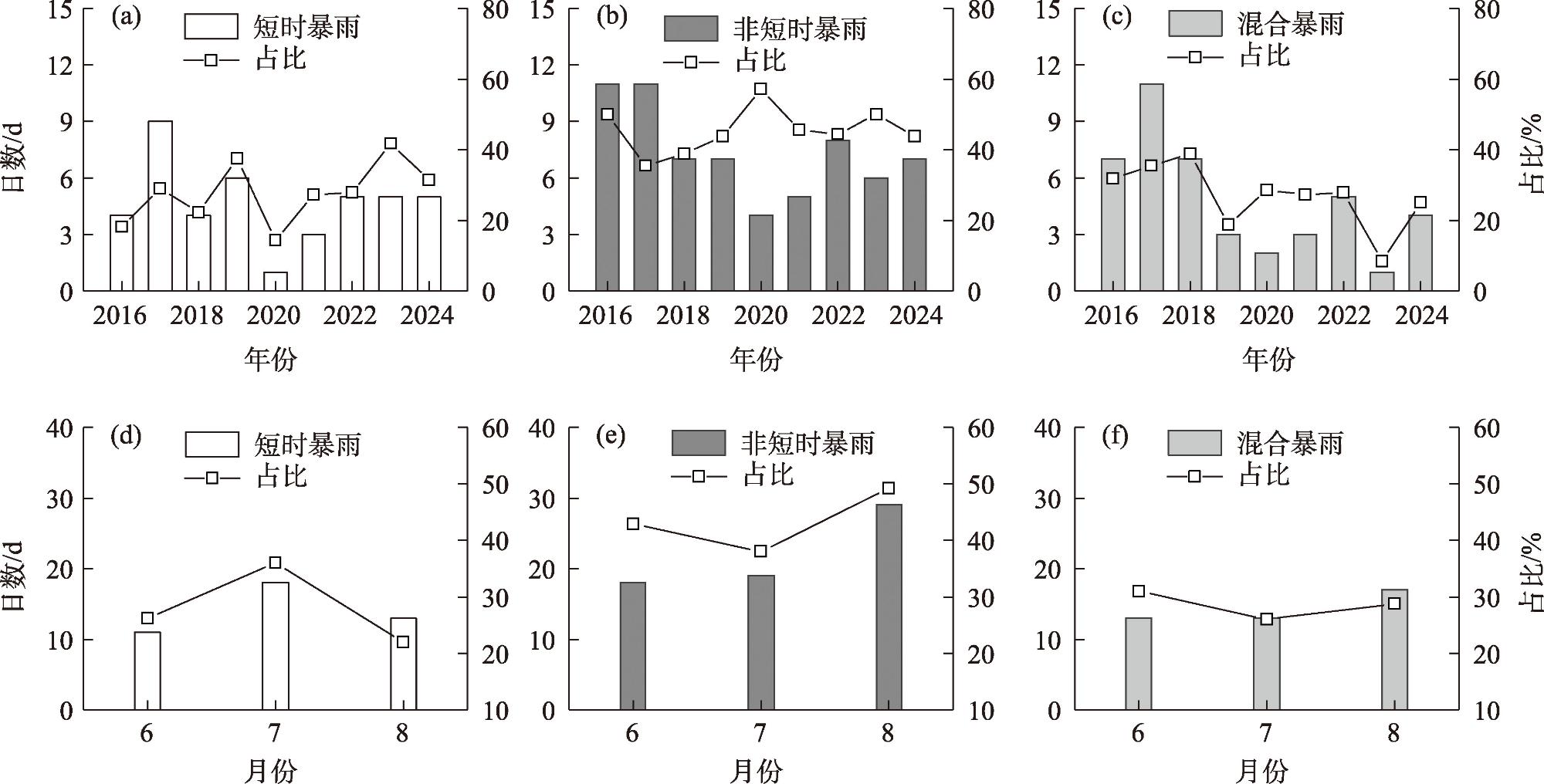
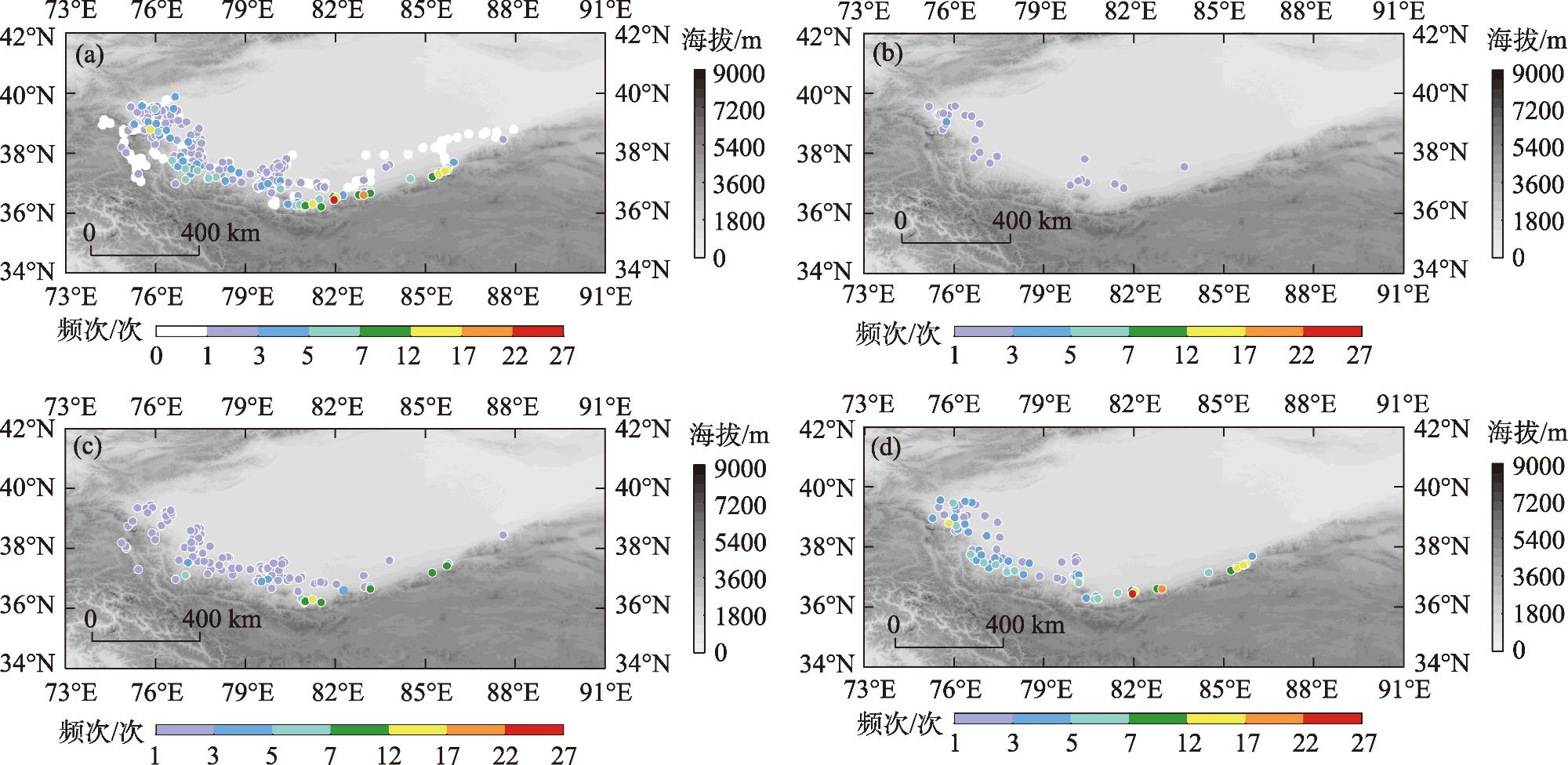
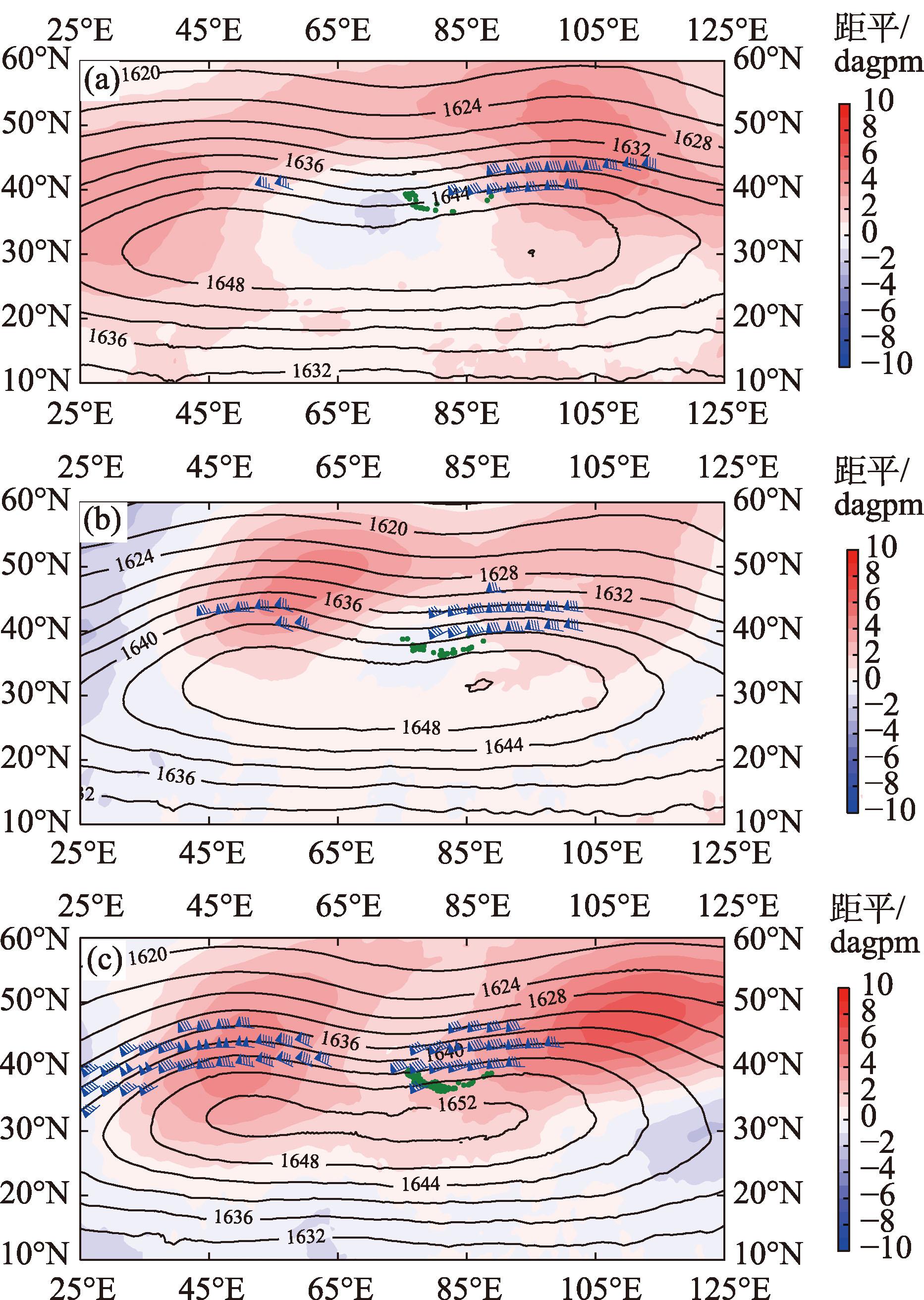
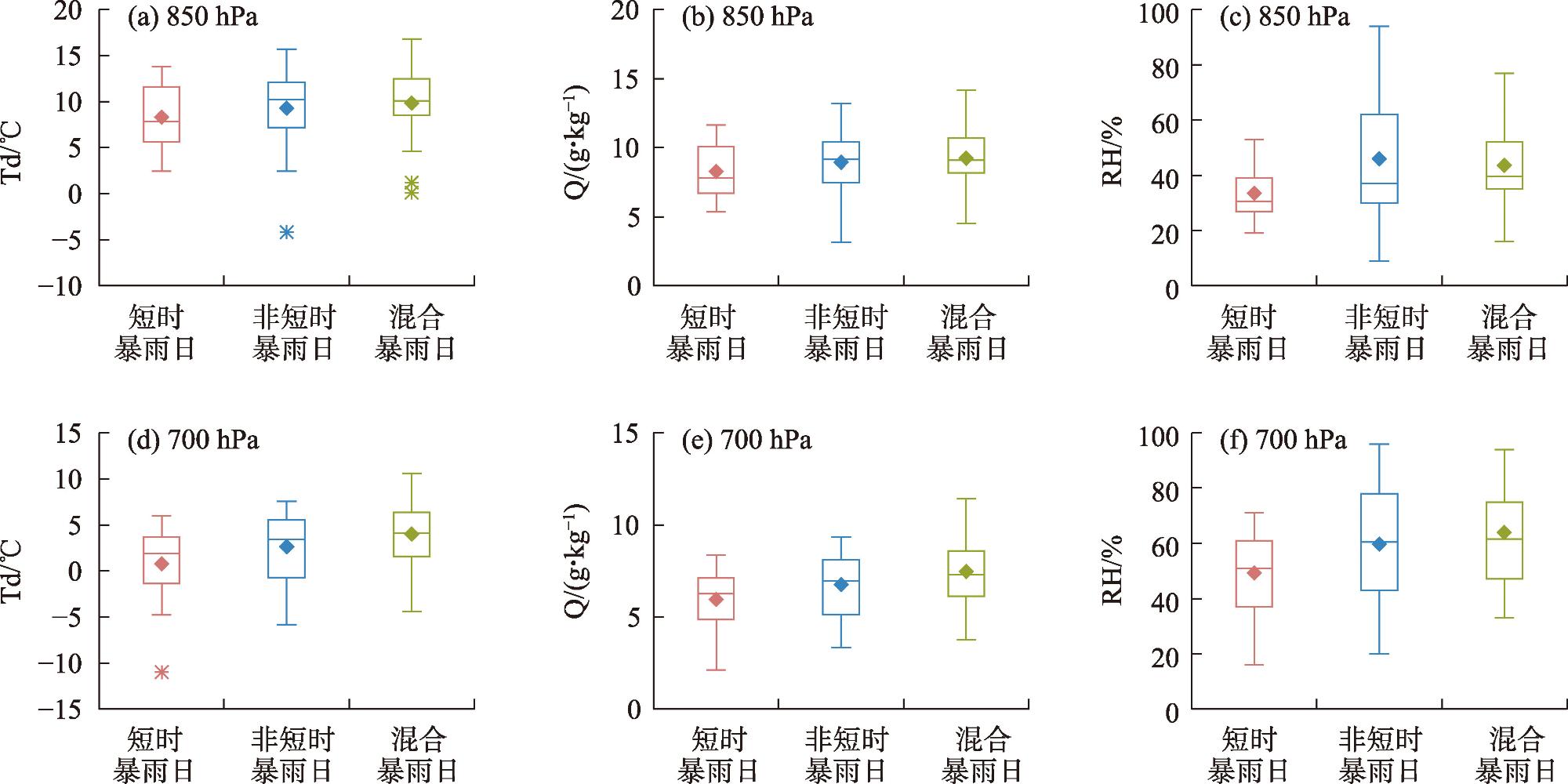
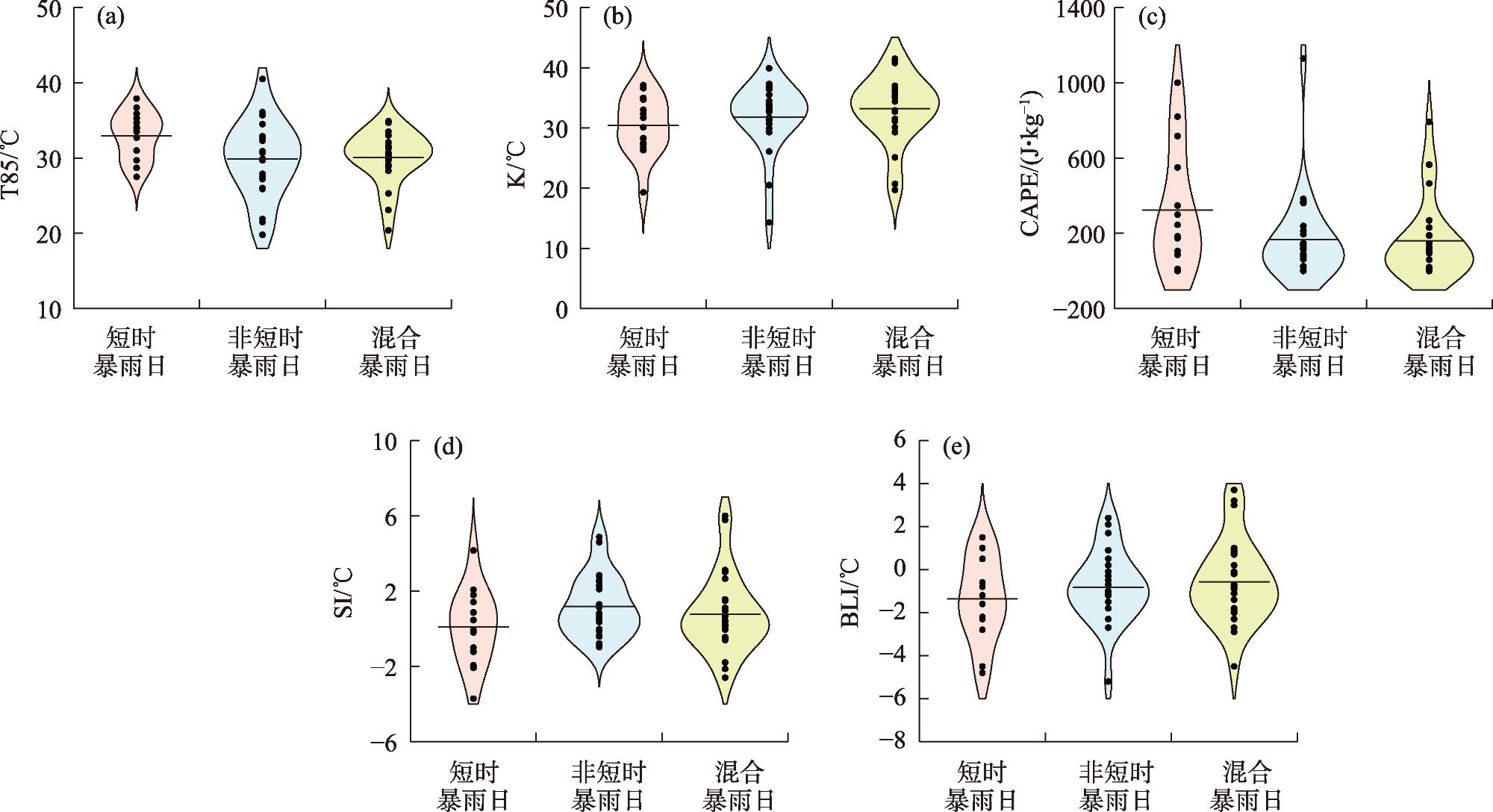
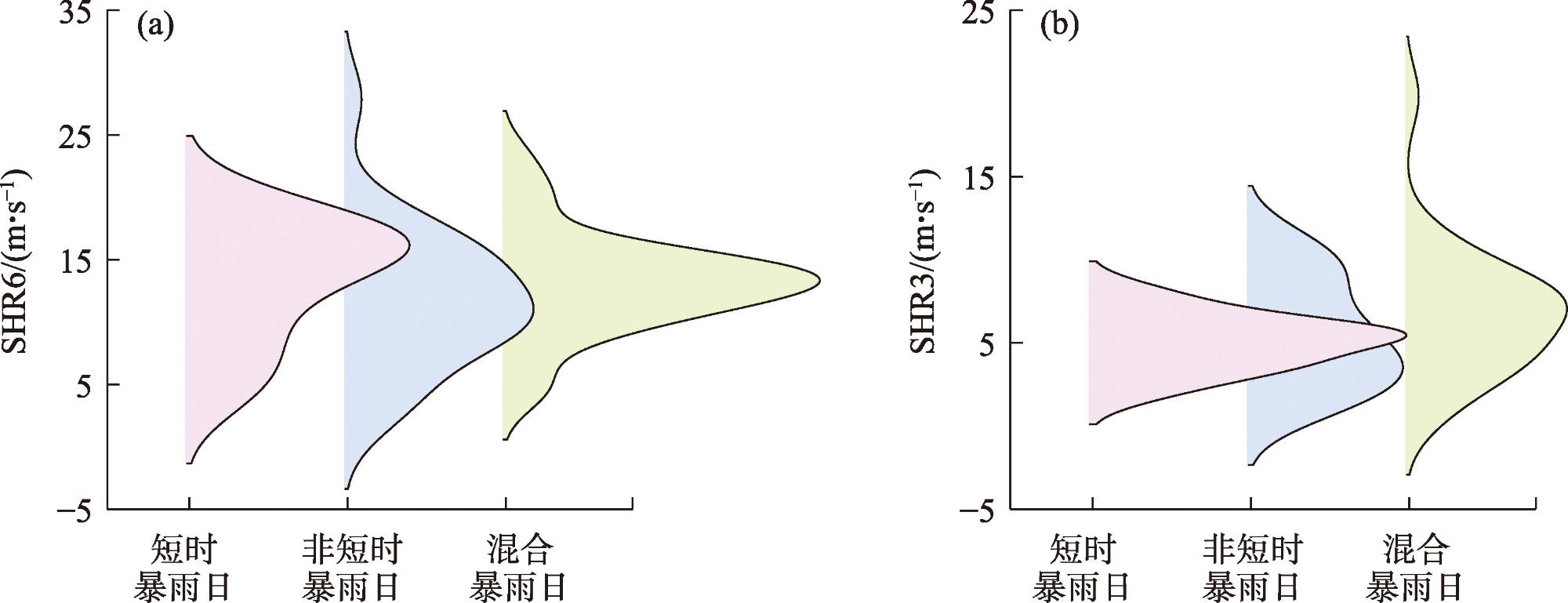
Accurate weather forecasting in the Kunlun Mountains relies on accurate determination of the physical-quantity characteristics and atmospheric circulation of different types of rainstorms on the northern slope of the mountains. This paper newly classifies the rainstorms on the northern slope of the Kunlun Mountains into short-term rainstorms, non-short-term rainstorms, and mixed rainstorms. The climatic characteristics, physical quantity parameters, and synoptic system configurations of these three rainstorm types are comparatively analyzed using data from ground automatic weather stations, conventional sounding data, and ERA-5 reanalysis data collected from 2016 to 2024. The results show that (1) rainstorms on the northern slope of the Kunlun Mountains are dominated by non-short-term rainstorms in summer, most frequently by nonshort-term rainstorms and mixed rainstorms in August and by short-term rainstorms in July. As the elevation increases, the frequency of mixed rainstorms increases while the frequencies of short-term rainstorms and non-short-term rainstorms increase and then decline. The range of rainstorms is wider in the western section than in the central section of the northern slope of the Kunlun Mountains. The western section experiences many short-term rainstorms whereas the central section experiences a high incidence of non-short-term and mixed rainstorms. (2) The South Asia High presents a Qinghai-Xizang high pattern during short-term rainstorms, an Iran high pattern during non-short-term rainstorms, and a two-center pattern during mixed rainstorms. All three rainstorm types occur to the right of the entrance zone of the upper level jet streams, where strong divergence and rising motion occur. (3) The rainstorms are dominantly influenced by the Central Asian trough system. During the short-term rainstorms, the Tarim easterly low level jet is not formed and the systematic dynamic uplift effect is relatively weak. Therefore, such rainstorms will more likely occur in areas with good thermal conditions. Non-short-term and mixed rainstorms are accompanied by abundant water vapor transported by the southern path and the formation of a strong Tarim easterly low level jet. The substantial forced-uplift effect facilitates rainstorm formation on the windward slope. (4) The water vapor conditions negligibly differ among the three types of rainstorms but the instability parameters are significantly higher during short-term rainstorms than during the other rainstorm types. The intensity of the deep vertical wind shear is typically moderate (weak) during short-term rainstorms (non-short-term rainstorms) and the short-term (non-short-term) precipitation is mainly generated by convective (stratiform) clouds. The deep vertical wind-shear intensity of mixed rainstorms is between those of the short-term and non-short-term rainstorms and is characterized by convective-cloud and stratiform-cloud precipitation.
ZHANG Meng , YANG Xia . Physical quantity characteristics and atmospheric circulation of different types of rainstorms on the northern slope of the Kunlun Mountains[J]. Arid Zone Research, 2025 , 42(12) : 2153 -2165 . DOI: 10.13866/j.azr.2025.12.01
图3 2016—2024年6—8月昆仑山北坡各站累计暴雨频次(a)及不同类型站点(b)短时暴雨站、(c)非短时暴雨站、(d)混合暴雨站的暴雨频次分布Fig. 3 Distribution of cumulative rainstorms frequency by station (a) and different types of stations (b) short-term rainstorms stations, (c) non-short-term rainstorms stations, (d) mixed rainstorms stations on the northern slope of the Kunlun Mountains from June to August 2016 to 2024 |
表1 2016—2024年6—8月昆仑山北坡不同类型暴雨在不同海拔区间的分布Tab. 1 Distribution of different types of rainstorms on the northern slope of Kunlun Mountains at different altitudes from June to August 2016 to 2024 |
| 海拔≤1500 m | 1500 m<海拔≤2000 m | 2000 m<海拔≤3000 m | 海拔>3000 m | 合计 | |
|---|---|---|---|---|---|
| 总站数/个 | 194 | 70 | 55 | 34 | 353 |
| 暴雨站数/个 | 124 | 50 | 47 | 9 | 230 |
| 暴雨站数占总站数的比例/% | 63.9 | 71.4 | 85.5 | 26.5 | 65.2 |
| 累计暴雨站次/次 | 196 | 132 | 264 | 50 | 642 |
| 平均暴雨站次/次 | 1.58 | 2.64 | 5.62 | 5.56 | 2.79 |
| 短时暴雨站数/个 | 20 | 7 | 1 | 0 | 28 |
| 短时暴雨站数占总暴雨站数的比例/% | 16.1 | 14.0 | 2.1 | 0.0 | 12.2 |
| 累计短时暴雨站次/次 | 25 | 11 | 1 | 0 | 37 |
| 平均短时暴雨站次/次 | 1.3 | 1.6 | 1.0 | - | 1.3 |
| 非短时暴雨站数/个 | 72 | 20 | 19 | 7 | 118 |
| 非短时暴雨站数占总暴雨站数的比例/% | 58.1 | 40.0 | 40.4 | 77.8 | 51.3 |
| 累计非短时暴雨站次/次 | 92 | 38 | 89 | 14 | 233 |
| 平均非短时暴雨站次/次 | 1.3 | 1.9 | 4.7 | 2.0 | 2.0 |
| 混合暴雨站数/个 | 32 | 23 | 27 | 2 | 84 |
| 混合暴雨站数占总暴雨站数的比例/% | 25.8 | 46.0 | 57.4 | 22.2 | 36.5 |
| 累计暴雨站次/次 | 79 | 79 | 186 | 28 | 372 |
| 平均暴雨站次/次 | 2.5 | 3.4 | 6.9 | 14.0 | 4.4 |
| [1] |
姚俊强, 陈静, 周桂香, 等. 新疆南部暴雨研究:科学认知与主要进展[J]. 沙漠与绿洲气象, 2024, 18(5): 1-8.
[
|
| [2] |
杨霞, 江远安, 张林梅, 等. 哈密市伊吾县峡沟水库集水区汛期降水特征[J]. 干旱区研究, 2024, 41(5): 753-764.
[
|
| [3] |
杨霞, 周鸿奎, 赵逸舟, 等. 新疆夏季暴雨精细化特征分析[J]. 气象, 2021, 47(12): 1501-1511.
[
|
| [4] |
杨霞, 杨柳. 昆仑山北坡西段和中段暴雨的特征及差异[J]. 干旱区研究, 2025, 42(2): 202-211.
[
|
| [5] |
张俊兰, 杨霞, 肖俊安, 等. 昆仑山北部夏季降水多尺度时空变化特征[J]. 高原山地气象研究, 2023, 43(3): 1-10.
[
|
| [6] |
杨霞, 张云惠, 张超, 等. 南疆西部“5·21”极端大暴雨成因分析[J]. 沙漠与绿洲气象, 2020, 14(1): 21-30.
[
|
| [7] |
唐鹏, 黄艳, 张丽, 等. 中昆仑山北坡一次极端暴雨天气过程分析[J]. 沙漠与绿洲气象, 2022, 16(6): 34-41.
[
|
| [8] |
韩兴胜. 中昆仑山北坡降水量变化特征分析[J]. 人民长江, 2017, 48(S2): 85-88.
[
|
| [9] |
杨霞, 周鸿奎, 许婷婷, 等. 南疆夏季不同类型暴雨精细化特征对比分析[J]. 干旱区研究, 2021, 38(3): 747-756.
[
|
| [10] |
王荣喆, 钱莉, 钱沛泉. 河西走廊东部暴雨气候特征及天气特征[J]. 干旱区研究, 2015, 32(1): 102-107.
[
|
| [11] |
李超, 隆霄, 曹怡清, 等. 贺兰山东麓20次暴雨过程环流形势及低空急流特征[J]. 干旱区研究, 2022, 39(6): 1753-1767.
[
|
| [12] |
田付友, 郑永光, 张涛, 等. 我国中东部不同级别短时强降水天气的环境物理量分布特征[J]. 暴雨灾害, 2017, 36(6): 518-526.
[
|
| [13] |
沈澄, 孙燕, 魏晓奕, 等. 基于物理量参数的江苏短时强降水预报模型的研究[J]. 气象, 2016, 42(5): 557-566.
[
|
| [14] |
朱蒙, 康暑雨, 张艳玲. 豫东地区短时强降水时空分布特征及物理量指标分析[J]. 气象与环境科学, 2020, 43(3): 116-123.
[
|
| [15] |
黄艳, 俞小鼎, 张云惠. 新疆短时强降水天气主要流型及环境参量特征分析[J]. 气象科技, 2022, 50(1): 85-93.
[
|
| [16] |
毛列尼·阿依提看, 杨莲梅, 张云惠, 等. 近10 a中亚低涡背景下新疆短时强降水环境场分析[J]. 干旱区地理, 2018, 41(2): 273-281.
[
|
| [17] |
黄艳, 安克武, 唐鹏. 南疆西部两种强对流天气环境参数特征分析[J]. 沙漠与绿洲气象, 2022, 16(6): 11-17.
[
|
| [18] |
杨柳, 杨霞, 刁鹏, 等. ECMWF模式对昆仑山北坡夏季降水日变化特征的预报性能分析[J]. 干旱区研究, 2025, 42(1): 27-39.
[
|
| [19] |
张家宝, 邓子风. 新疆降水概论[M]. 北京: 气象出版社, 1987: 400.
[
|
| [20] |
钱永甫, 张琼, 张学洪. 南亚高压与我国盛夏气候异常[J]. 南京大学学报(自然科学版), 2002, 38(3): 295-307.
[
|
| [21] |
谢泽明, 周玉淑, 杨莲梅. 新疆降水研究进展综述[J]. 暴雨灾害, 2018, 37(3): 204-212.
[
|
| [22] |
金晨, 何清, 黄乾. 南疆暴雨研究进展[J]. 大气科学学报, 2023, 46(1): 82-96.
[
|
| [23] |
朱乾根, 林锦瑞, 寿绍文, 等. 天气学原理和方法[M]. 北京: 气象出版社, 2000.
[
|
| [24] |
杨霞, 周鸿奎, 赵克明, 等. 塔里木东风低空急流特征分析[J]. 干旱区研究, 2021, 38(5): 1216-1225.
[
|
| [25] |
|
| [26] |
顾天红, 杜小玲, 李力, 等. 基于探空资料的西南区域暴雨环境参数统计分析[J]. 中低纬山地气象, 2022, 46(2): 27-32.
[
|
| [27] |
孙欣, 陈传雷, 梁寒, 等. 辽宁地区大暴雨环境场和物理量场合成分析[J]. 气象与环境学报, 2016, 32(5): 40-46.
[
|
| [28] |
王强, 唐明晖, 叶成志, 等. 湖南西南急流型暖区暴雨特征分析[J]. 沙漠与绿洲气象, 2025, 19(4): 103-111.
[
|
| [29] |
陈豫英, 苏洋, 张一星, 等. 贺兰山东麓不同量级暴雨过程的环流特征和概念模型[J]. 高原气象, 2022, 41(5): 1161-1174.
[
|
| [30] |
张培昌, 杜秉玉, 戴铁丕. 雷达气象学[M]. 北京: 气象出版社, 2000.
[
|
/
| 〈 |
|
〉 |