



Numerical simulation study on the impact of typical trban lakes in arid regions on local climate effects
Received date: 2025-03-27
Revised date: 2025-09-15
Online published: 2026-03-12
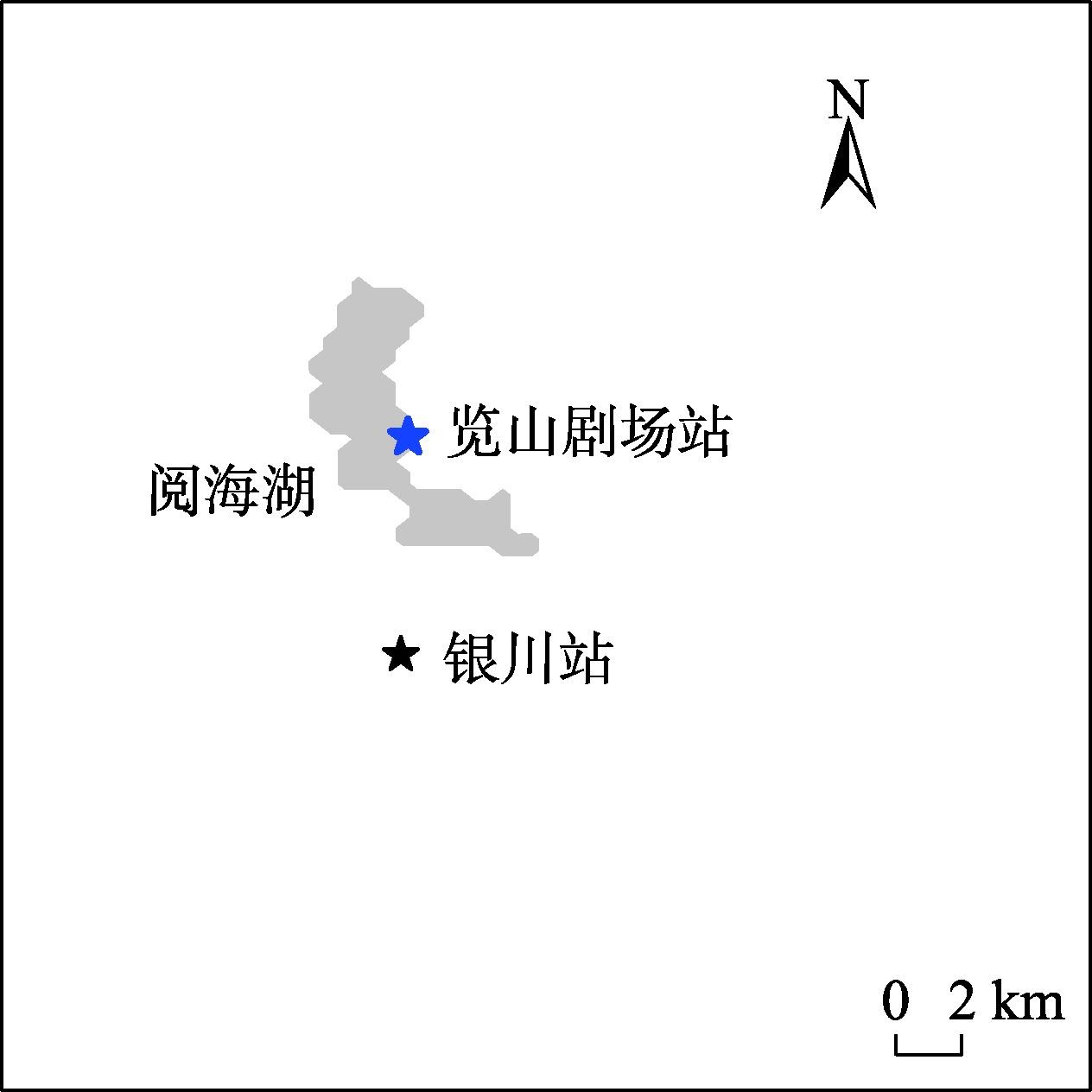
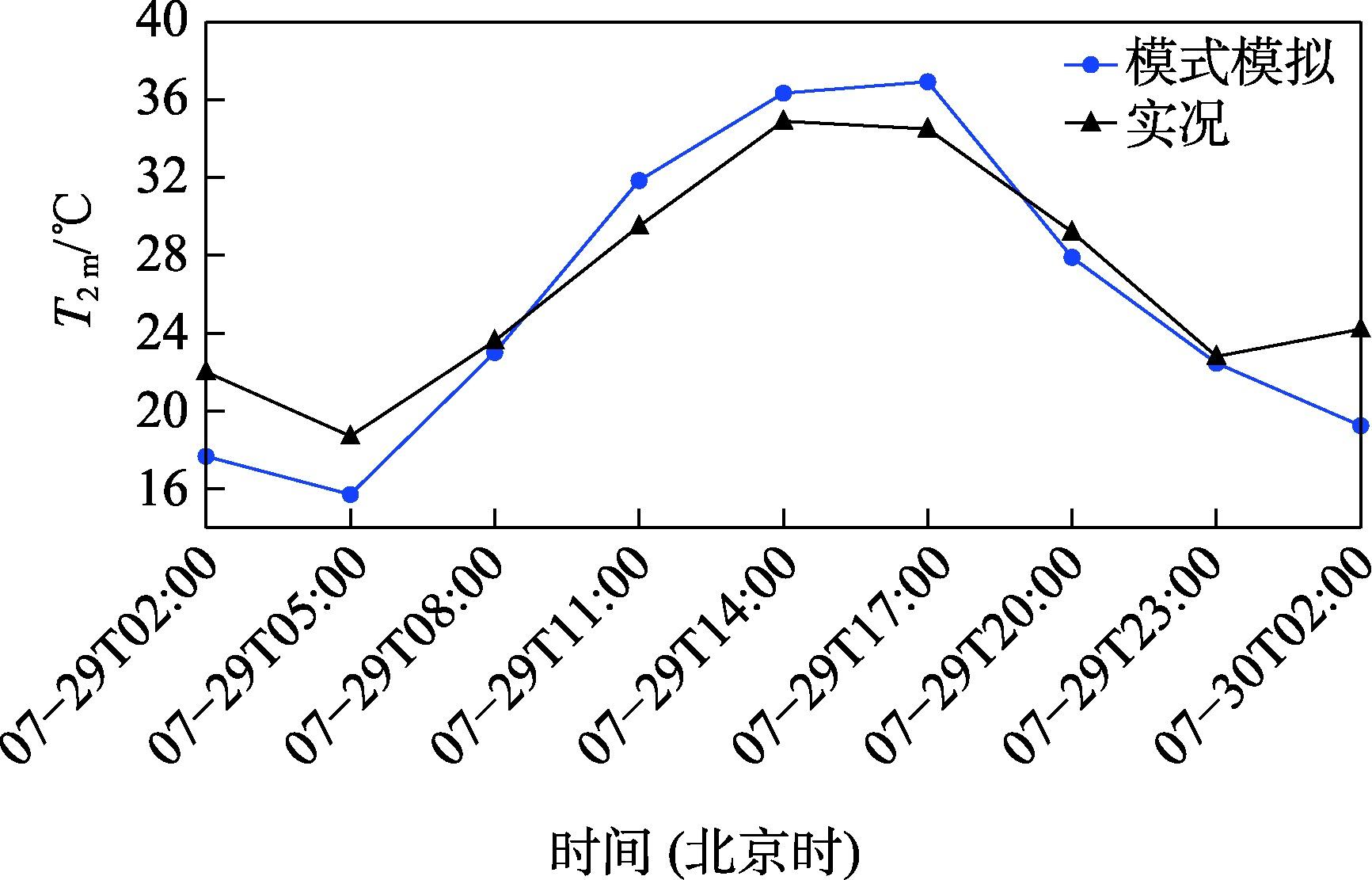
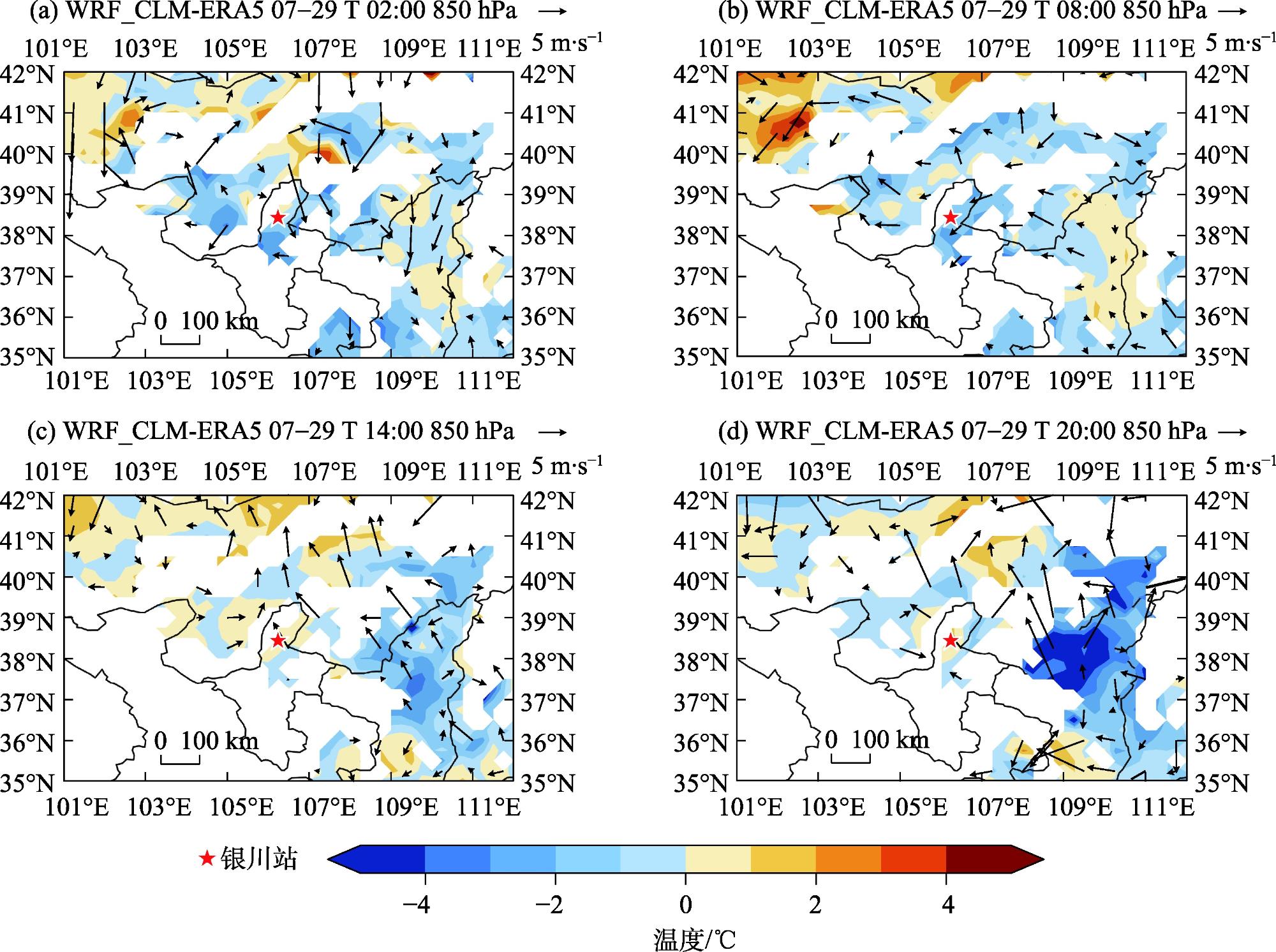
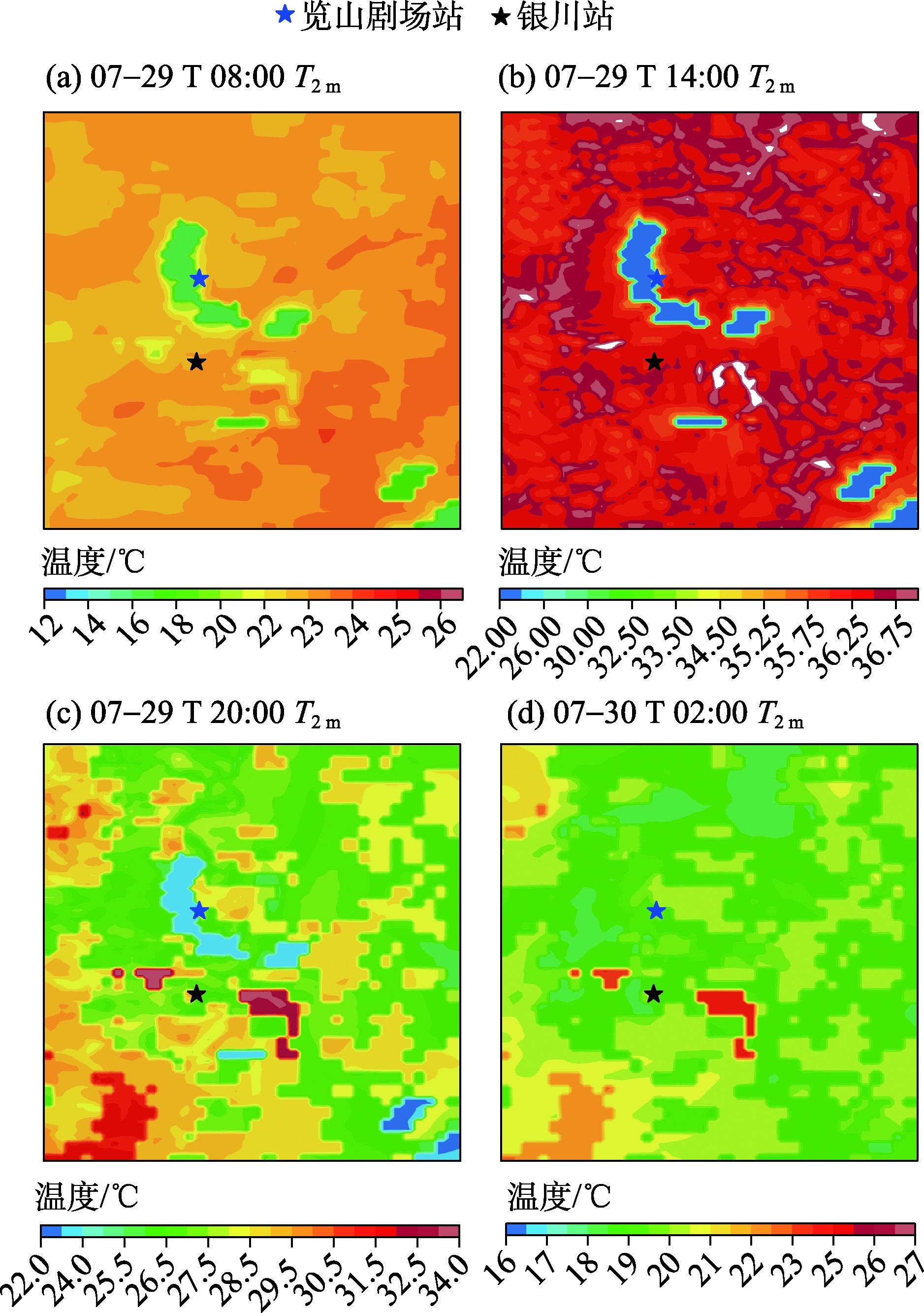
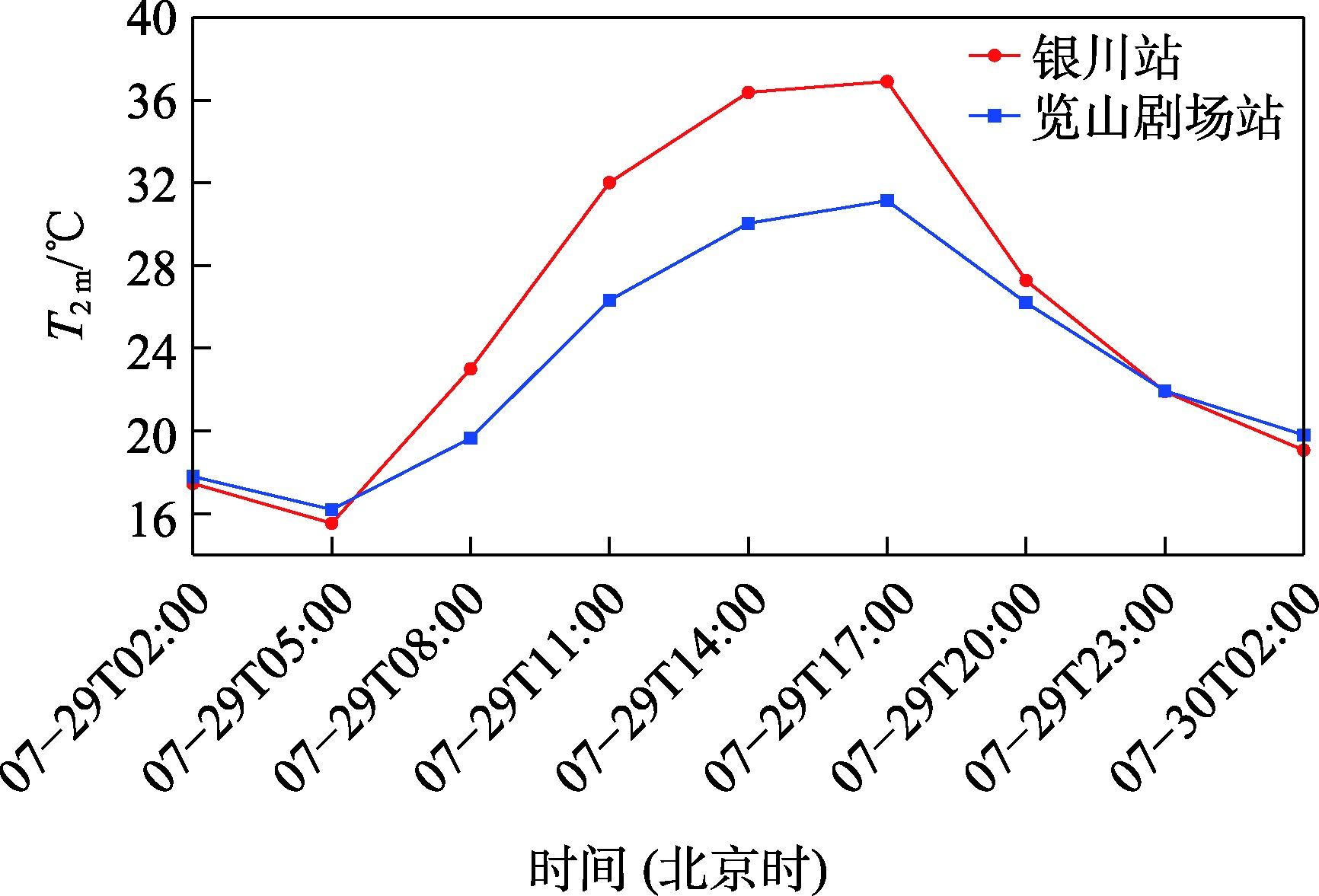
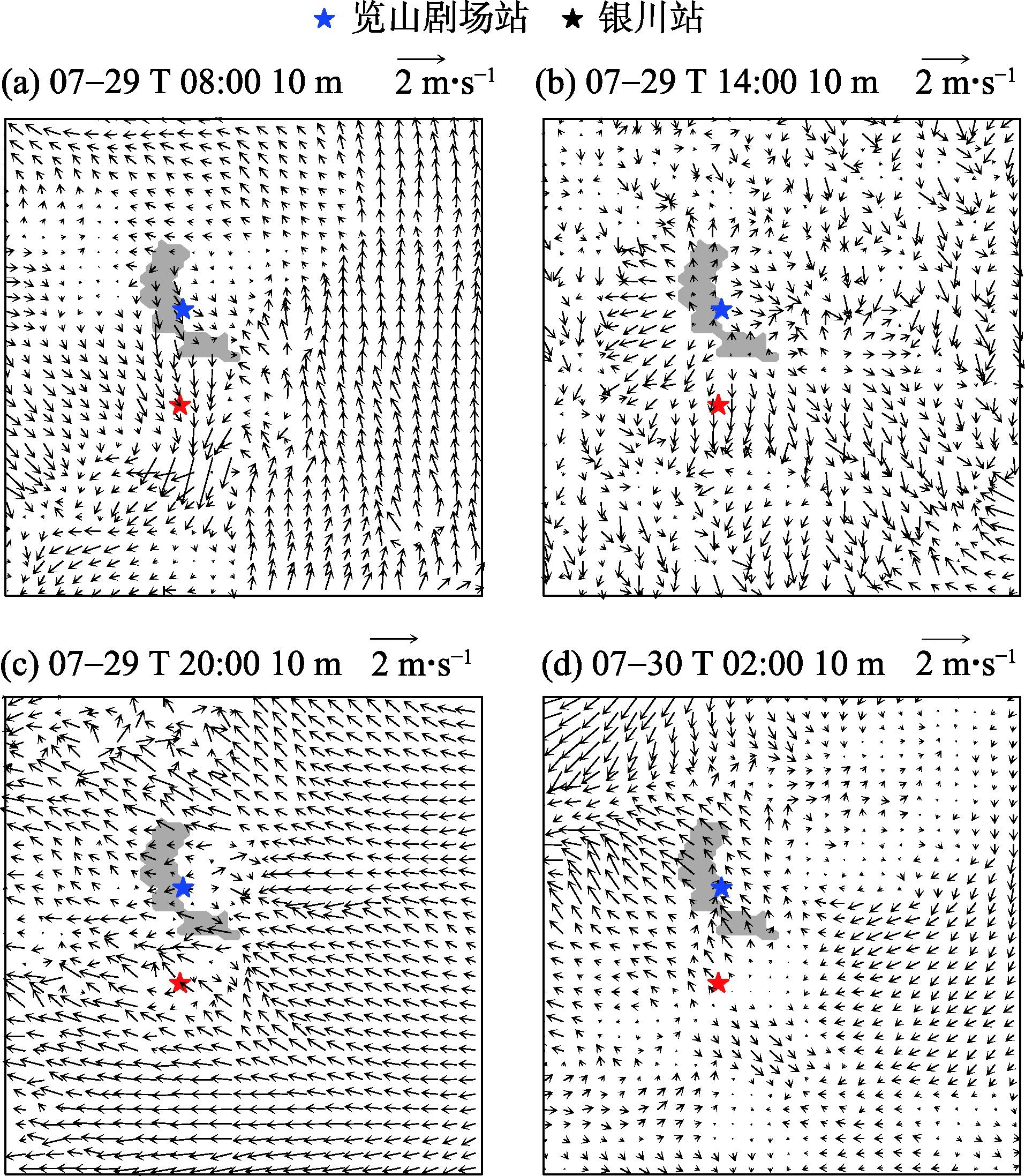
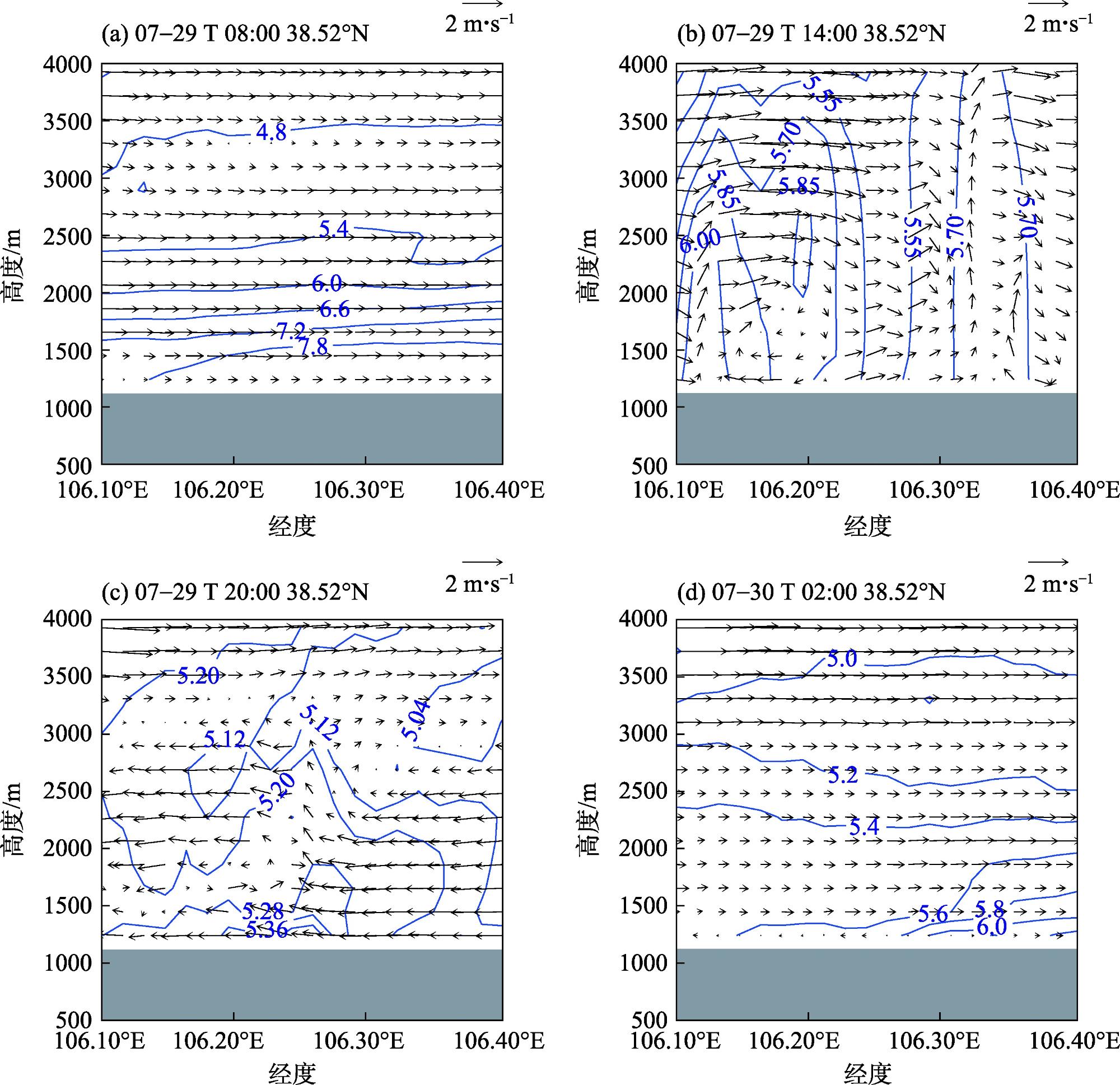
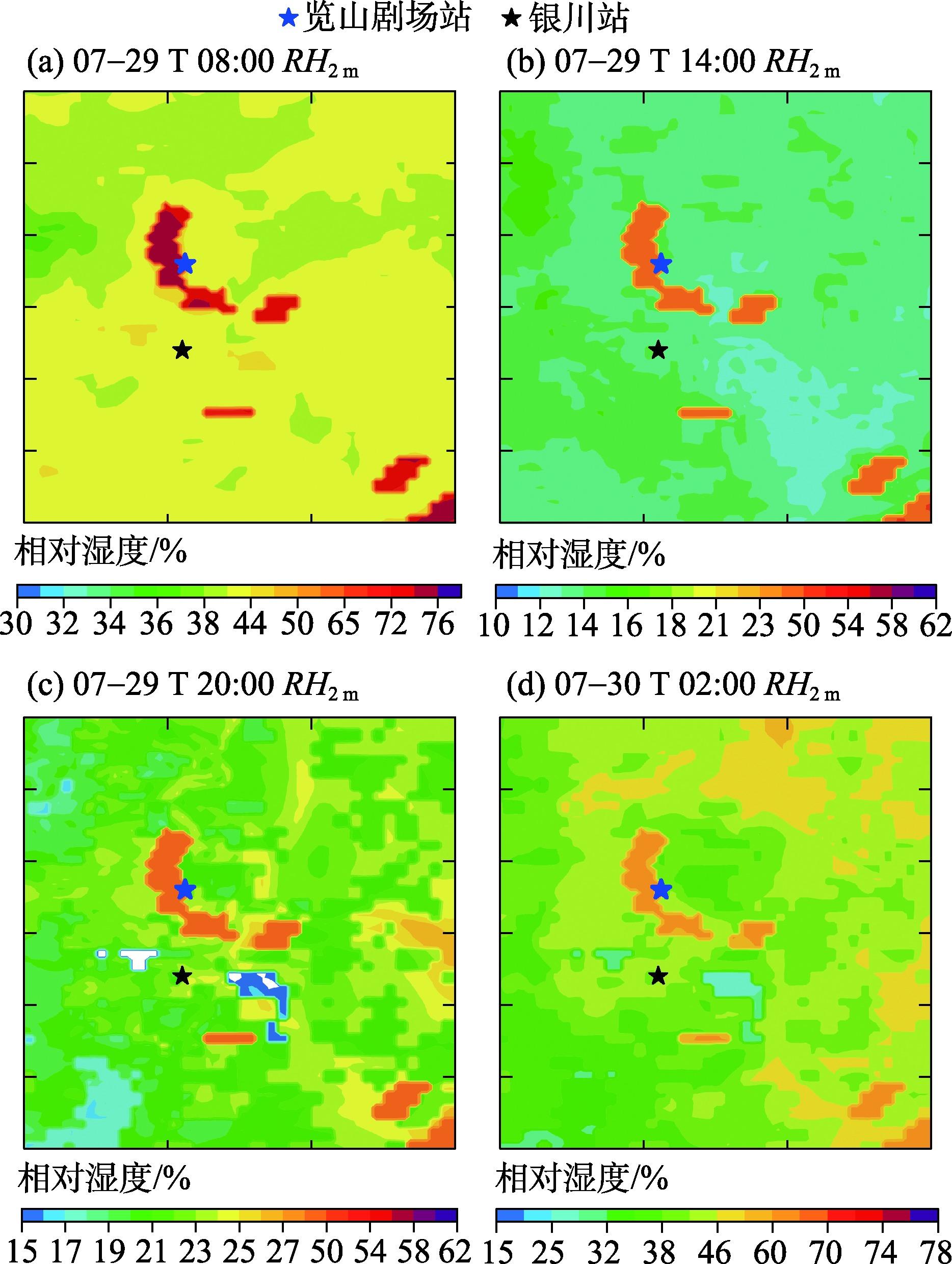
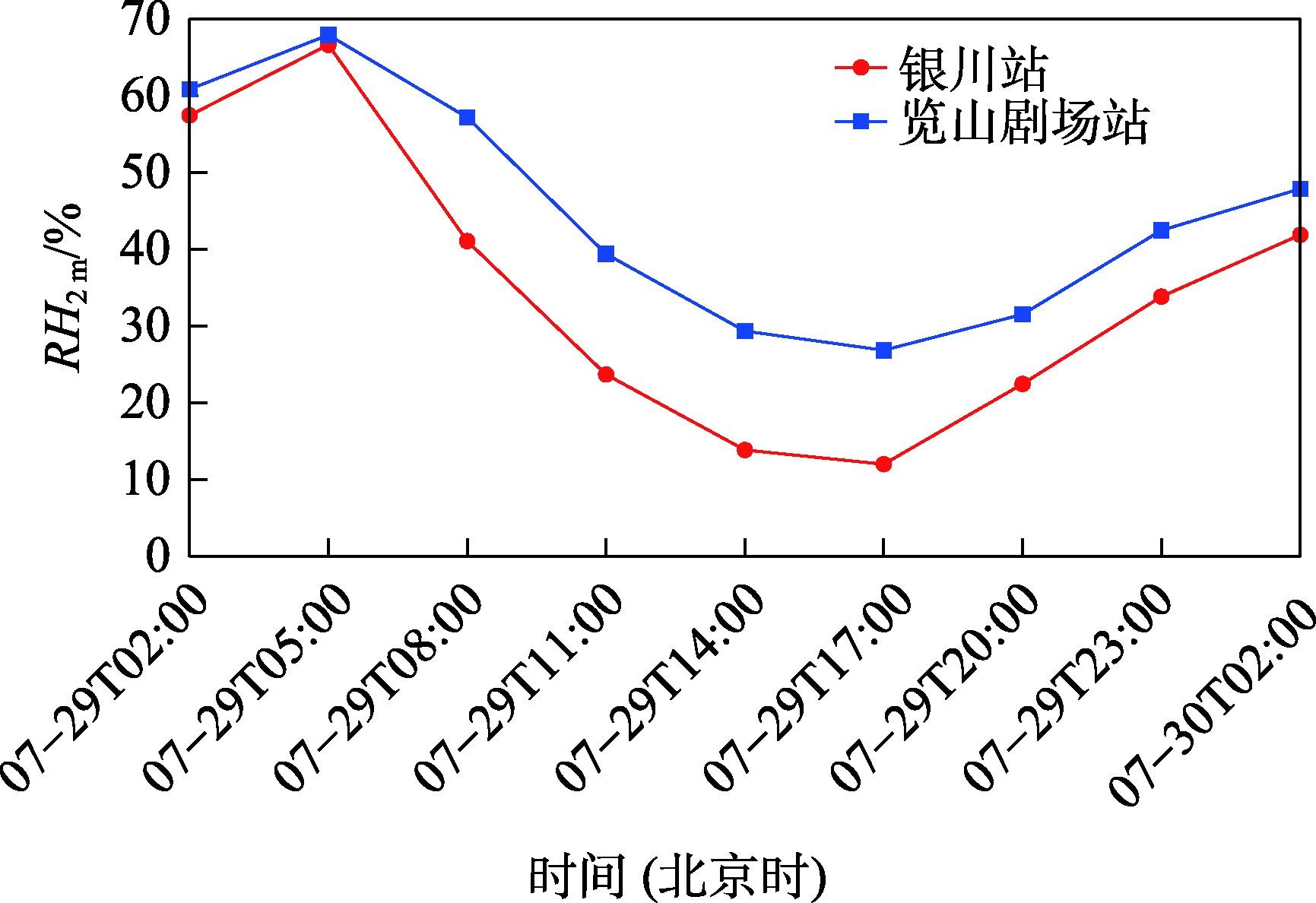
To investigate the mechanisms by which urban lakes in arid regions locally regulate climate at extremely high temperatures, this study simulated a high-temperature event in the Yuehai Lake area of Yinchuan during July 29-30, 2021. Simulations were performed in the Weather Research and Forecasting (WRF) Community Land Model coupled model configured with four nested grids. The WRF_CLM model accurately characterized the diurnal temperature variations at the Yinchuan station and effectively reproduced the spatial distributions of physical fields such as the near-surface temperature field and wind field, demonstrating its suitability for simulating lake microclimates in arid regions. Under high-temperature conditions, Yuehai Lake, situated in an arid region, can effectively mitigate urban heat-island intensity through synergistic thermal and dynamic effects. The low humidity and strong radiation in the arid region significantly enhance evaporative cooling during the daytime; consequently, the 2-meter air temperature is approximately 4 ℃ lower near the lake than in the surrounding urban areas. During the nighttime, this temperature difference narrows to 1 ℃ because the strong radiative cooling effect over land combines with the thermal inertia of the cooled water body. This “stronger during the day, weaker at night” pattern reduces the diurnal temperature range in the lake area. Simultaneously, radiative evaporation raises the relative humidity in the lake area by 4%-12% from that in urban areas, with the humidity peaking on the downwind lakeshore. Furthermore, the lake-land thermal contrast effectively drives the lake-land breeze circulation. During the day, a horizontal divergence center forms over the lake surface and extends its influence to approximately 0.05 toward the lakeshore; vertically, it induces a closed circulation cell centered at an approximate height of 2200 meters, creating a core zone of specific humidity. At night, the evaporation weakens and the urban background wind system dominates the moisture diffusion, diminishing the local humidification effect around the lake. This study quantifies the local climatic effects of a typical lake in an arid region, providing a scientific basis for ecological urban planning.
Key words: WRF_CLM model; high temperature; lake-land breeze; climatic effect
WANG Fan , ZHU Xiaowei , GAO Ruina , SUN Yinchuan , HUANG Ying , JIANG Guoyong , LI Jiayao , XU Haoyang , Liu Yao . Numerical simulation study on the impact of typical trban lakes in arid regions on local climate effects[J]. Arid Zone Research, 2025 , 42(11) : 2005 -2017 . DOI: 10.13866/j.azr.2025.11.05
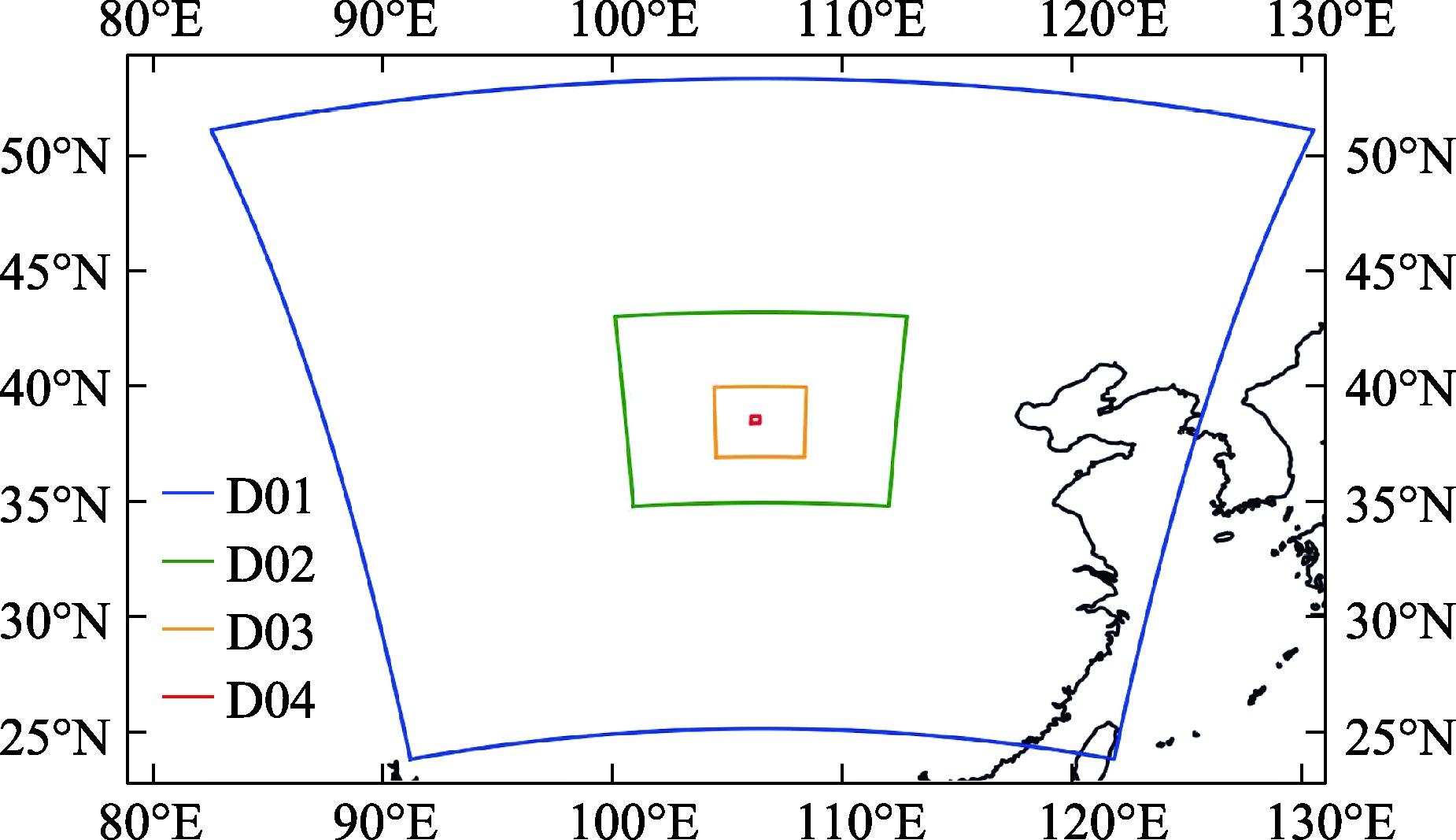
图1 WRF_CLM模式构建的4层嵌套网格区域Fig. 1 Four-level nested grid domain constructed in the WRF_CLM model |
表1 WRF_CLM模式参数配置Tab. 1 Parameter configuration of the WRF_CLM model |
| 参数 | D01 | D02 | D03 | D04 |
|---|---|---|---|---|
| 水平分辨率 | 9 km | 3 km | 1 km | 333 m |
| 微物理方案 | WRF Double-moment 6-class scheme | |||
| 长波辐射 | RRTM scheme | |||
| 短波辐射 | Dudhia scheme | |||
| 陆面过程 | CLM 4.0 | |||
| 边界层 | YSU scheme | |||
| 近地面方案 | Revised MM5 surface layer scheme | |||
| 积云方案 | 无 | |||
| 湖泊方案 | CLM 4.5 lake model | |||
| 地形 | 24-category USGS-based land use data | |||
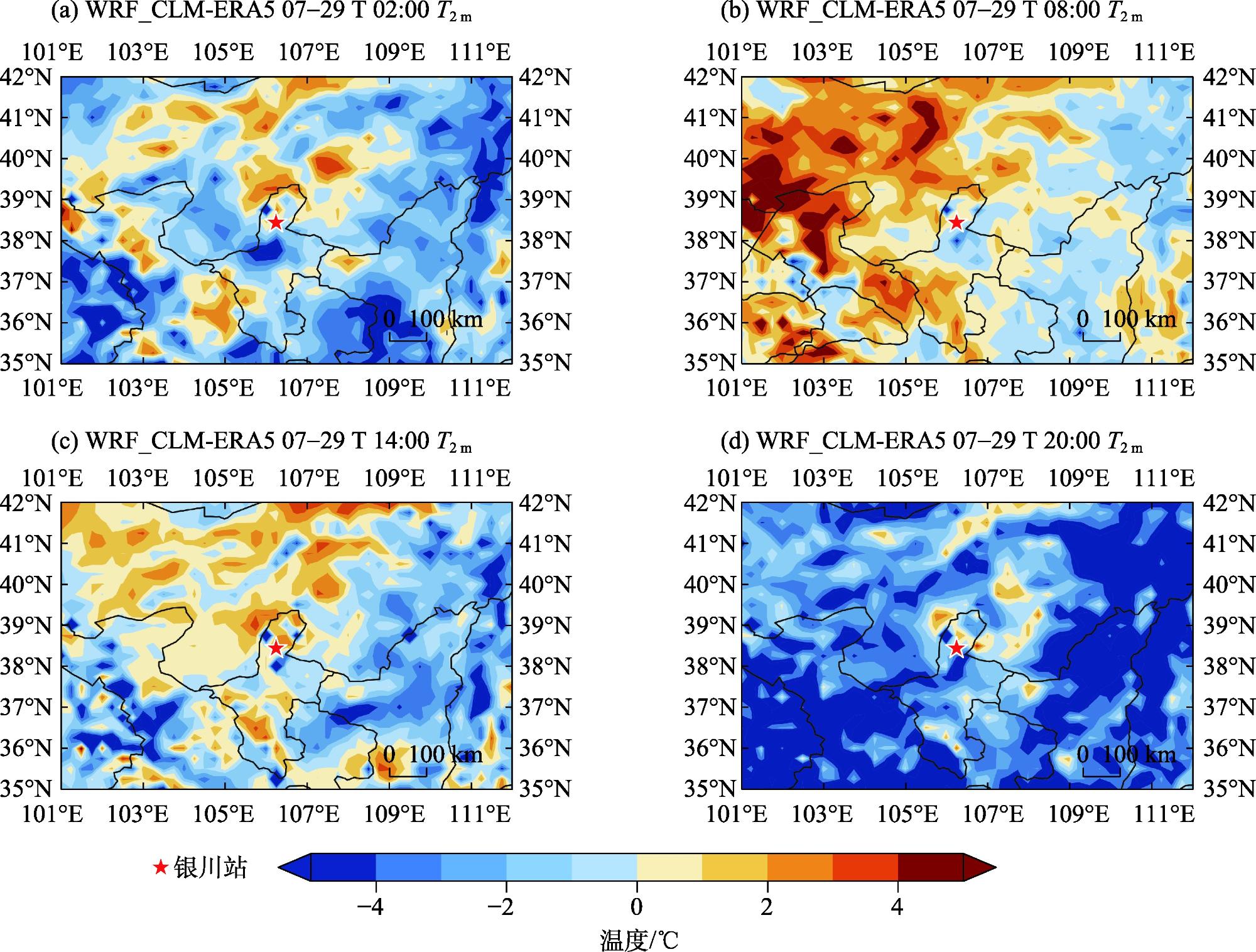
图6 模式第4层模拟嵌套区域2021年7月29—30日2 m温度空间分布Fig. 6 Spatial distribution of 2 m temperature in the simulated nested domain of the fourth layer in the model from July 29 to 30, 2021 |
| [1] |
|
| [2] |
|
| [3] |
|
| [4] |
|
| [5] |
|
| [6] |
|
| [7] |
|
| [8] |
|
| [9] |
李维亮, 秦瑜. 长江三角洲城市热岛与太湖对局地环流影响的分析研究[J]. 中国科学(D辑), 2003, 33(2): 97-104.
[
|
| [10] |
|
| [11] |
唐滢. 夏季太湖局地气候效应的数值模拟研究[J]. 气象科学, 2016, 36(5): 610-617.
[
|
| [12] |
任侠. 太湖对局地气象环境影响的模拟研究[D]. 南京: 南京信息工程大学, 2017.
[
|
| [13] |
王澄海, 孙超. 一个基于WRF+CLM区域气候模式(WRFC)的建立及初步试验[J]. 高原气象, 2013, 32(6): 1626-1637.
[
|
| [14] |
|
| [15] |
|
| [16] |
|
| [17] |
邢雯雯, 孙绩华, 刘辉志, 等. 高黎贡山复杂地形下局地环流的数值模拟研究[J]. 大气科学, 2021, 45(4): 746-758.
[
|
| [18] |
许鲁君, 刘辉志, 曹杰. 大理苍山-洱海局地环流的数值模拟[J]. 大气科学, 2014, 38(6): 1198-1210.
[
|
| [19] |
苏东生, 文莉娟, 赵林, 等. 青海湖夏秋季局地气候效应数值模拟研究[J]. 高原气象, 2019, 38(5): 944-958.
[
|
| [20] |
宋兴宇, 文莉娟, 李茂善, 等. 不同湖泊模式对青藏高原典型湖泊适用性对比研究[J]. 高原气象, 2020, 39(2): 213-225.
[
|
| [21] |
许鲁君, 刘辉志. 云贵高原洱海湖泊效应的数值模拟[J]. 气象学报, 2015, 73(4): 789-802.
[
|
| [22] |
张达, 冯顺新, 郭红民, 等. 云南高原异龙湖冬季典型日湖面风场特征及其形成机制[J/OL]. 中国水利水电科学研究学报(中英文), 1-18. [2024-12-02]. https://doi.org/10.13244/j.cnki.jiwhr.20240-215.
[
|
| [23] |
田宇. 夏季静稳天气下大型城中湖气候调节服务功能模拟研究——以武汉东湖为例[D]. 武汉: 华中农业大学, 2023.
[
|
| [24] |
杨显玉, 吕雅琼, 文军, 等. 扎陵湖和鄂陵湖夏季典型地表水热交换特征的数值模拟[J]. 高原气象, 2022, 41(1): 143-152.
[
|
| [25] |
吴昌广, 谢婧, 成雅田, 等. 武汉市局地次级湖风环流特征模拟及其降温效应分析[J]. 西部人居环境学刊, 2022, 37(6): 126-134.
[
|
| [26] |
傅敏宁. 鄱阳湖对典型天气过程的影响及近地面边界层特征研究[D]. 南京: 南京信息工程大学, 2013.
[
|
| [27] |
覃海润. 太湖湖风环流时空分布特征及与城市热岛的相互影响[D]. 南京: 南京信息工程大学, 2015.
[
|
| [28] |
高睿娜, 朱晓炜, 王璠, 等. 银川城市热岛效应演变及湖泊湿地降温效果评估[J]. 干旱气象, 2025, 43(1): 97-103.
[
|
| [29] |
庄晓林, 段玉侠, 金荷仙. 城市风景园林小气候研究进展[J]. 中国园林, 2017(33): 23-28.
[
|
| [30] |
|
| [31] |
|
| [32] |
|
| [33] |
|
| [34] |
|
| [35] |
王腾蛟, 张镭, 胡向军, 等. WRF模式对黄土高原丘陵地形条件下夏季边界层结构的数值模拟[J]. 高原气象, 2013, 32(5): 1261-1271.
[
|
| [36] |
|
| [37] |
赵英时. 遥感应用分析原理与方法[M]. 北京: 科学出版社, 2003: 194-199.
[
|
| [38] |
李婷婷, 赵聆言, 关艺蕾, 等. 城市湖泊湿地周边建成环境温湿效应的时空分布特征——以武汉16个湖泊湿地为例[J]. 中国园林, 2021, 37(3): 106-111.
[
|
| [39] |
张伟, 陈存友, 胡希军, 等. 基于计算机流体力学的城市近郊湖泊“湿岛效应”情景模拟研究: 以长沙市同升湖为例[J]. 生态与农村环境学报, 2022, 38(5): 670-680.
[
|
| [40] |
|
| [41] |
|
| [42] |
|
| [43] |
|
| [44] |
张嘉荣, 程雪玲. 基于CFD降尺度的复杂地形风场数值模拟研究[J]. 高原气象, 2020, 39(1): 172-184.
[
|
/
| 〈 |
|
〉 |