



Aircraft observation of the cloud microphysical characteristics of stratocumulus precipitation in the Qilian Mountains
Received date: 2024-07-03
Revised date: 2024-09-18
Online published: 2025-08-13
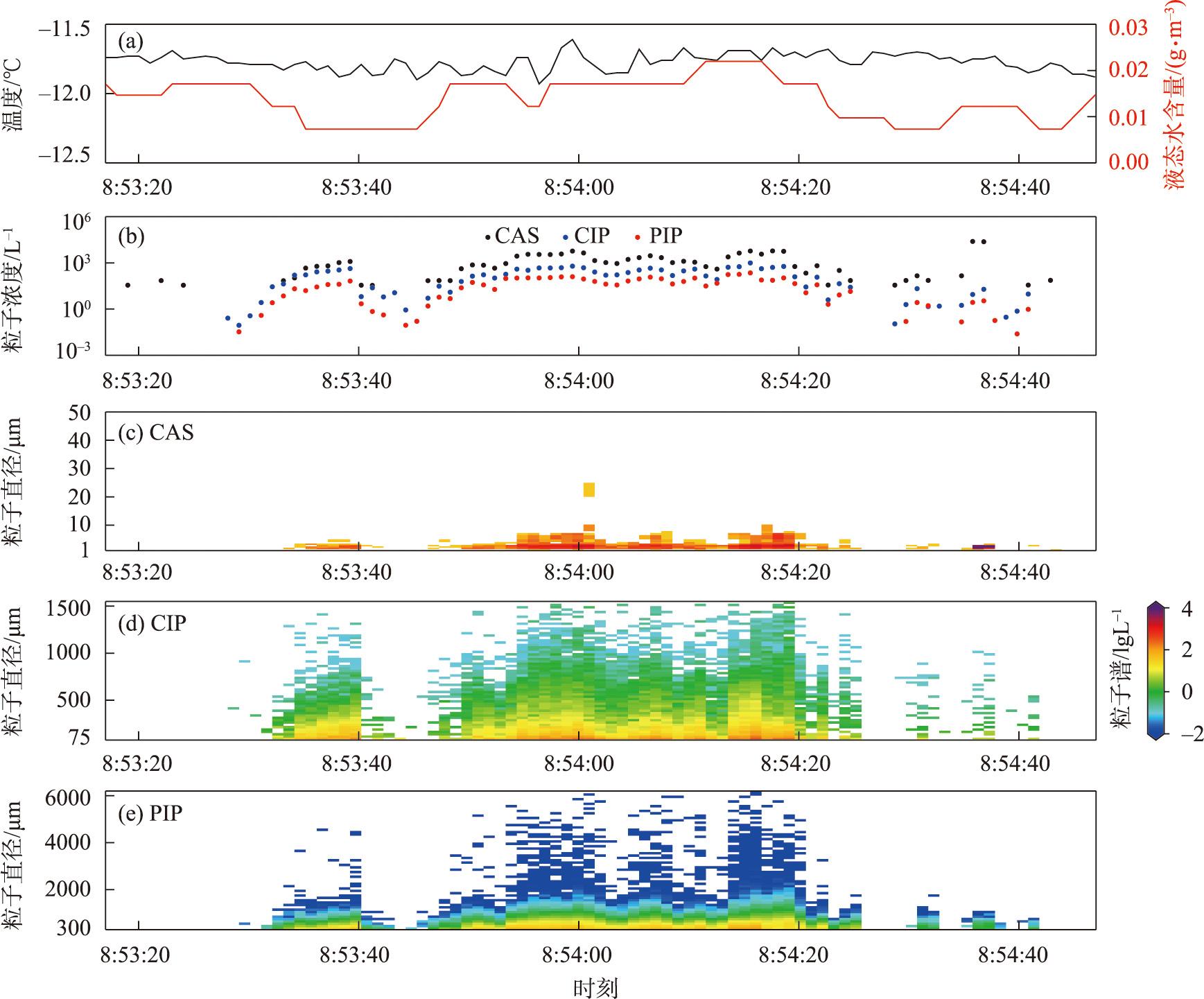
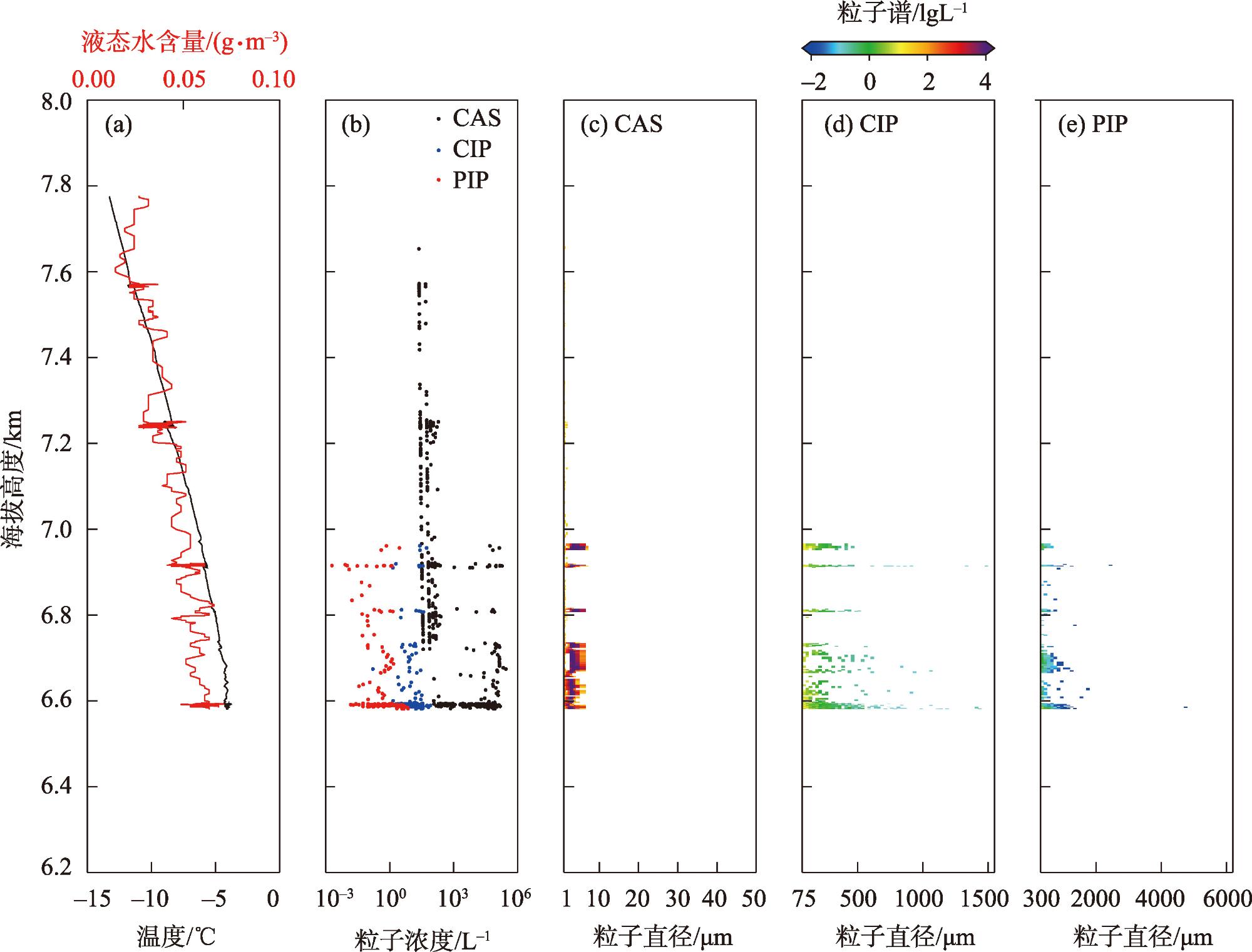
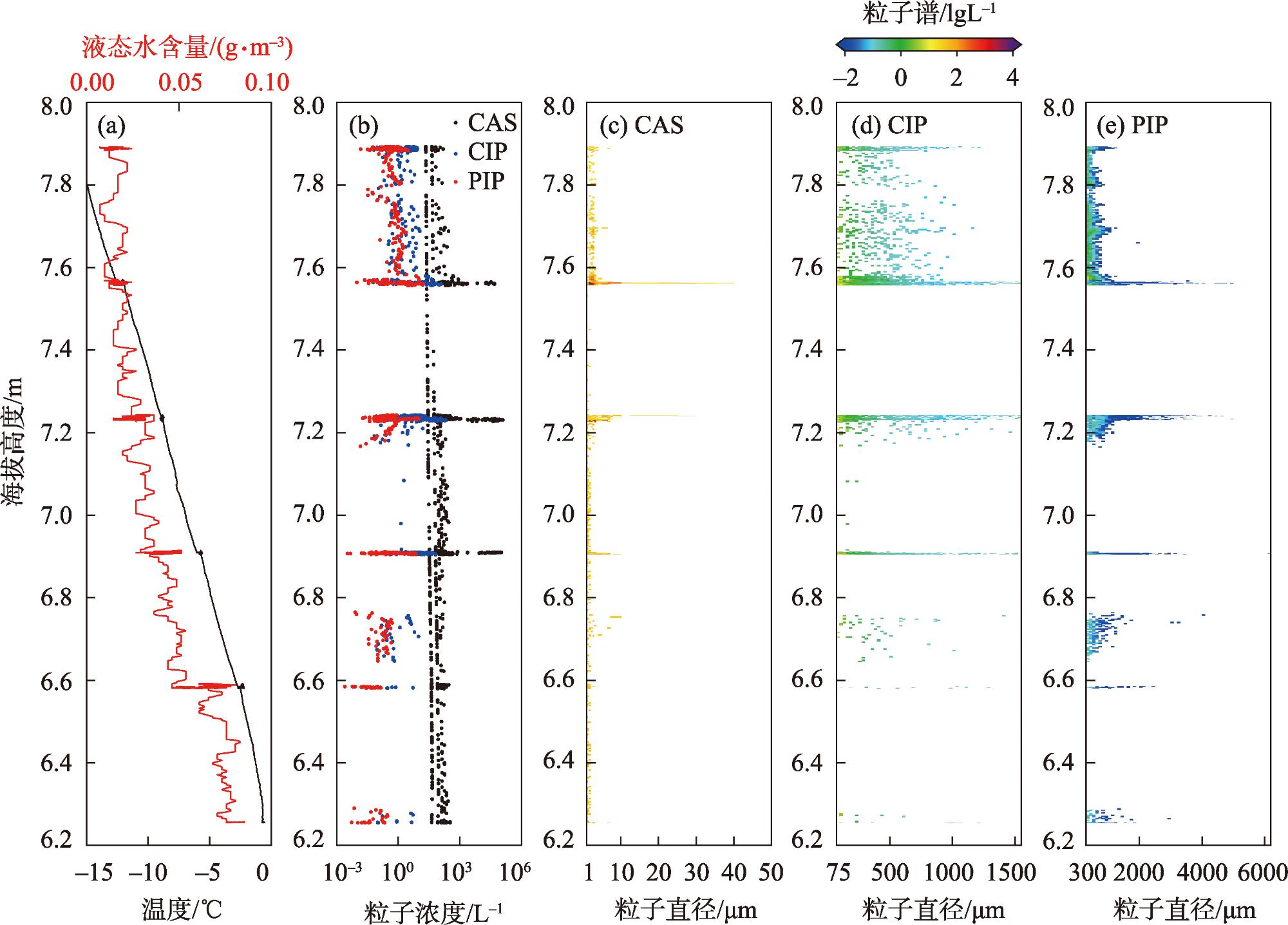
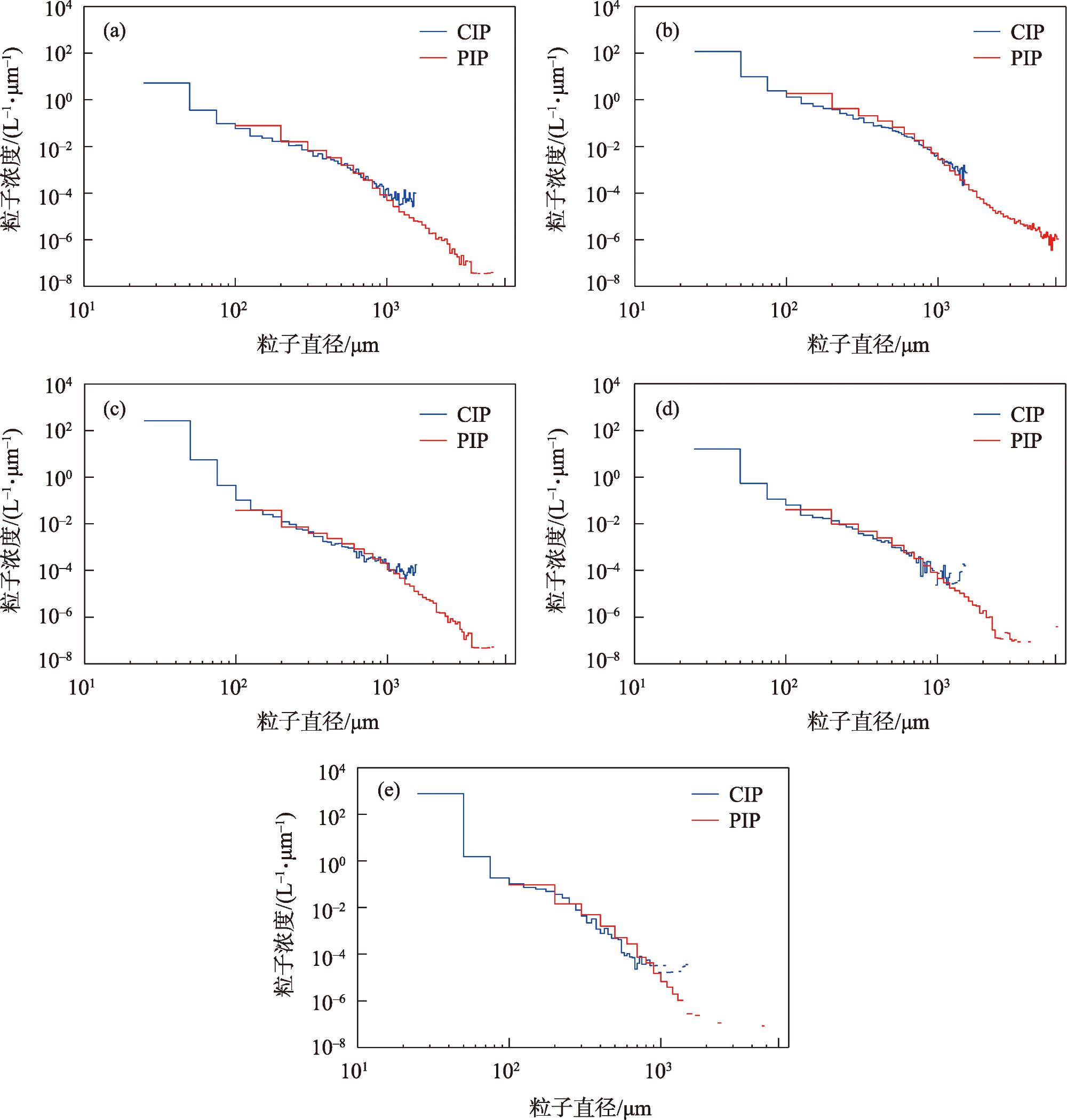
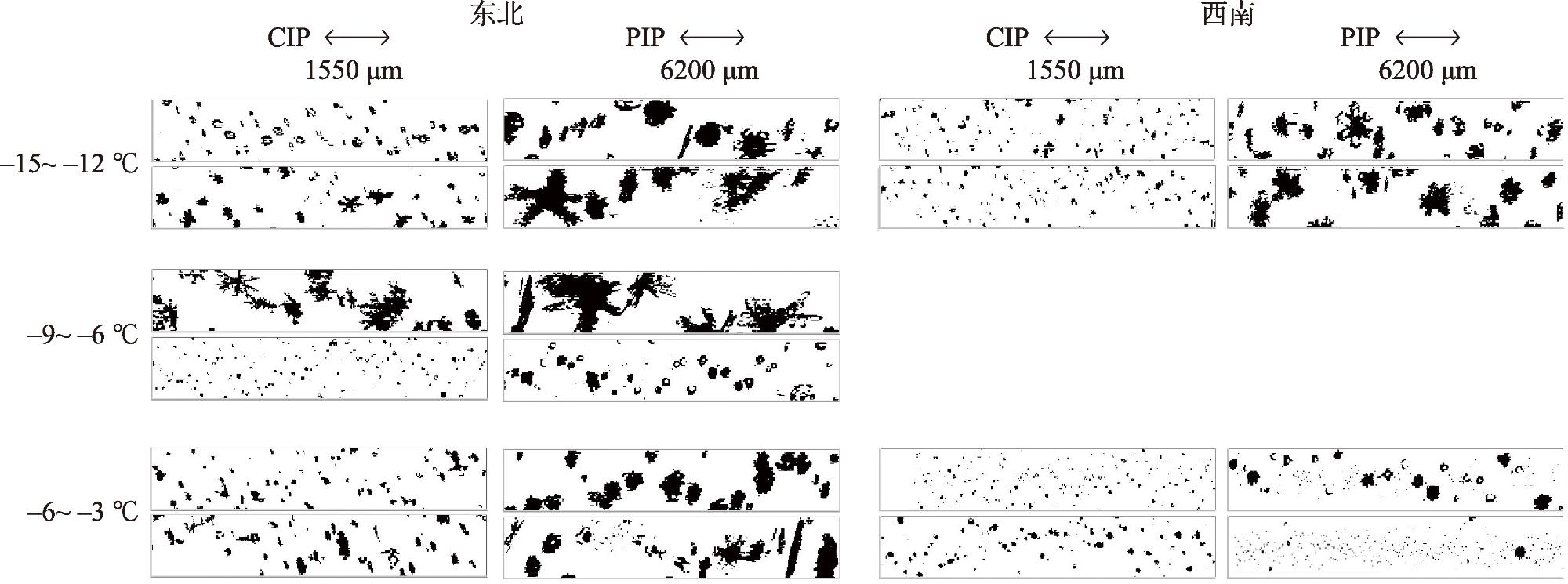
The microphysical characteristics of a stratiform precipitation cloud in the central Qilian Mountains on August 27, 2022, were analyzed through aircraft measurements. The results revealed significant differences in the cloud microphysical characteristics with different altitudes and regions. The supercooled liquid water content decreased as the altitude increased. In the -6 ℃ to -3 ℃ layer, the mean supercooled liquid water content was about 0.05 g·m-3, while in the higher layer of -15 ℃ to -12 ℃, the supercooled liquid water content was only 0.015 g·m-3, less than one-third of the lower layer. The riming process is essential in the growth of particles at all altitudes, with the mean diameter of the particles in the cloud reaching several hundred micrometers. Combining riming and aggregation processes can result in a particle spectrum width of over 6 mm. The mean diameter of the particles in the -6 ℃ to -3 ℃ layer was smaller than that in the upper layer, which may be caused by the evaporation and fragmentation of large particles while falling. On the mountain’s southwestern side, the low-level southerly wind with moisture lifted by the topography resulted in condensation and the production of numerous cloud droplets. The small particle concentration on the mountain’s southwestern side is one order of magnitude higher than that on the northeastern side, and the supercooled liquid water content is also higher. On the mountain’s southwestern side, the cloud particles are mainly supercooled cloud droplets and graupel particles; the aggregation process is not obvious, and the particle concentration is high. On the northeastern side, aggregated ice particles and graupels dominate, and the low concentration of small particles leads to a larger mean size of cloud particles.
FU Shuangxi , QI Peng , CHANG Yi , BA Li , CHEN Qi . Aircraft observation of the cloud microphysical characteristics of stratocumulus precipitation in the Qilian Mountains[J]. Arid Zone Research, 2025 , 42(2) : 212 -222 . DOI: 10.13866/j.azr.2025.02.03
表1 主要机载探测设备及参数Tab. 1 Main airborne detection equipment and parameters |
| 设备名称 | 探测范围 | 分辨率 |
|---|---|---|
| 云和气溶胶粒子谱仪(CAS) | 0.54~50 μm | 0.7~5 μm |
| 云粒子成像仪(CIP) | 25~1550 μm | 25 μm |
| 降水粒子成像仪(PIP) | 100~6200 μm | 100 μm |
| 热线含水量仪(Hotwire_LWC) | 0~3 g·m-3 | - |
| 飞机综合气象要素测量系统(AIMMS20) | 温度、海拔、空气流速、经纬度等 |
图8 山脉东北侧(a、c、d)与西南侧(b、e)在-15~-12 ℃层(a、b)、-9~-6 ℃层(c)、-6~-3 ℃层(d、e)平均粒子谱分布Fig. 8 Mean particle spectrums on the northeastern (a, c, d) and southwestern (b, e) sides of the mountains at -15~-12 ℃ (a, b), -9 ~-6 ℃ (c) and -6~-3 ℃ (d, e) layer |
表2 山脉两侧不同温度层平均液态水含量与粒子平均直径Tab. 2 Mean liquid water content and mean particle diameters at different temperature layers on the northeastern and southwestern sides of the mountains |
| LWC/(g·m-3) | D_CIP/μm | D_PIP/μm | ||||||
|---|---|---|---|---|---|---|---|---|
| 东北 | 西南 | 东北 | 西南 | 东北 | 西南 | |||
| -15~-12 ℃ | 0.015 | 0.014 | 418.35 | 396.04 | 478.85 | 525.54 | ||
| -9~-6 ℃ | 0.028 | - | 386.33 | - | 721.21 | - | ||
| -6~-3 ℃ | 0.043 | 0.056 | 363.37 | 187.46 | 598.08 | 418.18 | ||
表3 山脉两侧不同温度层粒子平均浓度Tab. 3 Mean particle concentrations at different temperature layers on the northeastern and southwestern sides of the mountains |
| N_CAS/L-1 | N_CIP/L-1 | N_PIP/L-1 | ||||||
|---|---|---|---|---|---|---|---|---|
| 东北 | 西南 | 东北 | 西南 | 东北 | 西南 | |||
| -15~-12 ℃ | 1094.66 | 1306.31 | 5.36 | 127.74 | 1.00 | 30.00 | ||
| -9~-6 ℃ | 6567.96 | - | 10.83 | - | 0.60 | - | ||
| -6~-3 ℃ | 3100.97 | 25828.10 | 2.97 | 6.19 | 0.44 | 0.25 | ||
| [1] |
刘晓迪, 宋孝玉, 覃琳, 等. 祁连山北麓牧区植被生长季不同等级降水时空变化特征[J]. 水资源与水工程学报, 2020, 31(4): 31-39.
[
|
| [2] |
张百娟, 李宗省, 王昱, 等. 祁连山北坡中段降水稳定同位素特征及水汽来源分析[J]. 环境科学, 2019, 40(12): 5272-5285.
[
|
| [3] |
陈乾, 陈添宇, 肖宏斌. 祁连山区夏季降水过程天气分析[J]. 气象科技, 2010, 38(1): 26-31.
[
|
| [4] |
付双喜, 张鸿发, 楚荣忠. 河西走廊中部一次强降水过程的多普勒雷达资料分析[J]. 干旱区研究, 2009, 26(5): 656-663.
[
|
| [5] |
付双喜, 张洪芬, 杨丽杰, 等. 地形影响下祁连山北麓不同类型降水特征对比分析[J]. 干旱区研究, 2021, 38(5): 1226-1234.
[
|
| [6] |
赵宇, 朱皓清, 蓝欣, 等. 基于CloudSat资料的北上江淮气旋暴雪云系结构特征[J]. 地球物理学报, 2018, 61(12): 4789-4804.
[
|
| [7] |
黄兴友, 陆琳, 洪滔, 等. 利用毫米波云雷达数据反演层云微物理参数和云内湍流耗散率[J]. 大气科学学报, 2020, 43(5): 908-916.
[
|
| [8] |
廖菲, 洪延超, 郑国光. 地形对降水的影响研究概述[J]. 气象科技, 2007, 35(3): 309-316.
[
|
| [9] |
|
| [10] |
|
| [11] |
|
| [12] |
李岩瑛, 张强, 徐霞, 等. 祁连山及周边地区降水与地形的关系[J]. 冰川冻土, 2010, 32(1): 52-61.
[
|
| [13] |
孙美平, 张海瑜, 巩宁刚, 等. 基于TRMM降水订正数据的祁连山地区最大降水高度带研究[J]. 自然资源学报, 2019, 34(3): 646-657.
[
|
| [14] |
|
| [15] |
杨洁帆, 胡向峰, 雷恒池, 等. 太行山东麓层状云微物理特征的飞机观测研究[J]. 大气科学, 2021, 45(1): 88-106.
[
|
| [16] |
刘春文, 郭学良, 段玮, 等. 云南省积层混合云微物理特征飞机观测[J]. 应用气象学报, 2022, 33(2): 142-154.
[
|
| [17] |
黄兴友, 芦荀, 黄勇, 等. 层状云微物理参数反演及其辐射效应的个例研究[J]. 大气科学学报, 2019, 42(5): 769-777.
[
|
| [18] |
|
| [19] |
洪钟祥, 黄美元. 南岳云滴谱第二极大及其他特征[C]// 我国云雾降水微物理特征的研究. 北京: 科学出版社, 1965: 18-29.
[
|
| [20] |
|
| [21] |
|
/
| 〈 |
|
〉 |