



Ecological management zoning in the Ili River Valley based on supply and demand of water supply services
Received date: 2024-11-13
Revised date: 2025-04-23
Online published: 2025-08-13
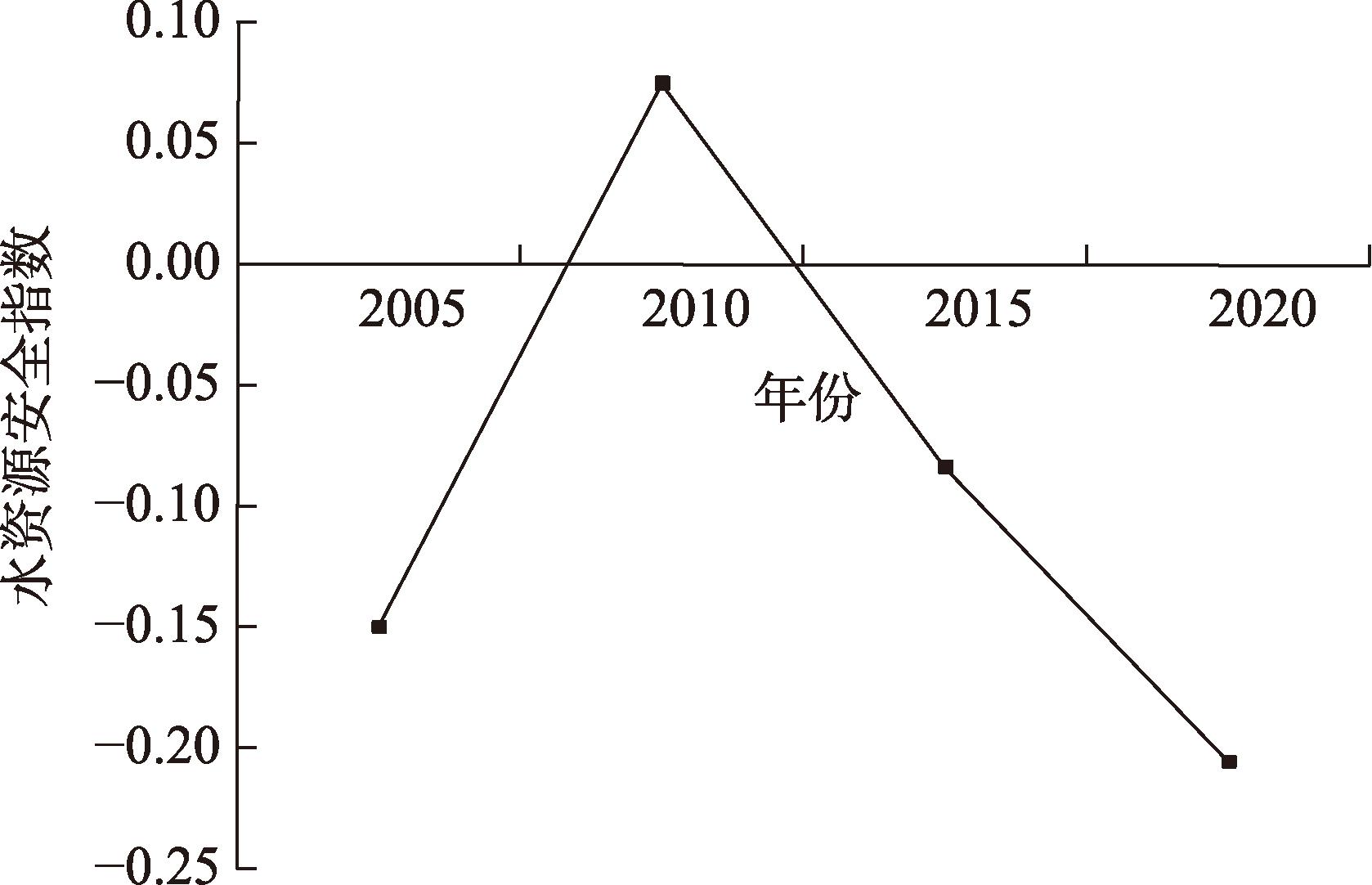
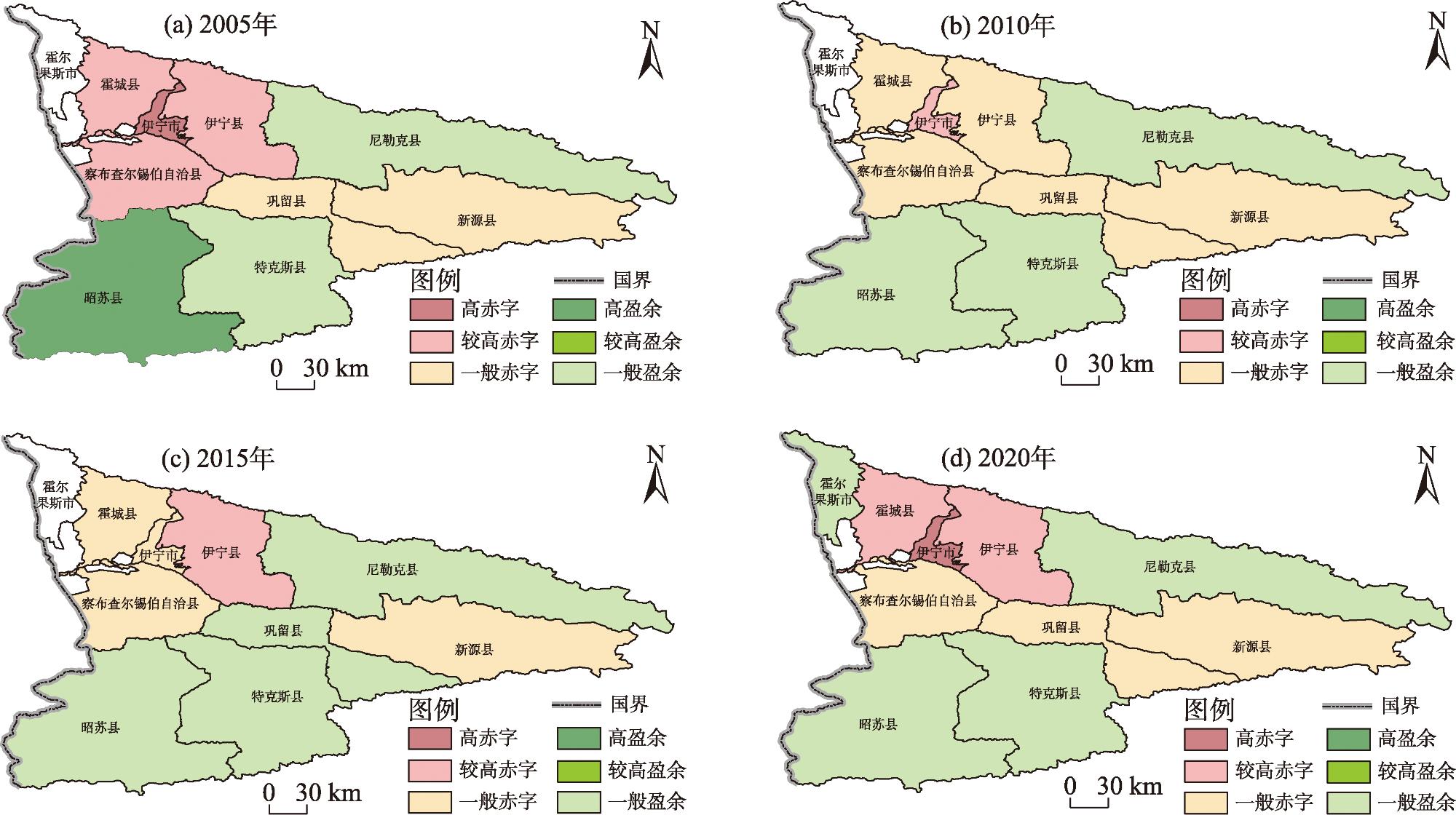
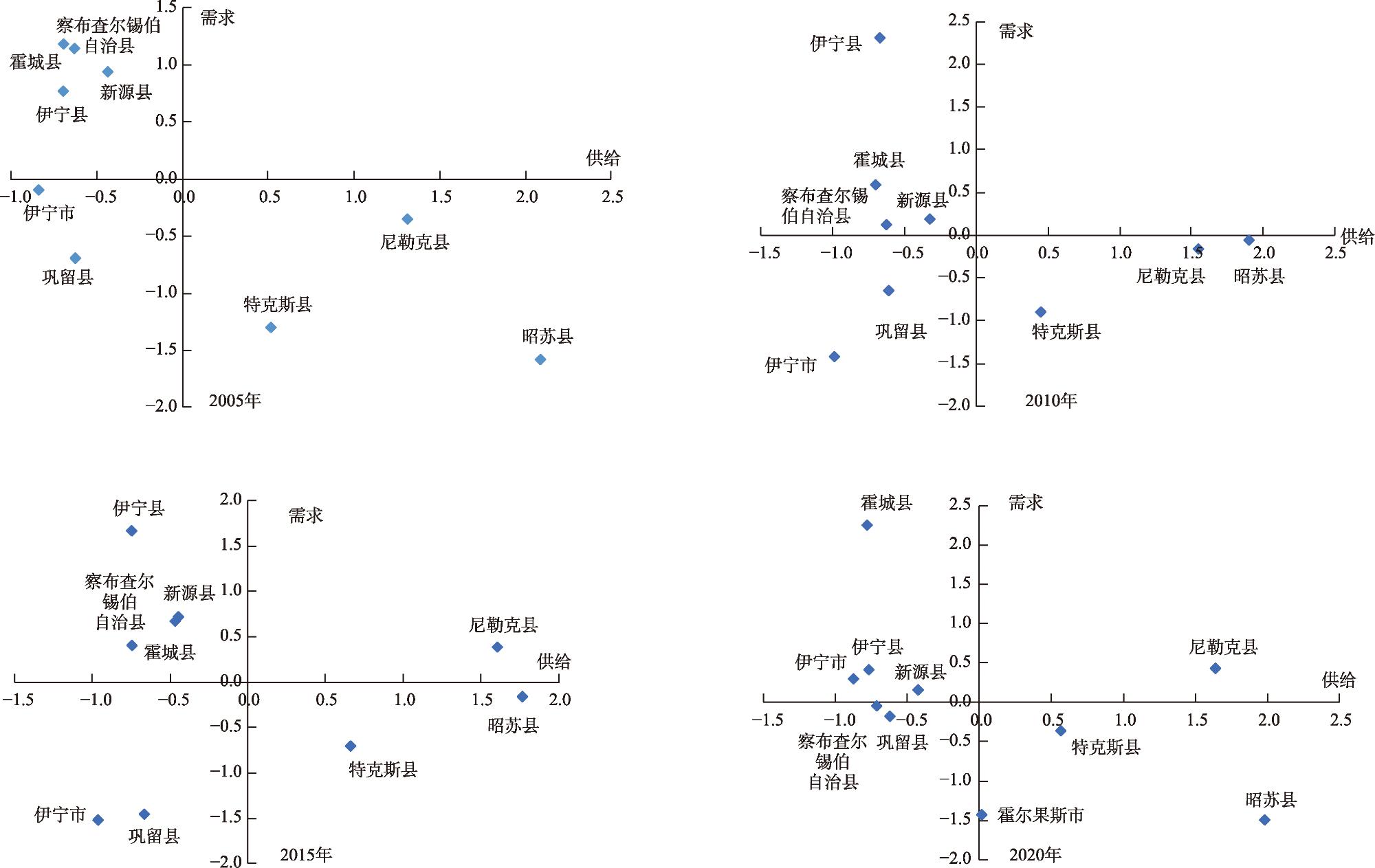
Water supply services sustain the survival and development of human society and are key to promoting the construction of China’s ecological civilization and the high-quality development of river basins. As a significant component of ecosystem services, it is central to ensuring the stability of watershed ecosystems and promoting the construction of ecological civilization in arid and semi-arid regions. This study focuses on the Ili River Valley in Xinjiang, analyzing the equilibrium characteristics of water supply and demand from 2005 to 2020. Using statistical yearbook and remote-sensing data, we apply models of water supply services, the water resources security index (FSI), and supply-demand matching analysis. The results indicate: (1) The FSI of the Ili River Valley fluctuates from “rising to falling,” and the supply-demand balance exhibits a three-stage evolution from “general deficit to general surplus to deficit persistence.” The spatial difference is significant: five counties and cities continue to deficit (i.e., Yining City, Yining County, Huocheng County, Qapqal Xibe Autonomous County, and Xinyuan County), while three counties and one city (i.e., Nilek County, Tekes County, Zhaosu County, and the city of Horgos [2020]) maintain the surplus that appeared in 2010 during the surplus inflection point. (2) The match between water supply and demand presents three dominant types: “low supply-high demand,” “low supply-low demand,” and “high supply-low demand.” The spatial distribution of supply-demand matching types is differentiated by gradients in the east, middle, and west. Counties and cities with the same matching types display spatial agglomeration and industrial convergence. They are significantly driven by the regional economic structure, which manifests in the following ways: the livestock areas with superior ecological fundamentals maintain a high supply capacity, while the arable land-intensive agricultural areas continue to face high demand pressure. To support regional sustainable development, this study analyzes county-level water supply-demand matching in the Ili River Valley, considering socioeconomic and natural geographic factors. Based on the analysis, ecological management zones—conservation, control, and improvement—are defined to promote integrated development, ecosystem sustainability, and efficient water resource use.
HU Jiran , YAO Juan , XIONG Changjiang . Ecological management zoning in the Ili River Valley based on supply and demand of water supply services[J]. Arid Zone Research, 2025 , 42(7) : 1313 -1322 . DOI: 10.13866/j.azr.2025.07.14
表1 水供给服务“供-需”平衡状况分级标准Tab. 1 Classification criteria for the “supply-demand” balance of water supply services |
| 分类等级 | 高赤字 | 较高赤字 | 一般赤字 | 平衡 | 一般盈余 | 较高盈余 | 高盈余 |
|---|---|---|---|---|---|---|---|
| 供需比 | (-3,-2) | (-2,-1) | (-1,0) | 0 | (0,1) | (1,2) | (2,3) |
| [1] |
|
| [2] |
黄治化, 赵军, 肖涵余, 等. 石羊河流域水服务供需状况及驱动因素[J]. 水土保持学报, 2021, 35(3): 228-235.
[
|
| [3] |
傅伯杰, 周国逸, 白永飞, 等. 中国主要陆地生态系统服务功能与生态安全[J]. 地球科学进展, 2009, 24(6): 571-576.
[
|
| [4] |
|
| [5] |
陈晓虎. 河道流域地表水资源的优势与开发使用的潜力分析[J]. 陕西水利, 2020(11): 41-43.
[
|
| [6] |
李妮. 水资源利用与环境经济协调发展研究——评《水资源与环境经济协调发展模型及其应用研究》[J]. 人民黄河, 2019, 41(7): 163.
[
|
| [7] |
颜瑜严, 杨辽, 王伟胜, 等. 伊犁河谷景观生态风险时空变化及其地形梯度分析[J]. 生态科学, 2020, 39(4): 125-136.
[
|
| [8] |
文广超, 赵梅娟, 谢洪波, 等. 伊犁河谷西部土地植被覆盖演化及驱动力分析[J]. 干旱区研究, 2021, 38(3): 843-854.
[
|
| [9] |
杨良健, 曹开军. 新疆85个县市旅游生态安全时空格局演变及驱动机制[J]. 生态学报, 2021, 41(23): 9239-9252.
[
|
| [10] |
杨磊, 冯青郁, 陈利顶. 黄土高原水土保持工程措施的生态系统服务[J]. 资源科学, 2020, 42(1): 87-95.
[
|
| [11] |
|
| [12] |
|
| [13] |
|
| [14] |
|
| [15] |
|
| [16] |
|
| [17] |
|
| [18] |
张欣蓉, 王晓峰, 程昌武, 等. 基于供需关系的西南喀斯特区生态系统服务空间流动研究[J]. 生态学报, 2021, 41(9): 3368-3380.
[
|
| [19] |
章维鑫, 吴秀芹, 于洋, 等. 2005—2015年小江流域生态系统服务供需变化及对石漠化的响应[J]. 水土保持学报, 2019, 33(5): 139-150.
[
|
| [20] |
占湉, 于洋, 吴秀芹. 湟水流域生态系统服务供需匹配关系[J]. 生态学报, 2021, 41(18): 7260-7272.
[
|
| [21] |
朱建佳, 刘金铜, 梁红柱, 等. 太行山区水资源供需关系的垂直梯度特征[J]. 应用生态学报, 2019, 30(2): 472-480.
[
|
| [22] |
屠文竹, 赵文武, 刘月, 等. 基于生态系统服务供需关系的黄土高原生态修复分区[J]. 生态学报, 2024, 44(21): 9695-9707.
[
|
| [23] |
|
| [24] |
黄云, 刘静, 郑博福, 等. 基于服务流视角的长江经济带水供给服务供需匹配特征及驱动机制[J/OL]. 环境科学,1-20 [2025-04-23]. 10.13227/j.hjkx.2024060847.
[
|
| [25] |
任檬, 毛德华. 涟水流域水产出服务供需分析与服务流研究[J]. 生态科学, 2021, 40(2): 186-195.
[
|
| [26] |
杨明杰, 杨广, 高普章, 等. 基于SD模型的干旱区城市水资源供需分析——以新疆克拉玛依市为例[J]. 人民长江, 2018, 49(5): 45-51, 73.
[
|
| [27] |
王宗志, 叶爱玲, 刘克琳, 等. 流域水资源供需双侧调控模型及应用[J]. 水利学报, 2021, 52(3): 265-276.
[
|
| [28] |
官冬杰, 孙灵丽, 蒋赖寒, 等. 三峡库区水供给服务供需关系动态变化及演化趋势分析[J]. 重庆交通大学学报(自然科学版), 2023, 42(2): 75-85.
[
|
| [29] |
刘鑫, 温天福, 曾新民, 等. 袁河流域水资源供需平衡与空间差异[J]. 南水北调与水利科技(中英文), 2020, 18(5): 94-101.
[
|
| [30] |
张靖琳, 吉喜斌, 陈学亮, 等. 河西走廊中段临泽绿洲水资源供需平衡及承载力分析[J]. 干旱区地理, 2018, 41(1): 38-47.
[
|
| [31] |
石茜茜, 张金萍, 李佳艺. 自然供水条件下灌区水资源供需时序随机模拟[J]. 人民黄河, 2018, 40(9): 148-152, 156.
[
|
| [32] |
王录仓, 高静. 基于灌区尺度的聚落与水土资源空间耦合关系研究——以张掖绿洲为例[J]. 自然资源学报, 2014, 29(11): 1888-1901.
[
|
| [33] |
蒙吉军, 汪疆玮, 王雅, 等. 基于绿洲灌区尺度的生态需水及水资源配置效率研究——黑河中游案例[J]. 北京大学学报(自然科学版), 2018, 54(1): 171-180.
[
|
| [34] |
杨霞, 安大维, 周鸿奎, 等. 2012—2017年伊犁河谷冬季降水日变化特征[J]. 冰川冻土, 2020, 42(2): 609-619.
[
|
| [35] |
何辉, 玉素甫江·如素力. 2001—2015年伊犁地区植被NDVI变化及其影响因子的相对作用分析[J]. 中南林业科技大学学报, 2019, 39(10): 76-87.
[
|
| [36] |
黄伟豪, 兰珊, 张艺圩, 等. 伊犁河流域农户对高标准农田建设成效的评价[J]. 干旱区研究, 2025, 42(4): 766-774.
[
|
| [37] |
|
| [38] |
|
| [39] |
严莉, 曹广超, 康利刚, 等. 基于InVEST模型的共和县生境质量时空变化及驱动因素[J]. 干旱区研究, 2024, 41(2): 314-325.
[
|
| [40] |
欧维新, 刘翠, 陶宇. 太湖流域水供给服务供需时空演变分析[J]. 长江流域资源与环境, 2020, 29(3): 623-633.
[
|
| [41] |
陈登帅, 李晶, 张渝萌, 等. 延河流域水供给服务供需平衡与服务流研究[J]. 生态学报, 2020, 40(1): 112-122.
[
|
| [42] |
|
| [43] |
|
| [44] |
董潇楠, 谢苗苗, 张覃雅, 等. 承灾脆弱性视角下的生态系统服务需求评估及供需空间匹配[J]. 生态学报, 2018, 38(18): 6422-6431.
[
|
| [45] |
张城, 李晶, 周自翔. 基于水供给服务空间流动模型的渭河流域水资源安全格局[J]. 地理科学, 2021, 41(2): 350-359.
[
|
| [46] |
王一达, 李晶, 周自翔, 等. 基于SWAT模型的无定河流域水供给服务空间流动模拟[J]. 陕西师范大学学报(自然科学版), 2022, 50(4): 81-91.
[
|
| [47] |
刘春芳, 王佳雪, 许晓雨. 基于生态系统服务流视角的生态补偿区域划分与标准核算——以石羊河流域为例[J]. 中国人口·资源与环境, 2021, 31(8): 157-165.
[
|
/
| 〈 |
|
〉 |