



Analysis of the hydrochemistry characteristics and groundwater recharge sources in the Hotan River Basin, China
Received date: 2023-10-10
Revised date: 2024-01-26
Online published: 2025-08-12
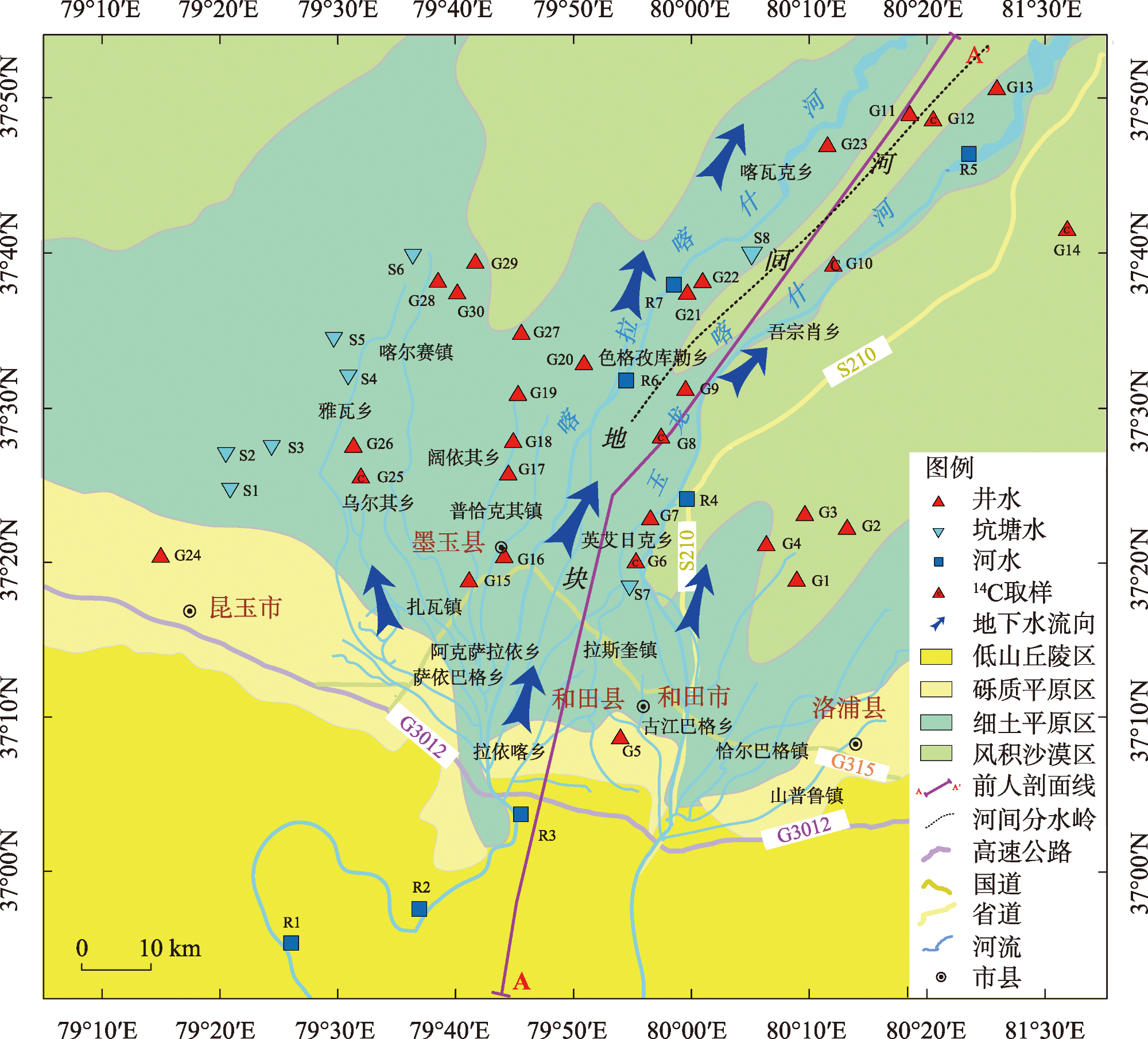
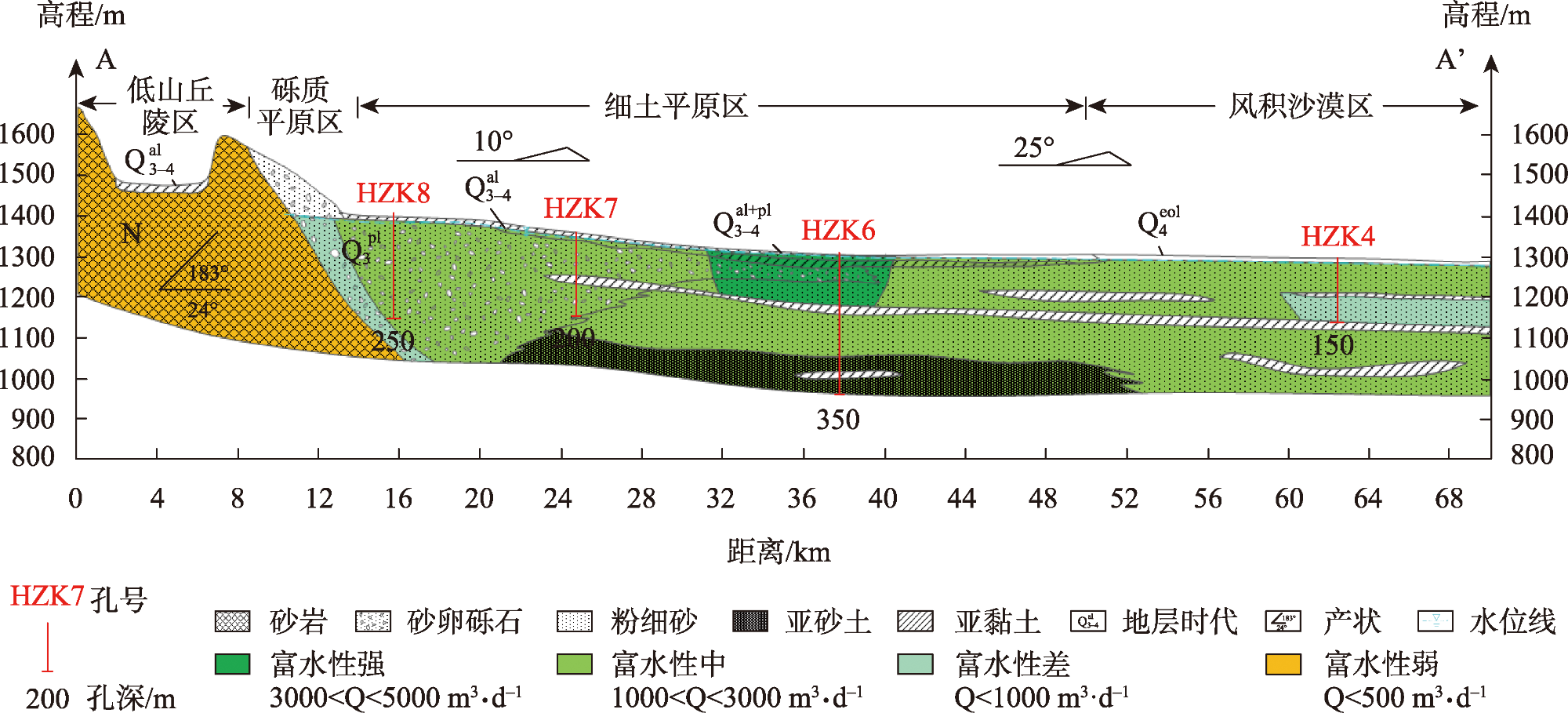
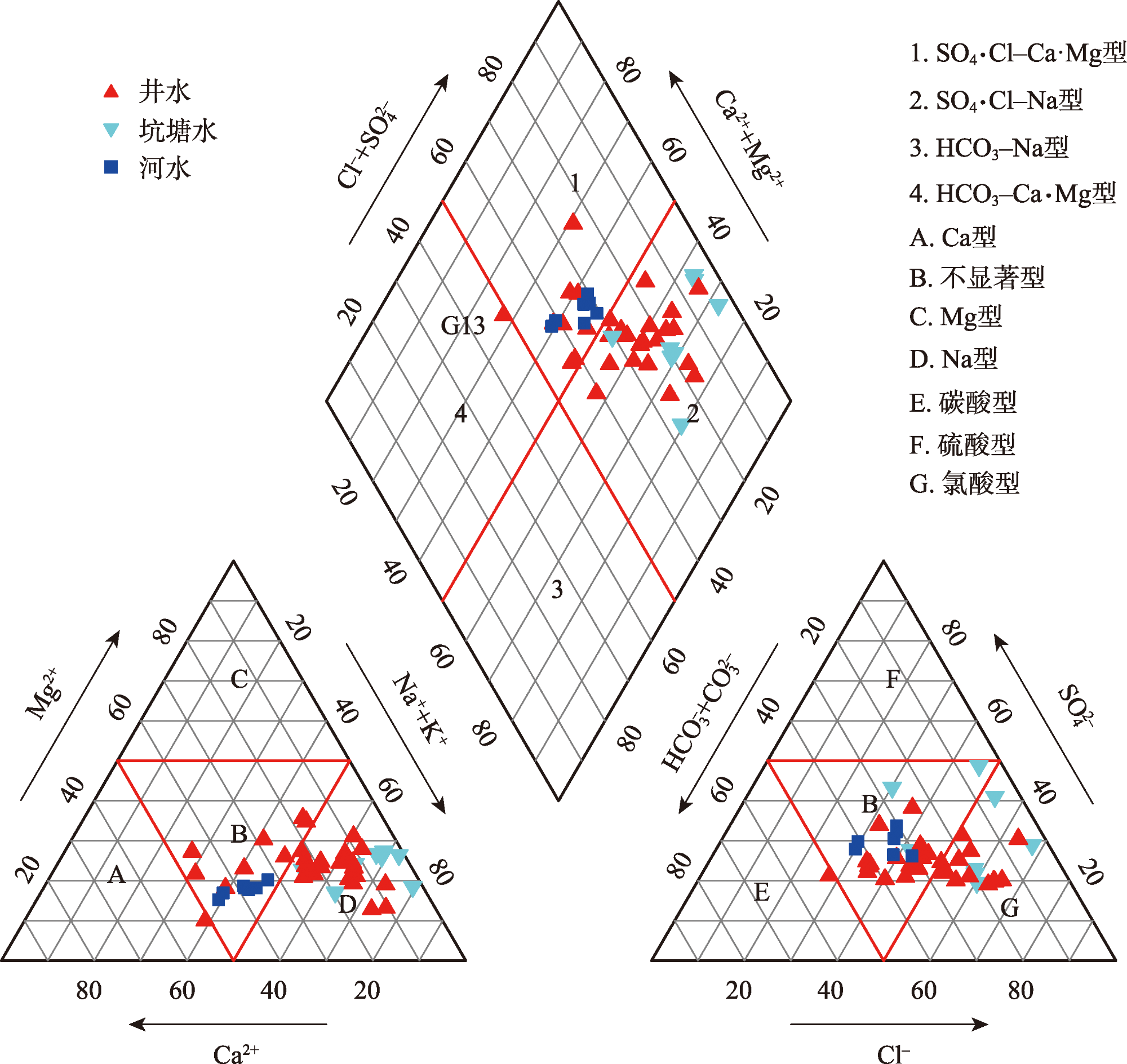
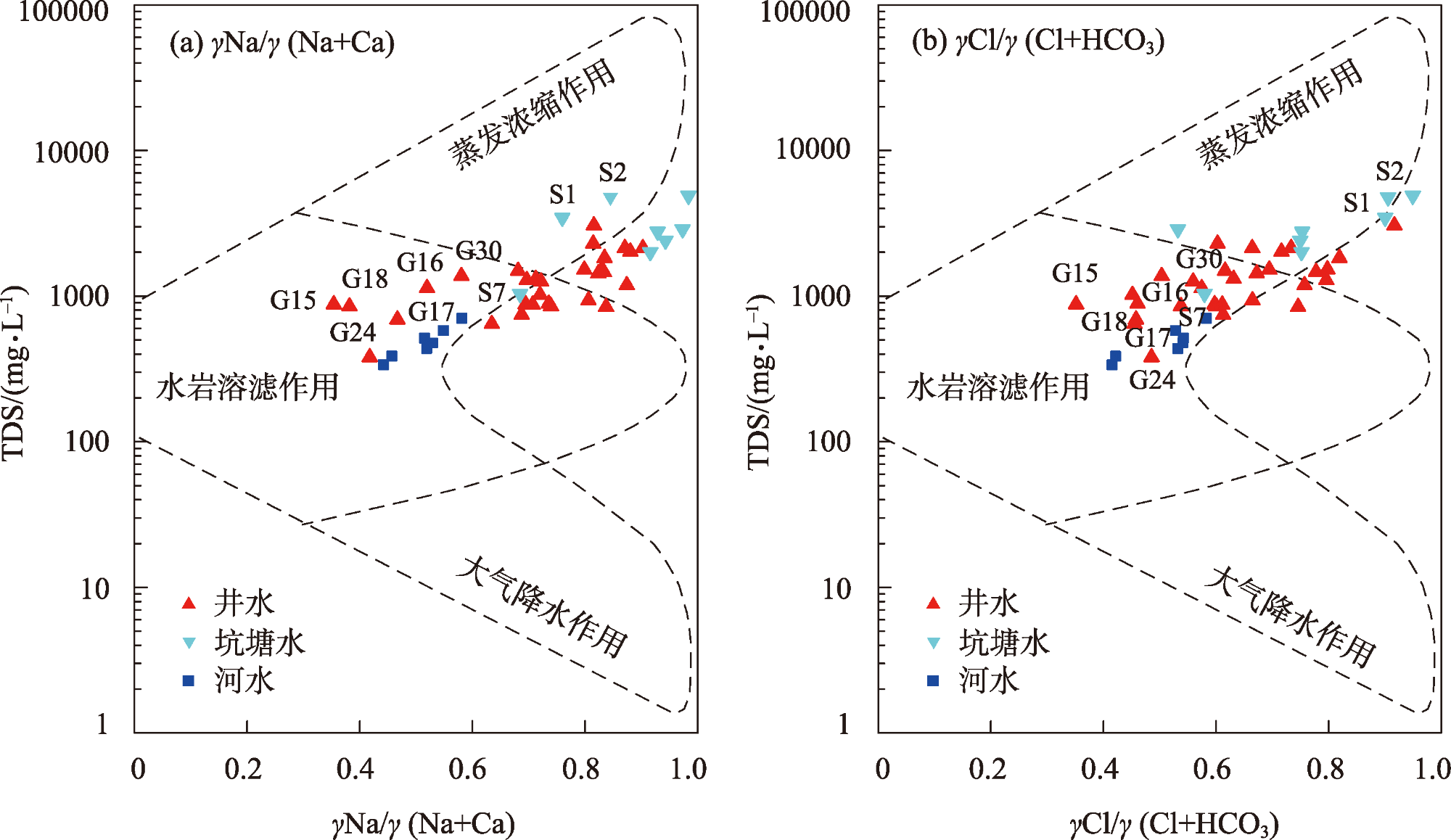
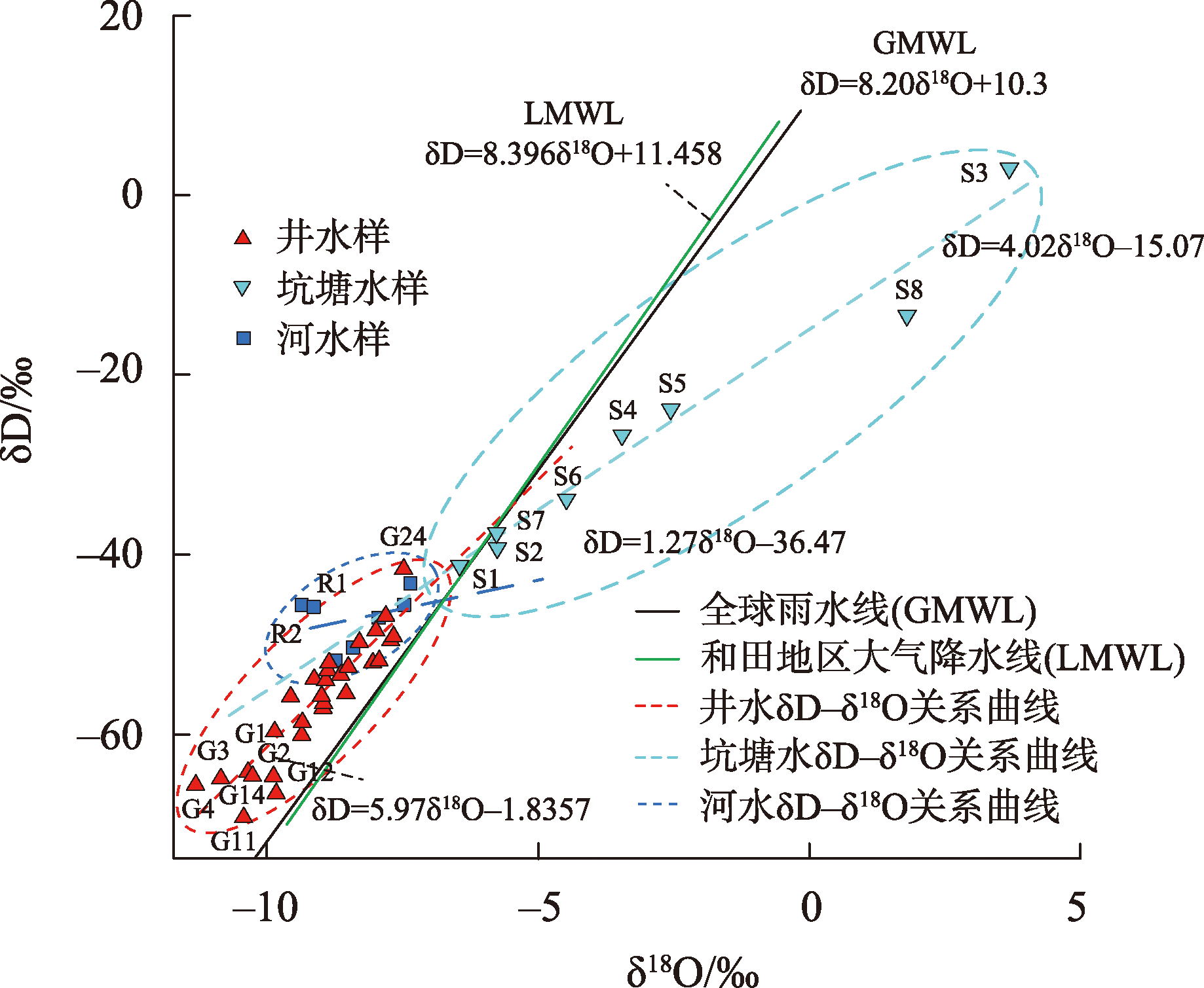
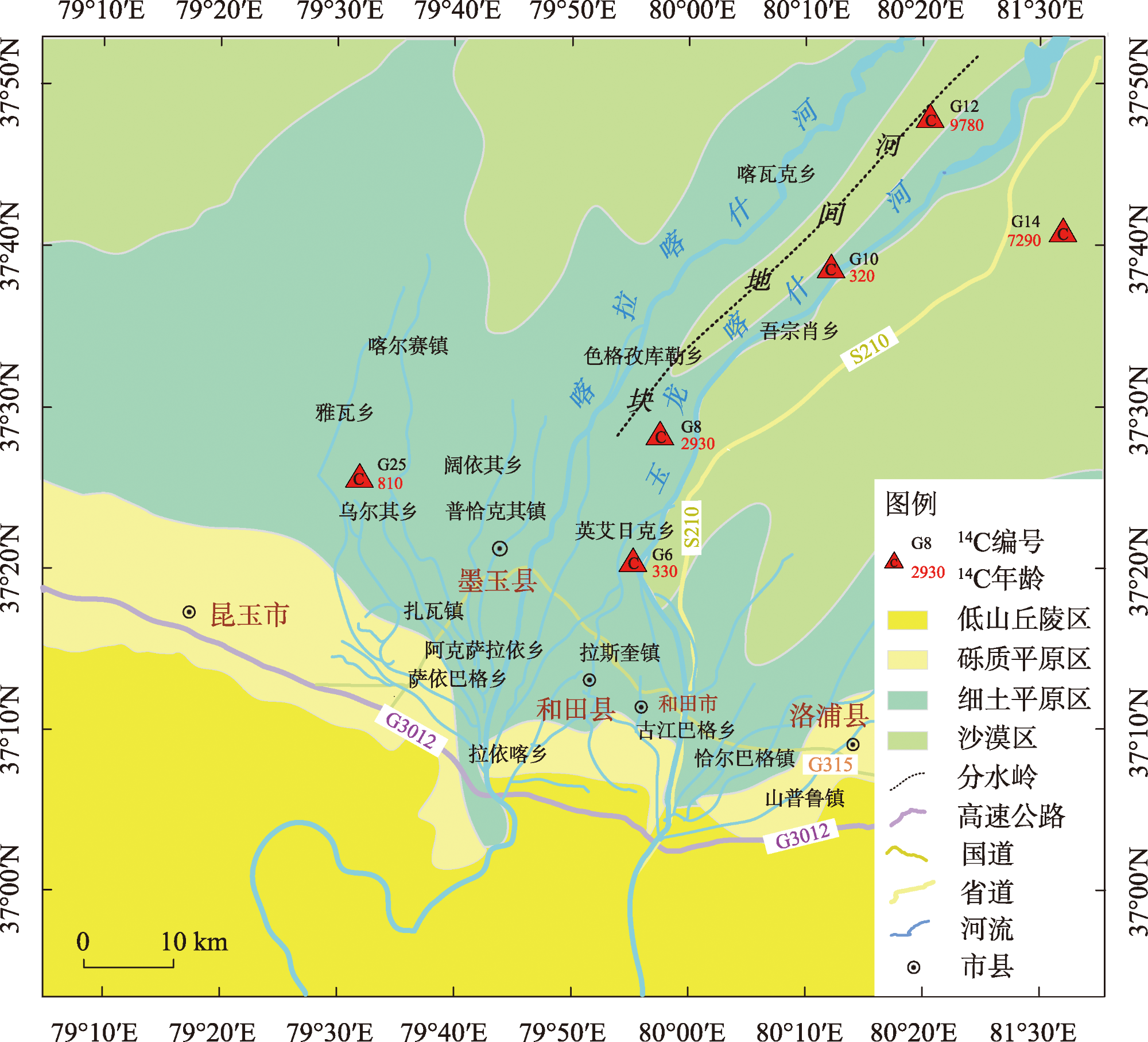
The characteristics of hydrochemistry and groundwater recharge in the Hotan River Basin were studied by analyzing the chemical composition of water, primary recharge sources, and mutual transformation of water bodies (wells, ponds, and rivers) in the different geomorphic units. For this, SPSS statistical analysis, Piper diagram, Gibbs diagram, and isotope tracing methods (D, 18O, and 14C) were used. The results showed that (1) the water bodies mainly originated from the ice- and snow-meltwater and precipitation in the mid and high mountainous areas>2000 m in the south. From the mountains to the desert, the chemical type and salinity of the groundwater showed obvious zonal characteristics. The different water bodies were weakly alkaline, and the ion composition and TDS values varied with the overall order of pond>well>river. The NO3- contents of a few groundwater samples were significantly abnormal. (2) the groundwater in the gravel plain area mainly received vertical and disconnected recharge from the surface river water. The groundwater had a fast renewal rate, low salinity, and major water-rock interactions, mainly of the SO4·Cl-Ca·Mg type. (3) the TDS value of the groundwater in the fine soil plain area varied over an extensive range, mostly of the Cl·SO4-Na type. In the inter-river block, the groundwater near the upstream received surface water and lateral runoff from the adjacent areas, and the 14C age was small. “Drift Oxygen” of δD and δ18O isotopes in the groundwater of the middle and lower reaches could be generally observed. The 14C age of the groundwater in the watershed was considerable but minuscule near the riverbank. The relation between the groundwater and the river was close. On both sides of the inter-river block, the groundwater runoff flowed along the northeast and northwest directions, respectively, and finally discharged into the peripheral desert area. The research results can provide a theoretical basis for the reasonable development and utilization of water resources and protect the ecology and environment of the Hotan River Basin.
Key words: hydrochemistry; groundwater; recharging source; isotope; Hotan River Basin
LI Xiaodeng , CHANG Liang , DUAN Rui , WANG Qian , ZHANG Qunhui , YANG Bingchao . Analysis of the hydrochemistry characteristics and groundwater recharge sources in the Hotan River Basin, China[J]. Arid Zone Research, 2024 , 41(6) : 917 -927 . DOI: 10.13866/j.azr.2024.06.02
表1 不同水体水化学参数统计Tab. 1 Statistics of hydrochemical parameters of different water bodies |
| 类型 | 指标 | K+/(mg·L-1) | Na+/(mg·L-1) | Ca2+/(mg·L-1) | Mg2+/(mg·L-1) | Cl-/(mg·L-1) | SO42-/(mg·L-1) | HCO3-/(mg·L-1) | NO3-/(mg·L-1) | TDS/(mg·L-1) | pH |
|---|---|---|---|---|---|---|---|---|---|---|---|
| 地下水 | 极差 | 39.20 | 689.39 | 108.77 | 131.21 | 1101.43 | 653.69 | 572.59 | 18.49 | 2681.04 | 0.57 |
| 最小值 | 5.66 | 52.65 | 39.33 | 7.55 | 73.74 | 105.53 | 134.30 | 0.25 | 381.16 | 7.59 | |
| 最大值 | 44.86 | 742.04 | 148.10 | 138.76 | 1175.17 | 759.22 | 706.89 | 18.74 | 3062.20 | 8.16 | |
| 平均值 | 19.73 | 283.87 | 82.04 | 64.21 | 403.08 | 265.50 | 351.25 | 4.57 | 1299.64 | 7.90 | |
| 标准差 | 7.74 | 165.22 | 33.66 | 32.03 | 243.67 | 134.20 | 139.56 | 4.11 | 587.82 | 0.17 | |
| 变异系数 | 0.39 | 0.58 | 0.41 | 0.50 | 0.60 | 0.51 | 0.40 | 0.90 | 0.45 | 0.02 | |
| 坑塘水 | 极差 | 61.81 | 1166.35 | 205.89 | 220.80 | 1522.22 | 1318.54 | 383.36 | 16.41 | 3851.77 | 2.13 |
| 最小值 | 14.82 | 214.35 | 19.67 | 49.42 | 264.46 | 236.93 | 163.60 | 3.02 | 1036.91 | 7.70 | |
| 最大值 | 76.63 | 1380.70 | 225.56 | 270.22 | 1786.68 | 1555.47 | 546.96 | 19.43 | 4888.68 | 9.83 | |
| 平均值 | 53.21 | 844.05 | 83.38 | 154.19 | 917.45 | 749.27 | 361.08 | 6.39 | 3028.06 | 8.53 | |
| 标准差 | 20.72 | 414.77 | 77.33 | 69.00 | 523.16 | 479.44 | 152.65 | 5.53 | 1319.11 | 0.70 | |
| 变异系数 | 0.39 | 0.49 | 0.93 | 0.45 | 0.57 | 0.64 | 0.42 | 0.87 | 0.44 | 0.08 | |
| 河 水 | 极差 | 5.05 | 80.33 | 28.50 | 19.48 | 123.37 | 73.98 | 80.58 | 2.87 | 366.78 | 0.46 |
| 最小值 | 5.30 | 46.48 | 50.97 | 10.22 | 63.10 | 79.55 | 148.95 | 2.10 | 338.26 | 7.77 | |
| 最大值 | 10.35 | 126.81 | 79.47 | 29.70 | 186.47 | 153.53 | 229.53 | 4.97 | 705.04 | 8.23 | |
| 平均值 | 7.03 | 79.28 | 62.73 | 18.08 | 111.31 | 120.12 | 176.51 | 4.02 | 491.49 | 7.98 | |
| 标准差 | 1.75 | 28.00 | 10.49 | 6.47 | 41.55 | 25.64 | 31.75 | 0.99 | 123.60 | 0.16 | |
| 变异系数 | 0.25 | 0.35 | 0.17 | 0.36 | 0.37 | 0.21 | 0.18 | 0.25 | 0.25 | 0.02 |
注:pH、标准差和变异系数均无量纲。 |
表2 不同水体δD、δ18O和d-excess参数统计Tab. 2 Statistics of δD、δ18O and d-excess parameters of different water bodies |
| 类型 | 指标 /‰ | 极差 /‰ | 最小值 /‰ | 最大值 /‰ | 平均值 /‰ | 标准 差 | 变异 系数 |
|---|---|---|---|---|---|---|---|
| 地下水 | δD | 27.50 | -69.12 | -41.62 | -55.02 | 6.37 | -0.12 |
| δ18O | 3.86 | -11.31 | -7.45 | -8.91 | 1.00 | -0.11 | |
| d-excess | 13.17 | 11.88 | 25.05 | 16.25 | 3.07 | 0.19 | |
| 坑塘水 | δD | 44.11 | -41.40 | 2.72 | -26.63 | 15.09 | -0.57 |
| δ18O | 10.13 | -6.46 | 3.67 | -2.88 | 3.71 | -1.29 | |
| d-excess | 37.26 | -26.95 | 10.30 | -3.57 | 15.01 | -4.20 | |
| 河水 | δD | 8.71 | -51.77 | -43.07 | -47.15 | 2.95 | -0.06 |
| δ18O | 1.97 | -9.32 | -7.34 | -8.40 | 0.74 | -0.09 | |
| d-excess | 13.32 | 15.68 | 29.00 | 20.05 | 5.68 | 0.28 |
注:标准差和变异系数均无量纲。 |
表3 同位素部分样点特征值及参数统计Tab. 3 Characteristic values and parameter statistics of partial samples of isotope |
| 样品编号 | 井深/m | 水位埋深/m | 取样高程/m | 补给高程/m | δD/‰ | δO/‰ | d-excess/‰ | 14C年龄/aB.P. | ||
|---|---|---|---|---|---|---|---|---|---|---|
| G6 | 130 | 4.03 | 1316 | 1932 | -48.92 | -7.68 | 12.55 | 330 | ||
| G8 | 120 | 4.21 | 1299 | 2379 | -53.66 | -8.32 | 12.90 | 2930 | ||
| G10 | 80 | 4.27 | 1275 | 2067 | -53.88 | -8.38 | 13.16 | 320 | ||
| G12 | 100 | 3.75 | 1260 | 2127 | -55.33 | -8.57 | 13.21 | 9780 | ||
| G14 | 75 | 3.45 | 1268 | 2636 | -66.02 | -9.82 | 12.54 | 7290 | ||
| G25 | 85 | 3.13 | 1315 | 1929 | -53.00 | -8.37 | 13.96 | 810 |
| [1] |
曾小仙, 曾妍妍, 周金龙, 等. 石河子市浅层地下水化学特征及其成因分析[J]. 干旱区研究, 2021, 38(1): 68-75.
[
|
| [2] |
李杰彪, 梁修雨, 周志超, 等. 某地下核设施场址地下水化学特征及其对水循环的指示意义[J]. 地球科学, 2024, 49(3): 965-977.
[
|
| [3] |
孙琪, 徐长春, 任正良, 等. 塔里木河流域产水量时空分布及驱动因素分析[J]. 灌溉排水学报, 2021, 40(8): 114-122.
[
|
| [4] |
陈宗宇, 万力, 聂振龙, 等. 利用稳定同位素识别黑河流域地下水的补给来源[J]. 水文地质工程地质, 2006, 33(6): 9-14.
[
|
| [5] |
马金珠, 黄天明, 丁贞玉, 等. 同位素指示的巴丹吉林沙漠南缘地下水补给来源[J]. 地球科学进展, 2007, 22(9): 923-930.
[
|
| [6] |
|
| [7] |
徐学选, 张北赢, 田均良. 黄土丘陵区降水-土壤水-地下水转化实验研究[J]. 水科学进展, 2010, 21(1): 16-21.
[
|
| [8] |
孙晨云, 郑和祥, 李瑞平, 等. 鄂尔多斯沿黄灌区大气降水稳定同位素特征与水汽来源分析[J]. 灌溉排水学报, 2022, 41(4) : 93-100.
[
|
| [9] |
喻龙, 何峻岭, 艾书涛, 等. 新疆铁门关市域地下水氢氧稳定同位素特征分析[J]. 干旱区资源与环境, 2023, 37(1): 58-64.
[
|
| [10] |
|
| [11] |
|
| [12] |
贾丹阳. 罗布泊地区红柳沙包记录的水分来源信息研究[D]. 石家庄: 河北师范大学, 2021: 33-47.
[
|
| [13] |
刘树宝, 陈亚宁, 陈亚鹏, 等. 基于稳定同位素技术的黑河下游不同林龄胡杨的吸水深度研究[J]. 生态学报, 2016, 36(3): 729-739.
[
|
| [14] |
吴华武, 李小雁, 蒋志云, 等. 基于δD 和δ18O的青海湖流域芨芨草水分利用来源变化研究[J]. 生态学报, 2015, 35(24): 8174-8183.
[
|
| [15] |
刘澄静, 角媛梅, 刘歆, 等. 基于氢氧稳定同位素的哈尼水稻梯田湿地水源补给分析[J]. 生态学杂志, 2018, 37(10): 3092-3099.
[
|
| [16] |
刘鑫, 向伟, 司炳成. 汾河流域浅层地下水水化学和氢氧稳定同位素特征及其指示意义[J]. 环境科学, 2021, 42(4): 1739-1749.
[
|
| [17] |
王雨山, 尹德超, 祁晓凡, 等. 白洋淀不同水体氢氧同位素特征及其指示意义[J]. 环境科学, 2022, 43(4): 1920-1929.
[
|
| [18] |
|
| [19] |
|
| [20] |
|
| [21] |
李丹, 张明珠, 庞园, 等. 广州市沿海平原地下水循环及转化规律初探[J]. 人民珠江, 2019, 40(9): 76-84.
[
|
| [22] |
宋献方, 夏军, 于静洁, 等. 应用环境同位素技术研究华北典型流域水循环机理的展望[J]. 地理科学进展, 2002, 21(6): 527-537.
[
|
| [23] |
张晓伟, 沈冰, 关东海, 等. 新疆和田地下水水化学成分特征灰关联分析[J]. 西安理工大学报, 2006, 22(1): 96-98.
[
|
| [24] |
李玲, 周金龙, 齐万秋, 等. 新疆和田河流域绿洲区浅层地下水水化学特征及成因分析[J]. 水资源与工程学报, 2008, 29(3): 14-20.
[
|
| [25] |
杨锐, 周金龙, 张杰, 等. 新疆和田地区平原区地下水硬度空间分布及影响因素分析[J]. 环境化学, 2020, 39(11): 3255-3264.
[
|
| [26] |
李升, 余斌, 陈锋, 等. 皮山河绿洲带地下水水化学及同位素特征分析[J]. 干旱区资源与环境, 2021, 35(5): 116-122.
[
|
| [27] |
时雯雯, 周金龙, 曾妍妍, 等. 和田地区地下水中氟的分布特征及形成过程[J]. 干旱区研究, 2022, 39(1): 155-164.
[
|
| [28] |
胡顺福. 和田河流域水文特征及区域水资源评价[J]. 干旱区研究, 1991, 16(2): 61-70.
[
|
| [29] |
何朝飞, 骆成彦, 陈伏龙, 等. 基于CMIP6多模式的和田河流域未来气候变化预估[J]. 地学前缘, 2023, 30(3): 515-528.
[
|
| [30] |
魏潇娜, 龙爱华, 尹振良, 等. 和田河流域冰川径流对气候变化响应的模拟分析[J]. 水资源保护, 2022, 38(4): 137-144.
[
|
| [31] |
彭兆轩, 柳莹, 李江, 等. 新疆和田河流域防洪主要问题与对策[J]. 水利规划与设计, 2021, 43(5): 43-47.
[
|
| [32] |
白凡, 周金龙, 曾妍妍. 吐鲁番盆地平原区地下水水化学特征及水质评价[J]. 干旱区研究, 2022, 39(2): 419-428.
[
|
| [33] |
|
| [34] |
|
| [35] |
余其鹰, 白云岗, 张江辉, 等. 和田河流域干流河道耗水过程分析[J]. 水资源与水工程学报, 2021, 32(2): 73-80.
[
|
| [36] |
那扎凯提·托乎提, 虎胆·吐马尔白, 焦萍, 等. 和田河流域近60年降水、气温与径流演变特征研究[J]. 水文, 2022, 42(1): 85-89.
[
|
| [37] |
何启欣, 曹广超, 曹生奎, 等. 香日德-柴达木河流域水体氢氧稳定同位素特征及影响因素研究[J]. 干旱区研究, 2022, 39(3): 820-828.
[
|
| [38] |
夏怡洁, 王圣杰, 张明军. 新疆自来水中氢氧稳定同位素时空变化[J]. 干旱区研究, 2022, 39(3): 810-819.
[
|
| [39] |
李晗薇, 姚俊强, 容韬, 等. 塔什库尔干河流域河谷大气降水同位素特征与水汽输送路径[J]. 干旱区研究, 2024, 41(3): 399-410.
[
|
| [40] |
石玉东, 王圣杰, 张明军, 等. OIPC 和RCWIP 降水氢氧稳定同位素数据在新疆天山地区的适用性[J]. 冰川冻土, 2020, 42(3): 974-985.
[
|
| [41] |
吐尔逊江·艾莎, 海米提·依米提, 古丽娜尔·哈历别克, 等. 塔里木盆地降水中稳定同位素变化特征浅析——以和田地区为例[J]. 安徽农业科学, 2012, 40(4): 2163-2165.
[
|
| [42] |
陈宗宇, 齐继祥, 张兆吉, 等. 北方典型盆地同位素水文地质学方法应用[M]. 北京: 科学出版社, 2010: 24.
[
|
/
| 〈 |
|
〉 |