



Evaluation of climate comfort for red tourism in the Shaanxi-Gansu-Ningxia Region based on GIS
Received date: 2024-08-19
Revised date: 2024-11-05
Online published: 2025-08-12
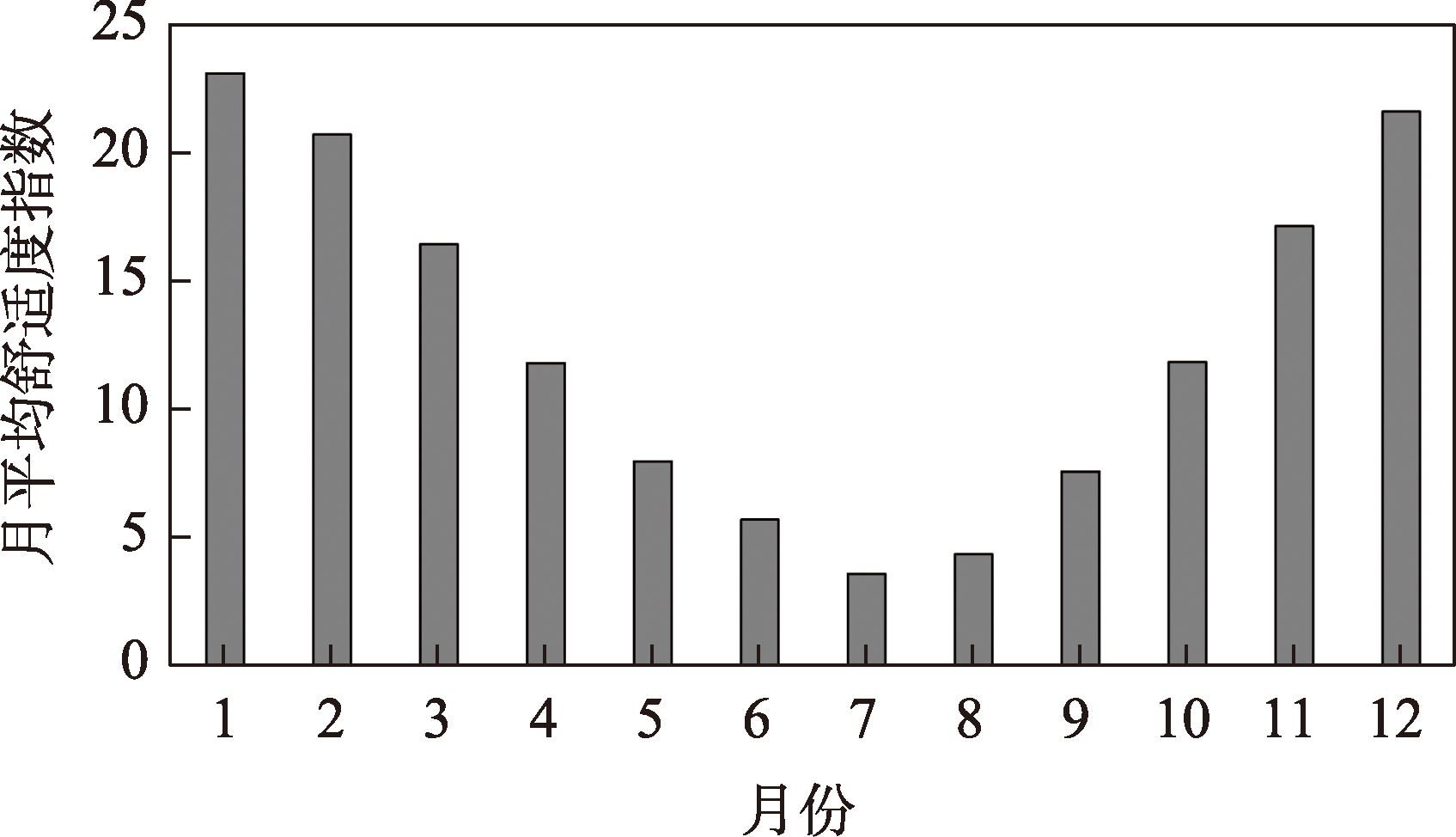
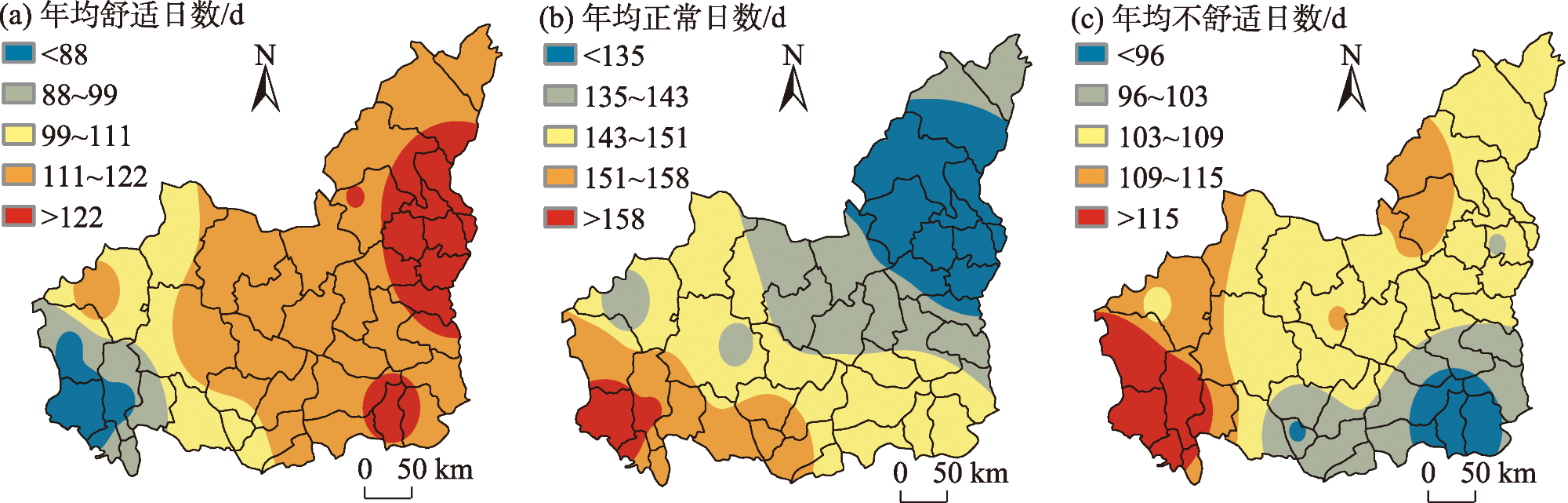
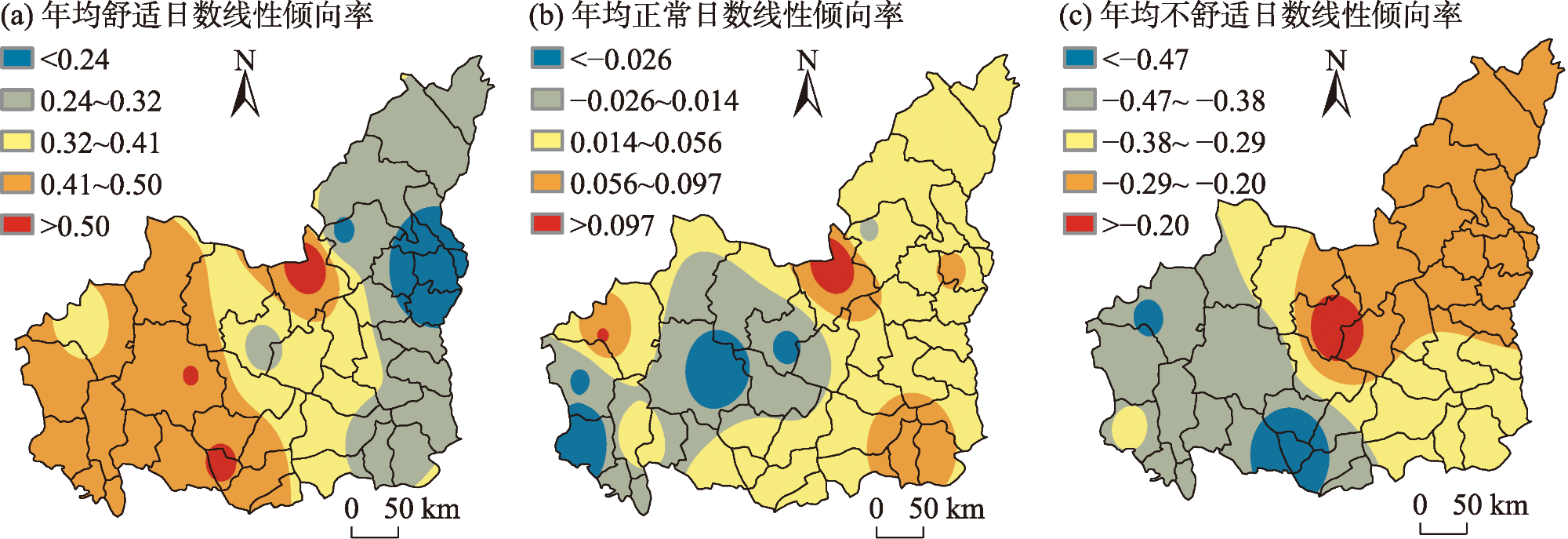
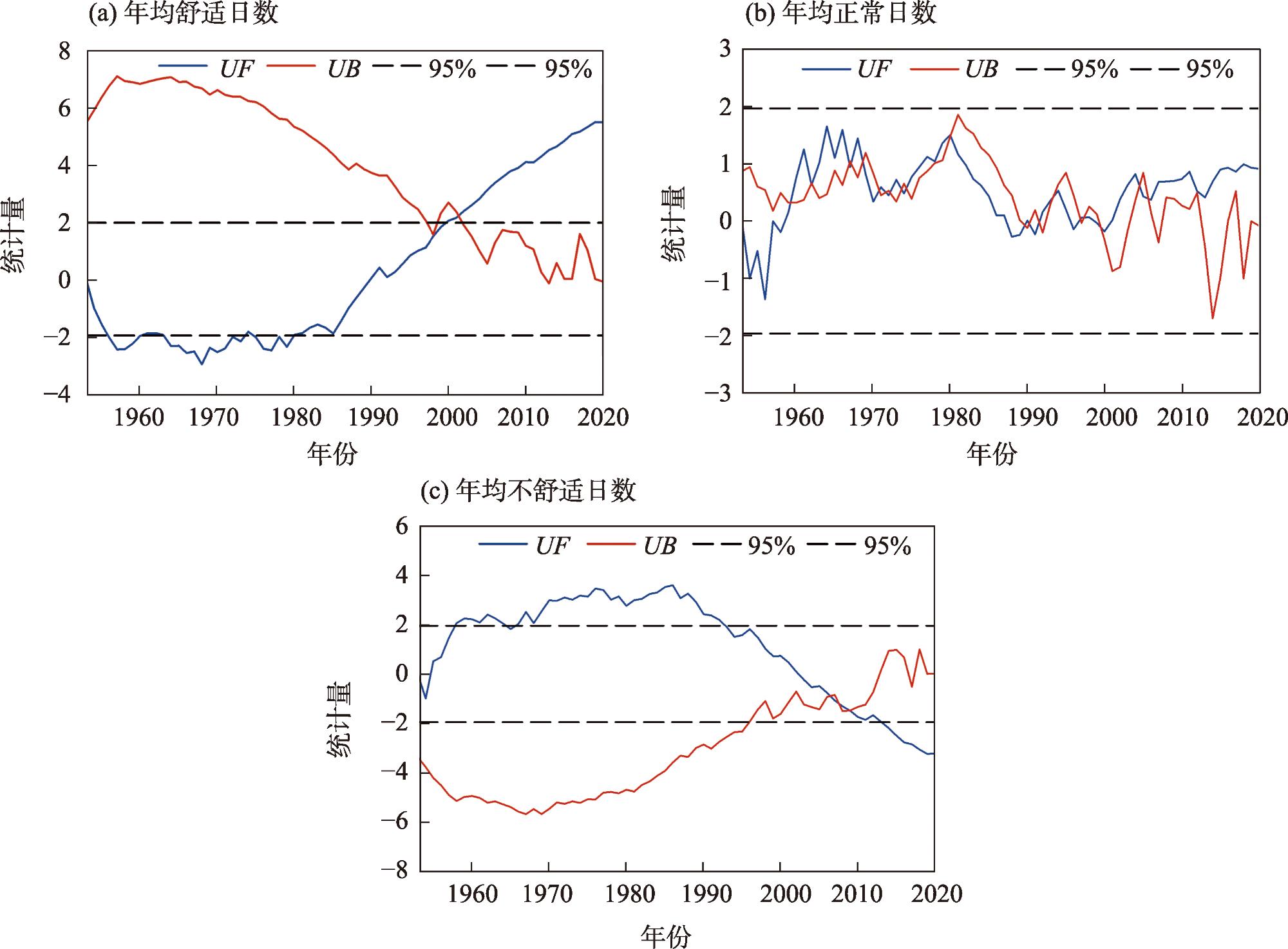
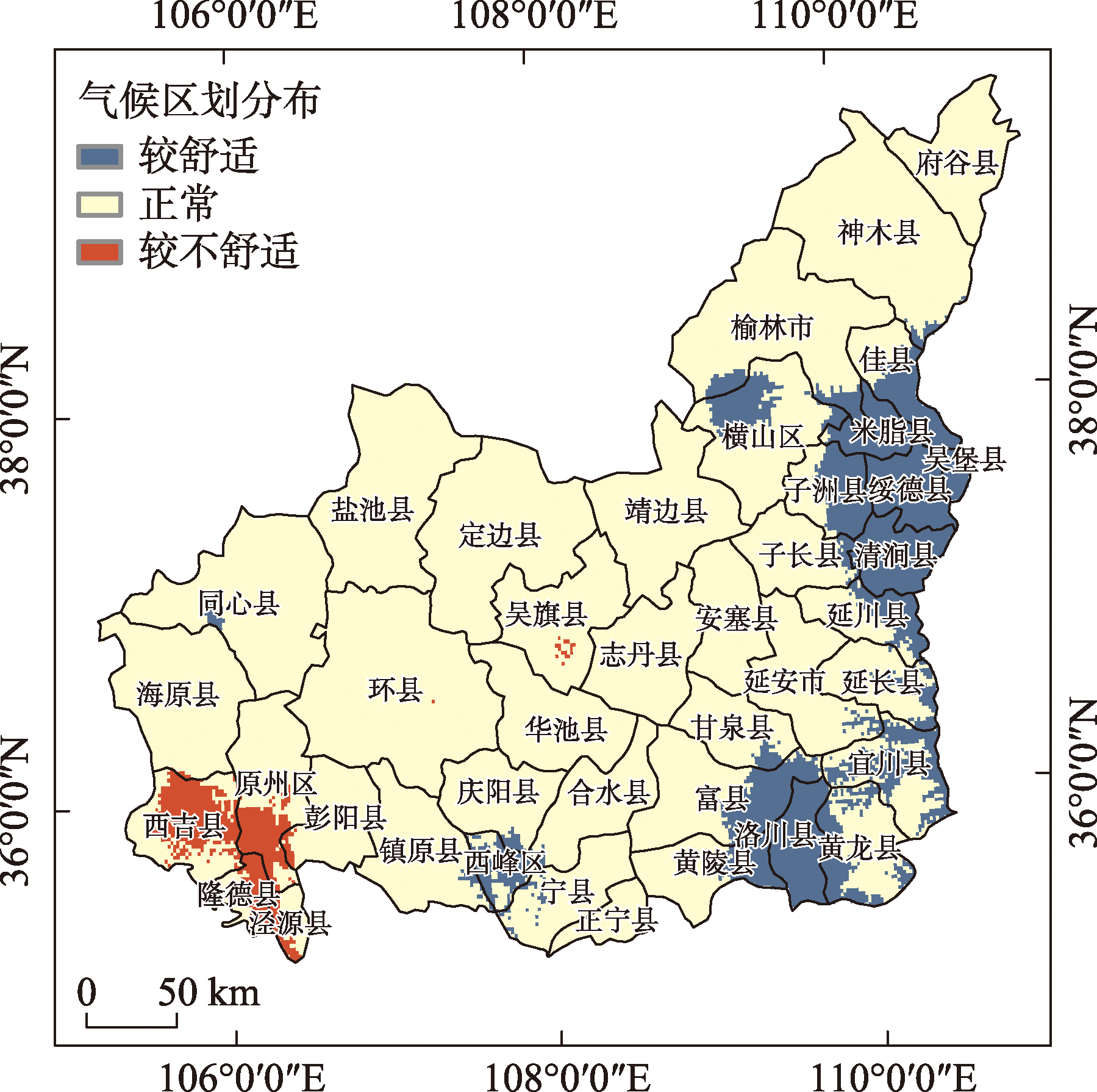
Assessing climate comfort in the Shaanxi-Gansu-Ningxia region is essential for the development of red tourism and the promotion of ecological sustainability. Using daily meteorological data from 1953 to 2020, including average temperature, wind speed, and relative humidity, this study applies a comprehensive climate comfort evaluation model integrated with GIS-based spatial interpolation and zoning methods to systematically analyze the spatiotemporal distribution of climate comfort in the region. The results show that, temporally, the climate is generally comfortable from May to September, while discomfort prevails from December to February. Spatially, northern Shaanxi exhibits relatively favorable climatic conditions, whereas the southwestern Xihaigu region is less suitable in terms of climate comfort. Under the influence of global warming, the annual average number of comfortable days has increased, whereas the number of uncomfortable days has significantly decreased since 2000. Comprehensive zoning results indicate that southwestern and central high-altitude areas experience lower comfort levels, while other regions remain relatively favorable. Further analysis reveals that for each unit change in the climate comfort index, the red tourism visitor flow index changes by 0.593%. Notably, Yan’an, due to its rich red tourism resources and favorable climate, has a significantly higher attractiveness index than other regions. Future red tourism planning should be dynamically optimized to address climate change and evolving tourist preferences. This study offers a scientific basis for regional tourism development and the sustainable advancement of red tourism. A scientific reference for regional tourism development and the sustainable advancement of red tourism activities.
JIN Shuang , REN Jiahui , FENG Fang , HUANG Qiaohua , HE Ping . Evaluation of climate comfort for red tourism in the Shaanxi-Gansu-Ningxia Region based on GIS[J]. Arid Zone Research, 2025 , 42(6) : 1093 -1102 . DOI: 10.13866/j.azr.2025.06.12
表1 气候舒适度指数分级Tab. 1 Climate comfort index classification |
| CCI取值 | 体感 | 级别 |
|---|---|---|
| CCI≤3.36 | 最舒适 | 1级 |
| 3.36<CCI≤6.92 | 较舒适 | 2级 |
| 6.92<CCI≤17.52 | 正常 | 3级 |
| 17.52<CCI≤22.52 | 较不舒适 | 4级 |
| CCI>22.52 | 最不舒适 | 5级 |
| [1] |
IPCC. Climate change 2021: The Physical Science Basis[R]. Cambridge University: IPCC, 2021.
|
| [2] |
|
| [3] |
|
| [4] |
|
| [5] |
|
| [6] |
张辉. 旅游气候舒适度评价研究——以内蒙古自治区为例[D]. 上海: 上海师范大学, 2013.
[
|
| [7] |
|
| [8] |
荣培君, 张荣荣, 赵现红. 中国气候舒适度时空演变及其对旅游业的影响[J]. 世界地理研究, 2024, 33(7): 139-149.
[
|
| [9] |
官景得, 王咏青, 孙银川, 等. 近39 a宁夏旅游气候适宜期及变化分析[J]. 干旱区地理, 2020, 43(2): 339-348.
[
|
| [10] |
马丽君, 孙根年. 中国西部热点城市旅游气候舒适度[J]. 干旱区地理, 2009, 32(5): 791-797.
[
|
| [11] |
陈海英, 安莉娟, 代海燕, 等. 乌兰察布市草原景区旅游气候舒适度评价[J]. 草业科学, 2024, 41(9): 2181-2189.
[
|
| [12] |
曹伟宏, 王淑新. 京津冀地区城市人居环境气候舒适性评价[J]. 冰川冻土, 2017, 39(2): 435-442.
[
|
| [13] |
胡琳, 胡淑兰, 苏静, 等. 陕西省人体舒适度变化及其对气象因子的响应[J]. 干旱区研究, 2019, 36(6): 1450-1456.
[
|
| [14] |
曹伟宏, 何元庆, 李宗省, 等. 云南丽江旅游气候舒适度分析[J]. 冰川冻土, 2012, 34(1): 201-206.
[
|
| [15] |
张可心. 1981—2018年庆阳市气候舒适度特征分析及评价[J]. 干旱区地理, 2020, 43(5): 1270-1277.
[
|
| [16] |
任佳慧, 冯芳, 黄巧华, 等. 淮海经济区人居环境气候舒适性评价[J]. 江苏师范大学学报(自然科学版), 2023, 41(2): 67-71.
[
|
| [17] |
张曼义, 丁国香, 华梦飞, 等. 安徽省气候舒适度评价及旅游资源潜力分析[J]. 海洋湖沼通报, 2022, 44(6): 89-96.
[
|
| [18] |
王胜, 田红, 谢五三, 等. 近50年安徽省气候舒适度变化特征及区划研究[J]. 地理科学进展, 2012, 31(1): 40-45.
[
|
| [19] |
张群慧, 常亮, 顾小凡, 等. 1979—2020年柴达木盆地人体舒适度指数时空变化及趋势分析[J]. 干旱区研究, 2024, 41(8): 1300-1308.
[
|
| [20] |
李积宏, 周刊社, 张东东, 等. 西藏高原人体舒适度指数时空变化特征分析[J]. 干旱区地理, 2024, 47(6): 980-992.
[
|
| [21] |
高家骥, 李鸿奎, 白芝珍, 等. GIS支持下的东北三省人居环境气候舒适度分异及影响因素分析[J]. 测绘通报, 2022(6): 148-153.
[
|
| [22] |
曹开军, 杨兆萍, 孟现勇, 等. 基于栅格尺度的阿勒泰地区旅游气候舒适度评价[J]. 冰川冻土, 2015, 37(5): 1420-1427.
[
|
| [23] |
邱粲, 曹洁, 林隆超, 等. 基于GIS的山东省旅游气候舒适度精细化评估[J]. 资源科学, 2013, 35(12): 2501-2506.
[
|
| [24] |
任国平, 郑慧开, 汤放华, 等. 基于转化效率的资源型省份红色旅游经济高质量发展[J]. 自然资源学报, 2023, 38(3): 576-600.
[
|
| [25] |
杜涛, 白凯, 黄清燕, 等. 红色旅游资源的社会建构与核心价值[J]. 旅游学刊, 2022, 37(7): 16-26.
[
|
| [26] |
常学礼, 赵爱芬, 李胜功. 生态脆弱带的尺度与等级特征[J]. 中国沙漠, 1999, 19(2): 20-24.
[
|
| [27] |
赵安周, 张安兵, 赵延旭, 等. 基于MODIS NDVI数据的陕甘宁地区植被覆盖时空变化及其对极端气候的响应[J]. 水土保持研究, 2018, 25(3): 224-231.
[
|
| [28] |
孙梦华, 牛文浩, 张蚌蚌, 等. 黄河流域土地利用变化下生态系统服务价值时空演变及其响应——以陕甘宁地区为例[J]. 应用生态学报, 2021, 32(11): 3913-3922.
[
|
| [29] |
芦佳玉, 延军平, 王鹏涛, 等. 全球气候变暖背景下陕甘宁地区风速时空变化特征[J]. 中国沙漠, 2017, 37(3): 554-560.
[
|
| [30] |
杨新, 延军平. 陕甘宁地区气候暖干化趋势分析[J]. 干旱区研究, 2002, 19(3): 67-70.
[
|
| [31] |
王晓冬. 陕甘宁地区气候变化及相关影响分析[J]. 干旱区地理, 2004, 27(1): 24-28.
[
|
| [32] |
彭春香. 陕甘宁红色旅游资源空间分布及跨域整合治理研究[D]. 西安: 西安建筑科技大学, 2023.
[
|
| [33] |
延安市统计局. 延安统计年鉴[M]. 2000-2019.
[Yan’an Bureau of Statistics. Yan’an Statistical Yearbook[M]. 2000-2019.]
|
| [34] |
张陇堂. 陕甘宁共推红色旅游线路[N]. 中国旅游报, 2009-09-30( 003).
[
|
| [35] |
马耀峰, 李旭, 梁雪松, 等. 陕西红色旅游发展战略研究[J]. 西北大学学报(哲学社会科学版), 2005, (4): 22-26.
[
|
| [36] |
卢珊, 王百朋, 张宏芳. 1971—2010年陕西省气候舒适度变化特征及区划[J]. 干旱气象, 2015, 33(6): 987-993.
[
|
| [37] |
雷杨娜, 张侠, 赵晓萌. 1971—2018 年陕西省人体舒适度时空分布特征研究[J]. 干旱区地理, 2020, 43(6): 1417-1425.
[
|
| [38] |
马丽君. 中国典型城市旅游气候舒适度及其与客流量相关性分析[D]. 西安: 陕西师范大学, 2012.
[
|
/
| 〈 |
|
〉 |