



Spatiotemporal characteristics of carbon emissions from energy consumption and the approach to energy structure adjustment in Xinjiang
Received date: 2023-12-26
Revised date: 2023-01-23
Online published: 2024-06-20
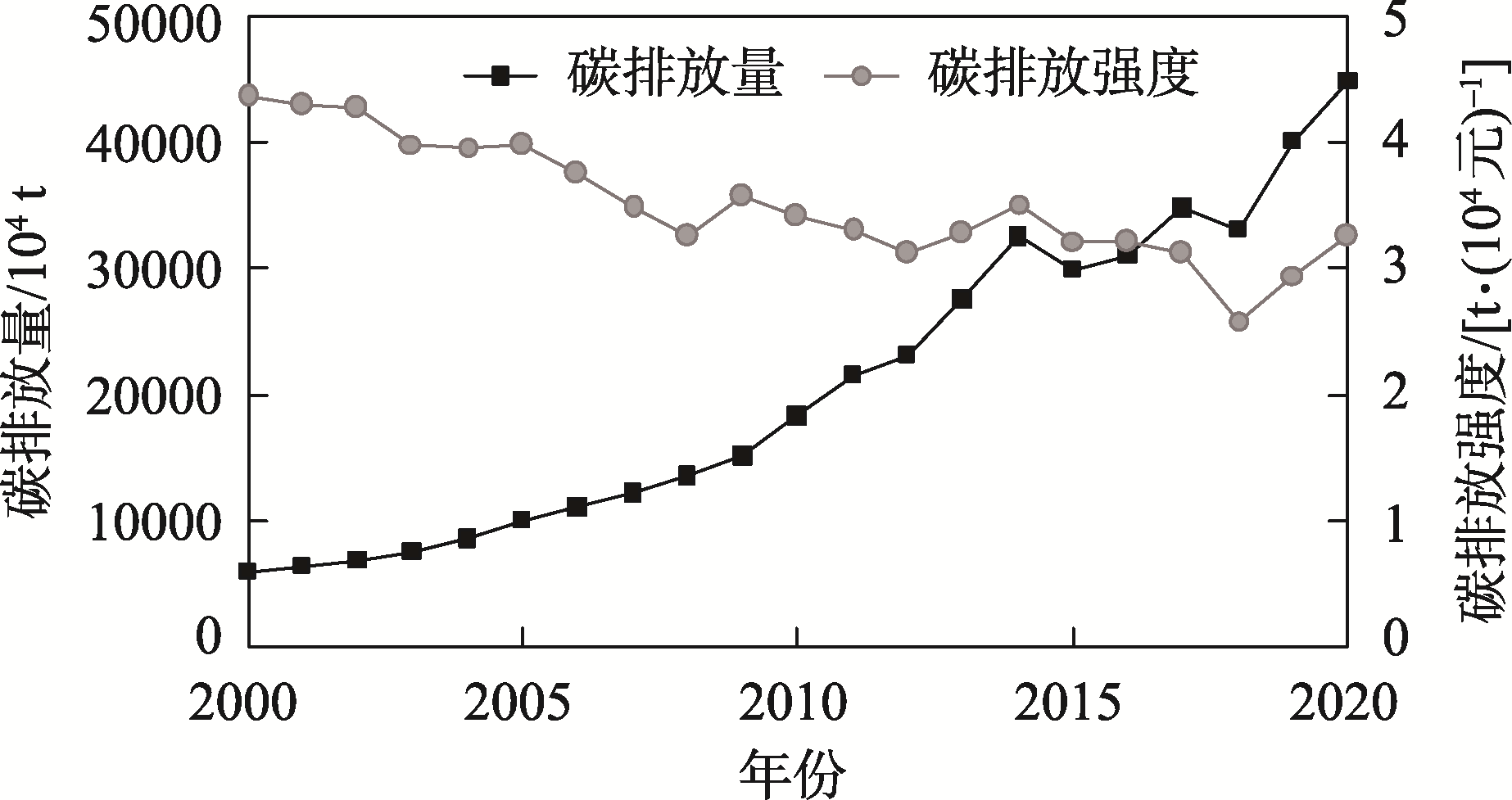
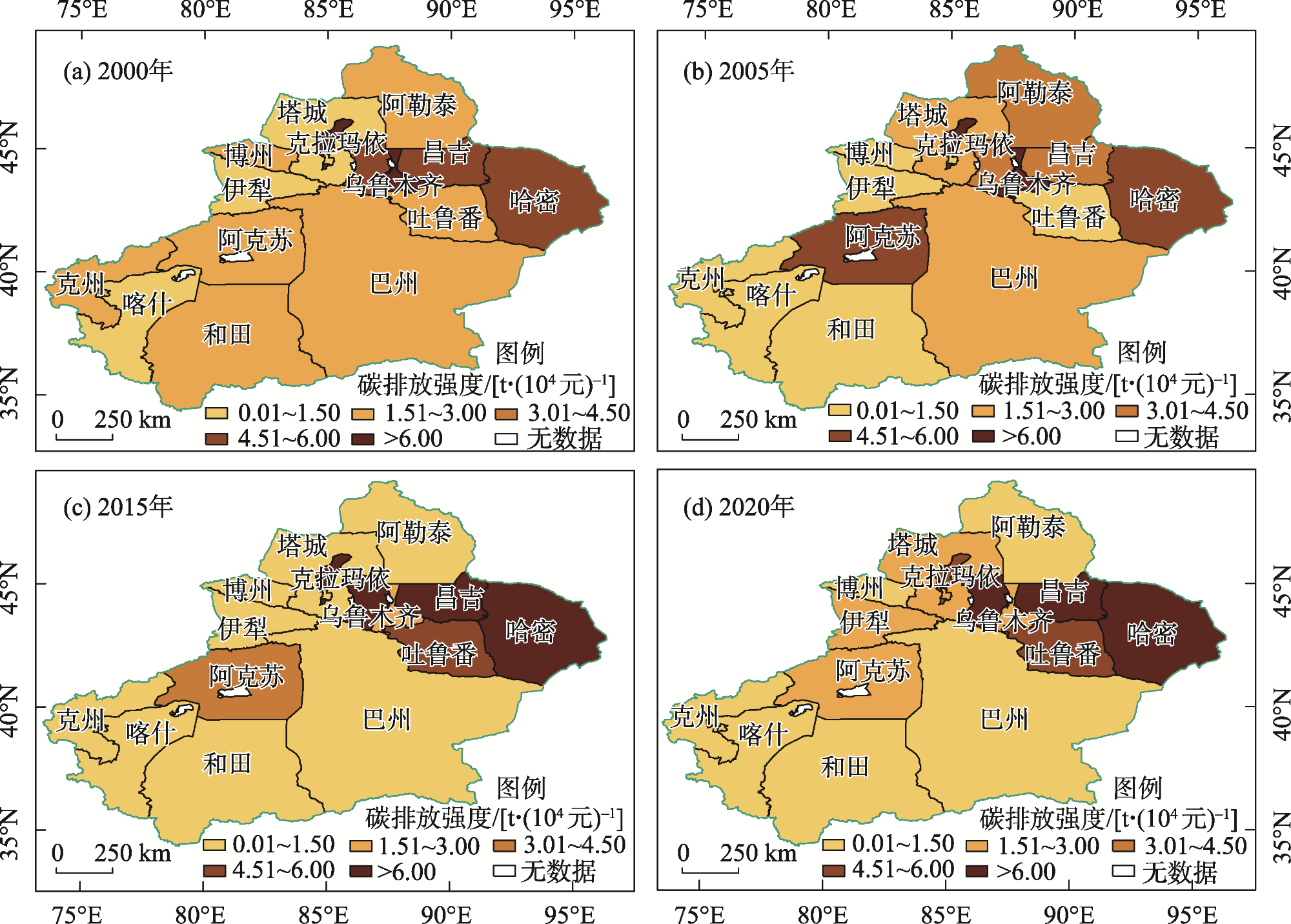
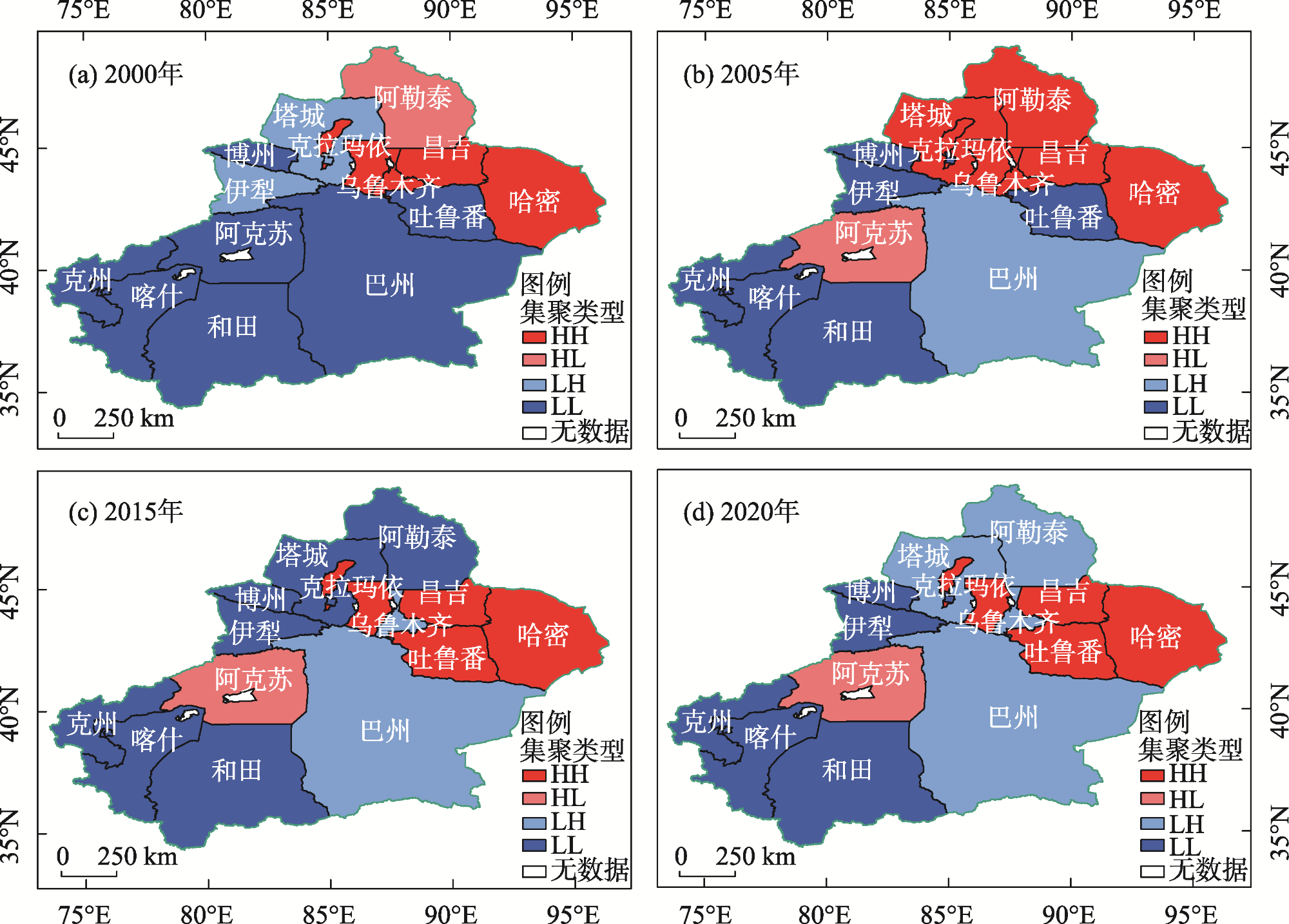
As an important energy production and supply base in China, Xinjiang plays a pivotal role in the delicate balance between economic development and carbon emissions. Ensuring a harmonious coordination between these factors is essential to achieve sustainable economic growth and meet goals related to energy conservation and emission reduction. This paper measures and analyzes the spatiotemporal characteristics of energy consumption carbon emissions in Xinjiang from 2000 to 2020 using spatial autocorrelation based on the data obtained from Xinjiang Statistical Yearbook. Results indicate that the total carbon emission intensity from energy consumption in Xinjiang shows an increasing trend every year during the study period. Nevertheless, the overall trend reveals a reduction in the intensity of carbon emissions. The spatial distribution of carbon emission intensity shows that the eastern slope of Tianshan Mountain has a high carbon emission intensity, whereas the northern edge of Junggar, the northern slope of Tianshan Mountain, and the northern slope of Kunlun Mountain has a low carbon emission intensity. These regions exhibit evident clustering characteristics. Considering global warming and carbon emission reduction, Xinjiang must work toward achieving the goals of “carbon peak” and “carbon neutrality” while promoting high-quality socioeconomic development in the area through the implementation of a multi-energy, complementary green energy network.
BAO Jiayu , LI Xianglong , HU Qiwen , LI Tao . Spatiotemporal characteristics of carbon emissions from energy consumption and the approach to energy structure adjustment in Xinjiang[J]. Arid Zone Research, 2024 , 41(3) : 490 -498 . DOI: 10.13866/j.azr.2024.03.13
表1 各类能源的平均低位发热量与折标系数Tab. 1 Average low calorific value and standard coal coefficient |
| 单位热值含碳量/(t·TJ-1) | 碳氧化率/% | 平均低位发热量 | 折标准煤系数 | |
|---|---|---|---|---|
| 原煤 | 26.37 | 94 | 20934 kJ·kg-1 | 0.714 kgce·kg-1 |
| 原油 | 20.08 | 98 | 41868 kJ·kg-1 | 1.429 kgce·kg-1 |
| 天然气 | 15.32 | 99 | 38979 kJ·m-3 | 1.330 kgce·m-3 |
注:kgce为千克标准煤。 |
表2 集聚类型时空转移矩阵Tab. 2 Space-time transition matrices |
| 时期 | 集聚类型 | HH | LH | LL | HL |
|---|---|---|---|---|---|
| 2000—2005年 | HH | 昌吉、哈密、乌鲁木齐、克拉玛依 | |||
| LH | 塔城 | 伊犁 | |||
| LL | 巴州 | 和田、博州、克州、喀什、吐鲁番 | 阿克苏 | ||
| HL | 阿勒泰 | ||||
| 2005—2015年 | HH | 昌吉、哈密、克拉玛依 | 乌鲁木齐 | 塔城、阿勒泰 | |
| LH | 巴州 | ||||
| LL | 吐鲁番 | 和田、博州、克州、喀什、伊犁 | |||
| HL | 阿克苏 | ||||
| 2015—2020年 | HH | 昌吉、哈密、克拉玛依、吐鲁番 | |||
| LH | 乌鲁木齐、巴州 | ||||
| LL | 阿勒泰、塔城 | 和田、博州、克州、喀什、伊犁 | |||
| HL | 阿克苏 |
注:HH为高-高,HL为高-低,LH为低-高,LL为低-低。 |
| [1] |
|
| [2] |
丁仲礼, 段晓男, 葛全胜, 等. 2050年大气CO2浓度控制: 各国排放权计算[J]. 中国科学: 地球科学, 2009, 39(8): 1009-1027.
[
|
| [3] |
刘燕华, 葛全胜, 何凡能, 等. 应对国际CO2减排压力的途径及我国减排潜力分析[J]. 地理学报, 2008, 63(7): 675-682.
[
|
| [4] |
刘竹, 关大博, 魏伟. 中国二氧化碳排放数据核算[J]. 中国科学: 地球科学, 2018, 48(7): 878-887.
[
|
| [5] |
|
| [6] |
|
| [7] |
|
| [8] |
刘卫东, 张雷, 王礼茂, 等. 我国低碳经济发展框架初步研究[J]. 地理研究, 2010, 29(5): 778-788.
[
|
| [9] |
|
| [10] |
曹俊文. 江西省产业部门碳排放特征及减排途径——基于1992—2007年投入产出分析[J]. 经济地理, 2011, 31(12): 2111-2115.
[
|
| [11] |
|
| [12] |
陶俊逸, 赵筱青, 陈彦君, 等. 云南省能源消费碳排放时空演变及其影响因素[J]. 环境科学与技术, 2023, 46(9): 178-187.
[
|
| [13] |
王青, 傅莉媛, 孙海添. 中国工业生产能源消费碳排放的区域差异、动态演进与影响因素[J]. 资源科学, 2023, 45(6): 1239-1254.
[
|
| [14] |
|
| [15] |
程叶青, 王哲野, 张守志. 中国能源消费碳排放强度及其影响因素的空间计量[J]. 地理学报, 2013, 68(10): 1418-1431.
[
|
| [16] |
王少剑, 苏泳娴, 赵亚博. 中国城市能源消费碳排放的区域差异、空间溢出效应及影响因素[J]. 地理学报, 2018, 73(3): 414-428.
[
|
| [17] |
吕志超, 刘雁, 李佳茹, 等. 基于LMDI的河北省能源消费碳排放核算及因素分析[J]. 环境生态学, 2023, 5(4): 74-78.
[
|
| [18] |
杨振, 李泽浩. 中部地区碳排放测度及其驱动因素动态特征研究[J]. 生态经济, 2022, 38(5): 13-20.
[
|
| [19] |
王长建, 汪菲, 张虹鸥, 等. 广东省能源消费的动态演变及其驱动机制研究[J]. 资源与产业, 2019, 21(5): 9-19.
[
|
| [20] |
宋府霖, 韩传峰, 滕敏敏. 长三角地区能源消费碳排放驱动因素分析及优化策略[J]. 生态经济, 2022, 38(4): 21-28.
[
|
| [21] |
杨清可, 王磊, 朱高立, 等. 中国城市碳排放强度的时空演变、动态跃迁及收敛趋势[J/OL]. 环境科学, 2023: 1-17.
[
|
| [22] |
王素凤, 洪剑涛, 李化夫. 中国城市能源消费碳排放影响因素的时空异质性[J/OL]. 世界地理研究, 2024: 1-14.
[
|
| [23] |
杜宏茹, 李雪梅, 王长建. 新疆能矿资源型产业发展及其区域效应研究[J]. 干旱区研究, 2011, 28(2): 363-369.
[
|
| [24] |
宋香荣, 苏斌, 杨福德. 能源环境约束下新疆工业结构调整优化研究[J]. 新疆财经, 2013, 32(6): 51-56.
[
|
| [25] |
胡方芳, 陈前利. 新疆碳排放峰值预测[J]. 区域治理, 2019, 3(42): 37-41.
[
|
| [26] |
高志刚, 李明蕊. 正式和非正式环境规制碳减排效应的时空异质性与协同性——对2007—2017年新疆14个地州市的实证分析[J]. 西部论坛, 2020, 30(6): 84-100.
[
|
| [27] |
夏婷婷, 南海明, 高岷, 等. 新能源耦合煤化工及综合性能源走廊探索——产业兴疆路径研究[J]. 煤化工, 2022, 50(4): 3-9.
[
|
| [28] |
王长建, 杜宏茹, 汪菲. 能源消费对新疆经济发展的影响机理[J]. 干旱区研究, 2014, 31(6): 1163-1169.
[
|
| [29] |
王少剑, 谢紫寒, 王泽宏. 中国县域碳排放的时空演变及影响因素[J]. 地理学报, 2021, 76(12): 3103-3118.
[
|
| [30] |
|
| [31] |
杨琳琳, 李波, 付奇. 基于BP神经网络模型的新疆水资源承载力情景分析[J]. 北京师范大学学报(自然科学版), 2016, 52(2): 216-222.
[
|
| [32] |
柴强, 盛建东, 武红旗, 等. 新疆草地土壤厚度及与地形特征的相关性[J]. 中国草地学报, 2015, 37(5): 18-23.
[
|
| [33] |
强建华, 于浩. 新疆矿山环境遥感监测成果综述[J]. 中国地质调查, 2016, 3(5): 28-34.
[
|
| [34] |
郭森, 崔永军, 贾浩, 等. 新疆电力供需预测及电能消纳有效途径研究[J]. 中国电力, 2018, 51(5): 147-153.
[
|
| [35] |
吕清刚, 柴祯. “双碳”目标下的化石能源高效清洁利用[J]. 中国科学院院刊, 2022, 37(4): 541-548.
[
|
| [36] |
姚玉璧, 郑绍忠, 董宏昌, 等. 中国西北地区太阳辐射时空分异特征[J]. 干旱区研究, 2023, 40(6): 863-873.
[
|
| [37] |
孙若晨, 熊康宁, 郭应军, 等. 喀斯特地区太阳能资源评估研究进展[J]. 安徽农业科学, 2021, 49(9): 5-10, 27.
[
|
| [38] |
顾玮, 古丽·加帕尔, 尹瀚民, 等. 新疆南疆地区太阳能资源时空分布特征及区划研究[J]. 干旱区地理, 2021, 44(6): 1665-1675.
[
|
| [39] |
|
/
| 〈 |
|
〉 |