



Ecological health assessment of the alpine wetland landscape in the Heihe River source area based on vigor, organization, and resilience
Received date: 2023-03-08
Revised date: 2023-11-01
Online published: 2024-06-20
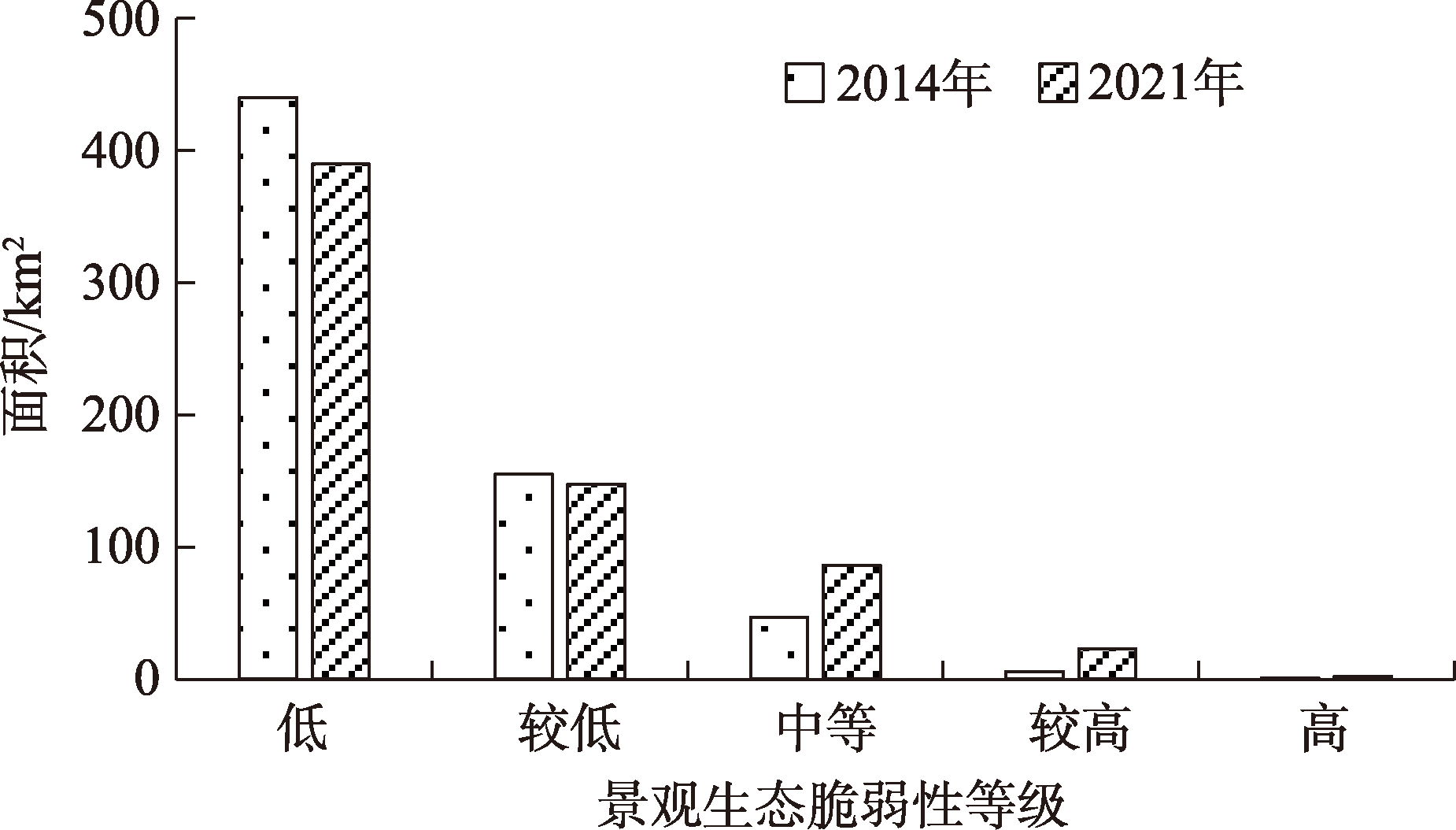
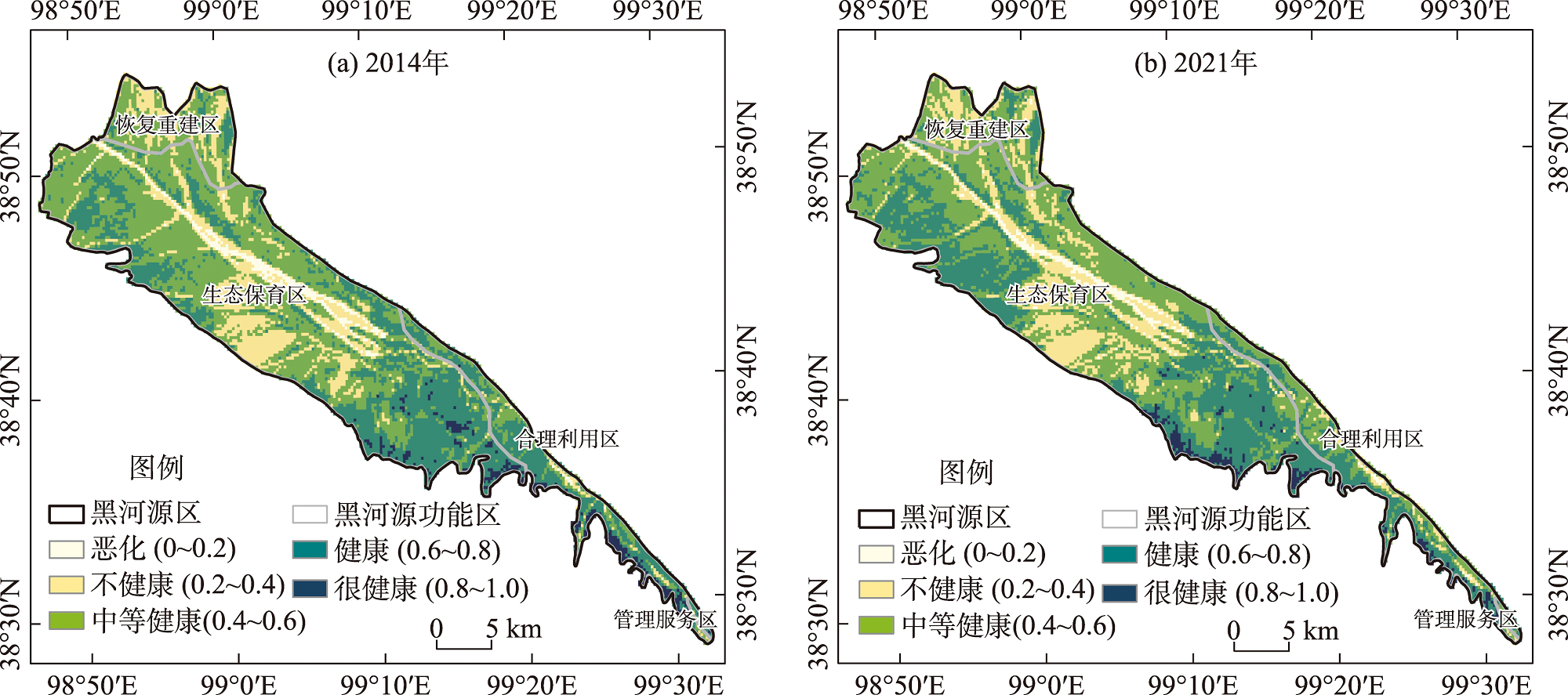
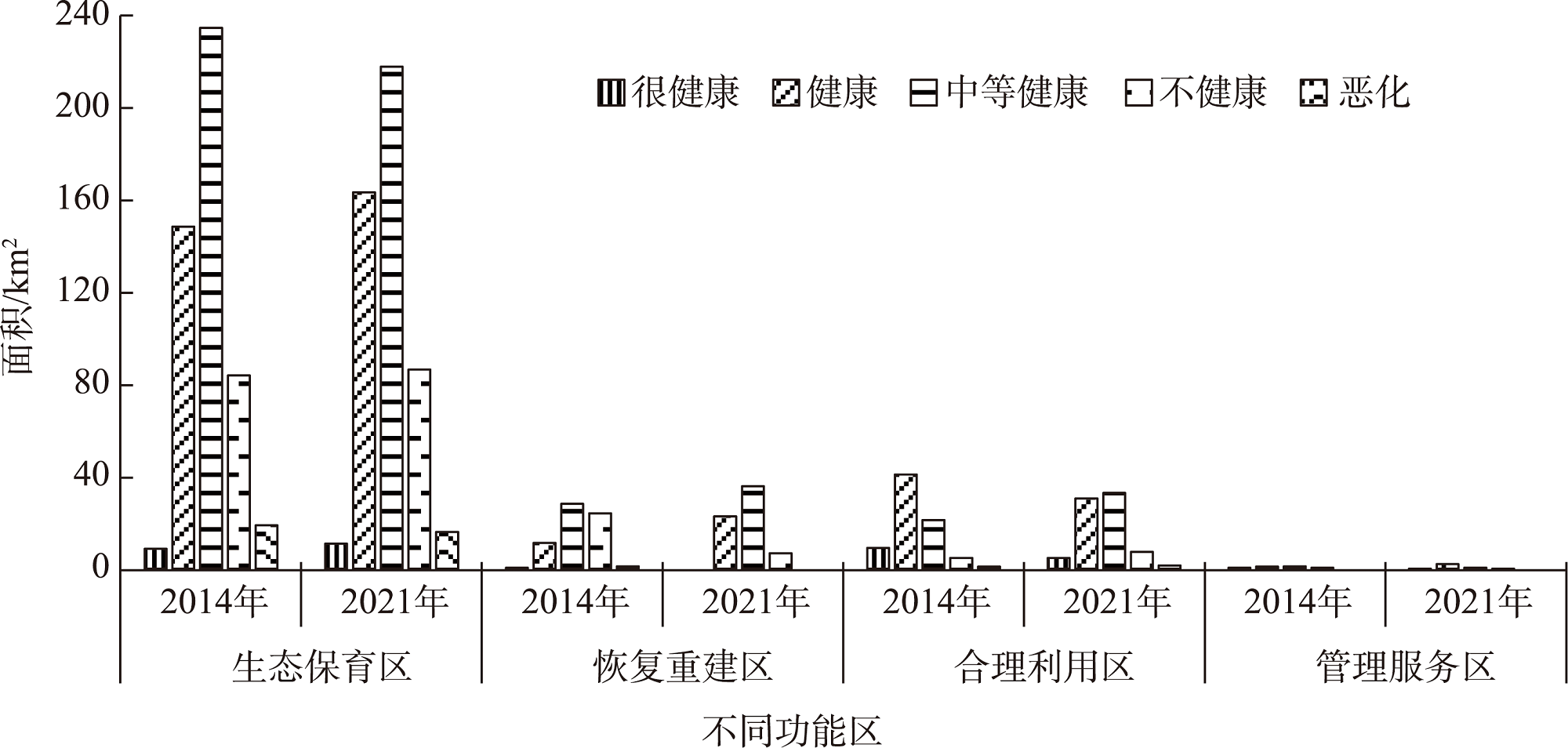
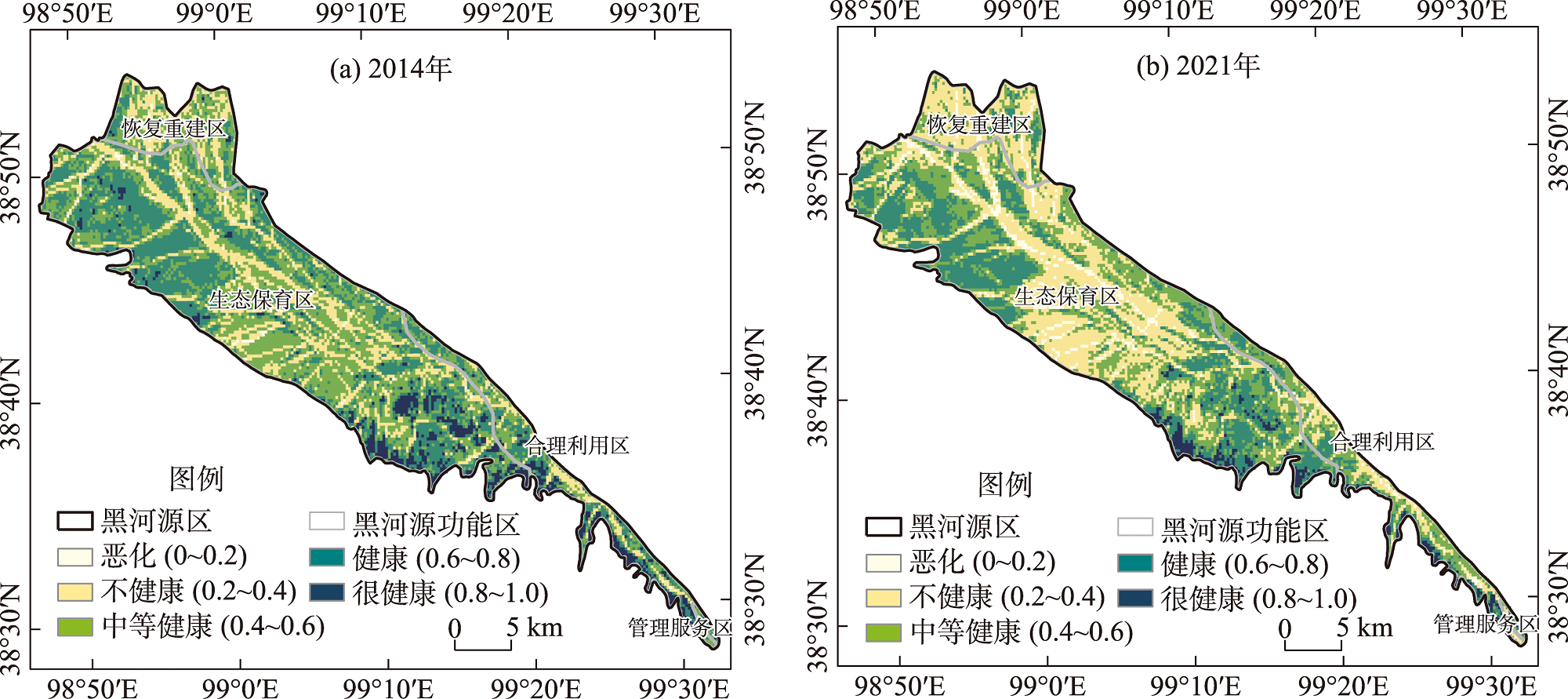
The Heihe River source area National Wetland Park, representing a typical alpine wetland, is key for measuring the current and future development of such ecosystems. This study uses land use data to introduce the landscape ecology vulnerability index and establish a comprehensive assessment system of the alpine wetland ecological health based on four aspects: ecosystem vitality, organization, resilience, and ecosystem service value. It quantitatively assesses the spatiotemporal change characteristics of ecological health in the Heihe River source area from 2014 to 2021. The findings reveal that (1) grassland in the Heihe River source area is the main land use type, with high, medium, and low coverage grasslands distributed in a mosaic pattern. The second type is unused land, mainly distributed on both banks of the river and in the northwest; (2) the Heihe River source area consists of both low- and low-vulnerability areas, resulting in an overall low landscape ecology vulnerability; and (3) the Heihe River source area is predominantly rated as healthy and moderately healthy, indicating a relatively high overall ecological environment health level. Throughout 2014 to 2021, the ecosystem of the Heihe River source area was relatively healthy. In the future, the Heihe River source area should prioritize ecological functions, balancing animal husbandry production and ensure the ecosystem’s healthy progression toward achieving “ecological harmony.”
SUN Weijie , QIAO Bin , YU Hongyan , ZHAO Tong , CHEN Qi . Ecological health assessment of the alpine wetland landscape in the Heihe River source area based on vigor, organization, and resilience[J]. Arid Zone Research, 2024 , 41(2) : 301 -313 . DOI: 10.13866/j.azr.2024.02.13
表1 景观生态指数公式及意义Tab. 1 The formula and significance of landscape ecological index |
| 景观格局指数 | 公式 | 参数意义 |
|---|---|---|
| 景观适应度( ) | 表示斑块丰富度指数; 表示香农多样性指数; 表示香农均匀度指数。 表示斑块类型 占面积比; 表示景观中斑块类型的总数;k表示景观斑块的个数 | |
| 景观干扰度( ) | 表示景观破碎度指数; 表示景观分维度指数; 表示景观分离度指数。 表示土地利用类型 的面积; 表示土地利用类型 的斑块个数; 表示斑块周长; 表示斑块面积。a、b、c表示相应景观指数的权重,a+b+c=1 | |
| 景观易损度( ) | 专家咨询法并归一化获得 | 表示不同生态系统的易损性,生态系统的脆弱性与其在景观自然演替过程中所处的阶段有关。通常,未利用地取值为7,林地、草地取值为5,建设用地、水域取值为1 |
| 景观敏感度( ) | 为景观类型数量; 为某一景观类型; 表示第 个小区域内第 类景观类型在网格内所占面积; 为第 个小区域的面积 | |
| 景观格局脆弱性( ) | 表示景观敏感度指数; 表示景观适应度指数 | |
| 景观功能脆弱性( ) | 表示第 类景观类型在网格内所占面积; 表示景观类型数量; 表示网格面积; 表示第 类景观类型生态系统服务 | |
| 景观生态脆弱性( ) | 表示景观格局脆弱性; 表示景观功能脆弱性 |
表2 黑河源区生态系统健康评价指标体系Tab. 2 Evaluation index system of ecosystem health in the Heihe River source area |
| 目标层 | 准则层 | 指标层 | 指标计算方法 | 参数意义 | 指标类型 |
|---|---|---|---|---|---|
| 黑河源区生态系统健康评价 | 活力 | 归一化植被指数(NDVI) | 为近红外波段; 为红外波段 | 积极 | |
| 组织力 | 植被覆盖度(FVC) | 为完全裸土或无植被覆盖像元的 值; 为完全被植被覆盖像元的 值 | 积极 | ||
| 景观生态脆弱性 (LEV) | 根据表1进行计算 | - | 消极 | ||
| 平均斑块面积 (MPS) | 为斑块总面积; 为斑块总数 | 积极 | |||
| 恢复力 | 海拔(DEM) | - | - | 消极 | |
| 生态系统弹性度 (E) | 为景观类型 所占面积比; 为景观 的生态弹性度分值;n为景观类型数量 | 积极 | |||
| 生态系统服务价值 | 生态系统服务 价值(EVS) | 利用价值当量法计算不同土地类型单位面积的生态系统服务价值 | - | 积极 |
表3 景观生态健康等级划分及意义Tab. 3 Classification and significance of landscape ecological health levels |
| 健康等级 | 健康水平 | 生态功能 |
|---|---|---|
| 一级(≥0.13) | 很健康 | 完好 |
| 二级[0.10~0.13) | 健康 | 健康 |
| 三级[0.07~0.10) | 中等健康 | 亚健康 |
| 四级[0.04~0.07) | 不健康 | 轻度病态 |
| 五级(<0.04) | 恶化 | 病态 |
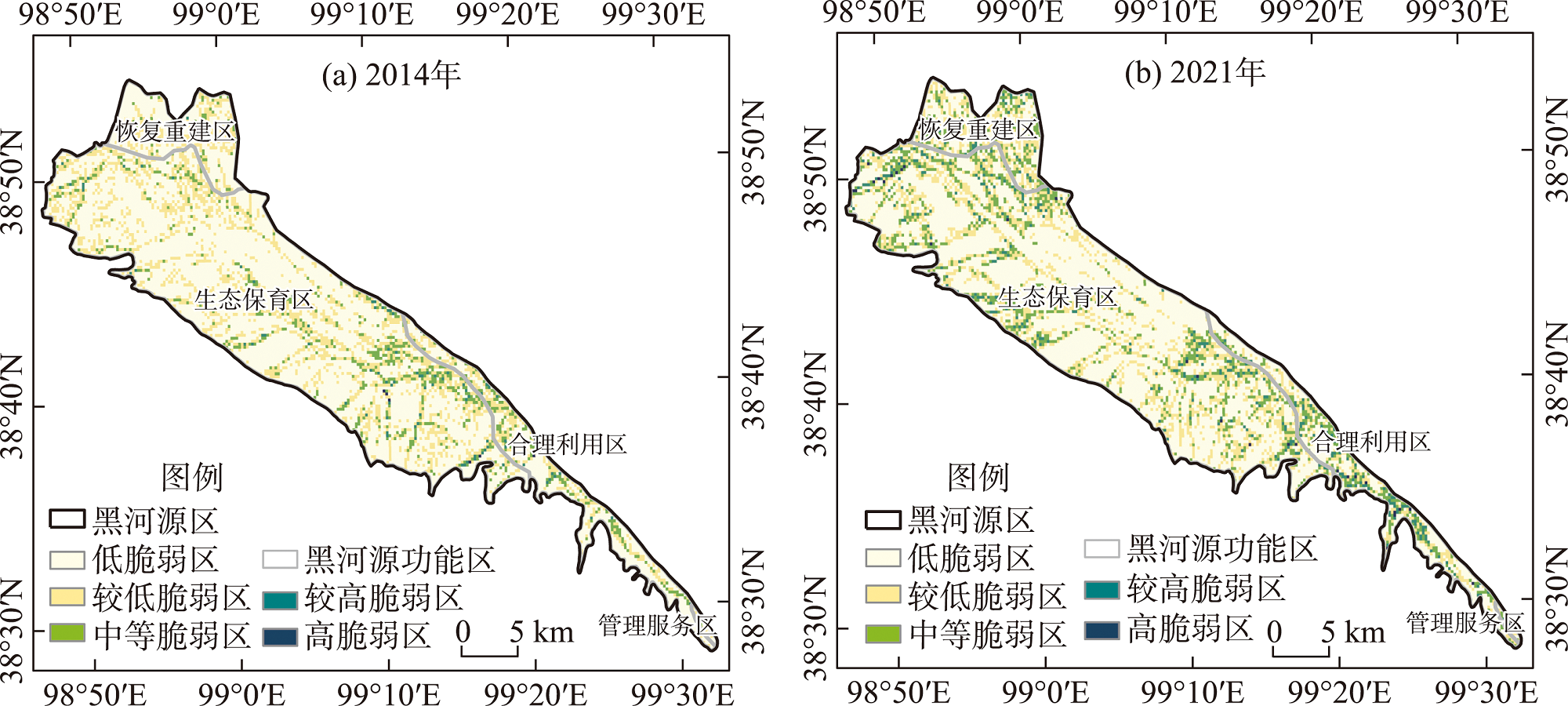
表4 黑河源区不同功能区景观生态脆弱性指数Tab. 4 Landscape ecological vulnerability index in different subregions in the Heihe River source area |
| 黑河源区 | 恢复重建区 | 生态保育区 | 合理利用区 | 管理服务区 | |
|---|---|---|---|---|---|
| 2014年 | 0.16 | 0.17 | 0.15 | 0.19 | 0.20 |
| 2021年 | 0.19 | 0.24 | 0.18 | 0.25 | 0.29 |
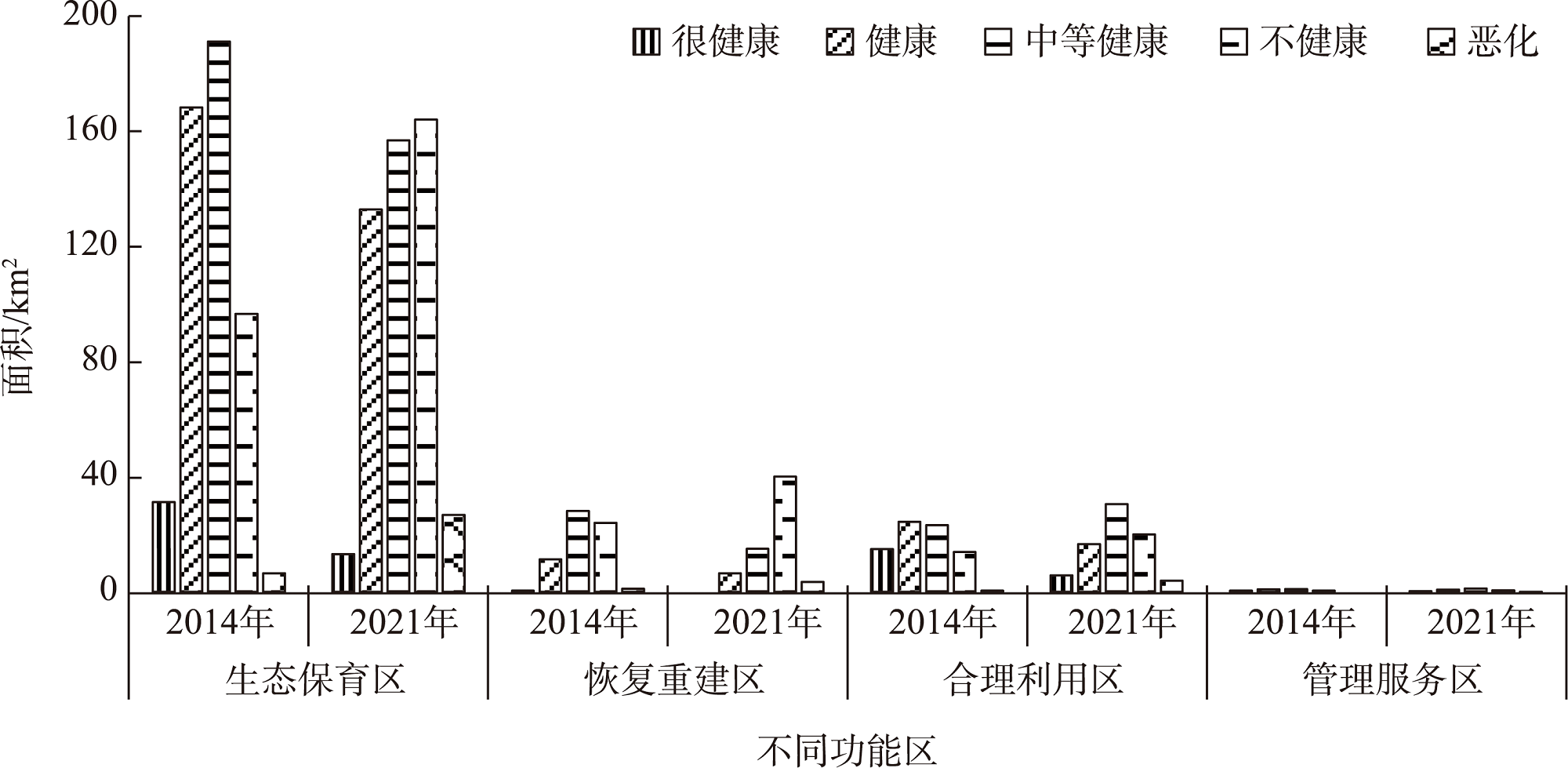
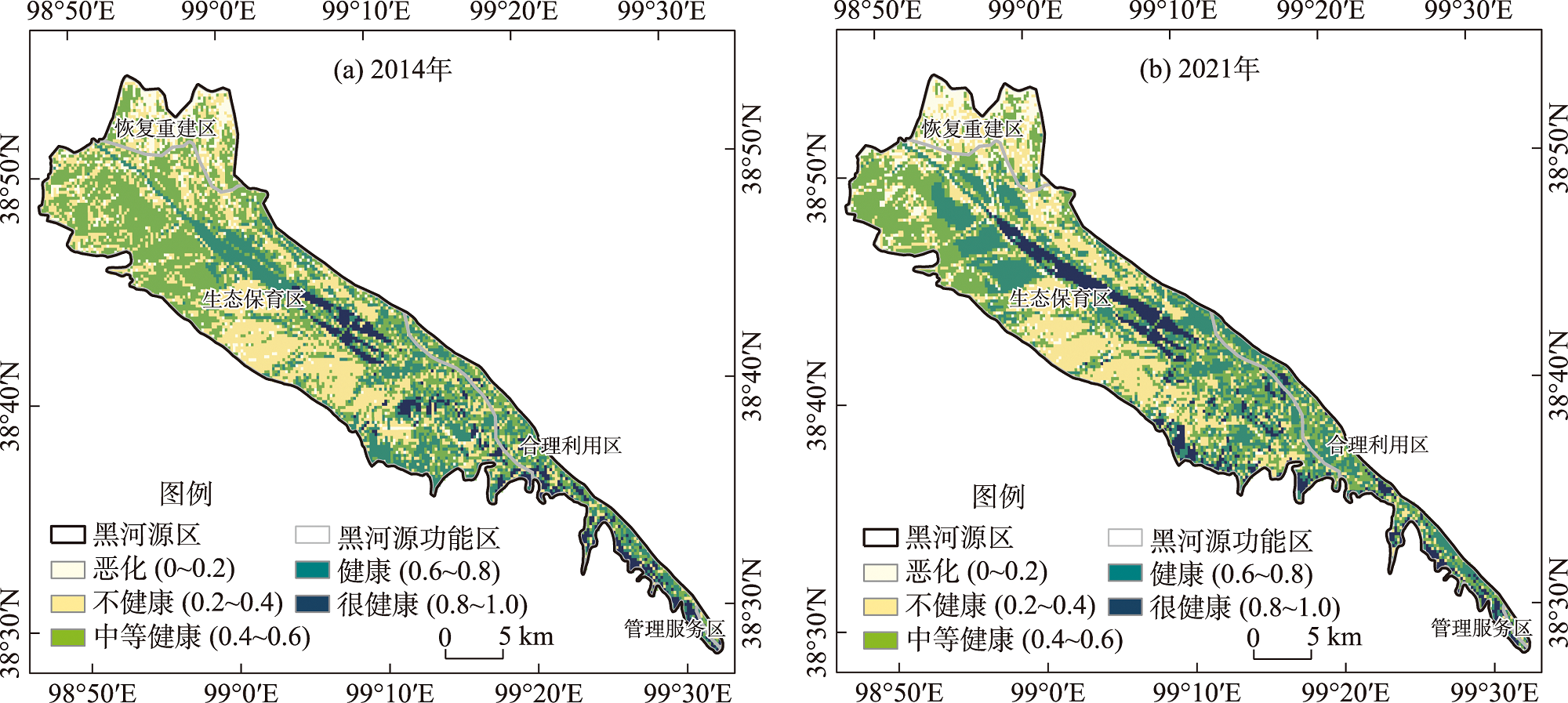
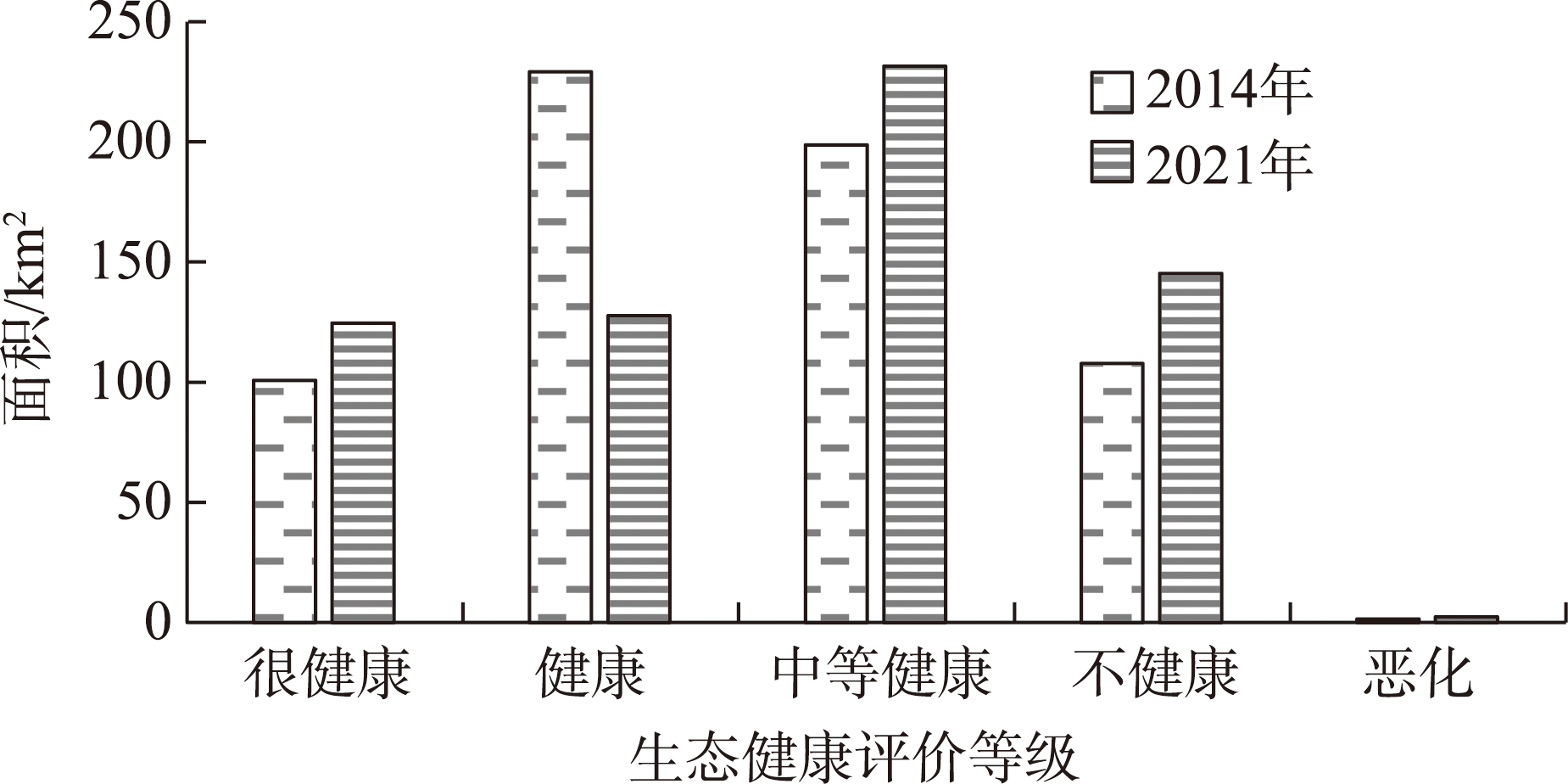
图8 黑河源区景观生态系统组织力空间分布Fig. 8 Spatial distribution and area comparison of organizational of landscape ecosystems in the Heihe River source area |
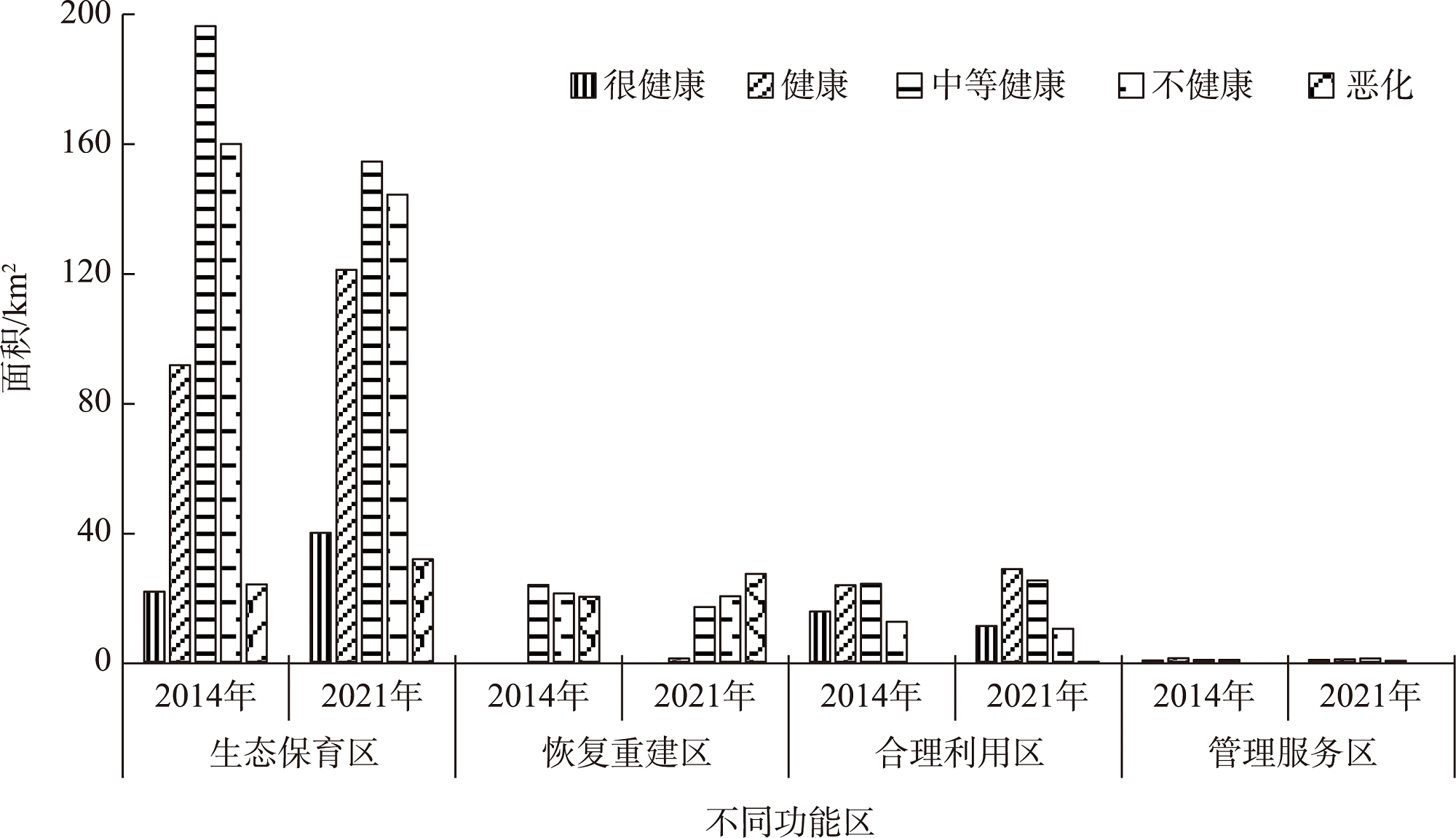
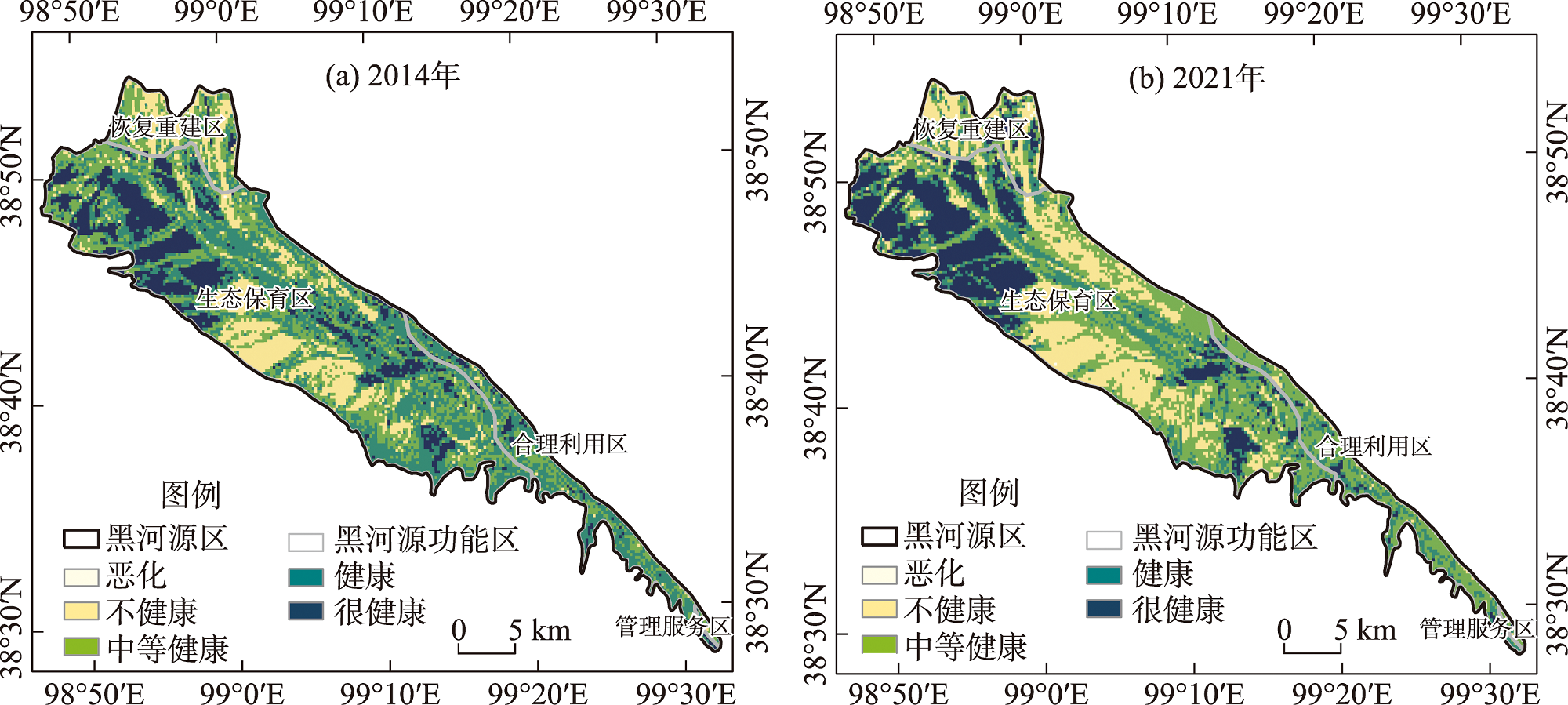
图10 黑河源区景观生态系统恢复力空间分布Fig. 10 Spatial distribution of resilience of landscape ecosystems in the Heihe River source area |
| [1] |
乔斌, 王乃昂, 王义鹏, 等. 山地-绿洲“共轭型”生态牧场理念源起、概念框架与发展模式——以祁连山牧区为例[J]. 生态学报, 2023, 43(21): 1-16.
[
|
| [2] |
邢宇. 青藏高原32年湿地对气候变化的空间响应[J]. 国土资源遥感, 2015, 27(3): 99-107.
[
|
| [3] |
|
| [4] |
燕守广, 李辉, 李海东, 等. 基于土地利用与景观格局的生态保护红线生态系统健康评价方法——以南京市为例[J]. 自然资源学报, 2020, 35(5): 1109-1118.
[
|
| [5] |
张月琪, 张志, 江鎞倩, 等. 城市红树林生态系统健康评价与管理对策——以粤港澳大湾区为例[J]. 中国环境科学, 2022, 42(5): 2352-2369.
[
|
| [6] |
|
| [7] |
刘焱序, 彭建, 汪安, 等. 生态系统健康研究进展[J]. 生态学报, 2015, 35(18): 5920-5930.
[
|
| [8] |
周静, 万荣荣. 湿地生态系统健康评价方法研究进展[J]. 生态科学, 2018, 37(6): 209-216.
[
|
| [9] |
|
| [10] |
李雪宁, 徐先英, 郑桂恒, 等. 石羊河下游人工梭梭林健康评价体系构建及应用研究[J]. 干旱区研究, 2022, 39(3): 872-882.
[
|
| [11] |
|
| [12] |
|
| [13] |
|
| [14] |
张藜. 基于景观生态理论的三江源湿地生态健康评价[D]. 西安: 陕西科技大学, 2016.
[
|
| [15] |
朱捷缘, 卢慧婷, 王慧芳, 等. 汶川地震重灾区恢复期生态系统健康评价[J]. 生态学报, 2018, 38(24): 9001-9011.
[
|
| [16] |
|
| [17] |
周启刚, 彭春花, 刘栩位, 等. 基于VOR模型的三峡库区消落带2010—2020年生态系统健康评价[J]. 水土保持研究, 2022, 29(5): 310-318.
[
|
| [18] |
|
| [19] |
乔斌, 曹晓云, 孙玮婕, 等. 基于生态系统服务价值和景观生态风险的生态分区识别与优化策略——以祁连山国家公园青海片区为例[J]. 生态学报, 2023, 43(3): 986-1004.
[
|
| [20] |
刘梦, 周爱国, 补建伟, 等. 黑河源多金属矿区地质环境承载力评价[J]. 中国矿业, 2018, 27(9): 114-120.
[
|
| [21] |
|
| [22] |
杨露. 祁连山地区生态环境质量时空变化及其驱动机制分析[D]. 兰州: 兰州大学, 2021.
[
|
| [23] |
张行, 陈海, 史琴琴, 等. 陕西省景观生态脆弱性时空演变及其影响因素[J]. 干旱区研究, 2020, 37(2): 496-505.
[
|
| [24] |
张晓瑶, 虞虎, 张潇, 等. 基于多源数据的三江源国家公园土地生态安全综合评价[J]. 生态学报, 2022, 42(14): 5665-5676.
[
|
| [25] |
李鹏, 俞国燕. 多指标综合评价方法研究综述[J]. 机电产品开发与创新, 2009, 22(4): 24-28.
[
|
| [26] |
付建新, 曹广超, 郭文炯. 1980—2018年祁连山南坡土地利用变化及其驱动力[J]. 应用生态学报, 2020, 31(8): 2699-2709.
[
|
| [27] |
宋长春. 湿地生态系统对气候变化的响应[J]. 湿地科学, 2003, 1(2): 122-127.
[
|
| [28] |
叶伟林, 黄钰涵, 周自强, 等. 祁连山地区近60年气温时空变化特征[J]. 科学技术与工程, 2022, 22(4): 1344-1353.
[
|
| [29] |
徐亚男, 刘学录, 李晓丹, 等. 祁连山东段生态敏感性对景观动态变化的响应[J]. 生态科学, 2019, 38(5): 160-167.
[
|
| [30] |
刘宽梅. 祁连山自然保护区景观格局变化及其稳定性研究[D]. 兰州: 兰州大学, 2021.
[
|
| [31] |
刘佳茹. 2005—2018年祁连山生态脆弱性遥感评价研究[D]. 兰州: 西北师范大学, 2021.
[
|
| [32] |
张应丰. 祁连山地湿地生态质量评价[J]. 林业调查规划, 2015, 40(4): 69-72.
[
|
| [33] |
卢成保, 侯留飞. 青海省祁连县草地退化原因分析及治理对策[J]. 今日畜牧兽医, 2018, 34(2): 62.
[
|
| [34] |
杨荣荣, 曹广超, 曹生奎, 等. 2000—2018年黑河源区草地NPP时空变化及影响因素分析[J]. 草原与草坪, 2020, 40(2): 79-86.
[
|
| [35] |
马恒利. 近40年黑河流域景观生态风险演变及其与地形梯度的关系[D]. 兰州: 兰州交通大学, 2021.
[
|
/
| 〈 |
|
〉 |