



Analysis of moisture feeding in the Ulugh Muztagh area of the East Kunlun Mountains
Received date: 2023-07-31
Revised date: 2023-10-18
Online published: 2024-06-20
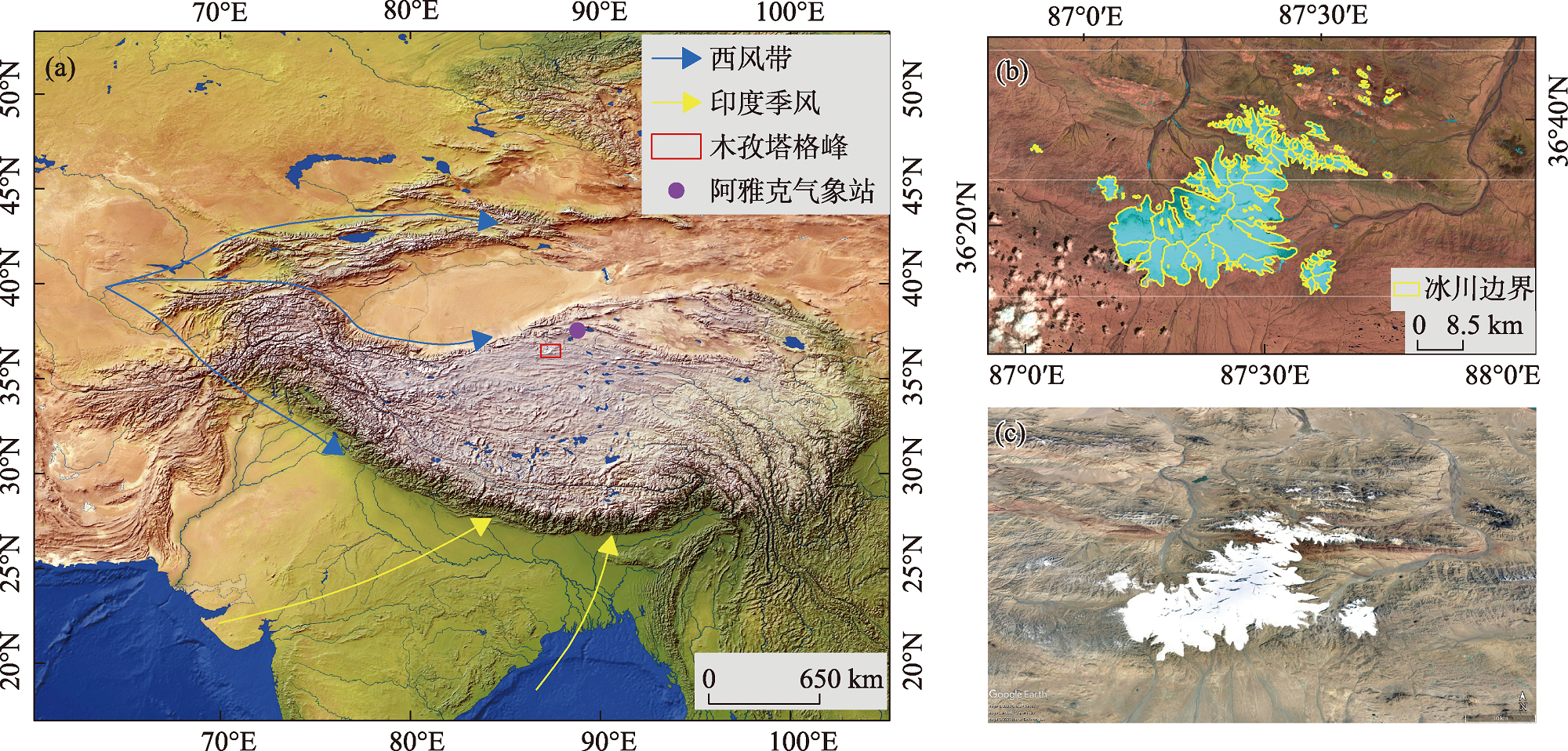
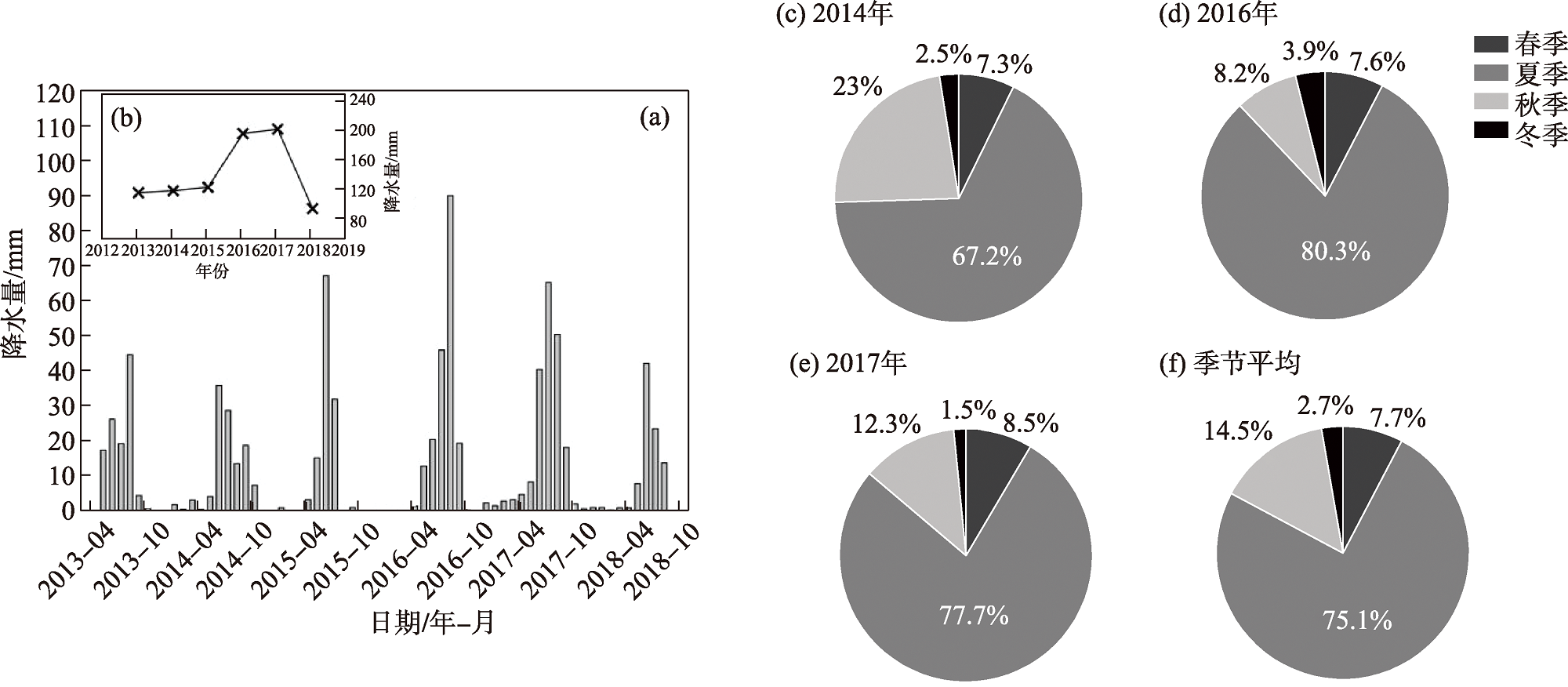
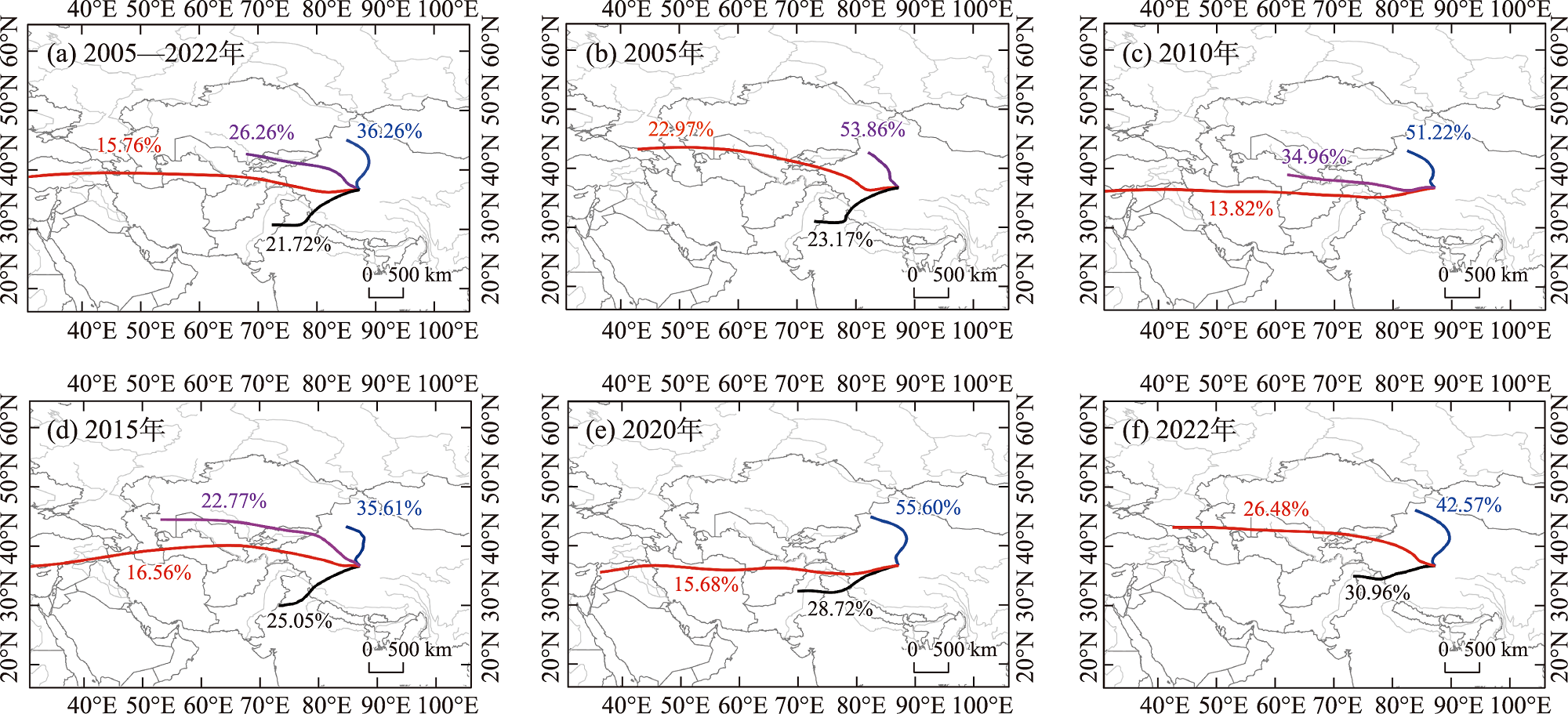
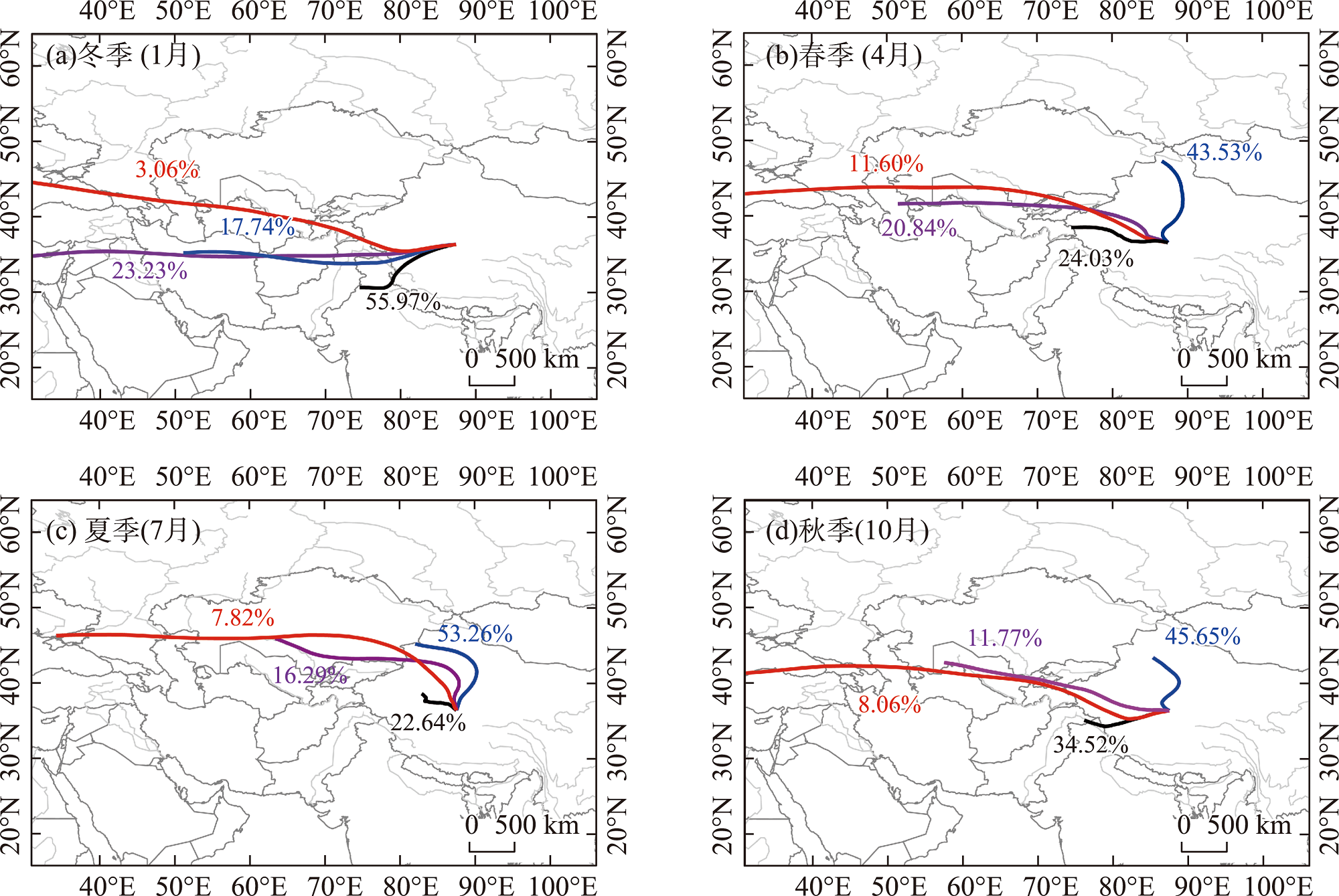
Precipitation acts as a crucial supply for mountain glaciers, and its water vapor source closely correlates to the amount of precipitation. This study focuses on the modern glacier distribution area of Ulugh Muztagh in the eastern Kunlun Mountains, analyzing water vapor sources in the region from 2005 to 2022 using the Hybrid Single Particle Lagrangian Integrated Trajectory (HYSPLIT) model and the Global Data Assimilation System (GDAS). Employing backward trajectory analysis, we reveal the source and regularity of water vapor in the Ulugh Muztagh region and discuss its seasonal changes. The results show that the water vapor source in the Ulugh Muztagh area mainly extends to the Eurasian interior along the midlatitude westerly belt and is divided into three routes entering the Qinghai-Tibet Plateau from the Tianshan Mountains, the Pamir Plateau, and over the high-altitude stratosphere. On the Qinghai-Tibet Plateau, water vapor from the Indian Ocean either moves northward over the Himalayas or turns northwestward to merge with the westerly circulation into the plateau’s hinterland. Land-source water vapor, entering from the Pamir Plateau and Tianshan Mountains, accounts for 62.52% of the total water vapor in the Ulugh Muztagh area. Meanwhile, sea source water vapor, comprising high-altitude water vapor from the westerly belt (Atlantic water vapor) and the Indian Ocean, accounts for 37.48% of the total water vapor. Notably, we find that the proportion of water vapor from the sea source has increased steadily over recent decades. Analyzing multiyear seasonal averages for water vapor, we find a notably high proportion of locally recycled water vapor in the summer, comprising 22.64% of the total. This study’s outcomes offer valuable insights into the water cycle dynamics of the Ulugh Muztagh area in the East Kunlun Mountains.
WU Jiakang , CHEN Lihua , CHE Yanjun , ZHANG Mingjun , CAO Yun , GU Lailei . Analysis of moisture feeding in the Ulugh Muztagh area of the East Kunlun Mountains[J]. Arid Zone Research, 2024 , 41(2) : 211 -219 . DOI: 10.13866/j.azr.2024.02.04
感谢中国科学院新疆生态与地理研究所、新疆巴音郭楞蒙古自治州阿尔金山国家级自然保护区管理局以及玉素甫阿勒克检查站等单位和部门对木孜塔格峰地区野外科考的大力帮助和支持。
| [1] |
孙赫, 苏凤阁, 黄敬恒, 等. 第三极西风和季风主导流域源区降水呈现不同梯度特征[J]. 科学通报, 2020, 65(1): 91-104.
[
|
| [2] |
汤秋鸿, 刘宇博, 张弛, 等. 青藏高原及其周边地区降水的水汽来源变化研究进展[J]. 大气科学学报, 2020, 43(6): 1002-1009.
[
|
| [3] |
|
| [4] |
|
| [5] |
|
| [6] |
田立德, 姚檀栋, 孙维贞, 等. 青藏高原南北降水中δD和δ-(18)O关系及水汽循环[J]. 中国科学(D辑:地球科学), 2001, 31(3): 214-220.
[
|
| [7] |
|
| [8] |
杨梅学, 姚檀栋, 田立德, 等. 藏北高原夏季降水的水汽来源分析[J]. 地理科学, 2004, 24(4): 426-431.
[
|
| [9] |
饶文波, 李垚炜, 谭红兵, 等. 高寒干旱区降水氢氧稳定同位素组成及其水汽来源: 以昆仑山北坡格尔木河流域为例[J]. 水利学报, 2021, 52(9): 1116-1125.
[
|
| [10] |
余武生, 马耀明, 孙维贞, 等. 青藏高原西部降水中δ-(18)O变化特征及其气候意义[J]. 科学通报, 2009, 54(15): 2131-2139.
[
|
| [11] |
徐彦伟, 康世昌, 周石硚, 等. 青藏高原纳木错流域夏、秋季大气降水中δ-(18)O与水汽来源及温度的关系[J]. 地理科学, 2007, 27(5): 718-723.
[
|
| [12] |
|
| [13] |
|
| [14] |
李虎, 潘小多. 青藏高原水汽输送过程及水汽源地研究方法综述[J]. 地球科学进展, 2022, 37(10): 1025-1036.
[
|
| [15] |
|
| [16] |
任行阔, 高晶, 杨育龙, 等. 慕士塔格地区大气水汽氢氧稳定同位素季节内变化特征及影响因素分析[J]. 冰川冻土, 2021, 43(2): 331-341.
[
|
| [17] |
孙永, 易朝路, 刘金花, 等. 昆仑山木孜塔格地区冰川发育水汽来源探讨[J]. 地球环境学报, 2018, 9(4): 383-391.
[
|
| [18] |
|
| [19] |
|
| [20] |
王树基, 黄明敏. 东昆仑山冰川作用述要(以木孜塔格峰一带为例)[J]. 干旱区地理, 1986, 9(4): 46-49.
[
|
| [21] |
郭万钦, 刘时银, 许君利, 等. 木孜塔格西北坡鱼鳞川冰川跃动遥感监测[J]. 冰川冻土, 2012, 34(4): 765-774.
[
|
| [22] |
|
| [23] |
|
| [24] |
|
| [25] |
|
| [26] |
孟鸿飞, 张明军, 王圣杰, 等. CWT方法在中国夏季降水水汽来源识别中的应用[J]. 干旱区研究, 2018, 35(4): 872-881.
[
|
| [27] |
岳俊, 李国平. 应用拉格朗日方法研究四川盆地暴雨的水汽来源[J]. 热带气象学报, 2016, 32(2): 256-264.
[
|
| [28] |
曾钰婷, 张宇, 周可, 等. 青藏高原那曲地区夏季水汽来源及输送特征分析[J]. 高原气象, 2020, 39(3): 467-476.
[
|
| [29] |
|
| [30] |
庄晓翠, 李博渊, 赵江伟, 等. 基于HYSPLIT模式分析的塔克拉玛干沙漠南缘暴雨水汽特征[J]. 气象, 2022, 48(3): 311-323.
[
|
| [31] |
|
| [32] |
李颖, 苏凤阁, 汤秋鸿, 等. 青藏高原主要流域的降水水汽来源[J]. 中国科学:地球科学, 2022, 52(7): 1328-1344.
[
|
| [33] |
|
/
| 〈 |
|
〉 |